How A Plot-First Writer Builds Character(s)

Don't be put off by the Jim Morrison/The Doors album cover look of this book. It's really great, I promise!

I am a plot-first writer. My story ideas emerge when considering events, real and imagined, and only after all the events are in place do I try to figure characters. While my mind races happily along forming the plot, my brain comes to a standstill when it’s time to zero in on a character to carry the story.

That is, until I found this handy-dandy little book: The Complete Writer’s Guide to Heroes & Heroines: Sixteen Master Archetypes by Tami D. Cowden, Caro LaFever, and Sue Viders.

There are dozens of books on character-creation out there and lots of helpful resources online to aid in creating the perfect characters. I know because I’ve tried many of them. Most of these methods involve making endless lists and exploring everything in the character’s past from shoe-size to perfume preference. For some authors this is vital to the writing process, but for me, it is tedious, boring, and keeps me from writing the story.

So I was happy to find a resource that was different. Here are a few of the things from Sixteen Master Archetypes that I found helpful:

  • With only 8 Hero types and 8 Heroine types, this book narrowed my initial character questions to only a few possible answers. Yet the types are broad enough to encompass lots of individual quirks while being distinct enough that your character will fall into a category quite easily.
  • There are multiple examples from books, tv, and movies to illustrate the different archetypes. I’m a visual person, and I love being able to pinpoint who my character is like from a pool of characters I already know. (Example, is your character a Free Spirit? Think Dharma from Dharma & Greg or Phoebe Buffay from Friends. Is your character a Professor-type? Think Sherlock Holmes or Columbo.)
  • This book gives examples of possible professions for each of the character types, as well as what in their history might’ve contributed to the people they’ve become.
  • And most valuable of all to a romance writer, this book gives examples of how the various heroes and heroines both clash and mesh, their points of conflict and their points of commonality, as well as how the characters change when forced to be together.

You might be worried that the choices are so narrow as to make all characters in that category seem the same, but consider this: Harry Potter and Mr. Spock are in the same category (Professor.) Thelma Dickenson from Thelma and Louise is in the same category as Dorothy Gale in The Wizard of Oz (Waif.) Plenty of room to maneuver there.

If you’re like me, a plot-first novelist who has a rollicking story to tell but searches for just the right person to inflict all this conflict and disaster on, I encourage you to check out The Complete Writer’s Guide to Heroes & Heroines: Sixteen Master Archetypes.

You can find the book on Amazon.com by clicking the title above.

How do you feel about character worksheets? Love ’em or hate ’em?

Post Author: Erica Vetsch

Erica Vetsch is a transplanted Kansan now residing in Minnesota. She loves history and reading, and is blessed to be able to combine the two by writing historical fiction set in the American West. Whenever she’s not following flights of fancy in her fictional world, she’s the company bookkeeper for the family lumber business, mother of two terrific teens, wife to a man who is her total opposite and soul-mate, and avid museum patron.

.

How Opinionated Should a Novelist Be?

If you’re a novelist, there’s good reason to keep your opinions to yourself. Which can be difficult for people who are often sought for their opinions.

I recently read a Time magazine interview with John Grisham in which the author was asked, “Do you try to put Christian sentiments into your books?” He responded,

I’m a Christian, and those beliefs occasionally come out in the books. One thing you really have to watch as a writer is getting on a soapbox or pulpit about anything. You don’t want to alienate readers.

It’s a very diplomatic answer. Grisham doesn’t plead the fifth; he admits his religious persuasion. But he also admits that his Christian faith, if wrongly handled, can “alienate readers.”

This is the tightrope that novelists walk. In our age of electronic super-connectivity, there is no shortage of opinions and outlets for voicing them. But if you’re an author, that “connectivity” can have a downside. The more opinionated you are, the more chance you will alienate readers and potential readers.

Not long ago, in a post entitled To Blog or Not to Blog? Rachelle Gardner discussed the pros and cons of authors maintaining a blog site. Among the cons she offered, was this:

If you’re trying to be honest and authentic on your blog, and you spout off about religious views, politics, your views on parenting or any other controversial topic, you risk alienating potential buyers of your books simply because they disagree with one of your personal viewpoints.

There it is again — “alienating” readers. Your views about politics, religion, and controversial topics, no matter how “honest and authentic,” can negatively impact your professional influence or perception.

At the time, I hedged. “This notion that you shouldn’t express opinions,” I wrote, “bothers me.” However, at the time, I also did not have a novel published.

Call it political correctness, call it spinelessness, call it selling out, but I’m beginning to think that backing off from controversial opinions may be the smart thing for a novelist to do. Let me tell you why.

I recently perused my posts for the last year. Of my ten most commented upon posts, only two of them are NOT writing / publishing related. What should I make of this? It’s pretty simple: My visitors DO NOT visit my site for political commentary, parenting tips, sports takes, film reviews, recipes, social critique, or vacationing on a shoestring budget.

What people want from us writers is… writing-related stuff.

Please note: This does not mean we shouldn’t have opinions. Most of us have lots to say about politics, parenting, sports, film, social issues, etc. It also does not mean we should never blog about them. It means that whatever your brand is, it probably doesn’t have a lot to do with your controversial opinions.

Am I inferring that novelists should refrain from all controversial topics? Nowadays, I don’t think that’s possible. Between Twitter, Facebook, YouTube, investigative bloggers, and the 24 hour news cycle, what one believes can eventually be found out. Furthermore, the possibility remains that being opinionated may in fact win you supporters. After all, it is your OPINIONS about writing, the publishing industry, a specific genre, or the arts, that attract some readers.

The point is, whenever you voice a controversial opinion, it will have a plus / minus effect. Some people will like you more, others will like you less.

If someone asks me my position on __________ (fill in the blank), I will probably tell them. But the bottom line is this: Good stories have little to do with a storyteller’s politics or religion.

I don’t know what Cormac McCarthy’s politics are, but I loved The Road. I don’t know what Dean Koontz believes about climate change, but I like the Odd Thomas series. I’m not sure who Tosca Lee voted for, but I really enjoyed Demon: A Memoir. I’m not sure what Leif Enger believes about gay rights, but Peace Like a River is a wonderful book.

I don’t know the opinions of a lot of my favorite authors. And I’m better off if they don’t tell me.

Breaking News!!

Otherwise-Sensible Mother Sleeps with Strangers, Endangers Young Family
Columbus, OH (AP) August 4

If sources are to be believed, Columbus resident Marla Taviano and her family have accomplished a feat that, to our knowledge, has never even been attempted by another human being (for obvious reasons).

From August 1 last to August 1 three days ago, this adventurous five-some visited 52 Zoos in 52 Weeks. (No, this is not a misprint.) Over the course of a year, world-traveler-wanna-be Taviano, her husband and their three young daughters drove from New York to Florida to Texas to California and 27 states in between—a whopping 22,000 miles—to “visit animals that hail from all corners of the globe.”

But folks, that’s not the half of it. Instead of taking the conventional (read: normal, rational, reasonable, safe) hotel route, they stayed in the homes of 31 different families. And here’s the clincher: 17 of those families were complete strangers that Taviano met online.

Why in tarnation this seemingly-normal, law-abiding wife and mother compromised her family’s safety and well-being by entering the homes/eating the food/sleeping in the beds of random persons she met through her “blog,” we may never know.

When asked this very question by the Times’ own Harper Hooper, Taviano tempered her response with what can only be described as a smirk, “I didn’t fear for my family’s lives for a minute. Quite the contrary. We met some of the most incredible people, and I’m totally convinced that God himself orchestrated every last bit of it. I could write a book about the amazing, gorgeous, generous, fabulous people we’ve met in the past year. Were our tactics a bit unconventional? Sure. Would we have had the guts to attempt something like this five years ago? Heavens, no. Call us crazy, but we’re not certifiable.”

Most would beg to differ. When asked if she’s been hiding under a rock, oblivious to recent reports of internet stalkers and pedophiles, Taviano replied (with her customary smirk), “Oh, I’m not discounting all of that horror. Not for a minute. Those stories are sickening and heart-wrenching. The internet gets a bad rap for that very reason, but there’s this huge positive side to the world wide web as well. Communities of people sharing their lives with each other, offering advice and encouragement, living out their faith together, becoming a part of each other’s stories…”

But surely she can’t insist with a clear conscience that there was no risk involved in what she dragged her poor, helpless family into.

“Well, of course there’s risk,” Taviano smirked. “There’s always risk when you step out into the unknown. But what kind of life is a life without risks? And I was confident that I knew the hearts of these families and that their motives were pure, even if we’d only ever met online. I’ve found the internet to be a beautiful place. The friendships I’ve formed through this medium are ones I’ll treasure for a lifetime.”

Despite the absolute absurdity of her claims, Taviano spoke with uncanny conviction. Could there possibly be some inkling of truth to what she’s saying? The Times has its top reporters on the case even now. Is Taviano just an out-of-the-box thinker? Or, as we suspect, another nutcase off her ever-lovin’ rocker?

To be continued…

Marla here. I’m supposed to be blogging today about “something non-fiction.” So I decided to show instead of tell. The newspaper article above is made up. Except it’s not fiction. Because the whole 52 Zoos in 52 Weeks thing is true. So whatever that’s called. Creative non-fiction perhaps? Memoir-with-liberties? Anyway. The rest of the story coming soon to an e-book near you.

The Moral of the Tale? The best way to keep your non-fiction as interesting as fiction = live a story worth writing about.

I’m dying to know: what adventures have you lived that you’re hoping to put into words?

Post Author: Marla Taviano

 Marla Taviano—a lover of words, Scrabble tiles, and giraffes—dreams of traveling the globe with her web-guru husband and their three young daughters. The author of six books, Marla writes and speaks on enticing topics like sex, loving the poor, and how to visit 52 zoos in 52 weeks on a shoestring. Her heart breaks for those in poverty/slavery around the world, and she wants to use her platform to ease their suffering. Marla lives in Columbus, Ohio and met her Wonder Agent, Rachelle Gardner, at a Starbucks by the Denver Zoo in 2009.

Can You See Your Lion?

Recently I read that antelopes in captivity are not only healthier, but more reproductive when they can see and smell lions, their primary predator. I found such an observation fascinating. Does that mean a bit of stress makes an antelope’s life better?

Which of course led me to consider what a completely stress-free life would look like. Heaven? Or . . . boring? Evidently the antelopes are in the second camp. So boring, in fact, they find little reason to live a productive life without a reminder of some of life’s challenges.

As an author, I took some odd comfort in that. What writer, at any stage in their career, lives without stress? Maybe stress, at least in a manageable dose, isn’t such a bad thing after all.

Let’s face it, if getting published—or staying published—was stress-free then everyone would be doing it. But it’s neither easy nor stress-free. While the self-esteem movement wants everyone to be a winner (and undoubtedly there is something good about reminding us of our value) the bottom line is all of us do lose at one time or another. What accomplishment can we celebrate if every time we set out to do something we succeeded? Either our bar is too low or we’re fooling ourselves, because grown ups face disappointment all the time. In fact, overcoming stress and the accompanying feeling of failure make our successes all the sweeter.

All of this has me considering stress in a new light. I’m not saying all stress is good, or too much stress is good. Maybe there’s a difference between good stress and bad stress, although to an antelope I can’t figure out what’s good about having a lion in the neighborhood. Maybe if we don’t have some lions to look at in our distance—a reminder of the challenges that are out there—we might not have a reason to grow and improve. Maybe without those lions looming we might not even want to get up in the morning.

So next time you’re rushing to meet a deadline, or you receive a rejection, a disappointing contest result or a bad review, remind yourself without these lions in your life, living would be too dull to matter. At least that’s what the antelopes think.

What about you? Is there a fine line between good stress and bad? At what point do the lions in your life make you want to try harder, grow and improve before feeling there are too many lions in your life?

Note: Lion Photo compliments of Amanda Neilson, Neilson House Photography

Peace in the Process

Memo from the Desk of Learning Things The Hard Way

Do you ever feel like you write and study and query and revise but aren’t getting any nearer to publication? That the skill level, body of work or following you aim to achieve is a distant speck on your horizon?

A few years ago, I was at my writing desk and cracked open the book Water For Elephants by Sara Gruen. The book was a beautiful blend of captivating writing, spectacular voice, charming wit, depth and heart. After about an hour, I stopped reading. Part of me couldn’t put it down; part of me couldn’t read any more. It was a beautifully crafted, engrossing reminder that my own writing sucked. I nearly broke the mouse punching the exit button on my always-open novel document. Then I took a deep breath and heard a little voice saying NO ONE expects my first novel to be as good as Sara Gruen’s NYT bestseller.

No one except Camille.

Brilliant, captivating writing sets the bar high, and I like that. In fact, I like a bar set so high my nose bleeds just squinting to see it. I love an impossible challenge when it comes to writing well. Do you? But somewhere in all that bleeding and straining to reach higher, dissatisfaction with my skills became a debilitating road block, a discouraging heckler from the sidelines.

You’re delusionial.

You’re never going to be good enough to break in.

You’re mediocre and always will be.

Quite frankly, you suck.

Every author was once a newbie, every graduate an underclassman, every craftsman an apprentice. Guess what? You’re allowed to stare off into the distance at your desired destination—as long as looking ahead doesn’t trip you up where you’re at today. When the writer/editor/artist you want to be eludes you, maybe you’re looking too far ahead. Maybe watching the horizon is slowly crippling you from ever reaching that place. Ask yourself this: Are you better at your craft than you were last month? Last year? A decade ago? I bet you are.

Content But Not Complacent

Eventually, I found out I wasn’t Sara Gruen. Imagine my surprise. In fact, I wasn’t even supposed to be Sara Gruen. I also discovered that after all that straining and reaching higher, I had grown as a writer. For me, staggering genius is still a speck on the horizon, a glint on the high bar. And I still aim for it, nose bleeds and all. I, like my current novel, am a work in progress. You may be aiming for your own speck on the horizon, your own dream of success or accomplishment, and while you should never stop aiming, you need to give yourself permission to be here, today, right now. To be content in the midst of reaching, content but not complacent, right where you are.

Genius begins great works; labor alone finishes them.  -Joseph Joubert

No one is born a best-selling author. The only writers certain to fail at publication are those who quit. The truth is it takes a lot of patience to wait for the day when your natural talent pans out and proves to be sheer genius, especially if that day is still a distant gleam on the horizon. The trick is to wait patiently but actively. Pursuing excellence by writing, studying, reading, querying, listening, collecting rejections, receiving instruction and advice, honing, querying again, and working every day toward that high bar. You may never be Sara Gruen. (What?!?!) But you will become a far better writer in the process as you stretch out and reach beyond you.

Regardless how far I’ve come and how far I have yet to go, I keep reminding myself that it’s okay to be where I am right now (while pinching my nostrils and pressing an ice pack to my forehead). So please don’t quit! Aim for excellence but also graciously give yourself permission to be right where you are today.

 Peace to you, wherever you are! ~Camille

Q: Are you easily discouraged by the better art, better work, better performance of another? Or do you allow dissatisfaction to motivate you to keep working on your craft? Are you content with where you are, but not complacent? It’s a tough balance. Have you found it?

A Time for Every Purpose

Perhaps an author of bygone days was permitted the leisure of penning a work and leaving all else to publishing people. Today’s author must also be given to social media engagement, marketing, writers conferences, blogging—where is the time to write?

To everything there is a season,
A time for every purpose under heaven …
~ Ecclesiastes 3:1 (NKJV)

My time-management skills are far from perfected. But as a homeschooling mom and lay minister with precious few hours to write, I’m motivated to faithfully put into practice three things I’ve learned so far.

Time needs to be ORDERED. A no-brainer, right? Ordering time begins with a calendar and then goes on to account for the items without an entry. Household chores, down time, and fitness for both soul (Bible-reading & prayer) and body (exercise) can get pushed aside if time is not allotted for them. Omitting them on occasion is unavoidable. Missing them regularly may overtake us with a vengeance.

Time needs to be RESPONSIVE. You can only call it flexible if you’ve ordered your time and then have something to flex from. Responsive time allows me to be sensitive to the needs of others and cultivate healthy relationships. (Some of the most important conversations I have shift something else.) Perhaps most importantly, responsive time helps me accept God making a change to the schedule He owns anyway.

Time needs to be PURPOSEFUL. Urgency and deadlines do motivate a person to focus on the task at hand. But unless I’ve defined with God what His purpose for my life is, and I keep my eye on that goal, my less-focused hours are easily wasted on activities which undermine my true purpose. Like money and seo services, time impulsively spent on the wrong thing makes it unavailable for the right thing.

The writer’s soul longs to produce something bigger than itself. Our art is transformation of ideas from abstract to concrete, leaving our stamp upon the world. Words are our medium—words of purpose purchased with time.

… What profit has the worker from that in which he labors?
I have seen the God-given task
with which the sons of men are to be occupied.
He has made everything beautiful in its time.
Also He has put eternity in their hearts …
~ Ecclesiastes (3:9-11)

The rest of us are dying to know! What’s your own best time-management tip?

Up The Creek Without A Paddle – But Not Really

To an unpublished author, thoughts of marketing your book once it’s published might not be front and center of your mind. You’re more focused on finishing that manuscript, acquiring an agent, polishing your proposal. That’s as it should be. But what if you’re agented, and have several editors showing interest in your completed project?

Now is the time to start your engines and put some wheels on your marketing strategies. Sure, your book may not sell right away, but you’ll want to be prepared when it does. And even if you’re still in the early stages of your writing journey, it’s never too early to start thinking about it.

Last week on my blog I shared a few of the things I’ve been doing since my book, Yesterday’s Tomorrow, released in March. The prospect of marketing can seem daunting to a new author. At first I felt as though someone had pushed me upstream with no paddle, no compass, no directions at all. I soon learned the world of marketing has many places to explore. Today I’m going to focus on one.

Networking.

Your network is where you hang out; it’s who you talk to, share life with. It’s your community. At this point, published or not, you should be working hard to establish an online presence through blogging, Facebook, Twitter, MySpace, Google+, etc…the Internet is by far the cheapest and fastest marketing tool at your disposal. Learn to use it wisely.

Then there’s your real-life community. We all have family, friends, co-workers, right? These are the folks you want in your network, people who know you, love you and have supported your writing efforts over the past few years. They’re going to want to tell everyone they know about your book, this is great! Make sure they’re kept up to date in the process and send them a copy or two when your book comes out. The more people you can get saying wonderful things about your writing, the easier your job gets. And don’t forget to thank them for their efforts.

But what if you don’t have a supportive family? What if the people in your immediate circles just don’t get it or just don’t care? All is not lost here. While I’d like to advise you to have a good heart-to-heart with these folks, I’m no family therapist. Focus your networking efforts elsewhere.

Do you belong to a writer’s group? If you don’t, you should. This is the next best thing to having all your cousins in Nebraska hauling boxes of books around in the back of their trucks and selling them at every pit stop.

I’ve recently finished reading an excellent book on social networking by Kristen Lamb, We Are Not Alone  – The Writer’s Guide to Social Media, (Who Dares Wins Publishing, 2010). I highly recommend this book and I know quite a few of my fellow WordServers do too. One thing Kristen said that I love is this: “Fish where the fish are.”  Your writer’s group will not only provide support and encouragement in your writing journey, but when your baby is finally born, they’ll be the first to send flowers and start handing out the chocolate cigars. Most writers have a blog. I’ve never met a writer who didn’t like to read. Combine the two, and you have instant reviewers, influencers and endorsers.

Don’t ever be afraid to ask for an interview or to ask someone to review your novel. Yes, you may have to send a few copies here and there, but if it’s going to help get the word out about your book, it’s a great investment. And always offer to reciprocate by featuring fellow authors on your own blog and helping them spread the word about their new baby when the time comes.

Networking has been the most fun for me so far in this gig as a newly published author. I’ve expanded my network considerably, met a lot of wonderful people who have been more than gracious with their words, time and endeavors to get my book ‘out there’,  and I’m looking forward to doing it all over again when my next novel comes out!

What about you? Have you started networking? If you’re already published, tell us about your experiences.

Becoming a Nationally Syndicated Columnist

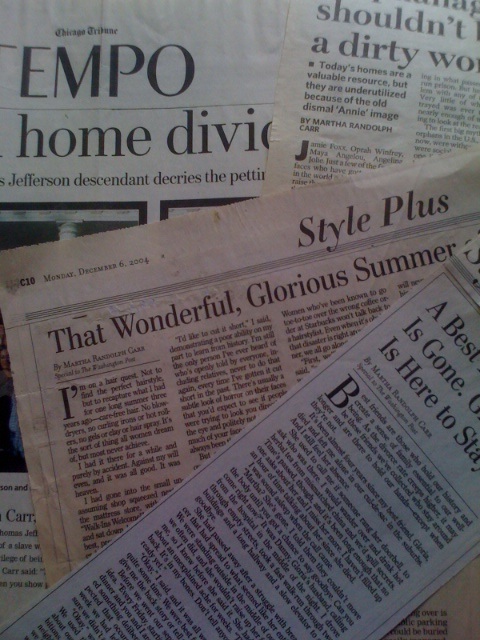
I am fortunate enough to be both a national columnist on politics and world events through Cagle Cartoons, Inc. and a blogger at www.marthacarr.com on writing, faith, and whatever wild adventure is going on in my life. This weekend that means a 5K followed by a second jump out of a plane. Don’t tell my agent. I’m celebrating learning to walk, and then run again after a whopper of a bout with cancer.

However, there has to be a question in everyone’s mind these days whether it’s worthwhile for writers to still strive to become nationally syndicated columnists. The decline of newspapers and the rise of blogs (like this fabulous one) must make people wonder if there’s a place for the journalist who provides content through a clearing house.

Both a column and a blog can become a source of income and it takes time for that to be true in both instances. There’s really no shortcuts, so that’s the same.

But despite all of the advantages to having a blog, and there are many, there are still some pretty big benefits to writing for others for a living.

  • Accountability – there’s a constant weekly deadline with a required word count. No longer and no shorter than 700 to 750 words. The grammar has to be correct, which means AP Style and the facts have to be checked and sourced. An occasional mistake is okay – it’s bound to happen – like the time I mistakenly wrote interred instead of interned. Just one letter off and I accidentally buried two people.
  • Editor – my column appears in about a thousand small town newspapers and some pretty big websites such as MSNBC, Politicus and Moderate Voice and so that means about a thousand editors are combing through the piece to make sure I’m not going to make them look bad. There’s also an editor at Cagle Cartoons that is reading the piece as well. Occasionally that means a conversation about a statement I’ve made, to make sure it’s correct and can I back it up with facts. That’s always in the back of my mind and keeps me rigorously honest. It also means I’m not going to reprint something I heard from friends, saw on the internet or even read in another publication if I can’t find original, reliable sources. Great training for every other kind of writing as well, including fiction. As writers, we want to get it right but knowing when to even ask a question or where to go takes practice.
  • Size of the Audience – These days a lot of syndicates, like Cagle, are going to a subscriber format instead of making their customers, the newspapers and websites, pay for each piece individually. They pay one flat fee and can use as much of the content as they want on any given day. That means I’m under someone else’s established banner and it immediately translated to a million new readers for me when I started three years ago, and now translates to four million readers a month in four different countries. I’m very big in India. Also at the bottom of every column, every week there sits my web address, an email address and the name of any recent book. It’s even better than a paid ad because all of these people already know me.
  • More Profitable Book Tour – Unlike a blog, my audiences are concentrated in large numbers in specific towns and I can design a book tour around that information. I choose to speak as fundraisers for nonprofits such as United Way and sell books afterward in partnership with a local bookstore as a way to raise funds. That also gives the newspaper that runs my column an opportunity to promote it for free, for me, and do some good work for their community as well.

If you are interested in getting started as a columnist, start by going local. That’s how I got started, at the Brunswick Times-Gazette, home of the world famous Brunswick Stew in Virginia. I still get the paper here in Chicago. They need your content and you in turn, can learn how to tell a concise story on a wide variety of topics while getting used to a constant deadline. Then after a year or more, take all of those clippings and start shopping larger newspapers individually and at the same time the big syndicates. Those clippings will tell them you can handle the basics and that you have a few things to say that are worth reading. If you want to know more on the topic, send me your questions at martha@marthacarr.com and let’s talk.

Q: Do you still read newspapers? If so, do you read a print copy or view the paper online?
Have you ever considered writing for your local paper? If so, what topics might you cover?

How to Find the Perfect Publisher

When I was getting ready to attend my first writer’s conference, I had a difficult time trying to figure out which publisher to pick for my editor appointment. I was absolutely overwhelmed. I didn’t know who would be the best match for my book, much less who would provide the type of professional working relationship that I needed.

I’ve learned a lot since then about what goes into finding the perfect publisher. In fact, the first thing I’ve come to understand is that there is no perfect publisher. Publishing houses are staffed with regular people like you and me. They’re not perfect. And as we all know, traditional publication is in flux. Changes are never easy on writers or publishing house staff.

All that to say, we have to go into the publishing experience with realistic expectations. We won’t find one perfect publisher. But we can work at finding the best match possible. And here are three ways we can do that:

1. Get an agent’s help.

Yes, you might be thinking. This is a no-brainer. Many writers want to hook up with an agent because an agent is usually the expert on the various publishing houses and what types of books they’re looking for.

However, there are times when an unagented writer catches the attention of a publisher or editor. In such cases, if a writer seeks out an agent before making any decisions with the publisher, the agent can offer advice, send the manuscript to other houses, and work at getting the best deal.

Agents are often more willing to consider writers who are garnering publisher interest. Let the agent know and follow up with them if they already have your manuscript. If you’re not getting through to the agent, enlist the help of a current client.

2. Research, research, research.

I cannot emphasize enough the importance of learning about various publishers you’re planning to target. And if you’re planning to publish without the help of an agent, then the research is even more crucial. I’ve talked with too many writers who’ve gone with small or subsidy presses and have had disappointing experiences.

There’s no shortcut to immersing yourself in the industry and learning all you can about publishers. Here are several ways to research:

  • Read books by the publisher(s) you hope to target.
  • Study different publishers and look at what most of their books have in common.
  • Check with authors who work with that publisher. Save this step until you’ve garnered interest from a specific publisher. Then you can email the author(s) to ask a few questions like: Were you satisfied with the editing? How much marketing do they offer? How well do they communicate?
  • Investigate the Preditors & Editors list. Google the publisher. Ask other writers on twitter or facebook their opinions.

3. Don’t try to fit a square peg into a round hole.

Some publishers are coveted more than others.Without naming names, we all know which publishers are bigger, more prestigious, and can do more for their authors in terms of advances, editing, marketing, and sales.

However, we can’t automatically assume that we should target the biggest houses. And we shouldn’t resort to smaller house only if the big deals don’t pan out. Our books are individuals and need personalized plans of action. There is no one-size-fits-all for publishing. We need to find the “hole” that matches our book.

What do you think? What are some other ways writers can find the best possible publisher for them? If you’re a published author, is your publisher a good fit? And if so, what did you do make sure you were a good match?

Post Author: Jody Hedlund

Jody Hedlund is an award-winning historical romance novelist and author of the best-selling book, The Preacher’s Bride, a Carol Award finalist. She received a bachelor’s degree from Taylor University and a master’s from the University of Wisconsin, both in Social Work. Currently she makes her home in Michigan with her husband and five busy children. Her latest book, The Doctor’s Lady, released in September 2011.

Preparing for an Interview

Writers pursuing publication should learn how to speak well.

I know what some of you are thinking.

Hey lady, I’m a writer. Not a speaker. 

Here’s the thing. If you are pursuing publication and your goal is to be a successful author, chances are, at some point, you’ll need to use your voice. And I mean your actual voice, not your writing one.

Radio interviews. Workshop presentations. Speaking to your platform. Pitching to editors and agents. I’m sure the list doesn’t end there.

My debut novel will release in May, 2012 with Waterbrook Multnomah (a division of Random House) and although it’s still ten months away, the marketing department is already discussing ways to promote my book.

Recently, I did an audio recording, or an interview conducted over the phone which will be shared with sales reps and retailers. It also might be used for promotional purposes later down the road.

The questions were deep. And I was nervous. I’d never done anything like this before and usually, when I get nervous, my voice gets shaky. And the shakier my voice gets, the more nervous I get. It turns into this whole vicious cycle.

But you know what?

It ended up being a really cool experience.

Here are some tips that helped me prepare, relax, and have fun:

  • Find out what you have to talk about and let the topic soak. I had to answer some pretty deep questions. Questions I didn’t know how to answer at first. Letting them percolate for a while helped when it came time to brainstorm.
  • Type your answers in a bullet point format instead of paragraph format. I wanted to sound conversational, not like I was reading. But the idea of answering from memory terrified me. I needed something to help me stay focused and avoid rabbit trails. So for each answer, I had a short list of bullets to reference.
  • Practice. This is key. Practice alone. But even more important, practice with an actual person. My husband was kind enough to ask me the questions, listen and offer feedback.
  • Time yourself. Attention spans only last for so long. The more concise we can be, the better.
  • The day of the interview, don’t obsess about it. Practice one more time. Then do something to distract yourself. For me, playing some good old-fashioned spider solitaire helped keep the nerves at bay.
  • When the time comes, take a deep breath, smile, and do your best! 
You can use these same tips for almost any speaking engagement. I know I went through a similar process when I prepared to pitch to Rachelle, my agent, and Shannon, my editor, at the 2009 ACFW conference.
• • •

How do you feel about this kind of stuff? Do you enjoy speaking, doing interviews, pitching to agents and editors? Have you ever had to do it? If so, how did you prepare?