I’m a disorganized perfectionist. Creative to a fault—I run off in a multitude of directions and suffer from the attraction of distraction. My husband loves to call me “bright shiny thing.” Whatever I’m doing can be interrupted by anything, and soon I’m involved in something and accomplish nothing.
This week my husband had enough. “Your piles of papers and stray books all over the house are driving me nuts! Can you please find time to go through and get rid of what you don’t need?” For some this request is an inconsequential written task on your to-do list. For me, well, you might as well ask me to strap an oxygen tank to my back and climb Mount Everest.
While organizing, I came across something so dear to me that I had to sit a moment and take it in. My journal.
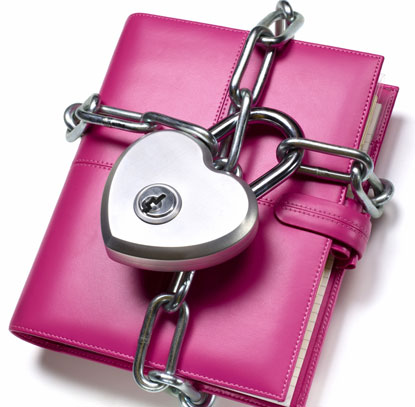
It’s misleading for me to tell you I found my journal, when really I have many journals. I was one of those little girls who kept her words in diaries, locked with tiny gold metal keys. Pre-teen angst over pimples and parents found sweet refuge on paper. As I grew in age, my journals grew in number. No longer confined to only one, as a young mother I purchased a new journal for each precious child inside of me. It was one of those journals I discovered while cleaning yesterday.
Holding the words of first-time parenting in my hands, this flowery-fabric-covered time machine transported me to the winter of 1991. As I turned the pages I felt the flutter of new life again, and could almost smell the Pampers and Desitin. Taking a deep breath, I remembered the anxiety of a twenty-something mother who worried over ear infections, allergic reactions, and kidnappers.
As a nonfiction writer, I write about marriage and parenting. What better tool is there than my journals? A smorgasbord of material—it’s a place where I can remember my fears and joys and reach my readers with real words and stories—family permission permitting. So, I thought I’d share a few ways I used my journals to author my first book, and a couple ways you can use a journal as a keepsake.
•Prayer Journal – I keep my prayer journal beside my favorite leather recliner in our family room. When I have my cup of tea in the morning, I jot down a few things that are pressing or maybe a scripture verse or quote that spoke to my heart. When I wrote my book I included a prayer at the end of each chapter. This journal was a helpful tool.
•Family Journal – Funny things my kids say, life experiences, favorite recipes can all find their place here. I recently laughed out loud after reading my journal entry when the kids were five and seven. Since I write with lots of humor, what a great help my kids and this journal are. I took the time to write random things I heard them say that morning. My favorite? “When smoke comes out of the hole, turn it off.”
•New Life Journal – When I discovered I was pregnant with each of my four children, I ran out and purchased a new journal. My words of love, joy, and their own baby milestones grace the pages. Now I try to write something each year around their birthdays. When they are married and expecting their first child, I plan on gifting them with this book from my heart, along with their very own blank journal to continue the tradition.
•Gratitude Journal – This season is the perfect time to write what you’re thankful for. Pass a gratitude journal around to your family and ask them to write something down and sign it. Are you hosting Thanksgiving? Leave it by the spinach dip where your guests can see it and add their own thoughts of thankfulness. What a precious keepsake.
As an author, I take great joy in hearing from my readers. When my words have helped bring a laugh, comfort or teach, I am elated. But, my first love is my family. I’ve always believed as a writer I’m cutting a path for my children. This gift of writing is for them first. When my last day on earth draws to a close, my legacy remains. My journals are a part of that legacy. My words on paper are the fingerprints of my heart, left behind to remind them how much they were loved.
What about you? Did you keep a diary as a child? Do you write in a journal today? If so, what do you record on its pages?