Goodreads

Here is some Social Media just for authors and just for readers. You are probably thinking, “Am I dreaming?”

No! It does exist, and it is an amazing place to devote time and energy. This little heaven for authors is called Goodreads. Goodreads has approximately 4.6 million users. While it may not seem to be as grand as Facebook’s 800 million users, these 4.6 million users are just on Goodreads as readers!

Goodreads is a place people go to only to think about reading. What an awesome concept. There are no random pictures of kids, like on Facebook, pictures of things you can’t afford like on Pinterest. Instead, there are readers, some virtual books shelves, and people talking about BOOKS!  Think about this as Facebook just for authors and their audience.

What are some of the things that you can do on Goodreads?  You can create an author page that “fans” can share with others.  Within Goodreads, you can also start pages specifically for your book. ( I do not encourage people to start book pages on Facebook, just fan pages.  But on Goodreads, you can have both, and they link back to your author page.)  It’s designed just for you, the author. You can easily chat with your readers, add video clips, and link it to your Facebook and/or Twitter pages.

I recommend to authors that they spend money on Facebook, programming a page with their books, so it directs them to buy the author’s books. If you are an author with many books, start a store on your fan page. Goodreads does this for you! (Score!) If your book is on Amazon or Barnes and Noble, it is automatically connected to Goodreads.

Goodreads is super user friendly and very intuitive.  When you sign in, there are tips and tricks that are posted on their pages everyday.  It will give you more ideas and walk you through the site.  This makes it very easy to learn and be more adept in controlling the site. Have fun with this site, and don’t just put your books on it, but really get involved. Dialogue with friends, readers, and other authors.

These were my three tips from Goodreads when I signed in today.

My personal favorite thing on Goodreads is their quote section.  You can add quotes from your book or quotes from your favorite author. I love to search the quotes by words and topics. There are no ads with these quotes, and it is such a great resource for writing. Quotes are also a good way to promote yourself!

Goodreads is definitely a top social networking site for authors.

Go here to start your adventure as a Goodreads author. Also, here is some great information about how to effectively utilize all that Goodreads has to offer: Using Goodreads to Promote Your Books

Have you been using Goodreads to promote your writing? How so?

How to Plot by the Numbers

Plotting By the NumbersShow, don’t tell. Watch your participial phrases. Don’t head hop. Whatever you do, stay within manuscript length recommendations. For a writer scrambling to keep up with all the dos and don’ts, the writing profession can seem full of arbitrary rules. And when someone breaks said rules and goes on to win awards, it’s tempting to follow suit. One standard you shouldn’t buck, however, is a publishing house’s word-length requirements.
Why? Shouldn’t you let your story tell itself without regard for its length?

If you will be the one footing the bill, you’re free to make your manuscript whatever length you prefer.  But if you hope a publisher will pay to produce your book, it’s important to understand that additional pages cost extra money, and not just in terms of paper and ink. It takes several editors (who are on the payroll) to review and guide you in polishing a manuscript. Proofreaders don’t work for free either. If your last name is Tolstoy or Michener you might get away with submitting a beefy manuscript. The rest of us need to keep the bottom line in mind.

Book stores base the number of copies of a particular title to order on standard widths. If a publisher fails to adhere to these widths, it throws off a bookstore’s shelving efforts. Besides this, writing your novel shorter or longer than genre readers expect can negatively influence their buying decisions.

Aren’t these considerations crass? What about your inner artist?

Your inner artist will recover, and you’ll even grow as a writer from keeping to practical guidelines.

But how on earth can you tell how long a novel will be until you’ve written it?

You can’t know entirely, but I’ve developed a method that helps me write to a specific length. Even if you’re a seat-of-the-pants writer and allergic to plotting, my technique may help you. Here’s a screen shot of one of my working calendars. CS stands for my current novel, and the number represents the scene I’ll write that day. (I number them in my plot outline.) I find it helps to include upcoming deadlines and events as well. The DS represents DawnSinger, the first novel in my epic fantasy series, Tales of Faeraven. The Renewal mentioned was a conference I attended.

Sample Scene Calendar

1. Estimate your desired word count. If you don’t know what that might be, read publishers’ submission guidelines at their sites. As a starting point, here’s an agent-maintained list of word count guidelines. Find the happy middle ground in a given range. That way you can guard against running too-short or too-long.

EXAMPLE: A publisher gives the range of 80,000-100,000 words for a historical romance. The middle ground to aim for is 90,000 words.

2. If you already know the average number of words you write per scene, use that figure. If you don’t know this number, write the first 50 pages of your book, then estimate the average number of words per scene. You can also base your figures on 1,500 words per scene, but eventually, you’ll want to check your own average against this figure and make adjustments as needed. It’s okay to round your numbers.

EXAMPLE: Approximately 12,500 / about 8 scenes = 1,500 words per scene

3. Divide your average words per scene into your desired total word count. The answer is the number of scenes to brainstorm.

EXAMPLE: 90,000 / 1,500 = 60 SCENES

4. Develop your plot to include the number of scenes you should write for your desired total word count. Write just a few sentences to describe each scene. This keeps you from bogging down while plotting and gives you a flexible guideline you can easily adjust as you write.

What’s next?

To learn more about my system of plotting, read How to Plot a Novel in Three Acts at my Live Write Breathe site.

Are you more of a plotter or a seat-of-the pants writer?

How Input Affects Output

I felt it sneak around the edges of my concentrated efforts. My lashes blinked faster. My lids now fought when I struggled to lift them off my eyes. A light sheet of brain-fog settled over my mind.

Afternoon fatigue had arrived. And it threatened to keep me from writing the scene on the screen before me. How would I finish without falling asleep?

Too often, I fight a common battle when I finally get a few snippets of time to write. But instead of grabbing a caffeine loaded, sugared up, fattened calf kind of snack, I’ve found a few quick solutions that allow me to treat my body with the respect it needs to function at optimal efficiency.

1) Eat nutritious vegetables or fruit. In particular, I’ve found the following have fabulous energy boosting properties for my body chemistry. Literally within seconds, I can feel a renewed focus and am able to write well. My faves include, red, orange, or yellow peppers, V-8 juice, grapefruit, oranges, watermelon, tomatoes, sweet potatoes, cucumbers in vinegar, cantaloupe, and celery.

Fruits & Veggies Energize Writers
Fresh Veggies and Fruit Energize

2) Get out in the sun. A few minutes of vitamin D rich sunlight is just the ticket to get my blood pumping and my thoughts racing.

Vitamin D Wakes Writers Up
Sunlight – Natural Inspiration

3) Drink water. When writing, we often don’t want to interrupt our thoughts, so dehydration is a big problem for many writers. Most people assume they need caffeine when exhaustion strikes — in reality, dehydration is often the culprit behind your fatigue. Science shows that water wakes us up.

Hydration Hydrates our Brain Cells
Water Wakes Writers Up

4) Take a nap. Though I fight it, sometimes a ten minute nap works miracles. A few moments of shut-eye gets me going again. (I find I need to set the alarm on my phone, so I can actually nod off. Otherwise, my fear of over-sleeping keeps me from getting the rejuvenating rest I need).

Naps Help Writers
Nap Time for Writers

5) Go for a walk. I plan this powerful method of staying alert into my writing schedule. It’s part of the formula I follow to get words on the page. Having an intended break gives me something to look forward to and pushes me past the humps. A good walk gets my blood flowing, my muscles heated, my cells active, and my thoughts fired up.

Walking Wakes Writers Up
Walking Stirs Creativity

6) Take prayer and Bible reading breaks. A few minutes spent with the Master Author infuses me with energy and inspiration. Nothing like purpose to light me into action.

Prayer and the Bible Inspires Writing
Pure Inspiration

Before fatigue wraps itself around me like a constricting serpent around its prey, I need a plan to fight back. I find the list above gives me exactly the input I need to affect my output in positive ways.

Here are some other great tips to help you battle afternoon fatigue.

What ways do you battle exhaustion when it threatens to hinder your writing?

Find Your Writing Passion


Some writers try their wings to see if they can make it as writers. They give it a year, five years, maybe even ten, thinking if they aren’t published by this time they will give it up. Why waste your time, energy, and money on such a hard and often thankless occupation? If you can quit writing, DO IT NOW now, and put yourself out of your misery.

Others write because we must. Writing helps us think and remember information. Writing helps us generate ideas and organize our thoughts. We write to make sense of the world.

What is your passion?

What is something you alone can share?

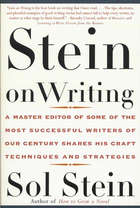
A lesson from page 210 of Stein on Writing, used with permission from Sol Stein:

“I ask you to imagine yourself on a rooftop, the townspeople assembled below. You are allowed to shout down one last sentence. It is the sentence that the world will remember you by forever. If you say it loud enough, everyone in the world will hear you, no matter where they are. What one thing are you going to say?”

Is your sentence one that could have been said by any person you know? If so, revise it until you are convinced no one else could have said that sentence.

When you have reworked your original sentence, consider these additional questions:

Is your sentence outrageous? Could it be? Is your sentence a question? Would it be stronger as a question?

Would the crowd below cheer your sentence? Can you revise it to give them something they’d want to cheer?

Suppose the person you most love in all the world were to strongly disagree with your sentence. Can you answer his or her disagreement in a second sentence?

Has your second sentence weakened your first? It usually does. If so, make it stronger than the first.

You now have the option of choosing one of the other sentences. There may be value in combining and condensing them.

You look down and see only one person, your greatest enemy, who says, “I didn’t hear you. Would you repeat that?”

Can you alter your sentence so that your statement will be enemy-proof?

Suppose you found out that the only way to get your message across would be if you whispered your sentence. How would you revise it so that it would be suitable for whispering?

Look at all the versions of your sentence. Is there a prior version that is actually stronger than the last? Can the virtues of one be embodied in another? And most important, which sentence now strikes you as the most original, the one least likely to have been written by someone else?

This exercise will direct you to a theme or expression of a theme that is uniquely yours.

Q4U: Most writers are introverts. If this is true for you, what subject will prompt you to talk or write?

With Us Here Tonight

Shortly after my first book was published, I gave a book talk at our local library.

Then I gave another talk at another library. And then a third library.

Then a Rotary Club called me. A few months later, I found myself the featured speaker at a Shriners dinner. Last month I presented a talk at the National Eagle Center. Birding festivals, book conferences, annual meetings, schools, service organizations–I’ve addressed them all.

Wait a minute. I thought I was a writer, not a speaker.

Guess what? Book authors get to do both!

The fact is, you NEED to do both if you’re going to successfully build your readership and market your writing. That means you should work on your public speaking skills, and the best way to do that is to take every opportunity you find for a speaking engagement. Develop the following five types of speeches, and you’ll be ready for anyone!

The Sound Bite is the one you will use a bazillion times. It’s the one-liner you’ll utter every time someone asks you what your book is about. It’s also one of the hardest to compose because you need to distill your book and its value down to one sentence. My sound bite for my series is “The Birder Murders is a humorous series about a really nice guy who happens to find bodies when he’s out birding.”

The Book Talk is the speech that focuses on your book’s content. If it’s nonfiction, you can give a general review of the topic itself, or focus on just one chapter’s point and why it’s important. If it’s fiction, you discuss characters, their relationships, the plot, how you came up with all of it, what you want to accomplish with it. This works best with audiences who have already read your book because they will have questions about what they’ve learned and/or enjoyed from reading it.

The Business Talk is about your experience with the publishing business of being an author. The changes we’ve seen in publishing, including the growth of e-books and marketing paradigms, is a topic that appeals to audiences composed of business people or future authors.

The Writing Talk is about your own process of writing a book. Do you do research? Conduct interviews? Journal or set word goals? The beauty of a Writing Talk is that it is appropriate for a variety of groups, and depending on the slant you give it for the group you’re addressing, it works equally well as a classroom talk, a keynote address for a gathering of library supporters, an awards speech, a writers conference, a book club… you name it.

The Topic Talk is the newest talk in my own arsenal of speeches. Because my books are about nature, I’ve started giving talks about nature education and conservation issues. If it is mentioned in my books, it’s fair game for a talk and a great way to use extra research.

Here is a great resource to help you to continue to develop your public speaking skills.

What talks could you present for your book? Do you have any ideas for talks that I have not mentioned?

The Art of Bloodletting:Translating Suffering to the Shared Page

“The only books worth reading are books written in blood.” –Frederick Buechner When suffering strikes, we are often silenced by pain. In such times, the act of writing may feel frivolous, exploitative, or irrelevant. Yet it is these dark, raw places of our lives that most demand our full attention, our most artful labors. We must steward the afflictions God has granted us. We may remain silent in the midst of it, but at some point we must write. Patricia Hampl reminds us of the responsibility that comes with our experiences: “We do not, after all, simply have experience; we are entrusted with it. We must do something—make something—with it. A story, we sense, is the only possible habitation for the burden of our witnessing.”

Dan Allender, in “Forgetting to Remember: How We Run From Our Stories,” tells us what happens when we ignore the hard events in our lives: “Forgetting is a wager we all make on a daily basis and it exacts a terrible price. The price of forgetting is a life of repetition, an insincere way of relating, a loss of self.” How then do we begin to write from within our afflictions? And how might the practice and the disciplines of writing offer a means of shaping our suffering into meaning for both writer and reader? Forgive the brevity and oversimplification, but here’s what NOT to do and why:

1. Don’t write to heal. Our therapeutic culture urges us to write into our pain as a means of self-healing. Newsweek’s article, “Our Era of Dirty Laundry: Do Tell-All Memoirs Really Heal?” rightly questions this cultural assumption. I have mucked through some hours and days of writing that were hellish. Re-living an experience with language and full consciousness is sometimes worse than the original event. Recognize that writing into affliction brings its own affliction. And even more importantly, recognize that when we are predisposed to heal ourselves, we will not be fully honest in the writing. Healing will likely and eventually come, but only as we engage with the hardest truths.

2. Don’t write to redeem, to turn inexplicable pain into sense and salvation. We want to bring beauty from ashes. We want to make suffering redemptive to prove its worth. But this is God’s work, not ours. Our first responsibility is to be true to what was, to witness honestly to what happened. Our job is not to bring beauty out of suffering but to bring understanding out of suffering. Poet Alan Shapiro argues that “…the job of art is to generate beauty out of suffering, but in such a way that doesn’t prettify or falsify the suffering.”

3. Don’t write for yourself alone. This is not just about you. You are working to translate suffering to the shared page. Buechner reminds us of the universality we should be striving for: “…all our stories are in the end one story, one vast story about being human, being together, being here. Does the story point beyond itself? Does it mean something? What is the truth of this interminable, sprawling story we all of us share? Either life is holy with meaning, or life doesn’t mean a damn thing.”

Writing can begin here, in the self, but should consciously move us beyond ourselves, to place our story into the larger stories around us, and ultimately, into the grand story that God is writing. The most powerful work comes from a “self that renders the world,” as Hampl has said—not just the self that renders the self.

Life is holy with meaning. Pain is holy with meaning. Don’t miss it. I pray for you the strength and faith and wisdom to begin to enter those hard places and to translate your suffering onto the pages we share—for the good of all, and for His glory.

How have you been able to translate your suffering into your writing?

Agent Expectations and Priorities, Part 1

When I first started agenting full-time in 1994 there were five other agents serving authors of faith. It was a relatively new phenomenon in Christian publishing, and not always appreciated by publishers. Some even had unwritten polices about not working with agents. Now there are about 100 agents serving Christian authors in one way or another. Today, most publishers won’t work with an author unless they’re represented.   I know many of the agents, and like most of them.  And while we all do similar work, our styles and priorities aren’t all the same.

So what should you expect from Barbara, Sarah and me (as the leader of this particular agency)?

Here’s what I’ll be doing nearly every day of the week (in general order of importance)…

  1. Negotiating and processing contracts: When a work-for-hire agreement needs to be written or a publishing contract needs working over, this is what I do first (for the whole agency). It’s what authors need and want, and what an agency ought to put on top of the stack each day.  In the last few months it seems most publishers have gone to a new boilerplate contract. That means I’ve got to renegotiate my agency boilerplate with them line by line, a time-consuming task, but it is the top priority for authors. There are typically nuanced changes that have to be made depending on whether it’s a fiction or a nonfiction contract. The rights issues in the changing face of publishing means I have to be extra diligent.  Negotiations often take several weeks because publishers put projects in line. That means after I get a draft (anywhere from 10-30 days), then I respond back within a day or two. Then it gets back in line again before they respond back, then I respond back…then it gets in line. You get the idea. Contracts take time and shouldn’t be rushed.
  2. Reading client proposals:  A close second in importance is fine-tuning new proposals.  There are always about five to ten projects I’m getting ready to pitch at any given moment (Barbara and Sarah the same).  So when you send me your new proposal, it gets in line behind the others ahead of you. It often takes two to three weeks or more before I get it back to you with edits, but publishers are expecting excellence in proposals these days, so we take our time, going back and forth with the author, to make them as close to perfect as we can. We only have one opportunity to pitch your proposal, so making it top-notch, based on our experience, is vital.  And, yes, time-consuming.
  3. Submitting proposals:  Writing or editing a pitch letter, picking out editors to send the project to, following up on the myriad of questions editors have…this is the lifeblood of any agency.
  4. Client work:  Returning client’s emails and phone calls is a huge priority with me.  My answers may be short and to the point, but I am a responsive agent, usually getting back to clients in 24 to 48 hours.  Calls with marketing directors on upcoming releases, career planning meetings and author phone calls, going over royalty reports, plus dozens of other client-related busy work details fill up a good portion of my day.

Next month I’ll share a few more of my priorities and then a couple of items that are clearly NOT what I want or have time to do.

What do you want your agent to prioritize for your career?

How I Learned to Beat Writer’s Block

Image Credit: Studio-Annika / http://www.istockphoto.com/user_view.php?id=773765My first year as a soon-to-be-published author was nothing less than a baptism of fire.

When I received my contract to write How To Do Everything with HTML, I had no idea what I’d gotten myself into.

Oh, I knew I was going to write a computer book.

What I didn’t know was that the whole process would be done at a pace that bordered on insane.

Because technology changes so quickly, computer books are produced on a much faster timetable than other books. Otherwise, they can be obsolete before they ever hit bookstore shelves. The ink on my contract had barely dried when my editor e-mailed me and asked me to develop a chapter delivery schedule.

I had 20 weeks to write a 600+ page book.

If that weren’t stressful enough, I discovered that the entire writing, editing, rewrite, and proofing process would take place simultaneously.

It went something like this: For week number one, I had to write my first chapter. That included more than just writing the text. I also had to develop the HTML code. And I had to design and create all my own illustrations. After I turned in chapter one, the next week I turned my attention to the second chapter.

Like chapter one, I had to write the text, code, and illustrations. But I also had an additional task.

I had to incorporate tech edits for chapter one.

The publisher had graciously hired a technical editor who went through my HTML code and found all the bugs. Then he kicked the file back to me so that I could fix it. Thus, in the second week I had to write a 20-30 page chapter, create the computer code, design and produce my own illustrations, and incorporate the tech edits from chapter one.

Then things got even more challenging.

By about the fifth week I began to receive copy edits. So now my weekly workload involved writing a new chapter, developing the HTML code, designing and creating my own illustrations, incorporating tech edits from previous chapters, and reviewing copy edits from previous chapters.

I didn’t think it could get any worse.

It did.

About three quarters of the way through the project, page proofs began to come in, chapter by chapter. So in the last month or so, every week I had to write a new chapter, develop code, design illustrations, fix bugs, review copy edits, and correct page proofs.

It was like running down a railroad track with a mountain on one side, a cliff on the other and a locomotive breathing down my neck.

By the time I reviewed my last page proof, I felt like I’d just finished the writer’s version of the Ironman triathlon. I breathed a huge sigh of relief when I sent off that final file.

A sinking feeling followed that sigh of relief.

I was ready for a long rest, but that would have to wait. About halfway through the project I’d suggested an idea for a follow-up book on Cascading Style Sheets (a related language that works hand-in-hand with HTML). The publisher liked the idea, gave me a new contract, and told me to get started right away.

For another 20 weeks, I kept running down that railroad track.

It was an exhausting process, but I’m thankful that my first books were produced this way. The schedule was brutal, particularly for a brand new writer. But I learned a valuable lesson.

I learned that I never need to let writer’s block defeat me and that I can produce consistently every week. There were many days when I didn’t feel like writing. However, because of the breakneck pace and tight production schedule, I didn’t have time to wallow in self-pity or give in to writer’s block.

I had to produce.

If I gave in to writer’s block, then the next week I would have twice as much work.

And so I wrote.

For me, writing two computer books in the space of nine months was like boot camp. The publisher put me through the wringer.

But in the process, I learned how to deal with writer’s block.

I sit down and write.

Do you struggle with writer’s block? Or have you developed a way to deal with it?

From Self-Published to Contracted Author (In Ten Thousand Easy Steps)

Five years ago, when I attended a Harvard University writers’ workshop for medical doctors, I was one of the few in attendance who actually had an edited, polished, pitch-ready manuscript in hand. But, still, I left that meeting with no agent and no publishing contract. The reason is I didn’t have a media platform.

Right or wrong, after that meeting, I decided to self-publish. I figured it would be easier to build my platform once I had a tangible book in-hand, and the fastest way to turn my manuscript into a tangible book would be via self-publishing. I thought, “I can always sell my book to the publisher later, if it succeeds,” and “How hard could it be to self-publish and succeed?” Little did I know how much work the whole venture would entail.

Over the following year, I hired freelance editors and artists to tweak my book into publishing house quality. I even started my own publishing LLC, so I could print my books via Lightning Source, Inc. and get them into the warehouses of the major distributors like Ingram and Baker&Taylor.

Next, came the marketing. Ugh! Being that I had no contacts in the media, I still don’t understand how I landed those first few radio and TV interviews. Okay…I confess. Maybe it had to do with me calling the stations and saying, “Hello. This is Dr. Rita Hancock. I need to leave a message for [the producer’s name], so please connect me to her voice mail.” It’s not my fault if the receptionist put me through because she thought I was calling to leave pregnancy test results. It’s not like I implied that exactly.

During this platform-building year, I also built my book’s website and online interactive support forum and began sending out monthly newsletters, answering questions on “Ask the Expert” websites, and utilizing pay per click advertising to drive traffic to my website.

Eventually, thanks to the platform-building, I landed both an excellent agent and a contract with a bona fide publisher. However, what came next utterly shocked and disappointed me. I didn’t yet know the adage “The top 20% of the authors get 80% of the marketing dollars.” Being a newbie author, I was left almost completely on my own to market. In a sense, it was “do or die” for my writing career. So, over the subsequent few years, refusing to “die,” I redoubled my efforts and took media training classes, learned how to write press releases, secured book endorsements, cross-promoted with other Christian authors, and built up my presence in social media like Facebook and Twitter.

I hoped that through these continued efforts, I would eventually be in the top 20% on some publisher’s author list—if not on my first book, maybe on my second, and, if not with my first publisher, maybe with a different publisher. And that’s exactly what happened. One day, during a conference call over my second book, I heard the publisher say what sounded like music to my ears. “Dr. Hancock, we’re prepared to put a lot of money and a lot of energy into promoting your next book.” Amazing! All that hard work finally paid off, and it took only ten thousand easy steps to get there.

What steps are you willing to take to promote your book?

Writing Giants

Surf the web and you will see that the subject of writing is well-charted territory. No matter what your goal, a how-to manual is there to support it. Need to write grant proposals, company newsletters, technical manuals, instructional design or academic materials? Industry experts abound to provide a sea of knowledge about any aspect of writing imaginable. For advice on how to create fiction, it seems logical to consult some of the successful authors and writing giants among us.

As I began researching books on writing by authors, Stephen King’s On Writing: A Memoir of the Craft kept appearing on the horizon. I extrapolated all that I could from that book and have started recommending it to other writers. Some of his tips include writing the first draft of a manuscript with door closed, consulting an ‘ideal reader’ that represents the audience, writing consistently each day (1,000 words or more), and writing about what the writer really knows, because that is what makes a writer unique. I’ve been applying King’s techniques into my writing regimen whenever possible. With over fifty worldwide bestsellers in his wake, clearly he knows what he’s doing.

Another writing giant willing to share his techniques is Ray Bradbury, who still cuts quite a swath. The Illustrated Man, Fahrenheit 451, Dandelion Wine and his other stories will forever swim in the waters of literature.  Bradbury’s book for aspiring writers Zen in the Art of Writing is full of sage advice. He suggests that people write about what they love or what they hate because that conviction and passion is crucial to the story. He advises authors to run after life with fervent gusto, to pursue their interests, and write about the things that make them happy.

Starting out, even surfing small literary waves can feel like riding giants. I’m getting more comfortable with what lies beneath (although it’s harder than it looks).  King and Bradbury cared enough to show the rest of us that it’s possible to conquer the sea, and when you do, an ocean of opportunity awaits. Besides, what one person can do, another can do.

Are you ready to paddle out?