How to Write a Book in 3 Months

The following post comes from WordServe author Cassandra Soars. 

notes-514998_960_720

The first book I wrote (Love Like Fire: The Story of Heidi Baker) was a ten-year process, from the day I started my research to the day it was published in April 2016. But I’ve recently discovered that writing a book doesn’t have to take that long. When a filmmaker hired me to write a book for him, I discovered some helpful tips for writing a book in draft-form in three months.

  1. Write what you know. If your project involves a lot of research, do your research first, then put it away. There will always be more to learn, and you will never feel like an expert. At some point, you need to put away the research and write from what you have learned and what you do know. Writing what you know is always easier than writing what you don’t know.
  1. Don’t try to write and edit at the same time. I have one friend who constantly studies plot and form while she’s writing, and needless to say, her process takes much longer and is much more complicated since she’s always analyzing and second-guessing her first draft. I’ve found that writing and editing are two completely different processes that use different parts of the brain, and it’s best to keep them separate. If you try to edit while you’re writing that first draft, your process will take much longer.
  1. Don’t be afraid of a bad first draft. A first draft is not going to be your best work. It probably won’t even be good. Don’t worry. Give yourself the freedom and permission to get the story down on the page, no matter how bad you think it is. After you have an entire first draft, then you can start editing. This is where you can make it shine.
  1. Give yourself deadlines. If you want to write a book in three months, give yourself a daily word count. For a longer book of around 90,000 words, set yourself a daily goal of writing 1500 words a day, 5 days a week. This will give you 30,000 words a month, and within 3 months, you’ll have written your book. For a shorter book of 60,000 words, your daily deadline is a word count of 1,000 words a day, 5 days a week.
  1. Be consistent. You don’t need to wait until inspiration strikes. If you make it a routine to sit down at your desk daily, even it’s only for an hour, you will find that there is always something that you will feel like writing about. Go with that—and give yourself permission to not follow your writing outline. Write about what you can connect with emotionally that day. Your emotion is transferred through your writing; if you feel it, so will your reader.

The best writing advice I ever got was from a college writing professor who told me that he writes a book by writing one chapter at a time. He showed me his file folders, individually marked by chapters. When he finishes writing one chapter, he puts it away in a file folder, and then starts the next chapter. Take it a chapter at a time. Don’t overwhelm yourself by thinking about the entire book at once.

cassandrasoars-201x300Cassandra Soars has published various national magazine articles on a wide range of topics, including life in Mozambique, Africa, where she lived for five years. She has a master of fine arts in creative writing from the University of Pittsburgh. She also earned a master’s degree in international development from the University of London’s prestigious School of Oriental and African Studies. Cassandra and her husband Steve recently founded a social media site for couples called iheartus.com.

WordServe News: November 2016

Exciting things have been happening at WordServe Literary this month!

On the final post of each month you’ll find a list of Water Cooler contributors’ recently released books along with a recap of WordServe client news.

New Releases

overachieving-your-platform-coverThe second book in the Best of the WordServe Water Cooler series released this month! Overachieving Your Platform: 95 Ideas to Embrace Your Inner Sales Marketing Genius offers advice on how to break out and build a platform that really works–with proven advice from more than 30 WordServe authors. This is one no author can afford to miss!

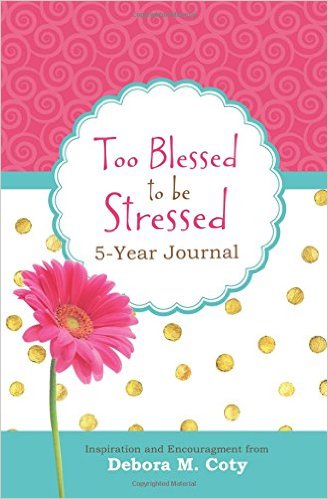
51iimzzhitl-_sx326_bo1204203200_Debora Coty released the Too Blessed to Be Stressed 5-Year Journal with Barbour. Overflowing with encouragement, inspiration, scripture selections, and humor just for your beautiful heart, this journal offers a special place to record your innermost thoughts and feelings, life’s lovely blessings, and anything else that might be on your mind.

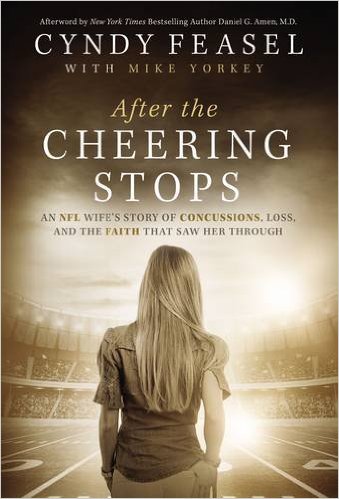
51yps1r2krl-_sx337_bo1204203200_Cyndy Feasel, with Mike Yorkey, released After the Cheering Stops with Thomas Nelson. Cyndy, wife of the former NFL player Grant Feasel, tells the tragic story of her family’s journey into chaos and darkness resulting from the damage her husband suffered due to football-related concussions and head trauma—and the faith that saved her.

61prwmw9bul-_sx385_bo1204203200_April Knight released ScriptureDoodle: God’s Promises with David C. Cook. This six-week devotional experience refreshes believers who are feeling burned out or stuck in a rut in their relationship with God. Each of the creative worship prompts in the interactive guide includes biblical encouragement and ideas for worship through art.

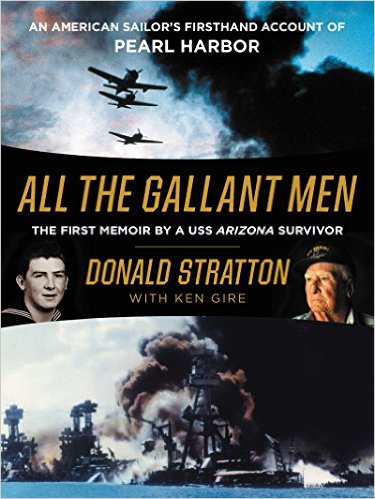
51uak9vgbsl-_sx373_bo1204203200_Donald Stratton and Ken Gire released All the Gallant Men with William Morrow. The first memoir by a USS Arizona survivor, this is a gripping and intimate account of Donald Stratton’s experience at Pearl Harbor, where a million pounds of explosives were donated beneath his battle station aboard the Arizona; his year-long recovery from burns to most of his body; and his re-enlistment with the Navy to serve in several additional naval battles.

New Contracts 

Craig Chapman signed with Regnery Publishing for his book, Battle Hardened, the story of his father’s combat journey across Europe from D-Day to VE Day.

New Clients

Kevin Keating and Bonnie Kristian signed with WordServe Literary this month.

The Joy of Writing

I’m not sure what surprised me first — the fact that my business coaching client turned non-writing friend answered the question intended for me, or how he responded.

Lake Superior Anita Brooks Photographer
Anita Brooks’ Lake Superior Reflection

From the dining room table, I glanced through the picture window at the full moon reflecting over Lake Superior in the distance. After finishing three days of intensive review with the four partners of my latest business coaching project, the mood was relaxed, while the five of us savored plates piled with steak and king crab. It was in this moment of celebration when one of my coaching clients leaned forward and asked me, “Do you enjoy writing?”

My mouth opened, but his partner’s voice sounded before I had the chance to speak. “Not anymore, now that you have to work at it. It’s different when it becomes your profession.” A sheepish blush crept across his rounded cheeks. “At least, that’s what I imagine.”

An awkward pause followed his interjection, but I didn’t allow it to languish long. I smiled to let him know we were okay — after all, I’ve made the mistake of answering for others.

Then I turned my attention to my other client. “Actually, it is different now that I write professionally, but I still enjoy it very much. I’d be lying if I said every minute felt good, but it’s like any difficult thing we accomplish. There are times I think about walking away, when things aren’t going smoothly, when I get bored, when I feel overwhelmed, when I despise the way my words come out on a page, and when I think about the investment cost of time, energy, and money. But the negative emotions don’t last. I can’t imagine doing anything else. A soul-deep, intrinsic drive pushes me to write, I’m compelled to do this, despite my finicky feelings. And reader responses make it all worth while.”

Intrigue was obvious on my client’s face. “So people actually contact you?”

I chuckled, but it echoed off as my thoughts turned to some of the specific readers I’ve heard from. I could feel a hot glistening around the edges of my eyes as I began to answer. “It has surprised me at how many people have emailed and sent private social media messages. Nothing compares to the power of knowing words you penned touched another human being.”

“What’s the best thing a reader has told you?”

Anita Brooks Plane Wing in Flight
Writing and Reading Are Uplifting Experiences

I dipped a piece of crab in melted butter and slipped it in my mouth before answering. “Probably not what you think. A lady emailed to tell me she bought a copy of Getting Through What You Can’t Get Over in an airport on the east coast. She started reading on the plane, and said it hit some tender spots, so she closed it and vowed not to finish. But when she got home, she said, “That book kept calling my name.” That’s when she picked it up and began reading again.

In her email she said, “PLEASE forgive me, but a couple more chapters in I threw your book across the room, but only for a few minutes, because I couldn’t help myself, and had to go get it. I just finished reading the entire thing for the third time. THANK you! Your book saved my life.”

As I heard myself telling this story to my clients, I realized something afresh.

Goodreads Review Getting ThroughYes, the writing is hard at times. There is no doubt my emotions can lead me temporarily astray. However, as a professional author, I DO still enjoy writing as well as having written — because I understand the impact my words can make.

The greatest joy of writing comes from knowing I was made to do this, and that others are helped because I act despite my fears and insecurities. Many think, dream, and fantasize about writing books, but there is no greater joy than realizing I am an honored member of the club that says, “I did.”

Have you discovered the joy in writing?

Writing for a Superlative Culture

We are an -est society.

Happiest. Saddest. Loneliest. Hardest.

I recently returned from a trip overseas and I was asked, by various people:

“What was your hardest time?” “Give me your happiest vacation memory.”

I had to stop and ponder.

Was the happiest moment when my husband captured a photo of a monkey trying to find another banana under my hat? Was it scuba diving in the waters of Nirwana Beach off the coast of Indonesia? Or climbing the slopes of Mt. Batur for the sunrise and being served tea heated in the steam vents from this still-active volcano?

Monkey Forest

Was the hardest moment going days and days on limited sleep as my body refused to adjust to the fourteen-hour time difference? Or when a person on our team was diagnosed with dengue fever? Or the humbling moment when I realized our young guide didn’t read or write?

I found myself in a quandary as I sifted through my mind to try to come up with the -est story. Not sure if the tale I was contemplating qualified for the perimeters or was just an average, good story, I found myself silent.

We live in a culture of superlatives. Highest. Lowest. Hottest. Fastest.

Yet, as writers, the challenge remains to take what has been written a thousand times before and make it fresh. To take the mundane and ordinary and breathe new life into the sentences. To find a new way to write about a sunrise. Or washing the dishes. Or camping out under the stars.  Skill is necessary to take the images and everyday events and draw the reader into deeper emotions. To tell again the story of love. Of grief. Of redemption. Of faith.

I have lived for over thirty years in Arizona. Same house. Same church. Same husband. 

Same desert.

I have hiked the trails surrounding Phoenix and beyond. This permanence allows me to write from a deep sense of place, yet I am still discovering new things in this desert home.

Earlier this summer I was working on a piece about palo verde trees and needed a photo. The palo verde tree has green bark with each twig terminating in a thorn. The palo verde lives up to its Spanish translation of “green stick,” as the tree tosses aside all its leaves during times of drought. The tree sprouts tiny leaves after rain, but can perform photosynthesis through its green bark, even when leaves are absent.

I needed a photo of the tree after rain. I didn’t have one. Thirty years of hiking in the desert and I didn’t have a photo of a palo verde, one of the most common trees in our area. I had sunsets. Sunrises. Mountain peaks. Cactus. Wildflowers in abundance.

I had photos of the driest. The tallest. The orangest (this should be a word).  But not one picture of the ordinary palo verde with its amazing green bark. (A fact I remedied the next day.)

trunk of a palo verde tree

Thoreau once said that because he could not afford to travel, he was “Made to study and love this spot of earth more and more.” 

Ah, this is our challenge. As our readers settle into the pages, can we–through our words–make them love and study the spot we describe more and more? This story of reunion? This story of loss? This story of returning to God? 

This story of the ordinary and mundane? A story that has nothing to do with volcanoes or monkeys or strange tropical diseases.

A simple story of a tree that sprouts tiny leaves after the rain.

palo verde after rain

Lynne Hartke writes stories of courage, beauty and belonging at www.lynnehartke.com. Her first book about the faithfulness of God in the hardest places is coming out with Revell in 2017. She lives in Chandler, Arizona in the Sonoran Desert with her husband, Kevin. Their 4 grown children and 3 grandchildren live nearby.

Pitching an agent? Read these query letter tips…

student-849825_960_720In my work at WordServe, I read a lot of query letters and book proposals (sometimes more than 100 in a week!) that come into our agency. And in my work as a freelance editor, I often help clients develop their proposals and queries before they submit them. After reading hundreds of pitches across every conceivable genre and topic, I’ve come to notice a few significant Do’s and Don’ts that can make or break whether an agent is going to read any further. If you’re newer to the world of publishing and hoping to get your book noticed, perhaps a few of these will be helpful to you the next time you’re putting together your pitch to an agent or editor.

When sending a query to a literary agency…

  1. Don’t claim that your book is going to be a huge bestseller. The fact of the matter is that only a teeny, tiny percentage of books end up at the top of the New York Times bestsellers list—and much of it depends on things outside of an author’s control. If you claim that you’ve written the next Harry Potter, the agent reading your pitch is probably going to assume that you don’t understand the publishing industry very well; have unrealistic expectations; and/or haven’t done your homework. A better way to emphasize your book’s potential is to try something a little less grand that focuses instead on who is realistically going to buy your book: “I’ve written a book about women in the workplace that will resonate with young working mothers across the country.”
  2. Do your homework on the agents and agency you’re submitting to. If you can find out the name of a specific agent at the firm who represents books in your genre, send the proposal to their attention. Mention why you’ve chosen them. Perhaps comment on another author they’ve represented whose work has similarities to your own. If you can’t submit the proposal to a specific agent, send it to the general agency, but make sure you’ve read up on what kinds of books the agency represents. WordServe represents primarily faith-based books; when I get submissions for romance books with risqué content or nonfiction books that argue against our values, I delete without reading any further.
  3. Don’t claim that your book will make a great feature film. Even fewer books end up as movies than end up on the bestseller list (see #1, above) – and agents who see this in your pitch will know your expectations are overblown and be far less likely to work with you.
  4. Do write your pitch in polished prose that reflects your writing style. You’ve got 30 seconds to get an agent’s attention, so represent your writing well. If your book is humorous, inject some levity in your query. If it’s a thriller, create tension with your first line. If it’s literary fiction, elegant sentences that mirror the book’s style are a must. In every circumstance, ensure that there are absolutely no typos; this is your first impression, and it needs to be 100 percent perfect. Seriously: a few typos in a pitch letter is enough to get an immediate rejection.
  5. Do highlight why you are the right person to write this book; but don’t claim that nothing like this has ever been done before. Chances are, it has—and the agent has already seen it. Instead, focus on what sets your project apart, what new angle or new research or new understanding you bring to a topic—and why you’re the best person to tell readers about it. Focusing on your prior experience, personal connection to the topic, research you’ve conducted, or a dedicated audience you’ve built up are all great ways to convince an agent that you’re worth taking a chance on—and that doesn’t require the claim that no one else has ever thought of anything like this. It just requires you to show me why you’re the best person for the job.
  6. Do read the requirements for submission for every agency you send to. Different agencies have different submission requirements, and it’s essential that you provide them with exactly what they want—or your query will likely be deleted without even being read. If an agent doesn’t want attachments, make sure you include everything in the body of the email. Do they want to see five pages of sample material or fifty—or none at all? Do you need to include a full proposal, or just send a query and wait for a response? Following the specific instructions for each agency, while tedious, will result in a much better response rate, as agents will see that you’ve done your research, are taking this process seriously, and have respect for an agent’s time and wishes.
  7. Last, but not least, do show courtesy and respect to the agents you’re submitting to. Thank them for their time (they really are busy), and don’t pester them if you don’t hear back immediately. While it’s appropriate to follow up with an agent if you don’t hear from them within the time frame they list on their website, do not write to them before this window has elapsed. If they say that they aren’t able to respond to every query, accept that you simply may not hear back. With so many queries coming in, agents aren’t always able to give a personal response to each project they see. It’s unfortunate, but a reality of the industry. And finally, if you do receive a rejection, don’t pester an agent to explain themselves or try to argue for reconsideration. Graciously accept the response, and move on. There are many good agents out there, and you want to find one who connects with your work and is excited to partner with you.

Pitching agents is a difficult process—trust me, I get it! But by spending time polishing your query and making sure to send it to just the right places, you’ll increase your chance of finding the perfect person to represent your work. Above all, don’t be discouraged! It takes time, and often lots of rejections, before you find the right agent—but it does happen. For the most part, agents are in this business because we love books as much as you do; and we’re always hoping that the next query letter we open is going to be the perfect one for us.

Finding Champions for Your Book

Euphoric winner friends using a with a tablet

A winning team has dedicated fans. A successful candidate has loyal supporters. Artists and museums have influential patrons. No one flourishes alone. You and your book will not be exceptions to this rule. You will need champions who will promote your book within their circle of influence, open doors for interviews and speaking engagements, and remain loyal fans when you release your next book.

Let’s consider some of the qualities that make an ideal champion:

Dedicated: You will find a great champion for your book in a person who is dedicated. Publishing and marketing a book is a long process. Six months before the book is available, Amazon and other bookstores with an online presence will make the book available for pre-release order. A dedicated champion is someone whose interest in your book will last from reading an early manuscript to attending a book release party. It’s great to have all kinds of people interested in your book, even those who will only join you for part of the publishing journey. However, your inner circle as an author should be populated with people who have a reputation for following through on their commitments, finishing the projects they start, and sustaining interest in your topic for many years.

Loyal: Writing a book is an exciting process. Many people will enjoy knowing someone who is a published author. Who knows if they will appear in the book dedication, inspire a character within the story, or benefit in their chosen career from knowing an expert on the subject of your book (you)? Again, it’s great to have all kinds of people interested in your book, even those whose interest in your book may arise from dubious motivations. However, if you are to succeed as an author, you will need to sort out the loyal champions of your book from those who will be quick to jump to the next project that promises more rewards. Include everyone in your publishing process if you can, but invest in those who have demonstrated loyalty to you in the past.

Influential: A dedicated and loyal friend is a priceless treasure. However, when you search for potential champions for your book, you will need to look for someone who is influential as well. Influencers exist in many different spheres, and a person influential in one setting may not be influential in others. A person influential within his or her field who knows top leaders within an organization may lack an online presence. A person in the early stages of his or her career may have gathered a great social media following. Both the senior leader with contacts in the field but a negligible online presence and the upcoming leader with the great social media following are influencers. You need all kinds of influencers. Look for potential champions for your book at various stages of career development. Show appreciation for the young blogger along with the radio host, the conference organizer, and the bookstore owner.

How do you spot a potential champion for your book?

Bad News for Good Writers

audience

Dear Gifted Not-Yet-Published Writer Who Has a Timely Message Audiences Need,

I think your writing is fantastic. You’ve allowed me to peek and I think that you have an important message and that you can deliver it well. I wish that was enough. It should be, right?!

It’s not enough.

In today’s publishing world, publishers who want nothing more than to publish great writing aren’t able to say “yes” to every book with a great message that’s written well if the writer has not worked diligently to build an audience. Some publishers do take that risk on a book they believe in, knowing that it might not pay out for them.

And if you’re like me—with way more confidence than might be merited—you believe that your awesome book will be the rare shining exception. Once the first reader reads it and tells all her friends, you figure, it’ll start selling like…a bestseller. And possibly it will. Much more likely, though, you’ll not find an audience for your writing unless you work to build one.

So—momentarily abandoning my signature irrational optimism—I’m just going to outline the bad news so that you have access to the facts you need.

1. Agents and publishers need to sell books.

Every agent and publisher I know loves great writing. In order to stay in business, though, they must publish and sell books that sell. It would be great if these two were synonymous, and sometimes they are. Not always.

2. Writers with audiences sell books.

Whether you publish with a traditional publisher or decide to self-publish, you must have access to an audience that trusts you in order to sell books.

3. Demonstrating an audience is requisite to securing an agent or publisher.

For an agent or publisher to consider representing you or publishing your work, you need to demonstrate that you’re reaching an audience.

4. Building an audience takes hard work.

Occasionally someone will build an audience with seemingly little effort—because they win an Olympic gold or are elected as President of the United States. (Okay…there was some effort.) The rest of us have to work REALLY HARD to grow an audience. Smarties, like @jeffgoins, with much more experience than I have can teach you how to do this. (Mention other smarties in the comments, below.)

5. Selling books is really hard.

Whether you publish with a traditional publisher or self-publish, selling books takes work.

Now start at the top of the list and read them all again. Congratulations, you now have a handle on the bad news.

The Good News

The good news is that there’s always something you can be doing to build your audience:

  • Pitch article after article to editors.
  • Speak to audiences, for free at first, about your subject.
  • Offer a freebie download at your site to build your mailing list.
  • Guest post on blogs of folks you know.
  • Make friends online by sharing their great stuff. (They will love you for this. And owe you.)

If you were bummed out by all the bad news, do one thing today to build your audience.

Cheering you on,

Margot

This post first appeared on Margot’s blog, http://wordmelonblog.blogspot.com/.

You can only eat so much eggplant.

eggplantI’ve rediscovered the joy of vegetable gardening, thanks to our move to a warmer clime that allows for gardening year-round. As a result, I’ve acquired some hands-on experience with how my garden grows…or not. And, being the reflective person I am, I can’t help but apply those lessons to not only life in general, but also to life as a writer. So whether or not you’re a dig-in-the-dirt kind of person, I hope you’ll find some gems in the guidelines I’m culling from my veggies.

  1. Sow liberally and see what comes up. For my first crop of lettuce, I ignored the seed packet instructions and laid seeds thickly the whole length of the row. I wanted to be sure something came up, and my confidence didn’t match the packet’s. The result: I had all the lettuce I could eat, and then some. The next time I sowed lettuce, I followed the instructions and spaced fewer seeds farther apart. The result: nothing came up and my work was a wasted effort.

Writing take-away: when you’re new at writing, try it all. See what develops for you. It’s better to produce more than you can use than have no success at all.

  1. Thin the rows to get better results. When I noticed that the new plants were crowding each other, I pulled out the smaller ones to let the bigger ones get the full advantage of soil, sun, and water. I got healthier plants that produced more and for longer periods of time.

Writing take-away: Capitalize on what’s working for you. If your fiction isn’t doing well, focus on the self-help material that’s popular with your audience and helping your platform grow. Put your energy where you’re seeing the strongest results.

  1. Some seeds just won’t sprout. Get over it. Plant something else. For some reason, I couldn’t get snow peas to grow despite two tries. Instead of letting the soil lay unused, I planted beets, which turned into a bumper crop, forcing me to try lots of new great recipes using beets.

Writing take-away: If you just can’t find an audience for something you’ve written, it’s time to try a different approach, treatment, or subject. The new material you produce might prove an easy winner.

  1. You can only eat so much eggplant. I didn’t think I could get tired of eggplant parmesan and mixed veggie grills, but after this summer and fall, I know there really is a limit to how much eggplant I can eat. Next year, I will plant only one plant, or make a habit of giving excess produce to my neighbors much earlier in the season.

Writing take-away: You can get tired of writing in the same genre. When you just can’t face writing another devotional, or romance, or even a blog post about writing, take a break. Write something else. Binge on reading books. Watch all the movies you missed in the last year. Then a day will come that you really want to write in your genre again. You’ll feel fresh and your writing will benefit.

By the way, if anyone wants eggplant, let me know…

Words: Show … Don’t Tell

sun-and-sky-and-cloudThe Jew, Max, was imprisoned in a basement, or so the plot in the movie The Book Thief goes. The setting was Germany. It was the beginning of the Second World War. As a woman who has only heard about World War II, I was fascinated as I sat on my couch and watched the story unfold.

But as a writer, I was mesmerized as I heard the words of a 12-year-old girl named Liesel who was Max’s connection to the outside world. She spoke living words that transposed me to a time and place long ago.

But isn’t that what writers should do? Write “living words”? Ones that when woven together do more than tell their readers facts and truths and stories.  Words that show.

How did the writer of The Book Thief, Markus Zusak, do this? I had to know. And so I purchased the book so I could read his words.

One scene showed an interaction between Liesel and Max when he was hiding in her home, confined like a trapped animal. Unable to see the light of day, he listened intently as the girl told him about making a soccer goal. (This scene begins on page 249 of the book.)

“You told me all about the goal, but I don’t know what sort of day it is up there. I don’t know if you scored it in the sun, or if the clouds have covered everything,” Max said. Then he asked Liesel to go outside and tell him what the weather looked like.

After she returned to the basement, she said: “The sky is blue today, Max, and there is a big long cloud, and it’s stretched out, like a rope. At the end of it, the sun is like a yellow hole …”

Knowing that only a child could have given him a weather report like that, Max used the basement wall as a canvas and “painted a long, tightly knotted rope with a dripping yellow sun at the end of it, as if you could drive right into it.”

Show three-dimensional lives

As a writer I wonder if I will ever tire of reading those “weather” descriptions over and over again. And I also ask myself a question: Could I ever write so vividly?

Liesel’s and Max’s words about the sun and sky remind me to show and not tell. To transpose readers into worlds with colors and sounds and smells. To introduce them to the souls of people (both fictional and real) and not leave these people as “cardboard” characters. To help readers experience three-dimensional lives that dream and struggle. That succeed and fail.

What happened to Max? you wonder? You’ll have to read The Book Thief for yourself, or watch the movie, or listen to the audio book (I’m doing that now). And if you love to write as I do, I think you, too, will be spellbound by Markus Zusak’s words.

Remembering favorite words

As I read books and articles and hear people speak, I try to jot down the words that I love the most. I do this on a little notebook that I tuck into my purse or as a “note” in my iPhone.

You might want to have a “word notebook” yourself – either paper or electronic. If you do this, then when the writing gets hard and the right words just won’t come, don’t give up. Instead turn to the masters. Go to your notebook. Read the words that once captivated your heart. Take a walk. Breathe the fresh air.

Then pick up your pen, or go back to your laptop, and try to get the rights words, again … and again.

Crowd Source Marketing

finger-769300_1280There’s an old adage in marketing that says in order to get a consumer to pull the trigger and buy something, they have to hear about the product three times. There was a time when the blueprint to accomplish that was pretty straightforward. Get reviews from newspapers or magazines and get interviewed on television or radio. Then, go make public appearances at bookstores or book fairs or local meetings, and don’t forget to keep writing.

None of those were easy to accomplish and they all took a lot of work to hit the magic three, but at least there was a path to follow that thousands of authors from decades past had taken with some success.

Times have changed. Not only have they changed, they keep changing at an ever-increasing pace.

The internet opened up the world and made it so much easier for authors to reach the public directly. That’s the good news. The flip side is there are hundreds of different ways to do it and a lot of them are really good, but may not be right for you.

So, the goal becomes finding the right tools for your genre and your personality and staying up to date about everything that’s new, while still finding time to write, and then have a life.

This is where just a little organization can funnel the hive mind of social media down to the essentials. Look for groups, particularly on Facebook, that are not only devoted to marketing books but are also in your genre. If you’re in traditional publishing, include that on your checklist. If you’re going the indie route, make sure the group is too.

A few other things to add to your checklist are:

  • The group is devoted most of the time to marketing – not selling, not writing
  • It’s invitation-only, so that it’s a safe place to share and there’s some control over the postings
  • There’s a monitor who shows trolls (people who complain or bully) the door and kicks them out of the group
  • Active members who are sharing information and are willing to answer questions – lots of questions
  • Be one of those people and share when you can – admit when you don’t know enough to add to the conversation. In other words, participate.

Some of the benefits you can reap from joining together are:

  • Doing cross-promotions with others in your genre. There’s power in numbers.
  • Getting a heads up about a new site that’s working for someone. And getting a thumbs down for a site that would only waste your time and your dollars.
  • Sharing each other’s ads or promotions on each other’s social media sites. Again, it’s that power in numbers.
  • Gaining a realistic view of how well you’re doing. It’s the equivalent of your water cooler.
  • Getting applause when things go well and getting some inspirational chitchat when they don’t.
  • Testing out new blurbs for your book or, if you’re indie, testing out new covers and getting early feedback.

Everything is easier when we work in cooperation with others and come together as a team, building on the information, adding in a post to what’s already there. That’s the definition of crowd sourcing.

Since I’ve found my own peeps I’ve been able to course correct a lot of mistakes I didn’t know I was even making and I’ve come up with a streamlined ad campaign that is even more in line with my budget. Best of all, though, I’m having a lot more fun sharing ideas and cheering on my fellow authors.