5 Things Aspiring Writers Might Be Surprised to Know

Your DreamsI remember when my pulse quickened and my heart thumped at the thought of “making it” as a writer. The first time I gingerly brushed the soft cover of my first book, flicked through its pristine pages, I felt awed. The young girl inside of me, who’d always dreamed of seeing her name on a book, shed a happy tear.

Now that I’ve succeeded in publishing multiple books, with more on the way, I’ve found myself in a reflective mood. Recently, I pondered some of the more surprising things publishing success has taught me — boiling them down to my top five.

***

5. Your need to learn will never diminish. Culture shifts, technology advances, headline focuses, and global changes necessitate a writer’s dedication to ongoing education. Solid research and investigation are bedrock pieces in the foundation of any great written work. New information equals fresh content. 

4. Fear will not subside — although fear can change as your writing career progresses. Early on, many aspiring writers fall prey to the paralysis of fear, while professionals know that fear can prove a driving motivator. When you consider the greater loss of missing potential success, the emotion of fear propels you to action. If you fail to try, your failure is guaranteed. 

best thing you don't write3. The writing life is not a solitary endeavor. It takes a team to successfully publish. Critique groups, writing peers, or advance readers help us delve deeper into our subject matter, and pick up on flaws we often miss. Agents, publishers, and editors polish our projects and help promote them to reach a bigger audience. Readers become fans who sometimes become friends — if we are so blessed.

A wise writer intentionally and consistently builds their audience. When much in the world changes, one thing does not: word of mouth is still the most powerful marketing machine.

2. Story, whether written in the entirety of a book, or a short paragraph to example a point, draws readers deeper into your world. Few people appreciate being talked at, while most love being drawn into a good story. Whether they author novels or non-fiction, the skillful writer paints pictures with their words.

1. Human curiosity is king. Write cliff-hangers, page-turners, and chapter-leads to keep your reader wanting more. As you resolve or answer each inquisitive sentence you craft, replace it with another, until ultimately, you tie it all together at the end. A satisfying conclusion after creating ongoing curiosity makes a reader say, “I wish this book hadn’t ended.”

Motivational MantraI’m still working on all of these areas in my own writing, and anticipate the need to keep them in mind until the day I type my very last word. I don’t simply want to write, I want to use my words well.

Most writers I know would agree — we start out writing for ourselves — until we discover the real gift is in writing for others. The dream we live is the dream we share.

Watching and Waiting

Photo/KarenJordanI’ve learned a lot about waiting and watching as a writer. So, I wanted to share this excerpt from my book, Words That Change Everything, with you.
Waiting rooms can bring out the worst in me. Long periods of waiting produce all kinds of emotional red flags—from impatience and worry to full-blown panic attacks.

Reminders of past pain, traumas, and personal losses make our current trouble seem intolerable. The dark clouds roll in, and we ignore the light of spiritual truth.

I’ve been assigned to many waiting rooms, especially this past decade. And I don’t really like to wait; I’m very impatient for good news to arrive. But waiting does not have to be hopeless. We can find hope and resist worry when we know that God is listening to our cries for help.

The psalmist speaks of “waiting” in Psalm 40, and I particularly resonate with this line from The Message Bible.

I waited and waited and waited for God. At last he looked; finally he listened. He lifted me out of the ditch, pulled me from deep mud. He stood me up on a solid rock to make sure I wouldn’t slip. (Ps. 40:1–2 The Message)

Jumping from one waiting room to the next—crisis after crisis—and trying to help others in their time of need, well-meaning supporters encouraged me to find relief from my stress, anxiety, and exhaustion.

When I asked for advice how to obtain their suggested rest, some offered me quick fixes and temporary solutions. But nothing provided the peace that I desperately needed until I leaned on God’s Word for help.

What are you waiting for today?

jordanKaren Jordan. Words that Change Everything. Copyright © 2016 by Karen Jordan. Used by permission of Leafwood Publishers, an imprint of Abilene Christian University Press.

Stepping Stones to Writing Success

Stepping stones

Along the journey from staring out the window thinking of a marketable idea for a new book to unpacking the box of freshly printed books sent by the publisher, a writer needs to set small goals to serve as stepping stones to writing success. While each person will have a unique approach to setting project milestones, here are a few ideas to get you started:

  1. Conduct market research: Stroll through several local bookstores, flip through the pages of catalogs, and browse the websites of online book retailers to see what books are on the market now in the category of your book proposal. You will need to find about five comparable books to discuss in the Comparable Titles section of your book proposal. However, marketing research is helpful for you as you define what you hope to accomplish and cover within the pages of your potential book. You do not want to duplicate the work of another author. By reading what has been said by other writers about your topic, you can better understand what you have to contribute to the topic. Do not be discouraged from writing a book in a popular category. The existence of many books on the topic indicates a market for that subject.
  2. Set realistic deadlines: As you prepare to publish your book, you will encounter many deadlines. Within your book proposal, you will specify how long it will take you from signing a new contract with your publisher to handing in the first draft of the manuscript to the editor. A time period between five to six months is a good goal for completing a nonfiction manuscript. Make sure that you are confident you can complete the manuscript on time. Once you sign the book contract, break down the goal of writing the book content into smaller deadlines for yourself. Be sure to allow some margin for the interruptions and distractions that arise in the life of all writers. The sooner you finish your first draft, the sooner you can move on to the other tasks necessary for publishing your book. Set ambitious but achievable deadlines.
  3. Connect with key influencers: As I wrote about in an earlier post, “Finding Champions for Your Book,” many people will contribute to the future success of your book. Hopefully, you already have strong relationships with many of these key influencers. Use the time from the beginning stages of book proposal preparation to the completion of the manuscript to strengthen existing relationships with champions for your book and forge new ones. Connecting with people will provide a welcome break from the tedium of writing. You will remember the purpose for your pursuit of your writing goals. You can sharpen your ideas by discussing them with a few trusted advisors. You will prepare yourself for the upcoming transition from writer to marketer of your own book. The sooner you prepare to connect with potential readers, the better for everyone involved in publishing your book.

What do you consider as important stepping stones to writing success?

Entering Through the Back Door

entering-through-the-back-door

The two-story farmhouse where I grew up had a back door that faced west. Visitors and family members entering the house through that door found themselves in the mud room, where boots could be removed to leave puddles on the linoleum and coats could be hung in what was aptly named The Coat Closet. (Note: Minnesota Norwegians aren’t known for complicated labels.)

Before my parents remodeled, the front entrance consisted of four cement steps that opened into the room known as the Play Room. (See previous comment about Norwegians.) Within that room’s walls my sisters and I orchestrated fashion shows for our Barbies and my brother and I fought wars with little green army men. The piano and various other musical instruments took up residence in that corner of the house, giving an entirely different meaning to the word play as we dutifully plunked out thirty minutes until a ringing alarm released us.

One house. Two doors. I have no memory of ever entering the house through the front door. The front door was used only by people who didn’t know us: delivery services and door-to-door salesmen. 

For those who knew us–neighbors, friends, relatives and family–they all used the back door. Perhaps because the kitchen–the heart of the home–was the next room after you hung up your coat. The back door was the fastest way to getting a cup of coffee and a little lunch, which in a farming community had nothing to do with “little.”

Recently, I taught a writing workshop to participants who wanted to record their cancer stories. As a seven-year breast cancer survivor, I understand the value of capturing a difficult story on paper and sharing it with others. I also knew that unburying the deep parts of a cancer journey can be difficult. Memories are often stuffed as patients have had to deal with the chaos of living in the overwhelming now. It is sometimes difficult to bring those stories out into the light of day.

The class began with the typical questions:

  1. What day were you told that you had cancer?
  2. What was your diagnosis?
  3. What treatment plan did your doctor recommend?

People shared the facts, the analytical details. Breast cancer. Skin cancer. A parent with three cancers. Chemo. Radiation. The participants shared important details, but the questions were lacking. The inquiries didn’t invite the telling of a story, the intimate details of a life. 

Rather, the class invited others into the front door. A place for strangers.

For the second round of writing, I read a story from my journal about a day I was swimming laps at the gym after my diagnosis, a day I decided that I was going to beat the woman swimming next to me to the wall. She didn’t even know it was a competition, but on that day I decided that cancer would not win. I talked to the class about the smell of the chlorine. The feel of the water on my skin. The exaltation of touching my fingers to the wall.

Then I said, “We all have those moments when we decide that cancer will not win. I want to know about yours. Maybe it was wearing a certain outfit to treatment. Maybe it was going religiously to chemo. Maybe it was doing something that was physically challenging. Tell me about a time when you determined that cancer would not win.”

People picked up pencils or typed on their laptops. One man told about wearing purple–the color for cancer survivors–to treatment. A woman told a story about putting on lipstick and a wig to feel beautiful. Another told about training to run a marathon. 

One by one, people shared hard things, but with smiles on their faces. In the midst of a difficult diagnosis, at that moment in their story, they were victorious. 

I realized something important. By asking a question tied to an emotion, I invited people into the heart of their story, a task, we, as writers, attempt to do every day. We don’t spout facts and figures about relationships, conflicts, and belief systems.

No, we pick up our pencils and we invite people to enter through the back door, where they can hang up their coats and leave their boots to leave puddles on the linoleum.

Lynne Hartke’s first book: Under a Desert Sky: Redefining Hope, Beauty and Faith in the Hardest Places is coming out with Revell/Baker in May 2017. She blogs at http://www.lynnehartke.com.

WordServe News: January 2017

It’s a new year, and exciting things have been happening at WordServe Literary!

On the final post of each month you’ll find a list of Water Cooler contributors’ recently released books along with a recap of WordServe client news.

New Releases

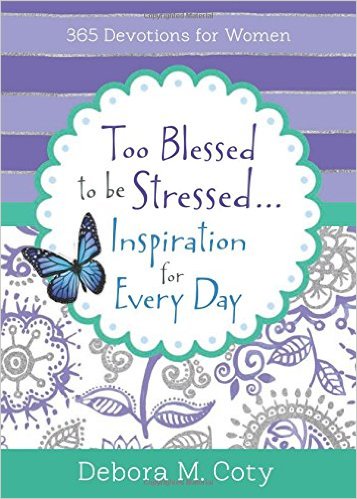
51kizchtjul-_sx355_bo1204203200_Debora M. Coty released Too Blessed to be Stressed … Inspiration for Every Day with Barbour. This 365-day devotional features just-right-sized, truth-filled readings (gift-wrapped in humor) for your heart. The Too Blessed to be Stressed daily devotional touches on everyday life topics like relationships, love, boundaries, hope, brokenness, and praise, while helping you to arrive at healing, refreshment, and revitalization of spirit, body, and faith.

cover-imageDena Dyer re-released the e-book version of her book Grace for the Race: Meditations for Busy Moms with FaithHappenings Publishers. In this collection of short devotionals—perfect for those few stolen moments you can find in a given day—Dyer uses real-life stories, scripture, and gentle humor to encourage moms and assure them that they are not alone.

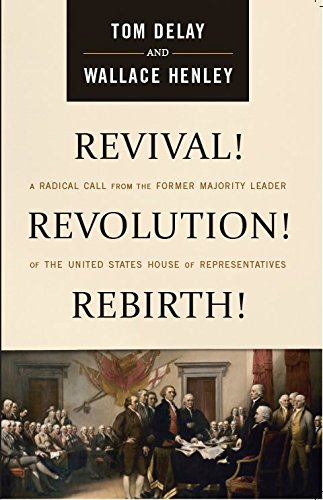
517huchsljlTom DeLay and Wallace Henley released Revival! Revolution! Rebirth! with WND Books. America is at a strategic moment in history.Will the qualities that have made the nation exceptional be consigned to the grave like other historic civilizations, or will they spring up with new vitality? DeLay and former congressional aide Wallace Henley draw from their rich experience to show the powerful reasons for hope!

61dkx5py71l-_sx328_bo1204203200_Denise George and Robert Child released The Lost Eleven with Berkley. Nearly forgotten by history, this is the story of the Wereth Eleven, African-American soldiers who fought courageously for freedom in WWII—only to be ruthlessly executed by Nazi troops during the Battle of the Bulge. It’s a story of unheralded patriotism that should be read by all.

51x0oo6bql-_sx322_bo1204203200_Jonathan McKee released If I Had a Parenting Do-Over with Barbour. McKee offers real, practical help to parents who would rather learn from someone else’s firsthand experiences. . . in hopes of circumventing their own parenting flubs. The real-world application will equip readers with solid, helpful practices you can actually use in your own home.

New Contracts 

Dr. Daniel Amen signed a two-book deal with Tyndale. Memory Restore 360 will teach readers how to optimize memory through an intentionally healthy lifestyle, including diet, exercise, and spiritual practices. Raising Brain-Healthy Kids and Teens will teach parents how to care for and develop their child’s brain to optimize performance, physical and spiritual health, and emotional resilience.

Steve Arterburn and Marcus Brotherton signed with Tyndale to publish Jesus Kid, in which kid narrator Kirby McCook retells old and New Testament stories, helping readers see that Jesus has had an important place in God’s plan for redemption from the beginning of time.

Debora Coty signed with Barbour for the next book in her Too Blessed to be Stressed series, this one specifically for moms! Look for Too Blessed to be Stressed for Moms in 2018.

Shellie Rushing Tomlinson signed with Barbour for the publication of Devotions for the Hungry Heart, a one-year devotional drawing on Shellie’s personal experience and identifying six attitudes of the heart that position the Jesus-hungry follower closer to God’s gracious table.

New Clients

Bob Izumi, Ronaldo Archer, Nigel Dixon, Kathryn Graves, and Walt Larimore joined WordServe Literary this month. Welcome!

2017: The Journey

The writing life is as full of ups and downs as a train ride through the Rocky Mountains. For those of you who put your words to paper and send them out to the world to read, this is not a revelation. As I write this post, there are just four hours left in 2016, a perfect time to reflect on the year that was, and to look ahead to the one about to begin.

train3.jpg

Personally, it was a year of both peaks and valleys with my writing. I had two romantic suspense novels come out, the second and third books of a trilogy. The books, and the series as a whole, received great reviews and feedback, a definite mountain experience. Sales were somewhat disappointing, however, which at times was deflating.

I finished writing and am now in the polishing-and-receiving-critiques phase of a two-book series, which is very exciting. Not entirely sure the best route to take to get them “out there” at the moment, though, and the task of figuring all of that out is somewhat draining, I have to admit.

I made much more of an effort this year to figure out marketing strategies and the best and most effective ways to promote my work. The support I received from fellow authors and readers was very encouraging, but the sure knowledge that so much more remains to be done in this area, and that promoting my own work is just about the last thing I want to do, is mentally and emotionally exhausting.

Some days the pull down into the abyss, the temptation to quit and “get a real job” was strong. But there were good days too, days I was able to rise above disappointment and disillusionment and focus on producing the best work I could in order to honor God and the gift he has given me and, after that, to leave the results up to him.

Riding a train through the mountains is an interesting experience. For the ordinary passenger, there is little or no view of the way ahead. Once a summit is achieved, there is a moment of awe at the breathtaking view spread out to either side. Before one even has time to truly enjoy being at the top, however, the train once again plunges down into the unknown. Only an unwavering trust in the one operating the engine prevents panic and allows one to sit back and enjoy the ride.

The same is true for me as I look ahead to 2017. In 2016, my writing journey shifted from spectacular to worrisome to exciting to exhausting, sometimes from one day to the next, occasionally from hour to hour. The way ahead appears equally daunting and exhilarating. Which leaves me with only one recourse, one resolution, if you will: to trust the one who knows the path I need to take far better than I do, who can see it much more clearly than I can, and who alone can guide me along it every step of the way.

And if, as other resolutions fall to the wayside, I can keep this one, 2017 will be a year of peace, regardless of the peaks and valleys I will inevitably traverse along the way.

Seven Essential Tips Every Successful Writer Must Apply

Fresh StartsI think every published author wishes they could go back in time to whisper in their younger self’s ear. Doing so would certainly save volumes of time and energy. I’m sure five years from now, I’d wish for the opportunity to tell today’s me something I need to know right now.
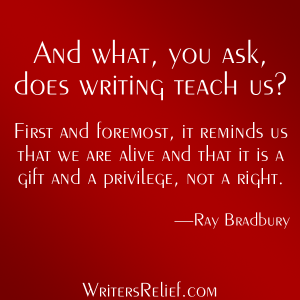
These are the thoughts rolling through my mind this new year, clean with the possibility of fresh starts. I think it’s important to slow down sometimes.

We need to reflect on the past in order to improve on the future. So I’m reminding myself of the tips I’d give my younger self, knowing I’ve let some slack, and resolving to begin again. I believe the seven following tips are essential, things every writer must know.

  1. Ray BradburyRead as much as you can. Phrases such as, “Great writers are great readers,” hold a wealth of truth. The more we study, the more prepared we are to succeed. Reading teaches us the subliminal art of sentence flow, heart tugs, and scene staging. It also shows us what to avoid, as we learn from the mistakes of others. It’s the best motivator I know.
  2. Eavesdrop. Most of my best dialogue came from listening in on someone else’s conversation in restaurants, conferences, stores, airplanes, etc. I write non-fiction, and I tell true stories or compilations based on real people, but even if I wrote fiction, I would use this technique for writing believable and fascinating statements.
  3. Listen to outsiders. The more detached someone is from you, the more objective their writing feedback is going to be. Family and friends tend to fall into two camps: they either gush over everything you write, even your sloppy first drafts, or they nitpick, make digs, or outright blast anything you pen. Make it your mission to interact with people on social media, critique groups, or professional advance readers who are willing to respond honestly.
  4. Pull on your thick skin. You might want to consider whale shark skin for this one, (estimated at 6″ thick). Just like “there’s no crying in baseball,” professional writers soon learn, no one’s handing out Kleenex around here either. When rejection stings, stiffen your spine, and pitch again.
  5. Douse distractions. It’s going to happen. Ten people want five different things from you at once. You’re working on one project, when the siren call of another beckons. But professionals know the power of tenacity — grinding your behind into the seat, tuning out the voices trying to break your focus, and writing through to the finish line.
  6. motivational quotesSet time-stamped writing goals. I’ve really let this one slip lately, and my work is showing it. But my One Word is Reset, so I am resetting my goals. The difference between a dream and a goal is a measurement. So my refreshed writing goals include a minimum of 5,000 words per week. This reasonable number allows for flexibility, while pushing me beyond a normal comfort zone. It’s doable.
  7. Touch your own heart. If I’m not passionate about what I’m writing on, why would anyone else be interested? If I’m bored, my readers will feel boredom. If I’m thrilled, my readers will feel a flutter of excitement driving them to turn the page.

The more I write, the more I question myself at times, and yet, when I go back to the basics, I find the truth, the way, and a successful writer’s life. Which brings me to a bonus secret.

Pages in a Thousand BooksI can write until my fingers are numb. I can start writing at dawn’s break, pushing until the wee hours of the next morn, but if I am not inspired, it’s all for nothing. My personal inspiration come from prayer, provision, and praise for my Maker. He’s the one who gifted and called me. This is my most powerful secret.

What inspires you to write? Do you have any tips you would whisper to your younger self?

Why you should write backstory you won’t use

cross-out-wordsA few years ago, I got the oddest suggestion I’d ever heard from an editor: write a few scenes between my novel’s characters that I wasn’t going to include in my final manuscript.

Say what?

I should deliberately spend time crafting scenes I was NOT going to use? How was that going to improve my book, writing scenes I wasn’t going to include in the final version?

Being the people-pleaser/non-confrontational  soul that I am, I didn’t question the editor’s wisdom, even though I thought it was nuts and a clear waste of time.  She was the editor, after all. She had to know what she was doing. So I sighed a great sigh of resignation and set to work writing scenes I wasn’t going to use in my book.

And lo! Before I even finished writing the first ‘unnecessary’ scene, I understood the point of the exercise: by creating more interactions between my characters, I was getting deeper into their heads and personalities. I was basically giving them a more complete personal history and backstory that would more accurately inform and motivate their actions on the pages of my novel. In other words, I was giving them life beyond the book, which would, in turn, make them very real within the book.

Crazy, huh?

Let me give you an example.

“This late-night conversation between Rafe and his mother doesn’t sound natural,” the editor said about a scene in my book. “Try writing another conversation between them that focuses on a different aspect of their relationship. Something from their past.”

So I did. I wrote a scene from Rafe’s high school football years, some 20 years prior to my book’s time frame. As I wrote, I imagined what this man might have been like before he matured, and how his relationship with his mother evolved. He was a headstrong teen then, and while he dutifully respected his mother, he couldn’t appreciate her wisdom at the time; that insight alone helped me revise the dialogue my editor had questioned in my book. It also changed the way I described the interaction between those two characters, and it influenced how I then changed Rafe’s interactions with his female colleague to better reflect his attitude towards women as learned from his mother.

Writing that little piece of personal history for Rafe was like shading in another part of a portrait or adding important information to a personality profile; because I knew his backstory better, I was then able to strengthen another scene in which he confronts a female assassin with conflicted respect, rather than brute force. My ‘unnecessary’ scene that I knew I wasn’t going to use actually helped me produce a more realistic hero.

What can I say? If ‘crazy’ works, I’ll take it. Especially when it improves my writing.

How about you? Have you found some crazy ways to improve what you write?

New Possibilities for a New Year

Empty road to upcoming 2017 at sunrise
The sunrise of a new year.
  1. Your future is not limited by the past. While past successes and experiences can inspire the future, as I wrote about in my book, Questioning Your Doubts: A Harvard PhD Explores Challenges to Faith, the future does not need to be limited by the past. New scientific discoveries can build on past knowledge, but they also can disrupt old paradigms. For example, the microprocessor made computing available to nearly everyone, with a modern laptop more powerful that a computer that once took up an entire room. Thanks to this invention, most writers prepare their manuscripts using convenient word processors instead of typewriters, and keep their contact list of agents, editors, and publishers on their smartphone in place of their Rolodex. In the not-so-distant future, writers might conference with editors and other writers in virtual reality, skipping the long lines at airports and time spent traveling. As a writer, your next fresh idea can define the future. Your past projects may influence your future goals, but feel free to try something new and even disruptive. Progress happens when people dream new dreams. Let the start of the New Year serve as your excuse to pursue a great new project.
  2. New friendships are waiting to be discovered by you. Writers quickly learn the value of relationships in their profession. After all, writing is all about communicating and collaborating. Even when writers spent quiet hours alone putting their thoughts on the page, the needs and interests of their readers shape their work. The audience of readers is always present when a writer expresses ideas with words. By the time a book reaches the shelves of a bookstore or the warehouse of an online retailer, the writer has collaborated with many people – literary agents, editors, illustrators, cover designers, copy editors, reviewers, publicists, and marketing directors. These colleagues as well as radio interviewers, blog readers, online reviewers, customers, and conference coordinators become new friends in the life of a writer. Resolve to maintain the friendships you have formed as a writer in years past, while staying open to the possibilities of accepting the input, advice, and encouragement of new friendships in the year to come.
  3. To accomplish your goal, break it down into discrete, doable steps. Whether you are planning to write a blog post in one evening or a book in six months, if you have a plan divided into measurable and actionable steps, you are well on your way to getting the job done. Fit your plan into your lifestyle and your current schedule to keep it realistic and achievable. Can you envision setting aside two hours every evening to complete a new manuscript? Should you schedule a vacation in a secluded and beautiful setting surrounded by nature in order to disconnect from everything and make your writing deadline? Having a plan that matches your working habits and the needs of your family and other responsibilities increases the likelihood of reaching your goal. Great new projects need to-do lists and new friendships need time set aside to develop the relationships. Make a plan that fits your life so your dreams can come to fruition in the New Year.

What do you plan to do to prepare for the new possibilities awaiting you in the New Year?

WordServe News: December 2016

wreath-1298566_960_720

It’s the last month of 2016, and exciting things have been happening at WordServe Literary!

On the final post of each month you’ll find a list of Water Cooler contributors’ recently released books along with a recap of WordServe client news.

New Releases

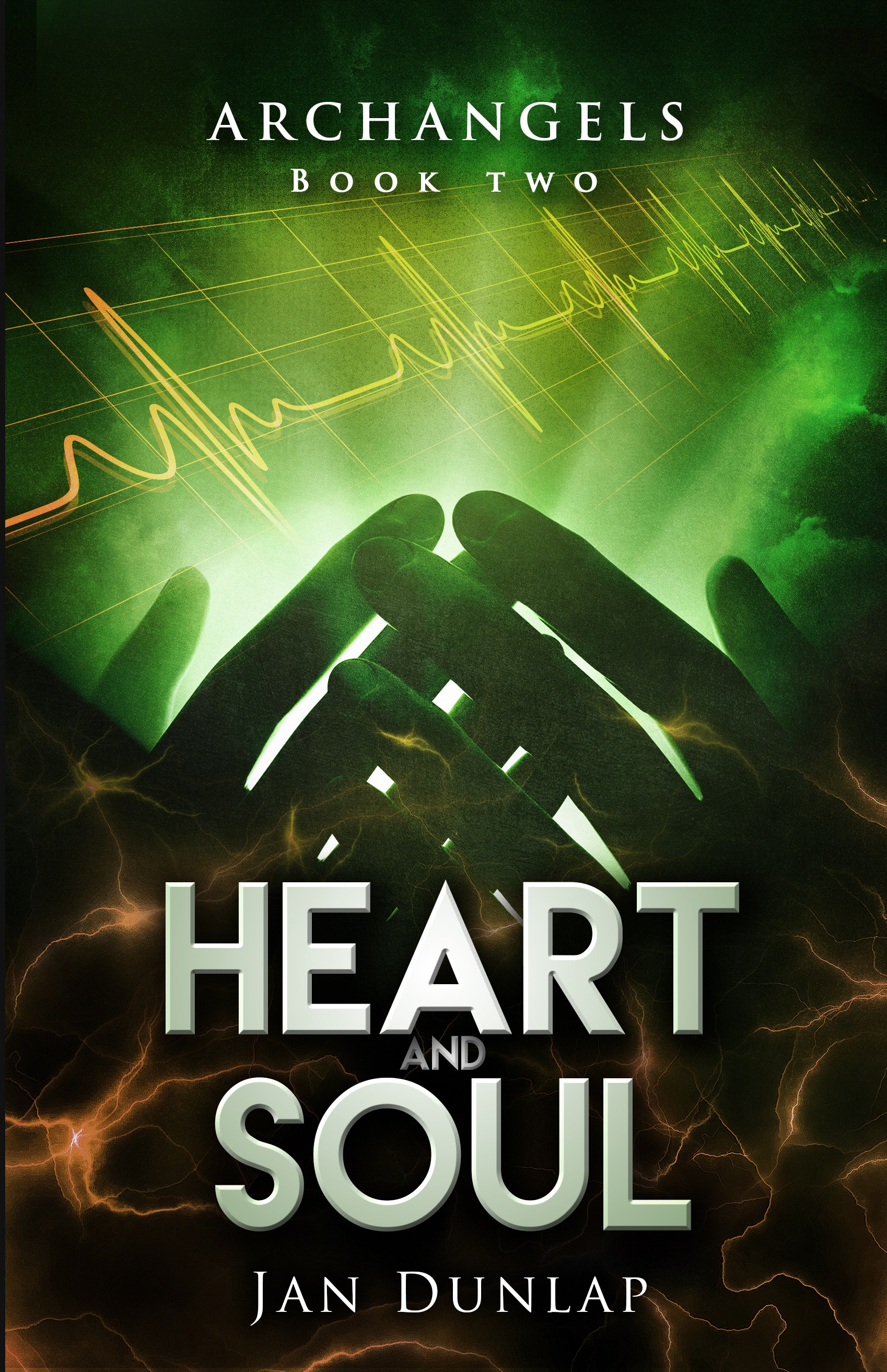
heart-and-soul-coverJan Dunlap published Heart and Soul, Book 2 in the Archangels series, with FaithHappenings Publishers. When Raphael Greene, a medic with an extraordinary gift for healing, is thrown into the role of guardian angel for cardiologist Ami Kim, he finds they share more than a mutual attraction: Ami is a gifted medical intuitive. Even more astounding is his discovery that Ami is conducting clinical trials of a therapy for heart disease that harnesses the power of prayer. Now Ami’s research has been stolen and a horrific plan to use the cure as a weapon of mass murder is underway. Can they stop it in time–and regain their faith in a merciful God?

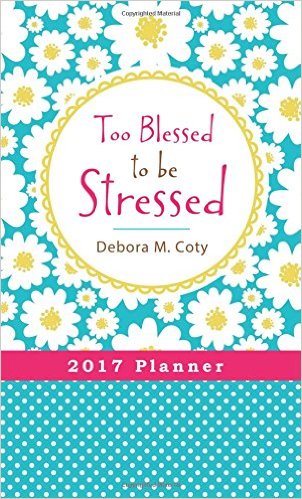
51hvrbtxhnl-_sx300_bo1204203200_Deb Coty released the Too Blessed to be Stressed 2017 Day Planner. Get organized—and transform your heart—every day of the year with this 15-month planner, featuring a refreshing blend of inspiring monthly readings laced with encouragement and gift-wrapped in humor. Featuring monthly and weekly calendars, a year-at-a-glance section, pages for frequent contacts, and more, this planner offers an important reminder: God’s grace is enough for the ups, downs, and all the in-betweens of life.

New Contracts 

Curt Steinhorst signed with Wiley Publishers for his new book, Your People Aren’t Working, for publication in early 2018.

New Clients

Jewell Johnson joined WordServe Literary this month. Welcome!

balloons-25737_640

What We’re Celebrating

All the Gallant Men hit the New York Times bestseller list for four consecutive weeks this month–first at #16, then #12, and finally #8! It was also the #1 book on both Amazon and B&N.com.

We had two winners in Christianity Today‘s 2017 Book Awards: Leslie Leyland Fields for Crossing the Waters, and Adam McHugh for The Listening Life. Congratulations!

And finally, Merry Christmas and Happy New Year to all of our Water Cooler readers. Wishing you a wonderful 2017 from all of us at WordServe!