The Holy Work of Writing

Every year I host a faculty essay reading at my university for our collective entertainment. At the beginning of the semester, I choose and cajole a dozen colleagues from across the curriculum to write personal essays on a shared subject. Then, sometime around Thanksgiving, I invite the rest of the campus to come hear them read the resulting essays aloud. It’s always a fun evening, everyone feeling proud afterward of what they accomplished.

Though the selected essayists have composed entire dissertations of scholarly writing, most have never set out to write for entertainment alone, so getting them to do it necessitates pep talks from me along the way as well as a fair amount of collaborative back-and-forthing between them and the trusted readers I encourage them to seek out. When they report to me on how it’s going and, afterward, on how it went, my colleagues are bashful and sincere and loveably modest as at no other time in my interaction with them.

“I got my daughter—she’s in high school—to read through it and make sure it made sense,” a grizzled professor of engineering tells me.

Another tells me how, in the course of writing about a Picasso painting her autistic son loved but she didn’t, she kept asking him questions and managed, through these exchanges, to get a rare glimpse of the world from his perspective.

Yet another colleague makes an appointment with me after the reading to work on improving his essay even more. He takes away from our discussion an argumentation skill that he is still bringing up in meetings years later: that you can’t convince someone of a truth unless you show it.

That’s the part of the event I like the most—my colleagues’ accounts of the process of composition. It’s so thrilling to watch seasoned writers grow into better writers through the humbling practice of sharpening iron on iron. Hearing the essays read aloud—every one of them so good!—and then witnessing the enthusiasm with which their audience applauds their achievement—yes, very good!—confirms what I am always telling my students: that, we humans having been made in the image of our creative God, our practice of creativity is as holy as the exercise of any of God’s other traits. And as pleasurable.

It often makes me feel a little guilty that my work, both as a teacher of writing and as a writer myself, is so enjoyable. It hardly seems like work at all, much less holy work, as I have come to think of it. But when we write well—when, through our words on a page, we interest and engage an audience in what is true and lovely and admirable and excellent—we are performing the work of God.

When asked what God’s work is, Jesus says, “to believe in the one he sent” (John 6:29). Writing, and teaching others to write, helps me to believe ever more confidently in the One God Sent—through whom, says John, “all things were made; without him nothing was made that has been made” (John 1:3 NIV). Good writing recreates, in words, what has been made through the Word and offers it up to others for their contemplation and enjoyment. What work could be more sacred?

On Beyond Index Cards: A Review of Scrivener Software for Writers

My first novel, slated for publication with David C. Cook in early 2014, involved hours and reams of research. I researched everything from fossils, to barbecue restaurants, the history of Haiti, pecan recipes, and more. I organized text, web links, and photos into dozens of Word documents, which I then had to flip open and closed while writing and editing each chapter. Add this to the half-dozen internet browser screens I had open for research, and, well, my computer was on the verge of crashing.

So was my brain.

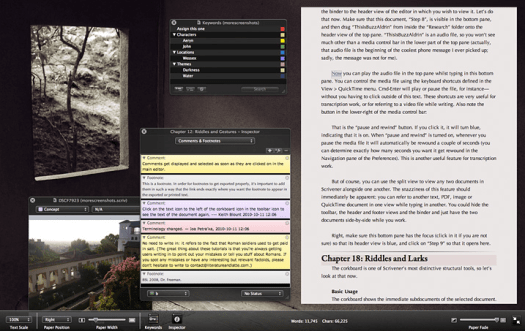
At the time I didn’t know any better, so I never lamented the process. But now that I’ve found Scrivener, a software program for writers of any genre, I marvel at how I ever kept my sanity. Currently neck-deep in an intense season of editing, I’m especially glad I can dump my manuscript in there, blow it up, and put it back together again with Scrivener.

Now, I will warn you. What you’re about to read may sound like an infomercial, but it’s not. I downloaded the trial version (highly recommended), quite skeptical about how much easier this could really make my writing life. But after just two days, I bought the software outright. First of all, this little slice of computer engineering GENIUS only cost $45—a small price to pay for sanity. An even smaller price to pay for the time it’s saved me, and the fun it brings to the novel writing process.

What’s so great about Scrivener? Below, I’ve summarized my personal favorite aspects of the program—so far. And I say “so far” because the software has so much depth of capabilities and bells and whistles, I discover something new and even more fun every time I use it.

1. Love me a Trapper Keeper!

I am a true child of the 80s. When I took my kids back-to-school shopping earlier this fall, I teared up, grieving that they shall never know the true beauty of the Trapper Keeper. Oh, sure, we found imitation versions on the shelves, but nothing close to the ultimate office supply nerd’s dream machine contraption, which kept everything in check, even when the bully on the football team rounded the corner and flipped my books in the air, sending everything—including my fragile, Love’s Baby Soft ego—to the floor.

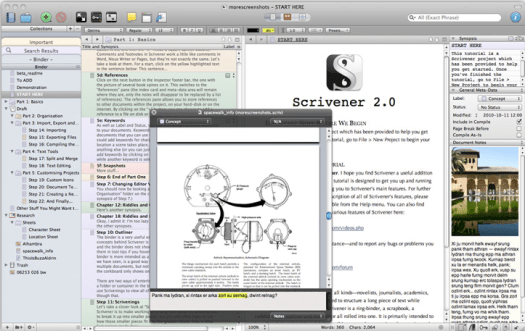
Well, never fear those bullies again. Scrivener is your virtual Trapper Keeper. The  program holds everything you need for your novel—websites, photos, places to jot down random thoughts and ideas, references, and notations—everything. And since it’s all in one location, nothing falls out.
2. The corkboard is adorable.

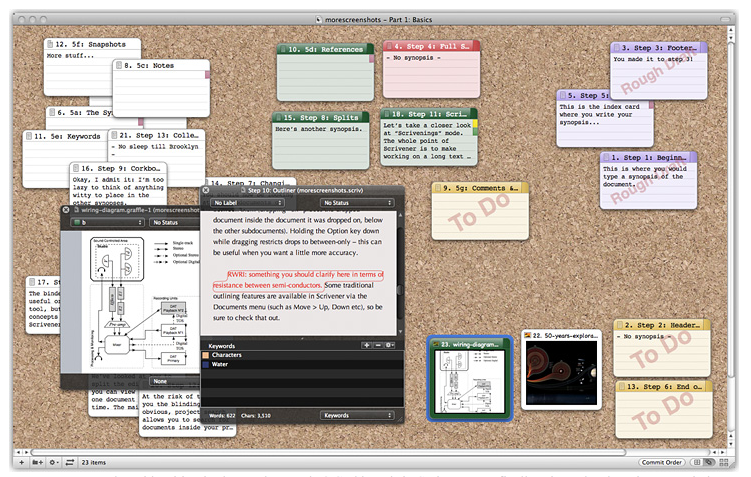
Say good-bye to sticky notes falling on the floor when it gets humid outside. Say hello to the floor you haven’t seen for months, since it’s been covered in index cards. Scrivener allows you to not only create virtual index cards and post them on a virtual corkboard, but you can also rearrange them, even when your manuscript is complete. Need to move chapter 30 back before chapter 14? No problem. Instead of scrolling back up and down through pages of text, just point, click and drag!

Better yet, each index card can function as a chapter synopsis, and you can attach various and individual scenes to each card, again, for easy viewing and rearranging, even within a chapter.

And as an added bonus, you can print out the index cards you create within the program, complete with lines to cut them the exact size of a 3×5 card.

As the website says, “Make a mess. Who said writing is always about order? Corkboards in Scrivener can finally mirror the chaos in your mind before helping you wrestle it into order.”

Don’t like index cards? That’s okay, because you can do your writing (also with rearranging capabilities) via the outlining mode.
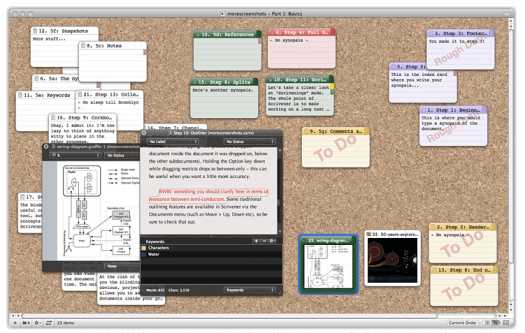
3. Don’t just think about Harry Connick as you write out your protagonist’s next love scene. See him on the screen.

Don’t just think about the New York City skyline as your villain creeps through Central Park. Keep a photo of it on your desktop as you write.

Character, setting, and other research organizers allow you to attach photographs, charts, maps, and more all together and accessible as you write. One of my supporting characters looks like Matthew McConaughey. Seriously. He does. So whenever I need to jot down notes about his character, I open up my folder and there he is, gazing at me. Beautiful.
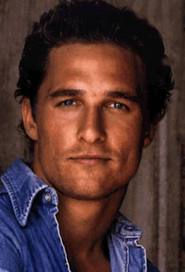
(woah–where did HE come from?!?)

 4. Worry about Word later.

It took me awhile to get over the fear of not writing in Word. But alas, the designers make it possible for you to compile all the text behind all those index cards and export it into one, seamless document which dovetails easily into Word.

5. Other cool features I love:

  • A name generator with every ethnicity and region imaginable!
  • Templates
  • Word count features, by chapter and whole document
  • Color-coding for chapters, editing status, and more.
  • Progress tracking
  • Keyword options
  • Formatting assistance

The website sums it up best:

“Most word processors approach composing a long-form text the same as typing a letter or flyer – they expect you to start on page one and keep typing until you reach the end. Scrivener lets you work in any order you want and gives you tools for planning and restructuring your writing. In Scrivener, you can enter a synopsis for each document on a virtual index card and then stack and shuffle the cards in the corkboard until you find the most effective sequence. Plan out your work in Scrivener’s outliner and use the synopses you create as prompts while you write. Or just get everything down into a first draft and break it apart later for rearrangement on the outliner or corkboard. Create collections of documents to read and edit related text without affecting its place in the overall draft; label and track connected documents or mark what still needs to be done. Whether you like to plan everything in advance, write first and structure later—or do a bit of both—Scrivener supports the way you work.

But wait. Before you buy, please note:

As with any computer program, there are negatives. Some folks–including an adorable and brilliant writer friend of mine–hate it. Also, while a PC version is available, the program was designed to operate on Macs, and the designers even admit it will probably work best on that platform. Try the trial version before you buy it to see if it will work for you and your computer operating system.

Also, you do need to have at least a smidge of computer savvy. And patience. There is a learning curve to this program, and the designers have been kind enough to offer a thorough, interactive tutorial and instruction book. While helpful, the program is so rich even I—a borderline computer geek—felt a little overwhelmed initially. And I don’t know if I’ll ever use all the functionalities.

That said, Scrivener has truly changed the way I approach my novel writing. I feel like it really frees my mind to focus on the prose, because I no longer have to remember where everything is on my hard drive . . . or if my dog ate a sticky note or a stack of index cards.

I honestly don’t know why more folks aren’t using and/or raving about the software.

Try it for free for 30 days.

I can’t throw in a set of steak knives, but I’d be willing to wager you’ll like the program, too.
Stranglers or Wranglers? The Super Power of Encouragement

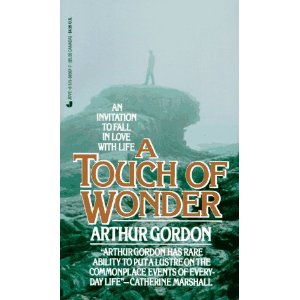
One of my all time favorite books, one that influenced both my writing style and my outlook on life, is A Touch of Wonder by Arthur Gordon. Gordon’s stellar writing peppered “Guidepost Magazine” with inspiration for decades. I remember happening upon the book in a seaside store, then finding a perfect spot on the beach to relax where, over the next two days, I read it from cover to cover. As the ocean waves rolled in the distance, I felt uplifted by true story after story filled with humor, struggle, love, and courage.

In one memorable chapter, Mr. Gordon told a story that created such an “Ah-ha of the Heart” for me that it helped form my basic writing philosophy. He wrote of a friend who belonged to a club at the University of Wisconsin many years ago. It was composed of several talented writers, all brilliant young men. They would each read their prose aloud, then take turns dissecting and criticizing each others’ writing so fiercely, they dubbed their writing group “The Stranglers.”

On the same campus, a group of women formed a writing group, calling themselves “The Wranglers.” But instead of dousing one another with criticism, they spent most of their time encouraging one another. They all left the meetings feeling inspired in their writing journey.

Twenty years after these two groups met, some interesting results were found. For all the brilliance of the writers who made up “The Stranglers,” not one member achieved any kind of literary reputation. “The Wranglers,” on the other hand, produced a half-dozen successful writers, including the Pulitzer Prize winning author of The Yearling, Marjorie K. Rawlings.

From this story I drew two convictions:

1. When choosing a writers’ group (or any support group for that matter), make sure that they lead with a positive spirit. Sure, you want honest feedback, but this can be done with grace in an atmosphere of encouragement. If the group has spiraled into nit-picking negativity, get thee to another group. That is, if you value your future as a writer.

2. Secondly, when you edit someone else’s writing, it is often automatic to skip the good writing and correct what is wrong, like the proverbial teacher with a red pen.  Because I accept this is how my editing brain works, I usually go through a writer’s chapter or manuscript or a proposal twice. The first time I highlight what needs to be changed to make it better. And then, I go back through and put smiley faces on the parts I like the best. You would not believe how writers love those smiley faces and how they make any critique go down easier.

In a little post-script to this story, I searched and found an address for Arthur Gordon, who was at the time quite up in years (he died in 2002 at 89), then wrote him a fan letter. He wrote me back on an old manual typewriter, saying how much he appreciated the bucket of encouragement, that this sort of reader feedback was fuel for his writing soul. I realized in that moment that no matter how old or accomplished a writer is, inside we’re all a little insecure and in need of positive feedback. A part of us is forever the child, giddy over a star or a sticker from the teacher.

So it behooves us to be positive and kind to each other in our critique. Not only does it make the writing life more fun, but in the long run, it also makes it more prolific and profitable.

What sorts of critique groups have you experienced? How did they make you feel? What kind of critique encourages you to excellence without throwing you into a depressing writer’s block?

The Best Advice I (finally!) ‘Got’

I always hated it when writing instructors told me to 1) write what you know, and 2) follow a formula.  How, I wondered, could I write what I knew when I didn’t know anything interesting, and when the only formulas I remembered were from high school math class? I was pretty sure that wasn’t going to be much help in writing anything other than a final math exam.

Now, having finally decoded those two pieces of cryptic advice in the course of my own writing career development, I have only two words to share with would-be novelists: read and outline.

Read books (all kinds!), but also read everything you can get your hands on: newspapers, magazines, the backs of cereal boxes, newsletters, church bulletins. I even read vanity license plates, which inspired me to give one of my series characters distinctive car plates that have played into more than one mystery plot!

The purpose of all that reading is twofold: 1) you accumulate a storehouse of information about the world; and 2) you never know what word, image, or idea will catch fire in your writing process.  Reading feeds you with new material – like ongoing brainstorming.

As for reading books in all genres, I find it’s a great way to broaden my experience. I may not be an expert on scuba-diving or anti-matter research, or know one end of a knitting needle from the other, but if I’ve read about it, I at least have some familiarity with it. And if it might fit into something I’m writing, I can go back for more reading or research.

It wasn’t until I figured this out – that I didn’t have to be an expert about something to write it into a story – that I finally really understood why my teachers insisted you had to ‘write what you know.’ Write what you know – not necessarily what you yourself have experienced. What a relief to know I didn’t have to commit a murder to write about one!

The most important thing I ever did when I was writing my first novel, however, was to outline. And I’m not referring to the outline of my book, either (though I do work from a rough outline when I write). The outline that I found most helpful was the outline I made of my favorite author’s best-seller.

Yes, you read that right – I outlined a book by my favorite author.

It was a tedious task, to be sure, but by the time I finished that chapter-by-chapter outline, I knew more about pacing and plot development than I had ever learned from any teacher or class. My secret was to use a different color marker for each subplot, so that by the end, I had a notebook in which I could visually trace how story threads flowed together and how the notorious ‘red herrings’ of successful plots operated. Deconstructing a best-selling novel taught me how to write my own ‘formula.’

What are you reading/outlining today?

WordServe News: October 2012

Exciting things have been happening at WordServe Literary!

On the final post of each month you’ll find a list of Water Cooler contributors’ books releasing in the upcoming month along with a recap of WordServe client news from the current month.

New Releases

*********************************************************************************************

A Year of Biblical Womanhood, by Rachel Held Evans (Thomas Nelson)

*********************************************************************************************

Finding God in the Hunger Games, by Ken Gire (eChristian)

*********************************************************************************************

In the Twilight, In the Evening, by Lynn Morris (Hendrickson)

*********************************************************************************************

Still Lolo, by Lauren Scruggs, with Marcus Brotherton (Tyndale)

*********************************************************************************************

A Bride Sews with Love in Needles, California, Erica Vetsch (Barbour)

*********************************************************************************************

Resolve, by Bob Welch (Berkley-Caliber)

*********************************************************************************************

Christmas in My Heart #21, by Joe Wheeler (Pacific Press)

*********************************************************************************************

New WordServe Clients

Christy Johnson: www.christyjohnson.org working on women’s non-fiction, spiritual growth

Angela Strong: http://angelaruthstrong.blogspot.com/ working on romantic suspense fiction

Dr. Wintley Phipps http://www.christianlifemediacenter.com/wintleyphipps.html working on Christian Living non-fiction, Spiritual Growth

Laurie Myers and Betsy Duffey, affectionately known as “The Writing Sisters.” Together they’ve written 30 children’s books in the general market that have sold 1.2 million copies. They’re writing both children’s works for the Christian market and Women’s Fiction. http://www.writingsisters.com/WritingSisters/Welcome.html

Cristobal Krusen, a film maker, screenwriter, novelist and collabortor. Recently had a starred review in Publisher’s Weekly for writing Undaunted, Josh McDowell’s memoirs. http://www.33hope.com/team/crist%C3%B3bal-krusen  and http://www.messengerfilms.com/

New Contracts

Wayne Cordeiro signed with Zondervan Publishing House to write and edit the NASB Leadership Bible. (GJ)

Deb DeArmond signed with Kregel Publishers for a book titled Related by Chance, Family by Choice. A book for moms and the daughters-in-law they love. (BS)

Jo Ann Fore signed with Leafwood Publishing House for her first book of nonfiction called When a Woman Finds Her Voice: God’s Healing for the Women Who Have Been Wounded, Controlled, Abandoned, and Silenced. (GJ)

Denver pastor and missional thought leader Hugh Halter signed for two books with David C. Cook. The first titled Flesh, a book that shows how to allow Jesus to live His life through you in daily living, the second untitled. (GJ)

Henry McLaughlin signed with Gateway Church to write a book on stewardship for one of their pastors. (SF)

Joe Wheeler signed with Howard Books for Great Christmas Love Stories. In every Christmas in My Heart book (21 straight years), Joe writes his own heartwarming Christmas story. This book will have the best of these love stories around Christmas. (GJ)

What We’re Celebrating!!

Excited for Rachel Held Evans, whose book A Year of Biblcal Womanhood has been getting some nice PR. She’s already done “TheToday Show,” “The View,” and will do “Inside Edition.” People magazine confirmed they’ll review it.

What can we help you celebrate?

A Brief History of E-Publishing, Part 6: Logjam 2.0

E-book reader - © Anton Maltsev - Fotolia.comI came very close to producing my first novel as a POD book, but I’m really glad I didn’t.

When the POD boom came along, I had just completed work on a suspense-thriller novel titled The Osmosis Project. I’d submitted The Osmosis Project to an agent with high hopes that I was on my way to being a published author. Unfortunately, the agent was not as excited about my novel as I was. Now I had another novel sitting on the shelf and no one to publish it.

So, I reasoned, why not do the same thing that I did with Friendly Revenge?

I didn’t want my novel to be sitting around doing nobody any good. And with POD, I could actually produce a paperback version of my book. Instead of having to relegate myself to disc signings, I could have a “real” book to sell. Better yet, I could be my own publisher and not worry ever again about having to do what I call “the publishing courtship dance” (i.e. queries, proposals, and so on).

And, because the big three POD publishers were eager to attract business, they were offering some really great deals. In fact, when Xlibris came out with a free publishing option, I almost jumped on the bandwagon.

However, before I could get started with the process, something happened that changed my mind.

It’s a long story, but on a whim I sent a query to several computer book companies for a book idea on how to write Web pages, written “by a non-techie for nontechies.” I didn’t really expect anything to come of it, but to my surprise Osborne/McGraw-Hill was very interested in the idea. In fact they were so interested that they gave me a contract to write How to Do Everything with HTML.”

With a book contract in hand, I found it very easy to get a literary agent to take me on.

And that was when I decided to keep The Osmosis Project on the shelf a little while longer. I reasoned that my new agent might eventually be interested in looking at my novel.

Which brings me to why I’m glad I didn’t decide to produce The Osmosis Project as a POD book.

As word about POD publishing spread among writers, the market was flooded with manuscripts. At that time there were only a handful of publishers offering POD, and they were quickly overwhelmed with writers wanting to self-publish with the new technology.

As with the first e-publishing logjam, quality took a nosedive.

The POD publishers were swamped and in an effort to keep up while still looking for longdistancemovingcompanies.co cheap long distance moving companies, often produced poorly-edited, poorly-designed, and poorly-proofed books. Plus, the turn-around time from submission to release went downhill, often taking months longer than promised.

E-publishing history was repeating itself.

Logjam 2.0 had arrived.

However, unlike the e-book logjam (see my Sept. 14 post), this one cleared up as more POD publishers came online. And with those publishers came the first major turning point in the e-publishing revolution.

For all practical purposes, it appeared as if the electronic book had died, replaced by physical books produced through Print on Demand.

But in only a few years the world of e-publishing would again be turned upside down when a company named Amazon decided not only to enter the e-publishing market, but to produce their own dedicated e-reader.

Oh, and that novel of mine? The other reason I’m glad I didn’t release it myself is because my agent did decide to represent it and in 2003 Tyndale released it asBlind Sight.

Sometimes, it’s better to wait.

[Check back on November16, for part 7 of “A Brief History of E-Publishing.”]

Finding Rest in a Storm

For you are my hiding place; you protect me from trouble. You surround me with songs of victory. (Psalm 32:7 NLT)

As the autumn winds whispered through our oak trees, dropping the leaves across our yard, my husband Dan mentioned that we probably wouldn’t see any squirrels playing in the trees that day. “In fact, if the wind is blowing when you want to go squirrel hunting in our area, you might as well stay home,” he said. “A squirrel will not move far from his nest on windy days, so you’ll have a hard time bagging any.”

Squirrels. A squirrel knows when he needs to be still and rest—not because he’s tired, but because that is when he is most vulnerable to predators. When the wind is blowing, a squirrel can’t hear the other sounds around him—his instincts are blurred by the wind-tossed branches and leaves rustling.

Dan said the same rule applies to deer hunting in our part of the state. Deer tend to not move around much when they cannot use their God-given senses to protect them from predators.

Storms. I continue to learn spiritual lessons like this one from nature. When a storm is blowing all around me, I need to be still and wait. It can be dangerous to sail into a storm.

I’ve lived in Texas and Arkansas all my life, and we’ve survived many storms—tornados and hurricanes. It’s difficult to prepare for any kind of storm. I’ve run away from hurricanes, and I’ve hidden in our “safe place” during a tornado. But I’ve learned that I can’t stop storms from coming my way.

Shelter. How can I apply this truth to my writing life? I hope to remember this truth the next time that I face serious setbacksparalyzing problemschaotic confusion, or even aggravating attitudes. I can’t stop them. But I can choose to find a safe hiding place.

Learning to find a place of rest in the storms of life isn’t always easy. I’m tempted to keep trying to protect myself. But once again, God reminds me that He is my true refuge during the storms of life. And I’ve found His Shelter to be a great place to rest.

Where do you find shelter on a stormy day?

Don’t Sabotage Your Writing/Speaking Career

WordServe Water Cooler is pleased to host this excellent article by James N. Watkins.

Welcome, James!

I’ve been editing professionally since 1972. (Of course, I started when I was five!) I’ve seen just about everything: Cover letters that said, “God dictated this article to me. I don’t even know what it means.” Submissions from aliens: the extraterrestrial kind. Envelopes spray-painted gold, which I assume was intended to make them stand out from all the plain old white envelopes. Hand-written submissions on lined paper. And now in the age of word-processing with 400 fonts, submissions that look like ransom notes.

So, here are some ways to avoid sabotaging your writing/speaking career—in no particular order.

1. UNPROFESSIONAL EMAIL ADDRESS

If you’re going to be a professional writer/speaker, you need a professional-sounding email address. Two of the worst I’ve seen: snugglebunny77@yahoo.com and—I’m not making this up—wordwhore@hotmail.com. Even yahoo.com, gmail.com, and hotmail.com strike this grumpy old editor as a bit unprofessional. Get a domain name and a host that will allow you to use that as your email address. For example, jim @ jameswatkins.com actually goes to my yahoo account, but it’s masked so all you see is the domain name.

2. UNPROFESSIONAL FACEBOOK AND TWITTER POSTS

You’ll probably want a Facebook account for only your family and close friends and then one separate for your professional presence.

Your followers don’t want to know what you’re fixing for dinner unless you’re writing gourmet cook books. And unless your brand is “Cat Whisperer,” I don’t want to see pictures of your adorable kitties. (And having more than five cats qualifies you as “crazy cat lady.”) Make sure every post provides value to your readers and fits with your “brand” (See point 5).

3. NO WEB PRESENCE, UNPROFESSIONAL WEB PRESENCE

When your book proposal comes before the pub board, the first thing the editors and marketing minions do—who are surgically attached to their laptops and smart phones—is go to google.com and type in your name. If you don’t show up, you don’t exist! And if you don’t exist, you don’t get a contract. It is absolutely necessary that you have a Web site, blog, Facebook and Twitter accounts online.

But having no presence may be better than having an unprofessional presence! With WordPress.com and Blogger.com anyone can have a free blog (Web log). The bad news is many of templates offered don’t appear to this grumpy old editor as professional: animated .gifs, cutesy art work, kitties, etc. etc.

Your Web presence is a determining factor in whether a publisher will give your proposal further consideration or a conference director will consider you as a speaker. Spend—no INVEST—in professional help in creating a professional-looking site. And make sure you have a professional edit the copy.

4. UNPROFESSIONAL BUSINESS CARDS

Just because you’re a Christian writer doesn’t mean your business cards and Web site must have a cross, dove, empty tomb or—if you’re Charismatic—tongues of fire. Remember the KISS principle. Keep it simple, saints!

And including “Professional Writer” makes me suspect. Would you go to a “Professional Brain Surgeon”?! I don’t think so! (What is he or she trying to prove?)

5. NOT BEING “BRANDED”

Ouch! That sounds painful, but “branding” is a buzz word in the business and publishing world.

Basically, branding is what readers and audiences expect when they see your name on a book cover or on a conference brochure. You can’t be all things to all people, so do some soul-searching and discover your unique role in the writing/speaking arena.

My brand—for articles, books, Web site, speaking engagements, convenience store grand openings—is “Hope and Humor.” (www.hopeandhumor.org). So whether I’m writing, speaking or blogging, people expect hope and humor. (So writing bloody murder mysteries would totally massacre—pun intended—my brand.)

What does your audience (or “tribe”) expect? Be specific and then deliver on your brand.

6. “FREE” PUBLISHING THAT COSTS YOU

Services, like www.lulu.com and www.createspace.com, offer free e-book and print-on-demand publishing services. (Everyone loves free!) You simply upload your Word document and post your homemade cover and you can have your book as an e-book on amazon in a few hours and your paperback or hardcover book on your doorstep within the week. And you only pay for the actual wholesale price of the books. What a deal. It is a deal IF and ONLY IF . . .

. . . you have it professionally edited (and not by your English teacher cousin). If your online or in-print presence is filled with errors, it can ruin your writing career.

. . . you have your cover professionally designed (and not by your sister-in-law who happens to own Adobe Illustrator—unless she’s working with it professionally.) An amateurish cover, again, can ruin your writing career—or at least book sales.

Please. Please. Please, take this warning to heart. I see so many “self-published” books that just scream AMATEUR! That free service can cost you your reputation.

And if you’re investing your hard-earned money in one of the hundreds of self-publishers out there, please read these additional warnings. (There are hundreds of self-publishers who are amateurs at best and scam artists at worst.)

7. HAVING A “REPUTATION”

Christian publishing is a relative small club. Editors meet regularly at conferences and professional meetings, and we talk about writers and speakers. Believe me, we know who the people are who committing professional suicide by being unprofessional, “high maintenance,” telling off editors who don’t appreciate their brilliant talent, missing deadlines and burning “bridges.” And speakers with “prima donna” complexes by demanding special treatment also can sink under the weight of their bad reputations.

There are many more such as playing the God card: “God told me to write this.” But seven sounds like a biblical number. And by being aware of these, you’ll protect your good name as a writer/speaker.

To find out more about James, please visit the links. (c) 2012 James Watkins (www.jameswatkins.com) for American Christian Writers (www.acwriters.com).

10 Kooky Tips On How To Write A Book

My writing nook at home. Don’t be fooled, it looks Pier One, but really, it’s a hodgepodge of thrift store and Craigslist.

I receive emails from people asking how to write a book.

I have written a book but I haven’t actually published it (yet, God give me patience and faith).

So when I am asked, it feels a bit like someone asking a person coloring a picture in a Strawberry Shortcake coloring book how to paint a still life.

Here are 10 kooky tips that popped into my head about writing a book if you absolutely don’t know how to start:

1) Start with a dangerously low self-esteem

This is vital. If you don’t, you may not be able to handle getting knocked off the height of your perch daily from rejection. It’s much easier to begin writing from the depths of despair.

2) If you have kids, get a lock for your bedroom door

My reasoning is two-fold: 1) my bedroom is where I write, and 2) my bedroom is where I cry when I am convinced that I cannot write, and it seems to upset the children when I cry uncontrollably.

3) YOU PROBABLY NEED TO ACTUALLY ENJOY WRITING

Or at least be able to stomach it, if you want to embark on a long project. Seriously, in order to write a book, you have to spend countless hours writing, which may stop you right there. Luckily for me, I love to write and see where it takes me. I also love to sit!

4) Make sure your writing desk has an economy size box of Kleenex.

I cry when I write. I cry over a beautiful sentence (both other people’s and my own). I cry over the fact that I can’t spell. I cry about God’s work in my life rendered on the page.

5) Listen to Papa Hemingway

I talk about Hemingway often, but I believe the goal is one true sentence.

Sometimes sentences string together perfectly and send shivers up my spine. One true sentence is the payback for locking yourself in your room to write.

6) Read books

Readers usually make good writers. Some of my favorite books include “To Kill a Mockingbird” by Harper Lee, “Les Misérables” by Victor Hugo, “Traveling Mercies” by Anne Lamott, and “Twilight” by Stephanie Meyer. (I’m just kidding about Twilight. Sorry, not a teen vampire fan.)

Read books on craft. For memoir, I love Vivian Gornick’s “The Situation and the Story” and Anne Lamott’s “Bird by Bird.”

7) Join a writing class

Most writing classes will require submissions and offer critique. This forces you to write. For years, I attended a memoir workshop in Chicago.

8) Buy business cards on-line and slap “writer” under your name

Call yourself a writer.

Even if you don’t have anything published, if you write, you are a writer. You may not be an author until you are published, but by golly, you are a writer. Put it out there! (And if you buy 250 business cards and have no one to give them to, the kids love to make up card games with them.)

9) Call or text or email people who love you, often

Writing is solitary. You show up and put words on paper and wonder if you actually have anything of value to offer the world. Call your mom, or your best friend, or Joe, the creepy guy at Starbucks who saw you writing one day and gave you his business card. Call anyone who loves you (OK, maybe not Joe) and ask for encouragement. You need cheerleaders. Buy pompoms and pass them out to friends.

10) Don’t write for attention

Believe me, an easier route for attention would be to hold up a Seven Eleven.

What’s your advice about writing a book?


Before the Lord

Hezekiah is helpless. His nights have been sleepless; his days worried and stressed. And now this—an ugly letter full of threats and taunts from Sennacherib, King of Assyria. He has nowhere to turn, except to the Lord of Heaven’s Armies, the One who can do something about it.

He walks up to the temple, spreads the pages out before the Lord and bends low, hands spread out in petition.

“Hezekiah received the letter from the messengers and read it.

Then he went up to the temple of the LORD and spread it out before the LORD.

And Hezekiah prayed to the LORD: ‘O LORD, God of Israel, enthroned between the cherubim, you alone are God…deliver us from his [Sennacherib’s] hand so that all kingdoms on earth may know that you alone, O LORD, are God.’” II Kings 18:14,15,19

The powerful example of this story affected me profoundly. I have since followed King Hezekiah’s example with various things that overwhelm me. Things I know I cannot possibly handle on my own: the endlessly large parade of medical bills following my husband’s recent kidney transplant; a painful letter from someone; a letter from a reader who is hurting, sharing with me, and who wants my prayers and advice.

And for the past seven years, I’ve also applied this to my writing as well. I have prayed over rejection letters and hopeful queries. Before I submit a piece, a proposal, or publishable material – paper pieces of my heart – I spread the pages out (or place my hand on the computer screen) and petition God to guide these pages into the right hands.

I ask Him for the right eyes to read this work.

For my agent to have wisdom and discernment on where my writing would be best sent.

For both my agent and me to have diligence and determination without undue discouragement.

For readers’ hearts to be touched.

For me to write to His glory alone, every word committed to Him.

For me to honor God with my every written word, my every action, my every thought. After all, what I want more than anything is for my writing to help “all kingdoms on earth to know that He alone is God.”

And then, I hit send, or carefully slide the manuscript into an envelope and seal it, trusting God for the outcome.

How do you commit your writing to God?