WordServe News: December 2012

Exciting things have been happening at WordServe Literary!

As the year comes to a close, we’re so very grateful that WordServe Authors released 83 books in 2012, and signed 80 book contracts for nearly 119 books to release off in the future.
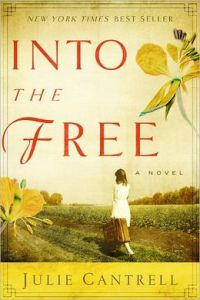
IntotheFreeJulie Cantrell had the agency’s first New York Times Bestseller in many years with her book Into the Free. It also garnered a starred review in Publisher’s Weekly. A rarity.

We had several books climb over the 100,000 copy mark:

* The Secret Holocaust Diaries of Nonna Bannister, written by Denise George and Carolyn Tomlin (Tyndale)

* The Devil in Pew Seven by Rebecca Alonzo, with James Pence (Tyndale)

* My Flight to Heaven by Dale Black (Bethany)

* Edge of Apocalypse by Tim LaHaye and Craig Parshall (Zondervan)

* Linspired (adult and YA book together) by Mike Yorkey (Zondervan)

And we’ve had several authors show up on national shows:

* Rebecca Alonzo on Dr. Phil (twice)

* Lauren Scruggs appeared on several shows in November at the launch of her book, Still Lolo.

These WordServe authors signed their FIRST BOOK CONTRACT in 2012:

* Anita Agers-Brooks (Leafwood)
* Leigh Ann Bryant (Authentic)
* Deb DeArmond (Leafwood)
* Rebecca DiMarino (Revell)
* Jan Drexler (Love Inspired)
* Michael Hidalgo (IVP)
* Heather James (Kregel)
* Amanda Jenkins (Tyndale)
* Caesar Kalinowski (Zondervan)
* Heather Larson, with David and Claudia Arp (Bethany)
* Tracie Miles (Leafwood)
* Jerry and Caroly Parr (Tyndale)
* Christina Powell (IVP)
* Rachel Randolph, with Becky Johnson (Zondervan)
* Tina Samples (Kregel)
* Lauren Scruggs (Tyndale)
* Amy Sorrels (David C. Cook)
* Mandy Stewarad (David C. Cook)
* Janalyn Voigt (Harbourlight)
* Jeremy & Jennifer Williams (Thomas Nelson)
* Tricia Williford (WaterBrook)

These WordServe authors had their FIRST BOOKS published through a traditional publishing house:

* Julie Cantrell, Into the Free (David C. Cook)
* Arnie Cole, Unstuck (Bethany)
* Katie Ganshert, Wildflowers from Winter (WaterBrook)
* Adam Makos, A Higher Call (Berkley Caliber)
* Jay Pathak/Dave Runyon, The Art of Neighboring (Baker)
* Zeke Pipher, Man on the Run (Howard)
* Lauren Scrubbs, Still Lolo (Tyndale)
* Helen Shores and Barbara Shores Lee, The Gentle Giant of Dynamite Hill (Zondervan)
* Jordyn Redwood, Proof (Kregel)

So all in all, we had lots to celebrate!

New January Releases

WhatJesusSteve Addison, What Jesus Started.

******************************************************************************************
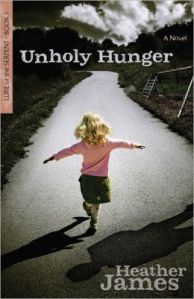
UnholyHungerHeather James, Unholy Hunger, her debut novel!

******************************************************************************************
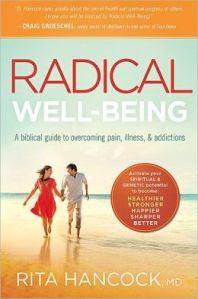
RadicalDr. Rita Hancock, Radical Well Being

******************************************************************************************
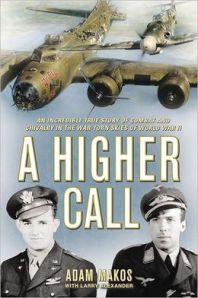
AHigherCallAdam Makos, A Higher Call

******************************************************************************************
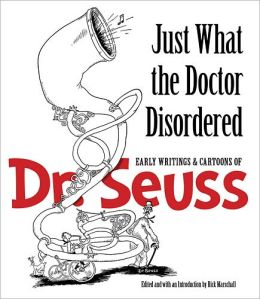
JustWhatDoctorRick Marschall, Just What the Doctor Disordered

******************************************************************************************
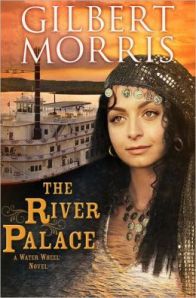
TheRiverGilbert Morris, The River Palace

******************************************************************************************
DilemmaOlivia Newport, The Dilemma of Charlotte Farrow

******************************************************************************************
GreatStoriesJoe Wheeler, Great Stories Remembered #1, audio (eChristian)

******************************************************************************************

StinkyJoe Wheeler, Stinky: The Skunk Who Wouldn’t Leave (Pacific Press)

******************************************************************************************

New WordServe Clients

Several new clients have joined the WordServe stable with Alice Crider as their point person, but we’ll report more on that next month.

New Contracts

Christina Powell signed with Intervarsity Press (IVP) for her first book. The book is tentatively titled Question your Doubts. It explores the many roots of doubt experienced by both believers and nonbelievers, providing a corresponding response of faith from the rare perspective of a Harvard-trained research scientist who is also an ordained minister. (SF)

What can we help you celebrate?

Are Reader Questions Helpful?

Freedigitalphoto.net Reading Club

After my first avid reading friend told me she had made a vow not to read fiction until the end of the year and hoped by then her desire to read fiction would be gone for good, my thought was, I would never try to convince my friend she should read fiction if she has a conviction against it. I know my life would be very dull without fiction.

Because I could see a reason to relieve any guilt other Christians might have about reading fiction, I became interested in the discussion questions in the back of some of my Christian friends’ novels. They always seemed to reveal the author’s motives in writing that particular story. The questions bring out the growth in the characters as they lived through the events of the story, and as they became better people.

In asking around about lessons on writing reader questions … what type of questions to ask, I learned some of my author friends are required to write the questions but admit they never read them and don’t know why they are asked to provide them.

I never found those lessons. So, I’m not sure how I did it, but I came up with 9 questions for the back of my book.

Last week a writing friend stopped in. I had one proof copy of my book left. A few years back she was writing fiction and it was awesome. Her words take on a lyrical quality. In fact she wrote the most awesome story I have ever read about the murderer Barabbas who was spared crucifixion at the time our Lord was sacrificed for our sins. So I know at one time she understood the place of Christian fiction in our lives.

She took the book knowing it was fiction, but thinking she could read it—for me. And she did give me some points and suggestions for three different changes, which I appreciated. But she couldn’t get past chapter eight because to her it read like a romance. And she had decided a few years ago that reading romance stories were not good for her mind. In fact she has not read fiction at all for several years. So of course she never made it to the discussion questions. I did not know my friend had quit reading fiction when I asked her to read it. And I did not try to convince her to finish it.

Earlier, my sister read a PDF copy of this story, and her words to me were: “Thank you for letting me read your book. At first I thought, ‘Oh dear, this is a Harlequin Romance’—but as the story progressed I realized it wasn’t. I cried when [unnamed character] died. I was on the edge of my seat while Birdie was running through the tunnel. I could picture it all. You have several subplots that make it interesting, but more important, you have several messages about Christian living.”

I’m still trying to come up with a basic template for discovering how to write the best discussion questions for any given book. Do you have any suggestions?

A Few Christmas Thoughts On Marketing

VIVITAR DIGITAL CAMERA

Would you trust a Christian?

How about a Puritan?

A Quaker then?

On cold winter mornings before I head out, I love a bowl of hot steaming porridge oats, with a dash of maple syrup.

With this in my belly, I am ready for anything the day may throw at me…well, at least until the mid-morning coffee break.

Look at the image of the Quaker man on the box. He’s adorable, trustworthy, decent, a law-abiding citizen. His smile is certainly reassuring. Admiring his rosy cheeks? Well, he could be Santa Claus.

His face says it all. Buy my products and you’ll feel as good as I look!

a pic of quaker%20oats%20man

I was in my local supermarket recently, when my keen eye spotted a bargain. I saw an offer on the shelves that was just too good to miss. A double-size box of my favourite porridge oats, with twice the usual contents, for a knock-down, give-away price of 30% below normal cost. My hand flashed out quicker than lightning. The big box was in my cart. The next day, ready for breakfast, I broke into my double-sized box of….what? I was shocked, then embarrassed at being so gullible. I trusted the Quaker man to deliver on his promise. What I got was, yes, a double-sized box, but inside it was 60% air! The actual contents came up to the level (take a look at the first picture) of the top of the wooden post.

As we head towards to the Christmas season when billions of dollars change hands, maybe we should all take a step back and reflect upon the potential of marketing and its ability to persuade us to buy products that patently don’t live up to the advertising.

Just for the sheer sake of it, I did a trawl through Bible Gateway to check if the following words and phrases ever appeared in the Bible.

Marketing, Selling, Sales Strategy, Search Engine,

Keywords, Customer Centric, Optimization.

You guessed it. None of them have a place in the Good Book. As writers, of course, we need marketing to get our message out there and reach communities, whether they be local or global. But we need to be discerning and careful to avoid the trap of believing and buying into the same secular trickery that sells anything to everyone. We should not be inveigled by the World, the Flesh and the Devil. Not be seduced to sell our sacred message by secular means.

I have often pondered this: What would I say, if God said these words to me?

”Fred, your book is great, but it will only sell one copy. The person who reads it will be changed and will become my servant and take the Gospel to millions of people all around the world, and all because he read your book. Alternatively, I can have your book sell millions of copies, you will be rich beyond your dreams, but only a few will be saved. My son, it’s your free choice.”

What do we ultimately want from writing books? Fame and fortune? Or to be walking in God’s will?

Of course, the Lord has a strategy to communicate his message to the world. Undeniably, he uses the power of the Word to get the message across to the greatest number in the most effective way. And he uses great orators to reach the lost, but persuasion is not their business. Their business is communicating the truth about the Son. The way God markets his message turns human wisdom and cleverness on its head.

When God wanted to free the Israelites from Pharaoh’s tyranny he sent a guilt-ridden, reticent, stuttering, fearful man called Moses to get the job done.

When God wanted to proclaim the coming of Jesus Christ he used an eccentric wild man, dressed in animal skins, eating locusts and honey in the desert.

When God wanted to save the world, he sent his all-powerful and eternal Son to be born naked in a stable for animals. As a human child he was vulnerable, weak, dependent and unable to live without his mother and father’s protection and care.

When God wanted to reconcile us to him, he allowed his Son be crucified, killed on a cross of wood, dying as a common criminal rejected and alone.

I wonder what the top marketing gurus and the best advertising companies would have come up with, if God had asked them to create a package to ‘sell salvation to sinners?’

They might have come up with a great sales strategy and a winning message to achieve customer optimization, perhaps throwing in an unforgettable slogan, an amusing jingle too… yet somehow, like the Quaker box of porridge oats I bought, I think it would fallen short, been so much air and less substance. I think their sales plan would have missed the target, somehow betrayed the truth, don’t you?

Christmas Parade Blog Winners!

I’ve awakened from my Christmas coma just long enough to announce the winners for the Christmas blog parade.
Christ's Birth In A StableWinner Prize Package #1: Rhonda Nash

Winner Prize Package #2: Karen Jordan

Winner Prize Package #3: Lindsay H.

I’ll be e-mailing you in the next few days.

Thanks everyone for commenting and participating in our blog parade. I hope you were able to see some new fantastic blogs and read some great posts.

Merry Christmas!

The WordServe Water Cooler

Concreteness and the Gospel of Christmas

Toward the end of the semester in a Writing from Faith course that I regularly teach at my Christian university, a first year student voiced a revelation.

Manger, Meggido, 850 BCE, photo: Darko Tepert Donatus
Manger, Meggido, 850 BCE, photo: D. T. Donatus

“Until now,” she told us, “I’ve always thought, when teachers said ‘Be concrete,’ that I should use more adjectives. Now I see that it means I need to make people see what I saw and hear what I heard and smell what I smelled. Using your senses to reconstruct an experience helps people believe and care about what you’re saying.”

She was responding to a fellow student’s personal psalm about her fear that, her missionary family being in far off Costa Rica, she wouldn’t get to go home for the holidays. In the poem, the student-psalmist stares at the computer screen while, just beyond the thin walls, her dormmates’ are goofing around and chattering about their holiday plans. The poet recounts the family traditions she’ll be missing: getting ornaments out of dusty boxes, drinking hot chocolate with her siblings while Dad reads them all Christmas stories, holding hands to pray over the traditional dinner of arroz con pollo.

We all teared up as she read, and, when she finished, the whole class started scheming about collectively raising the money for her plane ticket. Within minutes of hearing that psalm, they were organizing a new ministry to do the same for every needy MK—as missionary kids are called—on campus.

It was a big moment for me, pedagogically speaking. Not only had one of their writings spurred them to action, but they were finally starting to understand the importance of concreteness instead of just thinking it another feat of dubious value that their teachers and now I demanded of them in lieu of explaining. The power of sensory data to persuade was a creative strategy I’d been trying to convince them all of from day one. I lectured about it, pointed out concreteness in whatever we were reading, and highlighted in yellow and commended instances of concreteness in their own writing. It’s a simple concept, but somehow even advanced creative writing students struggle to grasp it.

“But it’s so easy,” I coaxed. “All you have to do is appeal to our senses!”

Jesus, St. Martin-in-the-Fields portico, photographer Richard Croft
Jesus, St. Martin-in-the-Fields, photo: R. Croft

Christmas is such a sensory holiday. Carols. Pine smells. Fruitcakes and sugar cookies. Snow. The sheer concreteness of Christmas crystallizes the joy-inspiring gospel it celebrates: that our invisible Creator sent us concrete evidence, in the form of his newborn Son, so that we might believe and have eternal life.If we can get, in our minds, to that baby in that feed-trough out in that barn—if we can really believe that good news—we have accomplished what Jesus will later say is the only work of God expected of us: to believe in the one he has sent.

Awaiting the Unexpected

Christmas star“For to us a child is born, to us a son is given…” Isaiah 9:6

What a joyful event we will celebrate in just a few more days! As I have every year for as long as I can remember, I’ve spent these December weeks busily preparing for Christmas. I bake the holiday breads and Christmas cookies my family loves. I deck the halls with our traditional decorations, hang the stockings, trim the tree, wrap the presents. I spend extra time in prayer, stash bills in the bellringers’ buckets, and listen for the cherished carols that herald the day of our Redeemer’s birth.

I know how to prepare because I know what to expect, and what a blessing that is!

But the Israelites to whom Jesus came were expecting a different kind of messiah. Instead of a baby in a manger, they were waiting for a political leader, a king who would rally the troops, drive out the Roman overlords, and establish an earthly nation. Only the shepherds in a field were privy to a miraculous birth; summoning the courage to open their hearts to the words of angels, they followed a star to go to Bethlehem, where they found the Lord himself. Instead of a political ruler, they adored a Child who assures us, “Behold, I make all things new.” (Rev. 21:5)

I think that’s what births are about – making things new. Whether it has been the literal birth of one of my own five children, or the beginning of a new phase in my life, these events change what I have previously known, and often have shattered the expectations I had beforehand of what the birth would bring. I’ve learned that the richest – and holiest – experiences result when I’m open to whatever God brings me, and that, thankfully, God will never be limited by my own  expectations of what I think should be.

As a writer, this same courage to open my heart to God’s leading has shaped my writing career. I studied and trained to write scholarly works of spirituality, but instead, I’ve found a niche in humorous cozy mysteries, of all things! The journey and the rewards I’ve experienced have far exceeded anything I could have imagined, bringing me a rich new life I hadn’t anticipated. I’ve learned to toss out my own expectations, and instead, enjoy what God creates anew for me.

In these final days before Christmas, as I wait again for Jesus to be born in that stable, I pray that each of us will take a moment from our well-loved rituals of preparation to courageously open our hearts, and, without any expectation, receive what God has in store for us.

“…And he will be called Wonderful Counselor, Mighty God, Everlasting Father, Prince of Peace.” Isaiah 9:6

May your Christmas make all things new!

Do your expectations prevent you from seeing something totally new and unexpected?

How to Write a Bestseller – Even If You Never Took a Writing Class

Recently, I was invited to share what I’ve learned in the trenches as I wrote, pitched, and published my debut novel, Into the Free…a book that spent three weeks on both the New York Times and USA TODAY bestseller lists and earned a starred review from Publishers Weekly (even though I never took a writing class).

Through the WriteNow writer’s workshop, I answered many questions, including:

  1. How did the idea for this book develop?
  2. Did you sell your first draft or were there many edits involved?
  3. What tools were most helpful for you as you learned to craft a novel?
  4. How did your debut novel get noticed on shelves?

We also discussed logistical details such as finding an agent, signing with a large publisher vs small publisher, dealing with editors, and carving time to write.

And we touched on hot topics in the publishing world including the convergence of the Christian and secular markets, self-published e-books, and why indie stores matter.

PLUS…listeners had time to ask questions at the end of this 45 minute workshop.

And the best part of all…the entire audio recording is still available FREE of charge online.

As a debut novelist, I’ve learned a lot by trial and error. Now, I’m ready to share my advice with you.

Why am I offering a free workshop? Because nice people helped me achieve my dream of becoming a novelist, and I want to do the same for you.

What’s in it for me? Well, selfishly, I’m an avid reader…and if I can help you publish a good book, then I’ll have a fabulous new story to read.

What do you have to lose? Absolutely nothing but time.

How can you participate in this free workshop? Visit WriteNowCoach.com where you can find an extensive archive of free workshops. While there, register to receive email updates so you won’t miss upcoming cost-free teleconferences.

It’s A Christmas Parade!

As our treat to our wonderful WaterCooler Readers, we thought we’d do another blog parade. Each of our authors below is blogging about their Writer’s Wish List. Hmm . . . I know I’m intrigued to see what’s on these lists. Funny? Quirky? Serious?

I don’t know . . . you’ll have to click on the links to find out!

1. Lucille Zimmerman
Blog Link: http://www.lucillezimmerman.com/2012/12/10/ape-author-publisher-entrepreneur-how-to-publish-a-book-by-guy-kawasaki-shawn-welch-a-book-review/

2. Janalyn Voigt
Blog Link: http://janalynvoigt.com/one-authors-christmas-wish

3. Kimberly Vargas
Blog Link: http://www.kimberlyvargasauthor.com/?p=241

4. Cheryl Ricker
Blog Link: http://www.cherylricker.com/2012/12/smells-and-whistles/

5. Jordyn Redwood
Blog Link: http://jordynredwood.blogspot.com/2012/12/wishing.html

6. Melissa K. Norris
Blog Link: http://melissaknorris.com/?p=1351

7. Gillian Marchenko
Blog Link: http://wp.me/p2Ds6m-zA

8. Dr. Rita Hancock
Blog Link: http://edensfreedomsisters.ning.com/profiles/blogs/the-eden-diet-joins-a-blog-parade-find-out-how-to-win-dr-rita-s-b

9. Karen Jordan
Blog Link: http://karenbarnesjordan.com/a-writers-wish-list-grace-gifts

10. Kelli Gotthardt
log Link: http://www.kelligotthardt.com/1/post/2012/12/writers-wish-list.html

11: Jan Dunlap
Blog Link: http://jandunlap.com/2012/12/the-wishlist-of-a-writer/

12: Cindy Dagnan
Blog Link: http://cindydagnan.com/cindy-sigler-dagnan/2012/12/14/one-writer%E2%80%99s-wish-list/

13: Anita Brooks
Blog Link: http://brooksanita.com/a-writers-fantasy-wish-list

Merry Christmas!!

Writing with Others: The Art of Collaboration

I never intended to be a collaborator.

For the record, my plan was to be a wildly successful, insanely rich novelist. People were going to mention me in hushed, awestruck tones along with other “last name only” fiction writers. You know: Peretti, Dekker, Grisham, Koontz, King, Pence.

I broke into book publishing in 2001 by writing computer books. In 2003, my dream was fulfilled. I was a published—and soon to be famous—novelist. By 2005, despite excellent reviews, my “career” had pretty much ground to a halt. In fact, in May of that year I hung up my keyboard and joined the prison ministry staff of a large Dallas mega-church, feeling that my grand experiment in full-time freelance writing was a failure.

God had other plans.

James H. Pence (left) and Terry Caffey

In an earlier post (Oct. 1, 2011 – “You Never Know”), I told the story of how God took a single page from my out-of-print novel Blind Sight and used it to change the life of Terry Caffey, a man whose family was brutally murdered. God not only used that page to change Terry’s life; He also used it to change the entire direction of my writing.

In January of 2009, Terry asked me to help him write a book that would tell his story.

I hadn’t written or published in four years and, as I already mentioned, collaboration was not in my long-term plans. However, because I wanted to encourage Terry, I agreed to help him write a book proposal.

Because of the intense media interest in Terry’s story, Tyndale snapped up the proposal and put the book on an accelerated publication schedule. We signed a contract in March of ’09 and the book was set for a September release.

I had to write it in twelve weeks.

The accelerated writing schedule was probably a good thing because I didn’t have the time to give in to sheer panic. I’d never collaborated before, and I had no earthly idea how to go about it. But it was a door that God had opened, and so I trusted Him for the wisdom.

I dusted off my little digital voice recorder and began interviewing Terry. Then I worked at outlining the book, selecting the stories that would go into it, even using my fiction-writing skills to lay out a plot-line.

As I worked with Terry and wrote what would become Terror by Night, I began to notice something unexpected.

I was enjoying myself immensely.

I love telling stories, but I had no idea how much I would enjoy helping other people tell their stories.

And so now I happily call myself a collaborator. Since the publication of Terror by Night, I wrote More Godthe amazing story of Nate Lytle, a young surfer who made a miraculous recovery from a massive traumatic brain injury. I also collaborated with bestselling author Stephen Arterburn on a novella titled The Encounter. Soon I’ll begin writing the story of Herb Samme, a dad who lost his son in Iraq and then went there–at age 59–as a civilian contractor to finish his son’s tour and walk in his footsteps.

I never intended to be a collaborator; I wanted to write my own books.

But God led me through an unexpected door and down an unplanned path. He showed me that I can be a blessing to others by using my writing abilities to help them write their books. And in doing so, He changed the direction of my writing ministry.

Has God placed some unexpected doors or unplanned paths before you? I hope that in 2013 you’ll take a chance and go through them.

You never know what God might do.

“A person plans his course, but the Lord directs his steps” (Proverbs 16:9, NET Bible).

[Tomorrow, Dec. 13th at 3:30 p.m., Central time, James will be leading a free webinar titled “Writing with Others: The Art of Collaboration” over at The Bestseller Society. You can register for the webinar here: http://www.bestsellersociety.com/events/the-art-of-collaboration-with-james-pence/ ]

Sticks and Stones: The Highly Sensitive Writer Toughens Up

I recently attended a writing seminar about creating compelling titles for books. A burgeoning writer volunteered her book title for the rest of the group to critique. The consensus of the group was that her title wasn’t catchy enough and needed to be reworked. Several people in the group offered sage advice that would probably have helped her a great deal, had she been open to suggestions – but she wasn’t. The novice writer became incredibly defensive (and borderline angry) about the feedback. She was not ready to be objective about her work. The facilitator had to smooth things over and hastily get a more willing participant for the exercise.

Throughout history, even the most successful writers have to deal with criticism, so there’s no reason why we should consider ourselves immune to feedback. Check out these excerpts from actual famous author rejections from http://www.writersrelief.com:

  1. Sylvia Plath: “There certainly isn’t enough genuine talent for us to take notice.”
  2. Rudyard Kipling: “I’m sorry Mr. Kipling, but you just don’t know how to use the English language.”
  3. J. G. Ballard: “The author of this book is beyond psychiatric help.”
  4. Emily Dickinson: “[Your poems] are quite as remarkable for defects as for beauties and are generally devoid of true poetical qualities.”
  5. Ernest Hemingway (regarding The Torrents of Spring): “It would be extremely rotten taste, to say nothing of being horribly cruel, should we want to publish it.”

Ouch! So, how does one not get touchy about his / her work? Writers are still artists, after all. Artists are famous for being highly sensitive. Artists who have to self-promote themselves may find it incredibly awkward to listen to face-to-face or written criticism. Once I gave a book I wrote to a professor friend to review. He said. “Well, perhaps you should focus on writing things you know about, as opposed to rock stars.” It was a fair point well made, and my creative writing has become much more real as a result of sticking to what I know.

Boxer Flexing Her Muscles

Aside from writing, I also like to paint. One time, it took 3 months to finish a large 12×12 foot piece and I needed to get a moving company to deliver it to my showing – longdistancemovingcompanies.co is my favorite long distance moving company for that. At one of my showings, I overheard a man telling his friend that my art might be best displayed at a fast food restaurant. “It’s convenience store art,” he said as I looked on, trying not to have any sort of facial expression. The critic didn’t know I was the artist or that I was in earshot. It stung, but feedback is still feedback and should be regarded as just that. It proved to be a valuable lesson – you can’t win them all. If you will accept nothing less than 100% acceptance, you will be plagued by disappointment. But here is the silver lining: You don’t need to win them all. You just need a percentage, and as long as you keep putting your work out there, the correct audience that appreciates you will find your work. It’s all about maintaining perspective.

Why does one need to develop a thick enough skin to withstand criticism? Because unless you have someone else to promote your writing on your behalf, it’s all going to be done by you. You will be the one going into the front lines to promote and defend and champion your own work. Confidence helps, so if you don’t feel you have any, then act as if you do. Pump yourself up until you start to believe it. If one reader doesn’t appreciate your writing, that’s okay – there will be others who will. Instead of harboring hurt feelings, why not just say, “There are other audience members in the literary sea. Next!”

How do YOU maintain perspective about your writing?