Mandatory Reading

readingI’m often surprised when I hear a writer say they’re too busy to read. Really?

Is a doctor too busy to bone up on emerging diseases?

A network administrator too over-scheduled to learn the latest technology?

The teenager down the street too booked to check out a new video game?

Face it. We all wish there were 32 hours in a day to accomplish everything. Newsflash: that’s not happening. Those who are too busy writing to read just might regret it one day. It’s kind of like living on a diet of junk food. Works for now. Tastes great. But eventually your body is going to crash…and so will your writing.

There’s a bajillion reasons why reading sharpens writing, but here are the top 3:

#1. Reading hones your craft.

Seeing how others structure their sentences, weave their plot lines, or develop characters presents a model (an obviously winning one since you’re reading a published book). Read and study the big name authors who’ve mastered the craft of ordering words, then follow their example.

#2. Reading outside your chosen genre stretches your writing capabilities.

I don’t write young adult, but I read it because of its snappy dialogue. I don’t write horror, but sometimes I pick up a tastefully done creeper because of its shock-and-awe factor. I don’t write epic sagas, but sometimes I’ll page through one to fill up my beautiful prose tank. Then I can use all those elements in my historical fiction to make it a more full-bodied manuscript.

#3. Reading puts your mindset into a different world, allowing you to see your created writerly world with fresh eyes when you come back to it.

Sometimes when you’re stuck on a particular scene, it helps to walk away from it for a time and focus on something else—something like another well crafted story.

Now that you’re hopefully feeling the need to race over to your local library, what books should you invest your time into?

Big Sellers

This one is a no brainer. There’s a reason these books fly off the shelves. Pick one up and figure out why.

Classic Tales

Granted, the language in many of these can be archaic, but they’re still worth the effort. If you can dissect a classic to understand what makes the connection to a reader’s heart, then you can mimick that in your own work.

Bargain Bin Books

These are the novels nobody buys. The characters are milquetoast. The plot is flatter than the tire on my ’91 Honda. And the writing, well…let’s just say it’s marginal. So why in the world would I recommend you read one of these losers? Because even bad writing can teach you good technique simply by presenting the inverse. Besides which, it will spur on your I-can-do-better-than-that attitude.

Outside Your Box Novels

Don’t get me wrong. I’m not dissing the concept of keeping yourself well read in your chosen genre. In fact, you should be. However, you will grow as a writer if you subject yourself to other styles and more variety.

Barring the occasional looming deadline or real life catastrophe, writers should be readers. But don’t just take my word for it…

“No matter how busy you may think you are, you must find time for reading, or surrender yourself to self-chosen ignorance.”

~ Confucius 

So…what book are you currently reading?

Publishing as Training in Humility

Do nothing out of selfish ambition or vain conceit. Rather, in humility value others above yourselves, not looking to your own interests but each of you to the interests of the others.                                                     (Philippians 2:3-4)

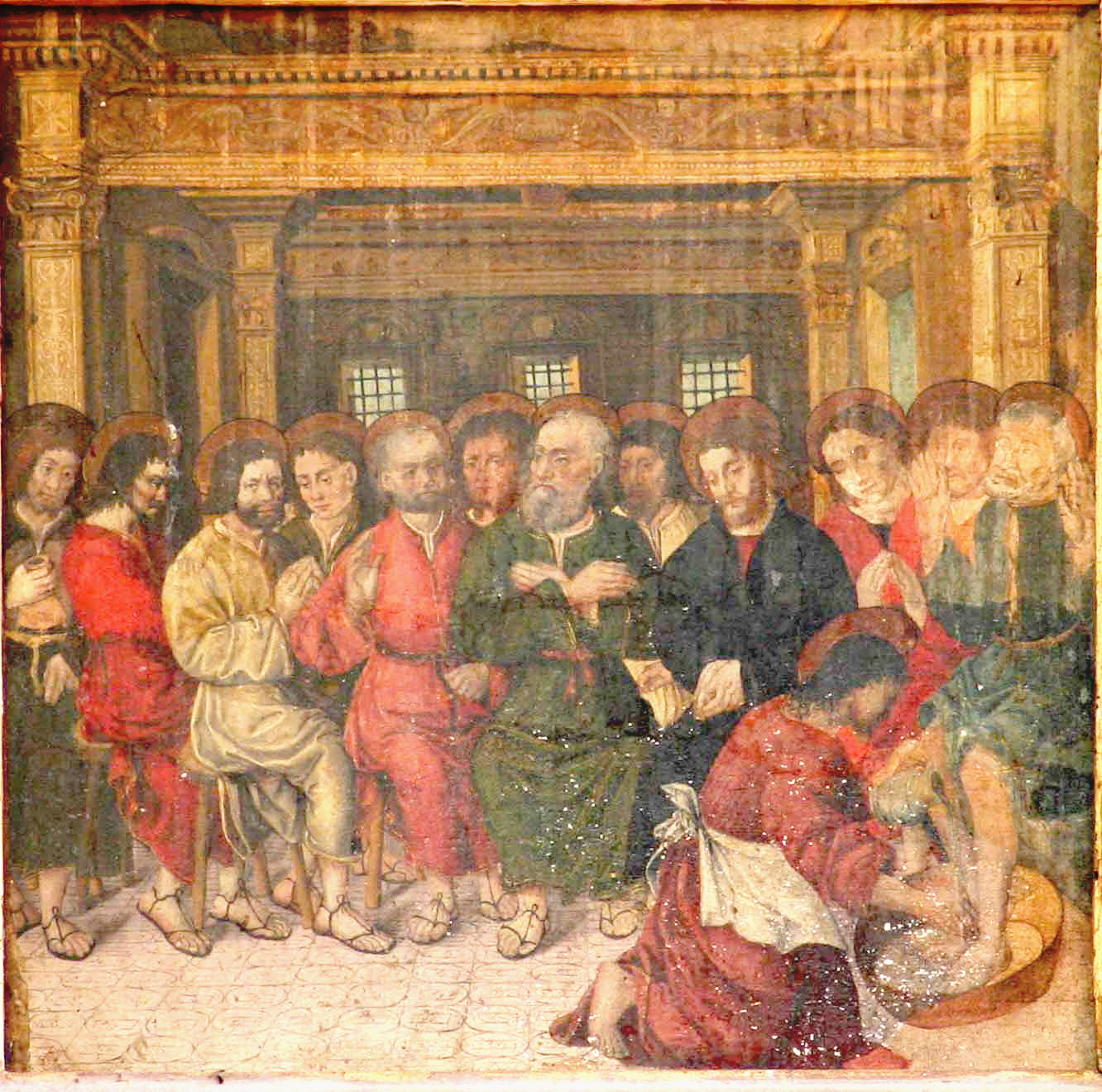
Antoine Ronzen--Lavement des piedsLast semester, I was wheedled into talking to a group of students in a course that I don’t normally teach, Intro. to Creative Writing. They were students at various levels and from a variety of majors, united only by a shared desire to be published someday, and my assignment was to talk about my own publishing career. At some point I said a bit about a book I have coming out in the spring.

“It’s called Easy Burdens,” I told them. “Or, that’s what I wanted to call it, but it ended up being called The Easy Burden of Pleasing God.”

The students murmured polite agreement that my title choice was better, but one bearded young man in a crocheted slouch hat was outraged.

“I don’t understand,” he ranted. “Why’d you let them call it by anything else?!”

“Well, they’re the marketing experts, not me. Besides, you have to understand that publishing a book is a group undertaking. Not like the writing itself, when you’re pretty much on your own. It’s like making a movie. Lots of people get involved in what it takes to get the book into readers’ hands, and each one is an expert in some part of that process.”

“I would never let somebody change my title,” he insisted.

“That was my attitude in the beginning too,” I admitted. “ I had to grow up and get a lot humbler.”

“I’ll never grow up,” he said. I called him Peter Pan, and we all laughed.

This semester, I’m overseeing a publishing practicum in which students undertake real world publishing projects. Remembering the exchange as I was making my syllabus for the practicum, I listed humility as one of the learning outcomes. (It being a Christian university, it’s okay to have spiritual as well as academic course objectives.)

For the first day of class—actually my only physical meeting with the students, since they learn exclusively by doing in this practicum—I invited a student who’d previously taken the practicum to show off the group-authored discussion guide for a new release that she’d helped write and to talk about a little about her interaction with a real publishing house.

“It was wonderful!” she gushed. “It made me know, this is what I want to do for a career.”

“Did you learn anything in the process that you think might help these students?” I asked.

“You pretty much have to do what they say,” she said right off. “I mean, they’re the ones publishing it, so what they say goes. You might have some really cool idea of how you want it to be, but they might not agree. And they will tell you so. And you have to fix it. It’s humbling.”

Sad to say, Peter Pan’s not in the practicum. He’ll have to learn humility from his own personal publishing experiences, just like the rest of us.

All the World’s A Page: The 9 Woes of the Writing Life

At work in the world, on the world of the page.
At work  on the world of the page.

Recently at the end of a creative nonfiction class I taught, a student came to me with a helpless shrug of her shoulders. “I want to write. I want to be a writer. That’s what I want to do with my life.” I felt a gush of pride that I had managed a convert, but pity came next, then fear:  What had I done? I immediately knew I needed to fill in what I left out from the class script, the off-stage notes that turn out to be the most important. To her and to any other aspiring writers, I offer the cheerful remainder here (to be read in a sonorous voice, because the warnings are real):

 Woe #1: You will see too much.

You will no longer be able to ignore the woman in El Salvador sitting among the garbage, the man carrying a sink onto a bus, the arguing couple behind you in the restaurant. A writer is charged with keeping attention, with bringing words to the invisible, the unspoken, the troubling, the ridiculous. But even as you take note, do take note: the best words you find will not be enough.

Woe #2: You’ll lose a lot of sleep.

You will welcome nightly visitations of the muse, inviting her with an open notebook beside your bed. You will be so hungry for words you will gladly trade your necessary rest for a single cutting sentence, a vivid metaphor, a line of pretty poetry. You will be tired often because of it and you won’t always be happy.

Woe #3:  You will gradually be divested of your most cherished stereotypes and grudges.

Your entrance into others’ lives and stories whether actual or fictional will bring a disconcerting complexity and humanness to the unlikeliest and unloveliest people. If you’re not careful, you may even be tempted to forgive.

 Woe #4:  You’ll give away your privacy.

All the world’s a page. To keep both of yours turning (world and page) you’ll need to appear on every platform you can beg, borrow and thieve, telling and giving all at any hour of night or day, without modesty or reserve. You will give most of yourself away. A special woe to those tempted to write memoir.

 Woe #5: You will read for pleasure less and you will like fewer books.

Once you take language and books seriously you will be unable to turn off your writer and editor’s eye. Writing that once offered distraction and escape will seldom survive the mental red pen, shrinking your list of favorites. You will give up on bestsellers. You will feel culturally stranded.

 Woe #6: You will spend far more money than you make.

For every writing project you undertake, you will buy a shelf or two of books and you’ll subscribe to literary journals and magazines as if they kept you warm and fed. Which they will, but the metaphor breaks down when the temperature drops below freezing and you’re eating oatmeal for dinner and the bills are past due.

 Woe #7: You will not be content to live in the present only.

In your pursuit of what is real and true, you will excavate the past as eagerly as the present, breaking down closet doors, piecing skeletons together, retrieving abandoned diaries. You will find nuance and revolution that disturbs the status quo. Others will be annoyed and will try to keep you quiet. You may not be invited for Christmas dinner.

Woe #8: You will no longer be satisfied in writing for yourself.

Once you find an audience, however small, you’ll write by an open window instead of a mirror. You’ll carry your readers with you. You’ll care too much about the truth for their sake. You’ll want to heal and help. You’ll see how small you are. You’ll keep writing anyway.

When I began a tentative writing life thirty years ago, I was never formally wooed nor “woe-d.”  If I had, would I have continued? I know the answer. It comes as the final “woe” and I write it now to my student, who is still watching me with undimmed eyes:

Woe#9: Woe to those who hear, who touch and who see, yet who drop the pen and turn away from the open half-written pages of a world still waiting to be finished. Many stories will be lost. Yours will not end as it should. This woe is far worse than the others.  

The Power of One Word

“… Words are powerful; take them seriously …” (Matt. 12:36 MSG).

I noticed a small typo within a comment that I had posted on a friend’s blog. Instead of the word “power,” I had typed “poser.”

A minor mistake? Not for a writer! And especially not in this case!

My tiny error distorted the entire significance of this scripture: “But we have this treasure in jars of clay to show that this all-surpassing power is from God and not from us” (2 Cor. 4:7 NIV).

One word shifted my focus and the potential attention of my readers. All I could see was my mistake. I lost sight of the message and power of God’s Word. And my readers may have missed the entire point of my comment.

How many times do we let one word spoil things for us? We speak a single word of profanity in the heat of an argument. Or we whisper a little white lie as we try to cover up a mistake. We often regret the unexpected consequences that result from our words. One negative comment or careless thought voiced in frustration or anger can blind us from seeing God’s blessings in a situation.

As a writer, I cringe when I discover one insignificant word choice that turns a powerful point into a grammatical disaster. And I wince when I read an offensive term that will repel an audience of would-be readers.

As a writing instructor, I notice many writers resisting the editing process. They focus on the goal of finishing their writing task, instead of fine-tuning their grammar and mechanics. They get offended if anyone calls attention to one tiny mistake or unclear point, or someone suggests meaningful change. Then, they get angry or depressed when they receive a lower grade for their work, or the piece is rejected for publication.

As a Christian, I’ve also experienced the power of God’s Word. One word of encouragement can pull me out of the deepest pit of despair. A single promise from God’s Word can offer hope to me, when my circumstances seem overwhelming. My simple confession of faith can produce peace in my heart and mind “which exceeds anything (I) can understand.” (Phil. 4:7 NLT).

So, does one word matter? God’s Word answers this question. “In the beginning was the Word, and the Word was with God, and the Word was God” (John 1:1).

Photo/KarenJordan

Have you experienced the power of one word?

The 15-Minute Writer, Part 4: Brain “Rules” for Writers

file0001052648856 (1)Busy authors and authors-in-training need all the brainpower we can get. (Especially us writer-moms; I’m convinced that some of my brain came out with each of my two children!)

Therefore, I listened VERY closely during a recent writers retreat as John Medina, author of Brain Rules, spoke about brain science, and how it can help writers become more productive.

Before we begin, we need to realize that there are no real “brain rules” for creatives. “I’m guessing as to what will help your creativity and output, according to the brain research that’s out there,” Medina told us. With that caveat in mind (pun intended), here are a few practical lessons I gleaned from the two hour-long sessions he led.

First, our ability to be creative is directly related to feeling safe. Our minds are instinctual; therefore, we need to find a place to write where we don’t feel threatened emotionally, creatively, or physically. Maybe it’s a coffee shop where the server knows our favorite drink, or a corner of our home where we can thoroughly relax.

Try this: ask yourself: where can I create without someone interrupting and/or discouraging me? Journal for fifteen minutes about this, or spend that time setting up a more nurturing space.

Second, we need to sleep to learn. Medina says, “We not only rehearse what we’ve learned as we sleep; we also rehearse what we don’t know, and try to solve it.”

Try this: do you have writer’s block? Work on your problem manuscript two hours before bed. Need to finish something within a few hours? Set a timer, and take a refreshing 15-minute nap.

Third, we all have times of the day when we’re most productive. Medina calls these natural body rhythms “chrono-types,” and he encourages authors to pay close attention to them.

Try this: work when you’re most creative. Are you a lark (morning person)? Set your alarm to write before work or school. Are you a might owl (night person)? Write after the kids are in bed. Maybe you’re a hummingbird (afternoon person). If so, try to write during your break at work, even if it’s only for fifteen minutes.

Fourth, exercise boosts cognition and buffers against the negative effects of stress. Medina cited a study which looked at two groups of people as they transitioned through the aging process. The active group suffered less depression and dementia, retired later in life, surrounded themselves by family and friends, and aged beautifully. The sedentary group aged “terribly,” according to Medina. “They endured depression, anxiety, medical problems, loneliness–and they looked old.”

He then mentioned a study in which soldiers exercised before and after Chinese language lessons. “There was a one hundred percent change in cognitive function when the soldiers exercised before trying to learn Chinese,” he said. “Other studies show that if you keep up regular exercise for three years, you actually improve memory!”

Try this: Medina vows that five aerobic sessions of 30 minutes per week is all it takes to get the massive brain benefits from exercise. Those sessions can also be two smaller ones (say, 15 minutes). He also says that your mental “sweet spot” will occur right after you exercise. So schedule a short exercise session right before your writing time. Your brain–and your body–will thank you!

Read part one, two, or three of this series.

Generating Buzz Through Book Reviews

beeOptimizing buzz from book reviews can be an key part of your book’s overall marketing campaign, so it’s important to make time for it, even if you’re like me and writing isn’t your primary day-job. 

Allow me to share a few tips that helped me get SIXTY-THREE book reviews and interviews for my new book, Radical Well-being, while suffering only a short-term, reversible case of utter exhaustion. Yay!!

(1) Establish your platform and develop relationships on the Internet long before you ask people to review your book.

When you pitch to book reviewers, it helps if you already have an established presence on the Internet and elsewhere. That’s why you need as many of these as possible (I included links so you can see what mine look like): an author website, Facebook fan/author & book pages, an Amazon.com author page, at least ten positive reviews on your book’s Amazon.com page, a Pinterest page, a Linked-In profile, a video book trailer on Youtube (see my latest book trailer, for example), a Twitter account, a blog (I actually created an interactive forum for discussion about my diet book–with a blog embedded in it), an Internet talk radio show, a newsletter or e-zine, magazine articles, and as many TV and radio appearances as possible. Don’t necessarily shoot for perfection on your Internet pages before you publish them. Just get your pages up and running. You can improve them gradually, over time, if need be.

(2) Pitch to every reviewer you can, and do it early.

I started collecting names and contact information for book reviewers, columnists, newsletter producers, and bloggers in my specific niche about six to nine months before the official launch date for Radical Well-being. As soon as the reviewers responded with interest, I asked if they would accept an electronic version of the book when it became available. If the answer was “No,” I put them on a separate list to receive a bound galley copy (a rough version of the book).

(3) Ask your publisher for an electronic version of your book to send to reviewers early. Also, get the cover art to include with the book file.

Almost half of the sixty-three people who agreed to review my book were willing to accept an electronic copy. The copy was watermarked by the publisher to deter widespread bootlegging. Attach the book’s cover art, a short author bio, and a book synopsis to the book file when you email it to reviewers, and send sample interview questions if the blogger wants to run an interview about you, as well. Bloggers love it when you suggest questions they might want to ask you.

(4) Try to coordinate reviewers to publish on the day of your book’s actual launch date.

Start well in advance. Otherwise, you won’t allow your reviewers enough time to read your book and write their reviews before your launch date! I had to scramble in this regard, as my publisher unexpectedly moved up my book’s release date by two months! Yikes! To help my publicist get the galley copies out in time, I actually printed out cover letters and mailing labels and snail mailed them to her. That way, all she had to do was put the galleys in the envelopes, insert my signed cover letter, affix the mailing label, and send them off. It wasn’t necessary for me to do that, but it freed her up to get me more media hits than I could get on my own, so it was worth the effort on my part.

(5) Solicit radio interviews well in advance of your book’s launch date, if possible.

You don’t have to be a major author to get radio spots. Try for Internet radio! Some hosts with smaller audiences may be eager to have you on. The nice thing about radio is you can PRE-record shows, thus freeing yourself up for other buzz-building activities on your launch date. Plus, you don’t have to get all dressed up or travel far from home like you do with TV. As a side note…. when you pitch to radio producers, keep in mind they get hundreds of pitches a day. Odds are high they won’t make it past your email’s subject line if it’s boring, so write one that’s enticing! My subject line read, “Christian IvyLeague MedDoc/radio guest/author w/ unlimited FREE Kindle diet book downloads for ALL ur listeners, Jan8-12.” Yes, you read that right. I offered my first book, The Eden Diet, entirely FREE, in exchange for a chance to talk about my second book, Radical Well-being. (By the way, you can have my diet book for FREE, too, if you want it. It’s FREE on Kindle through January 12, 2013. Just follow the link above, which I shamelessly worked into this point. Do you see what I did there? Use every opportunity!)

(6) Make marketing opportunities for your book anywhere possible.

The launch date for my new book, Radical Well-beingA Biblical Guide to Overcoming Pain, Illness, and Addictions, was YESTERDAY!!!! Thus, I wrote this blog entry ahead of time and strategically set it aside for publication today. As you can see, preparing promotional material in advance is critical if you want to achieve optimal buzz around the time of your book’s launch.

(7) Send reminders to your reviewers and radio hosts.

Don’t expect everyone who promised you a review or an interview to necessarily remember your release date. In fact, just assume they already forgot. Send them a “thanks again for agreeing to publish my review on [insert launch date]. May I provide any further information to facilitate your writing the review?” Many reviewers responded with a “I’m so glad you reminded me…” or “Would you mind reminding me again in two weeks? I have a lot going on right now.”

(8) Thank your reviewers with back-links to their reviews. 

It’s only courteous! And it’s good for relationship-building. Keep in mind that you might write another book someday and might therefore solicit reviews again from these bloggers! As for me, I intend to publish “thank you’s” and back-links in the February 2013 edition of Dr. Rita’s Christian Health Newsletter, which goes out to over 3400 subscribers. I also posted thank you’s to my reviewers on Facebook and elsewhere.

As you can see, it isn’t easy to create buzz for your new books, but starting early, working hard, and establishing good cyber-relationships certainly helps. A little bit of OCD doesn’t hurt, either.

Do YOU have info to add, here? If so, I’m all ears! What additional advice do YOU have regarding how to solicit and coordinate book reviews and interviews to optimize book buzz? Any and all comments are appreciated!

Blessings from Dr. Rita!

The Jealous Writer

Are You a Smart Writer?

Confession time. I have a problem with writer jealousy. It’s not a serious case, but enough that it requires energy and effort to keep it at bay.

As a child, I was known as The Smart One. But like most who want what they don’t have, I preferred any of these titles, The Cute One, The Funny One, or The Sweet OneAlas, I wasn’t gifted with any of those labels. And I allowed my thoughts over what I wasn’t to overshadow the gift of who I was.

As a woman, I know discontent. Over my hair color, body shape, shoe size, and the shade of my eyes. Insecurity reeks a crushing blow to productive energy. I’d love to recapture the minutes and hours of my youth, spent on wishing I looked more like someone else. I could reinvest my lost time in doing something meaningful.

Are You a Funny Writer?

As a professional author, I too battle the green-eyed monster. When I read an eloquent beauty, a humorous author, a sweet wordsmith, or a creative powerhouse, I often wish I wrote like them. I tremble in the shadows of a thick plot, riddled with mystery, nuances, and intrigue. I covet the ability to paint rich landscapes, where every small touch blends to perfection. I feel sad that I can’t make readers belly laugh like my hysterical peers. My heart’s desire is to embellish dialogue with verbs so strong that the reader forgets where they are as soon as they climb into the story. 

Are You a Sweet Writer?

But there’s hope for a jealous writer like me. 

  • Through age, I’ve learned it’s okay to be me, as designed by God. The child in me couldn’t see the benefit of my unique outlook on things. But now I know if the building’s burning down, pretty, funny, and sweet won’t get you out.
  • Through maturity, I’m learning to appreciate my gifts. I am who I am, and so are the irrevocable qualities others see in me.
  • I’m a serious student by nature, and can’t help sharing God-inspired knowledge and wisdom. Like a sponge, I absorb and release.

    Are You a Cute Writer?
    Are You a Cute Writer?

I don’t know if I’ll ever get past reading a hilarious story, and wishing I could write like its author. But I resolve to remember that just as an arm can’t do an ear’s job, neither can I write what someone else is called to. I may always long to write a great novel, but not until I finish the current race set before me.

Jealous writers who allow themselves to wallow won’t have time or energy to produce their own good work. I am a professional, aged-to-perfection, mature author. This is how I choose to focus my thoughts, so I can create the projects I’m uniquely qualified for. After all, if I don’t write them, who will?

Do you ever struggle with writer’s jealousy?

Write From the Truth of Who You Are
Write From the Truth of How You are Wired

Noli Me Tangere

This painting is entitled ‘Noli Me Tangere’ and was painted by the Russian artist Alexander Ivanov in 1835. It depicts the moment when Mary Magdelene recognises Jesus outside the empty tomb. The Latin inscription translated is ‘Do not touch me!’ Jesus forbids her strongly to lay her hands upon him, but why?

Is there some mysterious process in action going on here, as yet unfinished, whereby Jesus’ body is undergoing change from his former humanity back to his eternal divinity? I do not think that this is the case. I think the answer to understanding this portentous moment is instead to be discovered not in Jesus, but in the state of his beloved disciples at this time.

In the darkness of night the soldiers of the Sanhedrin, with weapons drawn, came to arrest Jesus. Judas’ kiss of betrayal sparked off a violent reaction in the followers of Jesus, encamped with him at the garden of Gethsemane. The grove of olives became suddenly a place of pandemonium, as soldiers took hold of Jesus, as Peter and the other disciples tried to prevent his arrest. Other followers of Jesus, in fear of their own lives, fled. So fearful was one young man’s response that he ran away naked, leaving his clothes in the hands of a surprised soldier.

Later on, during that fateful night of Jesus’ arrest, trial, and flogging, the disciple Peter, Jesus’ most outspoken defender, vehemently denied that he ever knew the Son of God and not once, but thrice, said to his accusers, “I do not know him!”.

The disciples, almost to a man, were scattered abroad. Afraid for their own lives, they hid themselves away, whilst their Lord was brutally being beaten, broken, and finally crucified on the Roman Cross. They were all terrified.

What then happened to them? Between the time when they dispersed so easily, running away like cowards, and the moment after the resurrection, they somehow became men and women victorious in their faith.

Afterwards, they were now profoundly prepared to stand up for Jesus in the face of violent opposition. No longer did they fear for their safety or even for their own lives.

The same adversaries who had only days before crucified Jesus were now persecuting his followers.

A momentous, phenomenal, and very personal transition occurred in their hearts, one which galvanised their faith in Christ. The metamorphosis was not in Jesus, but in the disciples. Jesus is the same yesterday, today and forever.

Look again at the painting above. Why did Jesus forbid Mary to touch him? It is as Mathew Henry says in his commentary of the Bible. Mary was ready, on encountering the risen Christ, to express her joy by affectionately embracing him. The original Greek translation of the passage in the Gospel of John does not use the word ‘touch’ but instead uses a far more revealing word in the context of this meeting. It is not ‘touch’ but ‘cling’ that is forcefully employed here.

Jesus says to Mary ‘Do not cling to me.’ In other words, she must not be familiar with him as she was in former times. She is not to dote upon his bodily presence, but is now to be in spiritual communion with the risen, resurrected Christ.

Of course, at this time she cannot fully comprehend his meaning, for the Holy Spirit had not yet come.

Mary was trying to cling on to her former joy in her relationship with Jesus. But soon she was going to experience a far more profound and eternal joy.

As Christians we can look upon the cross and be grateful for God’s mercy and know that we can have true salvation and be reconciled with the Father because of the staggering sacrifice that Jesus made for us, by enduring the pain of crucifixion and taking upon himself the sins of the whole world.

We need to move on from the cross and ask ourselves what is the difference between Jesus the Man and Jesus Christ, resurrected? To live the ‘resurrected life,’ we must focus all our attention on the resurrected Jesus and let go of Jesus the man, just as Mary was bidden to do.

The disciples underwent an awesome life-changing alteration when they perceived the resurrected Christ. They came to know that Jesus was not just a godly teacher, not merely the Jewish Messiah, but rather that he was, incontrovertibly…God! A truth they had not understood before when they had walked and talked with him. At Pentecost, after Jesus had ascended to the Father, the disciples all received the Holy Spirit. Their transformation from mere disciples of a Rabbi to believers in the Son Of God was complete.

Everything they had been taught from the lips of Jesus suddenly became mind-blowingly, irrefutably real. All their fears vanished, their confidence in him was made new, and their spirits were fearless.

They had become, by the grace of God, Christians… little Christs. They had been given the responsibility of taking the message to the entire world: that Jesus Christ has risen, is our Lord and Saviour, and is seated beside the Father in Heaven. They were now profoundly ‘in Christ and He in them.’

The Power of People Watching

“How vain it is to sit down to write when you have not stood up to live.”
Henry David Thoreau

FFISummer092253Almost four years ago, I stood in an apartment parking lot with twenty-three strangers from all over the country. We made awkward conversation, silently sizing one another up and wondering how people so different would ever survive a semester together.

That summer was the best of my life with some of the most unique personalities I’ve ever had the privilege to know. In class, we studied personalities, strengths and weaknesses, character, opinions, and worldview. I knew how each person reacted in the midst of passion, anger, joy, or grief. I knew struggles and victories. Our common denominator was a desire to lead and a heart for the Lord.

And I had to know my characters the same way.

Through these people and because of that summer, I had ideas to propel me into my first book. My characters took on the physical traits and personality of one of my roommates. My supporting characters share names in common with some of the guys.

The best characters are the ones the reader can relate to as a close friend, soul mate, enemy, or victim. The best stories emerge from the people, places, and experiences around us.FFISummer090523

Spending night and day with these people for two months taught me the beautiful complexity of people’s stories. It also taught me the depth of people. The best stories come from people watching, from intimately engaging in life, and embracing the good and bad.

As I work on my current WIP, I watch the people around me. I study emotional reactions, goofy quirks, language patterns, clothing style, facial expressions, and character. Slowly, my characters take shape on the page. Fair warning: if you are in my vicinity, one of your odd habits may make it into my book.

As writers, we tend to isolate. Or at least some of us do. We are content to people watch without interacting. Big problem. As Thoreau said, writing is flat if the writer has not lived.

Get out of your chair. Abandon your laptop. Spend time with friends and family. Sit at your favorite park or Starbucks. Take a note pad and record people’s conversations. Listen to the words they use, how they form sentences. Interact with the guy behind the counter or the people walking their dogs. Engage them in conversation.

Live and live well. Abundantly and fully. Engage with people intimately, not for the sake of a story or character, but because every person we cross paths with has a story that can teach us something about life and the Lord and yes, even writing.

People are weird and quirky and complex. We all have different personalities and reactions. People are full of surprises and opinions. Fashion your characters that way, too. God created people in His own image. Fall in love with them. Embrace the uniqueness. Embrace your uniqueness. Then write with eyes wide open, heart full, and a mind overflowing with memories to make your stories rich.

Have you people watched lately?

Goals?!?

NewYearDayIt’s that time of year where we set goals to make up for the mistakes we made the previous year grow as people. Isn’t that really what New Year’s resolutions are all about? Giving up some of those vices (like eating too much chocolate) for better health or starting down a path toward a dream we’ve held maybe too privately close because speaking it out load would actually mean we would need to do something about it.

Hmm . . .

I have to confess . . . I do make New Year’s resolutions every year. I can’t say that I’m all that good working on them but I still try. Maybe less than doing a New Year’s resolution, I believe in goal setting. I think it keeps us active in this life to be shooting for something . . . whatever it might be in your world. But I’ve learned some things along the way about setting goals that might help you achieve your goal(s) this coming year.

1. Have an overall dream (I’m going to finish my novel!) but then set smaller goals along the path.

For YEARS, I said I was going to finish my book but until I sat down and divided up that elephant into smaller achievable steps, it didn’t happen. What would get you there? Sometimes it’s hard to know HOW to actually do the work of finishing a novel so here’s what I’ve found and I’m not a super-speedy novelist.

Writing 1,000 words a day (when I’m not doing a 12 hour nursing shift) is fairly easy. Writing 2,000 words a day is my general maximum before my brain starts to meltdown. This word count should happen in about three hours (if you stay off social media and generally know what you’re going to write about.) Aim to write 20,000 words/month. Really, that’s just 10 days staying completely on task and getting 2,000 words on the page. Four months of JUST doing 10 days of 2,000 word counts and you have a first draft! Don’t edit yourself. Just get the words on the page. You can’t edit an empty page. And now you have an 80,000 word NYT Bestseller document that will need a lot of work–but you DID IT!

2. Make the goal realistic for you and your life.

I’ve been working out with a personal trainer for a couple of years. I needed to lose some weight (a lot!) and knew I needed the accountability of another person to help me do it. I am almost to my goal and my trainer would like a much faster process than me. He set a CRAZY weight loss goal for December (hello, Christmas cookies) and in my mind I said, it’s not going to happen. And so, it didn’t happen. I did, though, achieve the smaller goal I set for myself. If what I outlined above makes your eyeballs glaze over, cut it in half or one quarter but just get started.

3. Have an accountability person.

It really does help. I’m not talking about a critique partner though those are good, too. What you need is just someone in your corner (thanks, Casey!) who will keep tabs on you and your goal. Send you an e-mail to ask if you’re making progress. Celebrate your victories by posting lots of these (!!!!!!!!!!!!!!) on Facebook.

4. Don’t give up.

I was a person who used to give up easily. If I ate bad one day, the whole month could be shot. Everyone has bad days and doesn’t meet their goals. My trainer confessed to me just today about eating handfuls of chocolate covered raisins, pizza AND french fries which made me a little too joyful inside BUT he’s already back in the gym. When you fall off the path . . . the next day . . . sit back down and get back to it. Life happens but don’t let it run you over.

5. CELEBRATE!

As you’re traveling down whatever goal path you’ve set for 2013, celebrate the small achievements (making that monthly word count goal) and the big achievement (Yes, I DID finish that novel!) with lots of chocolate and responsible drinking exercise and then do it again.

Set another goal.

So, what about you? What’s one goal, writing or otherwise, that you have for 2013? How are you going to achieve it?