Hearing What You Can’t Read

woman listeningI am always fascinated by our five senses—touch, smell, sight, taste, and hearing. I love the warmth of my husband’s hand when he clasps mine, the fragrant scent of a rose caught up on the morning breeze, or the tart pucker of a Granny Smith apple.

As writers, we know that adding the senses into our books makes the world our characters live in more real to the reader. But that’s not where I’m going with this post. My question to you is, when was the last time you listened to a book? I don’t mean just for pleasure, but to get into the depth of the story by using more than your eyes.

I have a Kindle that offers a “text to speech” option, which I’ve found to be available on many books. (I believe this is up to the author and/or publisher if they offer this choice and I’m sure it’s available on other readers as well.) It has a computer generated voice, which for me is fine, but you can go through this exercise with an audio book as well.

The trick is to listen to the words, but not become caught up in the story. It’s amazing what you can hear.

Rhythm: Did you know words and sentences have rhythm? When you listen to a story you can hear it. A good writer will create a steady beat with their words to slow the pace of the story. Or, speed it up to raise the tension as needed.

Choice of words: I’m a big proponent of not using the same word over and over again. I’m not advocating pulling out a thesaurus and running the gamut of possible choices, but just having an acute awareness of word choices. It makes the work more appealing. Fresh. You can “hear” the repeated words more than “read” them.

Story world: Has the author “painted” the world the character is in vividly enough that when you close your eyes while listening to a scene you can almost imagine yourself right in the middle? This aspect is hard to do when you need your eyes to read!

Emotions: Much like the story world, can you picture the characters’ actions? Feel their pain? Or laugh with them? This follows the line of showing instead of telling. When you listen to a book, you can “see” their reaction, like a movie screen playing on the backside of your eyelids.

I go through this exercise with many of my favorite authors. I take the time to learn from their writing style by listening to it. Then try to apply the concepts to my own writing.

So what do I do then? I always listen to what I’ve written. I email the Word doc to Amazon and it goes right to my Kindle. Then I go through the same exercise. Have I set the proper rhythm for the scene? Do I have words repeating that should be changed? Have I created a memorable scene mixed with real-life emotions?

Try it some time. You might be surprised what you hear that your eyes would have never seen.

The Hard, Beautiful Work of Surrender

In-Gods-economy-ourThe angel of the Lord found Hagar by a well of water in the desert on the way to Shur. He said, ‘Hagar, you who serve Sarai, where have you come from and where are you going?’ And she said, ‘I am running away from Sarai, the one I serve.’ Then the angel of the Lord said to her, ‘Return to your boss. Put yourself under her power.’ The angel of the Lord said to her, ‘I will give you so many people in your family through the years that they will be too many to number.’…So Hagar gave this name to the Lord Who spoke to her, ‘You are a God Who sees.'” (Genesis 16:7-10, 13 NLV)

Did you know: Hagar was the very first person–and the only woman–in the scriptures to “name” God? In the desert, she saw Him for who He really was, and called Him “El Roi” (the God who sees me). In the midst of a dry, barren wilderness, her wounded place became a ministry space.

Experiencing Him gave her the strength to go back to Sarah, who had been mistreating her, even though such a task must have frightened Hagar. From her desperate encounter, she received a sense of God’s provision and protection. And God ultimately blessed her obedience, just as He will bless us when we obey.

However, it’s not easy to trust God when He’s leading us to do something more difficult than we could ever imagine. In order to change our character and heighten our dependence on Him, He may ask us to surrender our long-cherished dreams, ideas, or habits.

Why? Well, God knows when our plans, goals, and rituals have turned into idols. He sees us relying on other things and people for comfort and relief, and He wants to guide us to a place of freedom instead of bondage. So He whispers to us: Trust me. Open your palm and release what you’re grasping tightly. I promise that I will hold onto you, if you will just give me everything.

What difficult thing is God asking you to do:
• Believe Him for the impossible?
• Forgive someone who abused you?
• Turn over your children’s future to Him?
• Persist in your calling, when you see no fruit?

I urge you to trust Him…no matter what. In God’s economy, your wounded place can become a ministry space. You may not understand why He’s asking you to obey, and you may be unsure how long you’ll have to stay in a difficult situation. But whatever you go through, He promises to sustain you. He will never leave you to fend for yourself.

Perhaps your obedience is for someone else’s benefit. He may want to teach your children, friends, co-workers, or spouse about His character.

Unfortunately, if we don’t surrender the first time God asks us to, He changes tactics…using other people, circumstances, and even pain to get our attention. Does that sound harsh? It’s all for our good. Our Maker, who knows the future and created us to find our ultimate fulfillment in His arms, longs to save us from ourselves. He knows that because of our limited view and human frailties, our desires—if left unchecked–will lead us to destruction.

II Corinthians 3:18 says, “And we all, who with unveiled faces reflect the Lord’s glory, are being transformed into his image with ever-increasing glory, which comes from the Lord, who is the Spirit.”

This transformation takes place not by our own efforts, but by the Holy Spirit’s work in our lives. As we die to our plans, God changes us to be more like Jesus.

And that, my friends, is a beautiful thing.

Post adapted from Wounded Women of the Bible: Finding Hope When Life Hurts by Dena Dyer and Tina Samples (Kregel, 2013). 

The Mountain Crumbling Power of Persistence

There isn’t anything much more intimidating to a writer than a blank page.

An empty file.Untitled

A blinking cursor.

And a deadline.

Somehow, in the next three or six months you have to pull eighty to ninety thousand words out of your head and throw them into some semblance of order.

And do it well.

 What is the one key thing that will get you to that goal?

Some people depend on speed to get them through to the finish line. They can pour words on the page in writing spurts that make my head spin. They can write an entire novella in a week. Or a novel in a month.

Other people depend on their muse – writing only when it strikes. They may write for four hours one day, and not again until three days later when they find the idea for the next scene.

Some people depend on catching what little time they can out of their busy schedule. Five minutes here, twenty minutes there….

Whatever your writing style, there is one key ingredient you need to have:

Persistence

Persistence is that drip, drip, drip of water

          seeping into solid granite.

                      One by one the words come.

                                    Relentlessly.

Persistence doesn’t let life interrupt the commitment.

If you have a life that likes to intrude on your writing (and who doesn’t?), make time when the little ones are asleep, or when everyone is out of the house, or when someone else can care for things at home for an hour while you grab solitude at the coffee shop.

Before my children graduated from our homeschool, I rose an hour earlier than they did and wrote. I would write seven hundred fifty to one thousand words a day while they slept.

Persistence protects the writing time.

Turn off the text and tweet messages. Don’t answer your phone. Close the internet browser. Don’t answer the door. Set a timer, and don’t do anything but write until that timer goes off.

I set my timer for twenty-five minutes. When it goes off, I change the laundry, or let the dog out, or check my email, and after five minutes, I set the timer again.

Persistence forms a habit.

If possible, write in the same place at the same time each day. Write for the same amount of time each day. Aim for the same word count each day. Day by day, day after day, builds habit.

Have you discovered the joy of habit? One thousand words a day, five days a week, will give you 250,000 words in a year.

Two hundred fifty thousand words in one year.

How many books is that? In my world of writing for Love Inspired Historical, that’s three books, and a bit more.

That’s the kind of output agents and editors love.

 Will you make persistence a key weapon in your writing arsenal?

39 Cathedral Spires

 It is the relentless power that can split boulders and crumble mountains.

Give ‘Em What They Want, Not What You THINK They Want

shop-vac-10-gallon-industrial-wet-dry-vacuum-925-40-100After fumbling around with social networking and reading every marketing article about it that I could get my hands on for the last year or so, I’ve distilled my promotional strategy down to a simple directive: give readers what they want.

I know that sounds obvious, but the tricky part is understanding the ‘what,’ especially once you realize that ‘what’ your readers want may not be the same ‘what’ that you THINK they want.  The key is taking ‘you’ out of the picture, so you can clearly see your reader without your own perspective distorting your vision.

It’s like reflective listening – you want to reflect back what the other person is saying without putting your own spin on his words, so you hear clearly what he said, and not what you think he said. Quick example of doing it wrong: my husband said he wished he’d taken music lessons when he was a kid, so I got him music lessons for Christmas. Two weeks into the lessons, he told me he didn’t want to continue.

“But you said you wished you’d taken lessons as a kid,” I reminded him.

“As a kid, yes,” he said. “But now I have other interests that I’d rather spend my time on. You interpreted my comment as a current wish, which it isn’t.”

Ouch. I should have gotten him the shop-vac he said he needed, which I thought was boring.

Same idea applies to your readers.

Pay careful attention to what they say, or in the case of social media, what they really like to see and with what they engage.

For instance, I thought that as an author, I should be posting on Facebook about my WIP or upcoming events. Those posts, I’ve found, get little notice.

But if I post a photo of me getting kissed by a French bulldog, or a goofy homemade video of me singing (badly) about the cold weather, I get comments galore. Clearly, on Facebook, at least, my writing news is not very interesting to my readers.

Writing news is appreciated very much, however, by my newsletter subscribers, so that’s where it now goes, along with on my website. As for LinkedIn, I post both events and business-related material, such as when my books get a rave review or included in an industry-recognized blogger’s post.

For Twitter, I post quick links to interesting material in my subject areas (birds, nature, dogs, humor) or retweet entertaining posts, because I’ve found that those kinds of communications are most appreciated by my followers. Because it’s a fast and short exposure, I tend to use Twitter more than any other social media platform as more of a shotgun approach – post and hope it spreads wide and far to get my name in front of a greater number of people, because that’s the first step to finding new readers.

My experience has convinced me that connecting with readers, followers, and networks is a necessary piece of expanding my readership, but once I’ve reached new folks, it’s time to shift gears and use social media to build relationships, not solicit sales.

That’s why it’s called social media, and not the shopping channel. Remembering to give the reader what they want is easy when it’s the same thing you want to give your friends.

How do you use the various social network platforms?

Embracing Your True Identity as a Writer

Photo/KarenJordanAs I watch my grandsons, Ethan and Zach, make silly faces dressed in their costumes, I realize how much I act like them.

At times, I pretend to be someone else, wearing a mask to disguise my true identity.

Masked crusaders. Zach and Ethan often pretend to be superheroes with superhuman powers, fighting against crime or evil. But even though they enjoy their make-believe world for a while, they soon shed their costumes. Bored with one adventure, they put on other outfits–such as pirate costumes–and search for a hidden treasure or sail off to conquer another ship. Later, they may be fully decked out in their new football or soccer uniforms.

True identity. As a writer, when I masquerade as somebody or something else, I tend to lose my focus on reality. And with this cover-up, I sometimes unintentionally deny my true identity.

I may be tempted to hide behind a cloak of self-confidence, trying to compensate for my weaknesses and failures. Or I try to put on another mask to temporarily gain acceptance and approval.

Self-deception. My self-deception always directs me down the wrong path, leading me down a new road. And I find myself in places that I never intended to go. When I choose an identity that God never expects me to wear, I make regrettable mistakes and commitments. And I focus on my faults, instead of my blessings.

I’ve tried on the masks of SuperMom, SuperNonnie, SuperWife, SuperTeacher, and even SuperWriter. And I’ve suffered from stress and burnout. Then, I feel like a SuperNobody. When I try to become any of those super-characters in my own strength–instead of depending upon God for direction and strength–I fail miserably.

As I continue my journey as a writer, I pray that I will embrace my true identity and remember who I really am “in Christ” (Eph. 1:3-14). As a Christ-follower, I am unconditionally accepted and loved by God because of what Christ did, not because of what I can do for Him or for others.

101031.gkids copyI also plan to model my faith and beliefs for my grandchildren, so they will also know when to put their masks and costumes away and discover their own identities “in Christ.”

What has helped you find your true identify as a writer?

Photos/KarenJordan

How to Maximize Your Social Media Time

Early in my wanting-to-pursue-publication journey, I heard a woman give a talk about maximizing your time. She said, “Nothing you do should go to waste. If I see a movie, I’ll figure out a way to use it in my writing. I’ll write something about it.”

Social media conceptHonestly, at first, I did kind of give a big eye roll. Really? Nothing could be sacred, private, and free? Couldn’t my mind ever just have a void where I didn’t have to think about marketing?

Now, I might have changed my opinion on that somewhat.

Marketing is hard work. Author Richard Mabry once said to me, “It’s a marathon, not a sprint.” And this is the truth. When your book releases, there is usually a flurry of activity to launch your baby. But, there comes a time when you need to begin to focus on the next book while still keeping your other marketing activities going. This may be less about your book and more about growing your platform and social media presence.

Consider all your activities: can they aid in growing your social media? Can they give you a blog topic? Can something you do for fun give you a possible return on your time investment?

I recently read the book Fear Nothing, by Lisa Gardner. I wanted to read this book. Lisa is a favorite author of mine so I put most other books aside to enjoy her new releases.

On the marketing side, this is how I used my leisure time to help my social media.

1. I wrote a Goodreads review on the novel. This is good for authors. It gives people an example of your writing style and can help readers find you. After all, you likely write what you like to read.

2. I pinned it to Pinterest. Some readers/followers are more visual and I do find people repinning books from my boards.

3. I blogged about it– in two different places. My main blog is Redwood’s Medical Edge and it deals with medical accuracy in fiction. Fear Nothing had a character with congenital insensitivity to pain so not only did I blog about this particular medical disorder but I also did a post that was a review of the novel and some of its medical aspects. And now, I’m here blogging about how to use one activity to foster multiple marketing efforts. So, I guess that’s three blog posts.

Your activities should become the ultimate wardrobe, where all pieces can be mixed with one another. Ultimately, a book I read for fun ended up being used to build my platform (a medical nerd who writes suspense novels) and, hopefully, keep up interest in my social media.

What about you? In what ways have you used fun activities to maximize marketing efforts?

WordServe News: March 2014

Exciting things have been happening at WordServe Literary!

On the final post of each month you’ll find a list of Water Cooler contributors’ books releasing in the upcoming month along with a recap of WordServe client news from the current month.

New Releases

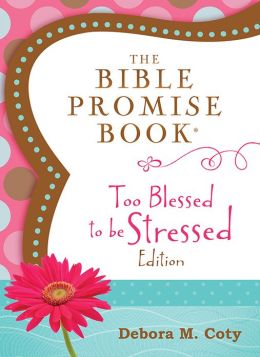
Debora M. Coty released The Bible Promise Book: Too Blessed to be Stressed Edition 9781624169885_p0_v2_s260x420with Barbour, a collection of selections from the original Too Blessed to be Stressed book.

*********************************************************************************

9780802409577_p0_v1_s260x420Roberta Kells Dorr released Abraham and Sarah with River North.

*********************************************************************************

SavedbyGracieJan Dunlap released Saved by Gracie with Authentic.

*********************************************************************************
Ken Gire released At Peace in the Storm with Bethany House Publishers.9780764208843_p0_v2_s260x420

*********************************************************************************

9781624168581_p0_v2_s260x420Paul Kent released Playing with Purpose: Baseball Devotions with Barbour.

*********************************************************************************

Tim LaHaye and Craig Parshall released Mark of Evil with Zondervan.

9780310334545_p0_v3_s260x420

*********************************************************************************

9781433683312_p0_v3_s260x420

Ben & Julianna Zobrist with Mike Yorkey released Double Play with B&H Publishers.

*********************************************************************************

9781624166181_p0_v2_s260x420Mike Yorkey released Playing with Purpose: Racing with Barbour.

*********************************************************************************

New WordServe Clients

Shelley Hendricks signed with Alice Crider.

Leticia Yuzefpolsky signed with Greg Johnson.

Linda Znachko signed with Alice Crider.

New Contracts

Anita Agers-Brooks signed a contract with Barbour for her non-fiction project titled, Getting Through What You Can’t Get Over. Alice Crider, agent of record.

What We’re Celebrating!!

The Brotherhood Conspiracy by Terry Brennan is a finalist for Foreword Review’s 2013 Book of the Year Award, in the category of Action & Adventure (Adult Fiction). Foreword Reviews, the only review magazine solely dedicated to discovering new indie books, announced the finalists for its 16th Annual Book of the Year Awards. The winners will be determined within the next two months. The final announcement will be made Friday, June 27, in Las Vegas, during the American Library Association Annual Conference. There are awards in over 60 categories and cash prizes for the best in fiction and nonfiction. Here is the complete list of finalists and the listing for The Brotherhood Conspiracy can be found here.

Amy Sorrells’ debut novel How Sweet the Sound received a fantastic review from USA Today!

Set in the late 1970s and early 1980s, a time when the topic of sexual abuse was not a thing “talked about” in the media and for which victims were still too often treated as “deserving” of the crimes committed against them, this novel refuses to nicey-nice over tough and ugly realities. This story is, throughout, raw — but yet penned with a sweetness of prose that makes you want to keep reading, even when you know it would be easier to curl into a ball and weep for the brokenness of the characters therein.

Poignant switches of point-of-view between Anniston and her aunt, Comfort, show the reach of abuse within generations of the same family and stretch a reader’s heart to its limits. Simply put, it hurts to read this novel. It hurts to watch the characters go through what they do. It hurts to see family secrets exposed, revealing pain upon pain. It hurts to see them abandon true love and it hurts when they are seemingly abandoned by it — but how beautiful the pain when an ending so lovely and right redefines and redeems several futures at once.

This book will turn your emotions inside out and grip your heart with a clawed fist before pouring acid — and then balm — over the wounds. You have been warned. Now, by all means, go buy this unusually edgy and entirely moving inspirational novel and read it for yourself.

What are you celebrating on this writing journey?

Words from Another World

“Sticks and stones might break my bones but words will never hurt me!”

Wrong. As adults we’ve long since figured out that childhood nursery rhyme we sang to protect ourselves couldn’t be further from the truth. We no longer deny that words can be mighty painful. As authors, what both fascinates and challenges us is their power to change the world, and it’s all by Divine design.

scrabblePicture, if you will, the disciples of Christ sitting in an upper room waiting and praying, praying and waiting. Before leaving in the clouds, Jesus had promised to send them power to take His message to the ends of the earth. He didn’t tell them what this power would look like or how long they’d have to wait for it, only that they must.

Finally, after days and nights of waiting, after all the anticipation and questions surrounding this mysterious force Jesus had spoken of, after weeks of wondering what this supernatural aid might be and how they would wield it, God’s promise fire fell “as cloven tongues of fire.”

How strange. Fiery cloven tongues uttering words of an other-worldly origin.

I find it fascinating that out of all the body parts the writer could’ve used to describe this amazing scene when God’s fire power fell on man, He chose a human tongue. What a visual of God’s plan to employ these fleshy instruments of ours to speak from the understanding of one human to that of another, each one witnessing of the consuming fire lit in his or her heart.

That said, is it any wonder that we’re so strictly charged to monitor our tongues and the power of language?

How can we allow ourselves to use whatever words we want with whomever we want whenever we want, knowing that God has chosen these same tongues as holy messengers to take His gospel into all the world?

Hugs, Shellie

5 Ways to Drive an Editor Crazy

13761150586648bAs an aspiring writer, I thought editors had horns on their head and pitchforks perched beside their desks. After all, they sent me form “no thanks” letters after I’d slaved over an obviously brilliant manuscript. They ignored my letters and phone calls, and seemed to take joy in waiting months before replying to my oh-so-urgent emails.

Now, as both a seasoned writer and an editor for a large faith-based website, I’ve learned that editors are people, too. We love finding new voices to publish, and we try to be gentle when doling out rejections. Sure, we have our quirks, and we make mistakes. But mostly, we’re word-loving, gentle souls who find joy in a well-placed modifier.

When provoked, however, we can lose our literary minds. Several habits don’t just rub us the wrong way—they make us want to run down the street while still in our bathrobes, shouting Weird Al’s “White and Nerdy” until we puke.

Here’s how you can speed that process along:

1) Treat Guidelines as Optional.

      Don’t bother reading writing guidelines; don’t even visit websites or read back issues of magazines. Send a totally inappropriate submission. In your cover letter, tell the editor that while you’ve never taken the time to familiarize yourself with their publication, you’re sure that your work is perfect for them. file3781288474089

       2) Respond viciously to rejection letters.

      When you receive a letter stating that “your submission doesn’t meet our current needs,” fire off a hateful email, chastising the editor for his lack of taste. Even better: use bad language and post your vitriolic thoughts all over social media. (This habit works well if you never want to see your work in print. Those bridges are so pretty when they burn!)

      3) Never turn in an assignment by the deadline.

Deadlines aren’t set in stone; therefore, ask for repeated extensions, paying no attention to the panicked tone of your editor’s responses. Don’t worry that you are one of several dozen moving parts in the publishing of a website, magazine or compilation book. Take all the time you want—the world does, in fact, revolve around you.

       4) Take up all your editor’s time.

Ask repeated questions about the contract or terms of your publishing agreement. Don’t get an agent or other professionals to weigh in on your questions. Don’t network with other writers so that you can learn from their experiences. Pester the editor with texts (preferably to her personal cell phone, if you can dig up the number) about when your piece will be printed, how many readers you’ll get, etc.

And finally:

5) Refuse to accept changes in your manuscript.

Since you have received your talent from God, treat every word as His direct quote. Don’t let an editor make changes to your beautiful masterpiece. Fight over each letter and punctuation mark. Don’t choose your battles. Take offense at questions. Die on every single hill.

Now, if you’ll excuse me, I have a nasty email to delete…and I need to look up the lyrics to a certain parody song.

Rewriting: 7 Simple Tips – Part One

file000114214574

When we started The Shepherd’s Song, the ideas came fast and the words flowed.  We didn’t stop that precious flow by asking ourselves questions. Our mother had taught us that. Get the words down, then you can shape them and refine the writing.

Here are some tips for rewriting, and some examples from the first chapter of The Shepherd’s Song.

1. Stick to what the character is personally experiencing.

FIRST DRAFT:  The ambulance doors opened and Kate’s stretcher was pulled out of the back. The wheels hit the ground and they were inside within seconds. Doctors and nurses surrounded her, each performing a different task, all with the goal of saving her life.

This first draft tells us what is happening. We hear the voice of a narrator. But if the scene is from Kate’s POV, we want to show the reader only what she is experiencing. Here’s the rewrite:

FINAL DRAFT:  She felt jarred as the stretcher was pulled forward, then lights and swirls of snow. The wheels hit the ground and they were inside within seconds. Masked faces in white and green hovered over her. Gloved hands touched her.

file0001155126791

2. Do a search for the word “thought.” See if you need it.

FIRST DRAFT:  A brief memory of her car plowing into another vehicle flashed across her mind. ‘A car accident,’ she thought. ‘I’ve been in a car accident.’

Extra words take the reader out of the character’s head. There’s no need to tell the reader that the character is thinking. Just say it.

FINAL DRAFT:  A brief memory came – her car sliding on the slick road, the sound of breaking glass and crunching metal. A car accident.

3.  Limit speech tags

FIRST DRAFT: “What happened?” the young man doing the CT scan asked.

“Car accident,” the nurse said. “A big pile-up on I-95.”

“No kidding. She doesn’t look so good. Is she going to make it?” he asked, helping them roll Kate into the room.

“Too early to tell,” Dr. Belding said.

The nurse shrugged. “You never know with these trauma patients. I’ve seen ones in worse shape make it, but not many. If I were the kind to bet, I’d bet ‘no’ for this woman.”

“Too bad,” the young man said.

Can you see how awkward this is? The tags (he said, she said), are slowing down the action and are reminding us that it is a written story.

FINAL DRAFT: She heard the voices back and forth over her stretcher.

“What happened?”

“A big pile-up on I-95. Twenty-five cars, six semis and one bus.”

“No kidding. She doesn’t look so good. Is she going to make it?”

“You never know with these trauma patients. I’ve seen ones in worse shape make it … but not many.”

Kate closed her eyes again. I might die.

Here’s another place we rewrote, removing the tag.

FIRST DRAFT:  He picked up the receiver and said, “This is John McConnell.”

FINAL DRAFT:  He fumbled for a moment with the receiver, then got it to his mouth with shaking hands. “This is John McConnell.”

Having a checklist for rewrites is helpful and a quick way to review a manuscript. Using search features allows us to quickly find and replace words like “thought” or “said.”

394936_576511685698033_1628795358_n

We’ll share four more tips next time. Do you have tips that you use for rewriting?

Betsy and Laurie

http://www.WritingSisters.com

Grunge ornamental cover for an album with photos