Rejecting Rejection

file1801281015946

Rejection is an important part of the publishing process—but it hurts! Here are seventeen quotes to inspire you after rejection.

“Failures are finger posts on the road to achievement.”
 C. S. Lewis

“Many of life’s failures are people who did not realize how close they were to success when they gave up.” Thomas Edison

“Do not waste yourself in rejection; do not bark against the bad, but chant the beauty of the good.” Ralph Waldo Emerson

“If you want the rainbow, you’ve got to put up with the rain.” Dolly Parton

“If you have talent, you will receive some measure of success – but only if you persist.” Isaac Asimov

“I wrote poems in my corner of the Brooks Street station. I sent them to two editors who rejected them right off. I read those letters of rejection years later and I agreed with those editors.” Carl Sandburg

“In the middle of difficulty lies opportunity.” Albert Einstein

“Ever tried. Ever failed. No matter. Try again. Fail again. Fail better.” Samuel Beckett

“Keep away from people who try to belittle your dreams. Small people always do that, but the really great ones make you feel that you, too, can become great.” Mark Twain

“A rejection is nothing more than a necessary step in the pursuit of success.” Bo Bennett

“You have to know how to accept rejection and reject acceptance.” Ray Bradbury

“If you’re not failing now and again, it’s a sign you’re not doing anything very innovative.”
Woody Allen

“Every rejection is incremental payment on your dues that in some way will be translated back into your work.”
 James Lee Burke

“Failure is success if we learn from it.”
 Malcolm Forbes

“As a writer, the worst thing you can do is work in an environment of fear of rejection.”
Carol Leifer

“I wrote poems in my corner of the Brooks Street station. I sent them to two editors who rejected them right off. I read those letters of rejection years later and I agreed with those editors.”
 Carl Sandburg

“I think that you have to believe in your destiny; that you will succeed, you will meet a lot of rejection and it is not always a straight path, there will be detours—so enjoy the view.”
Michael York

file0001179129151There.  Don’t you feel better?

How do you pick yourself back up after you are rejected?

Betsy and Laurie

www.WritingSisters.com

The Secret Tool That Will Put Your Writing Over The Top

I’ve never taken a writing class so I’m not sure when I learned this trick. Somehow I picked it up over the past decade.

I don’t even know if it’s important to other authors, or if writing instructors teach it.

So maybe this is elementary, but here’s my secret tool:

The way to make your writing interesting is to use details.

Yesterday I read Writing Down the Bones by Natalie Goldberg. I got excited when I found her encouraging writers to use detail.

She says, “Life is so rich, if you can write down the real details of the way things were and are, you hardly need anything else.” She adds, “Be specific. Don’t say ‘fruit.’ Tell what kind of fruit—‘It is a pomegranate.’ Give things the dignity of their names.”

Typical Greece


The paragraph below is an example of her writing. Notice how rich it is. Instead of saying, “My friend and I spent some time writing in Greece,” she wrote this:

I am on a Greek island right now: the Aegean Sea, cheap rooms on the beach, nude swimming, little tavernas where you sit under dried bamboo sipping ouzo, taste octopus, watch the great sun set. I am thirty-six and my friend who is with me is thirty-nine. It is the first time either of us has been to Europe. We take in everything, but only halfway because we are busy always, always talking. I tell her about my dance recital when I was six years old in a pink tutu; how my father, who sat in the front row, broke down weeping when he saw me. She tells me how her husband in Catholic school in Nebraska came late for a play that he was the star of and how the nuns had all the school children on their knees praying that he would appear.


Just for fun, I read a few lines from my book Renewed: Finding Your Inner Happy in an Overwhelmed World to find a paragraph where I had given detail. This is from my chapter on The Benefits of Solitude:

Right now I am alone. Snow is falling silently outside, and the only sound I hear comes from water trickling in my office fountain. Right now I can do whatever I want. I can slurp my split pea soup while taking intermittent bites of a chocolate bar.  I can sit on my chair with one leg tucked under in ladylike fashion. I can take a break to let the dog out, and I can sing badly while doing all of the above. These little freedoms are not to be underestimated.


Now that I’ve read Goldberg’s book, I see where I could have been even more detailed.

It’s much more fun to write when you’re giving details.

Take a minute to practice: Write about a favorite meal you had. Make sure you describe the setting, season, and the people you were with.


The Season of Harvest Will Come

A seed. Faith starts with a seed. So does any harvest.

Jesus himself promised his disciples that if they had faith as small as a mustard seed they could uproot a mulberry tree (Luke 17:6) or move a mountain (Matthew 17:21).

You need faith and a seed to grow a tree as well as uproot one. Woman picking applesOne of my favorite September activities is picking apples. I love visiting an orchard on a crisp fall day with clear blue skies when the sun still provides enough warmth that you can leave your jacket behind in the car. I enjoy the experience of reaching up through the branches to select the perfectly ripe apple as much as I enjoy eating the apple later.

Of course, the welcoming orchard laden with fruit at my favorite local farm is the end product of many years of work for the farmers, including labor throughout the growing season to ensure a bountiful harvest in September. Some years the blossoms freeze and then are scorched in the sun, limiting the fruit yield for the entire season. Other years, insects threaten the crop, creating extra work for the farmer. However, with proper care and patience, a harvest will come most years.

Writing and Sowing

Those of us who write books know that our labor of love is truly a process of sowing. We are planting ideas, and casting spiritual seeds on what we pray will be fertile ground. Like germination, which usually occurs hidden in the depths of the soil, writing happens in quiet, hidden places, away from the clamor of the crowds. We can envision our intended audience and select words and sentence structure with them in mind, but only God truly knows who needs to read our words. If we are fortunate, our words may touch a heart that hasn’t started to beat yet. Unlike speakers who can receive immediate feedback by looking into the eyes of the listeners in the room, writers may never meet many of their readers. The time and place when a writer’s words will have their impact is not the writer’s to know. A writer must create by faith and trust the outcome to God.

Waiting and Growing

All writers take a hurry up and wait journey, especially those who choose the traditional publishing route. This journey also is an expression of faith. Like the farmer who tends the apple orchard, the harvest of a writer means intense times of labor alternating with stretches of simply waiting on the process. The owner of the orchard waits for the apples to grow, and no one can rush this process without damaging the quality of the crop. The publishing process helps grow the manuscript and the writer should respect the process. The input of editors, reviewers, marketing team members, and designers makes for a higher quality book. Team efforts take time. This time may cause the writer’s friends and supporters to wonder whatever happened to the book. Tell your friends that your book needs to grow for a season before the harvest comes.

Publishing and Harvesting

The work in the orchard on cool spring days and hot summer ones leads to trees filled with apples at harvest time. For the writer, the solitude of writing and the patience required by the review process eventually lead to publication and the beginning of the harvest. Soon the initial reviewers will provide feedback, much like the farmer sampling a few test apples. Then the pre-ordered books will ship to the first wave of readers. I am in the process of early harvest for my first book, Questioning Your Doubts: A Harvard PhD Explores Challenges to Faith. Recently, a pastor shared with me his vision of a tree laden with fruit, providing nourishment for many people. That image captures my hope for my book.

What do you envision in your own season of harvest?

Idiosyncrasies of the English Language

plate-64269_640

Don’t panic. I’m not going all-out academic linguistics on you, but we need to take a moment to consider the quirks of the American English language (as opposed to British). More to the point: what is said vs. what is meant.

When I say: “Wow, that garbage can is full.”

It means: “Get off your butt and lug out that Hefty bag, would ya?”

When my husband says: “Can I help with dinner?”

It means: “Have you been on Pinterest all day or what? Why isn’t the food on the table yet?”

When the sales clerk says: “Have a nice day.”

It means: “I don’t care a rat’s behind what kind of day you have as long as you fill out the survey on the bottom of the receipt and make me look good.”

When words are spoken face to face, it’s easier to decipher because of body language. But when the written word is your medium of choice, it’s all the harder to convey what a character actually means. On the up side, this can be used to an author’s advantage by choosing words that convey characterization via dialogue.

Or it can leave your reader scratching their head and relegating your book to the bottom of the stack on their nightstand.

What to do?

The best way to make each of your characters say what they really mean (and not give the reader a different expectation) is to know your character well before they speak. This requires some groundwork before you begin a new manuscript. Yes, this takes time, but in the long run it will pay off.

Know your characters. Know them well. Then use the words that flow out of their mouths to solidify who they are in your reader’s mind. Those are the kind of characters that stick with a reader long after they’ve closed the book.

But Don’t Overdo It

I love sarcasm. Give me a character who’s snappy and snippy with their dialogue and bam—instant like fest as far as I’m concerned. So it surprises me when my snarky personalities aren’t always well loved. What’s the deal?

Apparently I’m in the minority. Surprisingly, sarcasm doesn’t head the list of likeable traits, which can work against an author while crafting characters. It is your job as a writer to make your reader fall in love with your characters . . . or at least want to have coffee with them.

What authors do you know who have mastered the art of dialogue?

The Summer of Success: Michael Ehret

Facing a crossroads at the moment—what step to take next and all that. I’m not all angsty over it, but I have been thinking a lot about the late Donna Summer, as a result.

DonnaSummerDonna Summer? The Queen of Disco?

First of all, thinking about Donna Summer is not new for me. I’ve had a long time interest in her career and in the singer, herself. I’ve even been known to be a defender of Summer (she’s so much more than disco), because I think her talent was far overshadowed by her persona and by the Super Storm known as Disco that came in and tried, unsuccessfully, to obliterate the Rock and Roll shoreline.

Variety defined her career

Still, I’m more interested in Summer’s genre-hopping than in her music, per se. For instance, did you know she was nominated for 17 Grammy Awards in eight different categories (sort of like fiction genres)? Further, did you know she won five times in four different categories—twice in Inspirational? That’s right, Inspirational. The singer of 1975’s 17-minute+ disco moan-fest, “Love To Love You, Baby,” won two Grammy Awards for Best Inspirational song (1984 and 1985).

Conventional wisdom is to not genre hop in the publishing world. There’s greater freedom in music (Linda Ronstadt also played the field, musically). But in publishing, writers are often advised that if they start in romance (or speculative or historical or suspense) then they should stay in romance (or speculative or historical or suspense).

But, I must have a little Donna Summer in me because I don’t want to be constrained in that way. Before we get all crazy, let’s remember that no one is knocking down my door for my next book—or, for that matter, my first book.

But—again—we can look to the diva for guidance. Because “conventional wisdom” isn’t called “conventional-sort-of-good-advice,” you know?

Summer made her mark in one genre—disco. It was the red-hot genre of the time and she rode that horse for all it was worth.

But when the horse started to get hobbled, she made the smart move of wrapping up that era with a Greatest Hits collection, changing record labels, and then came roaring back in 1980 with a rock-pop disc without even a whiff of disco, The Wanderer. And a song from that project earned her one of her Grammy nominations.

DiscoBallWhat are the lessons for a writer?

  1. Do your homework. Summer worked in Germany and Europe in various touring companies of shows like “Hair” and “Godspell” before connecting with Giorgio Moroder for her first major album, Love To Love You Baby.
  2. Establish yourself as an excellent writer of (choose one: romance, historical, suspense, other) and then, like Summer, work your butt off to make your mark. She released seven disco albums from 1975 to 1979—that’s four years. Three of them in a row were blockbuster double albums.
  3. Keep your nose to the ground and your face forward. If you pay attention to the market and publishing trends, you’ll know when it’s time to change genres. If you’re a big enough success, you’ll get your opportunity. When you do, show the same quality, perseverance, and dedication to craft that got you where you are.

That’s the way to build a Hall of Fame career (Summer was inducted into the Rock and Roll Hall of Fame in 2013) and do all the things you want to do.

Summer died May 17, 2012, at age 63. At her death (from cancer) she was working on two albums simultaneously—a collection of standards and a new dance music collection.

For the record, Summer’s Grammy wins were for:

  1. Best R&B Female Performance, 1979, for “Last Dance.”
  2. Best Rock Female Performance, 1980, for “Hot Stuff.”
  3. Best Inspirational Performance, 1984, for “He’s A Rebel.”
  4. Best Inspirational Performance, 1985, for “Forgive Me.”
  5. Best Dance Music Performance, 1998, for “Carry On.”

Additionally, she was nominated four times for Best Pop Vocal, twice for Best R&B Vocal, twice for best Rock Vocal, once for Album of the Year, once for Best Disco Vocal, once for Best Inspirational, and once for Best Dance Music.

Not a bad career.

Your turn: So, do you have a little Donna Summer in you?
******************************************************************************************
MichaelMichael Ehret loves to play with words and as the editor of CHEFS Mix Blog for CHEFS Catalog he is enjoying his playground. Previous playgrounds include being the Managing Editor of the former ACFW Journal Magazine and the ezine Afictionado for seven years. He also plays with words as a freelance editor and has edited several nonfiction books, proofedited for Abingdon Press, worked in corporate communications, and reported for The Indianapolis Star. You can connect with Michael via his website, Facebook and Twitter.

WordServe News: August 2014

Exciting things have been happening at WordServe Literary!

On the final post of each month you’ll find a list of Water Cooler contributors’ books releasing in the upcoming month along with a recap of WordServe client news from the current month.

New Releases

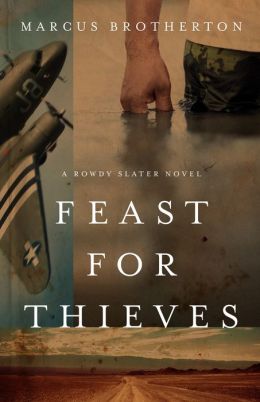
Marcus Brotherton released his first novel with River North, Feast for Thieves. Marcus also released, with Alec Rowlands, a collaboration project titled The Presence in 9781414387246_p0_v1_s260x420association with Tyndale Momentum. 9780802412133_p0_v2_s260x420

******************************************************************************************

Jim Burns and Doug Fields released Getting Ready for Marriage with David C. Cook 9781434708113_p0_v1_s260x420publishers.

******************************************************************************************

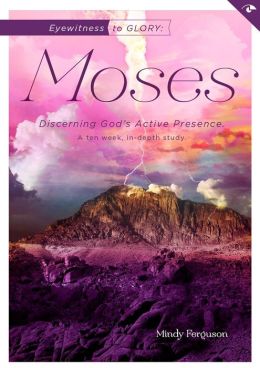
Mindy Ferguson released Moses with AMG Publishers. 9780899579108_p0_v2_s260x420

******************************************************************************************

Rick Johnson released, with Revell publishers, Becoming the Dad Your Da9780800723354_p0_v2_s260x420ughter Needs.


******************************************************************************************

Jeremy Jones, collaborator with Kyle Idleman, released Praying for Your Prodigal with 9781434707710_p0_v1_s260x420David C. Cook publishers.


******************************************************************************************

Jennifer Strickland, with Harvest House Publishers, released More Beautiful Than You Know. 9780736956321_p0_v4_s260x420

******************************************************************************************

Sarah Varland released a new romantic suspense with Love Inspired, Tundra Threat.9780373446285_p0_v1_s260x420


*************************************************************************************************

New Contracts

Jeremy Jones signed a work for hire agreement with David C. Cook for 40 Days to Lasting Change: A Devotional (tentative title). Greg Johnson, agent of record.

Jonathan McKee signed a contract with Group Publishing for Foundations–Volunteers (tentative title). Greg Johnson, agent of record.

What We’re Celebrating!!

Krista Phillips released her first self-published novella, A Side of Faith! Get your copy here.

Laurie Short was interviewed on The Harvest Show. Watch the clip here!

Barbara Stoefen’s memoir,  A Very Fine House, got an awesome review in Publisher’s Weekly. Read it here!

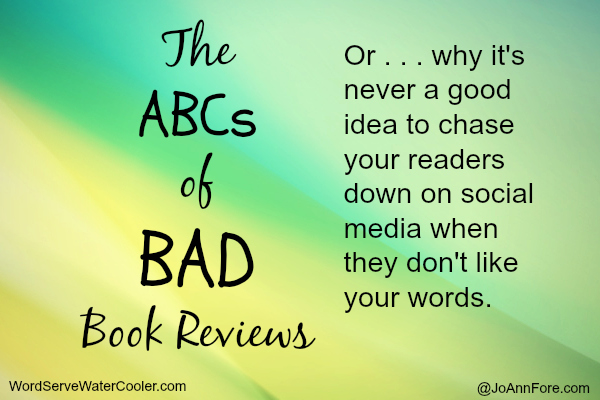
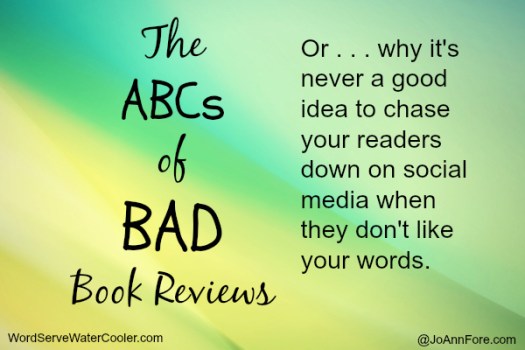
When the Bad Reviews Come {And They Will}


bad book reviews

“She needs to have more respect for the process . . . trying to claim that everyone should heal like her.”

The words pierced my heart.

Until then, I had enjoyed a couple good months of positive feedback, those heartwarming days after the release of my debut nonfiction book, When A Woman Finds Her Voice. The book hit #1 on Amazon’s Hot New Releases charts and then walked the Amazon {paid} bestseller list {in its genre} for a couple weeks in the top five. It also won some literary awards. But more importantly, my words were reaching the hearts of readers as comments like “inspiring,” “introspective,” “encouraging,” and even “life-changing” peppered online reviews.

That sort of feedback overwhelms a girl with God’s goodness, giving value to this shy writer’s words. To think He had somehow exchanged these primitive ramblings of one who simply longed to spread hope and had used them as encouragement for others, that’s humbling.

I’d finally felt the freedom to say it above a whisper: I am an author.

But then that two-star review hit my screen, attacking my sense of worth. It shouldn’t have, I know. Mentors warned me it was coming; they’d suggested I not even read it.

I didn’t listen.

I determined to mentally counter the negativity and then quickly return to my illusory sense of fulfillment. After all, I welcomed reviews—good or bad. Perpetual student that I am, I’m known to {relentlessly} solicit constructive criticism as an opportunity to learn. And here it sat, this chance for free education, this two-star review therapy.

But in a review-driven culture where we allow others to determine what we read, watch, eat, and even where we spend the night, how can we not be impacted when someone misunderstands our heart?

The judgement sliced soul deep, challenging insecurities I’d long ago buried.

This is the sort of vulnerability we open ourselves up to when we cast our words, our heart, into a public arena that holds potential for not just admiration and esteem but also misunderstanding.

You see, there’s nothing I’m more compassionate about than reaching the heart of a wounded woman and leading her to the restoring, redemptive feet of Jesus. But this particular reader didn’t know that, didn’t know me.

So how do we filter through these words when they come?

  1. We anchor. It’s crucial to anchor any negativity with perspective. We can’t allow disapproval to overtake our thoughts. For the one poor criticism, I had 49 positive reviews from folks who had been uplifted by my words. I worked hard to focus on those. {Very hard.}
  2. Bounce back. To feel defensive at first is natural, but if you find yourself wanting to respond negatively {as in hunt the person down on social media to blast them back}, walk away from the screen and refocus. Immediately.
  3. Consider truth. Ask yourself, “Is this true? Is the criticism valid? Did I somehow fall short?” If so, use this information in a positive manner and seek to write with excellence. However, if the negatives aren’t well-rounded and constructive, the point baseless, you simply have to let it go.

As word-weavers, this should become our default: in the face of bad reviews, let’s practice our ABCs to rebuild our confidence. Anchor. Bounce. Consider.

Okay, I’m curious now: How do you handle criticism?

7 Writing Tips We Learned From Our Dogs

samson-at-computer

We have always loved dogs. Over the course of our lives together we have owned over 27 dogs. It is not surprising that some were our best teachers. Here’s what our four-legged friends have taught us about writing:

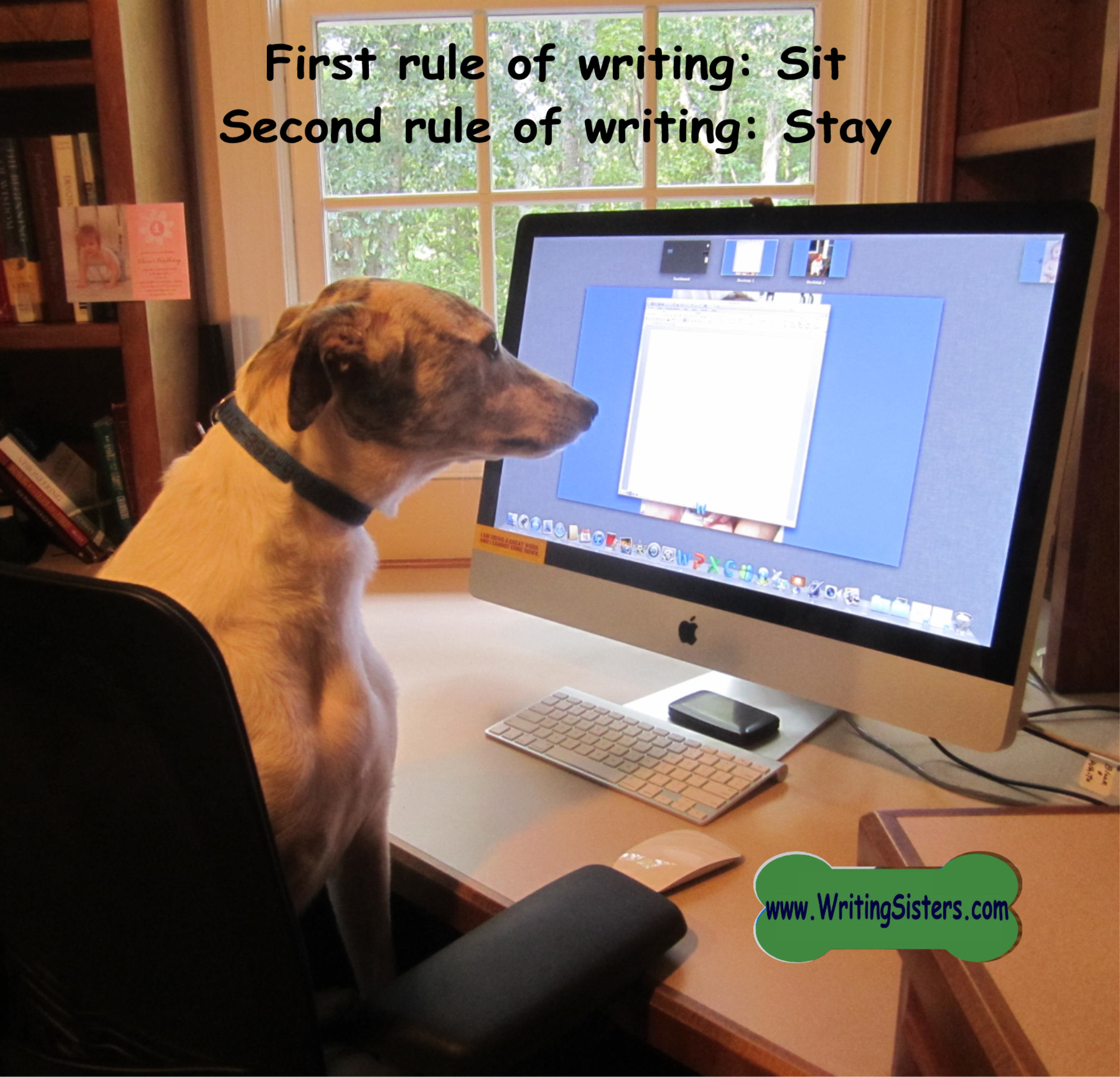
1. Sit and Stay. These are the two most important commands for writers! If you don’t sit down and begin, you will never get started. Staying is important, too. No, you don’t need another snack.

2. Dig!  Sometimes the facts that we need are buried deep, like a good old bone. The best writing requires some digging–in the library, on the internet, in your heart. Sniff it out. Then dig. If you don’t find it, dig another hole.

3. Know your territory. Writing takes good boundaries and good boundaries mean saying no. One important lesson for both of us was to protect and guard our writing time. We put the time on our schedule and then we protect it. Remember: Growl, don’t bite!

4. Expect treats. It is hope that keeps us going. Hope of touching a reader. Hope of one day holding your book in your hands. Excitement and anticipation is an important part of writing. Sit down to write expecting something good to happen.

5. Be kind to the postman. It’s not his fault. Rejection is an important part of the writing process. Keep it in perspective. Shake it off and start again.

6. Stay in the moment. Don’t get ahead of yourself and start worrying about the future.  Don’t stay stuck in the past. Worry is not your friend.

7. Play! Some of the best ideas come to us away from the desk. Stop work to chase a few ideas. Dogs love any distraction from a tennis ball to a squirrel. The work will still be waiting when you come back.

Has your pet taught you anything about writing?

Betsy Duffey and Laurie Myers  www.WritingSisters.com


Bio: The Writing Sisters, Betsy Duffey and Laurie Myers were born into a writing family, and began critiquing manuscripts at an early age for their mother, Newbery winner Betsy Byars.  They went on to become authors of more than thirty-five children’s novels. Their first book for adults is  The Shepherd’s Song,  Howard Books, March 2014.

Your First Writers Conference? Things to Know Before You Go!

This is conference season for writers! Not just the national conferences like RWA and ACFW, but smaller, regional conferences. There’s probably a writing conference or retreat somewhere in your area this summer or fall.

Speaker at Business Conference and Presentation.I’m planning to attend the ACFW conference in St. Louis in September, and it will be my second. As I’ve been signing up for classes and preparing my wardrobe (comfortable shoes are a must!), I’ve been thinking back to my first ACFW conference two years ago. I hope what I learned will benefit you.

  • Don’t be afraid to go. You won’t be the only newbie. Not only will you find other first-timers (at ACFW you learn to look for the tell-tale ribbon on other attendees’ name badges), but the veterans will welcome you as a new member of the family.
  • Don’t retreat to your room. Writers are prone to enjoy our solitary existence. We like to be alone. But conference isn’t the place for it. You paid a lot of money to meet other people who speak your language, so make sure you meet them. Introduce yourself. Sit next to strangers. Join someone who is standing alone. Strike up a conversation. You never know who you might meet. Two years ago, I ended up eating lunch with the most charming veteran author who writes in the same genre I do. What a treat to talk with her in that non-threatening environment!
  • Don’t sweat it if you can’t attend all of the classes and workshops you signed up for. Buy the sessions on the MP3 download or CDs and listen to them when your mind isn’t filled with the busyness of conference.
  • On the other hand, try not to skip the sessions you signed up for. There’s nothing like the immediate, in-person teaching by an industry professional to spark your enthusiasm.
  • Enjoy your appointments with editors and agents. Be confident, relaxed, and friendly. And if they ask you to submit something, do it. Since they really want to see it, email it to them as soon after conference as possible.
  • Exchange business cards with the new friends you meet. It’s helpful to have your picture on your card, if at all possible. You’ll be meeting so many people, it will be hard to connect names with faces a week later.
  • Most of all, have fun! Enjoy the meetings, the down times, the after-hours sessions with your new friends. Meet new people, become inspired, and get fired up!

Are you planning to attend a conference soon? Will you be in St. Louis in September for ACFW? If so, be sure to look me up!

How to Create Walk-On Characters Who Are Memorable (But Not Too Memorable)

The Water Cooler is pleased to host guest blogger K.M. Weiland.

Every character is the hero of his own story.

V8374c_JaneEyre.inddThat bit of popular advice is a marvelously evocative reminder to breathe life into even minor characters. However, chances are you’ve also had the sometimes-charming, sometimes-frustrating experience of a minor character who decides he’s not just the hero of his own story, but the hero of the story. He tries to take over, usually with mixed results.

So how can you go about hero-izing your minor characters into memorable and realistic personalities without letting them derail your story? Charlotte Brontë’s masterful novel Jane Eyre (which I analyze in-depth in my book Jane Eyre: The Writer’s Digest Annotated Classic) offers some excellent examples on how to deftly bring to life any type of character—without letting them run away with you.

The Four Types of Characters
First, take a moment to consider the various types of characters you might find in your story. Which category your character falls into will determine how he should be introduced.

1. Main Characters
Main characters are protagonists. They will be on stage in all or most of your scenes and will probably be given the primary point-of-view narration. Their goals and character arcs power the plot. Without them, there is no conflict and no story. To find Jane Eyre’s main character, we need look no further than the title.

2. Major Characters
Major characters are those who figure in the story almost as prominently as the protagonist. However, they act in roles that support the protagonist. They drive the story only in ancillary ways. Antagonists, sidekicks, love interests, and mentors are all examples of common major characters. In Jane Eyre, St. John Rivers acts as one of the antagonists, Helen Burns appears briefly as a sidekick, Edward Rochester is the love interest, and the housekeeper Mrs. Fairfax sometimes functions as a mentor.

3. Minor Characters
Minor characters fill out the rest of the cast. They are characters who recur throughout the story—sometimes only once or twice, sometimes frequently. They fill in the gaps in the story world, allowing readers to believe the setting is populated with the multitudinous faces we find in our own world. Minor characters may dramatically affect the plot, but only in comparatively small ways. They are not as integral as major characters. In Jane Eyre, her cousins the Reeds, the nasty Blanche Ingram, and St. John’s would-be wife Miss Oliver are all important, but decidedly minor characters.

4. Walk-On Characters
Walk-on characters are those who appear only once, fulfill a necessary role, and exit the story, probably never to be mentioned again. They are rarely named and exist only for background color or plot functionality. The many servants at Thornfield Hall and Jane’s fellow students at Lowood School are all walk-on characters.

Use Your Character’s Introduction to Signal His Importance (or Lack Thereof)

Identifying which group a character belongs in will help you understand how to introduce him. No matter his role, you want to bring him to life in your readers’ minds. You want them to clearly visualize him—and not just visualize him, but see him as a unique and vibrant human being.

This is where we sometimes get tripped up. We don’t want readers to dismiss our walk-on taxi driver as a cardboard cutout, or, worse, a cliché. So we spend several paragraphs describing his appearance, his accent, his personal tics, maybe even a little of his backstory. There! Now, he’s three-dimensional!

Problem is he’s also now giving readers the wrong signal. The more time you spend introducing a character, the more you foreshadow his importance within the story. A walk-on character who gets three paragraphs of intro, only to never show up again, will be at best a niggling loose end in readers’ minds. At worst, he’s a gaping plot hole.

Save your paragraphs of description for main and major characters. Weigh carefully how much attention you give to minor characters. The time you spend on them should never outweigh their roles in the story. As for walks-on, you’ve already guessed it: they deserve only a sentence or two of your attention.

How to Bring Characters to Life With No More Than Three Details

So riddle me this: If you’re not allowed to give walk-on characters (and some minor characters) more than a sentence or two, how in heaven’s name can you be expected to bring them to life?

Details are the key. Choose the right details, and you won’t need more than a few. Choose the perfect detail, and you might not even need more than one. Charlotte Brontë offers a fabulous example of this in her introduction of a walk-on postal lady early in the book.

The character appears only in this scene and affects the plot only because Jane needs to get her hands on that fateful letter from Thornfield Hall. Brontë expends just three sentences on the old lady, which introduce a sum total of three important characterizing details (see bold phrases below). But that’s more than enough to bring her to life without implying she plays a larger role in the story than she does.

“[The post office] was kept by an old dame, who wore horn spectacles on her nose, and black mittens on her hands…. She peered at me over her spectacles, and then she opened a drawer and fumbled among its contents for a long time, so long that my hopes began to falter. At last, having held a document before her glasses for nearly five minutes, she presented it across the counter, accompanying the act by another inquisitive and mistrustful glance….”

The next time you write a walk-on character, challenge yourself to come up with three—no more, no less—precise, pertinent, and enlivening details with which to describe him. Then evaluate the effect and see if your brief description hasn’t provided your story with an unobtrusively vivid new character.

************************************************************************************************K.M. Weiland

K.M. Weiland lives in make-believe worlds, talks to imaginary friends, and survives primarily on chocolate truffles and espresso. She is the IPPY and NIEA Award-winning and internationally published author of the Amazon bestsellers Outlining Your Novel and Structuring Your Novel. She writes historical and speculative fiction from her home in western Nebraska and mentors authors on her award-winning website Helping Writers Become Authors.