Miles to Go and Promises to Keep

Photo/KarenJordan

“But I have promises to keep,
And miles to go before I sleep …” (Robert Frost).

Many years ago, I sensed the Lord’s direction to begin writing a very personal story from my family’s life. So I began to record my thoughts even while we were still embroiled in the middle of the crisis.

Roadblocks. Yet every time I would attempt to complete a book proposal for this particular project, something thwarted my efforts.

I don’t just mean a little bump in the road. I’m referring to situations that seemed impossible to get through—like my mother’s fatal illness, my daughter’s three orthopedic surgeries and difficult pregnancies, my daughter-in-law’s seven miscarriages and two miraculous births, and my father-in-law’s lengthy terminal illness.

And that’s not counting all the roadblocks in my journey to publication. Oh, my! Where do I begin with that one?

Red flags. So as I approached this long-drawn-out project again—this time working on it with my daughter Tara—red flags waved all around me. Again, it looked hopeless. And to be honest, when I returned home from our last brainstorming session, discouragement covered me like a heavy cloak. And my emotions tempted me to return this story to my “What was I thinking?” pile once again.

Reminders. Then, I remembered my “40-day Challenge: Telling the Stories That Matter Most.”

I also began a study the life of Moses. And I thought my mission looked impossible!

Moses faced the unimaginable tasks of his calling with great fear. He knew he didn’t have the strength or the abilities that he would need to complete the undertakings God had asked of him. He was aware of his weaknesses and limitations; yet, he wanted to embrace God’s promises. But at each step, he faced his own inabilities in light of God’s plans.

As I study more about Moses, I’m reminded once again of God’s steadfast commitment to keep His promises. Even my unbelief, fear, and doubt will not divert God’s plans. I may get sidetracked and distracted, but God remains faithful to His Word.

God also promises to provide all I need to complete the work that He began in me.

“There has never been the slightest doubt in my mind that the God who started this great work in (me) would keep at it and bring it to a flourishing finish …” (Phil. 1:6 MSG).

Reflection. I’m grateful that God continues to invite me to join Him in His work. And I don’t sense that He has given up on me like I’ve often done with Him. He will forgive my complaining about my circumstances and blaming others for my failures.

So I’m holding on to God’s promises now, even as I write this confession of faith. And I pray if you are struggling with a similar issue, you will revisit His promises to you, too.

Are you facing an impossible project now? What lessons are you learning in the process?

How Many Words to Paint a Picture…?

Writers, editors, and agents like to talk about voice. That elusive thing that gets you published or doesn’t, that sets you apart from others. Much as people have tried, it’s a concept that’s difficult to boil down to a sentence or two.

One of the aspects of voice is how you write descriptions. This is one of the unique fingerprints of your writing that makes it possible for people to tell you apart from another writer. It’s part of your unique gift for storytelling.

Honestly? Descriptions are hard to get just right. If only we could attach pictures to our stories. It wouldn’t be such a bad idea, really, having a nice photo or rendering of what we pictured every hundred pages or so in order to assure ourselves that our readers got it, that the scene we so carefully tried to describe was fully absorbed by them, no room for communication errors. Unfortunately (or maybe not. Haha), the picture thing isn’t an option, so we have to keep practicing using our words to create a picture in our readers’ minds that bears some resemblance to what we were seeing when we wrote it.

Mucho Lake

How would you describe this picture? Are you a writer who would write long paragraphs about the blues and greens? Would you make an effort to explain the way the road curves around the lake, without so much as a guardrail? Would you try to capture the wilderness feeling of the picture? Write about the trees? Or would you just tell your reader that it’s a mountain lake straight out of a fairy-tale and leave them to fill in the blanks?

If everyone reading this post wrote about the scene above, even if we set strict limits on the number of words you could use, every single example would be different. Every. Single. One.

Here’s what I do think writers need to know…there are generalizations about readers’ preferences that are true. And while writing isn’t all about some set of imaginary “rules,” reader preferences are things to pay attention to if you ever want to have readers (or if you want more readers). If you’re a Hemingway-esque describer and you think less is more…readers of historicals might feel like you’ve robbed them of one of their favorite parts of the story. If you describe the interior of a house and take several pages to do so in a suspense novel…you’ve lost that target reader (you know, unless there’s blood on the furniture or something, but still…).

Use your words to help us feel part of the setting, to help us see it. But use them appropriately for your genre. Also use the words you enjoy reading. Do you skim long description paragraphs? Are they your favorite part? Or are you somewhere in between? How you answer those questions should have some bearing on how you write.

Know your reader.

Know yourself.

And make your setting come alive with your words in the unique way that is yours alone.

WordServe News: October 2014

Exciting things have been happening at WordServe Literary!

On the final post of each month you’ll find a list of Water Cooler contributors’ books releasing in the upcoming month along with a recap of WordServe client news from the current month.

New Releases

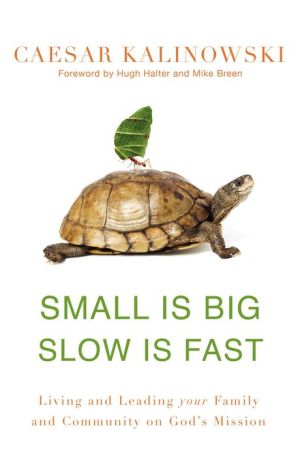
Caesar Kalinowski released, with Zondervan publishers, his second book: Small is 9780310517016_p0_v1_s300xBig, Slow is Fast.

**********************************************************************************************

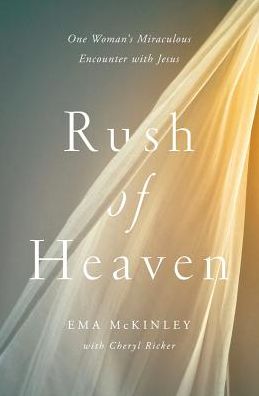
Ema McKinley with Cheryl Ricker released her debut nonfiction, Rush of Heaven. A 9780310338901_p0_v1_s300xtrue accounting of her miraculous healing. Zondervan publishers.

**********************************************************************************************

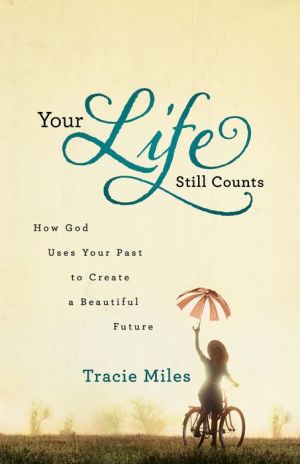
Tracie Miles of Proverbs 31 Ministries released her second book, Your Life Still 9780764211997_p0_v2_s300xCounts, with Bethany House Publishers.

**********************************************************************************************

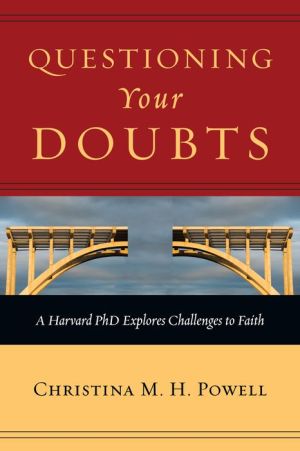
Christina M. H. Powell released her debut nonfiction title with IVP,Questioning Your 9780830836789_p0_v2_s300xDoubts.

**********************************************************************************************

Stephanie Reed released her latest Amish fiction novel The Bachelor with Kregel 9780825442162_p0_v1_s300xpublishers.

**********************************************************************************************

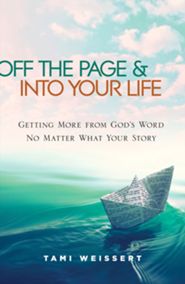
Tami Weissert released Off the Pages & Into Your Life with Authentic publishers.781167

**********************************************************************************************

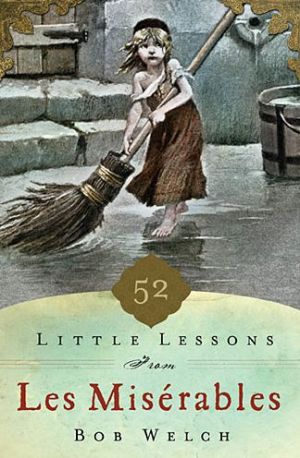
Bob Welch released a devotional with Thomas Nelson: 52 Little Lessons from Les 9781400206667_p0_v1_s300xMiserables.

**********************************************************************************************

Joe Wheeler released the 23rd book in his Christmas in My Heart collection with Pacific Press.

New WordServe Clients

Emmanuel and Veronica Chan signed with Alice Crider.

Judy Joy Jones signed with Greg Johnson.

New Contracts

Steve Addison signed a contract with IVP for his next book Movement Pioneers. Greg Johnson, agent of record.

Dena Dyer signed a contract with Barbour Publishing for a Christmas devotional called “25 Christmas Blessings”. Greg Johnson, agent of record.

Linda Kuhar signed with Leafwood for her nonfiction book tentatively titled Worthy of a Miracle. Alice Crider, agent of record.

Melissa K. Norris signed a contract with Harvest House publishers for a nonfiction book to release next year. Sarah Freese, agent of record.

What We’re Celebrating!!

Julie Cantrell won the ACFW Carol Award in the Historical category for When Mountains Move!

Barbara Stoefen was interviewed by her local news station in Bend, Oregon regarding her debut nonfiction release A Very Fine House. Watch the interview here. 

Marketing: Sharing the Treasure You Discovered

Sharing the Treasure

In a charming café tucked in the corner of an eclectic bookstore not far from the center of town, you stare into your latte, mesmerized by the heart-shaped swirls of steamed milk. This peaceful instance of solitude is so perfect you decide to share it on Instagram.

After venting the domed lid of your new Big Green Egg backyard cooker, you reach for tongs to lift ribs dripping in a tangy barbeque sauce onto your plate. Your friend, sensing the momentous nature of this occasion, captures the moment for Facebook with her smartphone.

You weren’t trying to market a bookstore or a cooker. You simply found a treasure and you were sharing it with friends.

Draw A Treasure Map
As I prepare for the launch of my first book, Questioning Your Doubts: A Harvard PhD Explores Challenges to Faith, I am learning how to assist in the marketing process. Buried treasure helps no one. A book cannot fulfill its purpose unless readers find it. So I have begun to view marketing as the process of drawing a treasure map to help potential readers locate my book.

Everyone draws a map unique to a particular treasure, but here are some ideas:

  • Have your social media bio mention your book and link to your website.
  • On your website, include links to a variety of online retailers and bookstore websites that are selling your book. Use a pull down menu of retailers if the list is long.
  • Mention your book in bylines to articles you write.
  • Blog and guest blog, mentioning your book in your post or your bio.

Supply the Digging Tools

Once the map leads you to the buried treasure, you need tools to dig it out so you can enjoy the treasure and share it with your friends. In the same way, marketing involves not only drawing a treasure map for potential readers, but also supplying the digging tools so others can unearth the treasure and share it with others. Here is a list of a few tools I am using to help others spread the word about my book:

  • Bookmarks
  • Flyers (both paper and PDF format for sharing by email)
  • Publicity photos
  • Link to discussion guide for book
  • Social media page for each book

Prepare to Celebrate!

What are some things you’ve found helpful for marketing your books?

Do I HAVE to Be a “Christian Writer”?

confused woman--question marks

For my first eight years as a publishing writer, I had a hot New York agent. She hung with me through high times and low—until the day I sent her my new manuscript, which was overtly faith-based. She dropped me like a potato on fire. I knew that would happen. But I had to obey God and offer explicit Scripture-based hope. Most of my subsequent books have done the same.

I never wanted to be a “Christian writer.” I never wanted to be confined to “Christian readers.” I wanted to write for ALL people, and I still do. But I also know my faith can turn people away. Here is our dilemma: how do we write the truth with integrity, yet speak to all people, regardless of faith? Here are some thoughts that guide me through the thorny “Christian Writers” thicket.

We need not tell all the truth about anything at any one time (even if we thought we knew it). Life, issues, experiences, even under the purview of God, are all complex, multi-layered, paradoxical. Communicating Truth and truths is a process that we engage in over a lifetime, encompassing many possible stages: plowing, sowing, watering, reaping. We need never feel that we have to roll out the entire plan of redemption in any one novel or memoir to make it “Christian.” There’s time. Think of your work as a body of work over your lifetime.

old books on shelf

Though I want all people to know Christ, more, I want Christ to be made known.
Because he is found everywhere in life, in all places, in all things, I am not only freed but compelled to discover Him and make some aspect of His being known through twig, creek, moonrise, miscarriage, forgiveness, cyclone, salmon, burial, and supper.

Belief in Christ’s truth-claims do not narrow our art. Christians are accused of being “narrow-minded” because they subscribe to Christ’s radical and exclusive truth claims (“I am the way, the truth and the life. No one comes to the father but by me.”) Belief in this claim does not confine, exclude, or narrow our art: nothing and no one is more capacious, more inclusive, more imaginative, more original than Christ himself, who created all things, who is before all things, who binds all things together, who can be found in every cell of creation.

Pacing in Writing | Wordserve Water Cooler

I intend to write only out of calling and passion. I seek that from God, not my agent, not the market, not editors, or even my publisher. This guarantees a wobbly path rather than a sure career. But, face it: there is no sure career in writing except the career of writing from faithfulness, obedience, and joy.

God’s truths are not just propositional and communicable by language: they are experiential, relational, incarnational. I desire to write from a faith that I am trying to live in and out of, rather than a faith I am simply pronouncing. Without lived-in faith, our words truly are noisy gongs. As Joy Sawyer has so brilliantly written,

“ . . . without an ever-increasing, tangible portrait of our God engraved upon our hearts, we reduce our proclamation of the gospel to the “clanging symbol” of language alone. Maybe that is why our message suffers so much when we rely upon mere rhetoric to communicate our faith: it’s simply bad poetry. Just as a poem can scarcely exist without images, we most fully express our poet-God by daily allowing ourselves to be crafted into the image of Christ.

I end here. I believe that writing is a calling, a kind of pilgrimage that takes us, like Abraham, from one land to another, through, of course, wastelands, where the promise of a promised land appears invisible and impossible—-but the writing inexorably, day by night, moves us closer to the city of God. And if we write well and true, we will not be traveling there alone. Others, at first reluctant, will slowly move with us, following our own feet and our words, drawn to the brightness of a city with open gates and lights that never dim.

Open gate--stone wall

Laying Your Worries at God’s feet

worry

Matthew 13:22 “What was sown among the thorns is the man who hears the word, but the worries of this life and the deceitfulness of wealth choke it, making it unfruitful.”

The other day I sat in my garden, basking in the sun and singing Great is Thy Faithfulness. Soon my song faded, and my thoughts slipped to family concerns—my family, our future, my job. I found myself fretting over things I couldn’t control. Not only was I worrying about today, but I was also borrowing troubles from tomorrow, the rest of the year, and the future. It was piling up on my shoulders one large boulder at a time, and I let the stress steal my joy and the message in the song.

Rather than praying, I worried. I let my fear grow, making me weak and afraid.

Elizabeth Charles once said, “When we call on God, He bends down His ear to listen, as a father bends down to listen to his little child.

That day, I turned my cares over to Him. Like a small child I walked into my father’s arms, feeling the warmth of His embrace. I told Him about every worry—and He listened. He is faithful to all His children despite our faults, despite the times we want to pull our worries back from where we’ve laid them at His feet. He loves us, and promises to provide for our needs.

Will I find myself again someday worrying needlessly? Yes, I probably will. Thankfully, I have a Savior who understands me and has abundant grace.

Stitching Your Story

We were almost ready to begin our ladies’ Bible study the other night when Sandi asked about my writing. I told her about the revisions I’m working on, and how they’ll make my story better.

Then she leaned back in her chair, shook her head, and said, “I don’t know how you do it. I don’t know how you write books like you do!”

I knew I had the perfect analogy for her. Sandi is a quilter, and she’d understand: Writing a book is like making a quilt. 

First you select a design, the “big picture” of your finished quilt.

For a book, the “big picture” is the genre and basic plot.

As you make the design of your quilt your own, you choose colors and patterns. You spend hours selecting just the right fabrics to fit your design.

As you plot your book, you develop characters with goals, motivations, and conflicts. You choose a setting that will complement the plot. And you work on your story structure, plotting or outlining the way it works best for you.

Elliza Mummert Sherck's quilt

When you start constructing your quilt, you work on one block at a time, stitching each piece into place.

When you start writing your novel, you work on one scene at a time – beginning, middle and end – stitching with words rather than thread.

Finally, you lay all your quilt blocks out on the floor to see how the finished project will look – and then you revise the design by moving blocks around and creating different color combinations.

And your novel? Revisions are part of the process! Switch that scene to a different character’s point of view. Rearrange the chapters to bring your antagonist into the picture earlier. Ramp up that happily-ever-after ending!

And last of all, when everything else is done, you finish your quilt by stitching the layers together and binding the edges, sealing the work you’ve done.

With your novel, it’s the work of editing and polishing that puts the final stamp on the story.

006

But the thing quilting and writing have most in common? The finished product is a work of your heart that you share with others.

 Mark and Karen's Quilt

Is Writer’s Block Real?

OLYMPUS DIGITAL CAMERA

Ernest Hemingway fought bulls in Spain, dodged bullets as a war correspondent, and hunted big game in Africa . . . but when he was asked to name his scariest experience, he said, “A blank sheet of paper.”

Recently I received an email from a buddy of mine who’s convinced she’s got writer’s block. Convincing me, though, is a tough sell. You can quote Hemingway all you like, but I think writer’s block is a scam.

Hold on. Before you sharpen your pitchforks and/or chastise me for being a heartless friend, allow me to explain.

Just because you can’t pump out fifty words to save your life doesn’t mean you’ve contracted the dreaded Writer’s Block Virus. It simply means you’re going to have to work. Yes, indeedy, welcome to Realsville. More often than not, writing is work. Grunt work. The kind that makes you sweat.

Oftentimes when one thinks they might have writer’s block, it’s simply a case of having to search deep inside to come up with a sentence or two. Sometimes that’s super hard, but it’s never impossible . . . unless of course you’re in a coma and/or your fingers are broken.

Granted, you might not have a clue what to write on your current work in progress (WIP), but writing isn’t just about a WIP. You could write a letter to a friend, an encouraging note to your pastor, a measly shopping list for crying out loud. Writing is writing. It all counts.

I hear you, though. You want to make progress on your Great American Novel, yet you’ve all of a sudden skidded to a stop. Instead of throwing your hands in the air and crying, “I’ve got writer’s block!” give one of these ideas a whirl:

• Write something completely different. A sonnet. A piece of flash fiction. A rebuttal to a letter to the editor.
• Walk away and refuse to think about your story for a day, a week, or two even.
• Kill off a character (one of my personal favorites).
• Add in a new character.
• Do something creative with your hands. Paint a poster. Bake bread. Color with your kids.
• Begin work on another scene.
• Go to a mall and eavesdrop on conversations.
• Write the last scene.
• Think of an event that would make your protagonist weep. Write it.

What do all of these ideas have in common? They put your mind on something other than the spot you were stuck in so that hopefully when you do eventually come back to it, you’ll have a new perspective.

But what if you’re still stuck?

That’s when you need to pull out the big guns. Call a trusted writer buddy and cry on their shoulder, then brainstorm like nobody’s business.

I refuse to believe that writer’s block is real. Is that naive? Cold-hearted? Ignorant? Perhaps, but those are the least of my sins. I serve a pretty big God. If He wants me to write, I will, block or no block. Therein lies my confidence.

Screenwriting for Fun and Energy

As this posts, I’m stretching my writing muscles. Doing something I’ve never attempted before. Writing a screenplay for a contest.

It’s not something I’d ever put thought into. After all, I’m a non-fiction author, although my work is story-rich. But I do have these fascinating plot thoughts that simply won’t go away. So what’s a writer to do with them?

According to a Hollywood screenwriter I met at a recent conference, “Enter a contest and have fun.”

Getting Through
Releasing, April, 2015 through Barbour Publishing

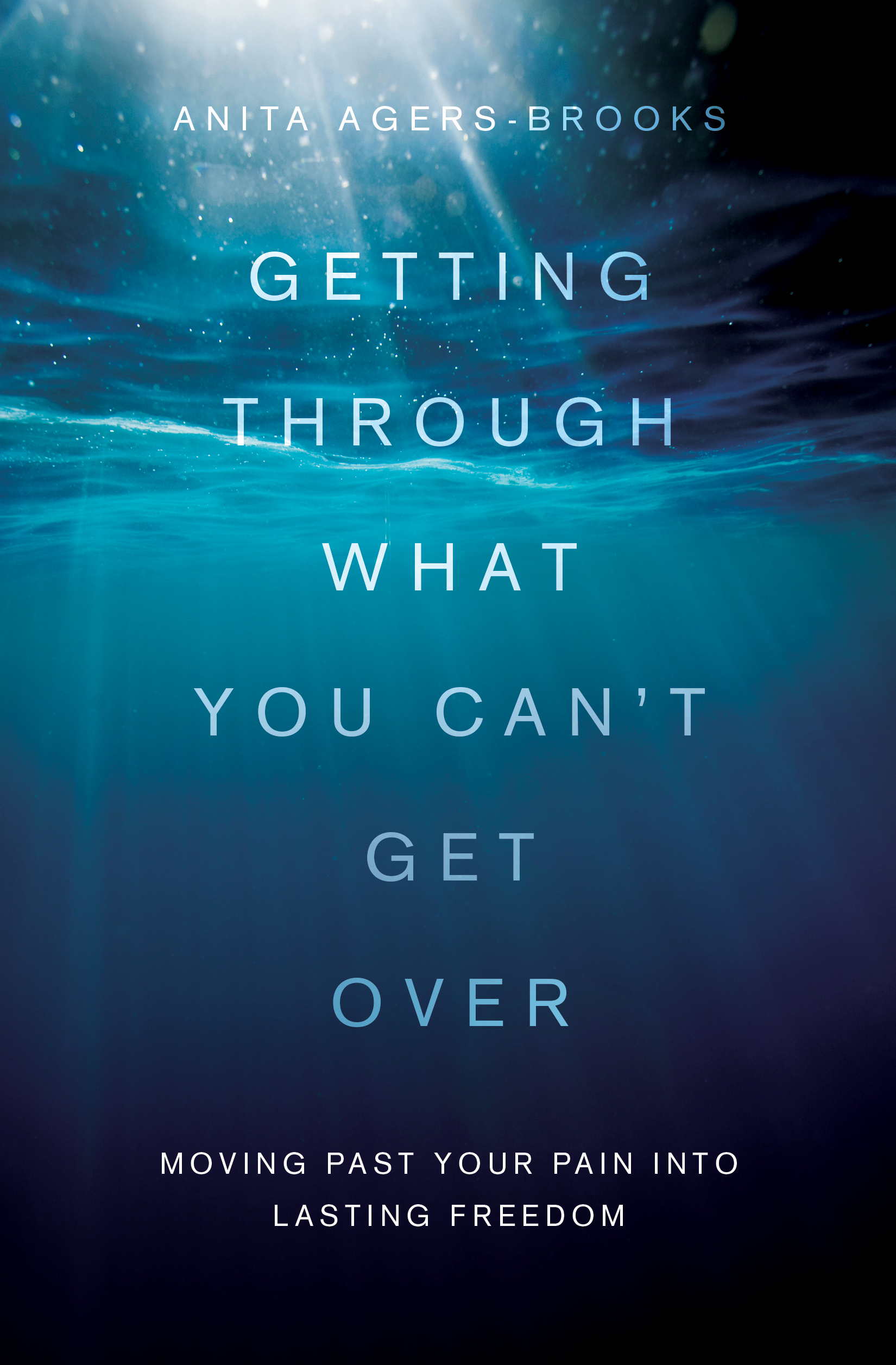
And the timing is right. I just finished writing a book I’m very passionate about called Getting Through What You Can’t Get Over, releasing through Barbour Publishing in April, 2015. I’m totally jazzed about Getting Through, but I’m also drained. It takes a lot to wade into soul-deep true stories of people who’ve experienced unwanted tragedy — many of them my own.

And as I prepare to work on my next non-fiction project, another soul-wrenching work speaking life into hurting people, I need a mental boost. So I’m challenging myself in an out-of-the-box way. I’m screenwriting for seven days in the 168 Film Project, Write of Passage contest.

But right before I started, something very interesting happened. And I wondered if God had hinted at all of this in the past, although I’d forgotten.

It was October, 2010, and I was in South Carolina on the cusp of discovering a life-changing secret about my identity. Though DNA tests wouldn’t confirm it for several days, I would soon learn my dad isn’t my biological father. At forty-six, the news blindsided me from left field.

On this particular day, I was getting ready to visit my dad (the only father I’d ever known), and as I neared his house, I thought my heart might explode from its pounding. I needed to catch my breath before I faced my fears.

It was Sunday evening, and I pulled into a plaza parking lot only two blocks from my dad’s house. The place was deserted, except for one vehicle.

Writing Screenplays
Stretching a Different Set of Muscles Can Energize

I glanced up and the license plate immediately caught my eye. I have no good explanation as to why, but I took a picture. I thought the personalized plate was curious, and remember wondering if God was telling me something. But at the time, I hadn’t even signed with my literary agent, much less sold a book.

Besides, I had bigger things on my mind, so I saved the digital photo in a file, and promptly forgot about it. Until recently.

A few weeks ago, I ran across the picture while looking for something else. Then I realized I was getting ready to enter my first screenwriting contest. And I wondered….

Does it mean anything? Probably not. Could God have hinted to me all those years ago? Possibly so. Is it fun to consider? Absolutely yes.

Whether anything comes from screenwriting or not, this is what I’ve realized. In order to infuse your writing with fresh wind, sometimes you need to do something totally off the wall, very different from what you’ve gotten used to. For a short time.

So I’m not working on a screenplay because I hope to invent the next Hollywood blockbuster, I’m screenwriting for fun and energy. That way, when this contest is over, I’ll have new fodder to make my next book even better than the ones before. And maybe that’s what God had in mind all along.

How do you stimulate your writing in creative new ways?

Anita Fresh Faith

12 Reasons for Writers to Love Facebook

facebook

True Confession: For me, Facebook was love at first post.

Apparently I am not alone. Facebook reigns as Social Media King, with 750 million active users. Here are a dozen reasons why Facebook is this writer’s Social Networking BFF.

1. Cure for Isolation: I am a relational gal and it is no secret that writing can be an isolating business. Facebook is a 24 Hour Kitchen Table “Come and Go” Conversation that never ends. I can connect to other writers who are also trapped at home on a deadline. In fact, Facebook is a virtual water cooler for thousands who work at home in their PJs but enjoy a little human connection with their coffee break.

2. Primes My Writing Pump: I read Facebook the way some read the morning paper (before newspapers all but disappeared). I like to peruse my friends’ thoughts while I sip my coffee. Writing a comment here, a question there, gets my writer’s juices flowing. Before long I fill in my status, which is much less daunting than writing a first sentence on an empty page. Interacting on Facebook eases me into a writing frame of mind.

3. Testing Material: Since I write humor, Facebook is a great place to test comedic material. If I get lots of good comments, I cut and past the post into a “Humor File” to use later in a blog or book.

4. Finding Topics that Hit a Nerve: Recently my daughter wrote a FB status about the pros and cons of when to share news of a pregnancy. More than 300 passionate responses from readers later, Rachel knew she’d stumbled upon a hot topic for her blog (www.thenourishedmama.com).

5. Easy Daily Journal: Everyone knows writers should journal daily. But what with all the social media we are now required to do to build our platform, who has time to journal, too? It’s a comfort to me that I have recorded the highlights of my experiences in a brief (publicly read) journal over the last 5 years… on Facebook. Romance novelist Eloisa James wrote an entire memoir (Paris in Love) based on a year of Facebook posts! Because the posts were so well-written, to my surprise, the book was hard to put down.

6. Gathering Ideas from Readers: In her bestselling book The Happiness Project, Gretchen Rubin sprinkles short tips and thoughts from her blog readers’ comments throughout the book. This added interest and variety to her book, especially when presented in bullet-point format.

7. Finding Original Quotes, Quips, and Anecdotes From Others: I wrote a couple of Facebook posts during a vacation when my husband and I both caught the flu. An author friend, writing a book on marriage, asked if she could use my posts as anecdotal material. I was happy to share; and she was gracious to attribute the quotes to me and mention my latest books as a reference in her book. A win-win!

8. Practicing “Writing Tight”: Today’s internet-skimming readers don’t have patience for long, meandering prose. Writing short FB posts is terrific practice in the art of writing tight. Today’s writers must know how to nutshell and extract worthwhile thoughts with as few words as possible. This past week I experienced two incredibly fun hours at a birthday party with four of my grandsons. Rather than bore my friends with a blow-by-blow account of my adorable grandchildren, I posted: “I went to a birthday party at a skating rink today and did the hokey pokey with four of my grandsons. And that’s what it’s all about.”

9. Facebook Friends are Faithful Fans: I’ve discovered Facebook friends to be faithful supporters of my blogs and books, generous in helping get the word out by re-posting press releases, book sales, and good reviews.

10. Networking: You never know how a Facebook relationship can lead to opportunities for writing or marketing your book. My daughter struck up a friendship with another prolific blogger who asked Rachel to guest post for a popular teacher’s blog. Rachel did so well that she was offered a paying gig to write regularly for http://www.weareteachers.com. We’ve also landed radio, podcast, and other web interviews because someone in media saw and liked our posts, blogs, or book topic on Facebook.

11. Random Polls: In our upcoming book Nourished: A Search for Health, Happiness and a Full Night’s Sleep (Zondervan, January 2015), my daughter (and co-author) wanted to address the Top 10 Everyday Stressors Women Face. So I posted the question, “What are the daily things that slow you down, trip you up, and steal your peace?” We gathered dozens of replies and categorized them into 10 areas that formed the basis for an entire book.

12. A Word for the Weary: How often have I received the perfect word of encouragement, comfort, or advice from someone on Facebook, exactly when I needed it? I’ve also had the privilege of regularly encouraging others via Facebook. For those who welcome it, Facebook connections can be a true ministry of words, whether or not you are professionally published.

How have you used Facebook to reach your readers?