15 Motivational Quotes for Authors

What Does Writing Teach Us?

What is it about motivational quotes that inspire us to greater endeavors? Daring us, energizing us, prodding us to overcome our fears and anxiety, so we can do what we truly desire?

Maybe it’s the quick, easy-to-remember word bites, or perhaps simply the comfort of knowing we are not the first trodding this territory. Regardless, the human spirit responds to simple quotes with powerful impact.

As writers, quotes from successful authors can move us past blocks, help us overcome anxiety, and keep us from giving up in the face of rejection. Maybe you could use a quick boost of daring, energy, or prodding today.

If so, here are fifteen of my favorite motivators:

“I write entirely to find out what I’m thinking, what I’m looking at, what I see and what it means. What I want and what I fear.” — Joan Didion

“If I don’t write to empty my mind, I go mad.” — Lord Byron

“It’s about getting up, getting well, and getting over.” — Stephen King

“Writing is the supreme solace.” — William Somerset Maugham

“If you’re a singer you lose your voice. A baseball player loses his arm. A writer gets more knowledge, and if he’s good, the older he gets, the better he writes.” — Mickey Spillane

“A wounded deer leaps the highest.” — Emily Dickinson

“Writers write about what obsesses them. You draw those cards. I lost my mother when I was 14. My daughter died at the age of 6. I lost my faith as a Catholic. When I’m writing, the darkness is always there. I go where the pain is.” — Anne Rice

“You don’t write because you want to say something; you write because you’ve got something to say.” — F. Scott Fitzgerald

“Any man who keeps working is not a failure. He may not be a great writer, but if he applies the old-fashioned virtues of hard, constant labor, he’ll eventually make some kind of career for himself as writer.” — Ray Bradbury

“Not that the story need be long, but it will take a long while to make it short.” — Henry David Thoreau

“My own experience is that once a story has been written, one has to cross out the beginning and the end. It is there that we authors do most of our lying.” — Anton Chekhov

“Get it down. Take chances. It may be bad, but it’s the only way you can do anything really good.” — William Faulkner

“I am irritated by my own writing. I am like a violinist whose ear is true, but whose fingers refuse to reproduce precisely the sound he hears within.” — Gustave Flaubert

“The unread story is not a story; it is little black marks on wood pulp. The reader, reading it, makes it live: a live thing, a story.” — Ursula K. Le Guin

“A blank piece of paper is God’s way of telling us how hard it is to be God.” — Sidney Sheldon

Which of these inspires you most?

Know Why Not

This post comes from Martha Bolton, author of the author of 87 books, including her newest, Josiah for President. Welcome Martha!

pencil-918449_960_720

It’s just as important to know why you don’t write as it is to know why you do.

You don’t write to get rich. I once had a business card made up as a joke that said, “Have pen, will grovel.” Being a writer is not a fast track to riches. You work long and hard on projects that may or may not ever see the light of day. You’ll find yourself celebrating a $50 cartoon gag sale with as much enthusiasm as you would signing a book contract. It’s nice to receive fair compensation for your work, but a writer should be passionate about his/her craft beyond any monetary gain. If awards and riches come, enjoy them and do some good in the world. But your passion should be in the work. If not, you’ll be tempted to throw in the towel at the first rejection.

You don’t write to get even or compete with others. We’ve all been hurt in life, and even the greats have had to contend with the jealousy of others. Most good writers don’t waste their career on such things. Write what you are meant to write and don’t get sidetracked.

You don’t write to please everyone. You can try, but you’ll only make yourself ill. Write the story that’s burning inside of you. Write for one person, even if that person is yourself. Write it well, but write it. The masses may end up loving your work, but that part is out of your control.

You don’t write to get famous. Few writers are recognized on the street.
For the most part, writing is a “behind the scenes” career. I once saw a book that I had co-written with a famous personality advertised in a catalog. The 20 percent off emblem was placed directly over my name. I had to laugh. But things like that happen all the time in a writing career. So you can’t take yourself too seriously. If you’re writing to stroke your ego, this probably isn’t the career for you. But if writing is what keeps you getting up in the morning and going to your work area, if you’re not seeking riches or fame or anything else other than putting pen to paper, or fingers on the keyboard, and seeing what can happen, then go for it. Who knows, you may end up becoming famous after all. Like I said, that part is out of your control. But I can almost guarantee you will end up fulfilled.

Want to Get Published? 3 Things a Publisher Must See

Note: This is the first post in a series of 4 posts: 3 Things a Publisher Must See.

3 things

You have a book in your heart that you’d love to see published. It may even be a great book. A publisher and her editing board need to see three things to say the “yes” you’re hoping for. They need to see: a unique project, a viable market and the right author.

1. A Publisher Needs to See a Unique Project

Although what you’re writing may seem fresh to you, know that publishers have already received countless pitches for “My Cancer Journey,” “My Eating Disorder Journey,” “My Spiritual Memoir.” Does this mean you scrap your project? No. But it does mean that you need to demonstrate how yours is unique. For example, these might catch a publisher’s attention:

  • Why Cancer Was The Best Thing To Happen to Me This Year
  • How My Eating Disorder Was Cured When I Won “The Biggest Loser”
  • I Was a Satanist High Priest and Now I Love Jesus

Make an editor curious enough to open your proposal!

One baby step toward publication: Read other books in your genre and identify what, if anything, makes yours unique.

2. A Publisher Needs to See a Viable Market

The publisher also needs to see that there is a market for this book. Who are the readers who will buy your book? What is the felt-need they have that will cause them to purchase your book, read it and rave about it to their friends? Research the market so that you can demonstrate that there are book-buying readers who need your book.

One baby step toward publication: Develop a one- or two-sentence “elevator pitch” that succinctly communicates the substance of your book, who will read it and what distinguishes it from similar books.

3. A Publisher Needs to See an Author Who Can Write and Promote This Book

A publisher is looking for authors who can write and who can also get that writing before an audience.

You’ve probably heard that author platform—your ability to reach readers—is the most important thing to a publisher. (And it’s pretty important.) But hear this: every publisher wants to publish great writing.

Chapters and pages and paragraphs and sentences and phrases need to engage readers. Your goal is to get a publisher (aka “reader”) to read the first sentence of your proposal and want to read the next one and the next one. You may think it’s an editor’s job to give your proposal a thorough reading, but it’s not. Her job is to find quality books to publish. When she is perusing your proposal, she can check out—and check facebook—at any point in the process. Develop your craft so that you can write prose that a reader does not want to put down.

And there’s also that platform business…

Who has platform? Oprah. Rick Warren. Francis Chan.

Intimidated? You don’t need to be. You can be building your platform right now by:

  • pitching and writing articles for publications
  • developing an audience for your blog
  • building your speaking resume by speaking places for free: MOPs groups, churches, etc.

The key is finding what works for you and sticking with it.

One baby step toward becoming a great writer: Sign up for a local writing class, sometimes available at city colleges, or attend a writer’s conference in your area.

One baby step toward building platform: Set a goal to publish one article or story, with a reputable national publication that appeals to the eventual audience for your book, in the next three months.

Cheering you on,

Margot


Take Heed!

This month marks the eighth anniversary of my writer’s blog: A Writer’s Way of Seeing. At this time last year, I offered writers advice for the coming year. I was going to offer a new list for 2016, but in reading what I wrote last year, I really think the same advice applies. Also, now that I’m an agent with WordServe Literary, I’ve picked up numerous new readers. So for new readers, and as a refresher for my regular readers, here’s a slightly edited version of last year’s blog called “Take Charge!” Maybe for this year the title should be “Take Heed!” because we’re all a year closer to our real deadline when we no longer will be writing.

new-years-eve-1036513_960_720

As we’re in the opening weeks of 2016 I want to offer my yearly exhortation for the new year. We’re all getting older and time’s a’ wasting, folks. If we want to succeed as writers, we need to take charge of our writing career. In fact, that will be my rally cry for you in 2016: “Take charge of your writing career!”

Here are seven suggestions on how to do that.

  1. Stay prayed up. Presumably by now you’ve confirmed in your own mind that God has called you to be a writer. Part of that calling is, of course, to write. But for a Christian, that’s only half the calling. The other half is knowing what to write. Mostly we find that out through prayer and discerning the needs of readers and our ability to write to those needs. As you pray, ask God to guide you in your writing pursuits. Make that a year-long (life-long, actually) commitment to yourself. If you stay prayed up about your writing, you’ll stay pumped up too.
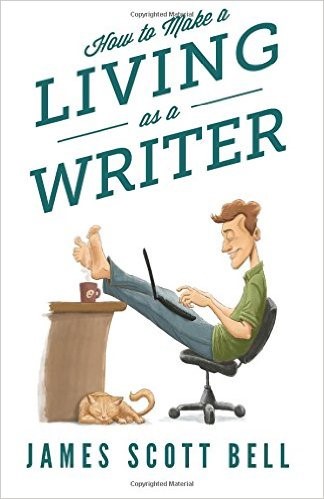
  2. Improve your craft. Each year I urge all of us who write to find a way to keep improving our craft. Take classes, read magazines such as The Writer, Writer’s Digest, and The Christian Communicator.  Join a critique group. Read the blogs of other successful writers, agents, and editors. Write, write, write. Commit to writing at least three (and probably more) drafts of each project, with each draft an improvement from the preceding draft.  Always have a good writing book on hand. I recommend any of James Scott Bell’s books on the writing craft, particularly How to Make a Living As a Writer.
  3. writerWrite out specific goals for each month. Make each goal realistic, but then stick to them. Daily, weekly, and monthly goals are good, but also write out in some detail what you hope to have accomplished by December 31. To stay on track, consider finding a writing accountability partner. Share your writing goals with each other and meet in person or by internet every week or two to encourage one another.
  4. If possible, have two or three projects/proposals/manuscripts in some stage of progress. Perhaps you’re working on just a one-sheet for Project A, while on Project B, you’re at the full proposal stage. Project C might be your work-in-progress—the actual manuscript you’re working on. For a successful writing career, you must always be thinking ahead.
  5. Pick one or two writer’s conferences and plan to attend. If money is a problem start saving now. Come up with creative fund-raising ideas. Perhaps ask your church to chip in with the fees. Most conferences have some scholarship money. See if you qualify or if you can do some conference work in exchange for part of your tuition.
  6. Stay up to date with the publishing world—including self-publishing. Know what the bestsellers are. Know which authors are writing successfully in the same genre in which you write. Read Publisher’s Weekly or Publisher’s Marketplace online. More and more writers are finding their entry into publishing through self-publishing. Sadly, many are making very serious mistakes. Although I encourage self-publishing as an option, I do not recommend it if you’re going to do a poor job of it. Last year at one writer’s conference I picked up a self-published book and found three major errors on the first page, including the misspelling of the name of a famous world leader. Who would buy such a book? Not me.
  7. Work on your platform. I know very few authors who like platform-building. I don’t like it either. I’d much rather just write. But a platform is important. Starting small is fine. Just do what small thing you can do now and build from there. Eat the elephant one bite at a time.

The crucial thing in all this is to keep your commitment red-hot. Rest assured, there will be discouragements, distractions, and even rejections in 2016. That’s life. It’s also another reason to plan ahead and to indeed “take charge of your writing career” in 2016. Start planning now!

Starting Your Writing Project 

It’s a new year, so it is time to set some new goals. For many of us, one of those goals may be writing our next book. As with most goals, the hardest part is getting started. So, let’s consider some ways to overcome writing inertia.

Find your topic: Whether you are writing your first book, or your hundredth book, the first step is determining the focus of the book.

For your first book, your possibilities are the greatest. Of course, you are confined by your areas of knowledge and interest, but you have considerable freedom in choosing a genre, subject and style.

For your second and subsequent books, you are limited by your previous writing decisions. Of course, some authors successfully jump from nonfiction to fiction or children’s books to historical novels, but usually your literary agent will encourage you to write your next book in a category similar to your previous work. Your readers will be looking forward to a new book that builds on what they have read in your previous books.

Prepare a schedule: You are more likely to complete your writing project if you plan the time for the task in your schedule. If you have written a book already, you will have a good idea of how many hours it takes you to write a certain number of words. If you are writing your first book, you can estimate the time by using how long it takes you to write an article with a given word count.

Realistically determine how many times per week you can devote time to writing. Next, figure how long each writing session should last–one hour or half the day? How many words do you expect to write during a typical writing session? Given these calculations, you should have a good idea of how long you need to complete your writing project.

Factor in time for disruptions and delays so you do not become discouraged by an overly optimistic plan. You want to reach your goal, but writing is not a race.

Gather resources: Prepare for success by thinking ahead. What research materials will you need for your project? Will you need to spend time in a library or travel to a certain destination? Do you need to schedule interviews with people?

Add time for these tasks to your writing schedule. Contact people you need to interview well in advance of your writing deadline. Consider if you will want photos or illustrations in your book. If so, plan on acquiring the necessary permissions. As you gather your resources, your goal of completing your writing project will become real to you, increasing your likelihood of finishing the project.

Of course, each writer has a unique way of preparing to write a book. How do you get ready for your next writing project?

Advice from the Experts

I love browsing around writing boards on Pinterest with words from the literary experts. When I’m feeling discouraged, I find short, pithy quotes that remind me what my meandering plot is missing or quotes that encourage me to stay the course even when things aren’t going as well as I’d like. In any case, to start off the new year, here are a few I’d like to share with you.

Experts

You can’t use up the creativity. The more you use, the more you have. – Maya Angelou

A story is a letter that an author writes to himself, to tell himself things he would be unable to discover otherwise. – Carlos Ruiz Záfon

I can fix a bad page, but I can’t fix a blank one. – Nora Roberts

The difference in winning and losing is most often in not quitting. – Walt Disney

I’m writing a first draft and reminding myself that I’m simply shoveling sand into a box so later I can build castles. – Shannon Hale

Love the writing, love the writing, love the writing. The rest will follow. – Jane Yolen

The key, the crux of the whole matter, is to FINISH YOUR MANUSCRIPT. You must learn to see this as the goal. Not the perfect word or the polished paragraph. A finished text. – Davis Bunn

The bigger the issue, the smaller you write. You don’t write about the horrors of war. No. You write about a kid’s burnt socks lying on the road. – Richard Price

When I used to teach creative writing, I would tell the students to make sure their character wants something right away, even it’s only a glass of water. – Kurt Vonnegut

When in doubt, make trouble for your character. Don’t let her stand on the edge of the pool, dipping her toe. Come up behind her and give her a good hard shove. – Janet Fitch

Novels are forged in passion, demand fidelity and commitment, often drive you to boredom or rage, sleep with you at night. They are the long haul. They are marriage. – David Leavitt

Be yourself and readers will follow you anywhere. Try to commit an act of writing and they will jump overboard to get away. – William Zinsser

Plot is people. Human emotions and desires founded on the realities of life, working at cross purposes,  getting hotter and fiercer as they strike against each other, until finally there’s an explosion – that’s plot. – Leigh Brackett

Write even when the world is chaotic. You don’t need a cigarette, silence, music, a comfortable chair or inner peace to write. You just need ten minutes and a writing implement. – Cory Doctorow

Dialogue is action. It’s not characters making talk. A character’s words are tools he uses to get his way in a scene. – James Scott Bell

Write a little bit each day. One page a day means 365 pages in a year. – Francine Rivers

One should be able to return to the first sentence of a novel and find the resonance of the entire work. – Gloria Naylor

If there’s a book you really want to read but it hasn’t been written yet, then you must write it. –Toni Morrison

We are cups, constantly and quietly being filled. The trick is knowing how to tip ourselves over and let the beautiful stuff out. – Ray Bradbury


WordServe News: December 2015

Exciting things have been happening at WordServe Literary!

On the final post of each month you’ll find a list of Water Cooler contributors’ books released this month along with a recap of WordServe client news.

End of Year Message from Greg Johnson

Happy New Year!

WordServe Literary didn’t quite hit the “banner year” label, but in a slow and tough publishing environment, we not only had 70 books published by WordServe authors, but also hit a volume level in contract value in 2015 that surpassed the two previous years.

WS_books

Good writers, quality ideas, the right publishers … and a solid agency behind them … the book industry is not dead yet!

Publishers are being increasingly selective, especially in the mid-list and with new authors, but for great writing, compelling stories and authors who have built an audience, there is room to publish traditionally.

We still believe in the power of books to inspire, entertain, meet needs and move people forward in life and in their faith. And with three agents working hard to shape proposals and help authors, WordServe continues to be positioned well for the future.

–Greg

New Releases

51wAiOpfs-L._SX331_BO1,204,203,200_


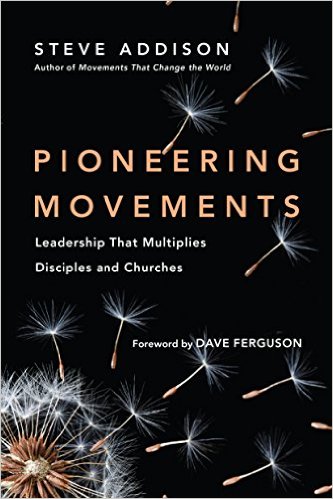
Steve Addison released Pioneering Movements with IVP Books.

Building on his previous works, Steve reveals the apostolic qualities and behaviors of biblical, historical, and contemporary pioneers who can guide church and ministry leaders today.


51u6T8-3v0L._SX355_BO1,204,203,200_


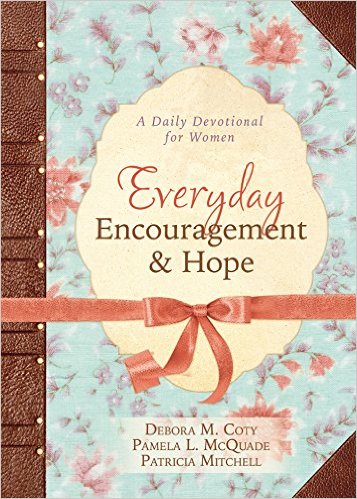
Debora Coty, Pamela McQuade, and Patricia Mitchell released Everyday Encouragement & Hope with Barbour. This daily devotional for women offers brief but power-packed devotions to draw women closer to the Master Creator and enable them to recognize His blessings throughout their lives.


51P6kZomPaL._SX355_BO1,204,203,200_


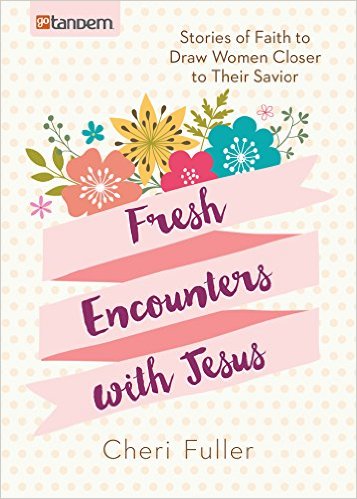
Cheri Fuller released Fresh Encounters with Jesus with goTandem. Sharing stories of biblical and historical figures, modern people, and her own faith journey, Cheri demonstrates the many ways God shows himself to us, through His Word, service, trials, mountaintop experiences, and quiet whispers.


51qehZgMvQL._SX331_BO1,204,203,200_


Kariss Lynch published the third book in her Heart of a Warrior Series, Surrendered. In this final volume, Nick Carmichael and Kaylan Richards prepare to spend the rest of their lives together — but first Nick must go on one last mission, this time with the one woman he hates and fears above all others: the terrorist Janus. Can Nick and Kaylan set aside their fears and do what is necessary to secure their future?


41DnwKFldRL._SX331_BO1,204,203,200_


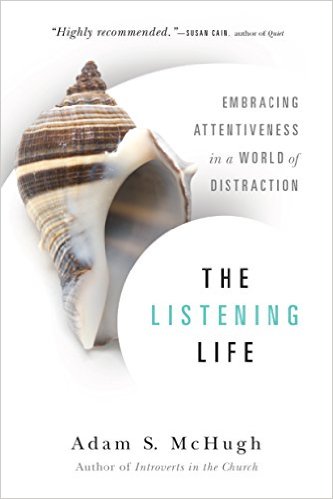
Adam S. McHugh released The Listening Life with IVP Books. Placing listening at the heart of our spirituality, relationships, and mission in the word, this book encourages readers to cultivate a posture of attentiveness. By heeding the call to the listening life, we can hear what God is doing in us and in the world.


New WordServe Clients

We’re pleased to announce that Josh Farrar, Marion Skeete, and Tiffany Smiling joined WordServe as new clients this month. Welcome!

New Contracts

Laurie Polich Short signed with InterVarsity Press for her new book, When Changing Nothing Changes Everything, an exploration of how changing your perspective can change your life.

What We’re Celebrating!!

Marcus Brotherton’s book with Travis Mills, Tough as They Come, made it onto the #6 slot in the New York Times Best Sellers list for Health books!

All is Calm

Hear that sound? No? That’s because it is the sound of silence. The kind of inexplicable, almost supernatural, silence that expands to fill the void left in the wake of a tornado or an eardrum-shattering fireworks display or, in this case, the Christmas season.

Much is made of the fact that Christmas is a time for peace, for reflection on Christ and the greatest gift ever given, his life, death and resurrection. In reality, though, if they happen at all, those moments of reflection are generally stolen ones, snatches here and there in the midst of rushing through crowded shopping malls, cooking and cleaning madly before friends and family arrive, and squeals of delight as children tear paper off of gifts spilling out from under the Christmas tree.

All good things. Martha things. Things that should be and need to be done. But things that can so easily distract us from the Mary thing. Sitting and listening. Meditating on the words of Scripture. Contemplating the wonder of some of the most profound and stirring words of all, “And the Word became flesh and dwelt among us” (John 1:1).

candle-535149__180

Emmanuel. God with us. What an incredible, almost incomprehensible thought.

And not one we can only contemplate at Christmas, thankfully. It is in this time, in the deep silence that follows the noise and (mostly) joyful rushing around and checking off of lists and the general chaos and confusion, this almost supernatural time of stillness, hibernation and rest, that we are finally able to find minutes, sometimes hours, for uninterrupted, undistracted contemplation.

On the words of Scripture. And on the words given to us as a treasured gift, not to hoard but to give, to share, to continue to pass along the powerful message that the Word dwelt among us. That the Word dwells among us. Not just in Bethlehem, not just at Christmas, but here, now, in the silence and stillness that follows the often frenzied celebration of his birth.

So as we enter into this, a new year, a clean slate, an endless stretch of possibility and potential, may the words of our mouths and the meditation of our hearts be acceptable to him. And may the words he gives us to share with others bless them and draw them back to his presence every day of the year ahead.

Let us continue to share the message of Christmas. That hope came when there was no hope. That light came into deep, impenetrable darkness. That joy came into sadness, grief and loss. It came two thousand years ago. And it comes today when we are finally still enough to know that he is God. When we stop long enough to listen, to meditate, to contemplate and, in the silence, unwrap, discover and experience for ourselves the greatest gift of all.

The Word with us.

Walking Down Memory Lane: Recording Your Legacy Stories

Photo/KarenJordan

What memories do you recall of your hometown?

Christmas always brings back a lot of memories from my hometown, Silsbee, Texas.

My husband Dan and I grew up in the same town in Southeast Texas. So, even though he’s a few years older than me, we share a lot of memories of our hometown. Not only were we both born in that small Texas town, our parents grew up there, too. So, a lot of our relatives and friends still live there. And we still make trips back there when we can.

Fun times. Both of our children were born in Southeast Texas, too. But since we moved away when they were young, they only remember the holidays, summer vacations, and fun times with their relatives there.

Painful moments. Some memories are difficult to embrace–like the death of loved ones or mistakes from our past. But I’ve discovered the importance of recording some of my painful memories, especially since both of my parents are gone now.

Writing down some of those narratives brings healing to my soul. Plus, if I don’t write my family stories down, I know they will be lost forever.

Legacy stories. I should have written down the stories my mother and dad told me long ago. But at the time, I didn’t see any value of recording them.

I still hear those stories from my other relatives when I go back to Silsbee for holidays, weddings, reunions, and funerals. I’m trying to work out a plan for jotting down more of those stories as I remember them.

Certain songs also trigger memories for me. Although I moved from my childhood home several decades ago, Kenny Rogers‘ hit, “Twenty Years Ago,” always takes me back in time, reminding me of my past.

As you listen to the song below, I hope it helps you recall some of the stories from your hometown, too. But be sure to write them down. Someone you love might be blessed by your stories. I also hope you’ll share a story with our readers in the comments below.

YouTube/RareCountry2 (“Twenty Years Ago – Kenny Rogers)

Did this video remind you of a story from your hometown?

For the Love of Writing

Have you ever been around someone who loves Christmas? I can’t quite rival Santa, but I love this season. I love the scent of cider as we decorate the tree and the chaos of Christmas decorations. I love the music, lights, winter clothes, the Christmas parties, and my dad sharing a devotional on Christmas morning. I love time with extended family, laughing and making memories. I love reading the Christmas story and imagining it from the perspective of the people who experienced it. And I love being around people who love Christmas, because their joy is contagious.

It’s the same way with our writing. When we love the story, our readers love it, too. My third book, Surrendered, comes out December 26. It’s the end of a series, the end of an era, the end of a contract, and a beautiful beginning (I hope) to many more stories to come. Under the pressure of deadlines, pursuing a contract, and learning to market, I can forget the joy of this calling. So this month, I’m falling in love with writing again.

Write what you love

Write what you love.

This year, Christmas also comes with a book release. I can’t wait to share Surrendered with readers. I loved crafting the romance that made me swoon, conflict that made me cringe, and action that had me scratching my head to figure out how to rescue them.

Now it’s time to begin again.

I have a couple of different manuscripts going, but I’m also working on one just for me.  A fairy tale. Even if it never sees the light of day, it makes me remember what I loved about my favorite stories as a kid and what I still love about romance, magic, and characters as an adult. The new manuscripts, the ones editors have requested to see are experiencing new life, as well, as I read and remember all that I love about Francine Rivers’s Mark of the Lion series, Karen Kingsbury’s Baxter Family series, and Dee Henderson’s O’Malley series. I look at what other people love about those stories, too. Then I add my own creativity, a new story idea, and something I love is born.

Write because you love it.

It’s taken finishing the Heart of a Warrior series to finally own the fact that I am a hopeless romantic who happens to write romance. But once I fully accepted that, I was able to embrace my new manuscripts in a greater way. I write because I love it, because I have a story to share, because I love bringing a character to life. I love tossing them into trouble and watching them come out shining like gold because they wrestled and emerged victorious. I love writing scenes with courage, heart, and emotion. I write because that’s how God made me. This month, I am writing for the love of the craft and not for the deadline.

Others will love it, too.

It’s important to hole up and remember to write because I love it, to write a heart story, but the beautiful benefit is that even when I close the door to my writing closet and let everything I love and am passionate about spill out on the page, I’m writing something that others will love, too. People connect with emotion, with stories that make them think and dream and imagine. They connect with vulnerability. When I write for me, I  am ultimately writing for them. Out of the overflow of what I have learned as a writer, as a person, as a woman made in the image of Creator God, my experiences, quirks, and imagination pour onto the page and the creativity of the reader is captured.

In this Christmas season, a time of joy and celebration and thanking the God who sent His Son to earth, I’m celebrating in a different way – with the gifts he’s given me. I truly believe when we write what we love because we love it, then others will love it, too.