WordServe News: May 2016

Exciting things have been happening at WordServe Literary this month!

On the final post of each month you’ll find a list of Water Cooler contributors’ recently released books along with a recap of WordServe client news.

New Releases

duggerLarry Dugger released 40 Days to Defeat Your Past with Charisma House. Just as Jesus squared off with the devil in the wilderness, we must square off with our devils. Forty Days to Defeat Your Past is a one-day-at-a-time process that uses the number forty to help readers identify and defeat the destructive patterns of their past and establish new, healthy habits to lead them into freedom.

ebookJan Dunlap released Heaven’s Gate, the first book in her Archangels series, with FaithHappenings Publishers. Following the character of Dr. Michael Carilion as he uncovers the missing piece of the One Theory—the Holy Grail of theoretical physics—this supernatural thriller wrestles with questions of science, faith, and a shattering new understanding of life after death.
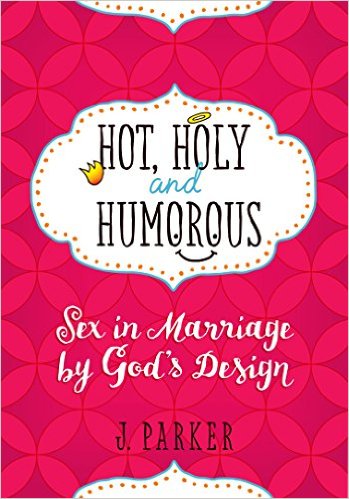
51L8nL3LvpL._SX347_BO1,204,203,200_J. Parker release Hot, Holy, and Humorous with BroadStreet Publishing. Wrongful thinking and attitudes about sex permeate our culture, even in Christian circles. Starting from a foundation of faith and humor, this book offers candid advice for wives who want to make the most of God’s gift of sexual intimacy in marriage.

lead me home

Amy K. Sorrells released Lead Me Home with Tyndale. This powerful novel follows the stories of two men in a small town – one, a young man forced to grow up too soon, the other a pastor of the local church who questions his calling as the church doors close for good. As severe storms roll through, threatening the community, both men confront the fear of losing what they care about most, and reconsider where they truly belong.

51jGauNvGIL._SX311_BO1,204,203,200_Jennifer Strickland released 21 Myths (Even Good) Girls Believe about Sex with Shiloh Run Press. With honest, straight-forward language, Strickland strips away the lies surrounding dating and sex and shares the myths, the truths, and the practical ways girls can enjoy the pursuit of passion and purity.

New Contracts

Mary Davis signed with Barbour for her work, Unworthy Hearts, part of the Pony Express Romance Collection.

Ken Gire and Donald Stratton signed with HarperCollins to publish the memoir of 93-year-old Stratton, who survived the bombing of the USS Arizona at Pearl Harbor on December 7, 1941.

Melissa K. Norris signed with Harvest House for her next book, The Made-From-Scratch Home. This follow-up to her most recent book, The Made-From-Scratch Life, will be available in early 2018.

Barbara Scott signed with Gilead Publishing for her novella I’ll Be Home for Christmas, which will be included in a Christmas seasonal collection of contemporary romances.

Mike Yorkey signed with Barbour to publish a new book on Stephen Curry of the Golden State Warriors, due out early next year.

New Clients

Linda Clare, Ron Hammer, Mary May Larmoyeux, Phillip Robertson, and Craig Selness signed with WordServe this month. Welcome!

The 15-Minute Writer: Tips for Creatives Who Parent


photo-1415822138156-fd0cd874335a

Photo source: https://unsplash.com/giuvicente

I began writing before God blessed me with children, and in the last eighteen years, I’ve birthed two boys and eight books. Being an author has been a grand adventure. It’s also kept me sane.

Seriously.

After having my oldest, who was a very high-needs baby, I suffered severe depression and stopped writing. One day, my counselor asked me, “Why aren’t you doing something that makes you light up whenever you talk about it?” Her question helped me realize God had called me to writing not only as a ministry to others, but also for my own growth and happiness.

Combining parenthood with a creative passion can be challenging, but I believe it’s worth the effort. If you’re a parent who longs to create, here are a few tips from the trenches:

Make the most of your kids’ sleep times.  When Jordan and Jackson were small, I used nap times to write instead of clean. Hiring a once-a-month housekeeper was well worth the expense…even when I didn’t get paid for writing. If you work full-time, dedicate a few moments after bedtime (or before your children wake up) to your art. A Netflix binge won’t feel as good as creating something–I promise.

Apply your creativity to time management. Once my sons were old enough, I enrolled them in Mother’s Day Out (two days a week) and dedicated those twelve hours a week to my art. On days we were together, I did household chores and errands with them in tow. I’ve also written by hiring a temporary sitter or working when my husband was at home. When my husband and I both worked full-time, we made one Saturday a month “guy time.” The boys enjoyed days with Dad while I worked on upcoming deadlines.

Work away from home. If you can swing it, try to write at a coffee shop or restaurant with free wifi. Another helpful habit is to participate, at least once a year, in a writing conference or retreat. For me, the expense of travel has paid off in contacts, clarity, and opportunities. (It also helps my family realize all that I do, and they appreciate me more when I get back. Talk about a win-win!)

photo-1457369804613-52c61a468e7d
Photo source: https://unsplash.com/impatrickt

Say “no” to distractions. Every artist who makes time for their passion has to say “no” to social events, book club meetings, and various distractions (such as Facebook posts about organizing closets). On the days I set aside to write–first proposals and queries, now articles and books–I worked. Even if I set self-imposed deadlines, I tried (and still try) to meet them if at all possible. Take yourself seriously, or no one else will.

Be patient with yourself and your goals. I found this very difficult at first, because I began writing before my kids were born, and I’m a very goal-oriented person. However, I found contentment when I surrendered my dreams and accepted that the kids needed me now, while the writing could often wait. Try to picture your artistic pursuits as a marathon, rather than a sprint.

Pay it forward. God gave me a supportive spouse who’s also creative, so he understands my calling. I don’t take that for granted, and I try to let him have space to pursue his own passions. I also have a heart full of gratitude for the precious relatives, friends, and colleagues who’ve encouraged me along the way.

Today, I hope I’ve given you a bit of that same encouragement.

Your turn: if you’ve combined parenthood with a passion, share your tips in the comments. (Hurry, before the kids wake up!)

5 Tips for Sharing Your Faith Stories

imageThe Bible encourages Christ followers to share their life lessons of faith with others.

Men. The apostle Paul gave Titus this advice as he prepared to teach men.

.  .  .  talk to them; give them a good, healthy diet of solid teaching so they will know the right way to live  .  .  .  teach the older men (to) enjoy everything in moderation, respect yourselves and others, be sensible, and dedicate yourselves to living an unbroken faith demonstrated by your love and perseverance.” (Titus 2:1 The Message).

Women. Paul also gave Titus instructions about teaching the older women, offering him some instructions concerning issues that concern all women (Titus 2:3-5).

Today. We might be able to glean some good stories with writing prompts from these passages. But how can we share our own faith if we can’t communicate our personal stories, identifying the stories that matter most to us?

As I prepared to speak to a group of Christian women, encouraging them to share their faith stores, I recalled an important challenge in 1 Peter 3:15: “Always be prepared to give an answer to everyone who asks you to give the reason for the hope that you have” (NIV).

Prompts. The following writing prompts helped me prepare to tell my faith story, particularly my personal “come to Jesus” experience.

  1. Before Christ. How would you characterize your life before you trusted in Jesus Christ? [Attitudes, emotions, concerns . . . ]
  2. Faith Crisis. What were the circumstances in your life that led you to trust Jesus Christ as Savior?
  3. Salvation. When and how did you respond to accepting Jesus Christ as your personal Savior?
  4. Christ follower. How would you characterize your life today since you chose to follow Christ? How is your life different now?
  5. Scripture Promises. What Bible verses have helped through a crisis of faith?

What resource or practice has helped you communicate your faith stories?

How to write REAL dialogue? Listen up!

listenI have a secret weapon when it comes to developing authentic, convincingly real dialogue in my novels: my ear.

That’s not to say that I am an eavesdropper. I do not lurk around others at cocktail parties (Cocktail parties? Do those even exist anymore in our online-saturated world?), nor do I silently sidle up to people talking on their cell phones. The fact is, when I am involved in a conversation, I try to listen very consciously and pay attention to how ideas are expressed, how a dialogue moves from beginning to end, and what it actually sounds like.

And when I hear a particularly memorable line, I steal it.

The result?

My characters say the same things that living, breathing, people actually say.

I know this is one of the keys to my success in creating characters because I always have readers enthuse to me about how “real” my characters are.

“I swear I know your characters,” a reader tells me. “They talk just like my friends do. If I didn’t know better, I’d think that you’d been secretly recording our conversations!”

Confession: I actually considered carrying around a small recorder early in my writing career to capture great lines of conversation, but decided that was too creepy. Instead, I developed the habit of repeating a line in my head until I had it memorized to copy down later. Almost miraculously, the rest of the conversation comes back to me for use in scene development, and that’s when I apply artistic license and my own imagination to craft it into my plot.

Until recently, I thought that was the way every writer developed dialogue: relying on your own ear. But then my daughter shared with me an experience she’d just had with readers of her fan fiction.

“I had so many readers comment on how much they loved this one line from a character,” she happily told me, “and it was verbatim what a friend said to me when he tasted some brownies I made. Seriously, all the best lines come straight from someone’s mouth! Forget struggling to come up with zingers – all you have to do is listen to the people around you.”

That simply confirms what I tell my audiences when I speak about my writing. I can’t take credit for some of the best dialogue in my books, because I didn’t make it up. I just recorded what I heard someone else say. In so many cases, the real world provides much better, more authentic material than I could ever dream up. Not only that, but listening carefully to conversation helps you develop pacing and timing that mimics real people, which is a huge benefit when you’re working with fictional characters.

The next time you’re stumped for dialogue, give your keyboard a rest, and instead, go talk to someone and put your ear to work. It really is surprising what people might say, and what you can do with it.


Finding Your Voice as a Writer

OLYMPUS DIGITAL CAMERA
Speaking with a Microphone

At a writer’s conference or in an exchange with your literary agent, you might hear the admonition to find your voice as a writer. You will quickly recognize that locating this important item is the key to defining yourself as a professional writer, launching a successful writing career, and attracting readers.

As you seek to differentiate yourself from other writers and find your own style, your voice might feel elusive. Unsure of how to proceed, you may be tempted to echo the style of your favorite author, or try on a variety of writing styles in an attempt to find the best fit for you. However, your voice is an extension of who you are as a person. To a certain extent, your voice finds you as much as you find your voice. Consider how your voice as a writer arises naturally from your unique perspective, your particular audience, and your principal message.

1. Your unique perspective: Every writer brings a special blend of skills, life experience and creative ideas to each writing task. If a group of five writers sat around a table working on an article for a magazine using the same requirements and editorial guidance, I would expect five very different finished articles to emerge. For example, a writer with a science background might take a logical, structured approach to a subject, where a writer with a theatrical background might add more emotion. A writer who spent many years teaching history at the college level would probably include background material to give a historical context to the subject matter.

2. Your particular audience: A novice writer might dream of his or her words reaching a wide general audience, such as anyone passing by the best-selling books display in a Barnes & Noble store. However, most writers appeal to a certain segment of the book-reading population, often to people who are similar to the writer. A naturalist will likely attract readers who love spending time outdoors. Beyond simply thinking about the marketing of your books, think about who you are most likely to influence with your work. Will your writing reach young parents, new retirees, or college students? Is your writing complex or easily accessible? As a Christian writer, are you writing for someone new to the faith or a lifelong believer? Once you understand your particular audience, you can choose words and illustrations most effective for your readers, thus defining an aspect of your writing voice.

3. Your principal message: At the intersection of your passion and your experience, your principal message develops. You will feel most fulfilled as a writer when you write about topics that matter the most to you. Your readers, in turn, will sense your interest and excitement. You will produce your highest quality work when you write in your area of expertise. When writing articles for publications to augment your work as an author, try to choose topics that complement the messages that readers take away from your books. This focus will help you build a loyal base of readers and maintain a consistent writing voice.

What has helped you find your voice as a writer?


To Blog or Not to Blog, That is the Question

The following is a guest post from Rachelle Gardner, a literary agent with Books and Such. It was first published on her blog at www.rachellegardner.com.

7526600_s-150x150

Standard wisdom used to be that authors, both fiction and non-fiction, should build relationships with readers through blogs. As social media and online marketing have evolved, my thoughts on blogging have changed.

The proliferation of blogs in the last ten years has made it increasingly difficult to stand out in the crowd. Many authors are blogging faithfully but it doesn’t seem to be increasing readership of their books; in fact most of their readers are other writers. One good indicator blogging might not be for you is if you have a hard time figuring out what you should write about.

So, how do you decide if you should have a blog?
Have a blog if:

  1. You have something important to say and it seems people want to hear it.
  2.  You understand that blogging is about offering something of value, NOT about promoting yourself and your books.
  3.  You enjoy blogging (for the most part, anyway).
  4.  You find blogging contributes to your creativity and enthusiasm for writing your books, rather than sucking all the energy out of you.
  5.  You can find the time for blogging without it completely stressing you out.
  6.  Your books have a highly defined target audience, making it easy to target your blog.
  7. Your books are topical (especially non-fiction), so that you have a clear and obvious theme for your blog.

Don’t have a blog if:

  1. You keep asking yourself and others, “But what should I blog about?”
  2. You only want to blog to promote your books and/or because you think you “have to.”
  3. The whole idea stresses you out.
  4. You honestly don’t have the time in your schedule to blog regularly.
  5. You’ve been blogging for a year or more, and haven’t built up to a traffic level that seems worth it.

Here are some alternatives to blogging when it comes to online networking and promotion.

  • joining a group blog
  • sending email newsletters
  • using Facebook effectively
  • leveraging the various ways Goodreads offers for promoting books
  • attracting a readership through Pinterest and/or Instagram
  • having an effective LinkedIn profile page

If you don’t want to blog or be engaged in online promotion, should you self-publish instead of seeking a publisher?

I get this question from writers frequently, and my answer is: What would be the point of self-publishing a book, if you have no intention of promoting it? Who will buy it? With millions of books available for sale at any given time, what’s your plan for letting people know that yours exists?

Blogging and other means of online promotion aren’t just hoops that publishers want you to jump through. They’re real and necessary methods of letting people know about your book. So if you have no intention of letting anyone know about your book, through a sustained, long-term promotional plan of online engagement, then think carefully about whether you want to write a book for publication. If you build it: they will NOT come. You must promote it.
Do you blog? If so, how’s it going? If not, why not? 

Rachelle Gardner is a literary agent with Books and Such Literary Agency based in California. In addition, she is an experienced editor, writing/publishing coach, social media coach, and speaker. She has been working in publishing since 1995. Find her at http://www.rachellegardner.com. 

WordServe News: April 2016

Exciting things have been happening at WordServe Literary this month!

On the final post of each month you’ll find a list of Water Cooler contributors’ recently released books along with a recap of WordServe client news.

New Releases

georgeJosh Aronson and Denise George released Orchestra of Exiles  with Berkley Books. This compelling biography tells the story of Bronislaw Huberman, the violinist who founded the Palestine Symphony Orchestra and saved hundreds of people from Hitler—as seen in Josh Aronson’s documentary of the same name.

51v21ckDovL._SX347_BO1,204,203,200_Wayne Cordeiro released the NIV LifeConnect Study Bible with Zondervan. Intended to help you grow deeper and stronger in your spiritual life, this feature-packed Bible offers helpful notes and articles, a variety of study tools, and links that direct you to an incredible set of digital resources. At home, online, or wherever you go, connecting with the Word of God is never more than a click, a tap, or a swipe away.

61VwcpvzlKL._SX398_BO1,204,203,200_Debora M. Coty released the Too Blessed to be Stressed coloring book  with Barbour. Encouraging readers to “color your way to calm,” the book offers 45 unique images on quality stock to comfort and inspire through beautiful design, refreshing thoughts, and scripture selections. Perfect for  anyone who enjoys a touch of inspiration alongside their creativity.

51S3bnXfyKL._SX355_BO1,204,203,200_Greg Johnson released If I Could Ask God Just One Question with Barbour. Written for teens, this short, question-and-answer format book offers solid, biblically based answers to teens’ most-asked questions about life, God, the Bible, and faith.


krusenCristóbal Krusen published They Were Christians with Baker Books. With passion and precision, Krusen brings to light the little-known stories of faith behind twelve influential people of history — including Abraham Lincoln, Fyodor Dostoyevsky, Louis Pasteur, Frederick Douglass, Florence Nightingale, and John D. Rockefeller Sr.

41VN6aCurjL._SX331_BO1,204,203,200_Gillian Marchenko published Still Life with InterVarsity Press. This touching personal memoir describes Gillian’s journey through various therapies and medications to find a way to live with depression. Real and raw, Still Life affirms that while there are not always quick fixes, hope remains, and living with depression is still life.

New Contracts

Jonathan McKee signed with Barbour Publishing for his next book, If I Had a Parenting Do-Over, coming in Spring 2017!

Tricia Lott Williford signed a two-book deal with NavPress! The first, Every Confidence, a memoir of the pursuit of confidence, courage, and joy in a world that teaches women to be anything but brave, will release in July 2017.

balloons-25737_640

What We’re Celebrating!

Tough As They Come by SSG Travis Mills and Marcus Brotherton received a Christopher Award in the Books for Adults category. Mills and Brotherton will be honored at the 67th annual Christopher Awards, to be presented in New York City on May 19th, 2016.

Orchestra of Exiles by Josh Aronson and Denise George was featured in the New York Post’s “Required Reading” column.

Dianne Christner’s Covered Bridge Charm reached #9 on the EPCA Fiction Bestseller list!

Tim Maurer, author of Simple Money, appeared on the Today Show to discuss his book and questions about personal finance! You can see the segment here.

When You Know Who You Are, You Know What to Write

public domain; pixabay.com

As writers and communicators, we’ve probably all heard the saying, “Communicate with the listener in mind.” I keep this statement on my desk to be reminded often that I need to be intentional in my writing – intentional to focus on clearly articulating the topic at hand with you – the reader – in mind. When I prepare a live presentation, the same practice applies. Like John Maxwell said in his book by the same title, “Everyone communicates, but few connect.”

If we only write or talk to have something to say, it does little good to anyone. And in a day when seemingly everyone has a platform of some kind, it matters even more that our words count.

Beware getting lost in the practice of communicating with your listeners/readers in mind, though.

In the private practice (counseling, coaching and consulting) my husband and I have, and in my teaching and writing, one of the main focuses of all I do is to affirm and re-affirm to clients, audience members, and readers that everything we do reflects what we believe about our identity. Like Joyce Meyer has often said, “Your DO is not Your WHO.” In other words, you aren’t what you do – either in daily behavior nor in vocation – for better or worse. That reality is hard to remember sometimes, isn’t it?

I have a couple of heroes in my life about whom, over the years, I’ve thought or even said aloud, “I wish I could write like him/her,” or “I wish I could be as funny/articulate/bold/etc as ________________ is.” While learning from others and even emulating others we admire can be a really positive experience in personal growth, we need to be careful that we avoid trying to become another person in our attempts to find success.

No one will bring to the world what you’ve been placed here to offer.

Discovering my identity and then practicing the position of my identity is key to experiencing success (i.e. “the abundant life” Jesus spoke of in John 10:10).

“Your DO is not Your WHO.” – Joyce Meyer

In my book, Why Can’t We Just Get Along?, the main point throughout is that “When you know who you are, you know what to do.” Since this is true in everyday life and relationships, we can trust that it is also true in our vocation. For the purpose of this blog, I’m speaking specifically to writers. If we never discover,  or if we fail to remember who we are, we will lose our unique voices in our writing as we attempt to ‘communicate with the listener(s) in mind’. The pull to be who others want us to be, even well-meaning friends and colleagues, will be too strong to avoid. We may (no guarantees here!) become extremely popular or even write a bestseller, but if it isn’t our voice the readers hear, is it really worth it?

This is a question only you can answer for yourself. For me, it just isn’t worth it.

Readers connect with different writers for as many reasons as there are writers and readers! I love it when I can “hear” the sound of different writers’ voices. Your readers love it when they can hear you distinct voice as well. So, as you’re working diligently on having solid content to share, avoid the pull to share it in someone else’s voice.

“My voice is never much louder than a ripple, but even small voices sound loud when you talk about things that matter.”
Natalie Lloyd, The Key to Extraordinary


6 Questions and Ideas for Your Writing Reflections

Photo/KarenJordan

“[T]ake chances, make mistakes, get messy!” (Magic School Bus)

Do you tend to focus most on your grammar and mechanics when you self-edit? I do.

I want to offer you some questions and ideas that will help to get you out of the “grammar cop” mode and into a more reflective mood.

Writing instructor. I compiled this list of questions as a writing instructor at the University of Arkansas at Little Rock. I offered these questions to my students to help them in their revision process with their papers.

I’m not sure where I got most of these reflective questions. Writing instructors tend to do a lot of “academic borrowing.” If you teach, you know exactly what I mean.

Professional writer. I also try to remember to ask myself the following questions when I’m reflecting on my own work, so I won’t be so critical of my own work. I tend to be a bit of a self-deprecating perfectionist at times.

I offer the questions and ideas to reflect on your work. I hope it will encourage you to tell the stories that matter most to you. So, let me know if they help you. [You can share your thoughts in the comment section below.]

Consider these questions/ideas as you reflect on your next project:

  1. Who do you imagine might be the audience for this story? (Self, parent, child, writing group, etc.) What details did you include for your audience?
  2. What feelings and reactions did you have as you were writing the story? What surprises? What insights? What have you done or what might you do that would capture those feelings, reactions, insights?
  3. What do you think this story means to you? Have you shown what the story means to you in the writing of it? What have you done? Where and what might you do?
  4. Pose questions you wonder about this story or that emerge from this story. What do you need to know in order to complete this story?
  5. How would you revise this story? Write a plan for your revision.
  6. What did you learn about yourself from writing this story? What did you learn about writing from writing this story? What did you learn about writing from reflecting on this story?

What reflective questions do you ask yourself when you revise your work?

Devotional Essentials, Part 3

glasses-272399_960_720

It’s probably no exaggeration to say that millions of people—maybe even tens of millions—use devotionals as a regular part of their Christian walk. And while many of them are re-reading classic works like My Utmost for His Highest, Morning and Evening, or The Real Force—A 40-Day Devotional (sorry, just a little shameless self-promotion there), many others are looking for brand-new readings that speak to their particular interests or needs. Book and magazine publishers, web sites, and churches all regularly produce new devotional material for this large and hungry audience. If you’re interested in writing devotionals, I hope you’ve found this “Devotional Essentials” series helpful. In this third installment, we conclude by discussing the S and T of the TEST I’ve suggested: Effective devotional pieces move from Topic to Example to Segue to Takeaway.

While every aspect of a devotional is important, the Segue and Takeaway are truly vital. If your Topic intrigued someone enough to start reading, you’ve already won a small victory—there are plenty of other devotionals that she could have chosen. Assuming your Examples are worthy of your Topic, the “storyline” of the devotional should keep his attention. But now we get to the devotional’s raison d’être: the biblical tie-in and spiritual point of the whole thing. Done well, your devotional will educate, edify, even excite readers. Done poorly, it may convince readers not to come back.

A Segue is a transition, “made without pause or interruption,” in Merriam-Webster’s definition. How do we move from the Example of our devotional—often a “secular” topic such as a sporting event, a movie scene, or some everyday experience—to the biblical teaching and the ultimate spiritual point, the Takeaway?

The Segue will be vary in complexity, depending on how closely the scriptural information parallels your example. If they’re very close, you might not need any transition at all—the connection will be obvious enough. But in most cases, a Segue should bridge the two ideas. It might be as simple as inserting a phrase like “In a similar way. . . .” Or the Segue may need to be developed over a couple sentences. (If you need more than that to explain the relationship, though, you might be trying to connect the wrong Scripture and story.)

Beware of the too-easy transition. In the “Home Run Kings” example of my last post, it would be easy (but cheesy) to come out of details about Babe Ruth and Hank Aaron by saying, “And Jesus will always hit a home run for you!” Give your devotional more thought (and your reader more respect) by developing Segues that are less obvious and more memorable. While devotionals aren’t a place for deep theological discussion, they can and should challenge readers with some fresh perspective on the Bible.

It’s that Bible teaching that comprises the Takeaway, the point of information or call to action you want readers to remember. As with each part of a devotional, the Bible teaching must be concise—the Takeaway will challenge your skills of condensing material, while staying true to the actual context and teaching of your chosen Scripture. Ideally, the Takeaway ends with a pithy, memorable wrap-up that encapsulates the entire entry and sticks in the mind.

Let’s finish today with a sample devotional that breaks out the elements of the TEST in context:

Topic: Major League Baseball

Example:

He was good enough to reach the major leagues, but not good enough to stay long. Yet he’ll always be good enough in the record books.

Confused? It’s a baseball riddle, of sorts.

The answer is Bill Goodenough, who appeared in ten games for the 1893 St. Louis Cardinals. The 6-foot, 1-inch, 170-pound center fielder was a late-season call-up for the Cards, debuting on August 31 for a squad that would finish tenth in the twelve-team National League.

Goodenough’s statistics were as mundane as his team’s performance that year. In 31 at bats, he rapped only four singles and a double for a batting average of .161. He reached base six other times—equally divided between walks and hit by pitches—stole a pair of bases, and scored four runs. And then Bill Goodenough, apparently not good enough, disappeared from the major leagues.

Segue:

We might play off Mr. Goodenough’s story to encourage people to try a little harder, live a little better, strive a little more to be “good enough” to please God. But that really misses the point.

Takeaway:

The apostle Paul wrote to Christians in Rome that, “no one will be declared righteous in God’s sight by the works of the law” (Romans 3:20). Our good works aren’t what please God—it’s what we believe about the life, death, and resurrection of Jesus. As Paul asked the Galatians, “Did you receive the Spirit by the works of the law, or by believing what you heard?” (Galatians 3:2).

It’s good to do good, but never think that’s your ticket to heaven. Only faith in Jesus makes you “good enough.”

 Where, then, is boasting? It is excluded. Because of what law? The law that requires works? No, because of the law that requires faith. For we maintain that a person is justified by faith apart from the works of the law.

Romans 3:27–28

Thanks for reading. Now go write some devotionals!