Double Booked by Two Authors

Photo/KarenAnita“Did you find your book?” I asked.

“No, but yours is on this aisle,” Anita responded.

Then the young lady standing near us asked, “What books do you need? I’m looking for one about anxiety and worry.”

“Well, I’ve got the perfect book for you,” I grinned. “I just wrote a book about the lessons I’ve learned about worry.”

Anita added, “It’s called Words That Change Everything: Speaking Truth to Your Soul. They have several copies of it here. It’s a great read!”

BookCover/WordsThatChangeEverything

The lady looked stunned as she examined the back cover of my book and my photo. “Seriously, you wrote this book?”

“Sure did,” I smiled. “And if you need a book about Getting Through What You Can’t Get Over, I highly recommend this one.” I pointed out Anita’s book: Getting Through What You Can’t Get Over: Stories, Tips, and Inspiration to Help You Move Past Your Pain into Lasting Freedom.

“I sure do! I’m looking for a book to encourage my friend, whose son was killed in a motorcycle accident a few weeks ago.“

Getting Through What You Can't Get Over Book Cover“Well, Anita’s book contains several inspiring stories about people who walked through some really difficult situations. I think it would be helpful for a person going through grief and post-traumatic stress.”

“Are you both authors? And you wrote both of these books?” Our new friend appeared confused.

“Yes, we attended a booksellers’ event here in town during the past few days. So, we decided to stop by this bookstore on our way home to see if they carried our books.”

Glancing at the two books in her hands, our new reader looked back up at us and giggled, “Well, I’d love to buy both of your books!”

“Awesome! Would you like for us to autograph your copies?” I asked.

“Yes, that would be great,” she smiled. “I still can’t believe you both really wrote these books!”

“Well, we’re finding it a little hard to believe that you were looking for books that deal with those topics.”

“I’m serious—these are exactly what I needed!” Then, she added, “This has to be a “God-thing.”

“Yes, a ‘God-thing’ for sure.” We agreed.
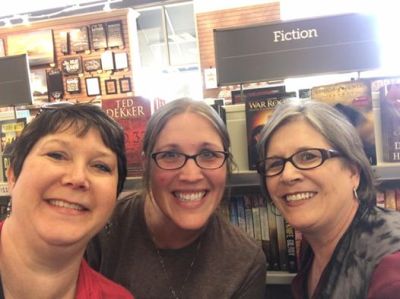
Photo/AnitaKarenThen, one of us suggested, “Hey, let’s take a ‘selfie’ to capture the moment.”

After I fumbled to find my cell phone in my purse, I said, “Okay, let’s strike a pose. Smile!”

After our brief photo shoot, we all embraced, recalling our unexpected encounter.

“Can we pray for you and your friend before we leave?” I offered.

“I would love that!”

“By the way, what’s your name? And what’s your friend’s name?”

“My name is Kendra. And my friend’s name is Karen.”

“Well, of course her name is Karen,” I laughed.

As Kendra walked to the register to purchase our books, we heard her telling the assistant manager about our encounter.

Anita and I waved at both of them as we turned to leave the store.

“What an awesome ending to a very productive week,” I commented to Anita.

“I told you we needed to stop by this bookstore!” Anita laughed.

Before we left the parking lot, Anita posted the photo of us with Kendra on Facebook, sharing our experience at the bookstore.

Best bookstore stop ever! Met this beautiful young lady named Kendra. She was looking for a book on anxiety and worry for herself, and another on grief for a friend who just lost a child. Talk about a God moment.

When she found out we were authors, and Karen wrote a book titled Words That Change Everything, and I wrote one called Getting Through What You Can’t Get Over, she took a copy of each off the shelf. After a quick, impromptu signing, we parted ways—all of us stunned in a great way. People like Kendra are why we do this.

 Amen, Anita. This IS “why we do this.”

Tell us about one of your God-moments as an author.


Use Less Scripture in Your Manuscript (And…I love Jesus.)

bible-1031288_960_720One of my pet peeves—as an editor, as a writer, as a reader—is when authors use long passages of Scripture in their manuscripts, or pepper it with too many verses.

And, of course, now that it’s out there, I feel like I need to defend myself. So let the record show:

  1. I love Jesus.
  2. I believe that Scripture is God-breathed and has the power to transform lives.
  3. I earned a Master’s of Divinity degree from Princeton Theological Seminary. (Sorry if that makes me seem like a show-off. It had to be said.)

Also:

  1. I don’t want to see too much Scripture in the manuscript you’ve sent me to edit.

I’m actually delighted to announce this grumpy thing publicly, for the first time, because I finally figured out why it gets under my skin:

Cutting and pasting large portions of Scripture into your manuscript, or peppering way too many verses into it, DOES NOT SERVE READERS.

Overusing Scripture is problematic for two reasons: it’s either too much or too little.

1. It’s too Much: Avoid Including Lengthy Scripture Passages

Problem: When readers—and I mean Christian readers—encounter long passages of Scripture in a manuscript, they tend to skim over them. From the cursory glance at keywords—“Moses,” “praise,” “sanctify,” “Jesus”—the reader determines that she’s already read this before and keeps reading (if you’re lucky) beyond the Scripture-brick to discover what he or she does not yet know.

Solution: Use a shorter passage of Scripture. When you crop the text down to the most salient verse or verses, the reader can better glean what you most want to communicate.

Example: In lieu of including the entire text of Psalm 119, which has 176 verses, give the reader a bite and tell them enough to make them hungry for more…

Every verse of Psalm 119 describes the good way God’s designed us to live. In verses 9-12, notice the words the Psalmist uses to point the reader to the good way:

How can a young person stay on the path of purity? By living according to your word.
I seek you with all my heart; do not let me stray from your commands.
I have hidden your word in my heart that I might not sin against you.
Praise be to you, Lord; teach me your decrees. (Psalm 119:9-12)

Path, commands, word and decrees all point reader toward the good way God’s designed. And If you read all of Psalm 119, you’ll find lots of other synonyms for this path that leads to life.

2. It’s too Little: Avoid Including Too Many Scripture Passages

Problem: When you pepper too many verses of Scripture into a manuscript, you might assume that lots of Scripture is benefiting the reader. But there actually might be more value in including less! Too many verses of Scripture can feel like being pelted by a rapid-fire Nerf gun. If the reader can’t make a meaningful connection to each passage, the verses will bounce off the reader and fall to the floor.

Solution: When you do weave Scripture into your manuscript, it’s your job to help the reader find fresh spiritual nourishment from the passage by demonstrating the connection to your message. Here are a few ways to help the reader glean as much as possible from the biblical text:

  • Provide historical context, noting time, place, speaker, culture, audience, etc.
  • Provide literary context, helping reader understand why what comes before or after this passage illumines its meaning
  • Offer practical application, demonstrating how this passage was vivified in your life of someone else’s
  • Strengthen the connection between the passage and the reason you’ve shared it

Example: “You are the light of the world” (Matthew 5:14)…

When Jesus says, “You are the light of the world,” he’s making a radical claim! Did you know that, in the ancient near east, a nation’s king was said to be the “light” who reigned on behalf of a deity?! Jesus is saying something pretty bold, then, about the kingdom of God and about your role in it by announcing that you are the light of the world.

Finally, Scripture was never intended to become a quantity to be used, cropped, leveraged or wielded. I know that and you probably do, too. Being thoughtful about presenting Scripture in a way that it can be tasted and digested, to offer real nourishment, is a gift to your reader.


Are We Ready?

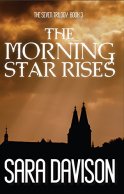
My latest romantic suspense novel released yesterday. The Morning Star Rises is the third book in The Seven Trilogy, after The End Begins and The Dragon Roars. In a recent interview, I was asked if I thought I had accomplished the purpose I’d had for the series when I set out to write it.

51vdnmrjnkl

It was a great question because it made me stop and ask myself what that purpose had actually been, something every author should probably do. Had I wanted to tell a strong, compelling story? Yes. Did I want to be obedient and write the story God had given me to the best of my ability? Always. But what was my unique, specific purpose for this particular trilogy?

Thankfully, I knew the answer. My hope and purpose in writing The Seven Trilogy was to pose the question, “Are We Ready?” to the North American church, the body of Christ, in the twenty-first century.

Times are changing. There is a shift in society that can be felt in the air and seen and heard in the public square in both written and spoken form. Hostility toward Christianity and the Bible is growing. If, as a society, we continue on our current trajectory, the very real possibility of persecution of believers could soon exist, not just in other countries around the world, but right here, in the west.

Are we ready?

In writing The Seven Trilogy, I created a world, forty years in the future, in which such persecution is not a rumour, not a distant, far-off possibility, but reality. With Canada under martial law after a radical group calling itself Christian blows up several mosques across the country, the military is sent in to oppress and keep an eye on believers. Basic rights such as owning a Bible, teaching Christian principles to children, and receiving a fair trial are stripped away. Punishments are meted out swiftly and ruthlessly.

Army Captain Jesse Christenson and believer Meryn O’Reilly find themselves on opposite sides of a ideological chasm that seems impossible to bridge. Can they find a way to be together?

In the midst of the chaos and confusion of this time, when everything they believed in when it was easy to believe is put to the test, the Christians in the story cling to two truths: God is still on his throne, and he has not abandoned them.

A common thread among reviews of the first two novels is that the story made readers stop and think about what they really did believe, how much they were willing to sacrifice for those beliefs, and whether or not they would be able to withstand the threat of severe persecution.

So we’re thinking about whether or not we’re ready. And we’re talking about it, me as much as anyone. Because I didn’t write the books as someone who had it all figured out and wanted to impart my great wisdom on the subject to everyone else. I wrote them as someone deeply concerned, not only about whether the church as a whole is ready for what is to come, but about whether I am ready.

I still don’t know. There is no way to know, really, until what is coming actually arrives. But we can take steps to prepare ourselves.

The believers in these novels wish they had read more, studied more, committed more Scripture to memory before it was taken from them. We still have time to do that.

They regret not doing more to share the gospel with their children and with everyone else in their lives before they had to risk their lives to do so. We can still talk freely about the gospel and expect to receive openness and interest at best, or mocking and dismissal at worst.

After all churches are closed, they agree to continue to meet in secret, risking imprisonment if they are caught. We are still able to meet and worship openly without fear of reprisal.

There is still time, but time does appear to be running out. If The Seven Trilogy inspires believers (including me) to ask ourselves if we are ready, if it generates discussion and gets us thinking about the best way to use the time, resources, and freedoms we have left wisely and effectively, if it drives us to our knees to ask God to help us prepare ourselves and our families for whatever the future brings, then yes, its purpose will have been served.

Kick-start your career with anthologies

Smiling Group of ProfessionalsIf you’re new to the authoring game, here’s a way to find more readers who might be interested in your work: contribute to an anthology.

While it may not produce any income for you, the non-financial rewards are well worth your involvement. Consider the following reasons to contribute an essay, short story, or excerpt the next time you have the opportunity to participate in a project that uses the work of multiple authors:

  1. Your work load is significantly less demanding. It’s (generally) a lot easier to produce a short piece when someone else gives you the parameters for writing than when you have to do all the creative work of coming up with an idea and choosing the treatment or genre, let alone actually write the piece.
  2. You control your time commitment. Minimally, you write a piece to submit and you’re done. You don’t have to do the editing or manage the publication process, hound the other contributors to get their pieces done, or design and implement the marketing plan. If you want to help with marketing, you can decide how much of your time you want to offer; it’s not your baby alone as when you’re the sole author.
  3. Your work will be exposed to new readers when fans of the other contributors read your piece. One of the smartest things I did as a fledgling author of a cozy mystery series was to contribute a short story to a mystery anthology edited by a friend of mine. It immediately granted me access to new readers in my target audience, and thanks to my friend’s reputation, it also gave me credentials as a good writer. Either of those results alone would have been worth my contribution; combined, they were a win-win proposition that gave me a big boost as a new author.
  4. Chances are good that the other authors will be doing some marketing of their own for the anthology, which means you get more publicity than you alone could produce. Again, it’s more exposure for you in readers’ circles beyond your own fans.
  5. You have an excellent opportunity to network with other authors when your work appears with theirs in the anthology. At the launch party for my friend’s anthology, I met more than a dozen authors working in my genre in my metro area. Many of them were local icons. A few of them were nationally known authors. Some were newcomers, like me. It was a genuine pleasure to meet them all and hear their stories of career development or marketing snafus. I was honored and humbled to be included in their ranks, and that experience reminded me that as a newbie, I had much to learn and a long way to go in my own writing journey. Moral support like that is essential for a new author, and the opportunity to learn from those who are also on the road is priceless.

Have you considered contributing to an anthology?

The 15-Minute Writer: Book Marketing in Life’s Margins

woman writer
Photo by Bench Accounting via Unsplash.com.

We writers wear many hats these days. In addition to writing proposals, queries, and manuscripts, we’re expected to market and promote our books through social media, speaking, radio/television interviews, and book-related events. Whew! What’s a busy author to do?

First, don’t get too overwhelmed. No one can do everything, so take that expectation off your shoulders. Take deep breaths. Now…don’t you feel better? Let’s do our part, and leave the rest in the hands of the Author of our life stories.

Second, after you write it but before your book releases, experiment with different marketing ideas to find out what you enjoy and are good at naturally—Facebook parties? Speaking engagements? Library visits?—and concentrate on those things. The fun you experience will come through, and you’ll sell more books (and even if you don’t, you’ll have more joy. And who doesn’t want that?).

Third, pray for wisdom, discipline, and creativity. After all, God gave us the idea and the opportunity to write a book, and He cares about the people who will read the message we’re sharing.

Finally, clear a few minutes in your schedule and write “marketing” on your calendar in a small window of time. This way, you’ll do a little bit every day. (It’s like the old question, How do you eat an elephant? One bite at a time!)

To help you get started, here are a few book marketing tasks that take 15 or 20 minutes, tops (just make sure each is related in some way—via a hashtag, link, or text—to the volume you’re promoting):

  • Write a short blog post
  • Draft a newsletter for your email list
  • Brainstorm a free resource to offer your list
  • Update a social media profile to reflect your new release details
  • Write a Facebook status or Twitter update
  • Take an Instagram picture and upload it
  • Read a blog post on another author’s site and comment on it (thanks to Michele Niefert for this idea)

    A photo by Alejandro Escamilla. unsplash.com/photos/N7XodRrbzS0
    Picture by Alejandro Escamilla via Unsplash.com.
  • Rate/review a similar book you’ve read on one of the major bookseller’s sites
  • Ask friends on Facebook or Twitter to review your book for you
  • Share another author’s book, which is related in some way to yours, on a social media platform
  • Update your website or blog in some way
  • Draft a query letter to a magazine on a subject related to your book
  • Ask other bloggers to review your book (Elizabeth Evans shared this tip with me)
  • Create an image on Canva or PicMonkey with a reviewer’s blurb on it and Tweet it (a terrific idea from journalist and author Simran Sethi)
  • Write a thank-you note to a book reviewer, librarian or bookseller
  • Follow-up with a meeting planner or editor you pitched but haven’t heard back from
  • Set up an Eventbrite page for a future workshop or seminar you’ll lead on the book topic
  • Read a book marketing article on line or in The Writer, Poets and Writers or Writer’s Digest

Now it’s your turn: share in the comments. What are your favorite—or most effective—quick marketing tasks?

Writing with Personality for Extroverts

Be YouLast month, I shared some simple insights on Writing with Personality for Introverts, so this time, I want to speak to their counterparts. Some misinterpret the definitions for these contrasting temperaments.

An introvert is not always quiet, and an extrovert is not always loud. As a certified personality trainer with over twenty-five years of experience, one of the best determiners I’ve found is this: An extrovert does their best thinking out loud, and an introvert’s most effective ideas take place in solitude and silence. They need to think before they speak.

As a bona fide extrovert myself, I often hear myself say something to someone else that I don’t want to lose. Then I have to stop, dig out paper and pen, as I tell them, “I’m sorry. I need to hurry and write that down before I forget it. Some of my best ideas come from conversations with other people.”

I usually receive an understanding nod along with a statement like this: “Go ahead, I’d hate to be the reason you lost a great idea.”

Sharing & IlluminationThe truth is, sometimes too much solitude hampers my creative flow. As an extrovert, I’ve learned that lunch with a friend or two, calling someone to go for a walk and a talk, or a brief phone call with a colleague, client, or family member releases fresh thoughts that enrich my writing.

Another thing I’ve learned is to use an audio app, so I can speak my thoughts out loud, and capture the concepts that flow from my loose lips. Sometimes I pretend I’m talking to another person, but whether I imagine a human face or not, my rambling, audible monologue releases many interesting pieces of prose.

Guilt used to smother me, because I felt stifled by sitting in solitude for too long. Now I realize extended periods of silence drain my energy, while intentionality in human exposure lifts my spirits and infuses my creative zest.

Nelson Mandela Know YourselfThe key to making any of us more effective in our endeavors is knowing who we are, and giving ourselves permission to operate in our natural giftings and preferences. As long as we are careful to do so in balance.

Whether introvert or extrovert, all writers require a healthy amount of time spent in study, interview, and interactions with other people. We equally need quiet moments with our thoughts and computers. Depending on our personality, some of us require more on one side of the spectrum or the other. Simply realize this — it’s okay to be different, we’re wired that way.

Are you an introvert who needs to think before they speak, or are you an extrovert whose best ideas pop out of your mouth while in conversation?


Acting My Way into Feeling: Just Write!

Photo/KarenJordanI’m about to do one of the hardest things I’ve done recently—WRITE!

“What? How can that be?” you ask. “You’re a writer! Isn’t that what writers do?”

Confusion. I wish I could tell you what’s keeping me from doing what I need to do. But I don’t have any answers at this point.

In fact, I’m not even sure I have anything of substance to offer anyone now. But I’m just going to write—and hope something helpful surfaces. Anything is better than nothing at this point.

Confession. After church this morning, I confessed to my husband that I hadn’t really felt like going to church today and entering into worship. But I did. And I’m glad I did—the sermon really spoke to my heart.

Modification. I’m also reminded what I learned years ago in a behavior modification class at seminary: “You must act your way into feeling.”

At first, I didn’t have a clue what the professor meant by that statement. But I tried it, and it worked.

For instance, I NEVER feel like doing housework. But I ALWAYS feel good about finishing my work.

So, that’s what I’m doing right now. Write—even though I do NOT feel like writing. And in the process, I hope and pray the feeling and the words begin to flow again.

Examination. Have you ever faced this problem? Maybe you’re not a writer, and you don’t get it. But perhaps there is another issue you might be struggling with in your work or even at home.

Perhaps you want to be happy or thankful, but you just can’t conjure up those positive emotions right now. Or perhaps you just don’t “feel” like being anyone’s mom right now—but you ARE a mom.

Maybe you don’t have any romantic feelings toward your spouse anymore. I’ll share what a pastor advised one man who claimed he didn’t love his wife anymore. This wise counselor simply responded with quote from God’s Word.

Husbands, love your wives, just as Christ loved the church and gave himself up for her . . . (Eph. 5:25 NIV).

Do you see his point? God’s Word reveals that love is a choice, not a feeling.

Decision. So, maybe—just maybe—we can experience joy and thankfulness as we make the decision to be happy or grateful.

What about writing? Well, I’ve learned that often I really don’t “feel” like writing. And many times I must just do what I don’t “feel” like doing.

Instruction. So, I guess I’ll just repeat the words of a wise writing instructor once again, “JUST WRITE!”

By the way, I hope my confession encourages you today to do whatever you need to do if you’re stuck!

And another thing—be blessed!

What strategy helps you when you don’t feel like writing?

Praying for the Armor of God: A Prayer for Writers

4c62df84a873982a7e0d7d5ea11ce3a4 (1)Dear Lord,

As I come to write today make me bold and fearless. Give me words to make you known in the world. Protect me with the armor you promised in Ephesians as I pray the words from scripture.

Be strong in the Lord and in the strength of his might.

Give me your strength which is so much more powerful than my own strength. And your words which are so much more powerful than my own.


Put on the whole armor of God

Give me your whole armor to protect me as I write today. As I make myself vulnerable to others by sharing my heart and mind, take down my walls and let your armor be my protection.

. . . having fastened on the belt of truth . . .

Help me to stand firm with your belt of truth buckled around my waist. Truth protects me and gives my life and writing integrity. Help me to focus on your truth, not the world’s lies.

. . . having put on the breastplate of righteousness . . .

 Protect my heart with your breastplate of righteousness. As I strive to put my thoughts and ideas on paper I can doubt myself and feel unworthy. But with your righteousness in place over my heart, I have the authority to write.

. . . as shoes for your feet, having put on the readiness given by the gospel of peace . . .

 Make me ready with the firm foundation of the gospel of peace on my feet, ready to go places in my mind or places outside my comfort zone.

. . . take up the shield of faith, with which you can extinguish all the flaming darts of the evil one;

 Lord, negative thoughts assail me like flaming arrows. “What ifs” fly at me. Critics wound me. Give me you shield of faith to stop them before they pierce me. Faith makes me strong and gives me courage to stand firm in my convictions.

 . . . take the helmet of salvation . . .

Protect me from my own thoughts. Let me meditate on things that are worthy and good. Transform my mind and give me the words that you would have me write today.

 . . . and the sword of the Spirit, which is the word of God,

Teach me to take up your sword, Lord, which is Your Word. Your stories encourage me. Your wisdom guides me and gives me discernment. Your promises strengthen me. Your love empowers me.

Thank you for the great honor of writing for you. Thank you for your armor and protection for me.

Amen

Ephesians 6:10-11, 14-20

Be Strong In The Lord Front Cover lores FINAL

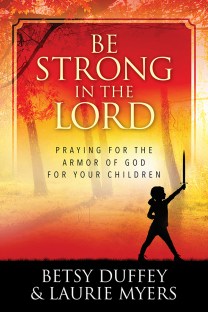
Praying from scripture has been a powerful tool in our lives. Our latest series of books takes passages of scripture and guides parents and other adults a child’s life to pray God’s promises for them. Our latest is Be Strong in the Lord: Praying for the Armor of God for Your Children, September 2016.

Betsy and Laurie

www.WritingSisters.com

The Good Editor

typewriter-584696_640 Every writer needs a good editor. There are no exceptions. Typing away at the computer may be a solitary adventure, but bringing a well-rounded story to readers is a collaborative effort with a lot of players on the team. One of the most necessary players is a good editor. This is so much more than catching a typo or fixing a sentence that ends in a preposition or realizing you meant effect and not affect. It’s more than knowing what AP Style or Chicago Style is and when to use what, where.

Keely Boeving, a freelance editor who has worked with me on one of my novels, said, “I consider myself an advocate for the reader. My goal is not to change a writer’s style or intent, but rather to draw it out—to help them say what they truly want to say in a way that resonates with readers. Translating what a writer conceives in their creative mind into words on a page can be tricky, and an external observer—an editor—can help facilitate the translation in order to help writers achieve their intent.”

A good editor gets you and can see where the story is going without the need to add in their own two cents’ worth. The really good ones are part fan who write notes about the parts they really like, part brave hero who can tell a writer they need to take out that beloved chapter, and part mind reader who can ask just the right question about that part you thought was clear.

Taking the time and investing the money in an editor can help you get an agent or a publisher to read past that first page. Not taking that step may mean a lot of rejections for a good story that just needed a little more work.

Some tips when looking for the right editor:

  1. Gather information. Ask for the editor’s background and do they specialize in your type of work. Ask them for names/emails of writers they’ve worked with before. Write a short email to the writers asking them about their experience. See if the editor has ever worked with your genre. Keely worked in New York for over four years and is now a part of the WordServe family, as well as working as a freelance editor.
  2. Be clear about your expectations. Talk about cost and when payment is expected. Be true to your budget and keep searching if someone is out of your price range. Talk about your timeline and whether the fee includes second or third rounds of edits. If you have a deadline that can’t be missed, say so up front and take no for an answer if you hear ‘maybe’.
  3. Talk about how you expect to receive the edits. Some editors and some writers still use the printed page. I prefer Track Changes and comments but I still run into people who don’t and prefer mailing that manuscript back and forth.
  4. When you get the edits back, read over them briefly and put the manuscript down. Go find something fun to do and let it go for a day. On my initial read there’s always one or two things that I don’t agree with at all… until the next day. Often, those are the changes that fixed something that would have tripped up a lot of readers but was pretty easy to fix. Don’t let that become the reason you don’t sell a work.
  5. Take what you like and be willing to leave the rest. There will be moments when a suggested edit changes the intention of a scene or the voice of a character. Have some confidence in your idea and know when to say no. Reason it out with the editor, as well. It could also be that the setup isn’t fully there but with some tweaking, your story gets stronger. If you don’t feel like you’re being heard, you have the wrong editor.

One last thing. Celebrate every part of the journey as a writer, including this one. You took an idea from your mind and put it down on paper. That’s a big accomplishment. Now on to the next step.

WordServe News: August 2016

Exciting things have been happening at WordServe Literary this month!

On the final post of each month you’ll find a list of Water Cooler contributors’ recently released books along with a recap of WordServe client news.

New Releases

dyerDena & Carey Dyer released Love at First Fight with Shiloh Run Press. Offering 52 devotional meditations written by the husband and wife team, it promises to help couples discover that a fun, resilient, and fulfilling marriage can be realized through hard work, forgiveness, God’s grace–and a sense of humor.

cover JPGJan Hettinga released The Safe King with FaithHappenings Publishers. The Safe King explores the roadblocks that keep many of us from following Christ, including our deep distrust of authority, our fear of giving up control, and our reluctance to let go of our kingdoms in order to embrace His—and offers ways to move past these roadblocks into a life of full discipleship.

Cover 1Joe Wheeler released Lew Wallace and the Story of Ben-HurBook 1 of the Classic Author Biography Series, with FaithHappenings Publishers. Featuring a biographical sketch of Wallace, an in-depth introduction to the text, vintage illustrations from the 1908 edition, and thought-provoking discussion questions to help readers get the most out of the story, this companion book will add richness to the experience of reading an American classic.

znachkpLinda Znachko will release He Knows Your Name with Kregel next month. When the evening news reported a dead baby abandoned in a local dumpster, Linda Znachko’s comfortable life changed. She was suddenly convicted—God was asking her to provide a dignified burial for this tiny lost child. Linda said yes. She had no idea where that first small yes would lead, or how wide the ripple effects would spread.

New Contracts 

Anne Love signed with Barbour for her work The Gardner’s Daughter, which will be included in the Of Rags and Riches Romance Collection set to publish next year.

New Clients

Craig Chapman, Heidi Gaul, and Jason & Shelley Martinkus signed with WordServe this month. Welcome!

balloons-25737_640

What We’re Celebrating

Laurie Short appeared on Focus on the Family to discuss her book Finding Faith In the Dark. You can listen to it here!