Mars versus Venus: Attracting Readers of the Opposite Sex 1/2

A couple of months ago, I noticed that Peter posted to FaceBook a blog post that he and some other male authors had written giving reasons why females should read their novels.

I’d been feeling this way about my own medical thriller novels—that men weren’t reading them because they were authored by a female and so I posed this idea to Peter that we should trade our books and have a conversation about author gender and readership. I read his western novel West for the Black Hills and Peter read my debut medical thriller, Proof.
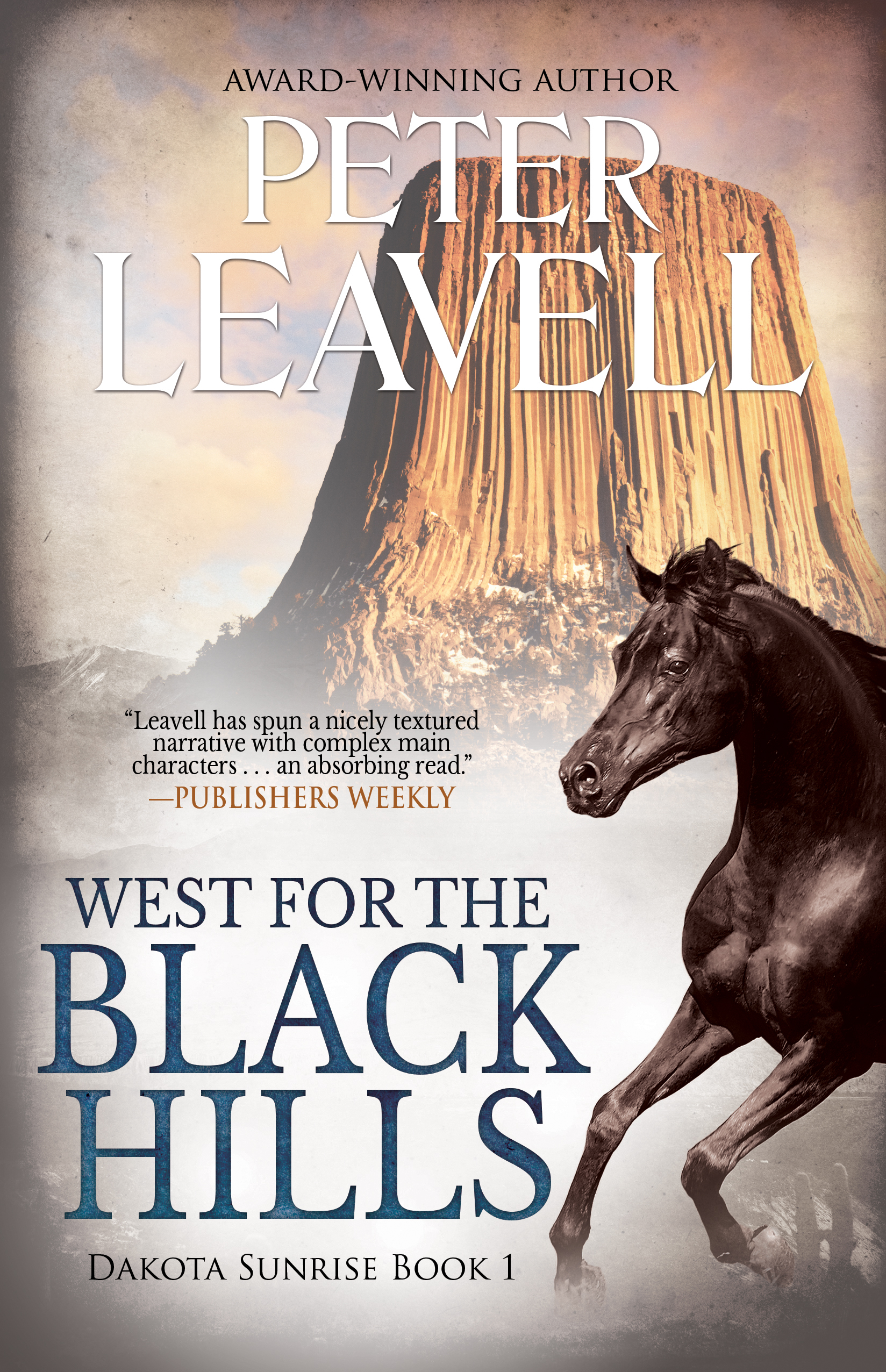
west-for-the-black-hills-hi-resToday, I’m posting about my experience in reading West for the Black Hills and on Thursday, Peter will post about his experience reading Proof.

1. Have you read this genre before? If not, why not?

Jordyn: I have not read a western novel before. Honestly, I didn’t think I would like them. The vision I had in my mind was of a dusty ranch in the middle of nowhere—what exciting things could happen? I definitely need tension, conflict and mystery in my novels to keep me engaged as a reader. I didn’t think this was the crux of the genre. My preconceived notion was that they were slow, almost literary novels (flowery prose with long sections of description) about the good ole west. I’ve tried to watch a few westerns on television and couldn’t get into them.

Peter: I should have added more tumbleweeds and stray dogs. Ha! Honestly, I get bored with the average western, too.

2. What did you find surprising about the book? About the genre?

Jordyn: What I found most surprising was the things I love about suspense novels are present in this novel. Mystery, intrigue—a few good twists and turns that definitely popped my eyes open a few times. West for the Black Hills definitely had me turning pages. I set other books aside to finish this one—which says a lot for an author who has a very large TBR (to be read) pile.

Peter: Thanks, Jordyn. I must admit, I was transported to another world with your novel. I even skipped my history reading at night because I had to know what happened.

3. Would you read this genre again?

Jordyn: This is a conundrum. Is it just Peter’s writing that I like or is he a good representation of the genre and other western novels are like this? Do I risk picking up another western novel to see what I think about it? I’m not sure of that yet, but I’m definitely a Peter Leavell convert for sure. Maybe that’s our next challenge—he recommends another western author to me—his favorite western novel—and I’ll see what I think about it.

4. Did you feel like you gained any insight into the opposite sex having read their book?

Jordyn: I felt like there were some themes that ran through the novel that provided some insight into the male mind. What follows are a few excerpts from West for the Black Hills and my thoughts on what I thought could be the male perspective.

“I prayed for forgiveness. The violence of deadwood had led to this punishment, no doubt, God’s poetic justice doled out for my sins. Turn the other cheek. And I had defended myself, defended Raven with violence. Should I have just let her go? I pulled the thin blanket over my shoulders. Was God trying to tell me my possessions belonged to others? I didn’t care about most of my possessions, but my horses were different. I loved them.”

From this passage—I thought—do men think more than women that God punishes for sin?

“‘Is self defense right? Jesus died without defending Himself.’”

There seemed to be a running theme of self defense and proper use of violence.  When is it okay to hurt/kill someone if you believe in Jesus who was decidedly non-violent—allowing Himself to be convicted innocently for the crimes of all humanity which led to him suffering one of the most violent deaths possible?

“’I’m no expert on the Bible, but you’re thoughtful enough about your actions that I know you read it. God used plenty of people in the Bible to dole out justice. Stop thinking about the philosophical reasoning behind everything and do your job.’”

I think this might be a male thought process because a woman defending herself that leads to another’s death probably doesn’t think this way because she knows she would have died without action on her part. A woman is probably thinking, “He had it coming and I’m lucky to be alive.”

“He crossed his arms. “Sometimes we’ve got to do the thing we hate most. Almost preordained. God seems to enjoy making sure there’s something we have to do that makes us uncomfortable.’”

In this passage, I thought there was a more universal theme that touches most Christians I know. Personally, I’ve felt God ask me to step outside my comfort zone to do things that I would never do—all legal of course.

5. What made the novel less enjoyable for you that you think may have stemmed from the author being of the opposite sex?

Jordyn: Sometimes I felt like Peter’s writing was very stark and factual but it didn’t detract me because I’ve been told this can be my writing style as well. It could also be how Peter wanted to portray the main character, Philip Anderson, and that’s why he wrote in this manner. Philip’s had a hard life so perhaps this writing is meant to convey that. I do feel like there is more emotional insight into a character from a female authored novel—more insight into thoughts and feelings. The emotional punch is heftier. Some of this is portrayed through the eyes of the heroine in the novel—that Philip won’t even share his feelings with her. So, really, I tend to wonder if this is more just Peter’s writing genius in disguise in a sense.

Peter: To find out it I’m a genius in disguise, you’ll have to read my historical fiction Gideon’s Call to see if the writing voice is different! How’s that for a marketing ploy?

What about you? Do you typically read novels authored by the opposite sex. Why or why not?

Writers are Readers

Writers are Readers Kariss LynchI’ve been a bookworm since I could hold a book. Between my dad and Dr. Suess, I was breezing through rhymes and learning to recognize words from the time I could talk. The love for reading never changed but the time available to read changed drastically, especially when I began to work full time and write books on the side. I know I’m not the only one juggling a hectic schedule (can I get an amen?). As writing time increased, reading time decreased until it trickled to almost nothing with the exception of the occasional holiday.

Big problem.

For a writer, reading is mandatory. It ranks right up there with learning proper grammar. My writing began to suffer without a constant intake. In May, I wrapped up writing Surrendered and hit pause on future projects. My tank read empty in glaring red letters. I needed fuel. I needed to rest and read.

So I picked a genre I didn’t write, chose authors that are highly recommended but whom I’d never read, and I drank in the pages. Since May, I have read over 90 fiction books, and as I read, new stories came to mind. I remembered why I love writing. I remembered the power of a story. And I learned a few things in the process.

1. Read To Learn 

As book after book came to an end, I began to read reviews and reader comments. I discovered what today’s reader loves in a hero, the longing in our hearts for something bigger and grander than ourselves, and the craving for romance to be earth-shattering and enduring. I specifically read YA and NA books. This audience is the rising generation of readers, and they are reading a lot. I want to know what they like and don’t like. Concentrating on this genre helped me spot patterns that I can now apply to my own writing.

2. Read To Recognize

Every author has a different style, different voice, different way of thinking and dreaming, a different way of spinning the story on the page. Once again, I began to spot patterns from the author. I loved to identify reoccurring themes in their writing and then visit their author page to see if anything in their bio bled into their stories. I paid attention when my heart or brain keyed into particular language or how a specific story unfolded and made a note to incorporate elements of that in my own writing. One of my professors in college said that the best writers steal. I stole a lot this summer, but in the end, it shapes my own style, creating something unique.

3. Read To Enjoy

There’s something beautiful about unplugging and simply sinking into a story, especially Surrendered Heart of a Warrior Kariss Lynchone that is well crafted. My to-do lists and schedule fled as I jumped on the page and experienced the action with each character. Every time I put down the book, I rose more refreshed to tackle the world and more excited to unlock the stories bubbling within me. Reading helps me unwind and escape, but it also helps me dream. It makes me better.

I’m wrapping up a steady season of reading and diving back into my edits for Surrendered, but I’m doing so with renewed energy. I’m excited to see what happens as I begin new projects. If you’re stuck on your manuscript and feel dry and drained with new ideas, get off your computer and grab a book. Dream a little. Rest a little. Learn a little. I promise it will be time well spent. Then jump back to your story and see what happens.

Happy reading!

All Things Come to She Who. . .

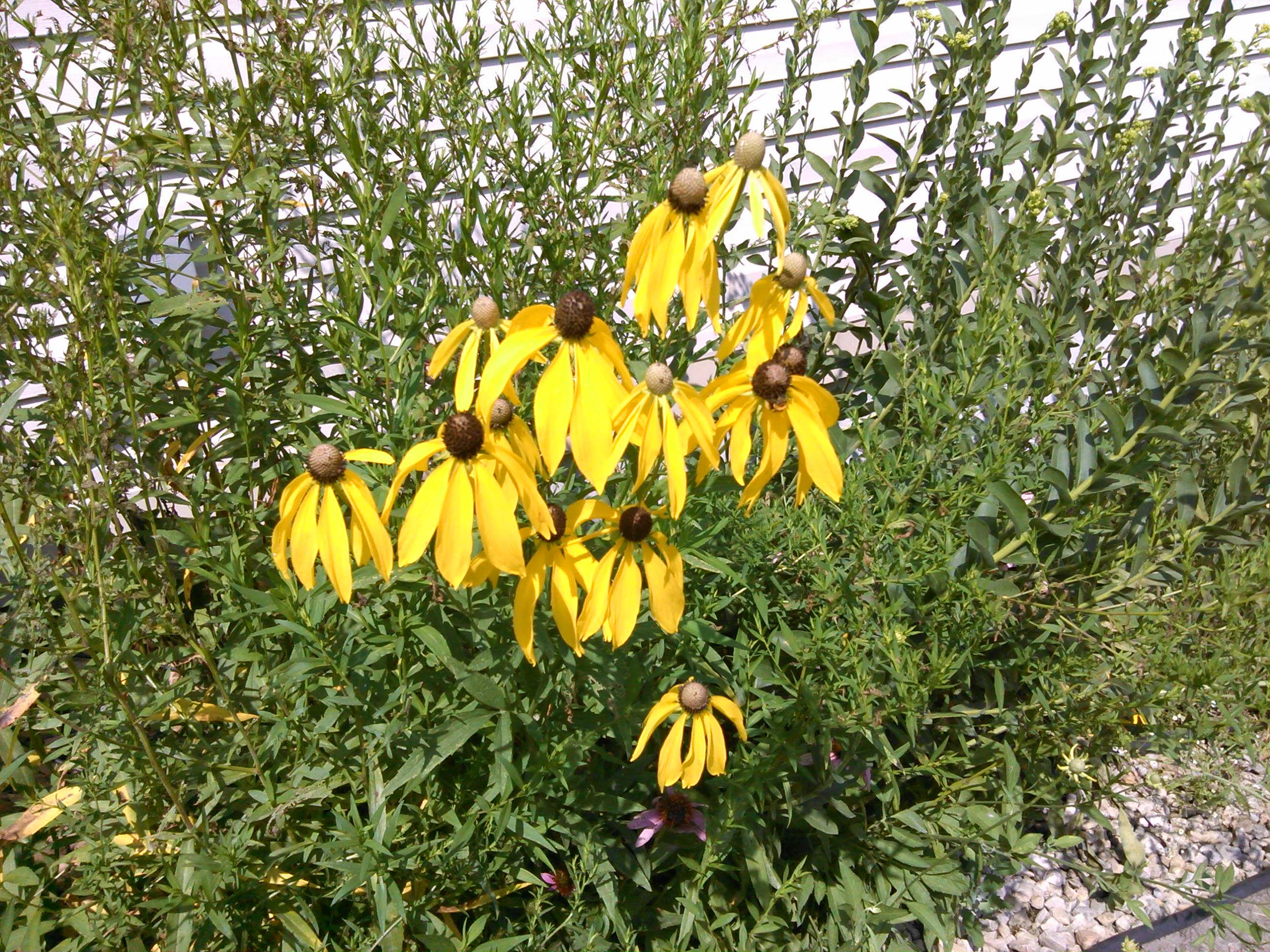
gray coneflowerCome this September, I will have been a published author for nine years.

I’m still not a household name, and I don’t expect to ever be one.

But, I can say with complete assurance, my writing career is beginning to bloom into what I had once only imagined.

In the last two months, I received my first Kirkus review, which is, according to my agent, a “big deal.” Not only that, but it was a positive review, and it’s already generating advance word of mouth among readers thanks to shares on social media. I also finally landed a review with a major magazine in my (fiction) subject area of birdwatching, which will generate the nationwide publicity for me that I’ve yearned for since my first Birder Murder Mystery book came out. Both of these reviews are for the seventh book in my series, titled The Kiskadee of Death.

Yes, it took seven books for me to land on these reviewers’ radar.

Seven books.

Another first in the last month was receiving a request from a magazine editor to write an essay for them. In my entire writing career, I have never had an editor approach me for an article – I was always the one doing the pitching. To have an editor seek me out to author an essay was a huge boost to my career confidence; knowing that I’ve made an impact on publishing professionals is worth the months I’ve spent cultivating readers and developing my brand.

The final mark, for me, of having my feet firmly planted on my writing path is the number of guest posts and speaking engagements I’m now booking with relative ease. Whether my new-found success in that arena is due to my hard-won lack of fear of rejection, the persistence I’ve practiced, or just a matter of time, I don’t know. And at this point, I don’t care what has generated these new opportunities; I’m just very grateful to have them.

Coincidentally (or not), I recently read an interview with Kate DiCamillo, the celebrated children’s author. Before her first publication, DiCamillo recalled meeting Louise Erdrich, the award-winning author, who asked DiCamillo how long she’d been writing. When the budding children’s author said “Four years,” Erdrich advised her to hang on, that her own book career had taken six years to get off the ground.

It made me feel better that even some of the author superstars of the publishing world know what it’s like to have to wait for success.

The bright side of all that waiting is that when success does finally come, a writer can look back over the years that have gone before, and see that without that waiting, that revising, refining, re-imagining, and all those countless hours of learning a craft and business, the achievement would not taste as sweet as it does. Because the truth is not that all things come to she who waits, but that all things come to she who works while she’s waiting.

Have you begun to see some signs of success in your own writing journey?


Editing: Pay Now or Pay Later

IMG_0234It happens every time. OK, nearly every time.

I unwrap the book-size package and am soon holding the dream-come-true from one of our Beachside Writers workshop students: the memoir that they’ve worked on for years, finally out.

I’m so proud of them. And, a few pages into it, so wishing they had found an editor — or four. Because as I read along, I am suddenly jolted by by an extra word.     Or by four spaces after a period instead of one. Or by a writers’ negligence in putting an apostrophe in the wrong place.

You get the idea.

If you’re going to invest the time, energy and money into a book, be willing to invest in a good editor.

Even then, your book will still have errors. All of my twenty books have had errors. Anytime flawed human beings have their manuscripts edited by flawed human beings, imperfection is assured. Still, discipline yourself, humble yourself and bring in others to create the cleanest book you can.

Why doesn’t that happen?

  •  By the time you get to the final edit of a book, you’re so physically tired and mentally drained that any goals of perfection fell by the wayside three meltdowns ago.
  •  Your eyes are so focused on the finish line — I just want this thing done! — that you miss the barriers right in front of you. Editing/fact-checking a book is the literary equivalent of running track and field’s steeplechase event: in your deepest fatigue, you still have to jump barriers — and splash into a water pit — lap after lap.
  •  You can’t afford—or aren’t willing to pay for—an editor.
  •  You can’t find such an editor.
  •  You subconsciously know an editor will find lots of errors and you can’t take the humiliation.

I get it. This is not the fun part. But here are some solutions:

  •  Go into it with your eyes open, understanding that when you’re done with a second or third draft, you’re not nearly done. I remember building a kitchen add-on, my first project of this caliber. When I had the space all framed in, I famously said, “Almost done now!” A contractor friend politely pointed out that I wasn’t even half done. Trim work takes way longer than you think.
  •  Edit and fact-check along the way so there’s less to do at the end. It takes discipline, I know. But every weed you don’t pluck by hand in April is a field of weeds you need to take a gas-powered string trimmer to come August. Put another way: better to floss regularly than think you can go at it diligently the night before your cleaning appointment — and fool your dentist.
  •  When setting up long-range deadlines for the book, leave ample time for editing your manuscript yourself and bringing in others to help. Yes, that’s others, as in more than one. I’ve had up to six people read my manuscripts before I send them to the publisher. My reasoning? Pay now or pay later. I’d rather be humiliated midway through the process in front of a few people than embarrassed at the end in front of thousands.
  •  Hire a professional editor if possible. If not, seek out friends and acquaintances who you think will do a good job. They needn’t be writers themselves, though, of course, that’s a plus. But, for my needs, they need to be “detail” people who know language, play well with others and, amid their surgical incisions, put on an occasional happy face to remind me I’m not a total loser.
  •  To find an editor, start talking to people. Editors are hard to find; it’s not like ordering a pizza. But if you just start talking, texting and e-mailing people, you’ll find someone.
  •  Be willing to spend some money. I’m always amazed at the number of writers who cringe at the idea of paying someone to edit their manuscript. And yet they’d pay someone to mow their lawn, clean their gutters or change the oil in their car. I generally pay someone $100 to $500, depending on the project. I also have friends who refuse to accept money, and who wind up with gift certificates or a dinner out instead. But to not expect to pay someone is to undervalue the worth of your project — and their time.
  •  Consider going the print-on-demand route. I call it “grace personified.” You have chance after chance to be forgiven the errors of your ways, in that you can can make fix after fix once the book is initially released.

You’ll never produce a perfect book. And that’s OK. We’re imperfect people. But at least put in the effort — and perhaps money — to try.

Paying It Forward — It’s Never Too Late to Start Writing

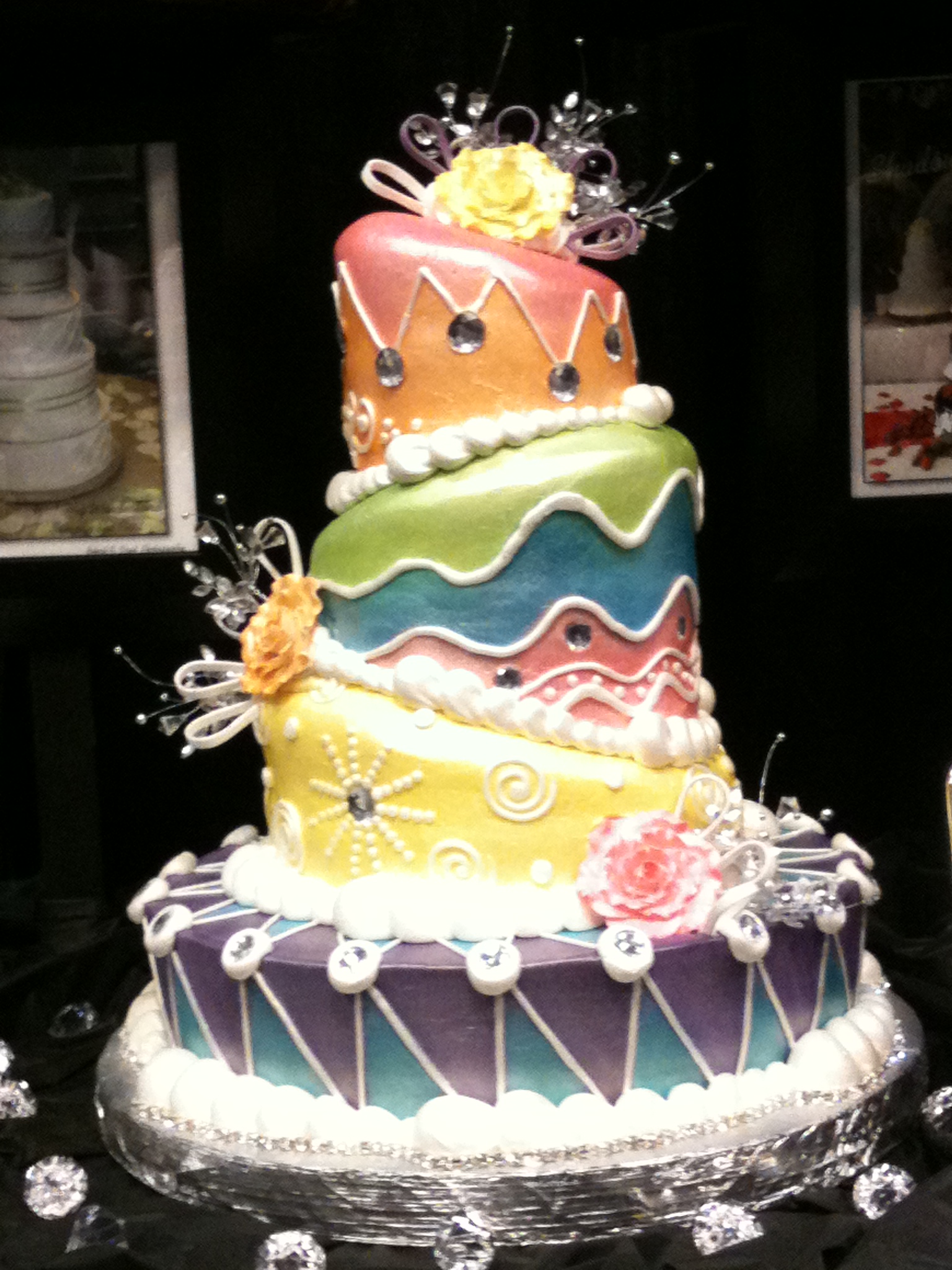
It’s my birthday as this publishes, so I think today is a great time to tap into a subject many aspiring and experienced writers wrestle with. Am I getting too old to publish?

Colorful Birthday Cake
A Colorful Life Makes Colorful Prose

This week, I met a fabulous ninety-two-year-old woman named, Gloria. Before arriving in America, Gloria, along with many of her friends and family, falsely believed the streets in the United States were made of gold. I think they had us confused with Heaven — which America definitely is not.

Gloria’s first husband brought her to the United States when she was a young woman. The only English words the onyx-haired beauty with raven colored eyes knew were, “Hello,” “Thanks,” and “Goodbye.” Yet, with her baby son, she braved a storm-tossed sea on an ocean liner bound for her land flowing with milk and honey. However, as often happens in life, her milk curdled and her honey soured.

Shortly after their arrival, Gloria found out she was pregnant a second time. Her husband panicked and left. She and her family never saw him again, and her sons grew up not knowing their father.

For several years, the single mother raised her sons as best she could in abject poverty. But Gloria, not a woman easily beaten down, learned English, got a job in a local bank, and worked her way up the ranks. By the time she retired more than forty years later, through hard work along with savings and investments, Gloria was a wealthy and influential woman in her Iowa community.

This ninety-two-year-old powerhouse is still impacting others, and will again this December, when she goes on a mission trip to Africa. She knows it’s never too late to make a difference.

I learned most of her story by devouring Gloria’s self-published memoir. Talk about a fascinating and motivating read. I found myself speaking out loud to some of the pages.

“You poor thing.”

“Spot on, Gloria.”

“I didn’t know that.”

“How did you survive?”

“So that’s your secret.”

I laughed, I teared up, and I thought: If Gloria could make it through her situations, then I can face my fears and do the things I’m compelled to pursue.

But then another thought niggled my brain. What if Gloria hadn’t written her book? If she hadn’t shared her story, her family and the world at large would miss out on ninety-two years of revelation, inspiration, and motivation.

Getting Through What You Can't Get Over
My Way of Paying It Forward

Like a fine wine, writers get better with age — let’s face it, the more life we’ve lived, the more we have to offer. Deeper insights, decisions tempered with wisdom, balanced viewpoints, lessons learned, and the list goes on.

If we inspire or motivate one soul, if we can help someone face their pain and cry healing tears, or laugh out loud when they’re experiencing difficult moments, I think we should at least try. It’s the ultimate example of paying it forward. This is the very reason I wrote, Getting Through What You Can’t Get Over.

If we justify not putting words on the page or excuse ourselves due to age, then we hoard our gifts and steal from others. No matter how old we are, if we are writers, we should write. It’s never too late to start writing…whether for the first time, or for the first time on a new project. No matter how many birthdays we celebrate, we have something to offer.

U R a Writer (So Write What You Know)

“Everyone’s talking about the Victoria’s Secret fashion show  … how this one girl wore this multi-million dollar outfit …. and how amazing they all are ….”

Books

The lights in my daughter’s eyes dash in the night.  We are up too late, pillow talk, chewing on all things girl: how it’s hard to admit when we are wrong, how friend hurts run deep, how some girls seem to get everything they want … and does that mean happiness?

We are treading the waters of the life I’ve known. It is from this pain that I have written — the pain of feeling like I was never enough

We talk about the real stuff: how love is all the soul really needs; how persevering through the thick of life makes a woman beautiful; how honor and respect are the prettiest adornments we can wear.

We learn the hard way, because the longing to be beautiful is within us, and because Jesus is and always will be the utmost answer on anything Beauty.

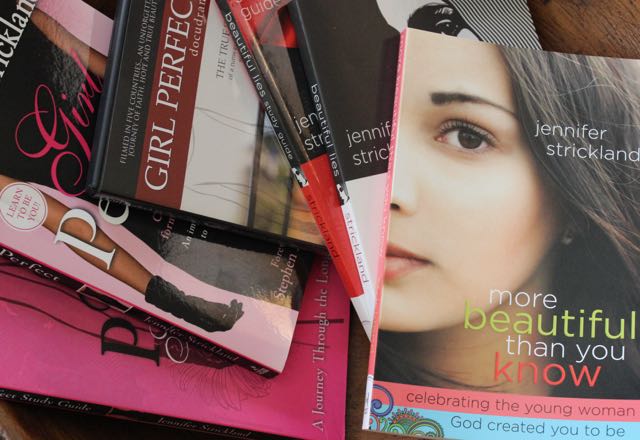
When I wrote More Beautiful Than You Know, I wrote to the girl I used to be; the girl my daughter now is; and the girl who was at my house yesterday, the one who didn’t want to take off her shirt to go in the pool because she stated bluntly, “I don’t have a bathing-suit body.”

I wanted to jump out of my skin and hold her — cup her heart and heal it — flood truth into the blood in her veins so that she would know she is More Beautiful Than She KnowsI wanted her to define beauty in her generosity, in her laughter that fills the sky, in her eyes which pool with humility and honor. I wanted to redefine beauty for her, in her, through her.

And I will ask my daughter if I can give my book to her friend Bella, the one named Beauty who thinks she’s not. Because I wrote it for her, because of her, and because one time I stood being measured by a line of judges against another girl and her bathing-suit body beat mine. That was the last time I felt good enough in a bikini, I’ll tell you that.

We write what we know. Write from your pain. Your core pain. The more you do, the more the wound will heal — and it heals best when it becomes healing to another.

I guess there is still a scar there, because when Bella only eats fruits and vegetables while the girls with “bathing-suit bodies” guzzle sweet tea and potato chips, I want to make a big banner of my book’s cover and hang it over the pool. I want it to say, “Bella: YOU ARE MORE BEAUTIFUL THAN YOU KNOW.”

I know this blog should teach you something about marketing or managing your writing schedule or turning posts into promotion, but today, I just want to challenge you to write what you know, and write for one person who could be changed by your story. Write for Bella. Write for me. Write for the one you see in your mind’s eye who needs healing from the thing that hurt you.

Do that.

And then, do that again. And again. And again.

One day, that person you wrote for, might be sitting at your kitchen table eating vegetables — or about to jump in your pool and fill the sky with laughter.

Your friend,

Jen

13 “Tells” of a Novice Writer

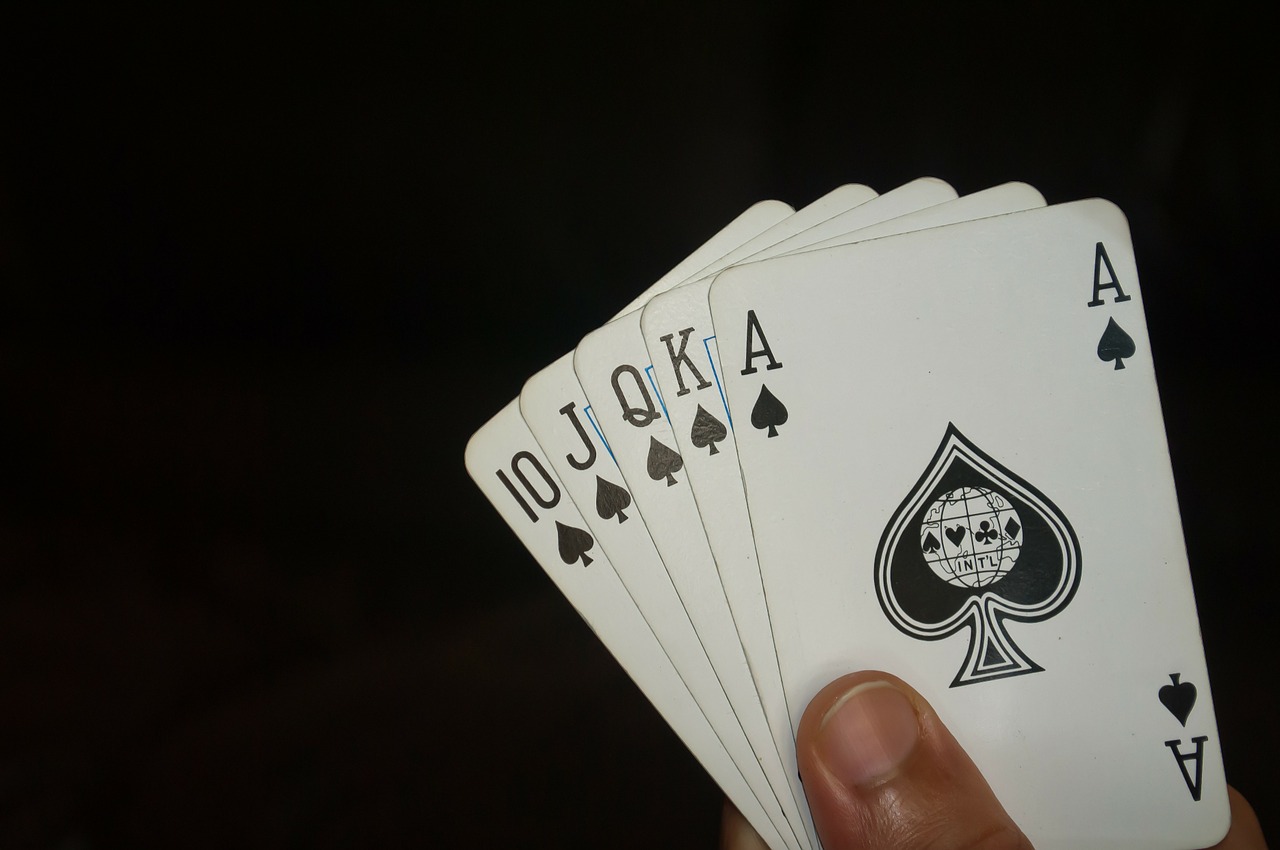
In the poker-playing world, professional card sharks have a term for a novice player who inadvertently gives away the cards he’s holding through some sort of gesture or tick of which he is unaware. The pros call it a “tell.”

pokerIn the publishing world, professional editors and agents look for the “tells” of a novice writer whenever they scan a manuscript. With practice, we can almost always pick out the amateur from the pro from reading just a page or two. Here’s a list of 13 Common “Tells” of an Amateur Writer that may give you an inside advantage at the publishing table.

  1. Too many clichés. If you find yourself using a common cliché–try changing it up for humor or effect. Instead of saying, “He marches to a different drum,” you might say, “She rhumbas to a different drum-ba.” You want to avoid cliches but they can also be springboards to creative alternatives.
  1. Too much telling, not enough showing. Use scene-setting, dialogue, metaphors and gestures to show your reader an emotion. Instead of, “She felt deep sorrow,” try instead, “She sat down, sighed heavily, staring out the window at nothing at all.  A slow trickle of tears turned to a river as her dam of resolve gave way to reality.”
  1. Too much preaching/didactic tone. Go through any non-fiction manuscript and take out words like “must” and “should” and any other words that feel like a finger-wagging nursery teacher who is scolding the reader.
  1. Sentences don’t vary in length and style.
  1. Manuscript is is too text dense.  Just looking at the page exhausts the eye because there are too many sentences crammed into one long paragraph, followed by another just as long.
  1. Page looks boring. There are not enough “reader treats” to keep today’s reader alert.   Especially in our current hyper-speed world, you want to make liberal use of shorter paragraphs and anything that breaks up and adds interest to the page.  Pull quotes, dialogue, lists, bullet points and stand-alone sentences here and there are some ways to keep the reader engaged.
  1. Dialogue is stiff and unnatural. The writer has not learned the art of professionally written dialogue. One sign of a pro is that they know to use a gesture to indicate the next speaker rather than over-using “he said” or “she said.” For example, rather than writing, “Joy said, ‘I love that crazy squirrel,’” a pro might write, “Joy laughed as she leaned toward the screen door. ‘I love that crazy squirrel.’”
  1. Main character is too unlikable or too perfect. Readers want to root for the protagonist so be careful not to make him appear either beyond redemption or too saintly. Make them flawed, human, and lovable.
  1. Too “Christianeze.” Christians are often blind to the phrases they’ve grown up using in church. Try sharing old religious phrases in fresh ways.  Instead of, “I’ve been redeemed,”  you might say, “I knew that God had taken the mess of my life and given me, in exchange, His love.”
  1. No transitions or weak transitions. This may be the #1 “tell” of a novice. You know what you are saying and where you are going, but your reader needs a very clear bridge from your former thought to the next or they will be confused and frustrated.
  1. Old-fashioned style. We see this in some classically trained, older writers who have not stayed current on how to grab the attention of today’s internet-savvy, fast-paced reader. Read popular blogs and note the style of writing that is reaching today’s generation of readers.
  1. Doesn’t use the art of “hooking the reader.” You don’t have long to grab the reader’s attention, so you want your first two sentences to be irresistibly compelling.
  1. Doesn’t end well. Pay attention to writers who end chapters or articles especially well. There is an art to tying up a chapter or a book. In fiction and non-fiction books alike, write a sentence at the end of the chapter that propels the reader forward, making it hard for them to put your book down. I often refer to the first paragraph when summarizing an article. (See example below where I will refer back to the “poker analogy” that started this post.)

By avoiding these common novice “tells” you will soon come across as a seasoned pro, and your chances in the game of publishing will improve considerably.

What other “tells” have you noticed that indicate an inexperienced writer?

How a Non-Writer Like Me Got Published (Part III)

(Continued from Part I and Part II)

What made me think I could write a book? I mean, really. Book writing is for experts… for people who know things. Important things. My friend’s critical feedback on the early chapters of my manuscript only served to confirm what I already believed to be true: Who would care what I had to say, or if I even had the right to say it?

The wind had been knocked from my sails and I saw no point in continuing my brief writing career.

Yet in the midst of the doldrums, I couldn’t shake the memory of that moment with God many months before. “Write a book about the gifts you were given,” I heard him say in my office. If that was really God, maybe He knew something about me that I didn’t. Maybe He had a reason… a plan.

It was just about this same time another friend of mine traveled to Israel on vacation. She invited me to write a prayer on a slip of paper for her to place between the ancient stones in the Wailing Wall in Jerusalem. I’ve always wanted to do this myself, but sending my prayer with her… a praise, really… was the next best thing to being there. In my note, I thanked God for the time he met me in my garage, and ultimately delivered my daughter, Annie, from the bondage of meth addiction. He had restored our family, and I still could scarcely wrap my mind around it.

Image, Jordan RiverMy friend also asked if there was a souvenir I might like from the Holy Land.

“So, um… yeah,” I replied. “Could you please bring me some of the Jordan River? Just a cup or so will do.”

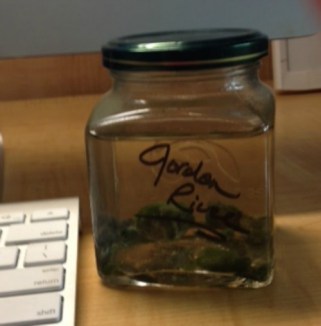
Within a month, precious holy water and a few tiny river rocks had a new home on my
desk, right next to the computer screen. I transferred the water into a small Manzanita olive jar and labeled it “Jordan River” in black felt tip marker.

It was as if God’s presence had returned to my office, and I again found myself back in the business of writing. I needed feedback though. Professional feedback this time. I knew no writing professionals per se, and no one in publishing, yet my new neighbor, John Vawter, had self-published a book… about addiction no less. His book, Hit By a Ton of Bricks, had been in my reading arsenal when Annie was on the streets! John had a friend-of-a-friend with an editing business here in Bend, a fellow by the name of James Lund. He’d once worked for Multnomah Publishing in Sisters, Oregon, and became a freelancer when Random House acquired the company and moved it to New York City.

“Am I delusional to think I can do this?” I asked James Lund when we first spoke early that March. “I mean, is what I’ve written any good, or am I completely wasting my time?”

Jim was working on a project with a tight deadline but said he could give me a couple of hours in about two months.

Two hours in two months? He already sounded too important for a novice like me.

But I did hear from Jim two months later, at which time I sent him my story’s table of contents, two chapters, and a check for his time. A week later, his feedback stunned me. “You’re not wasting your time… keep writing. And I don’t think you’re going to need much help from me.”

Initially, my inner Woody Allen lamented that this James Lund person must not be very good at what he does. However, I secretly delighted in the apparent vindication from my friend’s critical review. I confess to skipping through the house chanting, “neener, neener, neener.”

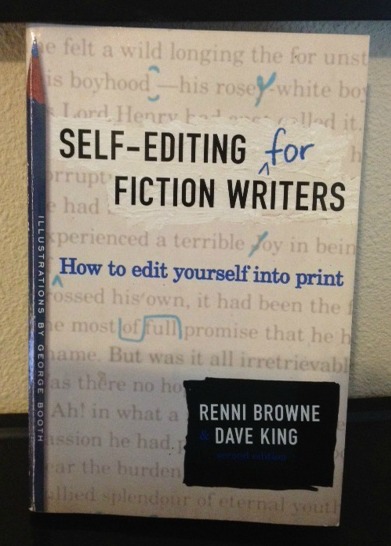
Jim and I agreed to reconnect in five months, at which time I was to have an entire first Image, self editing bookdraft ready for his review. Jim also had a few tips for me. He suggested I read Self Editing for Fiction Writers by Renni Browne and Dave King.

It will help equip you with some fundamentals that will improve your writing,” he said. “Try inserting ‘beats’ in your dialogue to make it more interesting. You also want break up some of the narrative by creating ‘scenes.’ Have you ever heard the term ‘show don’t tell’?”

“Jim… what’s a ‘scene’?”

(Please stay tuned for the conclusion in Part IV, when I go from clueless to published.)

Sharing Insights Through Stories

I first learned the value of stories in sharing insights through public speaking. A fascinating story can captivate an audience, build rapport, illustrate an important point, and make the speaker’s message memorable. In writing, an appropriate story can keep a nonfiction book from becoming dull, and teach truths about life in a work of fiction. So, what makes a good story?

Opened magic book with magic light

1. Vivid and Sufficient Details

In reading along with my daughters several children’s books awarded the Newbery Medal, I found myself transported to a different time and place by the skillful writing of the authors. In these books, the authors provided enough details to help the reader enter into the world described in the book. In describing a food foreign to most American readers, one author provided such vivid descriptions of the taste and smell that I felt as though I, too, was sitting down for dinner next to the characters in the story. In any story, too many extraneous details can cause the impatient reader to start skimming the page to the next section. These award-winning books had the proper balance of information and brevity.

2. Relevance

For a nonfiction writer seeking to illustrate a certain point with a story, relevance is vital. To illustrate the author’s message, the characters and plot must be relevant to the theme of the book, the intended audience, and the point to be made. In writing my nonfiction book, Questioning Your Doubts: A Harvard PhD Explores Challenges to Faith, I learned to edit out parts of a story that slowed down the reading of a passage without further elucidating the concept I was illustrating. In fiction, story lines that do not further the plot may be interesting, but they may also confuse the reader and become a distraction that takes away from the flow of the book.

3. A Story Arc

All stories, even short illustrations contained within one paragraph, need to have a story arc. We need to meet the character or characters in their everyday setting. Next, we learn of an event that brings a challenge to these characters and starts off the story. Then we must see the character(s) grow, learn something new, overcome a hardship, resolve a conflict, or make a difficult decision. Finally, we need a sense of closure as the changed character(s) resume everyday life in a new set of circumstances, perhaps a bit wiser for the experience.

Knowing what elements to include within each section of the story arc is an art. Timing makes the difference between a forgettable story and one that drives home the author’s message. Sometimes I find that reading a passage aloud can help me identify which words can be deleted and what sentences should be smoothed. Feedback from beta readers also can be useful for determining if a story succeeds in illustrating your point.

As a reader, I remember the insights I glean from stories more than those presented through statistics, lists of information, and persuasive language. When writing, I include stories for my readers to make it easier for them to process the insights I hope to share with them.

What do you think makes a good story?

Don’t Take My Advice

IMG_2494

It’s awkward offering advice in a blog post when your advice is to ignore the advice in blog posts.

But that’s exactly what I’m proposing for fellow writers — at least sometimes.

The problem isn’t that there’s a lack of good advice in such posts. I love nothing better than reading some “Ten-Ways-to-blah-blah” post and finding the suggestions so helpful that I immediately implement half of them.

The problem is that, in this age of easy information, we don’t think enough for ourselves. That we see ourselves as consumers of others’ creativity and not inventors of our own. That we leave too much of the imagination to someone else.

Long ago, I had the privilege of writing a piece for Sports Illustrated on Dick Fosbury, the 1968 Olympic high-jump gold medalist. “Foz,” as we Oregonians dubbed him, was a gangly, uncoordinated high school kid and self-admitted high-jumping failure.

Then he got the audacious idea to scrap the traditional “Western Roll” style of jumping. Instead, he did something nobody had done before: he soared over the bar backward, face to the sky, legs bent as if dangling over an exam table.

The short-term results? Laughter from his teammates. The long-term results? He became the greatest high-jumper in the world.

By literally turning his back on the establishment, Fosbury revolutionized high-jumping; since 1968, virtually all jumpers have adopted his style.

That never would have happened had Fosbury not dared to be audacious and think for himself instead of simply settling for “the way everybody else does it.”

But isn’t that how most of us write, edit, and market — based on others’ advice?

It is for me. Then, every now and then, desperation—the same thing that fueled Fosbury’s “about face”—triggers my own creativity.

The rough draft of my nonfiction book about the first World War II nurse to die after the landings at Normandy had become so unwieldy I couldn’t see the forest for the trees.

I’d written the 70,000-word book on an 11-inch laptop and I realized I had little idea of what it was long on and short on.

Conventional wisdom whispered: Let a handful of perceptive editors weigh in—and, ultimately, I would do that, of course. But I wasn’t ready for that step just yet. I needed some way to see into my story. To be in my story. And then the idea struck.

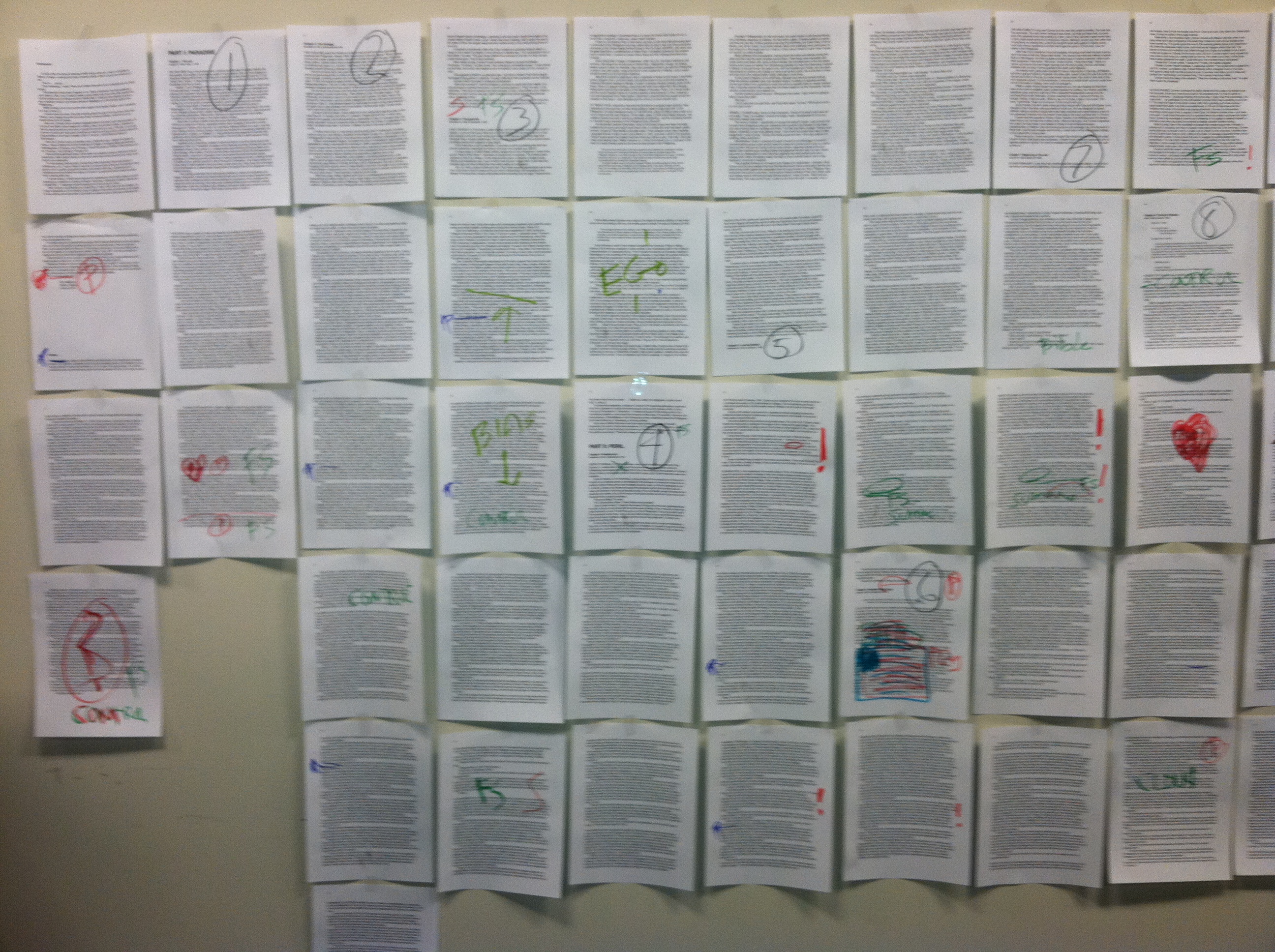
I printed out the book, double-spaced. I used colored felt pens to mark nuances I wanted to make sure were spread consistently throughout the book: dialogue, foreshadowing, action, what war smelled like and sounded like, in addition to the standard “what it looked like” perspective. And more.

A newspaper columnist at the time, I then slapped all 250 pages on three walls of our office’s photo studio—picture a dark-walled racquetball court—and, bingo, I was, indeed, inside my story. Literally.

With this perspective, I could see I had Mojave Deserts of dialogue dearth. I went chapters without letting readers hear the sounds of war. I had some chapters far too long, some far too short. I found all sorts of adjustments that needed to be made.

Never mind that nobody else but me could decipher my felt-penned hieroglyphics. In half a day—and despite a few smirks from newspaper colleagues—my mind’s focus went from fuzzy to sharp on what my book needed.

The experience opened me to other self-invented ideas to help my writing, from walking around the block while doing long edits (exercise, baby!) to discovering the gold mine of information that used bookstores offer and the Internet never will.

Among the best lessons I learned while doing the 452-mile Oregon portion of the Pacific Crest Trail (Cascade Summer) was this: hike your own hike.

And so it should be with writing. Seek wisdom from others, sure. But don’t be afraid to seek it from yourself. Like Fosbury, don’t be afraid to be a tad audacious and turn your back on the establishment.

There. Now, feel free to ignore all the aforementioned advice and come up with something better yourself.