10 Tips For Writing Well

10 writing tips

Some types of communication require writers to string a lot of words together as quickly as possible. (Maybe you have a day job that requires this!) When I’m writing in this way, I don’t pause to weave beautiful phrases or engage the reader with well-crafted sentences. But there are other writing projects in which I want to gift readers with words that shine. For these projects, there are some rules of writing that guide me as I purpose to be as artful and effective as possible.

 1. Be specific.

Use precise language. Not “tool,” but lathe.  Not “hot,” but fiery. Not “fruit,” but mango.

2. Appeal to a reader’s senses.

Appeal to the reader’s senses by including sights, smells, tastes, sounds and textures.

3. Avoid flowery speech.

Overusing adjectives and adverbs makes your speech too flowery. Mary DeMuth exhorts, “Use a better noun instead of a weak one that needs an adjective. Use a stronger verb instead of one that leans on an adjective or adverb for help.”

4. Use active voice.

Employ active voice, rather than passive, to create interest and keep readers engaged.

5. Avoid fancy words.

Don’t use a splendiferous fancy word when a plain one will do.

 6. Eliminate unnecessary words.

If any words or sentences can be removed without changing a text’s meaning, your writing will be stronger if you scrap ‘em.

7. Vary sentence length and structure.

Use simple, short sentences. Also use longer and more complex ones.

8. Choose original combinations of words.

Reach beyond clichés and stereotypes to discover fresh expression. “Never use a metaphor, simile, or other figure of speech which you are used to seeing in print.” (Orwell’s 6 rules of writing in “Politics and the English Language,” 1946)

9. Write to one person.

I’ve heard my wise friend Jonathan Merritt say, “If you try to write a book to everybody, you’ll end up writing a book to nobody. If you try to write a book to somebody, you’ll end up writing a book for anybody.” Identify your target reader—sister? neighbor?—and write to that one person.

10. Show, don’t tell.

Allow readers to discover what you have by painting colorful moments, conversations, conflicts, etc. Writing that “tells” simply informs, like recipe ingredients. Writing that “shows” offers reader a taste of yummy cake.

Cheering you on,

Margot

Excelling at the Craft of Writing… A New Book!

Here at the Water Cooler, writers are dedicated to helping each other grow in their craft. The community that has grown over the past five-plus years is both practical and essential: it enables writers to make connections with others on similar writing journeys; it encourages creativity, collaboration, and growth; and, perhaps most significantly, it pushes each of you to become better writers.

Who couldn’t do with a little more of that?

Excelling-at-the-Craft-of-Writing-Cover

In order to bring the ideas and content of the Water Cooler to the widest audience, we’ve embarked upon an exciting project: a three-part series of published books, The Best of the WordServe Water Cooler. We’re thrilled to announce that the first book, Excelling at the Craft of Writing: 101 Ways to Move Your Prose to the Next Level, is now available in print and ebook! This collection of 101 easy-to-read, engaging essays covers a range of topics that include organizing and outlining your work; creating vivid characters and dialogue; and fine-tuning your language, style, and voice. With proven advice from more than thirty WordServe authors, Excelling at the Craft of Writing moves from the first seeds of starting your writing project up to the last steps of creating a proposal and pitching your work to agents. It’s going to be a must-have resource for writers at every stage!

Many of you are already familiar with this book, having generously allowed us to include one or more of your posts in the manuscript; many more of you will be contacted for inclusion in the upcoming two books, on marketing and the writer’s life respectively. We hope that you’ll all want to participate in helping to promote the books, which should bring the work of the Water Cooler—and all of you—to a wider audience.

That’s why we’re offering a special promotion for Water Cooler readers. If you’re willing to promote Excelling at the Craft of Writing by advertising it on your site with a widget or dedicated post; tweeting it out to your followers; or posting on Facebook, we’ll send you a FREE digital version of the book to read on your e-reader device.

If you’re willing to help promote, please contact keely@wordserveliterary.com to tell us how and to receive your free book.

We’d also like to take this opportunity to thank all of the writers who allowed us to include their work in Excelling at the Craft of Writing, as well as all of you who have written and continue to write for the Water Cooler each month. We couldn’t do it without the dedicated involvement of so many great writers, and the blog’s success is a testament to your thoughtful, incisive, and intelligent posts each week. Thank you for being a part of this community!

–The WordServe Team

Enjoying Variety in Writing

Mixed fruits and vegetables at organic fair

Just as a wide selection of fruits and vegetables makes for a nutritionally balanced diet that promotes good health, variety in writing can improve the quality of prose a person produces. While specializing in one type of writing allows a person to focus, I believe a writer can benefit from tackling different lengths and styles of writing assignments. Here are three ways that writing articles helps an author of a book:

  1. Article writing teaches clarity. The limited word count of an article trains an author to think clearly and write concisely. While an author of a book can define and develop his or her message across many chapters, a writer preparing an article must get the job done in less than a few pages. I found that article writing for journals and magazines helped me winnow my words and learn to support my key ideas with only the strongest illustrations from the most reliable sources. Article writing also honed my ability to write an outline – a skill useful for writing book proposals.
  2. Article writing permits creativity. If you want to test an idea or a style, find a suitable publication and write a query to the editor. If you succeed, you will probably have between 1000 and 2500 words to try out your concept. If you discover a great new topic that deserves further exploration, you can follow up by writing a book proposal. If you find that you can express all your thoughts on the topic within an article or two, you have broadened your horizons without the long commitment that book writing entails. Move on and try another topic until you find your niche. Working with a variety of editors will improve your writing career. You will gain insights and learn new techniques from each editor.
  3. Article writing expands an author’s audience. To be granted the privilege of publishing a book, you need a platform. To maintain book sales, you need to connect with readers. Article writing creates the platform a novice writer needs in order to obtain that first book contract. Article writing also helps a seasoned author keep in touch with readers. Choose publications most likely to interest your potential readers, but, remember, if you write for new publications, you will expand your audience. Online publications or print publications with an online presence create opportunities to share your work across social media, a bonus for an author trying to reach more people.

I have learned to enjoy variety in writing, appreciating the different approaches to communicating to the specific audience for a given publication. Article writing gives me the opportunity to address a wider variety of issues than I could cover through book writing alone. What types of writing have shaped your writing career? What have you learned from writing beyond the pages of a book?

What Are You Afraid to Write?

Fear-Woman

I stumbled into the creative writing class fresh out of cancer treatment, a 48-year-old woman uncertain of her future. I had vague ideas about writing, but I was not even sure who I was anymore.

Cancer had taken all my sentences and scrambled my story.

I didn’t introduce myself as a pastor’s wife. I was Lynne (with an e) on a level playing field with the other college students.

I soon discovered that wearing jeans and a t-shirt like everyone else in the room couldn’t quite cover my wounds. The students wrote of true love and vampires and distant galaxies far, far away and I stared at blank pages. They were 18 and 19. All passion and future.

I was scars. Battle-fatigued. Dried up. Old.

The college professor—a reader of dark stories—disliked pat phrases, cliches, and the status quo. As he stood in front of the class one day, he said:

“The purpose of writing is to put on paper what people cannot say… or are afraid to say.”

Suddenly I discovered I had words. There were lots of things I was afraid to say.

Would the cancer come back? Would I live to see my children grow up? What is the purpose of it all anyway? Where is God?

Maybe that is why I didn’t introduce myself as the pastor’s wife, a careful woman, who would never admit the tumult of doubt, pain, and questions.

So many questions.

I soon realized other students were busy writing too. Apparently I wasn’t the only one with things she was afraid to say.

After writing for ten minutes, we were invited to share what was on our pages.

A heavy-set young man offered to go first and shared about his heroin addiction. A young woman shared about a sexual assault. Another shared about a miscarriage. Another the death of her brother. Another his parents’ divorce.

The readers stepped cautiously into the full noonday sun, all squinty-eyed, with scrunched up faces, unsure, after living in silence for so long, of the reception in the light of day.

As we each emerged, we discovered something unexpected: we were no longer alone. 

Writing is not about life in the suburbs and two perfect children and happily ever after. Ho hum. Pass the butter.

Writing—even from a Christian perspective—is about scars. Questions. Pain. Fear. Redemption is there, but not without struggle.

What are you afraid to write?

Lynne Hartke has a memoir coming out with Revell in 2017. She writes about courage, beauty and belonging at http://www.lynnehartke.com.

7 Ways Writers Can Find an Exclusive Voice

It’s one of the best compliments I receive from readers. “I loved your book. I could hear you encouraging me as I read. It felt like we were talking over lunch.”

Unique. Transparent. Courageous. Authentic. Fresh. Today’s most popular writing voices are often identified by these descriptors. But how do you tap into the exclusive inflections that showcase your authentic self on the page?Grandpa and Granddaughter

Recently, while watching my nine-month-old granddaughter amuse herself by practicing her newly discovered babble, I thought about a writer’s struggle to speak on paper. In the infancy of our career, we could learn a lot from babies about speaking in an identifiable way. And if we relax and learn to amuse ourselves in the process, we’ll likely find our voice faster.

Most of us need help understanding our voice. But if you follow the seven steps listed below, I can assure you, very soon, you’ll relax into the thrill of conversational-style writing.

  1. Karen Jordan author of Words That Change EverythingWrite to your best friend, parent, sibling, spouse, or child. Someone you wouldn’t hold back with. Last month, I rode to and from the Advanced Writers and Speakers Association Conference, (AWSA), and Christian Booksellers Association, (CBA/ICRS), expo with my author friend, Karen Jordan. One of the things I love about her new book, Words That Change Everything, is her transparent way of writing. Like me, she often envisions a specific person when writing her words.
  2. Imagine your ideal reader. Then, write to them, and only them. Writing expert Jeff Goins says, “My ideal reader is smart. He has a sense of humor, a short attention span, and is pretty savvy when it comes to technology and pop culture. He’s sarcastic and fun, but doesn’t like to waste time. And he loves pizza.”
  3. Ask yourself, What do I like to read? Spend some time looking closely at the books, articles, and blogs you are drawn to. What are their similarities and differences? What is the personality of the writer?
  4. Review your recent writing, and ask yourself, Is this how I talk?
  5. Interview some of your readers. Ask them, “What does my writing voice sound like to you?” List the answers you receive, and ask yourself, Are they hearing the real me through my words?
  6. Don’t start your project/page/chapter by thinking about writing for publication; at first, simply write it for yourself. Free-write without pressure or hindrance — you can always trash it later. But for now, allow your mind to run unfettered and your fingers to type unbound. The gems that shine through your free expression may surprise you, and will lend to freshness in your voice.
  7. Ask yourself, If I knew I had thirty days to live, is the message I’m sharing coming through in its purest state? Is this what I would want to say to the world through my last breaths, and how I would want to express it?

Getting Through What You Can't Get Over Book CoverRemoving our writing masks takes intentional effort. When I wrote Getting Through What You Can’t Get Over, I left puddles of emotional blood on many pages. However, I knew readers needed me to do it — our creative endeavors depend on reaching into our souls to thrust our true selves onto the page. When we do, readers feel like they know us personally, and want to draw nearer. Loyal fans are engaged when they can recognize our projects, without seeing our names.

Can you hear my writing voice in this article? How have you learned to write from your authentic writing voice?

10 Tips For Writing an Effective Query Letter…

10 query tips again

Whether you’re pitching an article or submitting a book proposal, your query letter—or your cover letter—needs to convince a publisher to keep reading. As you’re writing, remember that the reader will be tempted to check out and check Facebook. It’s your job to grab and keep a reader’s attention!

1. An effective query letter is concise.

Demonstrate you’re an effective communicator with the efficient use of words. (1 page!)

2. An effective query letter states your intention.

Be clear, up front, whether you’re pitching an article or looking for a publisher.

3. An effective query letter is personal.

Address your letter to a particular person. Has he or she represented or published something similar to your project? Make a meaningful connection with the recipient.

4. An effective query letter clearly identifies your premise.

What is the one thing this book or article aims to do? Clearly identify the singular unifying thesis.

5. An effective query letter identifies a reader’s felt need.

Why should this be published? What need does it meet? Who has this need? How will reader be helped?

6. An effective query letter captures and holds a reader’s attention.

Hook reader’s attention with colorful anecdote. Then, work to keep it.

7. An effective query letter communicates your competence.

Highlight the elements of your bio or resume most relevant to this project.

8. An effective query letter pulses with your passion.

Demonstrate your enthusiasm for this project.

9. An effective query letter balances confidence with humility.

Thank the reader for her/his time and offer your availability to discuss project further. Demonstrate humility and teachability.

10. An effective query letter is error-free.

It’s one page. Be fastidious.

Cheering you on,
Margot

Surviving the Valley

You hear a lot on the writing journey that it’s filled with highs and lows—probably more so in publishing because it’s rapidly changing and I personally wouldn’t consider any part of the industry stable or predictable.

valley-of-fire-1390258_1920The problem is the valley is hard. What exactly do you do? Do you give up writing? How do you readjust to keep your writing career moving forward when seemingly no one wants the words you’re putting on the page?

My writing valley (really—the deep dark hole of despair) started after my first trilogy was published. I worked really hard marketing those books, had great reviews, and two out of three of the books were each nominated for multiple awards. I was even told by my publisher that I was (at one point) their second-bestselling fiction author.

I thought there was no way my next proposal wouldn’t be picked up—by somebody. Well, it wasn’t and to be honest it put me in a psychological funk. I was pretty convinced that my envisioned bestselling author status dreams were rapidly crumbling in front of my eyes.

I’ve come through my first major valley (I’m sure one of many to come) and I thought I’d share what I did to survive it without throwing my writing career in the trash and lighting it on fire.

  1. Grieve. It’s okay to be sad about it. The writing life is unpredictable—even that’s a pretty generous understatement. Your writing life didn’t go as planned and it’s hard to readjust dreams sometime—but do readjust.
  2. Help other authors. Help them promote their books. Read books for endorsement. Review novels. Keep your name in the reader’s mind by having your name on their books.
  3. Stay active on social media. Even if you’re not publishing, keep engaging with your readers and other authors.
  4. Keep writing and learning the writing craft. Above all else—don’t stop writing. Journal. Blog. Write a new book proposal. Use this time to brush up on the areas of your writing that aren’t strong. Read those numerous writing craft books that have been piling up beside your bed (come on, I know you have them!) Learn those pesky computer things you’ve been putting off. Scrivner. Newsletter distribution sites. Take an on-line writing course. Even James Patterson has one now that’s very reasonably priced.
  5. Write outside your genre. During my valley, an editor from Guideposts reached out to me and asked me to audition for a cozy mystery series they were putting together. Hmm. Cozy mystery? I write thrillers. Straight up thrillers. I honestly didn’t think I could write gentle enough for a cozy mystery, but what else was I really doing? So I tried it. My first submission, well, you could probably predict the feedback I received. Too dark. The heroine’s not cheery enough. By the way, this surprised no one that knew me. But I resubmitted—and they loved it! And then the series didn’t move forward. I auditioned for a different Guideposts series and washed out again. Maybe cozy mystery wasn’t for me, but it did prove I could write something other than thrillers and I built bridges to editors at Guideposts even if they didn’t take me on for those projects.
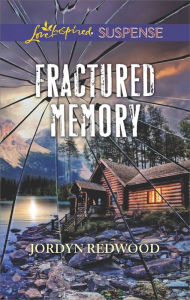
  6. Fractured MemoryListen to God’s nudgings. Looking back with perfect vision, I felt that God used the Guideposts experience to get me to write outside my comfort zone. During this process, I started thinking about a contest called Blurb to Book that Love Inspired was hosting. Never did I imagine I would write for them. I didn’t think I was a good fit, but I found myself obsessing about this contest to the point where I couldn’t sleep. So I entered, and I ended up winning a contract for Fractured Memory, my novel releasing this month from Love Inspired Suspense. Suddenly, I was clawing my way out of that dark writing well.
  7. Go indie. In this writing age, there is literally no reason to not have content out for readers. Don’t quit your day job and scrap and save every penny you can to hire a good editor, proofreader, and book cover designer. I do say this with some caution—be sure you put out a good book! Don’t sabotage yourself into another pit.

Overall, take the valley as a place that can provide rest, rejuvenation, and growth. Perhaps you will need to go back to a paying job or postpone the plans that you had of quitting or reducing your hours. Just know that the valley is survivable and it doesn’t have to mean the demise of your writing career.

Tell me, how have you survived low points in your writing career?


Question Everything

4835f5cfdc4709cbd181840ec9e16f16

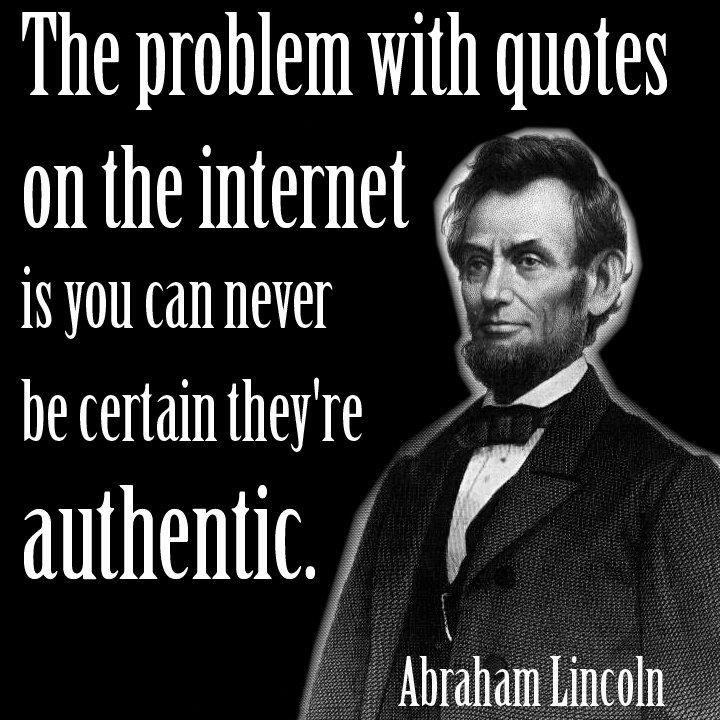
I wish I could take credit for the internet quotation, “The problem with internet quotations is that you can never be certain they’re authentic.” And who gave us this helpful reminder? If you Google it, you’ll find it was Abraham Lincoln.

Yeah, that’s ironic, doubly so when the quote and attribution are laid over an image of Benjamin Franklin. I’m hoping that second irony was intentional as well.

Some inaccuracies are funny. But bloopers, blunders, and blatant boo-boos in our Christian books aren’t. Certainly in our non-fiction, but even in the background details of fiction, we have a responsibility to our readers to provide accurate, correct information. (We do serve Jesus, who described himself as “the Truth.”)

Today, I encourage you to “question everything.” Why? Well, if you happen to Google that phrase, you’ll see it attributed to Euripides . . . no, wait, it was Albert Einstein . . . no, Socrates . . . or maybe Maria Mitchell. (Who’s that? Let’s see . . . Wikipedia offers two possibilities: an American astronomer or an Australian actress and singer.) There’s even an online forum discussing the question, “Isn’t there a Bible verse that says, ‘Question everything’?”

My point is simply this: Writers have a world of information at their fingertips, and it’s very easy to find an online quotation, fact, date, or story that fits their manuscript perfectly. Unfortunately, a certain amount of that information is just going to be wrong.

I could offer countless examples I’ve run across in my day job as a copy editor. But here are just a few, under two troublesome categories:

Questionable quotations:

Mark Twain was right: “Kindness is the language which the deaf can hear and the blind can see.”

Sixteenth century French theologian and pastor John Calvin wrote, “To make intercession for men is the most powerful and practical way in which we can express our love for them.”

Question every quote attributed to a famous person, especially if you found it on an internet quote site. Or, to put it another way, don’t believe everything you see on BrainyQuote, Goodreads, et al.

Here’s a well-researched article describing the “Mark Twain quote” above: http://quoteinvestigator.com/2013/10/26/kindness-see/. And if you search that “John Calvin quote” in Google Books, you’ll find it’s not actually from Calvin, but from a book about Calvin.

Google Books and Amazon’s “Look Inside” feature are indispensable tools for verifying quotations. But even if you determine a quotation is correctly worded and attributed, you should still question its context. Elaboration follows, after this link to a pretty funny article on internet quote sites in general: http://www.slate.com/articles/arts/culturebox/2014/05/quote_websites_are_frequently_inaccurate_but_we_use_them_anyway.html)

Concerns over context:

So you’ve found and verified a great quote for your manuscript . . . now take a few moments to “read around” that quote and to look up the author. You may find that the words come from a volume of unorthodox theology, a racy novel, or the pen of a white supremacist (all real-life examples). Those facts don’t necessarily disqualify the quotes, but you should be aware of their source—do you want, however unwittingly, to appear to endorse these writers?

Bible quotations should always be scanned for their larger context, too. What do you think of this one, from Jeremiah 26:14?

 “As for me, I am in your hands; do with me whatever you think is good and right.”

One author used these words as a beautiful example of Jeremiah’s surrender and submission to God. In actual context, the prophet was speaking to the priests and prophets of Judah, who hated his message and were threatening to kill him.

It’s incumbent on writers (and later, editors like me) to ensure every assertion in our book is accurate. And that may take a visit to two, three, or a dozen web pages to get to the actual story. (Not just Wikipedia . . . it’s a good starting point, but double check what you find there too.) If there’s one thing I hope you take away from this post, it’s this: Don’t believe everything you read online.

Why? There are three big benefits to you as a writer. First, you’ll keep your editor on your side. Second, you’ll keep your readers on your side. Third, if you accomplish the first and the second, there’s a greater chance you’ll keep your publisher on your side (and maybe get future contracts).

As an author, you are putting yourself forward as an expert on your topic. Don’t hurt your credibility by believing the first internet page you open. For everyone’s sake, dig deeper. Question everything.

Fitting the Words to the Occasion

Global business strategy
Solving globe puzzle by finding the correct puzzle pieces

In elementary school, I discovered the joys and complexities of writing. Through a summer creative writing class, I learned how the right word choice can make a poem memorable, dialogue meaningful, and a setting realistic. As a graduate student at Harvard University writing scientific research papers and a doctoral thesis, I revisited the importance of precision in writing. Medical and scientific writing employs a special vocabulary of scientific terms, abbreviations known only to others within the field, and a careful, well-organized tone.

Whether you are a professional writer creating highly technical and specialized documents, a journalist, an academic researcher writing for a scholarly audience, a novelist, or an author of a non-fiction book, you need to select the correct words to create clear and effective communication. Here are some ideas that have helped me fit the words to the occasion:

  1. Choose precise words. Resist the temptation to embellish your writing with multiple adjectives and adverbs. Choose “sprinted” over “quickly ran” and “coral” over “deep orangish pink”. Concise, clear writing makes it easier for your reader to follow your message. When you do insert an adjective, make sure it enhances the thought you want to convey. Even in a novel or memoir where you must describe the setting of your story to capture your reader’s interest, edit out superfluous sentences that do not advance the plot.
  2. Listen to the rhythm and flow of your sentences. Writing poetry teaches you to pay attention not only to the meaning of words, but also to the sound of words. Some lessons from poetry can improve prose. If you are deciding between two words that both carry a similar meaning, choose the one whose syllables improve the rhythm of your sentence. To draw your reader into a scene where characters experience fast-paced action, keep your sentences short. To transport readers to a bucolic setting in an historical novel, indulge in writing an opening paragraph of long sentences with descriptive clauses.
  3. Create a consistent tone. Scholarly writing has a consistent tone with logically structured paragraphs and a detached viewpoint creating a sense of objectivity. A “How To” book reads quickly, dispensing friendly advice on a given topic. A chapter in a novel or memoir describing a difficult time in a person’s life usually carries a somber, reflective tone. Pay attention to the connotations of words to create the right tone for your article or book chapter. When writing dialogue for a character, choose words that let the personality of the character shine through. As the character develops and grows throughout the book, allow his or her word choice to reflect those changes. In a non-fiction book with an overall formal tone, you can intersperse illustrations that carry a lighter, informal tone to break up the reading difficulty and keep your reader engaged. Think about what tone is appropriate for your writing in the early stages of your project as you are developing your outline.

What techniques do you use to fit the words to the occasion?

10 Tips For Crafting Your Book Proposal

10 proposal tips

Every sentence of your book proposal should have one person in mind: the reader. Whether you’re submitting it to an agent or an editor, that “first reader” will be holding the “ultimate reader” in her heart and mind as she reads. Your job is to meet the reader’s needs—both that first reader and the eventual one—by communicating efficiently and effectively.

1. Don’t get visually fancy.

Elaborate fonts, colors and graphics distract. Use Times New Roman 12 pt font in a Microsoft Word doc or PDF. Rule of thumb? Keep it simple.

2. Employ plain language.

High-fallutin’ intellectual language is only appropriate for academic books. More often, communicate using a conversational voice.

3. Write in the third person.

Compose your proposal in the third person, as if your agent or a professional collaborator has prepared it—allowing you to brag a bit.

4. Be clear and concise.

When a reader sets down your proposal, he or she can easily identify the premise of your book. Make the reader’s job easy; don’t use more words than are necessary to communicate effectively.

5. Avoid extremes.

Claiming every person always feels a certain way distracts reader by challenging her to search for an exception. “Most” and “often” are more effective.

6. Communicate value for the reader.

Throughout your proposal, make explicit the takeaway value for the reader who purchases and reads your book.

7. Title effectively.

Your working title suggests the book’s premise and the subtitle its promise. Avoid titles that are either too generic or too clever—both making the premise difficult to identify.

8. Prove you will market your book.

Don’t just say you’ll help with promotion. Offer concrete plans you will put into effect.

9. Practice Humility

Don’t oversell, insisting Oprah will return to daytime TV just to promote this book. And be cautious, even with faith-based publishers, about claiming that God told you to write it. #redflag

10. Offer an error-free proposal.

If you’re not paying for a professional critique, have a word-loving friend scour your final draft for grammatical or typographical errors.

Cheering you on,
Margot