Why Should I Go to a Writer’s Conference?

I believe there are three compelling reasons to go to a writer’s conference and as many, or more, conference “genres” to choose from.

Mount Hermon Azalea
Mount Hermon Azalea
  • You will dwell with a community of writers. The benefit is not only the chance to meet other people who think like you, but you will gain affirmation, encouragement and support. Perhaps you will meet a Facebook friend or an online writer’s loop member face to face for the first time and a lasting friendship blossoms. Or you might sit next to someone at dinner   who writes in your genre or lives nearby and a friend and/or critique partner is found. “A generous man will prosper, he who refreshes others will himself be refreshed.” Proverbs 11:25.
  • There is no better place to learn the writing craft. Most conferences will have an ???????????????????????????????array of workshops and tracks for every level of writer, whether you only have a vague idea about what you want to write or you have a whole drawer full of manuscripts. You can learn specifics about the publishing world from editors and agents and gain insight to what each is looking for. And you can learn from authors who have found success and are generous in sharing what they have learned along the way. “For wisdom will come into your heart, and knowledge will be pleasant to your soul, discretion will watch over you, understanding will guard you.” Proverbs 2:10-11

  • You will have the opportunity to make an appointment with an agent, editor or mentoring author. Beyond learning, building relationships is really the core and the blessing of writer’s conferences. Editors and agents are very interested in finding excellent writers who they enjoy on a personal level as well. The ability to work together is almost as important as your ability to write. If the thought of sitting down

    A meeting waiting to happen.
    A meeting waiting to happen.

    and chatting with an industry professional fills you with anxiety, say a prayer, take a breath, and know that the person you are talking to is interested in what you have to say and wants you to succeed. One of the biggest blessings I have found at conferences of any size, is that those who are there to instruct have a big heart for what they do, and are glad you are there. “Be strong and courageous. Do not fear or be in dread of them, for it is the Lord your God who goes with you. He will not leave you or forsake you.” Deuteronomy 31:6

There are many conferences to choose from, Christian and secular. And there are many good secular conferences so don’t be afraid to attend and be a light to the world. But if you desire to write for the Christian market, you really need to also attend Christian conferences. I like to break them down by size, and each has its benefits. I’ve attended the Romance Writers of America conference (this July it’s in San Antonio!) and a plus is meeting with the Faith, Hope and Love Chapter.

  • The small, weekend workshop. You can usually find one of these close to where you live, and they often are the best place to dip your toe in the water, or your pen into

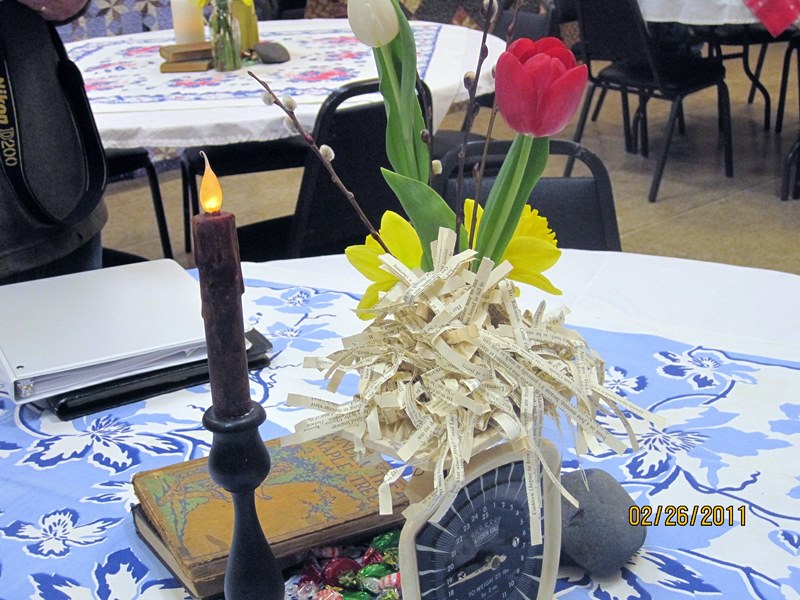
    Beachside 2011      The Weight of Words
    Beachside 2011 The Weight of Words

    the ink. Especially great for newbie writers. and also those who write because they love to, but don’t necessarily aspire to be traditionally published. Choose one that is lakeside, beachside, or mountaintop for an extra dose of inspiration! My favorite is Bob Welch’s Beachside Writers with Jane Kirkpatrick. They are a dynamic duo and the weekend offers a unique blend of learning the craft and practicing your writing skills. It’s on the Oregon coast in Yachats, and I try to go as often as possible.

  • Regional conferences. Once again, most likely you won’t have to travel far to find a writer’s conference that is still small but offers much to the writer who wants the chance to meet editors from publishing houses and magazines, agents, librarians, freelance editors, and multi-published authors who enjoy “giving back” and sharing techniques or writing methods they’ve learned along their journey. Most likely there will be an amazing keynote speaker. I have just returned from the Mount Hermon

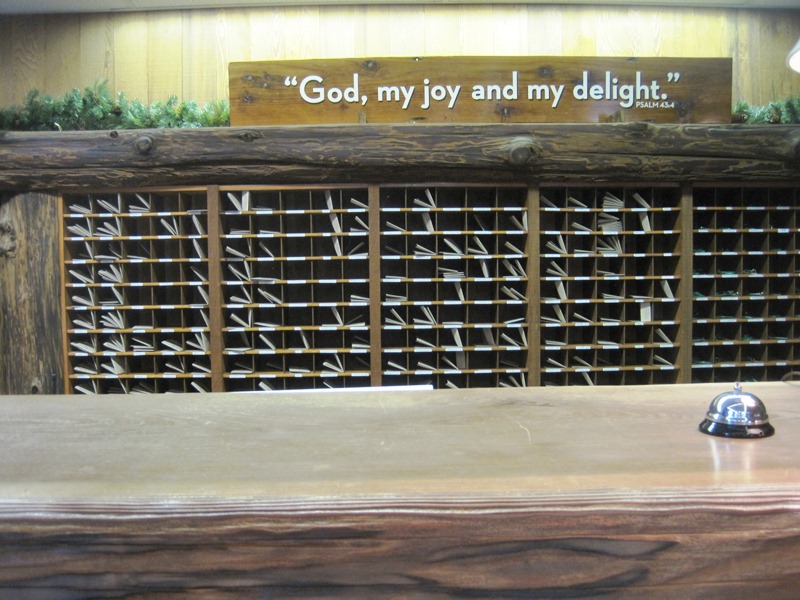
    Mount Hermon Check-In
    Mount Hermon Check-In

    Christian Writer’s Conference in Santa Cruz, CA. Author and speaker Glenna Salsbury was the inspiring keynoter this year and next year Author Robin Gunn will be speaking. The campus is in the redwoods, with dogwood and azalea in bloom, and I can’t imagine a more beautiful spot to be inspired to write. The sense of being among a community of writers is awesome, and as you drink in the beauty and tranquility you can’t help but experience God’s presence. And  the Oregon Christian Writer’s Conference has fantastic conferences ranging from one-day to a full four-day conference in Portland with keynote speakers such as Author Jane Kirkpatrick, Allen Arnold of Ransomed Heart Ministries and Author Dan Walsh.

  • National conferences. This is where you will find a compendium of knowledge about all aspects of the writing world. It’s most likely located at a conference hotel and
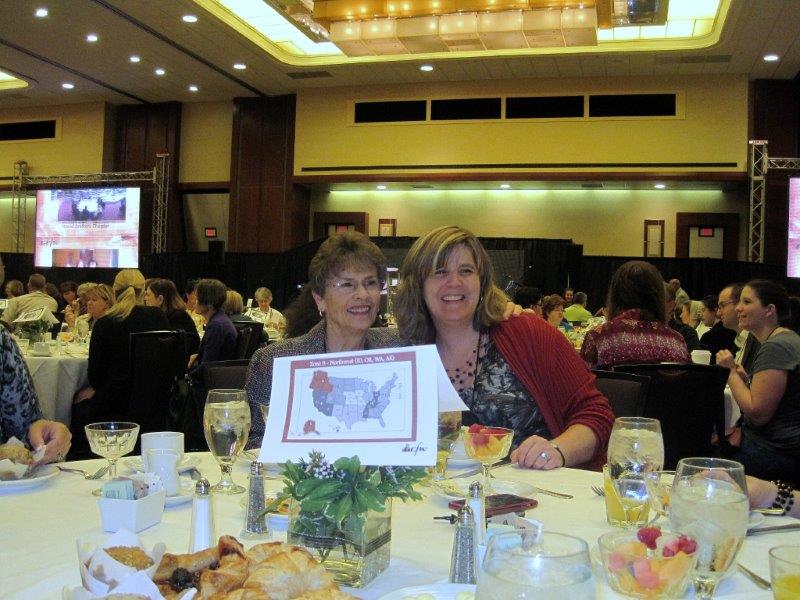
    Enjoying friends at ACFW
    Enjoying friends at ACFW

    maybe only occasionally near you. But it’s worth the time and effort to attend. The pace might seem hectic and you will literally fall into bed each night, but you will come home filled with enthusiasm to finish the book or start the next one! My favorite one is the American Christian Fiction Writer’s Conference, held this year in beautiful St. Louis, MO, with keynote speaker, Author Lauraine Snelling. The conference dates this year are September 25 – 27th. And remember, if you feel overwhelmed, there is always a chapel or prayer room arranged at ACFW with Brandilyn Collins and volunteers there to pray with you and/or beside you.
I’d love to know if you have attended a conference or if you are planning on attending one in the future. Which are your personal favorites? Why? If you’re attending one for the first time what do you look forward to the most? What do you fear?


When to Consult a Medical Expert

female doctor in ICUAlthough I’ve always helped authors along the way with medical questions, it’s been one of my primary focuses for the last three years since the invention of Redwood’s Medical Edge—my medical blog for authors.

The reason for creating my blog was the multitude of published works I read that were loaded with medical inaccuracies. Not just a few here and there. Time after time, errors caught my eye.

In a pod-cast interview, the interviewer asked if these medical mistakes would be enough for the average reader to pick up. To be honest, I’m probably more sensitive to these errors after spending 20 years in nursing but some are mind-numbingly obvious. Such as saying the spleen is on the right side. Such as calling a collar bone a shoulder blade. You don’t have to have a medical degree in anything to pick up on these missed anatomy issues.

Writers, I think, are confused as to when it’s beneficial to consider consulting a medical expert. And I actually mean more than asking Uncle Joe who has worked as a dentist when you need information about delivering an infant.

Not the best option.

An author who is also a medical expert is your best bet. They know what will overload the reader, they know what is too medically complex for a non-medical author to pull off, and can help you with the nuances (the language and the interactions) since they’ve worked in the field.

But when is it best to consider plucking down a few hard earned dollars to work with a medical consultant?

Here are my thoughts.

  1. You need a medical condition that fits a certain set of symptoms. I often get queries from authors along these lines and perhaps they’ve tried to find something on their own but just cannot decipher the medical language to know, for certain, if it fits: “I need a fatal condition for a child that won’t be immediately obvious but could put the child in peril around three months of age.” Believe it or not, a metabolic disorder fits this criteria.
  2. You have a medical scenario in mind but aren’t sure if it’s reasonable. This happens frequently and is probably the most dangerous position to work from. Let’s take a look at the following example: “My character has been in a car accident. The car has rolled three times. The injured character was not wearing a seat belt and was thrown 100 yards into a swift moving river, where he almost drowned. He was rescued and required only a minute of CPR to revive him. I need him home from the hospital that night.” Or the opposite is true. “I have a character that fell down the stairs and I need him to be in the ICU for three days.”

Both of these situations set up implausible medical scenarios. The car accident victim is going to be too injured to go home that day. Someone who requires CPR after nearly drowning is going to be watched, at a minimum, overnight. In order to get admitted into the ICU a patient has to be pretty sick so the simple fall down the stairs is likely not going to injure the character sufficiently.

  1. Come with an open mind but with a needed result for your character. What I prefer to know is your end game with an open mind to the medical scenario. “I need a character to suffer an injury from a fall that would land them in the hospital for a few days in the ICU and I’m fine with a few extra days in the hospital but I don’t want them to have any residual injuries.” For you, I would pick an epidural hematoma.
  2. You have a pivotal medical scene. I consulted once for an author who had a child in the Pediatric ICU, dying from leukemia. This is something you want to flow nicely for the reader. If at any moment they pause, look away from the page, and think about the accuracy of what you’ve written, you’ve taken them out of the story bubble and perhaps their trust in you has fallen. Perhaps you’ve even lost a reader.

I once read a review from a fan of historical fiction that skewered an author for writing a completely inaccurate historical scenario in the third book of the series. This reader then doubted the previous two books and swore off reading anything else from the author.

Don’t let this happen to you. Consult a medical expert if you find yourself writing these scenarios. It’s likely not as expensive as you think.

What about you? Any medical inaccuracies you’ve found in a novel?

Hearing What You Can’t Read

woman listeningI am always fascinated by our five senses—touch, smell, sight, taste, and hearing. I love the warmth of my husband’s hand when he clasps mine, the fragrant scent of a rose caught up on the morning breeze, or the tart pucker of a Granny Smith apple.

As writers, we know that adding the senses into our books makes the world our characters live in more real to the reader. But that’s not where I’m going with this post. My question to you is, when was the last time you listened to a book? I don’t mean just for pleasure, but to get into the depth of the story by using more than your eyes.

I have a Kindle that offers a “text to speech” option, which I’ve found to be available on many books. (I believe this is up to the author and/or publisher if they offer this choice and I’m sure it’s available on other readers as well.) It has a computer generated voice, which for me is fine, but you can go through this exercise with an audio book as well.

The trick is to listen to the words, but not become caught up in the story. It’s amazing what you can hear.

Rhythm: Did you know words and sentences have rhythm? When you listen to a story you can hear it. A good writer will create a steady beat with their words to slow the pace of the story. Or, speed it up to raise the tension as needed.

Choice of words: I’m a big proponent of not using the same word over and over again. I’m not advocating pulling out a thesaurus and running the gamut of possible choices, but just having an acute awareness of word choices. It makes the work more appealing. Fresh. You can “hear” the repeated words more than “read” them.

Story world: Has the author “painted” the world the character is in vividly enough that when you close your eyes while listening to a scene you can almost imagine yourself right in the middle? This aspect is hard to do when you need your eyes to read!

Emotions: Much like the story world, can you picture the characters’ actions? Feel their pain? Or laugh with them? This follows the line of showing instead of telling. When you listen to a book, you can “see” their reaction, like a movie screen playing on the backside of your eyelids.

I go through this exercise with many of my favorite authors. I take the time to learn from their writing style by listening to it. Then try to apply the concepts to my own writing.

So what do I do then? I always listen to what I’ve written. I email the Word doc to Amazon and it goes right to my Kindle. Then I go through the same exercise. Have I set the proper rhythm for the scene? Do I have words repeating that should be changed? Have I created a memorable scene mixed with real-life emotions?

Try it some time. You might be surprised what you hear that your eyes would have never seen.

Give ‘Em What They Want, Not What You THINK They Want

shop-vac-10-gallon-industrial-wet-dry-vacuum-925-40-100After fumbling around with social networking and reading every marketing article about it that I could get my hands on for the last year or so, I’ve distilled my promotional strategy down to a simple directive: give readers what they want.

I know that sounds obvious, but the tricky part is understanding the ‘what,’ especially once you realize that ‘what’ your readers want may not be the same ‘what’ that you THINK they want.  The key is taking ‘you’ out of the picture, so you can clearly see your reader without your own perspective distorting your vision.

It’s like reflective listening – you want to reflect back what the other person is saying without putting your own spin on his words, so you hear clearly what he said, and not what you think he said. Quick example of doing it wrong: my husband said he wished he’d taken music lessons when he was a kid, so I got him music lessons for Christmas. Two weeks into the lessons, he told me he didn’t want to continue.

“But you said you wished you’d taken lessons as a kid,” I reminded him.

“As a kid, yes,” he said. “But now I have other interests that I’d rather spend my time on. You interpreted my comment as a current wish, which it isn’t.”

Ouch. I should have gotten him the shop-vac he said he needed, which I thought was boring.

Same idea applies to your readers.

Pay careful attention to what they say, or in the case of social media, what they really like to see and with what they engage.

For instance, I thought that as an author, I should be posting on Facebook about my WIP or upcoming events. Those posts, I’ve found, get little notice.

But if I post a photo of me getting kissed by a French bulldog, or a goofy homemade video of me singing (badly) about the cold weather, I get comments galore. Clearly, on Facebook, at least, my writing news is not very interesting to my readers.

Writing news is appreciated very much, however, by my newsletter subscribers, so that’s where it now goes, along with on my website. As for LinkedIn, I post both events and business-related material, such as when my books get a rave review or included in an industry-recognized blogger’s post.

For Twitter, I post quick links to interesting material in my subject areas (birds, nature, dogs, humor) or retweet entertaining posts, because I’ve found that those kinds of communications are most appreciated by my followers. Because it’s a fast and short exposure, I tend to use Twitter more than any other social media platform as more of a shotgun approach – post and hope it spreads wide and far to get my name in front of a greater number of people, because that’s the first step to finding new readers.

My experience has convinced me that connecting with readers, followers, and networks is a necessary piece of expanding my readership, but once I’ve reached new folks, it’s time to shift gears and use social media to build relationships, not solicit sales.

That’s why it’s called social media, and not the shopping channel. Remembering to give the reader what they want is easy when it’s the same thing you want to give your friends.

How do you use the various social network platforms?

Working with an Editor

Kariss manuscriptsThey say that all good things must come to an end. Sadly, the same holds true in writing. As you turn your manuscript in to the publisher, you abdicate your position as ruler of your own fictional kingdom in favor of an advisor who tells you all the wonderful things you did wrong and how you can fix them. (For example, my editor would have asked me who “they” is in that opening line.)

But this “bad” thing doesn’t actually have to be bad. In fact, think of it as iron sharpening iron. Who knows your story and characters better than you? And who better to help you improve than an unbiased person who likes to read and knows a whole lot about writing and how to craft a story?

I am by no means an expert, but as I edit my second book, I realize how much I learned while editing Shaken. As you prepare your book for the editing process, here are some ways to prepare yourself, as well.

1. Check your pride at the door.

First of all, realize your editor is there to HELP you, not hurt you. Don’t take it personally. I thought I understood that, but I didn’t really grasp it until I received my first round of notes. Then my pride took a nose dive and shattered in a very ugly pile around my feet. This process is meant to refine both you and your story. I tend to write in a steady stream of consciousness, wrapped up in my story world. It takes someone looking at it from the outside to show me where the issues are and help me to change them.

2. Kill your darlings.

In Texas, we call this “killin’ your darlin’.” Your editor believes in your story, too, or they wouldn’t spend countless hours helping you. They want to make it better, but sometimes that means cutting important characters or scenes you love. This is the part I hated in the editing process.

It is challenging to dig into your story, delete scenes, and create new ones where you originally imagined something different. There were times my editor suggested a line of copy or dialogue that made me cringe, not because she wasn’t right, but because it wasn’t in the exact voice my character would have said it. Here’s where camaraderie came into effect. She could see the holes. I could keep the story true. We made a great team. Killing my darlings made my story stronger.

3. Fight for your story.

This may seem to contradict the previous point, but trust me, it doesn’t. Like I’ve said before, NO ONE knows your story or characters better than you. Here’s where discernment comes into play. At the beginning of the editing process, my editor asked me to cut several characters. No matter how much I played with this request, something didn’t sit right. So I fought for these characters, explained the role they would play in future books, and stood my ground. I knew keeping them would benefit the story. Once I explained their importance (and not just my emotional attachment), my editor listened and immediately replied with ways I could make these characters even stronger than what I had in mind.

It turns out that the characters I fought to keep have been some of the favorites for readers. If you know in your gut something needs to stay, fight for it. Just make sure to check your emotional attachment at the door and identify exactly why this piece adds to the story.

So, take what I’ve learned. Add your own insight. And I’ll add to the list after I finish this round of edits. I never want to be a bratty author who says I know best. I do want to collaborate. Yes, I know my story, but I need people who will help me make it better. I’m pretty excited about the possibilities. Bring on the next challenge.

What lessons have you learned while working with your editor?

Embracing Your True Identity as a Writer

Photo/KarenJordanAs I watch my grandsons, Ethan and Zach, make silly faces dressed in their costumes, I realize how much I act like them.

At times, I pretend to be someone else, wearing a mask to disguise my true identity.

Masked crusaders. Zach and Ethan often pretend to be superheroes with superhuman powers, fighting against crime or evil. But even though they enjoy their make-believe world for a while, they soon shed their costumes. Bored with one adventure, they put on other outfits–such as pirate costumes–and search for a hidden treasure or sail off to conquer another ship. Later, they may be fully decked out in their new football or soccer uniforms.

True identity. As a writer, when I masquerade as somebody or something else, I tend to lose my focus on reality. And with this cover-up, I sometimes unintentionally deny my true identity.

I may be tempted to hide behind a cloak of self-confidence, trying to compensate for my weaknesses and failures. Or I try to put on another mask to temporarily gain acceptance and approval.

Self-deception. My self-deception always directs me down the wrong path, leading me down a new road. And I find myself in places that I never intended to go. When I choose an identity that God never expects me to wear, I make regrettable mistakes and commitments. And I focus on my faults, instead of my blessings.

I’ve tried on the masks of SuperMom, SuperNonnie, SuperWife, SuperTeacher, and even SuperWriter. And I’ve suffered from stress and burnout. Then, I feel like a SuperNobody. When I try to become any of those super-characters in my own strength–instead of depending upon God for direction and strength–I fail miserably.

As I continue my journey as a writer, I pray that I will embrace my true identity and remember who I really am “in Christ” (Eph. 1:3-14). As a Christ-follower, I am unconditionally accepted and loved by God because of what Christ did, not because of what I can do for Him or for others.

101031.gkids copyI also plan to model my faith and beliefs for my grandchildren, so they will also know when to put their masks and costumes away and discover their own identities “in Christ.”

What has helped you find your true identify as a writer?

Photos/KarenJordan

5 Ways to Drive an Editor Crazy

13761150586648bAs an aspiring writer, I thought editors had horns on their head and pitchforks perched beside their desks. After all, they sent me form “no thanks” letters after I’d slaved over an obviously brilliant manuscript. They ignored my letters and phone calls, and seemed to take joy in waiting months before replying to my oh-so-urgent emails.

Now, as both a seasoned writer and an editor for a large faith-based website, I’ve learned that editors are people, too. We love finding new voices to publish, and we try to be gentle when doling out rejections. Sure, we have our quirks, and we make mistakes. But mostly, we’re word-loving, gentle souls who find joy in a well-placed modifier.

When provoked, however, we can lose our literary minds. Several habits don’t just rub us the wrong way—they make us want to run down the street while still in our bathrobes, shouting Weird Al’s “White and Nerdy” until we puke.

Here’s how you can speed that process along:

1) Treat Guidelines as Optional.

      Don’t bother reading writing guidelines; don’t even visit websites or read back issues of magazines. Send a totally inappropriate submission. In your cover letter, tell the editor that while you’ve never taken the time to familiarize yourself with their publication, you’re sure that your work is perfect for them. file3781288474089

       2) Respond viciously to rejection letters.

      When you receive a letter stating that “your submission doesn’t meet our current needs,” fire off a hateful email, chastising the editor for his lack of taste. Even better: use bad language and post your vitriolic thoughts all over social media. (This habit works well if you never want to see your work in print. Those bridges are so pretty when they burn!)

      3) Never turn in an assignment by the deadline.

Deadlines aren’t set in stone; therefore, ask for repeated extensions, paying no attention to the panicked tone of your editor’s responses. Don’t worry that you are one of several dozen moving parts in the publishing of a website, magazine or compilation book. Take all the time you want—the world does, in fact, revolve around you.

       4) Take up all your editor’s time.

Ask repeated questions about the contract or terms of your publishing agreement. Don’t get an agent or other professionals to weigh in on your questions. Don’t network with other writers so that you can learn from their experiences. Pester the editor with texts (preferably to her personal cell phone, if you can dig up the number) about when your piece will be printed, how many readers you’ll get, etc.

And finally:

5) Refuse to accept changes in your manuscript.

Since you have received your talent from God, treat every word as His direct quote. Don’t let an editor make changes to your beautiful masterpiece. Fight over each letter and punctuation mark. Don’t choose your battles. Take offense at questions. Die on every single hill.

Now, if you’ll excuse me, I have a nasty email to delete…and I need to look up the lyrics to a certain parody song.

Rewriting: 7 Simple Tips – Part One

file000114214574

When we started The Shepherd’s Song, the ideas came fast and the words flowed.  We didn’t stop that precious flow by asking ourselves questions. Our mother had taught us that. Get the words down, then you can shape them and refine the writing.

Here are some tips for rewriting, and some examples from the first chapter of The Shepherd’s Song.

1. Stick to what the character is personally experiencing.

FIRST DRAFT:  The ambulance doors opened and Kate’s stretcher was pulled out of the back. The wheels hit the ground and they were inside within seconds. Doctors and nurses surrounded her, each performing a different task, all with the goal of saving her life.

This first draft tells us what is happening. We hear the voice of a narrator. But if the scene is from Kate’s POV, we want to show the reader only what she is experiencing. Here’s the rewrite:

FINAL DRAFT:  She felt jarred as the stretcher was pulled forward, then lights and swirls of snow. The wheels hit the ground and they were inside within seconds. Masked faces in white and green hovered over her. Gloved hands touched her.

file0001155126791

2. Do a search for the word “thought.” See if you need it.

FIRST DRAFT:  A brief memory of her car plowing into another vehicle flashed across her mind. ‘A car accident,’ she thought. ‘I’ve been in a car accident.’

Extra words take the reader out of the character’s head. There’s no need to tell the reader that the character is thinking. Just say it.

FINAL DRAFT:  A brief memory came – her car sliding on the slick road, the sound of breaking glass and crunching metal. A car accident.

3.  Limit speech tags

FIRST DRAFT: “What happened?” the young man doing the CT scan asked.

“Car accident,” the nurse said. “A big pile-up on I-95.”

“No kidding. She doesn’t look so good. Is she going to make it?” he asked, helping them roll Kate into the room.

“Too early to tell,” Dr. Belding said.

The nurse shrugged. “You never know with these trauma patients. I’ve seen ones in worse shape make it, but not many. If I were the kind to bet, I’d bet ‘no’ for this woman.”

“Too bad,” the young man said.

Can you see how awkward this is? The tags (he said, she said), are slowing down the action and are reminding us that it is a written story.

FINAL DRAFT: She heard the voices back and forth over her stretcher.

“What happened?”

“A big pile-up on I-95. Twenty-five cars, six semis and one bus.”

“No kidding. She doesn’t look so good. Is she going to make it?”

“You never know with these trauma patients. I’ve seen ones in worse shape make it … but not many.”

Kate closed her eyes again. I might die.

Here’s another place we rewrote, removing the tag.

FIRST DRAFT:  He picked up the receiver and said, “This is John McConnell.”

FINAL DRAFT:  He fumbled for a moment with the receiver, then got it to his mouth with shaking hands. “This is John McConnell.”

Having a checklist for rewrites is helpful and a quick way to review a manuscript. Using search features allows us to quickly find and replace words like “thought” or “said.”

394936_576511685698033_1628795358_n

We’ll share four more tips next time. Do you have tips that you use for rewriting?

Betsy and Laurie

http://www.WritingSisters.com

Grunge ornamental cover for an album with photos

The Business of You

me-myself-and-i-021Social media is full of the white noise of people promoting themselves. Writers promoting books, ministry leaders promoting tools for church growth, singers promoting new releases, churches promoting their church, and on and on it goes. Tweets for how to lead your church, how to get more followers, how to make money off your blog. The list is endless. Social media has become a clogged highway of everyone promoting themselves and their newest content that will help you _____________ (fill in the blank). The problem is, I have been pulled into this white noise that seems to get lost on the people who are seeing constant media feeds in Twitter, Facebook, Linkedin, Pinterest, Instagram, Google+, and the other social media sites.

What is a Christian to do when it comes to self-promotion in a me-driven world? As writers and artists, we produce content we believe others would benefit from consuming and implementing into their lives, ministries, or business organizations. Is it wrong or sinful for us as Christians to promote ourselves as writers, artists, pastors, and ministry leaders? The fine line we have to walk keeps some people from promoting themselves and their work. On the flip side, other believers promote themeselves without shame and almost to the point of being obnoxious.

1. It’s Not About You

Rick Warren popularized the statement “It’s not about you” in his best selling book The Purpose Drive Life. Even though we verbalize this thought and half-heartedly believe it, do we live it out when it comes to self-promotion? The way you live this out without putting yourself front and center is to focus on other people. When you tweet, FB, or use other social media, always make it about other people, not yourself. Put the focus on God, your spouse and family, other leaders, and people who have made an impact in your life.

2. Self-Promotion Is Not A Sin, But Can Become Sinful

Self-promotion in and of itself is not a sin, but when all the focus all the time is about you, it becomes sinful. While everyone wants to think they are agents of humility, that rarely is the case. Humility and pride are opposing forces in our lives. We believe that we are not prideful and have humble motives. But motive plays a part in this equation. Why are you promoting yourself? Are you looking to make a living? Wanting to become well- known?

God created the creativity that flows from your writing, your voice, and your speaking, and it can be used to provide financially for you and your family. Never should we promote the creative gift we have as ours and claim it as our own. God gave us the gifts we have to be shared with others, so they can enjoy and benefit from the content that flows from what we create.

Strive to be humble, because God resists the proud, but gives grace to the humble.

3. Your Identity Is Not In Success

Our culture values success in everything that we attempt to accomplish and there is nothing wrong with being successful. The problem comes when we worship success and when our identity is grounded in whether or not we achieve that success. Our identity, as followers of Jesus, is in Jesus. We should teach our children and others to be successful, but only in order to bring glory to Jesus. Athletes are often criticized for glorifying God when they are successful. What the critics do not understand is that those athletes know their success is not for themselves but for someone else.

If you look at my website, you see that I promote my writing and other endeavors I undertake. I struggle with self-promotion. It probably has to do with one’s personality and experiences in life, but I find it distasteful sometimes that I toot my own horn. What about you?

Travel to Write, Write to Travel

“The world is a book, and those who do not travel read only a page.” St. Augustine

I’m an Irish girl, both by heart and by blood. As a teenager, I remember dreaming of visiting Ireland and Scotland and seeing the hallowed halls of my ancestors’ castles. The idea is more romanticized than real – the Lynch castle in Ireland is now a bank and the Chisholm castle in Scotland is a renovated weekend getaway.

Kariss - IrelandAs a kid, I loved studying the old folk tales, imaginative stories of the tricks and heroism of the wee folk. I grew up on a steady dose of faith and fairy tales. One nursed my convictions, the other my creativity. Three years ago, my dream came true. I spent three weeks on the British Isles. I didn’t see any of the wee folk, though I walked through the fairy gardens at Blarney Castle.

But this rainy tour wasn’t the beginning of my adventures. The travel bug bit me in middle school, and since then I’ve tried to visit new states and new countries, fascinated by the culture. Nothing stimulates my creative side more than exploring new sights, scents, and scenery.

Over the years, I’ve learned this serves me in my writing. All the sensory details, the tiny quirks, the cultural differences influence my settings and characters. I’m learning to identify different textures, not just what they look like but how they feel. I identify different scents with different people and memories. Color takes on vibrancy all its own, enhancing character features, scenery, and what the character experiences.

My travel stimulation reached new heights when I visited Haiti a couple of years ago. I had written and finished my first book, Shaken, which is partially set in Haiti around the time of the earthquake. I researched, talked to those who experienced the earthquake and those who visited before and after, and watched documentaries and the news. But when I finally had the chance to experience this tiny island for myself, I walked away changed with a perspective that enhanced the editing of Shaken.

Kariss - HaitiI remember the stifling humidity and heat as I stepped off the plane. Haitian men stood waiting in the small hangar where they tried to take our luggage off the conveyor belt and then quickly exit to the street as we chased them, hoping we would pay them to get our luggage back. While corralling our luggage was a challenge, I silently cheered their ingenuity and resourcefulness in a poverty-ridden city.

I caught my first glimpse of Port-au-Prince as I hopped in the back of a pick-up and gripped the seat as we played chicken on a two-lane highway, winding past people walking less than two feet from the side of the road. An old man bathed in plain view. Women balanced enormous baskets or jugs on their heads as their daughters trailed behind them with smaller cargo. The air reeked of garbage and burning plastic. Plastic bags that used to hold water littered the street.

Kids ran past in oversized American hand-me-down clothes or no clothes at all. Buses called tap-taps, that looked like a skittle pack blew up, wove in and out of traffic, people hanging onto the back of the cab. The people are down-to-earth and friendly. Those that work, work hard, and the kids are curious and intelligent.

ShakenWhile travel shows me the differences in this wide world, it also shows me the similarities. I noticed that the cement block homes on this tiny island resembled the colored homes in Ireland. I learned that cultures are not as different as we think, that people are people, no matter where you go. I learned to look at the human condition, the driving motivations behind actions, the heart, the hurt, the dreams.

Travel shapes my writing. Haiti certainly shaped Shaken, and adventures I had years ago in Ukraine shaped a few scenes in Shadowed, book two in the Heart of a Warrior series.

So, let the travel bug bite hard, and choose one new city, state, or country to visit each year. What places, people groups, or cultures have influenced your stories?