The Anatomy of a Scene

Learning to craft good scenes for your novel is a foundational tool in your writing tool kit. Think of the scenes as the building blocks you use to construct your masterpiece. If they’re faulty or incomplete, what will the building look like?

SceneBut there are as many blog posts about writing a scene for your novel as there are varieties of ice cream sundaes at your favorite summer hang out.

So why am I writing one more?

Because when it comes right down to it, writing a scene isn’t as hard as it seems. You only need to break it down into four major parts:

Beginning: When the scene begins, does the reader know when and where this is taking place, and whose point of view it’s in? If not, you’re in danger of leaving your reader stranded in the land of floating heads. YOU may know exactly what your characters are seeing, feeling, etc., but does your reader?

Middle: The midsection of the scene should take up the most time. A sentence or two into the scene, after you’ve given your reader the information they need, start increasing the tension and continue to the turning point.

The turning point is the main purpose for the scene. It’s where the reader learns something new about the character, or the character learns something new about himself or someone else, or a decision is made.

There are a lot of different ways this can be played out, but the main thing is to make sure the scene contributes to the flow of the story and moves things forward.

End: Does the scene resolve itself? The character(s) involved should make a decision or take an action as a result of the turning point.

And finally: Is there a hook at the end of the scene that will make the reader continue on to the next scene? Without a hook leading your reader further into the story, there is no reason for them to turn the page.

And here’s a homework assignment: Look at a scene in your favorite book. Does it have all four of these elements in it? What exceptions did the author make, if any? Now do the same with one of your own scenes.

What did you learn?


WHY are you Writing?

Today, the WordServe Water Cooler is pleased to host guest blogger Kim Zweygardt. Kim recently attended the Re:Write Conference and is here to give us some insight into what she found so valuable about this conference.

Welcome, Kim!

Writing2“I know I can write.”

“I am a writer.”

Writing is more than something I enjoy or can do well. (All those “A’s” in English Comp surely count for something.)

Writing is my calling.

Even so, after a blistering critique in 2014, I spent more time not writing than writing. Doubt crept in, undermining my call.

“I think I can write.”

“At least I think I’m a writer.”

I floundered, not sure how to regain the confidence to write. What would it take to jump start the flow of words onto the page?

In February, I found my answer in Austin, Texas when I attended a different kind of writer’s conference. Re:Write—The Ragged Edge “aims to tackle issues that writers face every day, offering guidance, insight, and a hefty dose of hope along the way.”

The Ragged Edge conference was filled with power hitters. Some I knew and had heard before: Ted Dekker, George Barna, Jim Rubart, Susan May Warren, Mary Demuth, Sandi Krakowski, Mark Batterson.

Others were new to me: Rusty Shelton, Claire Diaz-Ortiz, Chad Allen, the delightful “tour guide” to the weekend–Julie Carr, Rachelle Dekker, Kevin Kaiser, Ruth Soukup, Derek Webb and the lovely Esther Fedorkevich who founded The Fedd Agency and hosted the conference along with author Ted Dekker.

As I listened, I had my mind bent over and over again.

You see, it wasn’t so much about the how of writing but much more about the why. It wasn’t so much about rules for success but in how we see success. It wasn’t so much about the bad news of the economy and publishing and more e-books and less “real” books and Author Chicken Little crying that the sky is falling and much more about the Good News of Who we write for in the first place!

It made such a difference to me that if I hit the lottery or better yet, had a wildly successful book that made me a bazzilionaire, I would call all my writer friends who are struggling and feel alone with their dream or feel they have been put on the shelf by the times or the particular, maybe-not-mainstream story they have been given to tell, the one that burns in their heart to get out onto the page and reserve their place for the 2016 Re:Write Conference.

Registration? On me! Travel expenses? On me! Need a little cash for BBQ at the airport? On me!

Oh, to dream!

But, just in case I don’t hit the lottery or the NY Times bestseller list, you could start saving now and I’ll see you there.

To whet your appetite, here’s a mash-up of what the speakers said in all their different ways.

Don’t be afraid!

Step out of the shadows and take the plunge!

You are not alone!

You are the Light of the World and no one can tell your story but you!

Don’t listen to the nay-sayers!

Write well! Write compellingly! Go deep! Lean on Jesus!

Write as an act of worship and as a spiritual discipline because He has called you to it. And if you are called and you don’t write, you are disobeying the One who has called you.

So now I write. Because I am a writer.

***********************************************************************************************

KimZweygardtKim Zweygardt always knew she wanted to be someone special.  Her heart’s desire when she was 7 was to be a famous ballerina but when she read their toes bled from dancing on them, it became a less desirable career choice. Then Kim decided to be a famous lawyer solving mysteries and capturing the bad guys just like Perry Mason, but as she got older she discovered sometimes it was hard to tell just who the bad guys were.

Instead Kim chose a career in medicine practicing the art and science of anesthesia as a Certified Registered Nurse Anesthetist in rural Kansas, Colorado and Nebraska.

Kim is married to Kary, the man of her dreams, who has done a fabulous job of making all her dreams come true. They have three children but an empty nest and enjoy conversation with friends over good coffee and great food. They enjoy travel, the arts and taking a nap.

Member American Christian Fiction Writers, International Speakers Network, www.bookaspeaker.netwww.womenspeakers.net

The Beauty of Lying Fallow

harvested fieldLying fallow isn’t just for fields. If you want to find kernels of ideas to jumpstart your next writing project, you might be surprised to see how much you can glean from the already harvested fields of your finished projects.

Just as farmers routinely allow sections of their fields to remain unplanted for a season in order to replenish the land’s fertility, writers need to leave past projects alone for a time in order to get a fresh perspective on their work – a perspective that often reveals the kernels of ideas that somehow got hidden beneath the framework of that finished work. Every writer knows many ideas that pop into the head during the research and composing process end up getting tossed out in the pursuit of a tightly woven story or narrative. That’s part of the discipline of self-editing: you mercilessly cut out your own words that you might have lovingly slaved over because you realize that, in the end, they don’t make your work stronger.

Ouch. The truth hurts.

The good news, though, is that those same words, those kernels of ideas, might be able to take on their own life in another season of your career–as long as you can find them again. That’s why it’s a good idea to keep your notes from a writing project after its completion. Yes, it means you’ve got bulky files sitting unused on a shelf, or on your computer, but it doesn’t mean you’re a hoarder who just can’t let go.

sproutIt means you know that as soon as you get rid of those notes, you’ll find yourself looking for that funky little idea that didn’t quite fit the last manuscript, but would be an amazing starting place for a new project…now that you’ve had some fallow time to let that kernel of an idea begin to sprout all on its own in your subconscious.

I used to think that if I wasn’t working on a new project, I was losing time. Now I realize that my imagination needs as much of a rest as any physical landscape that is cultivated for production. What’s even more delightful is to browse through my bulky files of old projects and find new inspiration just waiting to be gleaned from the rubble of a field I thought I had fully harvested. I shouldn’t be surprised – the Biblical injunction to leave the field fallow in the seventh year was not only to improve its productivity for later, but to provide sustenance for the poor who were free to eat of what was left. In other words, the field might have been harvested, but even in its fallow season, it could give nourishment.

For writers who feel depleted after the long haul to publication and market, it’s reassuring to know that imagination is already replenishing itself.

What kernels have you gleaned from harvested fields?

Writing a Book When Life Gets in the Way

Getting Through What You Can't Get Over Book CoverI should have known when I chose the title, Getting Through What You Can’t Get OverLife threw me plenty of fresh material, as one tough thing piled on top of many little distractions. Anyone relate?

With the greatest of intentions, you plan your life around that contract, basking in the after-glow of signing your name. You cut back, say no, and schedule in ways conducive to writing the next great masterpiece. But then…life.

For me, it started right after I signed the contract in April, with the loss of a dear friend to cancer, and my father-in-law’s diagnosis of a new brain tumor. This aggressive grower would require a second surgery, less than a year after he’d been through the same procedure. Only this time, he would undergo radiation five days every week, for a period of two months. Add other appointments, follow-up visits, side-effects requiring care, and my mother-in-law’s freshly broken ribs. Let’s just say as their main care-giver, it was one rough summer. And all the while, hovering over my shoulders, the contract deadline. September 1st.

So what’s a writer to do when life wants to get in the way of the writing? You take the problems and solutions, questions and lessons, the painful and the purposeful, and you write from the heart of your struggles. But there were a few practical/spiritual tidbits I acquired as I walked that long valley. I pray someone finds a nugget of help here today.

  • Don’t discount the value of brief moments. One of the most inspiring things I’ve ever read was the story of a man who wrote an entire novel two minutes at a time, because that’s all he could muster everyday due to his job/financial responsibilities.
  • This truly is a no-brainer, but bears saying anyway–turn off the social media for a while.
  • No matter how frazzled, far behind, or feverish you feel about the work you need to do, take a Sabbath rest. I can’t tell you how many times I was tempted to pick up my computer and write on Sundays, but I stuck to my commitment to honor God with that day set aside each week. I firmly believe He honored my obedience with supernatural strength and inspiration.
  • Look at your commitments through a microscope. Are there areas you can delegate? Can you humble yourself and ask for help–then accept it? Will you stop people-pleasing and say, “No,” when appropriate? Is there something you can neglect temporarily? Are there troops you can rally to teamwork? In my case, I was able to strategize with family members. We came up with a plan and took turns driving my father and mother-in-law to medical appointments. Not everyone helped, but instead of letting bitterness add to my emotional weights, I expressed gratitude for those who were willing and able.What Satan Means for Evil God Means for Good
  • Remember, what Satan means for evil, God means for good.
  • Crawl in your Writer’s Cave. I explain the process in the post link. But to date, I’ve found no better way to gain the solitude I need when those precious writing moments arrive.

It isn’t easy to pen a book, especially when life conspires to hamper your productivity. But I must say, life holds no power over the One who created it. When I asked God for help, praising Him in advance, He gave the assist. He never let me down.

I slid across the deadline exactly on September 1st. Are there parts of the book I wish I’d written better? Of course. Writing a book isn’t easy when life gets in the way, but if it was, then everyone would do it. When you finish yours, celebrate. For getting through something many never will.

What tips can you offer to those who are struggling to meet their writing commitments?

3 Ways to Build Your Writing Career

IMG_5665

As a pre-teen with literary dreams, I was blessed to have a newspaper editor for an uncle. During a visit to his house, he introduced me to a Writer’s Market and demonstrated how to submit poems and short stories to magazines. That nudge helped me sail my ship. After a few dozen submissions, I received my first byline. I still have the $8 check. 🙂

I’m thankful for my uncle’s mentoring, and I try to help other writers get started and stay motivated. As a result, I’m often asked by excited beginners, “how do I get published?” That’s a good question. But it may be the wrong question. I believe a person who’s serious about writing should instead ask, “How do I build a career?”

As I’ve pondered what that process entails, I’ve uncovered three important steps to building a career as a professional writer. They comprise the chart for navigating the murky waters of publishing.

First–Build Confidence

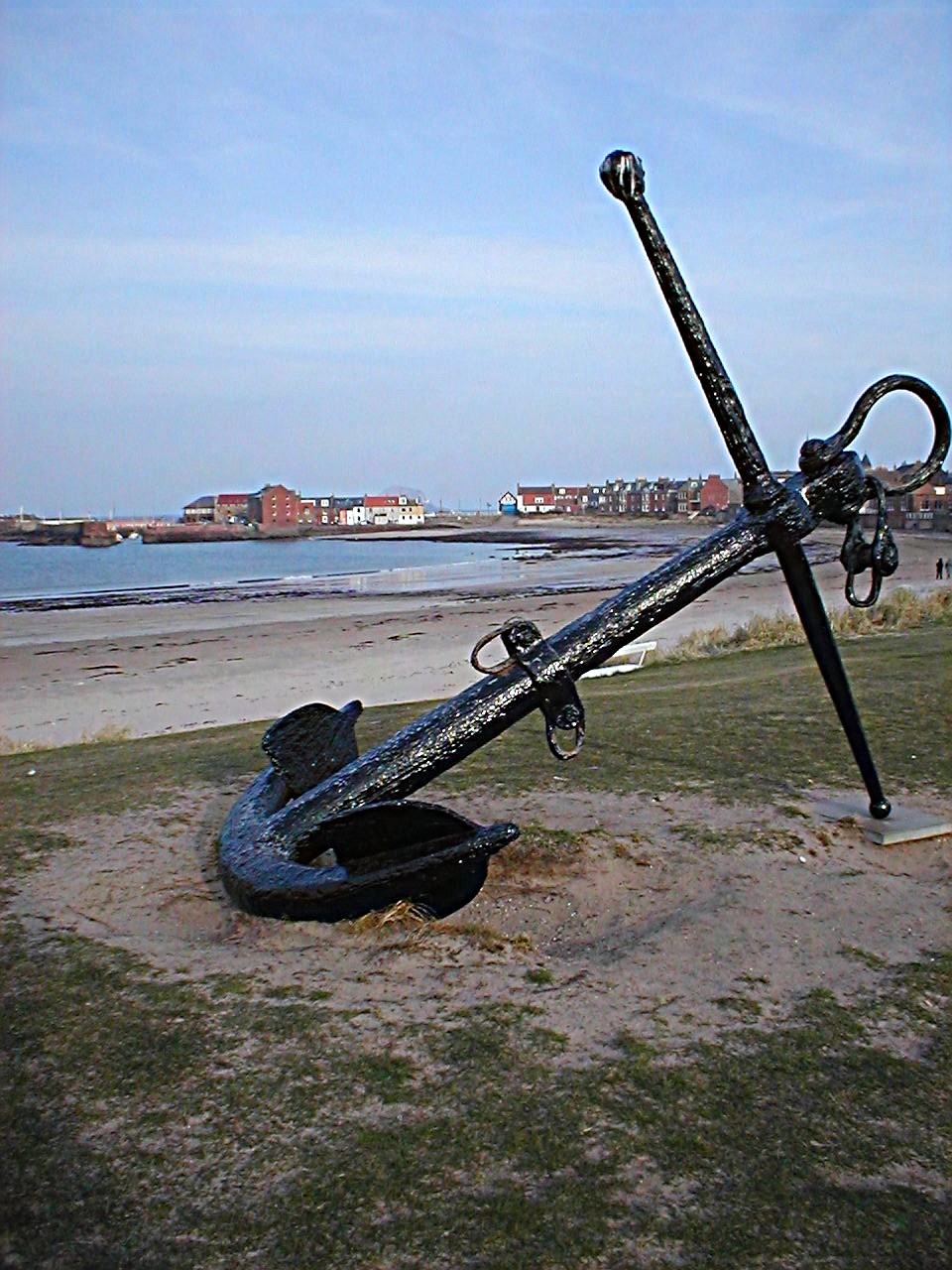
Confidence is the anchor of a writer’s craft. Repeat after me: “I am a writer.” Now say it again. Then repeat this exercise until you believe what you’re saying.

Another way to build confidence is to join a writer’s group, either locally or online.file0001814083365

Your belief in yourself will also improve as you learn about the ocean that is publishing. Like a fisherman trolling unchartered waters, be adventurous—by attending conferences and by subscribing to unfamiliar online and print newsletters and magazines.

There are two reasons to navigate new territory often: first, markets rapidly change, and second, editors and agents repeatedly change positions. The writer with the advantage is the one who stays abreast of people, publications, and trends.

Case in point: recently, a magazine accepted an article of mine (which they had previously rejected) because I re-submitted it when a new editor came on board. I found out about the opportunity through the “market news” section of a writer’s newsletter.

Second–Build Credits

How do you get those all-important first credits? Author Sarah Stockton, says she took two approaches to building her clip file: “First, I targeted online publications that didn’t pay. These are often easier to break into. Secondly, I queried places where I felt I had something to contribute that I felt passionate about, with an idea directly related to their content and an angle that I hadn’t seen from them before.”

Sand your boat often, by reworking old material. Also, don’t forget to revise your new bread several times before casting it on the waters.

Reprints are another way to beef up your resume. After you have a few excellent articles, try selling them over and over again. Each time, you’ll receive a new credit, as well as payment (whether it be in money or in publicity) for old work.

Third—Build Your Craft

Developing your craft takes perseverance, patience and prayer. Picture Noah, slowly putting the ark together under blue skies.Then feel God smiling on you as you obey Him, even when the rest of the world points and laughs.

Other ways to build your craft: attending a writer’s conference every year, entering contests, listening/reading books on areas in which you’re weak, and completing writing courses, whether in person or online.

Now grab that hammer and a few nails and start building your craft. I’ll see you in the water!

Cutting Out the Frivolous Stuff

song sparrow singingLast week, during a series of presentations on writing-related discoveries, which I always make first-year composition students do at the end of the year, one student said, “I learned that writing shorter is harder than writing longer.”

“Why’s that, do you think?” I asked.

He thought before answering.White-crowned-Sparrow

“Because to make something shorter, you have to make all these decisions. Like, what’s important and what to get rid of. And then, after you take stuff out, you have to change other stuff to make it sound right.”

“You mean, you have to revise—like, you know, re-see it,” another student chimed in.

“Yeah. It is like that,” he said. “Like seeing that it could be a different way and still be what I wanted to say. Maybe even better. I never thought of that. I always used to think revision was just fixing stuff.” The two students grinned with that mixture of embarrassment and pride students always have when using the language of the course.White-Throated_Sparrow

That night I led a professional development session for graduate faculty on the subject of assessing final projects.

“Everything students hand in is a draft,” I remarked in passing, “and drafts are hard to grade. If you want your students to revise, you have to trick them into it.”

Field_Sparrow“How?” one professor asked.

“Lots of ways,” I said, “but the most successful way for me is to give maximum word limits on assignments rather than minimum word limits.”

“How does that make them revise?” she persisted.

I knew that being made to write short did force students to revise, but it took me a second to come up with a reason why on the spot. “I guess it’s like when you fill out an online application and have to answer a question in a little box that limits you to only so many characters, including spaces,” I told them. “What you write is always way too long. So you have to keep paring it down, getting rid of unnecessary stuff, often the parts you’re Harris's Sparrowproudest of, so you can get down to what’s essential. And, in the end, it’s not only shorter but better. Or, anyway, I always think it is. In my experience, the same thing happens with students when I give them word limits. I get all these emails, begging me to let them go longer. But I never do. Not one word. So they have to revise. And what they turn in is lots better than what they turn in when they’re just trying to fill pages.”

Everyone wrote that down—the most useful grading takeaway, even though it wouldn’t be relevant until they started building assignments the next semester.

The next day, at an end-of-year luncheon of honors English students, my department chair asked those about to graduate to share the moment they realized they wanted to study English, and two women talked about learning to write short.

lark sparrow“Being forced to cut made my writing so much better,” one said. “I knew how to improve my writing after learning that.”

“I had this revelation that every sentence matters,” said another. “That was the moment for me.”

Finally, yesterday, my novel workshop students were talking about their revision strategies for the three chapters I’d be grading at the end of the semester.

“I’m cutting out a lot of frivolous stuff,” one said. “That’s the main thing I learned in this class: You don’t need half the stuff you write.”Chipping_Sparrow

As always, whenever I have one of these clumps of similar messages, I figured it wasn’t just coincidence—or the more obvious reality that people were saying back to me what I’d been preaching all semester—but the Holy Spirit weighing in on the ssavannah sparrowubject. It seemed strange, though, that the Holy Spirit was interested in revision.

Then it occurred to me that I’m the one who needed the cutting message I’d been preaching. My own novel is a frivolous (and practically unpublishable for a first novel) 130,000 words.

There’s no getting around it, I told myself. You need to cut another 30,000 words.

That doesn’t begin to answer the question—if you’re still wondering—of why cutting words from my pages might interest the Holy Spirit. Perhaps it’s that, as I like to tell my students, revision is a key part of the creative process, and God has always been into that. Separating light from dark, water from land. Fiddling with it, examining it, considering, until it’s good, or very good.

Or maybe God’s interested in revision for the same reason he pays attention to sparrows: namely, all of his creation—birds, us, our minds, words, our little improvement plans—fascinates and delights him.

(PS: To whatever fellow birdlovers are out there, I saw all the sparrows pictured this morning: song, white-crowned, white-throated, field, Harris’s, lark, chipping, and savannah. I feel so blessed!)


10 Tips for Great Research Interviews

10 Tips for Great Research Interviews  

You may have heard the advice “Write what you know.” But what if you want to write about something you don’t know anything about? Find someone who knows. We’ve interviewed modern day shepherds, airline pilots, engineers, trauma physicians, people from other cultures. Each interview is different and can be valuable in providing the authenticity and detail for your writing. Here are a few tips we’ve learned.

  1. Start with relationship. Spend some time connecting with your interviewee. Get to know him or her as a person.1965017_816271478388718_612352803_n
  2. Keep questions open ended. Yes and no questions don’t get you the details you need. Ponder ahead of time what will be the best questions to encourage the interviewee to talk.
  3. Be respectful of boundaries. Let your interviewee determine how much they are comfortable sharing about their personal lives. Don’t push, but be ready to go there with them.
  4. Be prepared. Do your homework; learn as much as you can in advance. Search the Internet or read books about the person. We find that the interviews are more productive if we have already written a first draft of the story or chapter. Then we know what blanks to fill in with our expert.IMG_0374
  5. Don’t be too structured. Some of the most interesting things we’ve learned were not from questions on the list. Sometimes, you don’t know what to ask.
  6.  Don’t send advance questions. For an informal interview it’s best to explore the subject together. Sending advance questions makes the interviewee focus on your questions rather than the subject.
  7. Listen. Sounds obvious but too often we focus on ourselves and what we are going to say or ask next. Stay focused on what your interviewee is revealing.
  8. Record the session. (We use our cell phones.) Take the focus off of note taking and trying to remember every detail. You’ll be thankful later when you listen to the tape. We’ve been amazed to find information on the tape that neither of us remembers the interviewee saying.1965075_10203555232787948_961820612_n
  9. Respect time. Set an amount of time in advance for the interview and let the person know.
  10. Express thanks. Follow up with a note or email of thanks. You can also bring along a book as a thank you, email a few photos you took, or send a copy of the article or book later when it comes out.


Betsy Duffey and Laurie Myers   www.WritingSisters.com

Shepherd Song

Honesty is the Best Policy

SavedbyGracieReaders often thank me for sharing my personal story of battling an anxiety disorder in my memoir Saved by Gracie: How a rough-and-tumble rescue dog dragged me back to health, happiness, and God.

“You’re so brave to have written this,” they say. “I’d be embarrassed to share something so personal.”

Honestly, it never occurred to me that I was being brave in recounting my experience with anxiety. I lost all my privacy boundaries when I gave birth to my third child in a room crowded with medical personnel. Once you’ve had an audience of strangers watch you push a child down the birth canal, there’s not much left that can embarrass you.

Another reason it surprises me to be described as “brave” is that all I’ve done is tell a true story about the ways my head, body, and spirit responded to taking a shelter dog into our home. It’s also true that I didn’t want the dog, but when I realized how the dog was helping me change my life for the better, I immediately wanted to tell that good news to other women who might be suffering with anxiety as I had.

First and foremost, I wanted to share my story to help others. I’d learned something new and valuable, and even though the therapeutic value of animals has been a popular research topic in recent years, I wanted to frame that information in a fresh way that would encourage readers to make that information work for them, too. Basically, I used myself as the proof in the research pudding.

And here’s where a true story encounters craft: it is the writer’s challenge to make the story simultaneously personal AND universal .

We all have experiences that are common to the human condition, yet people relate most deeply to the universal when it becomes intensely personal. Over the years of my writing career, I’ve learned that it’s the writer’s intimate voice and transparency (I’m talking about total honesty here!) that are key to combining the universal and personal. For example, if you tell me you’ve had a traumatic experience, I can nod and say “so have I,” but unless you give me the details of how it personally impacted you, I won’t be looking for similarities in our stories. That means you, as a writer, have to seek out and name the personal aspects of the universal that will engage your readers. You have to dig up the reality – expose the heart and soul – of the experience you want to share.

Make no mistake – digging in your life can be painful for you and those around you. With luck, though, it will be ultimately illuminating and healing, too.

And when you do that with your own story, you give your readers the permission, and hopefully, the courage, they might need to be honest with themselves in their lives. Honesty really is the best policy for a writer, because it’s the key to connecting compellingly with your audience as you make the universal very personal.

How do you approach the universal in your writing?

Crafting a Business Plan

Only a couple weeks ago, I closed the chapter on a significant season in my life – the completion of my first three-book series. I feel as if the last three years of my life have passed in a blur of deadlines, beautiful character adventures, and growing pains. As I celebrate the ending of this season and the potential of the next, I also need to reevaluate what I want this writing gig to look like going forward.

But that’s the thing. It’s more than a writing gig. It’s a business, a ministry. As with all businesses, it requires strategy, planning, and much prayer. When I first began this adventure, I wish someone had told me to look ahead, to dream but to do so in detail. As I reflect on all God has done, I am hitting “pause”–as I pray about contracts and direction and stories–to craft a business plan, one that gives me direction for the years (I hope) that loom with possibility before me.

Kariss Lynch Shakespeare quote

Creating Your Own Business Plan:

1) Craft a mission statement.

What is the purpose of your writing ministry? We all want to reach and impact readers. Be more specific. What unique calling/gifting/direction do you bring to the table?

2) Identify your audience.

If you have worked with publishers or are working to break into the field, you are aware that you must define your audience for your proposals. Be more specific than the age range. Do you write for those who have lost hope? Are your stories for the courageous at heart who want to change the world?

3) Set long-term and short-term goals.

This is where I am crafting financial, spiritual, physical, intellectual, family, social, and career goals. If every area of my life feeds my writing, and I believe it does, then it is important I take all of this into account. I’ve noticed I write better in deadline season when I am taking time to eat healthy and exercise. On the nights I don’t sleep much in favor of finishing a project, my health routine gives me energy to keep pushing. When I don’t set time aside to invest in family and friends or have fun, I write from a drained tank. If I don’t attend at least one conference a year, I miss out on building relationships and gaining valuable training. Goals help me account for these moments, and tackle them with more gusto.

4) Formulate a guideline for the unknown.

I have lingering questions that I want to answer that will help me as this career hopefully grows. Do I want to limit myself to my current genre or do I have other story styles burning on my heart? If so, what do I need to do to incorporate those stories? How do I respond to speaking opportunities? How am I going to interact with readers? How do I answer those who ask my advice on writing? How will I handle endorsements and judging writing competitions? I am working on answers to all these questions. I believe having an idea in place will help me to respond well when these situations arise.

5) Share your vision.

I have a small group of people in my life who will gather to give me feedback on my business plan. They will respond as readers, but they will also respond from a place of knowing my heart. They will be my encouragers in the months and years ahead, my accountability if I get off track, and the ones with wisdom to help me reevaluate this business plan when the need arises. They are the ones who challenged me to identify my direction in the first place.

I am still working to finalize this business plan and would love to hear from you! What goals have you set for your writing career? Do you have a business plan that helps keep you on track, or do you use another method?

7 Surprising Ways to Overcome Writer’s Block

file0001849487704 The words stop flowing and we can become desperate. There could be a deadline looming or just our own daily goals. Writer’s Block – fearful words. How can we overcome it and move forward? Try these tips from the pros:

1. Take a walk.  For me, a long five or six mile walk helps. . .  I find that then thoughts begin to come to me in their quiet way.  — Brenda Ueland

2. Consider a media fast.  I had a half-dozen half-finished manuscripts on my computer, but I couldn’t seem to finish a book . . .  I decided to do a forty-day media fast out of desperation. . . In the process, I found that my writing became a form of praying.  I don’t type on a keyboard; I pray on it.  And by the time I was done, I had completed my first self-published book.  –Mark Batterson

3. Lower your expectations.  I deal with writer’s block by lowering my expectations. I think the trouble starts when you sit down to write and imagine that you will achieve something magical and magnificent—and when you don’t, panic sets in. The solution is never to sit down and imagine that you will achieve something magical and magnificent. Malcolm Gladwell

4. Don’t wait to have it all worked out.  If I waited for perfection, I would never write a word. –Margaret Atwood 

5. Pray. The first thing I do when I am stuck is pray. . .I get on my knees and remind God that this was not my idea, it was His…Then I ask God to show me if there is something He wants to say to prepare me for what He wants me to communicate to our congregation.  I surrender my ideas, my outline and my topic.  Then I just stay in that quiet place until God quiets my heart…Many times I will have a breakthrough thought or idea that brings clarity to my message. — Andy Stanley

6: Chunk it. The secret of getting ahead is getting started. The secret of getting started is breaking your complex overwhelming tasks into small manageable tasks, and then starting on the first one. — Mark Twain

7. Change course.  If you’ve got a writer’s block, you can cure it this evening by stopping whatever you’re writing and doing something else. You picked the wrong subject. — Ray Bradbury

Great ideas from some great writers.  What do you do when you are blocked?

Betsy Duffey and Laurie Myers   www.WritingSisters.com

Tweet to your writer friends:

You need these 7 surprising tips to fight writer’s block. Click to Tweet

The secret of getting ahead is getting started. Click to Tweet

Shepherd Song