Life on the Blank Page: Why I Keep 3 Journals

Life on the Blank Page- Why I Keep 3 Journals

This is a life-as-a-writer post. Or I could say, the life of a creative — that word that encompasses all types of folks who are constantly creating and inventing and pouring out, whose job it is to fill the blank page, the blank screen, or empty air space.

I am in the middle of edits on a project that takes a lot out of me — that turns my brain to mush by the end of the day. I have disciplines that I do to keep the creative part of me exercised and stretched — similar to the months of short hikes I do to prepare for a longer hike in the Grand Canyon. Being in shape doesn’t just happen. Being creative doesn’t just happen either.

Last week I went journal shopping. I’m a three-journal gal. I used to keep one journal, but as my writing life expanded, it became too difficult to find things all crammed in one notebook. These journals each represent a creative discipline for me as a writer.

First, I use a pocket-size journal for hiking that doesn’t weigh a lot or take up much space. It’s about the size of my cell phone. I added some more sketches to the pages this week as I am exploring nature journaling as a way of alert attentiveness.  I don’t consider myself an artist, so drawing stretches my creative muscles in new directions and makes me look at the desert — which I have seen for 30 years — in a new way.

Boojum Tree nature journaling page
Def need work on the birds. The poor white-winged dove looks so very sad. But I like the boojum tree! I like the fact that boojum is from a nonsense poem by Lewis Carroll. What writer wouldn’t want a tree named from their work?

Second, I have a writing journal that is only used for writing prompts — questions that stir creativity. The prompt might be about mashed potatoes, but soon I find myself writing about my grandmother in her kitchen with a pot in her lap filled with spuds and a conversation we had about heaven when I was twelve years old. Writing prompts have a way of bringing me in through the back door of my brain. I am currently using the book Old Friend from Far Away by Natalie Goldberg. Questions in that book include:

  • Tell me everything you know about jello. Ten minutes. Go. (Can’t wait to do that one!!)
  • Tell me a memory associated with a bicycle. The spokes, the wheels, the narrow seat. Go for ten.
  • Tell me about how a relationship ended. Go. Ten minutes.

My final journal is the one I use during quiet times with God and to explore future writing posts and projects. This is the one I was shopping for last week. I wanted the journal lined, bound, and large. None of those wimpy diary-size journals! I had to go to three stores to find something large enough and I found it at Walmart of all places.

Life is wonderfull journal
Note: the flowers are there for photo purposes only.

I love the front: Life is Wonder-full and Beauty-full.  In life’s hard seasons, having my eyes and heart focused on wonder and beauty has proven essential.

So, now you know all about my three journals. 

Even for you non-writers out there, we all need places that fill our souls with wonder and beauty. We all need practices and disciplines that feed the creative side of us.

What are yours?


Lynne Hartke has her first book coming out with Revell in 2017. This post first appeared on her blog at http://www.lynnehartke.com where she writes about courage, beauty, and belonging to a loving God. She and her husband live in Chandler, Arizona, located in the Sonoran Desert, a place where she lugs around at least one journal.

How I boosted my book to 30x more people

ebookI finally bit the bullet. I boosted a post on Facebook.

For years, I’ve seen that annoying little message you get on your author page about paying to boost your posts. Because I’m cheap (and still suspicious of social media’s REAL intent, i.e. who needs to know what I buy, who I connect with, and what I like? Creepy…), I refused to give it a try. If my books can’t make it on their own merits, so be it – I’ll be content with small audiences, extremely limited financial reward, and the personal gratification that I haven’t caved to crass commercialism.

And then last month after I started getting consistent raves about my new thriller “Heaven’s Gate,” I thought, “What the heck. It’s only $20.”

Actually, it ended up being $60, since I decided if I was going to experiment, I wanted to see what a week of boosted posts could do rather than one day, which is what $20 will buy. Knowing that most buyers need to be exposed to a product seven times before they buy (do you know the Rule of Seven?), I figured one day of boosting was throwing away cash, but seven days might just convert into some sales. I can now tell you, without reservation, that $60 worth of boosting on Facebook can go a long way in giving your book exposure and building your audience, and now I can’t wait to give my other books the same treatment.

Here are the numbers from my week-long experiment:

  1. Organic reach peaked at 305 on Day 7, while paid reach was 9045. That’s 30x more people reached than my normal posting! Not only that, but thanks to my OCD tendencies, I checked one last time on Day 10 (remember I only paid for 7 days of boosting) and was happy to see a new total of 9432. The post was still being shared after my paid boosting! Score!
  2. I monitored my book’s print and ebook rankings on my amazon Author Central page (you do have one of these, right?) for the boosting’s duration. By Day 6, my ebook ranking had reached 924 in the Paranormal category after starting on Day 1 at 3366; the biggest jump was from Day 1 to Day 2, which tells me that first burst of posting made an impact that powered the rest of the week. Recalling the Rule of Seven and the impact of repeated impressions, though, I looked again on Day 18, only to find my ebook ranking better than ever at 831!
  3. As for print, my book moved from its initial 76,331 ranking to 8535 on Day 5. Clearly, somebody was paying attention.

Even knowing that rankings are a superficial measure (rankings don’t equal sale units), I decided that post boosting may not be such a bad idea for marketing after all. While the actual sales numbers are still in question, I know for a fact that more people have seen my book’s cover thanks to post boosting than would have otherwise. And that’s one step closer to buying my book.

Have you tried Facebook post boosting? What was your experience?

Writing with Personality for Introverts

Writing With Personality
Five Fresh Starts for the Living

I’ve studied, trained on, and spoken to audiences about human personality for over a quarter of a century now. But one of my favorite ways to use my education is to help my writing friends.

Recently, one of my author pals described her struggle. “I can’t seem to find my motivation. This summer has flown by with my visiting children and grandchildren. By the time they leave, I’m exhausted and don’t feel like doing anything creative.

“Having a recently retired husband under foot isn’t helping either. I’ve tried moving to several different rooms, but the noise of the TV or his honey-do repairs, not to mention his unrequested input or endless questions, disrupt my thoughts. When I write, I need quiet time to reflect, organized space to prepare, and a break from other people. I also need my family to take what I do seriously — most of them don’t think writing is real work.”

My friend is definitely an introvert. And what she was voicing was permission to work according to her intrinsic, soul-deep needs.

I replied, “It’s okay for you to feel this way. Have you told your family how you feel?”

“Not really,” she said with a sigh. “I don’t want to offend them.”

“I understand, but do you realize they may not grasp what they are doing to you?”

“They should.”

“We often assume other people know what our needs are, but the truth is, unless we tell them, few even think about it. One thing you might consider is coming up with an assertive, yet respectful way to let the people in your life know what’s bothering you. For instance, you could say, ‘I think my writing might have caused some confusion. I know most people don’t realize I’m working, especially since I do it from home, even I forget sometimes. But this is part of my job. I hope you understand if I put a few guidelines in place, to hold me accountable, so my work gets done and I meet my deadlines. It might mean I’m not available as much as you are used to.'”

“I could probably do that,” my friend replied.

I chuckled as I remembered when I first created my Writer’s Cave guidelines with my own family and friends. I had imagined all kinds of reactions, but once I shared my plan, they took it in stride and quickly adapted. It freed me from much writing angst.

I commiserated with my friend. “Dealing with your husband is a different matter — since he does live in your home too.”

Her soft laughter had a tinge of nervousness to it.

“Have you tried scheduling yourself in a closed room for a period of time and asked your husband if he could keep the volume down? Have you requested he wait to do repairs or ask questions until your allotted time ends?”

“Well, no.”

“Silencing ear muffs are another great alternative. I’ve got a set you can borrow.”

Her laughter had a relaxed ring this time. “I’ll have to check into those.”

“If neither of those options work, or if it offends your family, then maybe you could find a quiet coffee shop, restaurant, or other location away from home to help you concentrate. One with few people, since company drains your creative juices.

You can honestly tell your family and friends, ‘I won’t be available from this time to this time, I have a writing appointment.’ They don’t need to know the details, or that your appointment is with yourself.”

“I like that last option. Thanks.”

My introverted friend needed emotional support more than anything. She needed permission to be herself, someone drained of creative energy after an extended period of time with other people, even those she loves deeply. She knew what was necessary, but was afraid to act, she needed a third-party voice to set her free.

It must have worked. The last I heard, she was making good progress.

Know Thyself -- SocratesWriting with Personality is helpful for introverts, and their counterparts, extroverts. (I’ll share some insights about the latter next time.) But wherever you fall on the personality spectrum, as Socrates reminds, know yourself, and allow you to be and do as needed — otherwise, you will struggle to get your writing done. Another great writer and natural introvert, Karen Jordan, shared her insider’s perspective recently — it’s a great read, especially if you don’t want to feel alone.

Are you drained or energized by extended periods of time spent with other people?


Of Brussel Sprouts, Broccoli, and Disappointments


OLYMPUS DIGITAL CAMERA

My mother and I didn’t know anything about brussel sprouts the spring we decided to plant them in the family garden, back when I was a girl. We planted an entire row in between the rows of peas and green beans. In the back of the garden we added several rows of tomatoes and pushed cucumber seeds into rounded mounds in the black earth. Mom bordered the garden with zinnias and marigolds and we waited for the fruit of our labors.

We expected the obvious–for the brussel sprouts to appear like broccoli crowns, right up top for all to see.  And because we expected the obvious, we missed the fact that the sprouts were growing.

And growing.

And growing–there under the protecting leaves, hidden from sight.

We finally found them, no longer tender and sweet, but old and bitter. Mom grew up in the Depression, so there was no thought of throwing the brussel sprouts into the compost pit. She boiled them for dinner, where we kids gagged them down with large gulps of fresh milk and tears.

Mom never planted brussel sprouts again.

Which is the danger of disappointments and unfulfilled expectations.

It wasn’t until I moved away from home that I enjoyed the deliciousness of brussel sprouts bathed in olive oil and roasted garlic, an experience I almost missed because of the garden mishap.

This summer I had the grand idea of offering giveaways on my blog during the month of July. I anticipated interest, increased blog traffic, and multiple shares of the posts. Unfortunately broccoli results have yet to materialize. 

But today I boxed up one of the giveaways to mail to a little girl who has brain cancer. I sent another gift to a woman whose husband recently died. She was nominated by a friend for the giveaway. 

Brussel sprouts are growing this summer among the leaves of social media.

So let me ask you:

When things don’t turn out as you hoped, will you continue to plant new ideas? Try new things?

Or will you concentrate so hard looking for broccoli that you miss what may be growing in secret?


Lynne Hartke has her first book coming out with Revell in 2017. She writes about courage, beauty, and belonging to a loving God at http://www.lynnehartke.com. And brussel sprouts. Sometimes she writes about brussel sprouts. She and her husband live in Chandler, Arizona, located in the Sonoran Desert.

7 Tips about the Basic Needs and Stressors of Introverts

Image/karenjordan.netThank you, Jesus—I’m home again!

A few weeks ago, I found myself surrounded by extroverts, enjoying their confidence as they absorbed energy from all who surrounded them at a publishing event for Christian writers.

And all the activity almost sucked the life out of this introvert! I’m still exhausted.

Thankfully, my extrovert travel companion understood the strengths and weaknesses of an introvert, even though I’m sure she tired from dragging me out of my comfort zone.

Ever wondered what makes an introvert tick? I don’t have to look beyond my own mirror to answer that question. So, I hope the following tips help you understand some of the basic needs and stressors of introverts.

1. Personal space energizes introverts. And when we get stressed out, we need to be left alone. Being in crowds drains us, so we often need to find some alone time to recharge our batteries.

2. Extroverts often misunderstand the need for personal space, and introverts tend to be more withdrawn at times. So, they might need to come out of their caves and share their perspective with those who might misinterpret their need for solitude. And sometimes, they might need a little motivation to abandon their comfort zone.

3. Social situations routinely cause grief for introverts, as they struggle with small talk with strangers. They appreciate friends who understand and encourage them in stressful social settings.

4. Networking can frustrate introverts who aren’t prepared for that kind of interaction. Pitching new projects to a publisher at large events can be an overwhelming task for introvert writers. So, practicing their pitches with other writers can boost their confidence.

5. Focus can also challenge introverts since they tend to be distracted in intense environments. They may need to consider taking a few tips about planning schedules and sticking to deadlines from their more organized friends.

6. REST is a basic need for everyone. Facing my own weaknesses proved to be another opportunity to utilize my prayer strategy of REST: Remember, Exalt, Surrender, and Trust, based on Philippians 4:5-7.

. . . The Lord is near. Do not be anxious about anything, but in every situation, by prayer and petition, with thanksgiving, present your requests to God. And the peace of God, which transcends all understanding, will guard your hearts and your minds in Christ Jesus (NIV). (Phil. 4:5-7 NIV)

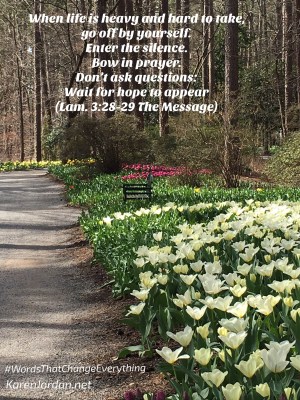
7. Prayer. During my worst moments under the stress of over-stimulating social situations and networking challenges, I searched for some personal space, and put this prayer strategy from Lamentations 3:28-29 into practice: “When life is heavy and hard to take, go off by yourself. Enter the silence. Bow in prayer. Don’t ask questions: Wait for hope to appear” (The Message).

Remembering and focusing on the presence of God enables me to exalt his Word over my circumstances, surrender my weaknesses and burdens to him, and trust him to guard my heart and my mind with his peace.

Are you an introvert, living in an extrovert’s world? What strategies help you when the energy of others is zapping the strength out of you?

And the Tweet goes on…

Red HotA few months ago, I enthused in this space about a book I’d read at my agent’s suggestion. Now I’m going to give you a follow-up, because reading Red Hot Internet Publicity has truly changed my marketing game; unlike a lot of books that sound great and helpful while I’m reading them, RHIP is proving itself to be one of those books that truly make a difference in my career. In other words, its tips WORK and you can actually DO them.

(Or am I the only person on earth who finds it difficult to implement ‘great ideas’ that use apps I can’t understand, or require more financial investment when my writing income is already in the red, or simply involve too many steps to even remember?)

This is what I’ve accomplished since my post “Learning New Marketing Tricks” appeared here two months ago: I’ve more than doubled my Twitter followers from 217 to 500+ by discovering new audiences on this one social network, and my exposure (impressions) has increased tenfold!

twitter-bird-light-bgs.pngThe route I’ve taken involves the RHIP suggestion to engage in group chats, which has introduced me to new contacts with similar interests. Even just a few Tweets back and forth produce new followers, and sometimes that generates ideas for writing posts on other networks. Perhaps even more significant is my new habit of scrolling every day through the topics that are currently trending on Twitter. I find a few to which I can contribute original Tweets, and then comment on others in that stream. Again, it only takes a few minutes, but it always generates new followers.

Finally, I’m insistent on using hashtags with every Tweet I make, and the more hashtags, the more likely it is that I’ll reach into new markets. Before I started focusing on Twitter, my tweeting impact was dismal – maybe making only a couple hundred impressions (read that as ‘your name showing up in the Twitter universe’) a week. These days, I’m getting a thousand impressions a day – that’s a lot of times my name is showing up in the Twitter stream, and that connects me to large groups of people I might otherwise not have encountered. Some of those people have now subscribed to my newsletter and bought my books; by following them back, I’ve found more threads of conversation and topics in which I can engage. Throughout it all, I constantly remind myself of my brand – of my unique voice – and make sure my Tweets reflect that. So far, I’m delighted with the results.

Hourglass --- Image by © Royalty-Free/Corbis
Hourglass — Image by © Royalty-Free/Corbis

So delighted, in fact, that I’m thinking I should double my time on Twitter…from 30 minutes a day to 60 minutes.

That’s right – 30 minutes a day have yielded me a breakthrough in exposure, and since getting my name and brand ‘out there’ is so important for making sales, those 30 minutes pack more of a marketing wallop than any other 30-minute marketing I can do.

Isn’t it great when something you try really works?

What Are You Afraid to Write?

Fear-Woman

I stumbled into the creative writing class fresh out of cancer treatment, a 48-year-old woman uncertain of her future. I had vague ideas about writing, but I was not even sure who I was anymore.

Cancer had taken all my sentences and scrambled my story.

I didn’t introduce myself as a pastor’s wife. I was Lynne (with an e) on a level playing field with the other college students.

I soon discovered that wearing jeans and a t-shirt like everyone else in the room couldn’t quite cover my wounds. The students wrote of true love and vampires and distant galaxies far, far away and I stared at blank pages. They were 18 and 19. All passion and future.

I was scars. Battle-fatigued. Dried up. Old.

The college professor—a reader of dark stories—disliked pat phrases, cliches, and the status quo. As he stood in front of the class one day, he said:

“The purpose of writing is to put on paper what people cannot say… or are afraid to say.”

Suddenly I discovered I had words. There were lots of things I was afraid to say.

Would the cancer come back? Would I live to see my children grow up? What is the purpose of it all anyway? Where is God?

Maybe that is why I didn’t introduce myself as the pastor’s wife, a careful woman, who would never admit the tumult of doubt, pain, and questions.

So many questions.

I soon realized other students were busy writing too. Apparently I wasn’t the only one with things she was afraid to say.

After writing for ten minutes, we were invited to share what was on our pages.

A heavy-set young man offered to go first and shared about his heroin addiction. A young woman shared about a sexual assault. Another shared about a miscarriage. Another the death of her brother. Another his parents’ divorce.

The readers stepped cautiously into the full noonday sun, all squinty-eyed, with scrunched up faces, unsure, after living in silence for so long, of the reception in the light of day.

As we each emerged, we discovered something unexpected: we were no longer alone. 

Writing is not about life in the suburbs and two perfect children and happily ever after. Ho hum. Pass the butter.

Writing—even from a Christian perspective—is about scars. Questions. Pain. Fear. Redemption is there, but not without struggle.

What are you afraid to write?

Lynne Hartke has a memoir coming out with Revell in 2017. She writes about courage, beauty and belonging at http://www.lynnehartke.com.

7 Ways Writers Can Find an Exclusive Voice

It’s one of the best compliments I receive from readers. “I loved your book. I could hear you encouraging me as I read. It felt like we were talking over lunch.”

Unique. Transparent. Courageous. Authentic. Fresh. Today’s most popular writing voices are often identified by these descriptors. But how do you tap into the exclusive inflections that showcase your authentic self on the page?Grandpa and Granddaughter

Recently, while watching my nine-month-old granddaughter amuse herself by practicing her newly discovered babble, I thought about a writer’s struggle to speak on paper. In the infancy of our career, we could learn a lot from babies about speaking in an identifiable way. And if we relax and learn to amuse ourselves in the process, we’ll likely find our voice faster.

Most of us need help understanding our voice. But if you follow the seven steps listed below, I can assure you, very soon, you’ll relax into the thrill of conversational-style writing.

  1. Karen Jordan author of Words That Change EverythingWrite to your best friend, parent, sibling, spouse, or child. Someone you wouldn’t hold back with. Last month, I rode to and from the Advanced Writers and Speakers Association Conference, (AWSA), and Christian Booksellers Association, (CBA/ICRS), expo with my author friend, Karen Jordan. One of the things I love about her new book, Words That Change Everything, is her transparent way of writing. Like me, she often envisions a specific person when writing her words.
  2. Imagine your ideal reader. Then, write to them, and only them. Writing expert Jeff Goins says, “My ideal reader is smart. He has a sense of humor, a short attention span, and is pretty savvy when it comes to technology and pop culture. He’s sarcastic and fun, but doesn’t like to waste time. And he loves pizza.”
  3. Ask yourself, What do I like to read? Spend some time looking closely at the books, articles, and blogs you are drawn to. What are their similarities and differences? What is the personality of the writer?
  4. Review your recent writing, and ask yourself, Is this how I talk?
  5. Interview some of your readers. Ask them, “What does my writing voice sound like to you?” List the answers you receive, and ask yourself, Are they hearing the real me through my words?
  6. Don’t start your project/page/chapter by thinking about writing for publication; at first, simply write it for yourself. Free-write without pressure or hindrance — you can always trash it later. But for now, allow your mind to run unfettered and your fingers to type unbound. The gems that shine through your free expression may surprise you, and will lend to freshness in your voice.
  7. Ask yourself, If I knew I had thirty days to live, is the message I’m sharing coming through in its purest state? Is this what I would want to say to the world through my last breaths, and how I would want to express it?

Getting Through What You Can't Get Over Book CoverRemoving our writing masks takes intentional effort. When I wrote Getting Through What You Can’t Get Over, I left puddles of emotional blood on many pages. However, I knew readers needed me to do it — our creative endeavors depend on reaching into our souls to thrust our true selves onto the page. When we do, readers feel like they know us personally, and want to draw nearer. Loyal fans are engaged when they can recognize our projects, without seeing our names.

Can you hear my writing voice in this article? How have you learned to write from your authentic writing voice?

10 Tips For Writing an Effective Query Letter…

10 query tips again

Whether you’re pitching an article or submitting a book proposal, your query letter—or your cover letter—needs to convince a publisher to keep reading. As you’re writing, remember that the reader will be tempted to check out and check Facebook. It’s your job to grab and keep a reader’s attention!

1. An effective query letter is concise.

Demonstrate you’re an effective communicator with the efficient use of words. (1 page!)

2. An effective query letter states your intention.

Be clear, up front, whether you’re pitching an article or looking for a publisher.

3. An effective query letter is personal.

Address your letter to a particular person. Has he or she represented or published something similar to your project? Make a meaningful connection with the recipient.

4. An effective query letter clearly identifies your premise.

What is the one thing this book or article aims to do? Clearly identify the singular unifying thesis.

5. An effective query letter identifies a reader’s felt need.

Why should this be published? What need does it meet? Who has this need? How will reader be helped?

6. An effective query letter captures and holds a reader’s attention.

Hook reader’s attention with colorful anecdote. Then, work to keep it.

7. An effective query letter communicates your competence.

Highlight the elements of your bio or resume most relevant to this project.

8. An effective query letter pulses with your passion.

Demonstrate your enthusiasm for this project.

9. An effective query letter balances confidence with humility.

Thank the reader for her/his time and offer your availability to discuss project further. Demonstrate humility and teachability.

10. An effective query letter is error-free.

It’s one page. Be fastidious.

Cheering you on,
Margot

Surviving the Valley

You hear a lot on the writing journey that it’s filled with highs and lows—probably more so in publishing because it’s rapidly changing and I personally wouldn’t consider any part of the industry stable or predictable.

valley-of-fire-1390258_1920The problem is the valley is hard. What exactly do you do? Do you give up writing? How do you readjust to keep your writing career moving forward when seemingly no one wants the words you’re putting on the page?
My writing valley (really—the deep dark hole of despair) started after my first trilogy was published. I worked really hard marketing those books, had great reviews, and two out of three of the books were each nominated for multiple awards. I was even told by my publisher that I was (at one point) their second-bestselling fiction author.

I thought there was no way my next proposal wouldn’t be picked up—by somebody. Well, it wasn’t and to be honest it put me in a psychological funk. I was pretty convinced that my envisioned bestselling author status dreams were rapidly crumbling in front of my eyes.

I’ve come through my first major valley (I’m sure one of many to come) and I thought I’d share what I did to survive it without throwing my writing career in the trash and lighting it on fire.

  1. Grieve. It’s okay to be sad about it. The writing life is unpredictable—even that’s a pretty generous understatement. Your writing life didn’t go as planned and it’s hard to readjust dreams sometime—but do readjust.
  2. Help other authors. Help them promote their books. Read books for endorsement. Review novels. Keep your name in the reader’s mind by having your name on their books.
  3. Stay active on social media. Even if you’re not publishing, keep engaging with your readers and other authors.
  4. Keep writing and learning the writing craft. Above all else—don’t stop writing. Journal. Blog. Write a new book proposal. Use this time to brush up on the areas of your writing that aren’t strong. Read those numerous writing craft books that have been piling up beside your bed (come on, I know you have them!) Learn those pesky computer things you’ve been putting off. Scrivner. Newsletter distribution sites. Take an on-line writing course. Even James Patterson has one now that’s very reasonably priced.
  5. Write outside your genre. During my valley, an editor from Guideposts reached out to me and asked me to audition for a cozy mystery series they were putting together. Hmm. Cozy mystery? I write thrillers. Straight up thrillers. I honestly didn’t think I could write gentle enough for a cozy mystery, but what else was I really doing? So I tried it. My first submission, well, you could probably predict the feedback I received. Too dark. The heroine’s not cheery enough. By the way, this surprised no one that knew me. But I resubmitted—and they loved it! And then the series didn’t move forward. I auditioned for a different Guideposts series and washed out again. Maybe cozy mystery wasn’t for me, but it did prove I could write something other than thrillers and I built bridges to editors at Guideposts even if they didn’t take me on for those projects.
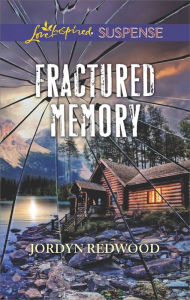
  6. Fractured MemoryListen to God’s nudgings. Looking back with perfect vision, I felt that God used the Guideposts experience to get me to write outside my comfort zone. During this process, I started thinking about a contest called Blurb to Book that Love Inspired was hosting. Never did I imagine I would write for them. I didn’t think I was a good fit, but I found myself obsessing about this contest to the point where I couldn’t sleep. So I entered, and I ended up winning a contract for Fractured Memory, my novel releasing this month from Love Inspired Suspense. Suddenly, I was clawing my way out of that dark writing well.
  7. Go indie. In this writing age, there is literally no reason to not have content out for readers. Don’t quit your day job and scrap and save every penny you can to hire a good editor, proofreader, and book cover designer. I do say this with some caution—be sure you put out a good book! Don’t sabotage yourself into another pit.

Overall, take the valley as a place that can provide rest, rejuvenation, and growth. Perhaps you will need to go back to a paying job or postpone the plans that you had of quitting or reducing your hours. Just know that the valley is survivable and it doesn’t have to mean the demise of your writing career.

Tell me, how have you survived low points in your writing career?