An Author Needs A Web Presence

One of the first marketing tips a writer is given is to make sure she has a web presence–and do it before she’s  published.

Three years before my publishing contract, I created a blog and used it as my author site. For the most part, I was quite happy with it. I updated the site on a monthly basis, along with a newsletter reminder, and had formed a nice reader base, so it served me well. When I received my contract from Zondervan, however, I realized I wanted more. I had two choices–pay someone to build a website, or do it myself.

So began my journey. I began visiting author sites and kept track of those I liked best, paying attention to colors, layout schemes, page descriptions, and author photos. I also studied web designer sites and their client portfolios. For learning purposes, my favorite sites were:

.

From there, I requested price quotes. And that’s when my enthusiasm began to waver. Some of the designers were charging over two-thousand dollars–and I’m sure worth every penny, as their client pages were gorgeous! To add to my dilemma, I’d heard it said that your website must look professional–an outward reflection of who you are as an author (or in other words, not cheap & dowdy). Well that’s great, if you have the money . . . but this gal from Kansas didn’t have that kind of money to spend.

With a sigh, I began searching for less expensive alternatives. I considered updating my blog. Blogs are free, and I already knew how to manage them. But I really wanted a new look. So I set my chin, determined to figure out a way to make it work.

That’s when I discovered a host program called Homestead. Several of my author friends used the program and were quite happy with it. I began studying the tutorial and realized I could create an author site with nearly all the functions I’d requested of the designers–and for a smidgen of the price.

Of course, I would have to design the pages myself–which would take time and creativity. Fortunately, Homestead’s design program has an easy learning curve, and it turned out to be quite fun. Plus, I had the added advantage of being able to update my site whenever I wanted–an option I might not have had if I’d paid a designer. The company also offers a free trial period, to make sure it fits your needs. After 2 weeks, I’d designed a Website that was a reflection of who I am as an author.

Check it out here.

I went into this venture desiring the best, settling for less, and being quite satisfied with the end result.
For those who enjoy the creative aspects of web design (and who are working with a limited budget) this may be a nice option for you, too. Next  time, I’ll visit with you about publicity photos. Until then, enjoy the moments  . . .

Are You Ready For A One-Star Review?

It’s no fun getting a one-star review on Amazon.  What’s worse?  Having your 10-year-old son read it in front of you.

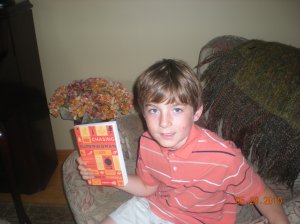
When Nick looked up, he was fighting the tears.  Trying to stay strong.  Trying to act like it didn’t matter.

Then he gave his own critique.

“You know, Mom, some of this is probably true.  But, you know what really upsets me?  She didn’t criticize your book.  She criticized you.  And she doesn’t even know you.”

Like Nick, I was fighting the tears.  Trying to stay strong.  Trying to act like it didn’t matter.

But public criticism is a big deal.  And first-time authors are never prepared.  I wasn’t. 

Now, at this point in the blog, I’m supposed to give you the magic formula.  You know, the three-step plan to prepare you for a public flogging.  The things I wish I knew.  Wish I did.  Want you to know.  Then, you’ll walk away with some value added, and I can bask in the comments.

But I’m not going to do that. 

Don’t get me wrong.  If I had a secret sauce I would probably share it.  Heck, I’d probably write another book and maybe even make some money off of it.  But since that’s not in the plans (and Rachelle would probably give me a hard time about platform), the best I can do is share my story and let you draw your own conclusions.

Here’s how it works.  When you’re an author, you are supposed to actually say something.  If you’re lucky enough to get people to read what you have to say, some people may actually like it.  Others won’t. 

Certain gluttons for punishment, like me, end up writing memoirs.  So if readers don’t like our story, it means they don’t like us.  Plain and simple. 

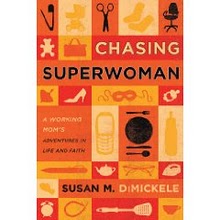
In my case, Chasing Superwoman is a very personal story.  It’s my story about my struggles (and failures) being a working mother who admits she is trying to do too much.  And while I love Jesus madly, I don’t always act like it.  This apparently offended a few readers who told me both publicly and privately that I should really set my priorities straight, act more like a “Christian” and hang up my “worldly” ambition.

Sure, I could feel sorry for myself.  I don’t deserve the criticism.  It’s not fair.  These readers haven’t met me (or my darling children!).

But let’s face it.  I kind of asked for it.   Didn’t I?

When we tell our stories, we put ourselves out there.  We make it personal.  We pour out our lives on paper, give people loaded guns, and yell “shoot”! 

Which means we have no business complaining about it. 

Now, if you’re a fiction author, you’re thinking, “What does this have to do with me?  I write fiction.  It’s not my story.” 

Think again. 

We all know deep down that your first novel is secretly autobiographical and that all the characters are based on your family and friends.  So when people criticize your book, you are equally going to feel like they are criticizing you.  Trust me.

The good news?  We not only live through it, we become stronger.  I promise.  (I’m going to blog about that next month.)

For now, just know to expect it.  And don’t complain about it, ok?

Aspiring authors, are you ready for a one-star review?  Old-timers, what’s your advice?  And how do you protect those closest to you — like your family — in the process? 


My First Rejection: the Twenty Year Ache

I received my first manuscript request in fourth grade.

My teacher invited me and another student to write a short story. The prize for the winning submission was breathtaking: a trip to a young writer’s workshop, where we would learn from real writers and hobnob with kids who, like me, dreamed secret stories deep in our young hearts.

For a ten year old, this was a once in a lifetime opportunity. I poured myself into my story, sparing no imaginative fancy. I don’t remember many details, only that it featured talking animals, a charging knight, and puppy love romance. I thought it was spectacular, one of a kind. I submitted my story and waited for the happy news.

A few days later, the teacher called me to her desk. Her soft, sympathetic voice set my knees to trembling. Why did she sound sad? Didn’t she have good news to deliver? “I’m sorry,” she said.  She’d chosen the other student’s story, a vignette about a visit to grandma’s house.

Oh, that rejection hurt. I cast green eyes at the winner and felt sick the day he attended the workshop. While he worked with grown-up writers, I solved math problems and filled out worksheets, just like every other school day.

If I’d been a stronger, more self-assured child, I might have pondered that grandma story. I might have learned the first adage of beginning writers: “write what you know”. I might have considered the fact that readers can relate to a visit to grandma’s, but no one can relate to talking ducks, fanciful knights, and puppy love. . .all in a single-page story.

I might have, but I didn’t. Instead, my young writer’s heart sported a big, throbbing bruise. But I didn’t talk about my writing, not to anyone.  So I came to my own conclusion: I wasn’t good enough. And that was that.

I couldn’t stop writing, though. I wrote poems and journal entries, short stories and personal narratives. I wrote frantically, then tore my words to shreds. Sometime I tucked my writing under my bed or in pages of childhood books, never to be seen again, even by me.

Meanwhile, I learned to deliver what my teachers wanted. An essay with a topic sentence and three paragraphs? Done. A summary of The Grapes of Wrath? Done. I earned good grades, but protected my writer’s heart with layers of bricks and barbed wire constructed from that fourth grade rejection.

I protected too dearly, and finally stopped writing all together. For twenty years I wrote nothing but grocery lists until, a few years ago, the writing exploded out of me with all the force of a long-dormant volcano.

Predictably, I still face rejection on this road to publication. But I don’t hide my words or tear them up anymore. I expect the hurt of rejection. I even embrace it, if I can. Because I understand now: the best stories come from bruised and throbbing hearts that don’t hide, don’t shred, and refuse to give up.

The honest stain of truth

Professor looked like Jabba the Hut, jowls of  flesh hanging over the collar of his shirt. He watched, smirking, as fellow co-eds and I jockeyed for seats around the long conference table, Professor’s preferred room arrangement for this, our first college creative writing class.

Until I met Professor, I could always count on my writing to please teachers and professors. But assignment after assignment came back with haphazard red-pen scratches. I imagined Professor held my paper for a brief moment before tossing it aside.

Professor enjoyed two things: making students cry and picking favorites. I landed in the first group, and was left out of the second like a scrawny girl in a middle school dodge ball gym class.

The class favorites wrote about sex, of course, and they wrote about it often. Though I lamented my mediocre scores, I refused to write about something so sacred just for him.

One fateful morning, my alarm clock malfunctioned and I was late for Professor’s class. When I arrived, he stopped class and laid into me with a barrage of insults. On and on he spat about how lazy, irresponsible and stupid I was, daring to enter his class late. Too hurt to hold back tears but too proud to leave, I stayed for the whole class.

My notebook was a soggy mess.

That day, I resolved to please Professor–if not shock the hell out of him–with my writing.

And I did.

I wrote a short story full of violence and deceit, sex and betrayal, blood and fine champagne.

The story disgusted me.

Professor loved it.

I hated Professor for a long time after that.

Years later, I realized my sordid short story paralleled scars of abuse from my childhood. The rage I felt toward Professor was a pivotal breakthrough from flowery, Pollyannic prose, and the beginning of my journey of writing hard, writing real and learning to write well.

I can’t say I agree with Professors tactics.

But I think I understand, now, what he was trying to do.

See, good writing involves daring to go to deep and frightening places. Like John Coffey–the man who breathed light and life into dead things in The Green Mile–hearts come alive when we breathe into still and long-forgotten places.

Words become life when writers allow the pen to pull them places no one else wants to go.

Like leper colonies, places in the soul exist where fear hangs like shadows, veiling what we don’t understand and shielding us from disease and pain. And yet, the only way to be real and alive is to allow the pen to touch diseased and painful places.

It is the unsought job of the writer to burst through the gates of leper colonies . . . to run to those who are bandaged and losing limbs . . . to embrace those who smell like rotting flesh . . . and to caress touch-starved hearts until they stop trembling and maybe, just maybe, believe in life again.

Good writers learn to distinguish the honest stain of truth from pencil scratches on paper.

Good writers learn the events in life which enslave us are ultimately the ones which set us free.

Good writers endure hours–even days–of depression that come when the pen finds fragile, tender places.

Good writers touch ugly, diseased places, in order to touch ugly, diseased places of others.

Good writers allow the pen to pull them.

To set even one person free.

What about you? How have you learned to write more deeply? Has a person, teacher, mentor or friend influenced the deep, true pull of your pen? Do you believe words have the power to set people free?

A Writer’s Life: Surviving the Fire Swamp

Rodents of Unusual Size? I don't believe they exist...

After hanging out at the Cliffs of Insanity, I’m doing a bit of rumor control today before negativity infiltrates the Water Cooler crowd. The report is this: “We’ll never survive.”

Survive what, you ask? The journey–wherever it takes us–along the writing road.

Never survive? To quote Westley, our hero from The Princess Bride, when he faced the Fire Swamp: “Nonsense.”

Many writers survive–even thrive. Sure, at times the Brute Squad hammers our egos, but consider a pounding an occupational hazard. Westley and Buttercup conquered the flame spurt, the lightning sand and Rodents of Unusual Size (R.O.U.S.’s). Like our hero and heroine, writers must overcome terrors specific to the writing world.

  • Expect the expected. Flame spurts were predictable. Listen for the popping noise, move, and you won’t get burned. Hang around the writing world long enough and you’ll recognize probable pitfalls. Listen for oft-repeated refrains like:
  1. Show don’t tell. (Unless you’re Erin Healy, who’s teaching a class at ACFW titled “Sometimes It’s Better to Tell than Show.” I don’t know about you, but I’m intrigued.)
  2. Know the rules before breaking the rules. (See bullet #1.)
  3. Writers need a platform. (Or a brand. Or, at the very least, an engaging plot.)
  • Don’t travel alone. You don’t survive a solo encounter with lightning sand. Buttercup would have suffered a tragic death but for Westley’s daring dive into the sand to rescue her. And despite writer Jessamyn West’s oft-quoted assertion that “Writing is a solitary occupation,” I’m thankful for my writing comrades. They’ve saved me from death by over-writing. Death by over-editing. Death by over-thinking why I decided ever to set foot on the writing road to begin with.
  • Realize the reports may be true. I’ll disappoint some of you by not drawing an anology between R.O.U.S.’s and editors. Or agents. Sorry, not going there. (I’m an editor too, after all.) Remember Westley’s response when Buttercup asked about R.O.U.S.’s? He said: “I don’t think they exist.” And right after that–OOOF! An R.O.U.S. took him down. We’d like to think we’re exempt from the tough times writers face: Bad reviews. Low sales. Dissatisfaction with critique groups. Let me be frank: Ignorance isn’t bliss when it comes to R.O.U.S.’s in the Fire Swamp or very real problems along the writing road. Saying “It ain’t going to happen to me” only accomplishes one thing: You’re unprepared when low sales take you out at the knees.Or when your crit group pummels your work-in-progress (WIP). Or when your elevator pitch plummets to the basement.

What about you? Any survival techniques you’d care to share with the rest of the group gathered ’round the Water Cooler today?

Post Author: Beth K. Vogt

Beth K. Vogt is a non-fiction author and editor who said she’d never write fiction. She’s the wife of an air force physician (now in solo practice) who said she’d never marry a doctor—or anyone in the military. She’s a mom of four who said she’d never have kids. She’s discovered that God’s best often waits behind the doors marked “Never.” She writes contemporary romance because she believes there’s more to happily ever after than the fairy tales tell us.

Celebrate!

Let's all celebrate! (Pic by Photobunny)

Today is both my birthday and my agent, Rachelle Gardner’s birthday. Reason enough to start a party!

As if that weren’t enough, as a bonus to really get in the mood to celebrate I have a few words of wisdom from Rachelle about building a career rather than just selling a book.

I was one of Rachelle’s first clients and right from the start I knew there was the potential for something special. It started with the way Rachelle chooses her clients, the writers.

Rachelle has never been afraid to take on a new author. She now has about 50 clients, 90 percent of whom are new authors, which says something wonderful about her approach to the publishing business. Her intention is to build a strong roster of credible writers rather than make the quick sale. That takes time and talent on both the author and the agent’s part and can be just as rare in an agent as it is in a writer.

“It’s great for me because as agents go, I’m still one of the newer agents, coming up on four years, and it’s kind of neat for me to help build writers from the ground up,” said Rachelle. “Now, keep in mind, I’m making very intentional decisions,” she added, as she looks for writers who have something to say and are willing to work with her.

I’ve had agents before, good agents who quickly sold my work but I’d never had anyone speak to me in terms of a career. Not only in general terms but specific steps I could take if I was interested in making a decent living. Rachelle was doing that from the start even while we were talking about the project at hand. She was taking the long view of me as a writer.

That approach was going to take more work and a lot more patience but has the potential to payoff with steadily rising book sales.

That’s like gold in this business. Continue reading “Celebrate!”

Just do (aka write) it!

When I was a teen, I had a habit of using the words “I’ll try” often. In my teenage mind, saying this was non-committal and got me out of stuff.

Mom: “Krista, clean your room.”

Krista: “Okay, I’ll try to get it done tonight.”

If I didn’t… oh, well. I tried. Just got busy and wasn’t able to finish. Shucks….

I remember at one point, my to-be-husband and I were talking about something (I don’t recall what now) and I responded with the reply, “Well, I guess I’ll try.”

It is his response that I DO remember.

“Don’t try, Krista. Just do it.”

I then realized how much my “I’ll try” excuse was just that. A big honkin’ excuse for mediocrity. A way to not feel so bad when I didn’t succeed. Because at least I tried, right?

Now don’t get me wrong. Trying is a GOOD THING. Too many people drag their feet and never TRY something because they fear failure or are just too dadgum lazy.

But that wasn’t me. My trying was only an excuse.

I’ve realized lately that “trying” has crept into my writing. “I’ll try to get some writing time in…” and then time just floats away like a helium balloon you give your kid outside and expect them to actually NOT let go of. At the end of the day, little writing done, I will look back and say, “Whoops. Well, I tried. I’ll try again tomorrow.”

At some point, if we’re going to be serious writers, we have to do more than just try. We have to glue ourselves to the chair, duct tape our wrists to the keyboard, and just WRITE.

If you were running a business (which if you are a writer, YOU ARE!) would you tell your customer, “Well, I tried to _________ but just got busy. Maybe tomorrow…?”

There will always be distractions. Other things to do. Kids to take care of. And sometimes those things DO take priority.

My youngest of four daughters has spent almost the last year in the hospital, and after several failed open heart surgeries and three very long months of waiting, she received a heart transplant in April. She’s been in the hospital 4 times again since May after her first 10 month hospital stay. Um, priority? YES. I wrote VERY little this past year.

But even as crazy as my life is now with meds 4 times a day, vitals to take, a Gtube to feed through, oxygen to manage, and a billion and one doctor’s visits, if I’m gonna be serious about this writing thing, I gotta stop just trying to write.

I have to just do it.

Because she’s home, and if I don’t get back to it now, I might as well quit. And quitting is NOT an option.

Tips for “Just doing it”

Enlist the help of your family. That’s what I have done. When my hubby is home, he will take over for an hour or two so I can hunker down at the computer.

Take advantage of even the little times. A few weeks ago, between physical therapy and transplant clinic appointments, Annabelle and I parked ourselves in Panera near the hospital. She napped while Mommy wrote for an hour! I wrote maybe 500 words, but it was something. And that something counts!

Set a schedule. SO many people do this successfully. I’m not one of those thus far, but I’m working toward it! Having a set time to write not only makes you honor your writing commitment like a professional, but it also helps you to act the part of a time managing business professional too.

Set goals. Some have a daily word count goal. Others have a weekly goal, or maybe even a month goal. Still others just have a goal related to time, say, spending an hour a day. Or maybe you’re editing and it’s to edit a chapter a day. Whatever your pleasure, set a goal, high enough that you have to work at it, but not too high that it’s unattainable. (i.e. no 100 words a week… but no 100,000 words a week either!!)

How do you carve out your writing time? Any tips to making yourself “just do it” even when life could easily take over? What are some excuses YOU have made?

The Writer’s Life: On the Edge of the Cliffs of Insanity

BeingThe Cliffs of Insanity a writer can make you crazy.

Think about it:

  • Your literary heritage? A long line of creative alcoholics and drug users: Ernest Hemingway. O. Henry. Tennessee Williams. Dorothy Parker. Edgar Allen Poe.
  • Betting your life on a maybe, dependent on the kindness of others–agents, editors, publishers–for your success. And, really, their decisions have nothing to do with kindness.
  • Balancing your hopes on the seesaw of contradiction: Write your passion. Write what the market wants.
  • Hearing voices. The fictitious ones in your head that you tell what to do–and then you wreak havoc on them when they don’t. Meanwhile, the ever-present voices in the real world–your boss, your spouse, your kids–demand you focus on the here and now. The business meeting. The bills. The moody pre-teen inhabiting your daughter’s body.
  • Facing unending emotional upheaval. Waiting. Rejections. The mixture of joy and jealousy when a friend earns “the call.” (Not that you’d ever admit to even a passing acquaintance with the green-eyed monster. Inconceivable.)

Being a writer can push you to consider changing your name to Poe or Hemingway. The craziest part? You chose this life. You’re committed to this insanity. Here are a few suggestions for managing the madness:

  • Pick your mentors wisely. Just because writing drove others to indulge in mind-altering escapes doesn’t mean you must. I admire my mentors for their lifestyle choices, not just their writing skills.
  • Don’t let all your dreams be based on maybes. I have limited control over my success as a writer. Writing, however, is not all of my life. I’m pursuing other dreams with both short and long-term goals.
  • Choose between your passion and writing for the market. Or not. Maybe you’ll be the lucky author who hits the market when your passions collide with what “they” want. (Romantic-Amish-Vampire-Time-Travel-Steampunk-with-a-moral, anyone?)
  • Jump off the seesaw. The whole “balancing the writing world with the real world” challenge? I may never master that. Sometimes my mind seems full of shrieking eels, all screaming, “If only these people (husband, kids, friends) would leave me alone, I could accomplish the more important goals!” Then I know it’s time to shut down my computer and connect with family.
  • Admit you experience emotions. If emotions are good for our fictional characters, why are they bad for us? Sometimes we’re conflicted: over-the-moon-happy for our friend who landed a contract and also disappointed we’re not the one signing on the dotted line. That’s reality.

I’m curious: Am I the only writer pushed to the edge of the Cliffs of Insanity? How do you keep yourself from leaping off? (And can anyone tell me where the Cliffs of Insanity exist?)  ;o)

Post Author: Beth K. Vogt

Beth K. Vogt is a non-fiction author and editor who said she’d never write fiction. She’s the wife of an air force physician (now in solo practice) who said she’d never marry a doctor—or anyone in the military. She’s a mom of four who said she’d never have kids. She’s discovered that God’s best often waits behind the doors marked “Never.” She writes contemporary romance because she believes there’s more to happily ever after than the fairy tales tell us.

The Story Of Her Life

Have you ever read a book that caused you to take a risk, accept a challenge, or—as in my case—plan a parade? Donald Miller and his book, A Million Miles In A Thousand Years, inspired me to help my dying mother accept her story’s starring role.


“Look what I’ve got for you, Mom,” I say, not knowing if she’ll like the Happy Birthday banner, replete with pink and purple butterflies, that I hope to hang at ceiling level in her nursing home room.

I have no idea whether my siblings and I will be able to give Mom a wonderful celebration or not. So much depends on her, and the truth is that for the past few years, she often doesn’t want to be the main character in her own narrative.

But this is her life, her one true story. These are the only memories she gets to make with her family. The only memories we have a chance, at this late date, to make with her.

“I love it,” she says.

I am more than surprised. I climb onto her desk, then step even higher onto her dresser to thumbtack the banner across the top of the wall. She smiles and I think This day could turn out to be amazing.

We plan to scoot Mom in her wheelchair across the busy road to the Mexican restaurant. She’s been looking forward to the guacamole and the Margarita for weeks. What she doesn’t know is that we’re going to make a grand parade out of it. We’ll stop traffic if it’s the last thing we do, and she is going to be the center of attention, the starring attraction in her life.

When she’s dressed, make-up on and hair curled, we head to the lobby, where my siblings are meeting us. I spin Mom around the corner and there they are, bearing the rest of the party paraphernalia: cameras, cake, and huge grins.

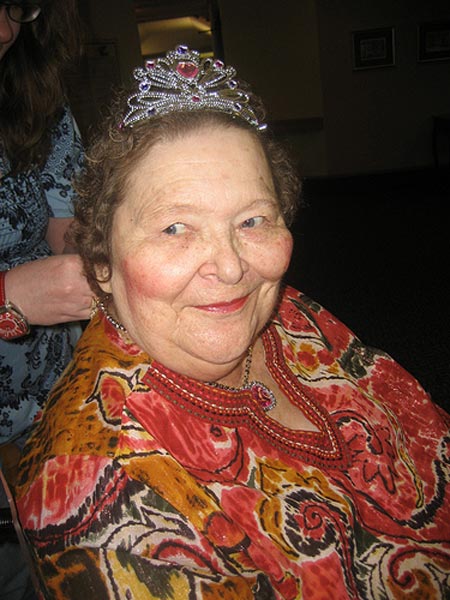
Mary McKennaOne places a child’s dress-up pendant around Mom’s neck, a gaudy piece of bling on her finger, and a glitzy tiara on her head. Mom beams! Another ties helium balloons to Mom’s wheelchair, passes out the horns, and gives Mom a big kiss. I distribute bottles of bubbles.

“What on earth is happening?” Mom asks.

“A parade,” I say. “And it’s all about you.”

For once, she does not object. She does not tell us it’s too much for her to be the heroine, for us to make over her and act goofy and pretend together that we’re a bunch of little kids who don’t intend to grow up until far into the evening. We open the door of the facility and are greeted by the bright sunshine of a fantastic April day.

McKenna ParadeWe start waving our bubble wands and blowing our horns and shouting, “Happy Birthday, Mom!” Dozens of cars slow down, pull over, open their windows, and call out their own birthday wishes for our mother. They honk, give thumbs up, and blow kisses as they pass by, all to Mom’s delight.

By the time the party’s over, she is tired, but not so much that she doesn’t get a huge kick out of it when a young mom (followed by her husband and awe-struck children) stops, points to Mom’s tiara, and says, “We didn’t know we’d be in the presence of royalty!”

We wheel her back across the road, still blowing bubbles and tooting our horns, but with somewhat less enthusiasm than we had on the way there.

Because stories end, and this one was reaching its curtain call.

Out of nowhere, I hear my long-dead father’s voice singing, for old times’ sake, a 1950s-era Nat King Cole song. One he’d sung hundreds of times when he and Mom were young and I was younger still, one that always seemed so sad to me, because even a child knows what’s eventually coming.

The party’s over
It’s time to call it a day.
They’ve burst your pretty balloon
And taken the moon away…

“Do you want me to take your Happy Birthday banner down now, Mom?” I ask, when we arrive in her room. She never did like fanfare.

“No! I don’t want you to take it down, ever.”

The party’s over
The candles flicker and dim…
Now you must wake up, all dreams must end.

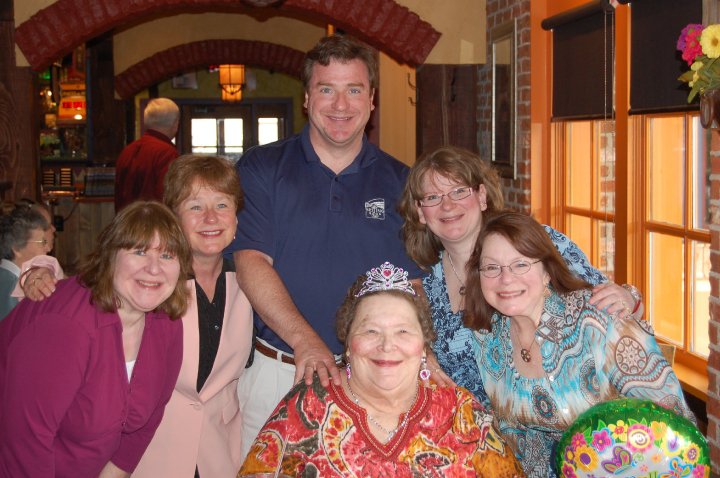
McKenna FamilyMom didn’t live to celebrate another birthday. But this my mother did: She grabbed hold of that final party, wringing every ounce of joy from it, composing the perfect ending in our hearts—and in her own.

And she gave me the courage to keep writing my story, too.

The Fine Art of Choosing A Pen Name

I’m using a pen name, a nom de plume, a pseudonym for publishing purposes.

Jillian Kent is a name I created after Rachelle asked, “Have you ever considered using a pen name?” With a smile on my face, I said, “You mean you don’t think Jill Nutter will sell as many books as Jillian Kent?” I had to smile because I’ve worked in the mental health field for years and you can’t imagine what adolescents on an in-patient psychiatric unit can do with a name like Nutter. Rachelle was very professional in providing guidance. I refer you to her blog post: Should I Use a Nom de Plume?

The following issues are ones I took into consideration:

Post Author: Jillian Kent

Jillian Kent is more than enthusiastic about the release of her first novel, Secrets of the Heart, The Ravensmoore Chronicles, Book One. She’s a full-time counselor for nursing students and holds a masters degree in social work. She’s fascinated with human behavior and thought it would be interesting to explore what might have happened in a lunatic asylum during England’s Regency era, her favorite time period. Jillian hopes you will escape into the past with her and find faith for the future.

The Work Place

I’m a Licensed Independent Social Worker employed as a counselor for nursing students within a huge hospital setting. I didn’t know if my supervisor or the president of the college would take issue with my second career. As it turned out, they fully support my efforts and allow me to talk about my writing within the college. I give books away at special events and to help raise money on occasion for things like our Student Emergency Fund. Choosing a pen name was also my safety net in case my work as an author wasn’t embraced or in the event I change jobs in the future.

Name Sensitivity and Setting

I married a great guy with the last name of Nutter. I write historical novels set during England’s Regency era. In England, the term nutter is slang for insane. Go to dictionary.com and type in the word nutter and you’ll see what I mean.  I write a darker Regency romance that includes the exploration of insane asylums and mental health issues. I didn’t want to take the risk that this might all be a bit too much for my readers.  I actually chose the name Jillian Kent for several reasons: 1) Kent is an actual city in England and frequently used as a setting in British novels, 2) Kent is short and easy to fit on the front of a novel and easy to remember, 3) Jillian is similar to Jill, my first name. So when readers call me Jillian it feels very natural.

Availability and Shelf Location 

I had to make sure the domain name was available for my website, that other authors weren’t using the same name, and that it would be placed on the bookshelves in a strategic position. Kent is in the middle of the alphabet. I’m near Karen Kingsbury on the book shelves so if someone picks up her book they just might see my book and be tempted to look at this new author named Kent.

Keep it Simple

I wanted a name that was easy to pronounce. Some folks pronounce Nutter as neuter. My maiden name was Baroudi (Ba-roo-dy). So now you can see even more clearly why Kent works for me.  I love my family and my family names and heritage, but when it comes to publishing, authors with sensitive issues must consider all the pros and cons of the nom de plume.

Have fun

If you discover you should use a pseudonym make sure you put a lot of thought into it. You might have it for a very long time and you want your name to be memorable if you are going to all the trouble of inventing a new one. As a child I was always making up new names because my maiden name was so unique. It’s kind of like starting over and beginning a whole new life.

Have you ever considered using a pen name? What are the reasons you might think about inventing a new name for publishing purposes? Are you using a pen name now?