Publicity Photos

I don’t know about you, but having my picture taken is not one of my favorite things to do. And yet, when you have a book contract, it’s one of the requirements asked of you by your publisher. There was a time, long ago, when I believed myself somewhat photogenic, but then came the extra pounds, the graying hair, the wrinkles and crows feet–need I go on?

So began my journey of trying to determine what I wanted for an author photo. Did I want a formal pose against a basic background, or did I want a more casual look? Inside or outside? Props such as a desk or books? Should I lose weight first? What should I wear? Is it really important to know which color looks good on me when I have all these other things to worry about?
I didn’t have the extra funds to hire an image consultant, but I knew what colors made me feel good–and that’s one of the best ways to determine which color season you are and what color palette works for you. Click here for more information on determining your seasonal color. Once I had this figured out, I searched through my closet for the perfect outfit and considered make-up and hairstyles that would give me a natural look, yet call out to people and say “Look at Me–This is who I am.”

Another step included studying my favorite author sites. What sort of pictures did they use and how many shots did they have taken? Did they hire a professional photographer or do it themselves?

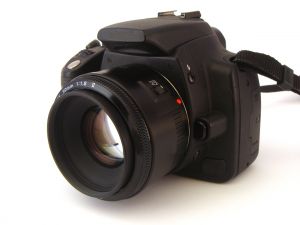
If you own a quality camera or know someone who does that has the prowess to take great photos, you can save money doing it yourself. But a professional photographer will understand light and shadow and can also work magic on those little “imperfections” I mentioned earlier, so you might want to keep that in mind as well. No matter what, you’ll need to be sure the pictures are taken in high resolution, jpeg, or tiff images, with a 300 dpi or more. All of this jargon seemed foreign to my ears, but not to those in the publishing world.

Loaded with the answers needed, I managed to get an author photo I’m satisfied with. Because I wanted to carry forward my Country at Heart theme, I chose to have my picture taken outside, wearing a casual jean jacket that helped define who I am as an author.

Next time, I’ll move on to the next marketing challenge–creating a book trailer. Until then, enjoy the moments  . . .
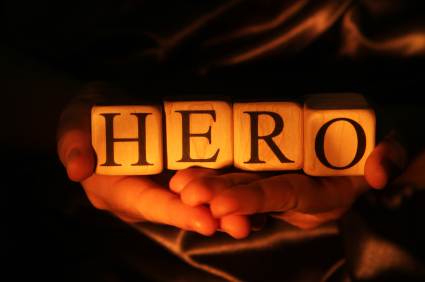
The Hero Within

In a writer’s world we are the masters of the pen (actually a computer keyboard, but that didn’t sound as cool). We create complicated characters through various techniques and tell them what to do.

But then they take on a life of their own and begin to tell us what the story is about. This can be quite fascinating, like sitting at a movie, watching the story unfold. Other times it’s frustrating because these life-like characters make bad choices or behave poorly (there’s always at least one), resisting our intended purposes for them.

When I think of writing in these terms, my thoughts drift to our Creator, and I wonder if God sees us in similar fashion. Aren’t we like His characters, created with His purpose in mind? Yet we have free will and the ability to choose poorly, or wisely.

God gives us that room, though I know we must frustrate him terribly at times. The Israelites certainly did. (Aren’t we still Israelites at times?) But part of the joy I experience in writing a powerful scene with my characters is seeing them grow and embrace God’s love and truth. There’s a sense of victory there even though these characters exist only in my head.

I remember as a kid imagining these scenes where the heroine (usually me, of course!) persevered and made this huge impact or discovery. I walked into the sunset as a new inspiration to my fellow underdogs (the theme of many teen movies).

The funny part of all this is, the longer I write and study the books and movies that are popular, the more I find a universal theme there—of a nobody discovering they have some kind of special gift that helps them save the day. A gift that comes from somewhere outside them and suddenly this feels-like-a-nobody character blooms into someone unique.

Now the amazing part. It’s a story theme that’s existed for thousands of years. The one I like best? The one in the Bible.

Jesus was just an ordinary carpenter. He didn’t look like much to those who resented and envied Him. He didn’t appear a whole lot different from the men He walked with. He started out as a nobody in the eyes of those around Him. But to know Him was to know He walked in greatness and humility.

He walked this earth like a man, yet within He holds a power to “save the day.” And every person who knows Him.

His is the story of the ultimate Messiah, the one true Savior of the world. He was and is the true Hero of the story—of the world and of our lives.

And the absolutely mind-blowing final part? He lives in us, changing us from nondescript nobodies to uniquely gifted individuals created to fit into a true story.

His story.

Happy Thanksgiving from the Water Cooler Family to Yours

Photo by Tom Gill

Thanksgiving has always been a great time for Americans to reflect on what is going right in their lives.

There are other moments throughout the year like our birthday or the upcoming New Year’s holiday that lend themselves to the same moment of gratitude.  However, this holiday asks the same question with a wonderful twist.

Instead of what might be the usual, what-about-me, we’re asked to remember others, especially those who can’t be with their families like our servicemen and women stationed all over the world and in harm’s way in Iraq and Afghanistan. That gives all of us a moment to step out of ourselves and remember what really matters to us.

For many of us it’s the people seated at the table right around us, and we get to say directly to them on Thanksgiving day just how much they mean to us. But there are also many others who touch our lives every day, and mean so much to us for their unflagging support and cheers of encouragements, who are scattered all over the world.

For the writers at the Water Cooler that includes you.

All of us at the WordServe Water Cooler want to take a moment to say thank you to everyone who has joined in our fun. Thank you for taking the time to share your thoughts and feelings here at the blog on the rollicking, fast-paced world of writing, publishing and marketing. We have all grown to feel like one big family.

For writers, who spend a lot of their career waiting to hear from editors or critics or booksellers, it’s a very special and sometimes rare gift to create such a supportive community. We look forward to all of the great conversations, book news, writing tips, and platform building to come.

A great big thank you as well to our agents at the WordServe Literary Agency, Greg, Rachelle and Barbara for all of your guidance, hard work and for always going that extra mile. We are all very grateful. Happy Thanksgiving everyone!

This Business of Story

Fall Road Olivia Newport
photo by Lorri Nussbaum http://www.keeperscards.com

“Noveling.”

On the day that I’m writing this, I’ve typed the word novelist several times and it keeps coming out noveling. “I’m a novelist” comes out “I’m noveling.”

Well. There’s something arresting there, especially since I decided long ago to write about “this business of story.”

I love stories. I read stories. I write stories. I live stories, with plot and character conflicts disassembling my tidy life plans every day. I share stories when I go deep in conversation with friends or walk beside them through their dry valleys. The fact is I see bits and pieces of stories flung around my ordinary day.

Dialogue. Humor. Moods. Obstacles. Disappointments. Faith gone dark. Determination. Overcoming. What it is that binds me to story?

My meanderings around this business of story take me to some dead ends and some scary places.

• Can I sell stories? We’ll find out when my contracted books start releasing.

• Can I survive the story of the storytelling industry, which seems to have a new cliffhanger every week?

• Can I shape stories? What am I contributing to the lives of people I care about?

• Can I sustain myself with stories? Can I make a living as writer? Can I carve out the time to feed my soul with the fruit of writing even if I don’t make a penny?

I tend to want to be at the end of stories. As a novelist I want to write stories that keep readers turning pages to get to the end. But I also want to know how things turn out in my own life story. What will be the payoff for my efforts, whether it be in relationships, ministry, or the next manuscript?

Almost every month, though, someone in my book group turns to a page to read aloud a striking passage that stills my hurrying. Mentally my tongue sloshes around trying to slurp up the wisdom and craft dripping from the words I hear. One exquisite paragraph, the precision of one sentence, even just one delicious word—story mingles in the writer’s choices, and zest lingers long after the book is closed. How could I have missed those morsels in my own reading? It’s a reminder to me of the splendor of being on the way somewhere, rather than being at the end of the story.

This business of story is about seeing life through a lens of story. We capture life within the words we wrestle onto the page. The meaning of moments comes into focus when the time is ripe.

As much as I want to understand the business of story to make a living as a storyteller, I want even more to understand the business of living a good story.

So I am “noveling” after all. I may just hang onto that accidental word.

How is your noveling going?

Note: On the day this posts, I’ll be driving across four states to be with extended family on Thanksgiving for the first time in six years. I’ll be on the lookout for free wi-fi along the way to check in with comments. Even if I’m late to the discussion, though, I hope you will find richness in conversation.

My Greatest Nonfiction Tool


I’m a disorganized perfectionist. Creative to a fault—I run off in a multitude of directions and suffer from the attraction of distraction. My husband loves to call me “bright shiny thing.” Whatever I’m doing can be interrupted by anything, and soon I’m involved in something and accomplish nothing.

This week my husband had enough. “Your piles of papers and stray books all over the house are driving me nuts! Can you please find time to go through and get rid of what you don’t need?” For some this request is an inconsequential written task on your to-do list. For me, well, you might as well ask me to strap an oxygen tank to my back and climb Mount Everest.

While organizing, I came across something so dear to me that I had to sit a moment and take it in. My journal.

It’s misleading for me to tell you I found my journal, when really I have many journals. I was one of those little girls who kept her words in diaries, locked with tiny gold metal keys. Pre-teen angst over pimples and parents found sweet refuge on paper. As I grew in age, my journals grew in number. No longer confined to only one, as a young mother I purchased a new journal for each precious child inside of me. It was one of those journals I discovered while cleaning yesterday.

Holding the words of first-time parenting in my hands, this flowery-fabric-covered time machine transported me to the winter of 1991. As I turned the pages I felt the flutter of new life again, and could almost smell the Pampers and Desitin. Taking a deep breath, I remembered the anxiety of a twenty-something mother who worried over ear infections, allergic reactions, and kidnappers.

As a nonfiction writer, I write about marriage and parenting. What better tool is there than my journals? A smorgasbord of material—it’s a place where I can remember my fears and joys and reach my readers with real words and stories—family permission permitting. So, I thought I’d share a few ways I used my journals to author my first book, and a couple ways you can use a journal as a keepsake.

Prayer Journal – I keep my prayer journal beside my favorite leather recliner in our family room. When I have my cup of tea in the morning, I jot down a few things that are pressing or maybe a scripture verse or quote that spoke to my heart. When I wrote my book I included a prayer at the end of each chapter. This journal was a helpful tool.

Family Journal – Funny things my kids say, life experiences, favorite recipes can all find their place here. I recently laughed out loud after reading my journal entry when the kids were five and seven. Since I write with lots of humor, what a great help my kids and this journal are. I took the time to write random things I heard them say that morning. My favorite? “When smoke comes out of the hole, turn it off.”

New Life Journal – When I discovered I was pregnant with each of my four children, I ran out and purchased a new journal. My words of love, joy, and their own baby milestones grace the pages. Now I try to write something each year around their birthdays. When they are married and expecting their first child, I plan on gifting them with this book from my heart, along with their very own blank journal to continue the tradition.

Gratitude Journal – This season is the perfect time to write what you’re thankful for. Pass a gratitude journal around to your family and ask them to write something down and sign it. Are you hosting Thanksgiving? Leave it by the spinach dip where your guests can see it and add their own thoughts of thankfulness. What a precious keepsake.

As an author, I take great joy in hearing from my readers. When my words have helped bring a laugh, comfort or teach, I am elated. But, my first love is my family. I’ve always believed as a writer I’m cutting a path for my children. This gift of writing is for them first. When my last day on earth draws to a close, my legacy remains. My journals are a part of that legacy. My words on paper are the fingerprints of my heart, left behind to remind them how much they were loved.

What about you? Did you keep a diary as a child? Do you write in a journal today? If so, what do you record on its pages?

The Publishing Type

I don’t know if this is true for your business, but in medicine, there are definitely types. Recently, I was sitting at the nurse’s station with several of my co-workers when this discussion came up. It is easy to tell if a nurse is going to make it in the ER within the first few shifts of their orientation. There is a certain attitude, work ethic, and demeanor that are likely consistent among ER nurses across the country.

Several experiences have led me to believe that there may also be a publishing type and I’m curious to know what others think. I’ve been quite surprised at some authorly discussions of late and wondered how there could even be controversy… yet, there is. What follows are qualities I think a writer needs to possess in order to seek publication. Notice, I didn’t say write. Anyone, literally, can put pen to paper and write. This is taking your hope, your dream, to the next level.

  1. Must love to read. This discussion has been raging over at a marketing loop of authors I follow. Several have complained that there are actual people who think they can craft a novel but hate reading. I find this problematic on several levels. First, I think writing is born from an enjoyment of reading. Your pulse has pounded at an author’s musings and you wonder if you could pull off such a feat. You’ll need to read extensively in the genre you hope to publish in if for no other reason than to know what’s being published. Reading in other genres will help your writing grow. Next, will be reading agent/editor’s submission guidelines. Really, the reading list is extensive.
  2. Must be able to multitask. Consider the following if you’re blessed enough to get a multi-book contract. Researching your next series, writing one book, and editing one (or more) novels at one time. Add to that blogging at several sites and developing your marketing strategy for your novel when it is released. Oh, and then there is likely your family, church and full-time job to add into the mix. What else should be on this list?
  3. Be able to organize. See #2.
  4. Must be able to follow direction. Agents and editors lament often about getting material they just don’t need or didn’t request. This is a waste of their time and you don’t want to be the thorn in their heel. If they ask for a one page synopsis—that’s what they actually mean and it’s not open for your interpretation. It’s not a challenge from them to you to get them to change their mind. The ability to do this will aid a lot in your developing a well-respected, professional reputation.
  5. You know how much more you need to learn. A continual love for learning is definitely a must if pursuing publication. I know I had a minor heart attack when my agent asked me for a book proposal. What is that?!? Recently, I was having coffee with a good friend of mine who is also a writer and we were talking about the current state of our relative manuscripts. Needless to say, we both wanted to shred them at the time. I said to her, “You know, the more I write, the more I know how much more I need to learn.” Do you feel this way? Did you feel that way after your first book was published? I think I buy more books now on the writing craft than ever before.

What are your thoughts? What qualities do you see in those who have successfully navigated the publishing road? Which would you take off my list?

Through A Curtain Darkly

“You should close your eyes and rest,” my husband said. “Doctor’s orders.”

He led me to our room, this kind man of mine, and started to pull the shades.

“Leave them open,” I said. “I need to see.”

I’d just lost our first son to miscarriage. I’d held his perfect body in my hands, his spirit by then already flown to Jesus. We baptized him ourselves with our tears, somehow finding the grace in that holy moment to accept the most solemn of truths:

The Lord both gives and takes away.

And so my love left me there upon our bed, a mother without a child, to focus through wispy curtains on the outdoor landscape. The land of the living, so far beyond my reach.

Out there, somewhere in the sky, was my baby, my heart. The trees bore only the merest buds of springtime that afternoon, little more than hopeful witness to the coming leaves of summer. But the frothy valances, stirred into sashaying billows by the open windows’ April breeze, slipped into ethereal life.

When I narrowed my eyes, the roses woven into the lace became buoyant blooms superimposed on the naked treetops like bouquets of pure white, their stems wrapped in brown satin ribbons.

I opened the drawer of my table, pulled out a paper and pencil, and began to write. The words flowed from my brokenness through my fingertips—a poem about how God counts the leaves on the trees, the grains of sand around the seas, and most of all, His children’s tears.

How He saves those tears in a bottle.

As I neared the end of the page, I squinted against the dimming of the day’s slanted light, unsure even then if the growing shadows were cast by the sun or by my soul. The lacy roses blowing through the treetops glistened like diamonds. I imagined our baby sprinkling fairy dust onto the blossoms, laughing with delight as he made each one twinkle.

For my eyes only.

The last lines of the poem came to me then, and I scribbled them beneath the others.

“There He’ll give us each a crown; Each tear will be a gem.                                            The bottles will be emptied, and we’ll never cry again.”

It happened many years ago, this otherworldly vision, almost another lifetime ago. But I still recall feeling suspended between heaven and earth as I captured my fleeting feelings, and I’ve never forgotten the magic of the rose trees swaying in the breeze.

Whenever I lay my head upon my pillow, from then until now, a journal and pen rest nearby. Of the hundreds of thousands of words I’ve composed since that tear-stained afternoon, many have been written between dusk and dark.

Who knows? Perhaps in the filtered light at sunset on an evening yet to come, roses may once again take flight.

And my words will reach God’s heart on petals of shimmering lace.

Simple and Sincere

Novel readers and children share a common characteristic.  Both have a nose for sincerity. If they catch the faintest whiff of guile or disingenuousness, you’ve lost them.

In writing and teaching children, you must be sincere.

I pondered this when I watched a videotape of my first grade music students. They sang about falling leaves, and the excitement in my voice as I guided them was obvious. Their faces and singing voices reflected my enthusiasm.

Watching the tape reinforced my suspicion: students respond to me because I love their songs. Though I’ve sung opera and studied the classics, I haven’t lost my taste for the simple things. I find simple truth in “Shoo, Fly” and simple beauty in “All night, all day, angels watching over me, my Lord.”

When I sing the songs of childhood, I believe them in the most hidden labyrinth of my soul. They resonate with me, and not because they’re “cute”. Fun, certainly. Entertaining, beyond a doubt. But if a song smacks of cuteness, I refuse to sing it. My students are too precious to patronize. They deserve simple, powerful songs that convey joy, truth, and beauty.

So do readers. They deserve a story we believe in, one that conveys truth, joy, or beauty, and preferably all three. They won’t be pandered to. They will respond to a book that burns its way out of us with tears, smiles, excitement, pain, or revelation. They will sense the engine of passion behind each line, in the subtle rhythm of a story we had to write. That doesn’t mean they’ll love the story. But if we tap into that rhythm, they might continue reading until the last page, until the last chord fades.

Honest, uncontrived passion. That’s what students and readers crave.

Did you ever try to write a book that didn’t resonate with you? Did you keep at it until it did, or did you scrap it and move on to a new project?

Speed Bumps On The Road To Publication

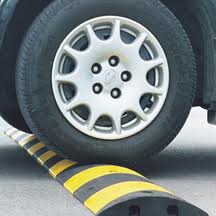
I was driving through the resort grounds in Jamaica, navigating the unfamiliar territory with difficulty in the darkness, when I saw the sign: “Sleeping Policeman.” I was wondering what a police barracks was doing on the grounds of the hotel when I was sent airborne, straining at the seatbelt while my back teeth clattered together. In the clarity that followed, I realized that I’d just seen the Jamaican equivalent of a “Speed Bump” sign.

Just as there are speed bumps on the roads we travel, there are speed bumps on our road to writing. Let me warn you about a few I’ve encountered, because—as I learned the hard way—when we know about the speed bumps they don’t bother us as much.

1) Constructive criticism is necessary. When we write, we know that ultimately someone is going to read what we produce. That’s what it’s all about. But if the only person who reads our work before we submit it to an agent or editor is our spouse or parent or Aunt Sally, we can’t expect any beneficial feedback.

The beginning writer doesn’t generally produce a Pulitzer Prize-winning first novel. But informed and constructive criticism allows us to correct our errors—and hopefully refrain from repeating them—so that everything we write afterwards is better than what went before. Find someone who is knowledgeable, ask them to read and critique your work, and be prepared to experience both pain and growth as a writer.

2) Rejections can convey a message. For a writer, rejections are a way of life. We might as well get used to it. But sometimes, in addition to the usual boilerplate language of “Not right for us at this time” or “Doesn’t fit into our plans”—both of which could be true—an agent or editor may make a comment. When that happens, pay attention.

Admittedly, there are times when the comments aren’t exactly helpful, as when an editor returned one of Tony Hillerman’s stories with a note to the effect of, “This might be better if you get rid of all that Indian stuff.” Of course, Hillerman went on to be an award-winning, multi-published novelist with his books about Jim Chee and Joe Leaphorn. But sometimes there’s a ray of hope in the comment, such as “I’d be interested in reading this again if you (fill in the blanks)” or “This shows great promise. I’d like to see your next one.” That’s when you take a deep breath and plunge on. The speed bump has slowed you, but it hasn’t brought you to a stop—just redirected you.

3) Hurrying can cause problems. Admittedly, I was in a hurry when I first made the acquaintance of the “Sleeping Policeman” in Jamaica. I’d have been better served by driving more slowly in the first place. That lesson can carry over into writing. Don’t be in a hurry.

You’ve just typed the last line of your first novel. Now how quickly can you send it off the every agent on your list? Hold on. I did something like that with my first novel, submitting it to the editor who’d encouraged me at a conference, and now I’m embarrassed to read it. It was a good first effort, but by no means was it a publishable book. The best advice I can give you is to let the manuscript cool—for a week, a month, or more. Then read through it like an editor, not a writer. Can you remove excess words (or, as Mark Twain put it, kill the adverbs) and passive voice passages? Are your characters well-drawn? Does the plot move smoothly and logically? Then, when you are sure it’s your best work, send it off.

What next? Why, start on the next book. Speed bumps are meant to slow you down, not stop you and make you turn back. Good luck.

The Bloody Page

I received my first critique of my first book (from someone other than my mom or husband) in the spring of 2008.

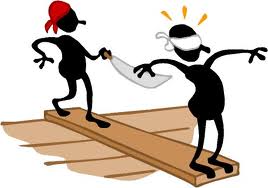
After much fear and trembling, I’d joined a small critique group through ACFW (American Christian Fiction Writers.) Pushing send on that first submission made me feel like I was walking the plank on a gigantic pirate ship, destined to plunge into the shark-filled waters, causing my poor words to be slashed and slaughtered.

What if they hated it? What if they came back and said it was the worst thing they’d ever read? Worse, yet, what if they said it was fabulous but silently snickered behind their cyber-mail back and plotted ways to kick my sorry rear-end out of the group?

But then a thought came to me. What if they really DID love it? What if my work was utter brilliance, and they begged me to critique their work because of what they felt they would glean from my writing prowess? (Think jumping off the plank only to be rescued by friendly dolphins who let me ride on their backs while those on the ship hoot, holler, and applaud!)

I’m sorry to report, the reality was somewhere in between, leaning toward option A.

The critiques I received back were a bloody mess. And I’m not swearing in a British accent there. Comments overwhelmed the pages, words were sliced everywhere, whole paragraphs were victims of the brutal attack.

At first, I was left numb. But as I read through the notes, the wheels in my head started to unthaw and turn. Their notes to a very novice writer started to make sense. Show, don’t tell. Don’t explain here. Explain this more. Adverbs in every sentence is not a fab idea. Adjectives after every noun doesn’t help the cause. Beats, not tags. The list of my faux pas goes on and on.

After a day of mourning, I got to work.

I’d love to tell you that I rewrote that chapter and it was perfect. No such luck. I’ve edited that chapter about 100 times since then, even getting more dripping red critiques.Much of my problem was that I was trying to put Barbie Band-aids on very large holes that really needed antiseptic ointment, gauze and an ace bandage, if not amputation all together.

Fast forward three years. My original manuscript is sitting, bandages still intact, in ICU.

A new baby was born a few years ago and survived the plank a little better. In September, I was tickled pink to sign my FIRST publishing contract. Sandwich, With a Side of Romance is set to release September 2012.

But very, very soon, my poor sandwich book will be dripping in blood again, but from a new source. A publishing house editor!

I’m getting ready to walk the plank again. On one hand, the safety of the boat sounds really nice. To live in my-book-is-wonderful land is tempting! But I’ve survived many massacres now, from critique groups, to rejections, to contest results. And I’ve learned that what doesn’t kill my book will make it better.

Discussion: For you unpubbed out there… who do YOU have to “bleed” your writing? Have you survived, or did the coroner have to get involved? For you pubbed among us… *gulp* does it hurt too badly???