Don’t Let Your Muse be a Prima Donna

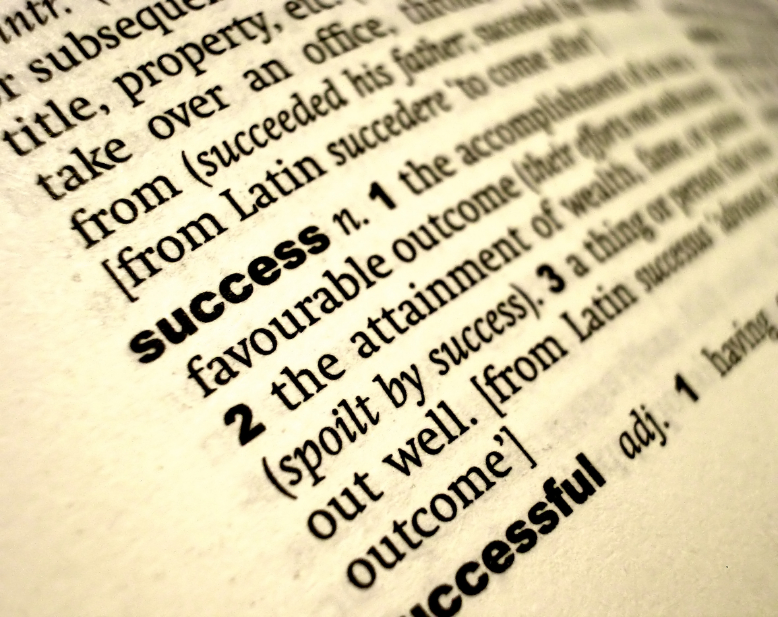
Granted, there’s nothing particularly sexy about the image here, but that’s exactly the point I hope to make today. I have plenty of writing mistakes behind me, and, no doubt, I’ll probably have more ahead of me, but my biggest mistake, by far, has to have been my slow recognition of how to live with a flighty muse.

I fell in love with words and books as a little kid, and the magic holds as much of a spell on me as it ever did. Even now, watching the letters group up into words and the words into sentences on this page pleases my eyes and settles my soul; only now I know there is nothing mysterious about the magic! I once thought of my muse as this elusive creature who must be cajoled into making an appearance. I had to attend to her every need with just the right coffee/surroundings/writing pad, etc.  Otherwise, like some spoiled prima donna, she might get offended and disappear as quickly as she arrived. There’s a good country word for that sort of thing: bologna!

If I might digress a moment to a much more important subject, I’ll use my last breath on this green earth helping my fellow believers understand that this same principle is applicable to our life in Christ Jesus. I believe it’s vain to wait on some supernatural hunger for God’s word and His fellowship in prayer to bonk us all on the head and propel us to our quiet places. And yet, I know that when we bend our will to His and seek Him diligently, He meets us and begins forming those very desires within us. Now, THAT is good news, any which way you slice it. And now, back to your regularly scheduled writing post.

My muse wears work clothes. She has to, y’all. Deadlines call from every corner. Oh, yes, I love words and writing as much as ever, the process will always feed my soul. But if I were waiting on a flighty muse to show up and perform, I’d be dead in the water.

Like so much else in this life, I’ve found that success comes when one foot, or word in our case, is placed in front of the other, time and time again. I can’t get the hours back that I’ve wasted in the past, waiting on my muse to show up and perform, but that’s okay. Experience is, after all, a mighty fine teacher. I may have stumbled towards the understanding, but I’ve learned that my muse, she is me. I’ve taken the power back, and it feels good. Who knows, if she’s good, I may even treat her to a caramel macchiato!

Do you wait for inspiration, or do you start without it?

Top 5 Self-Editing Tips: Structure

Writing is rewriting, and rewriting is self-editing. “But isn’t that the job of the editor after I’ve made the sale?” No. Some writers think running spell-checker is self-editing. Not so much.

“But won’t rewriting my work edit the life out of it?” No, but it will catch the eye of an agent or editor as a well-written manuscript and may lead to a sale.

Obsessive editing during the writing process will destroy your work. However, after you’ve written the first draft, gain some distance and perspective on your manuscript by setting it aside for a few weeks or a couple of months. Now it’s time to rewrite.

Here are my top 5 self-editing tips in their order of importance for polishing your work to a high sheen.

  1. Structure: Think of the structure of your work as an arched bridge spanning a great river. If the contractor takes short cuts (such as using less cement, steel, or fewer bolts) because she’s bored with the process and rushes to the end, the bridge is weakened and will collapse.  The same holds true for both ends of the bridge. If too much cement is used at either end of the bridge, it will collapse from the added weight.

For the purposes of this post, I’ll concentrate on the structure of novels. If the structure of your story is solid, the reader will continue to turn the pages until the ending scene.

The material of the structure is comprised of the elements of the story arc (the basic story thread) held in place by a beginning, middle, and end. Pretty simplistic, huh? Yet the three-act structure has worked since Aristotle’s days whether you write plays, scripts, short stories, or novels.

Sydney Harbor Bridge

Some authors maintain they have a four-, five-, six-, or even eight-act structure. I maintain if you break down the parts of their story arcs, you will discover classic Aristotelian structure.

Using the bridge analogy, a car drives onto the bridge. This is the point in the novel when you can lose a reader in the first page or two. I’ve thrown many a book (or manuscript) on the pile beside my bed if nothing happens right away. The author might as well have written “blah, blah, blah-blah, blah.”

A novel that piques the reader’s interest starts as far into the story as possible. I don’t want to know that the protagonist’s parents left him stranded in a snowstorm when he was a toddler and that’s why he’s terrified of snow (or abandonment). That’s back story. The story should begin with stasis (a state of equilibrium) and then the main character, pressed with conflict, reveals her goal.

One of my favorite movies is Indiana Jones and The Raiders of the Lost Ark. The story throws you into the action, and the back story―Indy’s character, profession, the setting, and the antagonist―are revealed as Act 1 plays out.

As the story progresses into the middle (Act 2) and the bulk of the novel, you should have rising and falling tension as your protagonist encounters numerous obstacles or crises.

The main turning point, or big surprise, comes in the middle of the novel. By this time the reader believes he has the story figured out. You need to turn his assumptions on their head. The major turning point should be such a shock that no one sees it coming. It should keep your reader up at night turning pages.

The crises continue. Will he? Won’t she? Oh, no! What will happen to this character your reader has invested her time in? Will everything turn out all right? How will the story ever end on a happy, satisfying note now?

Tension mounts and we reach another major turning point before we head into the final third act. Every turning point should be a surprise to the reader.

The crises are unrelenting until we reach the climax halfway through the third act. The protagonist faces off against the antagonist. The clash of the titans ensues. A woman faces her attacker or her paralyzing fear. The antagonist is not always a person. A man pushes his wife out of the path of a stampeding herd of cattle. Will he live? You get the picture.

Tie up all the loose ends of your storyline in the denouement―the final resolution of the plot or story arc. Is your ending satisfying? Does the main character live happily ever after? If you live and write in America, trust me, she better if you want to succeed as a professional author. Americans are eternal optimists.

To be continued…

How will you self-edit your novel to make sure your structure is strong enough to carry your storyline through to the end?

Photo credit: Sydney Harbour Bridge with the Opera House in the background by Ian.

On Becoming an Artist

“Red boathouse at sunset” by Karen L. Macek

Last year, I realized something that changed the way I look at myself and my writing.

I am an artist.

Over the course of my writing career, I’ve called myself many things: journalist, essayist, columnist, editor, reporter, researcher.  (I’ve also called myself other names at times, like stubborn, stupid, crazy, and masochist – especially when I’ve struggled to meet writing deadlines.) When I began writing fiction a few years ago, I added the descriptors of novelist, author, plot architect, and starry-eyed dreamer.

But artist?

Not in a million years.

For me, ‘art’ always referred to visual or performance genres. Art is the domain of my sister when she paints beautiful marsh landscapes in oils on canvas. Art is my daughter bringing a character to life on the stage, or playing haunting melodies on a flute or piano, or throwing clay on a wheel to transform it into a smoothly shaped bowl. Art is the creation of something new and tangible, and though I produced countless pages of words, I just never felt it rated as ‘art.’ I didn’t use paints, or clay, or costumes or musical instruments; my tool was a word processor, and my product was all in my head. And, with any luck, the heads of my readers.

Galley material, yes, but gallery worthy?

Not even close.

As far as I was concerned, writing was simple information management – collecting information, fitting it together (coherently, hopefully), and passing it on to readers. Whether it was just reporting the facts or organizing disparate information into a mystery novel, it was all about language skills and communication. Not Art with a capital “A.”

But then one day I was helping my daughter fill out a personality inventory, and I came across a section that listed occupations. I looked for the usual category of ‘Writer,’ but couldn’t find it in any of the traditional places I expected to see it. Instead, it was lumped under the category of “Art.”

The longer I thought about that label, the more I realized that what I do when I write truly is Art. Like any painter or musician or sculptor or actor, I look at the world around me and then translate my own experience of it into a new form, a personal, one-of-a-kind articulation of what is, or might be. I have a vision of life that ‘colors’ my representation and allows me to penetrate the surface of what I see to get at the heart of what lies beneath. Maybe my lens of choice is humor, or inspiration, or romance, or fantasy, but whatever it is, it helps me bring a freshness to my subject that is the essence of artistic endeavor.

I create with words, and not only is it my calling, but my sacred trust.

And now that I understand it that way, I guess I shouldn’t be surprised that I’m an artist. After all, my Father is too, you know.

Do you consider yourself an artist?

How Input Affects Output

I felt it sneak around the edges of my concentrated efforts. My lashes blinked faster. My lids now fought when I struggled to lift them off my eyes. A light sheet of brain-fog settled over my mind.

Afternoon fatigue had arrived. And it threatened to keep me from writing the scene on the screen before me. How would I finish without falling asleep?

Too often, I fight a common battle when I finally get a few snippets of time to write. But instead of grabbing a caffeine loaded, sugared up, fattened calf kind of snack, I’ve found a few quick solutions that allow me to treat my body with the respect it needs to function at optimal efficiency.

1) Eat nutritious vegetables or fruit. In particular, I’ve found the following have fabulous energy boosting properties for my body chemistry. Literally within seconds, I can feel a renewed focus and am able to write well. My faves include, red, orange, or yellow peppers, V-8 juice, grapefruit, oranges, watermelon, tomatoes, sweet potatoes, cucumbers in vinegar, cantaloupe, and celery.

Fruits & Veggies Energize Writers
Fresh Veggies and Fruit Energize

2) Get out in the sun. A few minutes of vitamin D rich sunlight is just the ticket to get my blood pumping and my thoughts racing.

Vitamin D Wakes Writers Up
Sunlight – Natural Inspiration

3) Drink water. When writing, we often don’t want to interrupt our thoughts, so dehydration is a big problem for many writers. Most people assume they need caffeine when exhaustion strikes — in reality, dehydration is often the culprit behind your fatigue. Science shows that water wakes us up.

Hydration Hydrates our Brain Cells
Water Wakes Writers Up

4) Take a nap. Though I fight it, sometimes a ten minute nap works miracles. A few moments of shut-eye gets me going again. (I find I need to set the alarm on my phone, so I can actually nod off. Otherwise, my fear of over-sleeping keeps me from getting the rejuvenating rest I need).

Naps Help Writers
Nap Time for Writers

5) Go for a walk. I plan this powerful method of staying alert into my writing schedule. It’s part of the formula I follow to get words on the page. Having an intended break gives me something to look forward to and pushes me past the humps. A good walk gets my blood flowing, my muscles heated, my cells active, and my thoughts fired up.

Walking Wakes Writers Up
Walking Stirs Creativity

6) Take prayer and Bible reading breaks. A few minutes spent with the Master Author infuses me with energy and inspiration. Nothing like purpose to light me into action.

Prayer and the Bible Inspires Writing
Pure Inspiration

Before fatigue wraps itself around me like a constricting serpent around its prey, I need a plan to fight back. I find the list above gives me exactly the input I need to affect my output in positive ways.

Here are some other great tips to help you battle afternoon fatigue.

What ways do you battle exhaustion when it threatens to hinder your writing?

Find Your Writing Passion


Some writers try their wings to see if they can make it as writers. They give it a year, five years, maybe even ten, thinking if they aren’t published by this time they will give it up. Why waste your time, energy, and money on such a hard and often thankless occupation? If you can quit writing, DO IT NOW now, and put yourself out of your misery.

Others write because we must. Writing helps us think and remember information. Writing helps us generate ideas and organize our thoughts. We write to make sense of the world.

What is your passion?

What is something you alone can share?

A lesson from page 210 of Stein on Writing, used with permission from Sol Stein:

“I ask you to imagine yourself on a rooftop, the townspeople assembled below. You are allowed to shout down one last sentence. It is the sentence that the world will remember you by forever. If you say it loud enough, everyone in the world will hear you, no matter where they are. What one thing are you going to say?”

Is your sentence one that could have been said by any person you know? If so, revise it until you are convinced no one else could have said that sentence.

When you have reworked your original sentence, consider these additional questions:

Is your sentence outrageous? Could it be? Is your sentence a question? Would it be stronger as a question?

Would the crowd below cheer your sentence? Can you revise it to give them something they’d want to cheer?

Suppose the person you most love in all the world were to strongly disagree with your sentence. Can you answer his or her disagreement in a second sentence?

Has your second sentence weakened your first? It usually does. If so, make it stronger than the first.

You now have the option of choosing one of the other sentences. There may be value in combining and condensing them.

You look down and see only one person, your greatest enemy, who says, “I didn’t hear you. Would you repeat that?”

Can you alter your sentence so that your statement will be enemy-proof?

Suppose you found out that the only way to get your message across would be if you whispered your sentence. How would you revise it so that it would be suitable for whispering?

Look at all the versions of your sentence. Is there a prior version that is actually stronger than the last? Can the virtues of one be embodied in another? And most important, which sentence now strikes you as the most original, the one least likely to have been written by someone else?

This exercise will direct you to a theme or expression of a theme that is uniquely yours.

Q4U: Most writers are introverts. If this is true for you, what subject will prompt you to talk or write?

Keeping the Ideas Coming

The writing life is a sedentary one, requiring hour upon hour of sitting in front of a computer screen—not good for the eyes or the metabolism or that almost forgotten New Year’s resolution to lose ten pounds. Desk-bound inactivity is also not good, I’ve lately read, for the brain—particularly those portions of the brain that support a capacity of supreme importance to the writer: creativity. To keep the brain in good shape and new ideas flowing in, say scientists who study creativity, you need to change things up a bit. Do something active. Think about something else.

The solution for me is running. I run twenty-one miles a week on the back roads around my house. Because of my work schedule, I run in seven to ten mile chunks, which is a bit hard for a nonathletic person like me, so I’ve come up with various strategies to take my mind off of what I’m doing. In addition to thinking about my current writing dilemmas and planning new books, I count the different kinds of birds or flowers or grasses or trees. I carry binoculars for locating birds and have trained myself to recognize their voices and habits. I phone distant family members and friends whom I rarely get around to talking to otherwise. I pray.

On especially long runs, though, even these distractions get boring, so this winter I started playing a sick, depressing game of building alphabets from the roadside trash.

I made up rules for myself. I had to follow the alphabet’s order. I had to actually see a letter—not guess or surmise it from the visible part of the trash—for it to count. No slowing or stopping to look more closely. No stopping to turn a piece of trash over to see the other side. No touching at all! I had to read on the fly.

It was, as I say, a sick, sad game. So much trash. I fantasized about returning after my run with a box of trash bags and picking it all up but never found time.

Then spring came, burying the trash in weeds. That made the game harder and longer. I was on J one day—Js and Vs were always the hardest letters to find—and had been jogging along for miles without seeing even the Juicy Fruit wrapper I’d seen the last time I’d run there. Up ahead, a square of paper stuck up like a tombstone out of the freshly graded borrow ditch. On it was one word: TIME.

It occurred to me that it would be much more fun to collect whole words than single letters, so I wrote down TIME in my little bird notebook and jogged on. Soon I had grand, subway, rub, natural, ice, aqua, buried, cable, light, wet, ones, bud, sonic, key, stone, mountain, and dew and decided to make a poem.

It has always bothered me how advertising and brand names undo words. Light doesn’t mean light. Mountain has no real connection to a mountain nor dew to actual dew. My poem, I decided, would reclaim these words’ real meaning. I would redeem the trash words.

My rules were few. What linguists call structure-class words (pronouns, helping verbs, articles, conjunctions, etc.) and inflections (verb forms, plural forms, etc.) were allowed. So was divvying a word into its parts: keystone offered key and stone. Homophones—such as bush from Busch—were off limits. Once my poem got going, though, I threw out all my rules and just concentrated on making the poem work as a poem, importing non-trash words as I saw fit.

Writing that first poem made me cry. Don’t know why, exactly, except that it felt holy. I decided, in any case, to collect trash words and make poems routinely when I ran. I even started a blog of the poems that have resulted. I find the project profoundly satisfying, from collecting words to redeeming them as poems to posting them for others to read.

I don’t have much of a message here, except this: Get serious—and creative—about your creativity. Every moment, every event, all the minutiae of your life, even the worst things—even running!—can be re-purposed for something good.

In what ways will you choose to redeem your creativity this week?

Fame and Fortune

Twenty-three years ago, when I first began writing a humor column for our local newspaper, my editor told me that I could expect local fame, but no fortune.

Today, I know he was right.

And wrong.

He was right because within a few months of my byline’s first appearance, I had a stranger come up to me at the local ice skating rink and tell me how much he enjoyed my column. Even bundled up in my parka and stumbling around on the ice with my children, he recognized me, thanks to the photo that accompanied my column. I thanked him for reading and promised myself to never leave the house again until I’d at least applied some mascara.

Fame makes so many demands on a writer.

My editor was wrong, however, when it came to the fortune part. True, I received a mere $5 a week for the short column I labored over for days, and no New York book agent or Hollywood scriptwriter came knocking at my door offering me any contracts. My net income from writing is abysmal, I’m still clipping coupons for groceries, and my husband politely refrains from laughing each year when he prepares to file my taxes.

But my fortune has steadily grown over the years and sometimes even surprises me with dividends I didn’t know I’d earned.

My fortune lies in every reader I have reached and in every life I have touched, whether I know about it or not.

This realization came to me especially powerfully a few months ago. I had an email on my author website from a woman I’d never met, asking me if I would give her permission to use my poem in an online anthology she was preparing for young mothers. When she told me the name of the poem – “A Mother’s Midnight Prayer” – I was stunned, since I’d written it 17 years ago, and it had appeared in a monthly magazine to which I occasionally contributed. The woman told me someone had given her my poem to read, and that it had inspired her in the course of many long nights with her own children. She also told me that my poem appeared on several websites for moms, and lo and behold, when I searched  for my own poem, I did, indeed, find it on the web, always with my name attached, and often accompanied by reader comments noting how meaningful they found my poem. One reader even reported that she’d had my poem on her refrigerator door for years, reminding her to cherish the fleeting days of her children’s early years.

To connect with others in our humanity and love – this is why I write, and it’s worth more than any material fortune could hold.

What unexpected dividends have you experienced in your writing life?

The Search-and-Find Feature

Over the years I’ve harped at authors never, ever to turn in a first draft. Some writers think the editor’s job is to spiff up their grammar, correct misspelled words, change passive voice to active, eliminate repeated words and phrases, or do laser surgery on their mixed metaphors.

Word travels in publishing circles about whether you’re a professional or you’ve made your living on the backs of good editors. You don’t want to be known as a hack writer.

Hopefully, the electronic tool known as search and find will make your self-editing chore more enjoyable.

  1. Passive voice (one of my pet peeves): Passive voice is created by using a form of be, such as am, is, are, was, were, being, be, or been and followed by the past participle of the main verb, or gerunds comprised of a present participle (ending in “ing”) that functions as a noun. Learn more in Hacker’s Rules for Writers. Search for these words and recast your sentences to make them more active. Examples:

Passive: He was jumping over the cliff into the river below to escape.

Active: He jumped over the cliff into the river below to escape.

  1. Qualifiers: These words clutter up your writing. Sometimes I think writers use them to boost their word counts. Examples: begin, start, started to, almost, decided to, planned to, a little bit, almost, etc. Examples:

With qualifier: Mary felt a little bit out of place among the nouveau riche.

Better: Mary felt out of place among the nouveau riche.

  1. Weasel Words: These words are easy to spot. You can drop them and no one will notice. My high school English teacher told me that if you could replace the word very with the word damn, you didn’t need it. Other examples: really, well, so, a lot of, anyway, just, oh, suddenly, immediately, kind of, extremely, etc. I’m sure you can come up with your favorites.

With weasel words: Suddenly, she stood up and said, “Oh well, let’s retire to the drawing room and just stay out of his way.”

Better: She stood and said, “Let’s retire to the drawing room and stay out of his way.”

  1. Adverbs: I don’t hate adverbs, but they “usually” are unnecessary, especially in dialogue tags. Your prose should communicate a character’s state of mind without using a tag line such as the example below. Use search and find to look for an ly followed by a space or a period.

With adverb: “I’ll kill him,” she said ferociously. (Really?)

Better: “I’ll kill him,” she said.

  1. Extraneous thats or thens: Use the global search-and-find feature for the word that. If you can understand the sentence without it, you don’t need it. You notice I didn’t write, then you don’t need it. Both of these words are over used.

Writing is rewriting, and rewriting involves self-editing. It’s your job to turn in the cleanest manuscript possible to your agent or editor. Use the search-and-find tool to speed up the process.

Can you think of other ways you can employ the search-and-find feature in Word to edit your work?

WordServe News

Exciting things have been happening at WordServe Literary!

On the final post of each month you’ll find a list of Water Cooler contributors’ books releasing in the upcoming month along with a recap of WordServe client news from the current month.

New Releases

Sifted by Wayne Cordeiro (Zondervan). This was the lead book at the Exponential (church planting) conference in Orlando.

**********************************************************************************************************************************

You’ll be Sor-ree by Sid Phillips (Berkley Caliber). Sid was one of the men portrayed in the HBO series “The Pacific.”  He’s still alive and well and living near Mobile, AL. A very fine Southern Christian gentleman.

*******************************************************************************************************************************

Red Blood, Black Sand by Chuck Tatum (Berkley Caliber).  Chuck was another one of the Marines portrayed in “The Pacific”. He’s also still alive and living in Stockton, CA. Stephen Ambrose called this book (originally self-published in 1995) “Probably the best WWII memoir ever written.”  Chuck’s book served as part of the basis for the 10-Part HBO series.

**********************************************************************************************************************************

The Pursuit of Lucy Banning by Olivia Newport (Revell).

*******************************************************************************************************************************


Playing with Purpose: Baseball by Mike Yorkey (Barbour).

**********************************************************************************************************************************

Always the Designer, Never the Bride by Sandie Bricker (Abingdon).

*********************************************************************************************************************************

Toward the Sun Rising by Lynn Morris (Hendrickson) book #4 in the republished Cheney Duvall series.

**********************************************************************************************************************************

New WordServe Clients

James A. Hall was a successful businessman for many years before working as a vice president with Walk Thru the Bible Ministry. For 15 years, he led their Seminar Division and currently is the Executive Director of a 25-year-old national ministry, Saints Prison Ministry. Some Jungles Have No Giraffes is his exciting memoir that details his amazing and compelling life. From a childhood tarnished because his father was on the run from the law, through his boarding school experiences at a Catholic seminary, to his days as a wealthy businessman involved with the Mafia, and his time spent in prison, the author’s life story reads like fiction, but is true. The miraculous conclusion of this tale again proves that without God life is indeed a jungle. (Agent: Barbara Scott)

Kariss Lynch began her writing career in third grade when she created a story about a magical world for a class assignment. Since then, she has received a Bachelor of Arts in English with a specialization in creative writing from Texas Tech University. Kariss believes her readers should expect a journey. Readers can expect to see the beauty that God creates through broken lives and the adventure that comes when we follow the Lord. We serve a God of big dreams, daily adventure, and lasting hope. Making her home in Dallas, Texas, Kariss recently finished the Craftsman course through the Christian Writer’s Guild. She became a freelance writer and blogger for Demand Media Studios in January 2011. In March 2012, Kariss accepted the writer position in the Communications Ministry at First Baptist Dallas. She is very active with her church and family, is an avid Texas Tech fan, and enjoys photography and swimming in her spare time. (Agent: Sarah Freese)

New Contracts

Terry Brennan signed another contract with Kregel Publications for his next book The Brotherhood Conspiracy, a sequel to Sacred Cipher. Terry is in his 14th year of senior management for New York City nonprofits dealing with homelessness. Prior to his present focus with nonprofits, he had a 22-year career in journalism with the Pottstown (PA) Mercury, winning the Pulitzer Prize for editorial writing while he was editor. His first novel, The Sacred Cipher, was published in 2009. (Agent: Barbara Scott)

Rebecca DeMarino signed a three-book contract with Revell Books for her debut Blue Slate series. The first novel, A Love of Her Own, will be released in 2014, followed by Heather Flower and Pure Patience. A 2011 ACFW Genesis semi-finalist, Rebecca and her husband Tom live in the Pacific Northwest. When not writing, Rebecca enjoys reading, running, gardening, and trying to keep up with her eleven grandchildren. (Agent: Barbara Scott)

Steve Addison signed with IVP for What Jesus Started, a follow up book to his first release onMovements. Steve works with Church Resource Ministries in Austraila.(Agent: Greg Johnson)

Calvin Miller signed with Baker Books for The Vanishing Evangelical, a penetrating look back and forward on what has happened to the Church in the last 30 years, where it’s going, what good and what harm has been done, and what we can learn from it all.  This is the 61st book Greg has represented for Calvin in the last 18 years.  (Agent: Greg Johnson)

Joe Wheeler signed with Howard Books for The Civil War Stories of Abraham Lincoln, a follow up to his book: Abraham Lincoln: Man of Faith and Courage (also with Howard). One of America’s top-three story anthologizers, this is the 74th book Greg has represented for Joe, as well as his 64th short story collection. (Agent: Greg Johnson)

Lauren Scruggs signed with Tyndale Houe Publishers for Still Solo: A Plane Ride, a Horrific Accident and a Family’s Journey of Hope. The book tells the story of losing Lauren losing her hand, her left eye, and becoming scarred for life after a tragic airplane propeller accident in December 2011. It is written with collaborator Marcus Brotherton, and it will be published this November. Also signed was a second book to young girls on body image. (Agent: Greg Johnson)

Jonathan McKee signed with Youth Specialties/Zondervan for More 10-minute Youth Talks, a follow up to his previous book for youth pastors. (Agent: Greg Johnson)

Ken Gire signed with eChristian/Mission Books for Finding God in the Hunger Games, an insta-ebook and follow up trade book on the spiritual themes in the book series and the new movie. The ebook will come out in June!  (Agent: Greg Johnson)

What We’re Celebrating

The Christy Awards committee has announced that Dancing on Glass (B&H Publishing Group) written by WordServe Literary author Pamela Binnings Ewen is one of three finalists in the Contemporary Series, Sequels, and Novellas category. The winner will be announced at a dinner to be held at 7p.m. Monday, July 16, at the Rosen Centre Hotel in Orlando.

Amy Sorrells is the grand prize winner of the 2011 Women of Faith Writing Contest for Comfort and Salvation (now titled Canary Song). Amy is a wife, mother, registered nurse, and blogger, but most importantly, she is a woman of faith and a WordServe client. Recently, Amy received an offer for the manuscript from a well-known publisher. More to come later. (Agent: Barbara Scott)

Sarah Freese attended the Festival of Faith and Writing in Grand Rapids, Michigan, April 19-21. She met with several editors and potential future WordServe authors. Various current WordServe authors, including Patty Kirk, Anne Lang Bundy, Leslie Leyland Fields, and Margot Starbuck, were in attendance, and a few of them presented on panels and led forums. Leslie and Patty’s forum was so full that people sitting in desks and on the floor had to make more room for people to stand around the perimeter of the room! The picture below doesn’t even show the room at its fullest.

What can we help you celebrate?

I Will Prevail! (And Other Things I Tell Myself in the Shower.)

One admonition I can’t seem to scrub from my brain is my mother’s bit about wearing the right underwear in case I’m in a car accident. Maybe your mother used the word, “clean,” when giving underwear life lessons, but mine specified “right.” Her reasoning was if I had on a pair of lacy deals or something even more scandalous, the attending physician in the ER might think I’m loose.

Yeah. That’s going to be a flash of thought for me, I suppose, when the doc is trying to volt me with paddles, and is tweezing shards of glass from my forehead. “Whoa, this chick might not live through the night, but, oh well. She’s got on frilly underwear, and you know what that makes her.”

Whenever I hear naysayer anthems in any walk of life, I have this strange tendency to contemplate the difference between the undies my mom wishes I’d wear, and the undies I do wear. (Yes, sorry, my brain works that way.)

One naysayer anthem I’ve heard relates directly to my newest gig in becoming a published author and venturing into the land of woe and book sales.

What’s said: “Don’t expect much because you won’t get much.”

What I hear: “Wear your granny panties.”                     

Well, you know what? I don’t want to wear my granny panties. And you know what else? I don’t care what I should expect. And I don’t care if an ER doctor thinks I’m loose, and I don’t care if people think I’m chasing unrealistic dreams.

(OK, I actually do care if an ER doctor thinks I’m loose, so don’t quote me on that. I got lost in the moment.)

One thing I do care about is what moves me. I need a juicy little nugget of hope, dangling just out of my hungry grasp. Yes, I know the odds are not in my favor of being a best-selling author. Yet, I still tell myself it’s a matter of when, not if, because anything short of that . . . well, if I didn’t have that particular hope to chase each day, then I’d be lying on the floor pressing a Life Alert button just to see if anyone comes.

I might have failure after failure, never even getting as far as putting one tiny finger on the first stair to success, but I’m sorry, I won’t stop striving and dreaming for more until I’m dead.

(Oh, and when it is my time to go, I hope whether or not the doctor resuscitates me isn’t predicated on my underwear choice.)

What moves you? What are your dreams? What kind of undies do you wear? (Kidding!)