Author FAQs

It doesn’t matter where I am. A party. The vet. Getting my teeth cleaned. Whenever people find out for the first time I’m an author, one of three questions pops out their mouth…

How are your sales? How much money do you make?

Really? Are plumbers asked this? Does anyone ever ask the Walmart greeter what he or she nets for pay? I’m guessing not, so why?

Why do people feel comfortable asking writers how much money they make? 

Because, doggone it, everyone has a book in them, and they’re curious how much money they can make. It’s really not about the author, to shame them or to pry. This question simply flies past the curious lips of people who have a secret hope they can pound out their story and become a millionaire.

Compassion is needed to answer this one. Sure, the Rowlings and Kings of the world do make big bucks, but most authors don’t. It’s a dream-crushing bit of information, so remember that sometimes truth stings. Be gentle.

How many chapters is your book?

This one always stumps me. Not because I’m on mind-altering drugs and don’t know how many chapters I’ve written in any given book, but mostly because chapters are subjective. Haven’t readers figured that out by now?

Apparently not. Apparently garden-variety readers award badges of honor to books with lots of chapters.

So I put on my teacher’s hat and explain in one-syllable words that publishers don’t require mandatory chapters; they look at total word count. At that point, I whip out my sunglasses because a brilliant light bulb flashes on.

I wrote a book, too. Can you help me get it published?

This is a tricky one. I love to help others. Who doesn’t? But the brutal truth is, I am a lowly writer, not an acquisitions editor.

Much care is needed in the answering of this question. The danger is you’ll get cornered for at least an hour listening to the synopsis of an entire epic saga. I’ve found the best way to handle this situation is to offer sources other than yourself. I frequently recommend joining ACFW (American Christian Fiction Writers) for networking purposes. I also advise author-wannabees where they can attend local writer meetings or possible critique groups they can check out.

Those are the top three questions I get asked. How about you? What’s your FAQ?

Crafting a Writing Goal

Book Proposal Image

Words aspiring writers want to hear.

“Send me a proposal on your idea.”

When it happened for me, at a writers conference, I first went off to a private place and cried happy tears. Then reality set in.

I hadn’t written a thing. I only had an abstract idea, a desire to write, and a nudge from God. The publisher didn’t offer any guidance on how to format a book proposal; he simply told me to send one.

When I got home, I got to work. The situation called for a marriage between prayer and practical actions. Shortly after I said, “Amen,” inspiration hit.

I wrote my goal on a piece of lined notebook paper. “I Will Read 100 Books on the Craft and Business of Writing.”

I practiced while I studied. It took me almost two years to accomplish the task, but when I finished the one hundredth book, I was able to look back and see the transformation in my work. Only then did I gather enough courage to submit a few queries for articles. And though there were rejections, there was also success.

Article Queries

After focusing on the craft of writing, I invested in the business of writing. If I wanted to author books, I needed help. I networked with other professionals and listened to their advice. I attended more conferences. I hired an editor to critque my work. And I continued reading beyond my first 100 books.

Michael Hyatt
How to Write a Winning Book Proposal

I wanted to create a stellar proposal. After gleaning the best information, I practiced on my first topic numerous times. By the time I ran across Michael Hyatt’s e-books on Writing a Winning Book Proposal for fiction and non-fiction, I was ready to finalize my project.

It took another year before I harvested any fruit from my labors, but harvest I did. WordServe Literary signed me based on that original topic. The hard work of crafting a writing goal and meeting it helped my agent sell my first book, scheduled for release in 2013.

I’ve now lost count of the number of writing books I’ve read. But there are a few I refer back to time and again:

10. On Writing Well — William Zinsser

9. Story — Robert McKee

8. The Art of War for Writers — James Scott Bell

7. Bird by Bird — Anne Lamott

6. Stein on Writing — Sol Stein

5. Writing Down the Bones — Natalie Goldberg

4. Self-Editing for Fiction Writers — Renni Browne & Dave King

3. Finding Your Voice — Les Edgerton

2. Writing for Story — Jon Franklin

1. Screenplay — Syd Field

I’m a lifetime learner. Without the help of many willing to share what they learned through their books, I probably wouldn’t be writing today.

What are your goals, and what are you doing to meet them?

Guest Blogging and Guest Hosting

Marketing Your Debut Novel Part IV

I’ve been doing a series on marketing your debut novel. You can find Part I, Part II and Part III here by clicking the links.

Briefly, Part I focused on growing your tribe/social media, Part II was about the comparable books section of your book proposal, and Part III was about the audience section of the book proposal. These all focused on one particular area of the writer’s life–the pre-contract phase.

Let’s depart that phase and begin concentrating on the next phase– the contract submission phase. I’m going to define this part of the writer’s life as the time you or your agent are submitting your book proposal but haven’t yet signed a contract.

You may think…there’s marketing to be done during this phase? Yes, absolutely. For me, this phase lasted from December 2009 to April 2011–almost 18 months! Definitely too much time to be sitting idle.

One thing you can be doing during this phase is hosting other authors/experts on your blog and guest blogging on others’ blogs that support your brand. This will lend to your credibility and should also help internet search engines highlight sites with your name. The more sites, the more opportunities for people to find you and the more exposure you have to people who may not have discovered you yet.

My primary blog, Redwood’s Medical Edge, deals with writing medically authentic fiction. This supports my overall suspense brand because I discuss ways to injure, maim, and kill fictional characters.

To help grow my blog and support my brand (therefore exposing Proof to more potential buyers), I began looking for opportunities to guest blog and looked for other authors to host.

For example, I wrote pieces for other blogs that dealt with strategies an author could use for medical research, common medical mistakes in fiction writing, and even offered real medical advice to parents over at Christian Mama’s Guide. Erin is a non-fiction author who published a guide on having a baby and although Erin’s blog is not a suspense blog at all, my guest blogging allowed me an opportunity to reach possible new readers and lent her blog credibility by having an expert post. A true win/win situation.

I also hosted authors like Richard Mabry, CJ Lyons, and Candace Calvert. I hoped to drive their readers, whose fiction is similar to mine, to my blog to learn more about me and possibly become future buyers of my fiction.

Though this isn’t specific to guest blogging/hosting, I did follow many on Twitter who mentioned they were authors. I sent one direct message to them telling them about my blog. From that, I’ve gotten several additional authors to guest blog for me. In return for guest blogging, I highlight them, their books, and their internet presence.

Some people argue that my strategy, primarily focusing on authors as my initial tribe, will not boost sales in the end. We’ll have to see if what they say is true but I know I’m an author and an avid book fan and have bought many more books because I’ve built relationships with these authors and grown to love them as friends.

Next post in this series, we’ll go over how to be a generous blog host and good guest blogger.

How about you? What are some strategies you’ve used to gain readership by hosting guests on your blog and/or guest blogging other places?

Learning From Attending Writers Conferences

The first writers conferences I attended were at locations near SW Ohio. Pleased by the way I was received and welcomed by fellow writers, I learned a lot.

I figured the agents I met at those first conferences would not be interested in my genre but I approached them anyway. When I went into the three-minute speed dating room, the first words I said were, “I have never pitched before, so I am here to practice.”

This never failed to get a positive response. And for a deep introvert like me, that was encouraging.

Now several years later, have I learned everything I need to know? Have I learned enough? Can I forget about going to writers conferences? I don’t know about you, but that would never work for me. The networking alone is invaluable.

I’ve bought into the saying that a picture is worth a thousand words, and in this post I want to focus on benefits of the annual trip my friends and I take to the Blue Ridge mountains and the conference held in May.

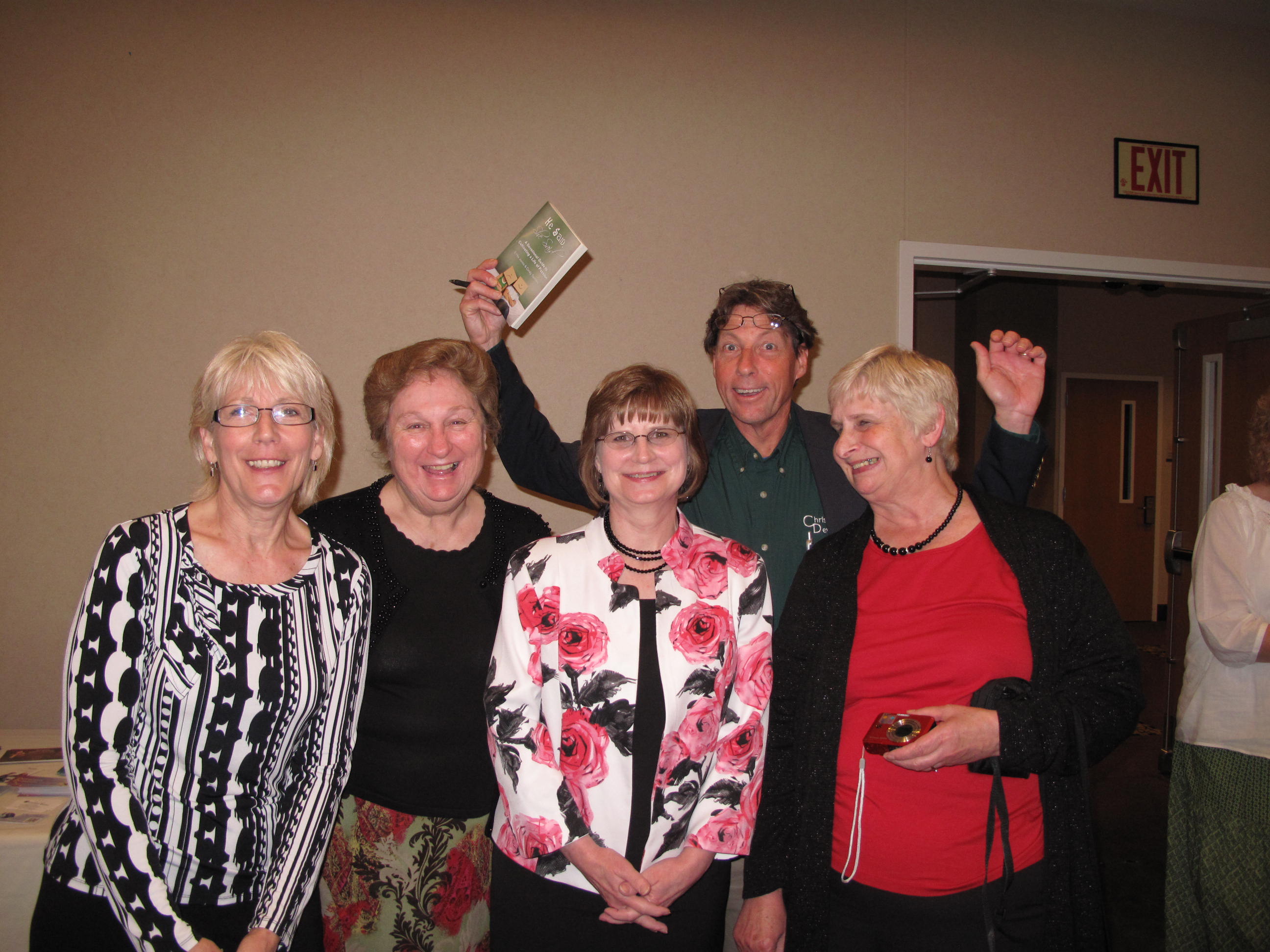
We spend time with forever friends. (I didn’t get enough pictures this year.)

Fellow writer Hope Daugherty
Writers Conference Benefits
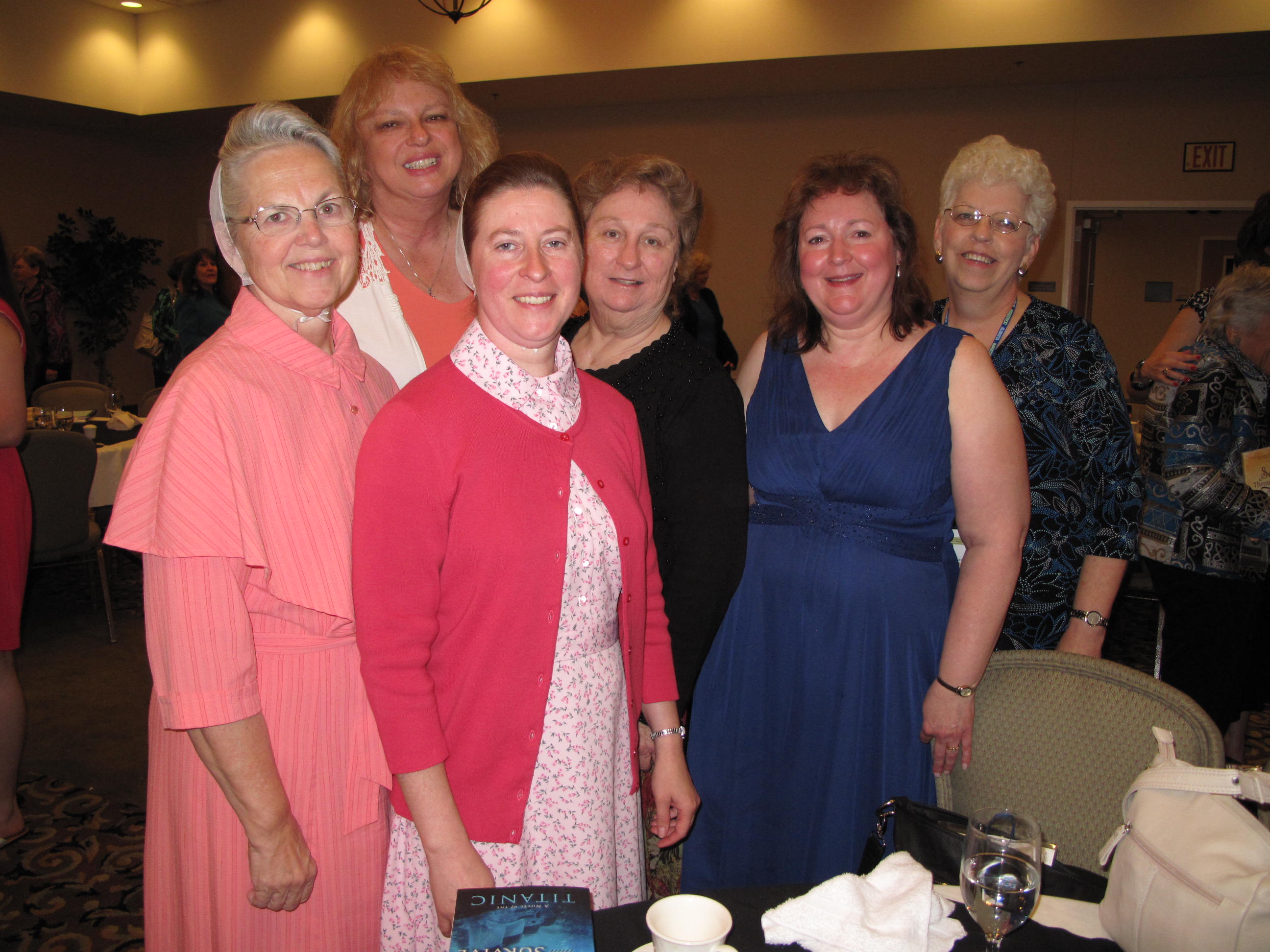
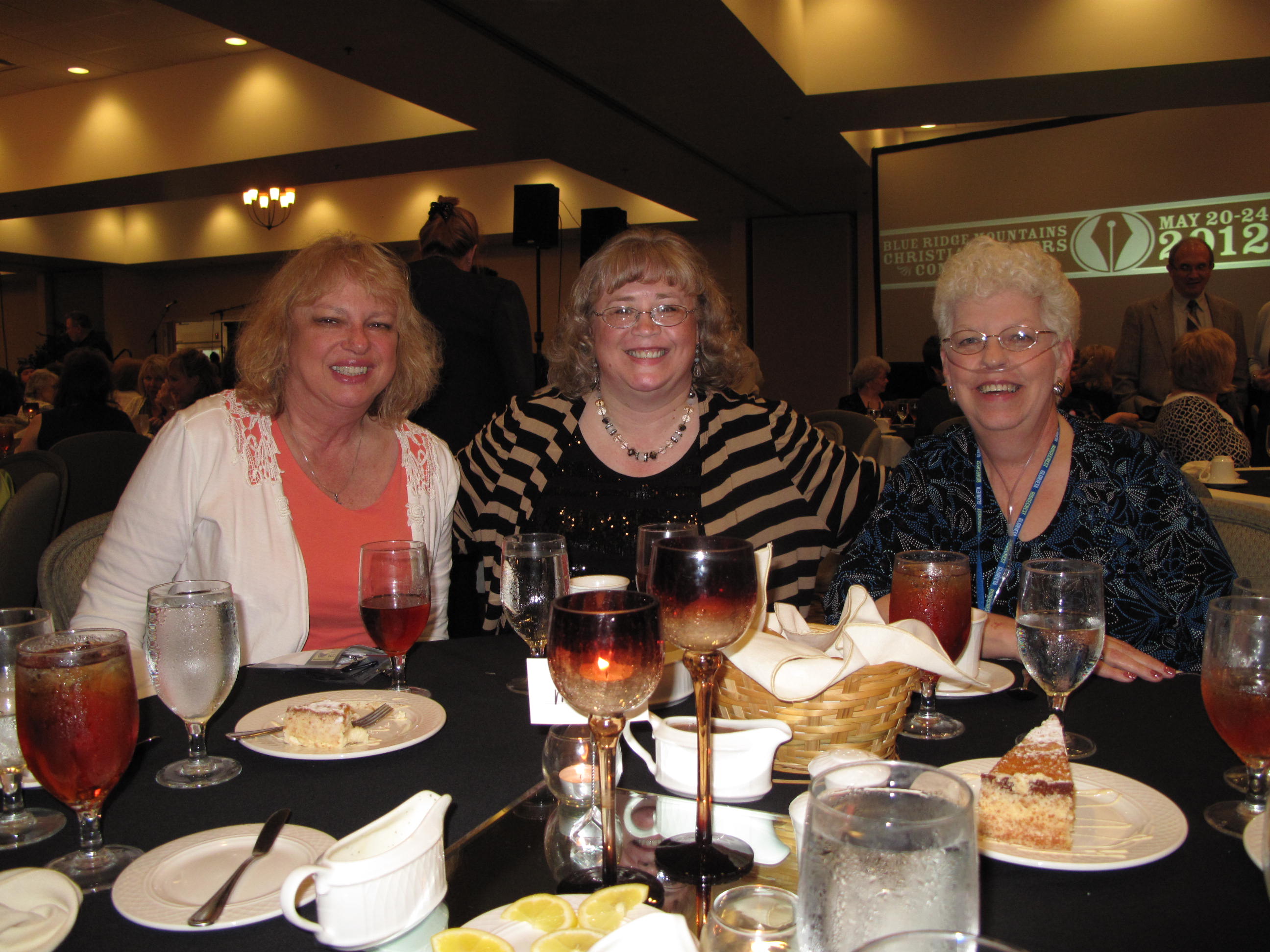
Ohio friends meet at the banquet.

We re-connect with established writers.

Yvonne Lehman
Instructor Eva Marie Everson
Eva Marie Everson

And we get acquainted with new ones.

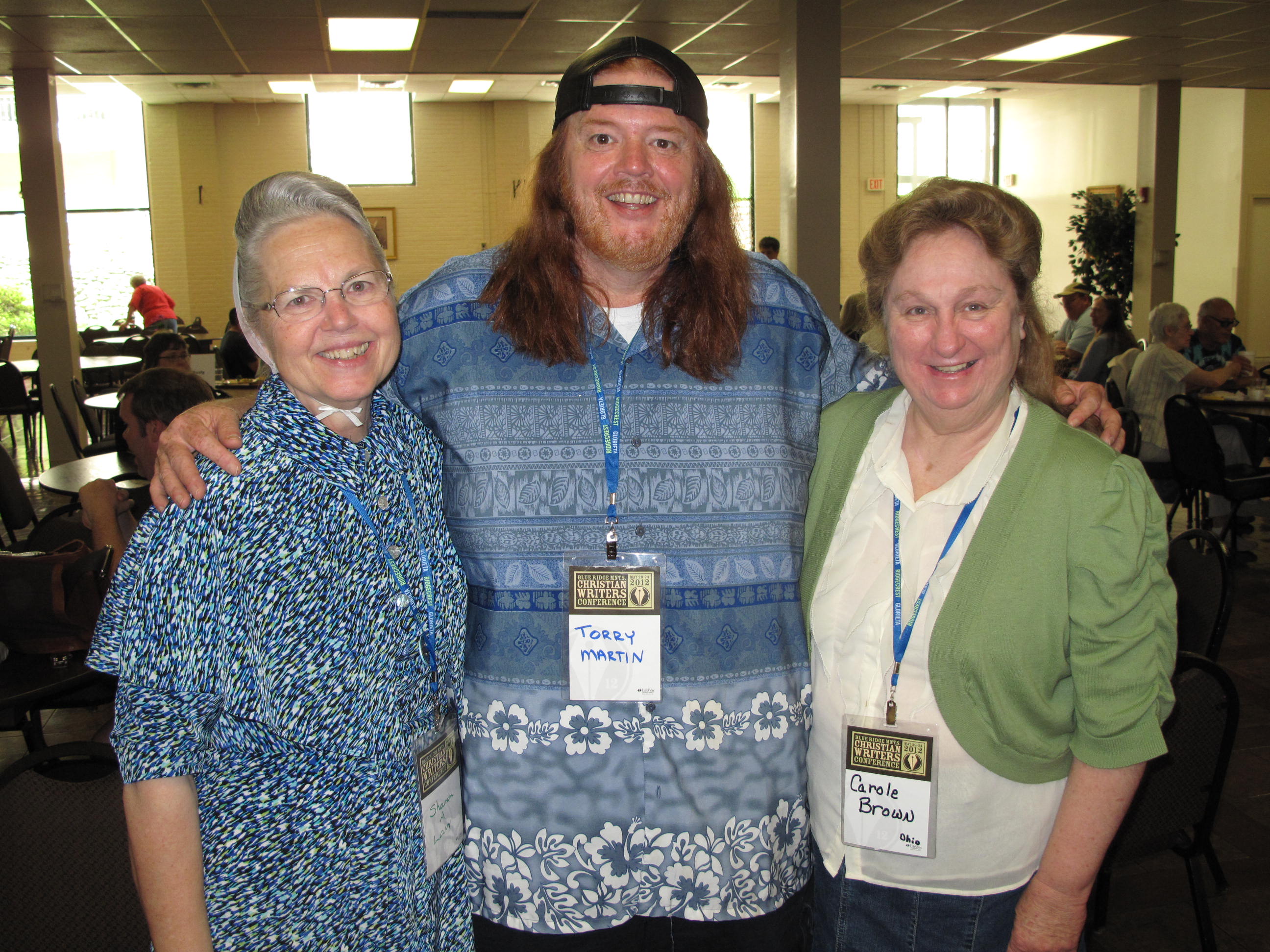
Torry Martin
Torry Martin

Some of us meet with our agents.

Diana Flegal

Mary Ellis shared the banquet meal with her editor at Harvest House.

Kim Moore

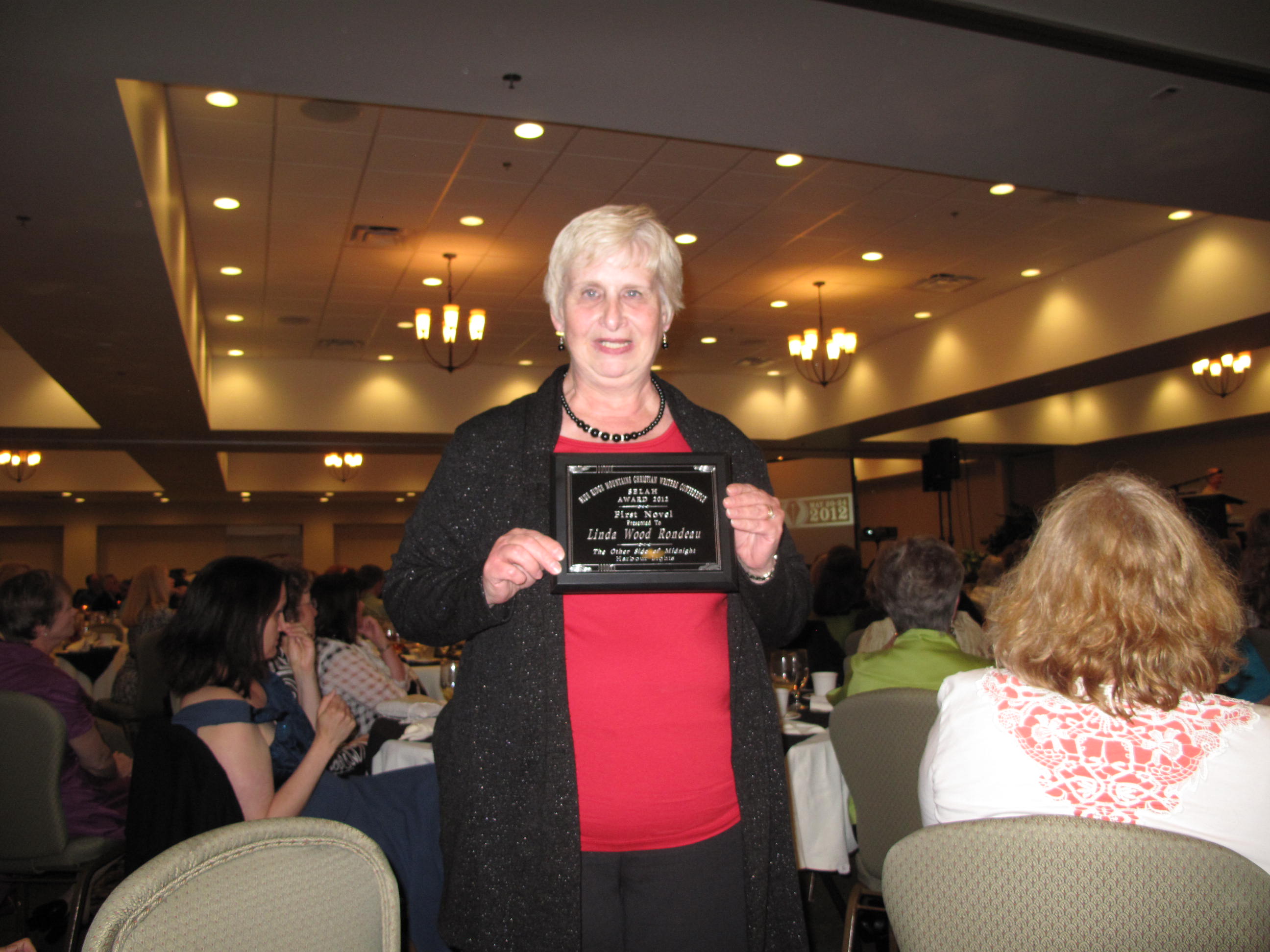
We rejoice when friends win awards.

Linda Rondeau

We enjoy the beauty of this place.

Steeped in peace and beauty
A rose by any other name would be as sweet.

We are refreshed by the people, the classes, the meals . . .

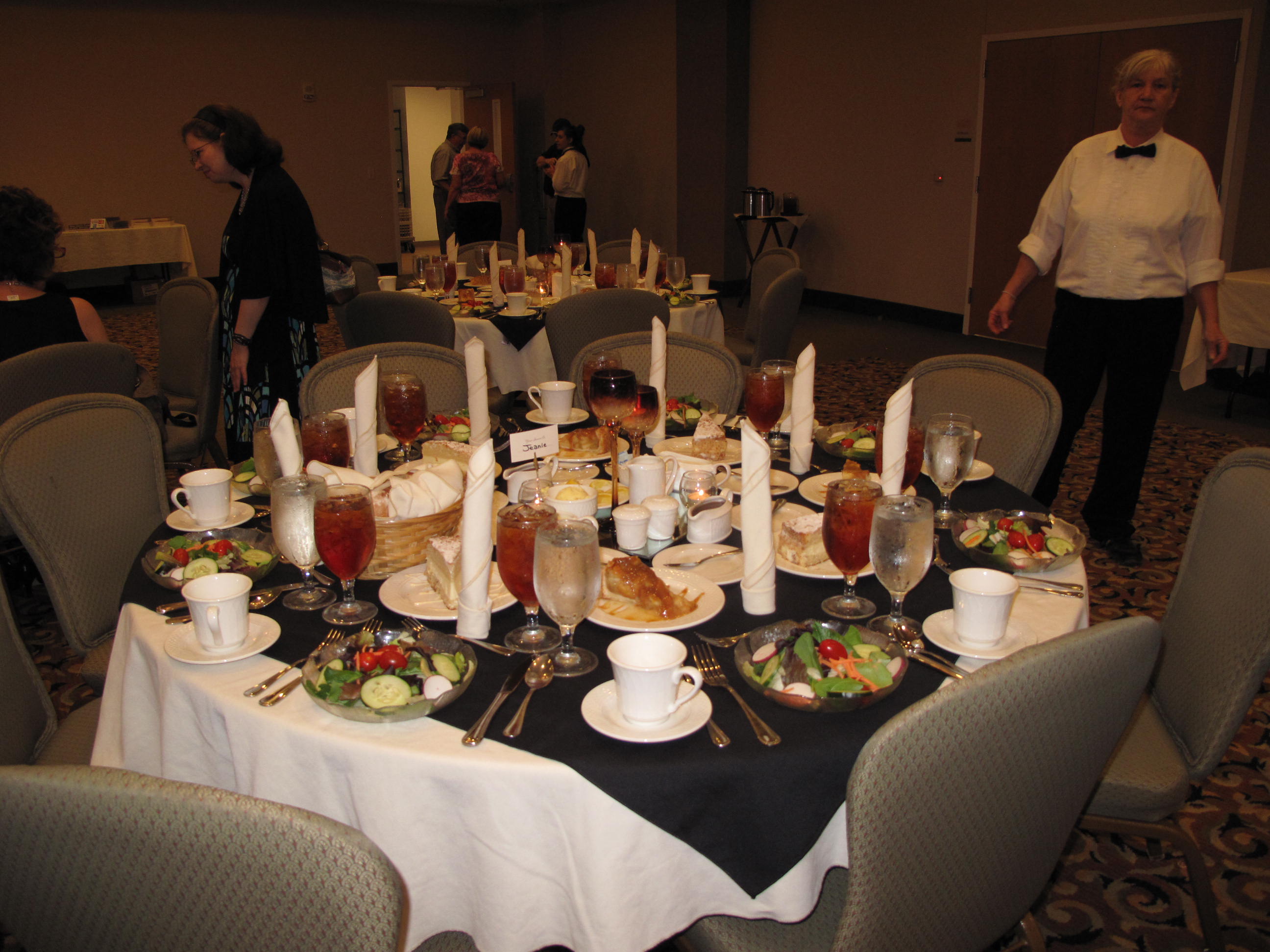
Banquet table setting
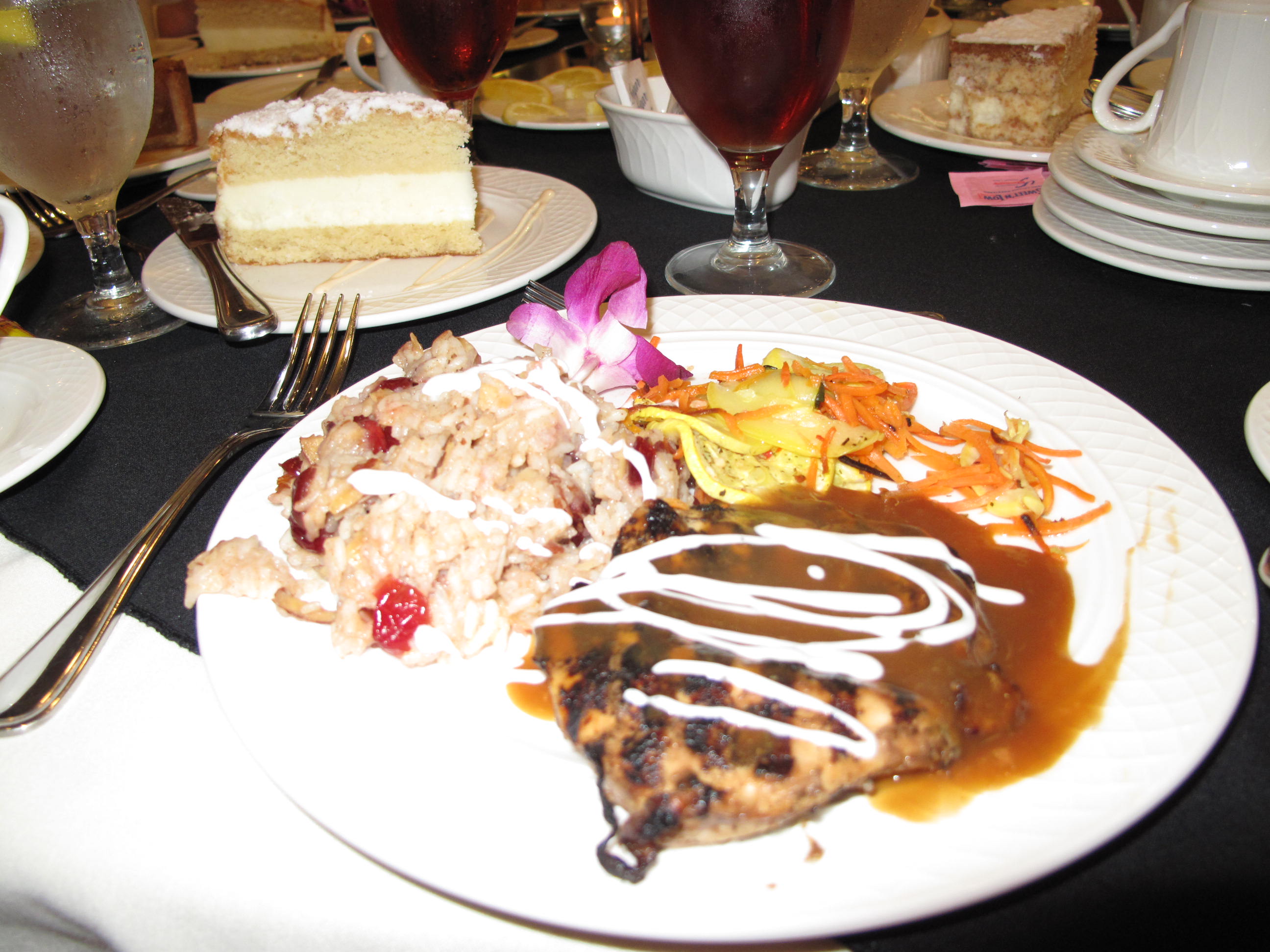
Main course at the banquet
Sweet white coffee.

Q4U: Have you ever attended a writers conference? If so, what is your favorite memory? What was the take home value for you?

If not, I encourage you to find one near you and go for it.

Four Ways to Untangle Your Writing Life

Image/FreeDigitalPhotos.net There’s something about chaos in my home office that infuriates me.

As I attempted to help my husband install a new computer, the jumbled mess of wires overwhelmed me. Lying on the floor, flat on my back, reaching under my desk, I needed more than a flashlight and my glasses to see where to plug in the cables. I wanted something to calm my frazzled nerves.

At times, I also find myself overwhelmed with the tangled web of my writing life. I have so many projects going at once that I can’t focus on the most important ones.

So, how do we unravel the emotions and confusion of our writing lives?

Stop and take inventory. As I inspected the knotted wires behind my desk, I saw that each wire needed to be threaded back through a narrow space under my desk and poked through a small round cutout in the desktop, before I could connect my new PC. I took a deep breath and thought about my angry reaction to my husband’s request. We had purchased the new computer for my writing needs, and he needed me to crawl under the desk because of his old college knee injuries.

Since I tend to overreact at times, my routine frustration over my harried writing schedule serves as a warning sign for me to stop and reassess my priorities. I try to remember to seek God first for guidance. Have I made too many commitments again? Do I need to redefine the boundaries of my work and my everyday life? 

Make some space. After we pulled the computer desk away from the wall to allow space to work, I found that the electrical supplies to my paper shredder, stapler, hole-puncher, and phone charger complicated my task. I unplugged all of them and moved the equipment, so I could focus on just the computer wiring.

Sometimes I also need to back away from my writing life to gain perspective, especially before making new commitments. My other activities, projects, and life issues contribute to my inability to manage my time. I’ve considered enrolling in the course, “Managing Multiple Priorities,” but I could never find the time.

Sort through the maze. Before I unplugged our old computer, I decided to tag each cord at its connection to each device. Then, I sorted the cables and bundled the wires with plastic ties. 

Prioritizing my writing projects requires more than plastic cable ties. The process motivates me to evaluate my passions and interests to see if each project meshes with my overall plans. My impulsivity often leads me astray. And someone else’s requests can produce unnecessary and avoidable stress.

Go forward. After installing my new unit, I expressed my appreciation to my husband for his help, and I thanked the Lord for giving me the patience and the helping hands I needed.

The writing life offers temptations and distractions daily. I’d prefer to believe that I have my writing life in order. But with every new task, I experience a learning curve. I’m well aware that I’m still a work in progress.

Therefore, since we are surrounded by such a great cloud of witnesses, let us throw off everything that hinders and the sin that so easily entangles, and let us run with perseverance the race marked out for us. Let us fix our eyes on Jesus, the author and perfecter of our faith …
(Heb. 12:1 NIV1984).

Fear, Hit the Road!

Admit it. You’re scared.

No matter how many times you’ve been published, no matter how many awards you’ve won, no matter how many manuscripts you have finished and waiting in your files, no matter if you’ve never let any of your writing see the light of day…in the far reaches of your mind there’s a voice screaming, “What in the world do you think you’re doing?!?!?!?”

You know, if you let it, fear and panic will freeze you in your tracks.

What do you do with it? Ignore it? Hope it will go away? Tell yourself the next step on the road to publication will finally silence it?

What are we so afraid of, anyway?

We’re afraid someone is going to find out we’re a poser. The little dog is going to pull back the curtain and everyone will see who we really are…and that person is just me.

Not Agatha Christie, or Shakespeare, or Dickens. Not Beverly Lewis, or J.K. Rowling, or Gilbert Morris…

just me.

I’m not a writer. Who do I think I am?

Eventually, someone is going to expose me, and then where will I be?

On my way back to Kansas in an old balloon.

What do we do about it?

Some of us try to build up that flimsy curtain. We think if we write better, faster, switch genres, get the right agent, the right editor, the curtain will withstand prying eyes. We become desperate, frantic in our efforts to be good enough to withstand the pressure when we’re finally found out.

But what should we do?

Have I not commanded you? Be strong and courageous. Do not be frightened, and do not be dismayed, for the LORD your God is with you wherever you go.

Joshua 1:9 ESV

Joshua was in a pickle. He had enjoyed some success as the military leader of Israel, but Moses was always there to stand between him and God. Moses was the one who knew what he was doing, who talked to God face to face, who always knew the next step to take.

But now Moses was gone. You can imagine Joshua’s panic. He was supposed to lead these people now?

He had been given the mantle of responsibility, and he had no choice. Read the first nine verses of Joshua again.

What has God called us to be? Most of us reading this blog have felt that hand on our shoulder, that irresistible whisper, that compelling urge to express in words the truths God has laid on our hearts to convey.

We have no choice. We must write.

Three times in these nine verses, the Lord tells Joshua, “Be strong and courageous.” It isn’t an option, it’s a command.

“Have I not commanded you?”

It isn’t a choice.

We don’t have a choice, either. If God has commanded us to act, we must act.

Fear has no place here. It has no foothold.

And we won’t be alone.

“Be strong and courageous. Do not be frightened and do not be dismayed…”

Why?

“…for the Lord your God is with you wherever you go.”

Fear, hit the road. I’m no poser, I’m the writer God has called me to be.


Surviving the Summer and Social Media

Let’s talk about how hard it is to get things done right now. Ugh!! Personally, I have been battling getting things done because I am so busy with summer activities, or the heat makes me lethargic (and it’s been a HOT one). For those of you writers who are also parents, your life is especially tricky because the kids are out of school. I just got back from the Pine Ridge Indian Reservation, and I am late with this post. Summer can dish out some unexpected adventures. Remember to be prepared. Learn from me, and I am sorry to those who are a victim of my summer.

Summer in Pine Ridge
photo by Amanda Jensen Photography

I decided to make a list of my best tricks for making summer social media survivable.

First.

Schedule whatever you can ahead of time. Block off time to work for a few hours on social media, and do yourself a favor if you are living in Denver: find the nearest icebox with Wi-Fi and work there. Seriously, take time out and work in a isolated place where you can knock a BUNCH of work out.

Schedule your Facebook posts. Did you notice that with the latest update you can schedule and date your posts? It’s kind of the coolest thing ever!

Second.

GUEST BLOG!! Ask people to blog for you, and you should extend the same courtesy to others. This is the best way to skip a little and give a little. The best thing about guest blogging is that you are able to cross-market with some of your author friends/co-conspirators.

Third.

Take advantage of being outside.  You can take some epic pictures with Instagram and use them in your future blog posts.  Be creative and take trips that could be relative to your blogs.  Strategize.  (If you missed my blog about how to use Instagram, find it here.)

Summer in Telluride

Fourth.

Remember that people are not on Social Media quite as much in the summer.  The times that trend are a little bit different depending on your target audience.  More people are on later at night.  Try some test posts to see what time you are getting the best feed back.

Fifth.

Make sure you have all your accounts linked.  Tools like this plug-in make things easier. Link your Twitter to Facebook and your blog to both.

I hope you all survive the heat and have many summer adventures the next month.

What is your best trick to survive the summer? What makes social media easier when you are busy?

Be Your Agent’s Dream Client

One thing authors wonder about is how to “behave” once they have a working relationship with a literary agent. Especially if it’s your first agent, you want to be the kind of author an agent wants to keep as a client. Agents understand that—and we want to be the kind of agent you want to work with, too! In fact, I tell my authors that the best partnerships are when the agent and author are president of each other’s fan clubs. That takes time, of course, but it shouldn’t take years if you are intentional about making the relationship great.

The secret to a good agent-author relationship isn’t a mystery. It’s like any other relationship: kindness counts; communication is key; and sometimes it takes a little work to keep things running smoothly. If you follow this commonsense advice, you’ll be well on your way to a positive long-term association with your agent.

We’ll start with the negative: The single most difficult thing that agents deal with is authors’ unrealistic expectations. These expectations fall into lots of categories—everything from the size of your advance (usually compared to others you know) to the amount of marketing the publisher will pay for, to the speed of the process (or lack thereof). It’s important that you develop realistic expectations in all of these areas. How do you do that? By talking with your agent, networking with other authors, attending conferences, and keeping up with happenings in the publishing industry (through key blogs and other news sources). If your expectations are impractical, your publishing journey will be unfulfilling. You’ll be disappointed and likely end up resentful.

I’ve had authors wonder why their advance for their sixth book is smaller than the advance for someone else’s first book. They don’t realize that one or two bad showings in sales hurts a publisher’s enthusiasm. A sales guy makes a call to a retailer, the numbers are brought up on the screen for their last book, and if they’re small they get a tepid response. It doesn’t matter about the quality of the book, it matters what the computer says their last book sold. Sad, but true (and all too common).  A new author, however, doesn’t have one bad book to muddy the waters. The value of their idea and platform can be leveraged into higher advances.

That’s why it’s essential to always keep those expectations in check!

In addition to managing expectations, it’s extremely helpful to agents when you communicate well. There is a balance to good communication—we don’t want you to be afraid to call or e-mail if there’s an issue, but daily phone calls and emails can actually slow the process, stealing time from the things an agent does behind the scenes to get clients’ work to publishers. As a general guideline, check in once a week with questions and updates, if you have them. Most important, when bigger issues do arise (and they will), go directly to your agent rather than to the publisher, your critique group, your Facebook page or your blog. Keep the lines of communication open and talk things out. If you’re not happy with your agent, this may be hard to address directly, but it’s the best way. Always.

Trust is the essence of any relationship, and agents need their authors to trust them. Agents handle the business details so you can focus on your writing and marketing, and we appreciate when you allow us to do this without second-guessing every move. If you’re confused about something, always ask, but unless it’s proven otherwise, trust that your agent has your best interest at heart in all actions, negotiations and decisions.

Today, authors have to be marketers and promoters of their work, and agents are ecstatic when their clients understand this. Many agents offer advice and can steer a writer toward good ideas for platform building, but what we really want is for our clients to have a commitment to the self-promotion mindset, and a desire to learn more about it and get better at it as time goes on. An agent rarely has the time to handhold you through every step of your marketing process, but your agent can be an enthusiastic partner and savvy advisor along the way.

Agents appreciate clients who care about the craft of writing and are always striving to learn and improve. Attend conferences and writing workshops, and work hard to learn from the editorial process. Your value to the industry increases as you improve as a writer. And this probably goes without saying, but we really like it when clients meet their publishers’ deadlines!

Don’t forget the basics: be kind, cordial and professional. And when it’s warranted, feel free to express gratefulness for a job well done.  And Starbucks cards are always appreciated.

What Writing Fiction Taught Me About Human Nature

I used to think I knew all about right and wrong, good and evil, heroes and villainsIt was all black and white to me. When I bothered to think of it at all, I pretty much knew how to bucket things and, I’m sad to say, sometimes people. Then I started writing, and I figured every character central to my plot would be a good guy or a bad guy, an ally or an obstacle. I quickly learned that wasn’t the way to build a character-driven novel. All-good or all-bad characters are flat, boring, and unrealistic. No one wants to read about them, and it wasn’t fun to write about them, either. I realized, like real people, characters must have a little of both in them.

Image: FreeDigitalPhotos.net

This concept was easier for me to grasp with my heroes. After all, if a hero doesn’t start out flawed in some way, how can they ever hope to grow? This was something I embraced early on in my writing. The fundamental change that occurs when a hero is tested through a series of internal and external obstacles is half the fun of writing, in my opinion. The villain was a bit trickier. Even understanding no one is perfect, it’s easy to fall into the trap of pointing a finger at a blatant wrong-doer and summing up their person as ‘bad’.

As I spent more time delving into the psyche of my villains before casting them in a story, I realized who they are is more than what they want, their flawed reasoning or perspective, and even what motivates them to do the terrible things they sometimes do. Villains, like real people, can have a backstory wound too.

What is a backstory wound?

Image: FreeDigitalPhotos.net

One of my favorite resources for character-driven plots comes from Martha Alderson, often referred to as the Plot Whisperer. A backstory wound can be anything impressionable in the character’s past that interferes directly with their success at achieving their goal. It’s worth pointing out this isn’t always something you’ll reveal to your readers, but it’s something the writer should know. Essentially, backstory wounds are how characters sabotage themselves, whether they’re aware of it or not. Heroes have them, and villains have them. (Don’t we all, really?) The main difference is, at the end of the story, the hero has changed somehow to overcome their backstory wound to the extent they can achieve their goal, whereas the villain hasn’t.

But they could.

Villains have the same capacity to grow and change as heroes have.

Image: FreeDigitalPhotos.net

When I realized that little nugget, I was able to start writing better villains, and I also had a slightly altered view of human nature; I became a little more understanding. Like our characters, real people face conflict and make choices every single day—choices often colored by their own backstory wounds. The fights we pick, the words we say, the grudges we release, the big dramas and little thoughts and actions that shape us every day—these help us grow in character…or not.

I still have my views on right and wrong. However, now I try not to assign those characteristics to people, but rather to their behavior at any given point in time, often framed by the choices available to them.

What about you? What has writing (or reading) taught you about human nature?

The 15-Minute Writer (part two): 5 Ways to Get Organized

(Read part one of the series here.)

Are you having trouble writing because you can’t see past the piles of books, Post-it notes, and paper on your desk?

Trust me, I’ve been there. I’m a pile-r by nature, a fact that has frustrated my  husband–and me!–more than once.

If you have limited time to write, though, getting organized is absolutely essential. After all, you don’t want to waste precious minutes you’ve scheduled for writing on finding lost items–or clearing your messy desk.

So here are my top five organizing tips for busy writers:

1. First, figure out your organizing personality. For example, don’t try to use notebooks if you’re not a notebook person. If you love technology and abhor piles of paper, go paperless. Hate Google calendar? Admit it! Don’t try to fit yourself into someone else’s mode. It doesn’t work in the long run. If you’re visual, you might need a big bulletin board or calendar on the wall in your writing area.

2. Set up a system you’ll want to use regularly. Why spend time on something if you’re going to dread it? If you love bright colors, use them in your file folders.  Play your favorite CDs when you’re going through receipts—or watch a funny movie while you’re organizing your calendar and notebook.

3. “Backwards plan.” I learned this handy phrase when my husband took a church administration course during seminary. It’s been invaluable for both of us. Here’s a short explanation of the BP process: Take a deadline (or set one for yourself) and mark it on your calendar. Then take all the tasks you’ll need to complete in order to meet the deadline—interviews, outlining, writing a rough draft, revising—and decide how much time you’ll likely need to complete each one. Then plan backwards, setting yourself mini-deadlines.

4. Set aside a few minutes of each writing session for de-cluttering. You need time to delete old material, back-up files, tame paper piles, recycle books, and throw out trash–or you’ll be on the way to auditioning for Hoarders. Once you’ve gotten organized, five minutes a day is do-able and will go a long way toward keeping your desk, computer, and writing space organized. Believe me, once you make this a habit, you’ll be glad you did!

5.Use OmmWriter. (Thanks to writer Duane Scott for this fabulous tip!) He said, “It blocks out all distractions (email, social media, chat messages, etc…) and provides you with a completely white screen with only a blinking cursor. It also offers different peaceful backgrounds and music to accompany your writing. Another great feature: you can set it to have a manual typewriter sound effect when you type.” The cost for all this? A one-time fee of $4.99.”

Your turn: what are your most effective organizational strategies? I’d love to hear them!