Live It Before You Write It

Often, I try to shortcut beyond my own abilities. Nowhere is this more true than with writing.

As a non-fiction author, I lean toward meeting felt needs in storied, practical, and spiritual ways. These days, every time I recognize a lack in life, my mind immediately draws a rough book, article, or blog outline. Maybe I can help someone else, I think.

There’s just one little problem. Sometimes I haven’t taken the time to live past my own lack. Impatiently, I rush beyond God’s desire to finish a beautiful work in my situation, and start sharing with others before I’m done living it out. I scribble my pitiful solutions onto a page. Too often, I forget to ask my Mentor what He thinks about what I just said.Nonfiction Half-Baked Ingredients
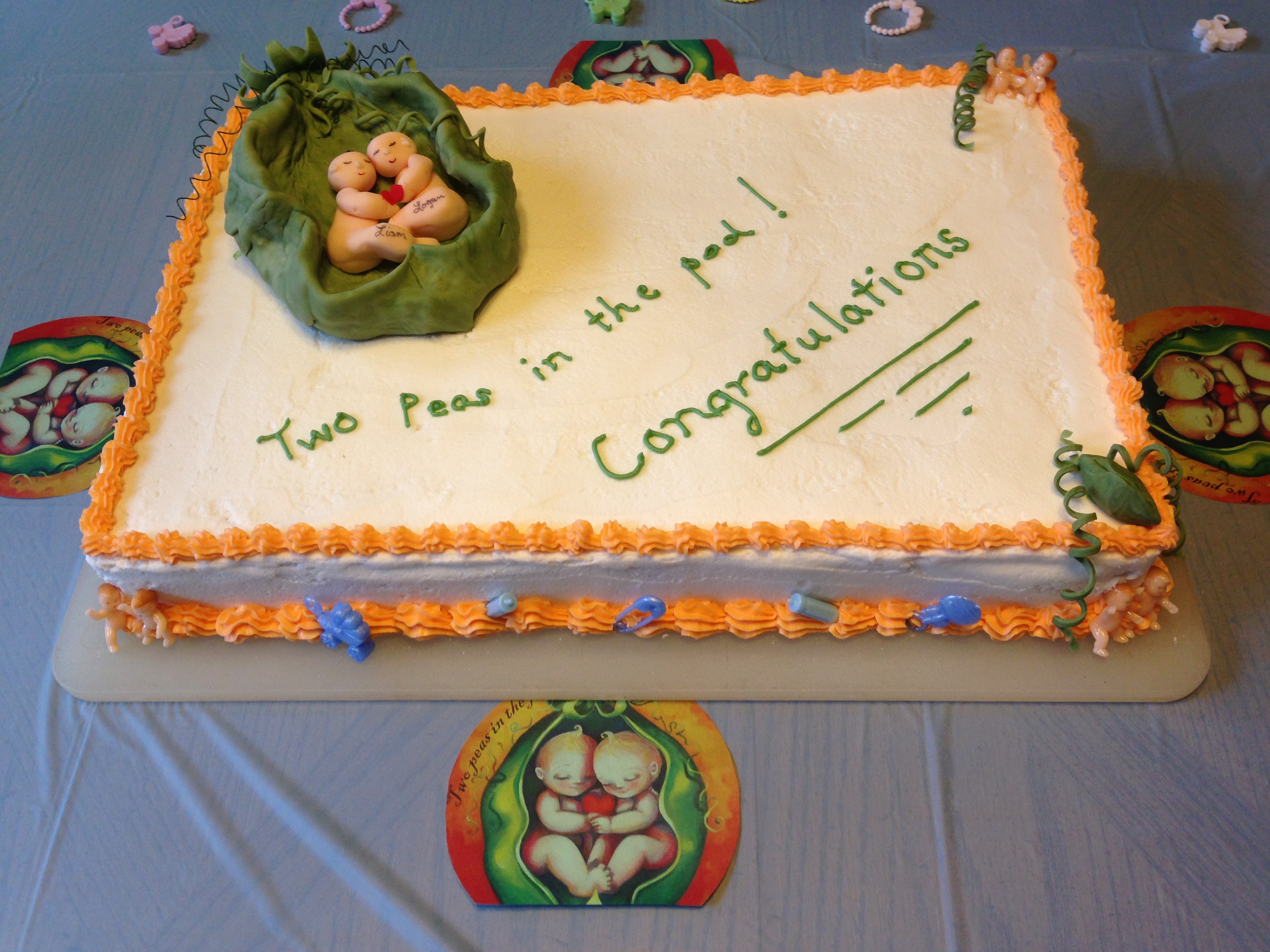
Like taking a cake out of the oven fifteen minutes before it’s done, my projects are half-baked when I rush them to my agent, to a magazine editor, or onto my blog platform. And because I’m still too close to the circumstances, the topic is too hot to handle.

Slowing down, and allowing God to add His special flavor deepens the richness of my life, and my work. Most often, this happens when I follow His timing, and don’t pull writing topics out before they are ready.

  • These are projects I want to write.
  • Need to write.
  • But the time isn’t right.

While I wait for the chemistry of those ideas to solidify, there’s plenty of other things to work on. I have life experiences already baked and cooled. But changing writing topics is like changing cake flavors. It requires putting some things away, and laying out a whole new list of ingredients. So how do I make sure I don’t mix things up in the process?
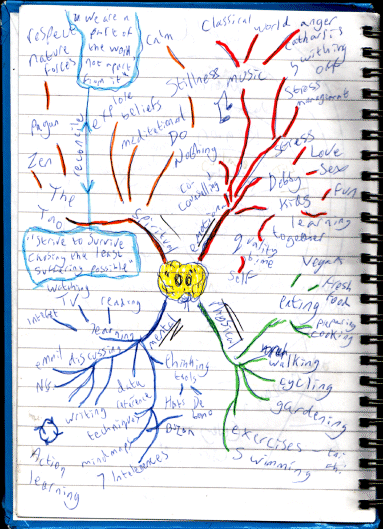
Mind Mapping ImageSpending a mere fifteen to twenty minutes helps me realign my thoughts into an organized fashion appropriate for the topic I need to focus on. One of my favorite brainstorming techniques is Mind Mapping. This process is simple, fast, reduces distracting thoughts, and moves me into a heightened creative flow. It pulls buried memories from the dark pantry of my brain.

Writing effective non-fiction often means living through a subject before you write about it. And Mind Mapping takes what we learn and develops those lessons into a teachable format. It ensures we won’t forget to relate any important part of the process to our readers.

Mind Maps enhance our memories and help us present concise non-fiction book projects. Mixed, baked, and cooled until the end product is just right. Showing readers what we lived, before we wrote.


Just Look at Me: Encouragement for the Highly Distractible Writer

file000551198693 (1)

When my sons were toddlers, they were so easily distracted (look: a squirrel!) that I often knelt down and gently placed my hands on their cheeks to help them listen.

“Look at me,” I’d say, waiting until their eyes met mine. Then I asked them, “What did Mommy say?”

Lately, I’ve felt God kneeling down, kindly pressing His hands to my cheeks. “Look at me,” He says. It’s not only a call to attention, but to single-minded devotion.

“Yes, Lord, ” I reply, taking my eyes off Facebook, Pinterest–even the Wordserve Water Cooler–and focusing on Him.

I feel Him kneeling down when I get jealous about other writers’ accomplishments; when I spend too much time clicking and too little time praying; when my tendency to compare Facebook “likes” and Twitter followers distracts me from the reasons I write.

Last week, I let Satan discourage me. Look at that author, he said. She’s your age and has written twice as many books as you have. Plus, she has a radio show, and her speaking resume is much better than yours. 

I started to get insecure, until I remembered the Lord’s hands on my cheeks. “What did I say?” He asks.

“Just look at me,” I respond.

I get it, Lord, I really do.

However, it’s hard to keep my focus when I am required to use social media for my part-time editing job. Plus, our post-recession world of high technology and low discretionary income means that book publishers’ marketing budgets are shrinking, while editors’ expectations are rising.

Sigh. This business is not always good for a highly distractible author…and yes, the apple does NOT fall far from the tree. (Look: a new webinar on building your tribe!)

I know I’m not the only author who struggles with this. Or at least I hope I’m not. So, let’s lean in and focus on our Parent’s eyes for a second.

“Do you hear what I’m saying?” God says.

When we spend time with Him, and hear His perspective on this crazy profession He’s called us to, we realize that He has uniquely called each of us to a highly specialized path.

I don’t have to be like anyone else. Although God calls me to work diligently at my craft and creatively tell people about my books (not for my glory, but His), I shouldn’t obsess about numbers, lists, or honors. All that leads to a place called “Crazy-ville.” And trust me, I can get there on my own.

My fellow scribes, God is calling me–and you–to be faithful and obedient:  “But seek first his kingdom and his righteousness, and all these things will be given to you as well.” (Matt. 6:33)

Just look at me, He says, and write what I’ve told you to write. Write out of the overflow of our relationship, and trust me for everything else.

As a friend says, “God’s got this.” We can trust Him. After all, those heavenly hands on our cheeks are nail-scarred…from His scandalous, all-consuming love for us.

The Best Advice I Could Have Given Myself

SignatureCountry artist Brad Paisley released a song in 2007 titled “Letter to Me,” in which he gives his teenaged self advice for the future. It makes me think about what I would have advised myself thirty years ago when I began my freelance writing career. So, with a tip of my own cowboy hat to Brad, here’s my letter to my younger self!

Dear Jan,

I am you thirty years from now, and I want to give you some advice about writing.

  1. Get a day job. You are never going to be on Oprah talking about your bestseller. (Oprah is a person with a very influential talk show in the future. She has a book club, and Tom Cruise jumps on her sofa. Enough said.) Accept the fact that your writing habit will never financially support you. Fortunately, your husband will, so be sure to say “Yes” when a guy named Tom proposes to you. You’re going to think he’s just trying to cheer you up because your car’s water pump broke down, but he’s serious. DO NOT LAUGH IN HIS FACE, because he will never let you forget it. (Although it will make a great blog post. A blog is …never mind. You’ll find out later.)
  2. No matter what you think, your first and second book manuscripts are trash. Really, they are. It would be nice to just skip writing them altogether to save time and effort, but if you don’t write them, you won’t write your third book, which will find a publisher. Just thought I’d let you know.
  3. You’re going to meet a woman named Belinda. Don’t ever tell her you’ve written a book, because even though she’s going to be one of your best friends, she’s going to drive you crazy with her constant stream of ideas for books SHE wants to write. If she ever brings up that she’s thinking about writing a book, immediately change the subject. (You can thank me later.)
  4. Write a YA romance series about a vampire and a high school girl. Believe it or not, it will sell and launch a publishing trend. I’m serious.
  5. Speaking of serious – stop taking yourself so seriously. There are many, many writers out there. The bad news is that you have to compete with them for contracts. The good news is that the writers you meet will absolutely enrich your life, if not your pocketbook. (Reread #1 above.)
  6. Don’t give up writing. You will get published. You will also get rejections, but that’s part of the package, so get over it and get it out of the way. It will give you more time to write and more confidence in your writing. Writing is your gift, so enjoy it, develop it, invest time and effort in it, and it will reward you in ways you can’t even begin to imagine.
  7. Finally, if you ever have a chance to buy stock in a company named Apple, you might want to do that.

Love you!

Jan

What advice would you give your younger self?

Around The Block With Writer’s Block

do-not-write-in-this-spaceSome people say that writer’s block is what gets the housework done, but if that were true, my house would sparkle and shine.

My vitamins would be alphabetized from A to Zinc, my nightstand drawer would contain no crumpled tissues of questionable provenance, and the frisky lint bunnies behind the dryer would now be reproducing in the rubbish bin.

For me, writer’s block doesn’t get the housework done, but it is what keeps the Internet humming along. And I don’t only turn to the Internet as a writer’s avoidance behavior, either. Hanging out online may prolong the blocked condition somewhat, but if I give the Web even half a chance, it eventually provides the cure I so desperately crave.

First, of course, there’s Facebook. Like other writers, I’m lonely. Ye Olde Writer’s Cave is dank and dreary and its stalagmites stab at my soul. But scrolling through my news feed–replete with photos of gregarious dogs who say funny stuff, sullen cats pictured splayed across Other Writers’ Keyboards, and videos of friends’ new grandbabies–brings me to my senses fast. There are worse things than loneliness.

Like wordlessness. And booklessness. And publisherlessness. Oh, my.

If Facebook somehow fails to snap me out of writer’s block, I click over to Pinterest. Within seconds, I’m immersed in a fantasy world of exotic locations, bohemian wardrobes, hunky men (some of my Pinterest friends are edgy with their pinning!), gorgeous homes, and just desserts.

It’s the desserts that get to me, if anything on Pinterest can. I’ve read that even viewing a luscious treat can cause–in some susceptible individuals–an insulin response with corresponding weight gain.

Let’s just say I’m highly susceptible.

When I literally feel my bottom-in-chair growing larger while innocently viewing the ingredients list for yet another bacon-intensive appetizer, I know I’m a site closer to loosening the block’s grip on me. One more stop on the Internet and I’ll be home free and back to cranking out another chapter.

I know exactly where to go, too.

If I truly can’t find two words to put together, my fingers click over to Craigslist, the piece de resistance in breaking the back of writer’s block.

Now, not just any category on Craigslist will do. I skip the ads for RVs and energy-deficient major appliances and ancient treadle sewing machines. I have no use for the personal ads, and discussion forums about dying and haiku aren’t really my thing.

Instead, I wallow in the hundreds of jobs on offer, immerse myself in the positions I could be applying for that might surreptitiously scratch my writer’s itch, that might anesthetize the pain I experience when I’m not doing my real job. The job I’m meant to do. Putting down glorious words, one after the other, preferably in the best possible order.

Can I hope to find employment as satisfying as writing is on a bad day, a job that could truly replace my need to write?

I pass over the ad for an exotic dancer for bachelor parties, but not without thinking of that Facebook poster that shows two gals dancing—one young and agile and the other old and clumsy. The captions read, “How You Think You Look” and “How You REALLY Look.”

Then I skim this heading: “Bilingual Interpreters Wanted! Spanish and Many Other Languages!” But somehow “many other languages” seems like Triglingual Interpreters Wanted. Or perhaps Quadlingual or Quintlingual, not that it matters. I only speak English with a smattering of adorable French phrases thrown in, mostly on the topic of finding the salle de bain closest to my train’s platform.

Being reminded of my obsession with locating the bathroom (in as many languages as necessary) draws me to another ad, this time seeking a participant in a medical study about urinary incontinence. It offerers $1200 compensation for time and travel expenses, plus a generous Depends allowance. I shake my head in dismay.

“You’re all wet,” I say to myself, a victim of my own dry wit. “These jobs aren’t for you. Maybe you should start with finishing this blog post, and then see what happens next?”

Before I shut down Craigslist, my eyes fall on one last ad.

“Surrogate Mothers Needed! Earn $28,000 and Up!!!!!” I feel a visceral (if latent) nurturing instinct flow through me while reading the job description. The money is certainly tempting, but then it hits me. They’re probably looking for someone with a uterus. There’s always a catch.

So that settles it. I’m a writer, and getting caught in a bad job won’t fix that. Only writing will. Once again, the Internet’s cured me of a vicious case of writer’s block.

This time, I hope, for good.

Do you suffer bouts of writer’s block? Any cures you’d like to share?

Are You a Good Literary Citizen?

ID-10032339

Are you a good literary citizen?

I’ll never forget it. I was probably eight or nine years old, and my family had gotten up early to get a spot in the front for the Blossom Time Parade in a neighboring town.

This was a big deal. Every year, thousands of people from Southwest Michigan gathered, anticipating a show of marching bands, fire trucks, homecoming queens, and buckets of candy thrown out to kids scurrying in retrieval around the pavement like ants.

The year I recall was an extra-big, super duper deal, because “Samantha”–the youngest child from the quasi popular 1980 sitcom Gimme a Break!–was scheduled to appear.

Now, I wasn’t a big fan of Gimme a Break!, nor did I think Samantha was the best child-actor of my youth, but she was going to be there, in my small town parade, and I loved to act in school, and every time I thought about meeting a real life star, a firecracker lit and crackled in my gut. I pushed my way to the front of the crowd at the parade, armed with a glittery pink pen and my diary.

Samantha waved and smiled as she sat on top of a cherry red Corvette. And then it happened. The car paused in line, waiting for the parade to continue, and a swarm of preteen girls crowded around Samantha, holding out pictures and paper for her to sign. My legs took off, and before I knew it, I was there too, in the swarm, buzzing, waiting for my turn to ask for an autograph.

Once most of the girls got their autographs, the car started to move. Panicked, I held out my diary to Samantha as her handler winked at me and said, “Surely we have time for one more.”

My heartbeat skipped.

“No! We don’t have time for any more,” Samantha hissed, pushing my diary towards my chest. Her eyes met mine coldly. “I’m done.”

The driver switched from the brake to the gas. I watched Samantha creep forward in the parade, once again smiling and waving to her adoring fans.

Who knows what was going on with Samantha. Everyone has bad days. But I have to admit, I was one disappointed, disenchanted little girl.

I decided that if I were ever fortunate enough to do well at something I loved, I’d be sure to be kind.

Fast forward more years than I care to admit, and I’m pleased to announce that time and again, as a new author, I’ve encountered kindness and generosity in the literary world.

What is a good literary citizen?

This is my definition: a person who supports creativity, who esteems work, and helps others grow in their craft. It’s a person who buys books (and lots of them!) and networks on behalf of authors and writers she or he admires.

I think about Samantha when authors share their knowledge of writing and publishing with me. I think about Samantha when I witness someone farther down the publishing road give a nod and a hello to another starting out.

I hold out my diary and these kind souls take my glittery pen and jot me a note. “Congratulations! Keep going! Try this agent. Sure, I’ll review your work.” Or even this: “I can’t help you now, but all the best to you!”

I don’t take it for granted. People in the publishing world are busy. There is no reason why some should respond to my letters or emails with such goodwill, but they do. And I learn that sure, there are Samanthas in the world. But that’s okay. There are also authors and writers who do their best to help strong work rise to the surface for all to enjoy.

There are people who value being good literary citizens.

Not every author or writer can help. Not everyone will care to help. But of course, everyone can pass on a measure of goodwill as another pursues her dreams.

And we can do it with kindness for the sake of our literary world.

*In an effort to pay it forward in the literary world, I am doing a daily author interview and book giveaway (from writers who happen to be mothers and write about it) the week of May 6th, leading up to Mother’s Day. Drop by to hear from great authors such as Shauna Niequist, Jennifer Grant, Kate Hopper, Claire Bidwell Smith and one more (waiting on a confirmation :)). Find out more at www.gillianmarchenko.com.

Perseverance: Keep Moving and Writing!

Photo/KarenJordan

He gives strength to the weary and increases the power of the weak … those who hope in the LORD will renew their strength … they will run and not grow weary, they will walk and not be faint” (Is. 40:29-31 NIV)

My legs quiver as I step onto the sidewalk in front of my home. How can I launch out for a walk feeling so weak? I take a second step, determined to go forward with my plan to regain my health by exercising.

Obstacles. My motivation to exercise overpowers my temptation to stop. I gain strength in each additional step, as I begin my lesson in perseverance. But it will not be an easy journey. There are obstacles to overcome and goals to reach. Can I make it? 

Resistance. Exercise, like other worthwhile endeavors, demands strength and stamina. The first morning I attempt my new exercise program, everything within me resists it, like opposite poles of two magnets. I would rather do just about anything other than exercise. So, on my first day out, I let temptation win. I stay home, and I feel guilty the rest of the day.

Failures. By the next morning, my previous day’s failure serves as my primary motivating force. So, I lace up my walking shoes, purchased just for this occasion, and jog slowly out of my garage. My first goal has been accomplished. And the next thing I know, I’m crossing the street facing the next block.

Intimidation. Okay, this is going to be a breeze, I think. But by the time I turn the corner, another fear presents itself, as if to try to stop me in my tracks. An all-male construction crew building a house nearby alarms me because of the recent crimes in my neighborhood. I’m fearful of walking in front of them. But I hold my breath and walk on. I move this obstacle out of the way, as I change my route and proceed in another direction.

Distractions. As I walk uphill, I become short of breath. When I slow down to breathe, a gray squirrel catches my attention. He’s busy burying an acorn in my neighbor’s yard. I watch him as I walk by. When I look up, I’m already at the end of the street, about to turn the corner to complete another block.

Goals. I continue to accomplish small goals as I walk. In a short while, I’ve gone far enough, and I decide to return to my home. My mind is cleared by the fresh air, but my body is affected by the exercise.

When I arrive home, I’m exhausted, but surprisingly refreshed. As I sit down for a cool glass of water before I shower, I recall the distance I’ve covered. I feel good about myself, and I’m grateful that I resisted the temptation to quit.

Strength. I find strength as I face my weaknesses each day. In 2 Corinthians 12:8, Paul tells us that the Lord’s “power is made perfect in weakness.”

Writing. I’m forced to face my fears and weaknesses in many other areas of my life, especially my writing life. Writing for publication also demands strength and stamina. So, we can expect to face resistance, right? With each new project, goal, or idea, we’re reminded of some past failure, rejection, intimidation, or distraction.

Survival Tips. How do you endure setbacks in your writing life? I’ve learned a few survival tips on the walking trail and on my writing journey  And as I face my fears and take one step at a time by faith, I’m able to go the distance

And now, … one final thing. Fix your thoughts on what is true, and honorable, and right, and pure, and lovely, and admirable. Think about things that are excellent and worthy of praise.  Keep putting into practice all you learned and received … Then the God of peace will be with you. (Phil. 4:8-9 NLT)

Where have your faced resistance in your life? How did you overcome it?


Photo/KarenJordan
YouTube/mrnmrsyounger (MercyMe – “Move”)

Of Making Many Books There Is No End, Dear Me . . .

Last month I attended the Association of Writers and Writing Programs Annual Conference & Book Fair in Boston. With over 11,000 writers in attendance, over 500 readings and sessions on everything from teaching creative writing to getting published, and over 650 exhibitors at the book fair, the AWP is easily the biggest literary conference in North America.

This is the third year I’ve attended. I bring home lots of book fair goodies for my students—writing contest announcements, literary magazine samples, little notebooks and buttons and koozies and USBs with literary slogans on them—and I always learn lots about both teaching writing and the business of writing.

Nevertheless, by day two of the four-day conference—though I’m still looking forward to the panel sessions and readings I’ve highlighted in my AWP planner—I’m impatient for it to be over with. It’s not just my usual introverted person’s conference malaise. It’s the feeling I have every time I enter Barnes & Noble, only 11,000+ times worse. Being in the company of that many fellow writers makes me feel so hopeless.

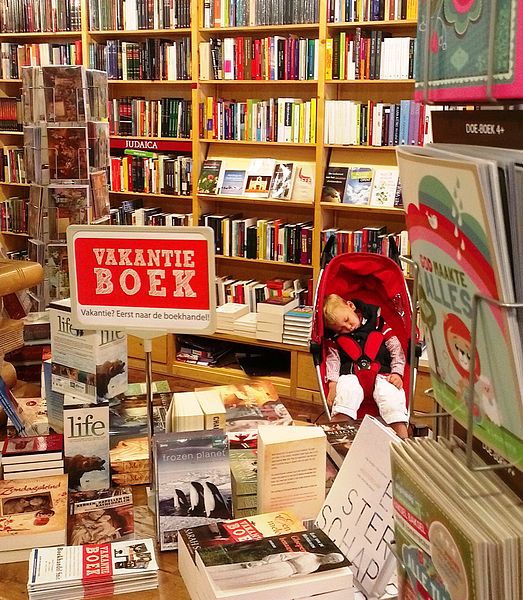
So many authors. So many books. Sleeping_at_the_bookshop_cropWho in the world will ever read all of them? I ask myself. And even in the privacy of my own mind, I don’t allow myself to ask the logical next question: What can I add to the billions of books already on the shelves, the eleven-thou-drillions of books yet to be published? And why bother?

Whenever I am overcome with one of these fits of writerly despair, I reluctantly remember the Wise Teacher’s remark at the end of his book of the Bible: “Of making many books there is no end, and much study is a weariness of the flesh” (Ecclesiastes 12:12 NRSV). The passage is often preached as a disparagement of all writing but the Bible. As the Jamieson, Fausset, Brown Commentary Critical and Explanatory on the Whole Bible explains, the “many books” in question are books “of mere human composition . . . as opposed to . . . these inspired writings,” and it is the study of these “mere human books” which “wearies the body, without profiting the soul.” What could be more discouraging to a Christian writer?

In any case, in hope of uncovering some trace of writerly optimism in the Teacher’s words, I went to Eugene Peterson’s paraphrase of the passage. Here it is in context:

Besides being wise himself, the Quester also taught others knowledge. He weighed, examined, and arranged many proverbs. The Quester did his best to find the right words and write the plain truth.

The words of the wise prod us to live well.
They’re like nails hammered home, holding life together.
They are given by God, the one Shepherd.

But regarding anything beyond this, dear friend, go easy. There’s no end to the publishing of books, and constant study wears you out so you’re no good for anything else. The last and final word is this:

Fear God.
Do what he tells you.

And that’s it. Eventually God will bring everything that we do out into the open and judge it according to its hidden intent, whether it’s good or evil.
(Ecclesiastes 9-14 )

The Teacher—or, the Quester, as Peterson calls him—starts out by describing to his “dear friend” his own writing process: a weighing and examining and arranging not unlike the “orderly account” based on “investigating everything carefully” that Luke tells his own dear friend was his method in writing his gospel (Luke 1:3 NRSV).

Like any good writer, the Teacher seeks to tell the plain truth in just the right words. That, in any case, is what I keep telling my writing students should be their goal as writers.

Beyond that, the Teacher seems to be saying in Peterson’s version, don’t stress about it. Just strive to do what God wants you to do and trust that God will make of it what he wants.

And that, today, is my comfort as a writer, and my prayer: that my hidden intents will be found worthy and that God will make of my efforts what he will.

Writing With a Day Job

Writing Career Plus a Day Job
Juggling a Day Job With a Writing Career?

Are you a writer, or an aspiring writer with a day job? Ever get tired trying to juggle at least two careers, (day job and writing), along with mommy, daddy, spouse, family, friend, and church duties?

If so, you are not alone. A conference speaker gave this statistic. “About one percent of writers succeed at getting published. Because most drop out of the race.” Here’s my post on that experience.

Embedded within that percentage is a smaller number of those who can actually afford to write full-time. Making the leap to a devoted writing career usually requires long-term planning, intentional strategy, and detailed tactics. Jeff Goins’ recent blog encapsulates a great way to approach the goal of becoming a full-time writer. The steps he outlines, I could have written myself. (More on that in a later post.)

But if you’re reading this now, odds are writing with a day job is your reality. Anything else may feel like something built on fluffy clouds.

So how do you bring home the bacon, fry it up in a pan, serve it to those you are responsible for, and after the dishes are done still find time to pursue that dream throbbing with every heart beat? Can it be done? I believe the answer is a resounding YES!

People often ask me how I accomplish everything at work and home, plus write blogs, devotionals, articles, and books. After I imagine my cluttered living room, (I’m not Wonder Woman, something has to suffer), three things come to mind. “Resolve, listen, act.”

As a writer with a day job:

Juggling a Writing Career and a Day Job
Resolve to Invest Time in Your Writing Business

A. Resolve to invest wisely.

  • Treat your day job with respect. Just because you have a higher calling, or a bigger dream, don’t discount the gift of your employment today. After all, it pays the bills, and you can glean great writing fodder from things that happen in your workplace.
  • Watch less television, and write more. 
  • Create your own Writer’s Cave.
  • Rise earlier, and allow fewer sleep-in days.
  • Write when you’re tired, energized, or just so-so.
  • Schedule writing, don’t wait until you feel like it.
  • Celebrate small victories. Fifteen minutes putting words on a screen are worthy of excitement.

B. Listen to voices of genuine authority.

  • For me, the voice of God rings truth above any other I might listen to. Early on, I asked the Best Selling Author of All Time to mentor me, and He hasn’t let me down yet.
  • Do not disregard those who have written with day jobs before you. Heed their valuable advice.
  • Seek the wisdom of professional agents, editors, and publishers. They are in their positions based on education, experience, and talent.

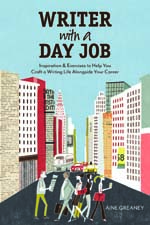
Writer With a Day Job Book CoverC. Act on what you are taught.

  • Be a doer — not a hearer, dreamer, thinker, talker only.
  • Keep something for notes with you always. Inspiration comes in strange times and places.
  • Make tiny goals like, “Write for five minutes before I leave for work.” You will encourage yourself with things to look forward to, and enjoy a sense of satisfaction when you complete them.
  • Keep your word. It’s better not to make a promise at work, or as a writer, than to make one and break it.

Have you read Aine Greaney’s fabulous book, Writer with a Day JobIt’s full of tips, exercises, and encouragements.

The Letter

Sometimes, I don’t think we as “Christian” authors give credit to how extraordinary our calling is. I’m speaking specifically to those writers who feel it is God’s will for them to write. We write because we feel burdened to do so. Not burdened like a chain around our necks but restless that if we don’t write then we are not fulfilling what we are here to do.

dark portraitSometimes that calling in light of our circumstances is hard to manage.

Long hours at the keyboard. Perhaps long hours banging your head against the wall when the words don’t seem to be flowing as they should. Managing two careers and likely a family. Wondering how long you can keep up the pace of working two jobs (yes, writing is very much a job) when one’s maybe not paying you as much as you thought it would. No, I haven’t gotten a James Patterson paycheck. Wondering when, if ever, we’ll hit it “big”. Wondering what “big” is?

I think, too, there is added pressure if we consider ourselves Christian authors. Now, there’s a whole other level of worrying/thinking. Is this what God wants me to write? Why did God take me down this path if I can’t survive on this income? Am I writing when God wants me to do something different? Am I still working my “real” (and paying) job when all God wants me to do is write?

LampPost

And so we look for God’s little lampposts along the path. Something—anything to affirm that this is the right, chosen path. That our typed words on a white screen would make a difference to someone, somewhere, in a Godly way. That someone’s faith would be affirmed—strengthened. That maybe our words would give sense to what Jesus did on the cross in a way that someone could then believe in that sacrificial offering for their own lives.

Now, after being on this journey for a couple of years, this is what I know. Sometimes these lampposts along the path are not what we think they will be. Maybe my affirmation is not in selling a gazillion copies of my book or hitting the bestseller lists.

But in a letter.

One of the smartest things I did as an author was leave an e-mail address in my published books and ask readers to e-mail when they finish with their thoughts. Some authors don’t do this for fear of spamming, privacy, etc. You can list your own reasons.

So far, I haven’t received any creepy/concerning e-mails. I have gotten over fifty letters from readers which is nice when you’re also getting one star reviews (particularly on Christmas Day—yes, that did happen!)

I’ve only sobbed over one letter—thus far.

It was written by a woman who had just finished Proof—my debut medical thriller. Proof, at its heart, is about Lilly Reeves, an ER doctor without faith and her journey to coming to know Christ through a trial- by-fire series of events.

In the novel, a physician friend tells Lilly the story of Lazarus. How Jesus waited three days to respond to his good friends’ cries for help. At first, this seems unusually cruel. But in the end, when Jesus raises Lazarus from the dead, Jesus does a miracle he’s never performed before and gives a prelude to his own forthcoming sacrificial offering.

The letter that brought me to tears was from a woman who was in the midst of her son being diagnosed with cancer. He’d just been through the surgery to retrieve lymph nodes and the surgeon was fairly certain of a lymphoma diagnosis—they were just waiting for the final biopsy results. She specifically mentions this passage of the book and what it meant to her at that moment – “. . .we are praying for healing for our son, but completely trust him to God’s plan, whatever that is . . .”

So humbling.

Remember, God communicated his presence to us in two ways. Through his creation and through his words.

Typed words on a page.

Consider this and the smaller lampposts along your path when you’re wondering exactly why you’re on this crazy writing journey. Maybe it’s not for a James Patterson type paycheck.

But simply for a letter like this . . . and the impact your words will have for one person.

Would this be enough for you to keep going if God has placed the call to write on your heart?

This post first appeared on Elaine Stock’s Everyone’s Story. Check her blog out.

They Also Serve Who Drink and Weep

Coming home .. .. The writing life takes me away from home often. I write this the day after returning from 2 weeks of travel, home to Kodiak Island, to my husband and sons and daughter and Yorkshire terrier who badly needs a groom. I walk through my door and want everyone to kiss me as if I have just been born, as indeed I have.

photo

I am home, but I cannot stop thinking about her, the woman I met on the plane. It was the fourth and last plane of the trip. I was almost there. I edged down the aisle and saw her—crying. Sobbing on her phone. My eyes went dark, my heart tightened. As I stepped past her, I heard her say, “They just told me. I have pancreatic cancer. He gave me 3 – 6 months to live. I don’t want to die!” and she dissolved again into weeping, running her hands through her hair.

She was beautiful, dark-skinned, dressed in expensive jeans, a leather jacket. Her phone was pink. She gripped it so hard, hanging on to whoever was at the other end. My seat was one row back and one row over. I could see her profile, hear every word. I looked around desperately. A woman was dying! And we were calmly sitting in our seats, buckling our seat belts against death—and would soon follow all the safety requirements, while she was no longer safe. What do I do?

a woman with hands covering face

Men sat in front of her, and in back, each one with the bland face we wear when we pretend we don’t hear because we too are afraid. I wanted to do this too, but there was an empty seat beside her. She would be alone this entire flight with no one .. .. And how could I forget what I had prayed that morning? In the hotel room, on my face, wanting this day, this one day, to have a pure heart, to serve someone . . . “May your kingdom come, Your will be done .. May I hear you and serve you this day . . ..” and off I went into another day of terminals and planes—and there she is near me, still crying, the seat beside her empty.  I have work to do—a chapter is due, edits for an article are due, but the seat beside her is empty.

airplane seat

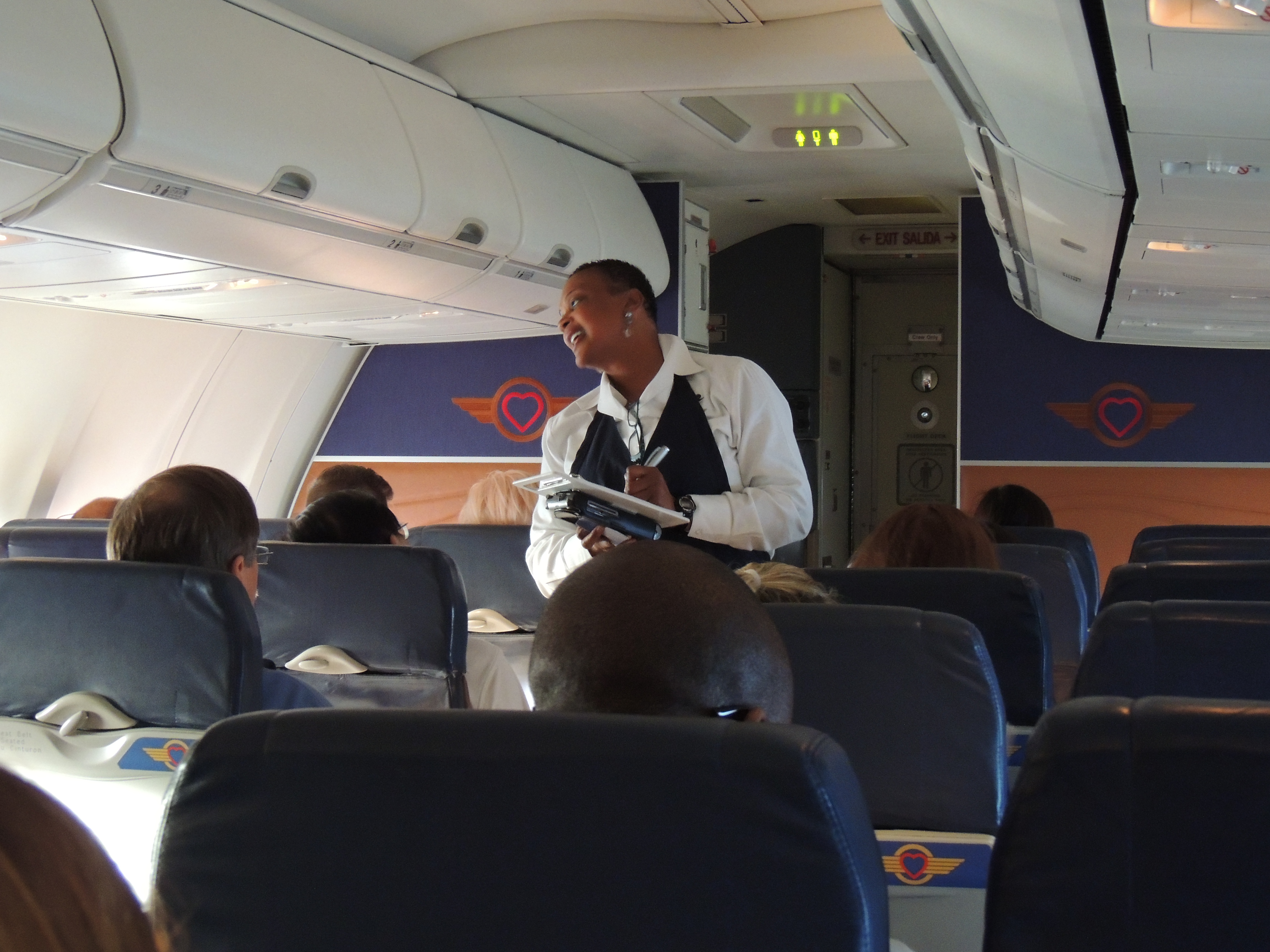
Shaking, I unbuckle my seatbelt, lift my bag and stand beside her. “Is it okay if I sit beside you?” I smile. She looks up at me, surprised, with her ruined face and nods, trusting, like a child, her eyes again filling with tears. I sit, she watches me settle. “What has happened?” I ask her and it pours out, but there are hands now to catch what falls, our shoulders touch, I stroke her arm, and we mourn and grieve and sit together in the shock of it. She is young. She knows Jesus, but she doesn’t want to die she cries again and again through a twisted mouth. I silently scream to Jesus to give me the words. I need them when I am writing, but I need them even  more now … .and they come. At one point she grasps my hands and says, “God sent you to me.” Mostly I am there to cry with her, to drink chardonnay with her. I know the chardonnay will wreck me, but had she offered me whiskey, I would have drunk that too.

It wasn’t much. I write all this not for anyone to say, “Oh, what a great servant you are!” Because I am not. How many people have I not seen and walked past? How many have I seen and still walked past? But this is instead about this wondrous, terrifying God we serve, who has asked one of his daughters to die a hard, early death, and who asked another selfish frightened daughter to sit with her in her fear and aloneness for a short time. It was so little. And she staggered off the plane to walk into the end of her life—and I staggered into a car taking me to stages and microphones.

Here is what I remember : “They also serve who only stand and wait.” John Milton wrote in his sonnet “On His Blindness.” I was going to speak on podiums, in many places, before many people for two weeks, but none of that mattered then. Of all I did on that trip, perhaps this mattered most: “They also serve who only sit and weep.”

2013-04-01 07.20.39

Can tears really be enough? For that day, for that hour, yes. God will provide another servant, and another for every empty seat beside her.

Do we dare ask this each morning? “May I hear you and serve you this day.” Yes, dare. Then watch for the empty seat. Bring tissues. Drink wine if you must. Become a child. Give whatever you’ve been given. Sometimes it will be words. More, it will be your presence and your tears.

And the kingdom of God will come near.