And God Said . . .

maypoproadside flowersLast month, inspired by a woman at a conference whose phone told her where we could get a hotdog, I decided to replace my dinosaur of a cellphone.

My daughters were delighted. They soon had me instagramming photos of their dogs, whom they rarely get to see, being off at college and internships much of the year. Before long, I was posting all the time: my garden’s amazing abundance this summer, pies about to go in the oven, snakes and spotted fawns and wildflowers I see on my runs.

Then, a visiting former student and I entered into a psalm-memorizing pact, and she downloaded a Bible app onto my phone that she said would help me, and soon I was listening to scripture as I ran, the voice of God booming forth from the net pouch I wear on my stomach—I hate earphones—to the astonishment of cattle, dogs, horses, and the occasional human passersby.

Almost immediately, I ditched the psalms for the gospels and soon settled on John—now esoteric, now fatherly—as my favorite voice. On one long run, I listened to everything we have of John’s writing. His three odd little letters I’d never paid much attention to before (one addressed to a woman, who knew?!) His gospel, with its baffling beginning:

In the beginning was the Word, and the Word was with God, and the Word was God. He was in the beginning with God. All things were made through him, and without him was not any thing made that was made. (Genesis 1.1-3 ESV)

And Revelation, for me always an unsettling narrative, in which heaven seems such a strange and off-putting place.

Listening to John’s whole opus read aloud in one go was transformative for me. His wise, kind voice pulled everything together in a new way: the creation, the fall, Jesus’ life on Earth, the struggles and successes and sheer realness of the early church—so recognizably the church of today—and the resolution of everything in the end.

After my run, I stood sweating in my driveway and listened to the beginning of Genesis and had new thoughts about it all. The creation was a work of words:

“And God said . . . And God said . . . And God said . . . And God said . . . And God said . . . And God said . . . Then God said . . .” (Genesis 1.3, 6, 9, 11, 14, 20, 26 ESV).

God spoke everything into being. And speaking being a communal act, involving a speaker and a listener, God would have been speaking to someone. So, not only the Spirit hovering over the waters but the Son—or, as John calls him, “the Word”—was present. And, if John is right that the world was created through Jesus, a narrative of the conversation preceding the creation might have had Jesus speaking with his Father, making suggestions, perhaps coming up with the whole idea.

volunteer arugulaI imagined it so:

“Hey, Dad, let’s make a world swarming with swarms of creatures—live creatures like us. And in it, a beautiful garden full of people just like us that we can love, and they can love us back, just as you love me and I love you.”

And the Father, besotted with love for his Son and surely impressed by his good ideas, spoke, the very words from his mouth giving flesh and movement and life to the words of the Son.

running shadowI didn’t let myself think about what happened afterwards—when, as John tells it, Jesus “came to his own, and his own people did not receive him” (John 1.12 ESV). It was too horrifying. Instead, I stood there in the driveway, teary-eyed about that unwritten conversation into we’ve been invited, not only as people made in God’s image but, the more so, as Word-mongers—God-lovers in the business of inviting still others into the same conversation.

What a responsibility.

What a delight!

10 Ideas for Tension Filled Writing

It was 10:30 at night. Not just any night, but the night before school started. Not just any night-before-school, but my first day of my first year back teaching high school full-time after a decade spent home being a full-time mother to my four precious blessings.

StressedOutWomanI was supposed to be in bed, but instead, I was on the front porch, armed with Rid spray, Rid gel, Rid comb and Rid shampoo angrily picking nits out of my second-born’s hair. She was sobbing. I was sobbing, too. Tears ran down my face making my nose itch. Even my kneecaps (recently shaved, I might add) itched at the mere thought of those hideous creatures.

Arriving home late from a city council meeting, my police chief husband discovered us thusly sobbing, picking and spraying. Without saying a word, he went inside, changed and took over the flashlight holding as we shampooed, checked and double checked until the wee hours of the morning. I flopped into bed exhausted and angry. Why hadn’t my daughter’s friend noticed this illegal immigration into her hair while on a mission trip sooner? Why had my daughter had a sleepover two nights prior, thus accidentally inviting them into our home? How could any of this work out for the best? Surely I would never last an entire school day on four hours of sleep!

That same week, both bathrooms sprung leaks causing a waterfall in my office and falling drywall in the laundry room. I attended Open House with my skirt caught in the back of my belt. My husband kept later-than-usual hours with murder suspects, stabbing suspects and hit-and-run accidents. Wasps made their home under our porch and the upstairs air-conditioning went out. I was hot, tired, cranky and spent my days in fearful waiting for the next plague to strike.

What does this have to do with writing? Nothing. And everything. For it gave me ideas for those times when the ill-timed equivalent of lice arrive on your scene!

1. Remember that the best plots involve conflict, action and drama. If everything in life went according to plan, it would make a boring book. Nobody would read past page two.

2. When life falls apart around you it often provides a forced clarity. Priorities become real. We are reminded that God is as necessary as breath. We invite Him into our lives and into our writing.

3. Every irritating situation has its flip side. Look for the humor and use it to make an unusual tweak in a character or an unique twist in your story line.

4. Listen to real life dialogue and take notes in your head (as if you’re not doing this already!) Sometimes what is being said in response makes a great jumping point for dialogue in your novel or a superb illustration in your non-fiction work.

5. Most likely, you didn’t expire from the stress of these multiple irritations, and your character won’t either. Rather, they can grow, change and develop. It can be a point of humor or a highlight of your character’s movement toward your desired ending.

6. What scriptures, friends, or soothing rituals helped you to cope? Might your characters borrow some of them for their problem pages?

7. Taking a walk or a laughter break can help alleviate stress. Send your character on an imaginary walk, or take note cards outside with you on a real walk and see what happens. Let your characters talk to you about what’s going on in their lives. What tickles your characters’ funny bones?

8. Was there a nemesis involved in your frustrating situation? Maybe this can be a starting point for a quirky or irritating companion to your main character. What did people say about your week/day of crisis that got on your last nerve? Serve it up on the page and make it fit your story.

9. A clump of events or disaster in your character’s life can likewise point him or her to a God who is very real and present. Recall the touch points in your frustrations that made you reach out to Him almost in spite of your determination to be angry or bitter.

10. If you’re stuck in a louse-y situation just now, either in your personal life or in your life between the pages– remember, just as chapters end, this too shall pass. If you’ll likely laugh about it later, try to laugh now. Almost everything, sooner or later, makes its way into the writing craft!

Coming Out of the Wilderness

Denabutterfly1The last half-decade has been full of changes for our little family. Stressors included the death of several friends, unwanted job changes for both my husband and I, health challenges, and a total of four moves in five years. We’ve bought and sold three houses (well, we bought three houses…one is yet to sell, so we’re renting it out). Finally, both my dad and my father-in-law underwent major heart surgery within a few months.

Whew. It makes me tired just reading that . . . let alone living it.

To add to the chaos, my writing career stalled. Ideas I felt were timely were turned down again and again, although my previous editors loved several of them and went to bat for me. I prayed, cried, doubted, and wondered what God was up to. He provided income through work for hire projects, magazine and editing work, and I was thankful. However, I longed to write books again.

I didn’t want to turn my back on God because I felt like I didn’t deserve my circumstances. I longed to be obedient, even in the difficulties. I prayed continually for strength, and I kept seeking Him . . . even when He seemed very, very quiet on the subject of when (or if) we might be done with the “desert” we were in.

Wanna know something? Every time I cried out to Him, He answered. Sometimes He reminded me of a Scripture passage that ministered profoundly to me. Songs came on the radio which seemed to have been written just for my situation. Friends and family members called, texted and emailed me at perfect moments, when I couldn’t seem to take another step or cry another tear. He was faithful. So, so faithful.

Two years ago, my friend Tina called me with a book idea, and I knew in an instant that we were meant to collaborate on that project together. Greg Johnson agreed to represent us, and (in a first for me), we actually had two offers on the project.

WoundedWomenIt came out this month, and my heart is full. Though the process of putting the book together was emotionally draining, it was a pleasure to write with such a kindred spirit. I couldn’t be more excited about the finished product (thanks, Kregel!).  Everything I’ve lived through, in publishing and life, has prepared me for Wounded Women of the Bible: Finding Hope When Life Hurts.

Six  months ago, God led my husband into full-time ministry and moved us back to a place we love. It feels as if we are finally coming out of the wilderness and into an oasis. We are grateful beyond words. And we can see in hindsight that He’d been honing and refining us all along to minister more effectively to hurting people.

Friend, are you suffering today? Do you wonder if God has something against you? And do you fear that you’ll ever feel joy again?In-Gods-economy-our

Oh, I’ve been there. My heart aches for you. But this I know: the path He has you on may seem lonely, and you might not feel His presence. But He hasn’t left.

He is up to something, even when we can’t see it. Until then, trust Him with your wounded places, for one day, they will become ministry spaces.

He promises.

Use of Humor in Thriller Novels

Don’t we need humor in life to make it through? Life is hard. I have two very serious jobs. I’m a real life pediatric ER RN and a suspense novelist. Those can be heavy days but they can also be fun days—by using a little humor to get through.

LaughterMarriage is no different, right? Humor is necessary. What are some of the funniest things that have happened between you and your spouse? To take a break from discussing serious subjects: like death, trauma, and writing suspense—I thought I’d take a humor break and share some funny highlights from my married life.

Do you find that opposites attract? That’s the truth with my husband and I. He’s the quiet introvert. I’m the more outspoken extrovert. He gets queasy at the site of blood. Obviously, I do not. What we have seems to work—as we’ve been married fifteen years.

During our dating years, we were set to see a movie. I drove to his place and let myself in—and then sat there fuming when he was nowhere to be found. This was before the age of everyone having a cell phone. Finally, his phone rings. I answer. He’s on the line. “Where are you?” He asks. “Where are you?” I ask right back. He says, “I’m at your place!”—“Well, I’m where you should be.”

Other funny moments? Let’s see—teaching kindergarten Sunday school with his ex-girlfriend. Well, we can laugh about that now.

My husband likes to trim his own hair. One day, he mistakenly forgot to put the spacer on the clippers and took a swipe. Without much introduction, he comes into the living room and asks me, “Can you fix this?” with one bald stripe down the middle of his head.

I burst out laughing so hard—I still crack up thinking about it. ER nurse, honey—not hairdresser extraordinaire.

Then, add kids to the mix and the potential for a good laugh multiplies. We have two daughters age 8 and 10. When my youngest was perhaps 4 y/o—she was just in one of these pestering type moods. After several attempts at redirection, I finally just say, “Please, just get out of my hair!” In her sweet, innocent voice, she says—“But, I’m not in your hair.”

Sometimes, readers need lighter moments to get them through serious subjects or intense novels, too. I have a very dry sense of humor. My debut medical thriller, Proof, dealt with some very serious subjects and I thought whilst writing the ms—I really do need some moments of levity.

Hence, the humorous pairing of my odd couple detectives, Nathan Long and Brett Sawyer. Nathan means business. He’s serious and organized—bordering on an undiagnosed case of OCD. A southern gentleman. Brett’s the laid back easy type—maybe plays a little bit loose with the rules to get the job done. Often, their interactions provide comic relief in Proof. Let me give one example: an elderly woman with some questionable underwear choices serving them tea with a heavy dose of liquor during an interview. You may think that would never happen. Well, just recently I had a 14y/o show up just in his skivvies—at the ER. That’s right—just the white cotton briefs. And let me say—he was not deathly ill. Plenty of time for that young man to get dressed.

What about you? What’s the most humorous thing that’s happened in your married/dating/writing life? I’d love to know—could end up in my next book.

Names withheld—of course.

Being Equipped

Criticism 1Many times, when I meditate on God’s Word, my eyes are drawn to encouraging and uplifting verses like John 3:16, or “I can do all things through Christ who strengthens me,” or “The Lord is my shepherd, I shall not want.”

And sometimes, as only God can do, He whacks me upside the head with a mackerel as he did during my prayer time the other day when He led me to Proverbs 29:1 (NLT): Whoever stubbornly refuses to accept criticism will suddenly be destroyed beyond recovery.

In the King James Version, this verse reads: He, that being often reproved hardeneth his neck, shall suddenly be destroyed, and that without remedy. Not quite as in my face as the NLT. The Old English makes it a little mushier with having to untie the knots in the sentence.

Not the NLT. It’s like stepping on the wrong end of a rake.

When I began writing seriously, the thing I feared most was receiving criticism. I had always been extremely sensitive to criticism. It came from having a poor self-image and being convinced in my mind I could never be smart enough or good enough. My first reaction was to shut down and then, at the first opportunity, I would go off by myself and brood.

Frustrated Woman at Computer With Stack of PaperImagine taking this attitude into a critique group.

But God, with His grace and favor and wisdom, prepared me. He showed me magazine articles, books, and blogs that talked about receiving and giving criticism. He brought me to my first critique group. There I observed a group of people much more experienced than I give and receive critiques in ways that were constructive and encouraging.

Most importantly, through prayer and wise counsel, He showed me, for the first time, how to see the criticism was not about me personally, but about my words.

Sometimes, it’s still hard to make this distinction. The enemy tries to wedge the door open and tell me negative feedback means I’m no good. But God has shown me, no matter what people think of my writing, I am good. I am His child and, as the old saying goes, God does not make junk.

To refuse and reject criticism is to set myself up for failure, to put myself in a situation of not being published, of developing a reputation of being difficult, if not impossible, to work with. This accomplishes several things I don’t want to happen. People won’t work with me or consider my work because I’m not open about improving it. It hurts God because it takes me out of His plan for me. And it gives the enemy a victory because it takes me out of the will of God and opens the door for him to do even more damage, and, thus, for me to be destroyed beyond recovery.

God’s shown me the purpose of the criticism, how it applies through this verse. The feedback is to help me improve as a writer, to develop and refine my craft, to become a better storyteller. To become a better servant of Him by taking my skills to the highest level possible. To walk in obedience and in the fullness of His plan and calling for my life.

After getting my attention in Proverbs 29:1, He led me to this Scripture, a part of a prayer in Hebrews 13:21 (NLT): May he equip you with all you need for doing his will. May he produce in you, through the power of Jesus Christ, every good thing that is pleasing to him. All glory to him forever and ever! Amen.

He’s equipped to me write and He’s equipped me to receive feedback and instruction to improve my writing so it serves Him even better.

Writers: Move Your Legs! Don’t Get Blood Clots From Prolonged Sitting.

If you sit for extended periods of time, such as during airplane travel or during long road trips, or if you have certain medical conditions, you may be at risk for “Deep Vein Thrombosis” (DVT), or blood clots that form deep in your veins. These clots are dangerous because they can dislodge from your veins and cause sudden death by passing into the lungs, disrupting blood flow, and creating dangerous changes in your heart and lung blood pressures.

A sizeable blood clot that lodges in the lungs can kill a person instantly. I know because I witnessed this on more than one occasion during my internship in Internal Medicine and my residency in Physical Medicine and Rehabilitation. Once big clots enter the lungs, there’s very little you can do to save the person.

Sadly, about half of the time, there’s no outward sign of DVTs. But when there are signs, patients usually complain of calf pain and swelling. They may also have pain on squeezing the leg or when they abruptly bend the ankle upward (this is known as Homan’s sign).

Several factors in addition to the sedentary lifestyle predispose to clots. One factor is family history. Another is the use of oral contraceptives or hormone replacement therapy. Still another is smoking. Additional factors include trauma (including venous catheter trauma), advanced age, cancer, elevated platelet counts, immobility or paralysis of the area (such as due to casting), plane travel, surgery, pregnancy, heart failure, obesity, or a personal history of blood clots.

One diagnostic test for DVTs is an ultrasound scan called a “Venous Doppler” study. Another test measures blood levels of “D-dimer,” which is a natural clot-dissolver found in elevated levels in case of DVT.

If you test positive for a blood clot, your doctor will most likely admit you to the hospital for and start you on clot busters or blood thinners. Sometimes, you might even have a “filter” inserted into the large vein in your abdomen (the vena cava) to trap clots that try to travel upstream to your lungs.

Now, let’s talk about the most important thing: blood clot prevention. First, try to minimize your chances of clotting. Quit smoking, get moving, and lose weight (if you need help with weight loss, check out my book, The Eden Diet. If you sit for prolonged periods of time, wear thigh-high compression hose, which are usually available at your local hospital supply store, and do “ankle-pumps,” where you bend your ankles up and down.

Depending on your risk factors, you may even want to talk with your physician about taking a medicine to prevent blood clots. As is true in many areas, when it comes to DVTs, an ounce of prevention is worth a pound of cure. Or, in this case, an ounce of prevention might even save your life!

Four Fiction Marketing Fallacies

Spend enough time in the writing blogosphere, and you’ll find all sorts of information on all sorts of topics. But by far the most misunderstood and misrepresented area is that of marketing. We all know that once you write a book, you’re going to have to market it somehow, but opinions on how to best do that vary wildly.

Today we’re going to take a look at the most common fiction-marketing fallacies:

Skye1. Good marketing is more important than good writing.

If you spend any time at all on writers’ sites and blogs, you will hear the opinion that platform (and marketing) is the only thing you need to sell a book. Quality doesn’t matter, just the number of followers you have on social media, the numbers of subscribers on the mailing list, and number of free books you can “sell” on Amazon to boost rank.  Proponents of this idea cite badly-written but heavily promoted books from the New York Times Bestseller list.

But this is unquestionably a fallacy. For one thing, it reflects a poor view of the reader, supposing that buyers can’t tell a good book from a bad book. Even if you do manage to sell bad books through your marketing methods alone, readers will only be fooled once. They won’t buy your next one. Your goal should be to write an excellent book, market it well, and rely on good reviews and word of mouth to help build momentum for your next release.

Inspirational romance author, Becky Wade says it best: “An author who invests thousands of dollars and hours in publicizing her novel will convince some people to spend their hard-earned money and time on it.  But if her readers aren’t crazy about her book, they won’t buy her next one.  Worse, they might tell their friends not to bother.  So what’s the author accomplished, ultimately? In my opinion, the best way for any author to get word of mouth going is to write a book that readers love.”

2. Platform can wait.

On the opposite side of “marketing is king” is the idea that fiction writers don’t need a platform. While it’s true that platform is far more essential for a non-fiction writer, who will rely on his or her established network of followers to sell books, fiction writers still need to give some thought to how they will reach their readership.

You don’t need a ready-built platform to acquire an agent or sell a novel to an editor. But, at some point in the publishing process, your acquiring editor, marketing manager, or publicist will contact you about your marketing plan. You probably don’t want to be thinking about it for the first time when you’re knee-deep in substantive edits. At very least, you should be building a following on Facebook, Twitter, and your blog (if you have decided to blog) pre-publication. It would also be helpful to think about the rudimentary bones of a marketing plan, including your mission statement as a writer.

3. Social media is the only method you need to sell books.

The third fallacy is probably the most widespread. Writers spend hours a day on Facebook and Twitter plugging their books to their followers. Social media can be a great place to interact with readers, but it’s certainly not the main place that books are getting sold. (And over-promoting on social media is more likely to lose you followers than create new fans.)

According to Jeane Wynn, President and CEO of the publicity firm Wynn-Wynn Media, “It takes all types of media to sell books. Social media is one component of a successful publicity campaign, but so are trade reviews, online reviews, blogs, and broadcast media. Writers shouldn’t focus on one area to the exclusion of all others.”

Besides, as every writer knows, “marketing” on Facebook can quickly become an avenue to procrastination!

4. My publisher will do all the marketing for me.

It is true that some of the larger publishers, especially in the inspirational market, will do a huge amount of marketing for their authors. For the most part, though, stories of book tours, television commercials, and full page magazine ads are either writer urban legends or perks reserved for best-selling authors with huge followings and major name recognition.

The amount of publicity and marketing help that a publisher will give varies from house to house and even from author to author. Even in the best case scenario where the publisher is involved and proactive, writers should plan on spending a substantial amount of time helping market their books around launch time, whether it’s writing guest blog posts, filling out online interviews, or arranging speaking engagements.

Remember, no one will be a more enthusiastic advocate for your story than you!

Writing a good book may remain the most important focus for an author, but marketing is a large component of turning writing into a paying career. Setting the proper expectations and thinking ahead now will go a long way to smoothing the marketing process during publication.

************************************************************************************************

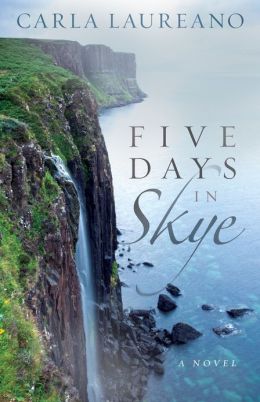
CarlaCarla Laureano has held many job titles–professional marketer, small business consultant, and martial arts instructor–but writer is by far her favorite. She is a member of American Christian Fiction Writers (ACFW) and currently serves as Vice President of the South Denver ACFW chapter, Mile High Scribes. Her debut romance novel, Five Days in Skye, was released by David C Cook in June 2013. The first volume of her three-book young adult fantasy series, The Song of Seare, is due out from NavPress in May 2014. She lives with her husband, two sons, and a menagerie of small pets in Denver, Colorado.

Facing Your Fears as a Writer

Photo/TaraRoss

Write down for the coming generation what the Lord has done, so that people not yet born will praise him. (Ps. 102:18 GNT)

I’m always looking for ways to encourage people to tell the stories that matter most. As a writing instructor, I’ve often observed the need for others to tell their stories.

Passing along our faith and family stories helps us make sense of some of the crucial issues that we face in life. When Christians begin telling the stories that matter most, lives change and hearts heal.

But fear silences the voices of many Christians, preventing them from telling their stories. And if you’ve considered writing for publication for any length of time at all, you’ve probably faced the emotion of fear in your work. Many obstacles keep us from telling our stories—personal insecurities, writer’s block, or a variety of excuses.

Excuses. I can think of so many examples through the years when I just sat back and waited on someone else to do something that I knew I needed to do myself. And I can always come up with an excuse about why I can’t do something.

Before my own children became independent, I often reminded them, “Delayed obedience is disobedience.” I never wanted Adam and Tara to be afraid of me, but I knew delayed obedience might be dangerous and harmful at times. But even though my instructions were motivated out of my love and concern for them, they often resisted. Yet I persisted in my discipline. I prayed that they would learn obedience as children, so they would obey God and their God-given authorities as adults.

I even offer myself excuses now, when I don’t want to do something, like making my bed. What does it matter if my husband Dan does that? It’s his bed, too! And our unmade bed obviously bothers him more than it does me anyway.

But what about the things that God calls me to do? What kind of excuses do I use to attempt to justify my disobedience?

  • That’s not my “gift.”
  • I’m not trained to do that.
  • What do I have to say?
  • I’m not a “good” speaker (writer, teacher, blogger … whatever).

Insecurities. As I searched the Bible to try to find some answers to my problem of fear, I discovered that I was in good company.

In fact, when God called Moses to lead His people out of bondage, “ … Moses protested to God, ‘Who am I to appear before Pharaoh? Who am I to lead the people of Israel out of Egypt?’” (Ex. 3:11 NLT).

Moses knew that this assignment was way out of his area of expertise and experience. And Moses knew that he couldn’t do this impossible task in his own strength or with his limited wisdom. But his awareness of his own limitations proved to be one of Moses’ greatest leadership qualities. It forced him to become totally dependent upon God.

Do you think that God was shocked by Moses’ questions and concerns? I don’t.

Promises. In fact, God responded to Moses with the assurance of His presence, not His judgment. “God answered, ‘I will be with you’” (3:12).

I don’t believe that my questions surprise God, either. God still promises to always be with us today. “… And be sure of this: I am with you always, even to the end of the age” (Mt. 28:20).

And He also promises to provide all that we need to do what He calls us to do.

“And I am certain that God, who began the good work within you, will continue his work until it is finally finished … ” (Phil. 1:6).

What’s keeping you from telling the stories that matter most to you?

Photo/TaraRoss
YouTube/JoshWilsonVEVO (“I Refuse”)

Consider the Source: How Reviews Reflect Our Experience

I recently read an account of a celebrity and her young daughter which captured the concept of feedback from a unique perspective. Having completed a Google search, the daughter was troubled to find that strangers were saying all kinds of things about her famous mother, both positive and negative. The mother told her daughter that when people make those kind of comments, the feedback is based on their own individual experiences. Therefore, when people provide comments, they are typically talking about themselves, whether they realize it or not.

What an epiphany, and what a great way to see feedback (like reviews) in a completely different light. People are a product of their own experiences, strung together like pearls over the course of a lifetime. If art imitates life, then reviews of art imitate the reviewer‘s life. Reviewers respond to reading material based on their own individual experiences. When people read books, they view them through their own filters which have been carefully created over their entire lives. These filters can be likened to stained glass windows. The color of the light shining through a stained glass window is contingent upon the color of the glass.  The light is reflected through the filter of their own experience.

Reviews heart book

If you are a writer, reviews are vital to your career. Although positive, warm, glowing reviews are wonderful and make us feel good, constructive feedback is helpful. Of course, no one is thrilled to get a bad review, but most people are actually quite gracious. They are typically honest, genuine and simply expressing the opinion of their own experience. The good news is that people who write scathing reviews are few and far between. However, even bad reviews can yield good things. Having a disparate personality review your material gives you a 360 degree glance that you may never have considered. If a review says that a book skims over the best parts; that means the parts they found most interesting. Do they have a point? Are they right? Is there a way to take that feedback, take it to heart and learn for the next time? Probably.

Let’s say you have a book available on Amazon and Goodreads. You may find that you have very different reviews on those websites. The Goodreads reviewers may have higher expectations as a literary community. If you feel a bit down about a review, check out some of the feedback for many of the classics (The Sun Also Rises, Catcher In the Rye, To Kill A Mockingbird, The Great Gatsby, to name a few). These works that have been part of the literary canon for years are still subject to scrutiny – and that’s okay. There are books out there that some will say are too controversial, and that others will say are not controversial enough. You can’t win over all of them, but you can still learn from all of them.

Pay attention to the words in the reviews: “I found this book to be a bit slow.” “I thought this book was going to be funny, but it’s not my kind of humor.” “I prefer stories that take place in present day as opposed to historical fiction.” This is why finding the appropriate audience for your work is so important. The audience will automatically be more open and enthusiastic to the material if their filter resonates with your own. 

In conclusion, when a person writes a review, they are often writing about themselves and their own life experiences. Keeping that in mind may make all the difference for your own development, as well as remind you to maintain some perspective about your next constructive review.

What are your thoughts on book reviews and reviewers?

Just Ask

The other day, while waiting on the phone before a live radio interview about my latest book, I prayed from my computer screen the Psalm that I had assigned myself as part of a memorization project a friend and I had embarked on. Our goal was not to memorize all the Psalms—that would be too hard—but just to acquaint ourselves with the gist of each one and memorize a favorite verse. Mine, from Psalm 2, was verse 7, in which the unspecified psalmist says, “I will proclaim the Lord’s decree: He said to me, ‘You are my son; today I have become your father’” (Psalm 2:7 NIV).

Interviews stress me. There’s no predicting what the host will ask. Sometimes they haven’t read the book, so I spend the whole interview trying to untangle what it’s really about from what the host thinks it’s about based on the title or cover material. Other times, they’ve read the book but have specific questions about parts of the book I’ve forgotten. Add to that the time constraints! A typical radio interview lasts only ten or fifteen minutes, including breaks for commercials and station identification. Invariably there’s a final question that begins, “In the thirty seconds before we break, can you explain …”

The worst part of radio interviews is that I’m very picky about how I say what I say—which is why I’m a writer and not a speaker. As a writer, you can revise your thoughts, or delete them entirely. In an interview, you’re committed to whatever crazy business emerges from your mouth in the moment.

Or maybe an even worse part of radio interviews is my general antipathy to self-promotion. Why can’t I just write, I wail inwardly, and leave that part of the publishing process to someone else?

To calm myself, I imagined the Father actually speaking the words of the Psalm to me: “You’re my daughter; today I have become your father.”

Frank Weston Benson--My Daughter Elizabeth
F. W. Benson–My Daughter Elizabeth

What a thrilling thought! The God of all creation as my actual parent.

When I got to God’s invitation in the very next line, though, I faltered: “Ask me, and I will make the nations your inheritance, the ends of the earth your possession.”

Whoa, I thought. The Bible notes must be right. The unidentified “I” of the passage must be David or some Davidic king or even Jesus himself. Anyone but me.

“But you write books,” I sensed or imagined the Father saying. “Just ask. I’ll give you nations of readers.”

Asking for that was too awful to imagine—however much I might want it. I couldn’t pray the words, not even in the secrecy of my mind.

Just then, the radio host’s voice intervened. Ten minutes later, I hung up.

I was still thinking, That went okay. I didn’t embarrass myself that badly, when the host called back to thank me personally.

“I’m sure people everywhere have said this,” she said, “but your books really minister to me.”

People everywhere. Answers to my prayers rarely come so immediately or unambiguously. Or maybe they do, but I return so quickly to not expecting God to respond that I don’t notice when he does. Or maybe I don’t really dare to pray with abandon—and thereby reveal to my own Father what’s really in my heart.