Motivating an Unmotivated Writer

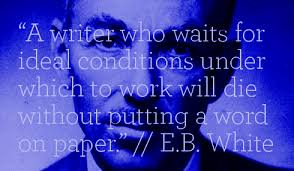
Writing Quote E.B. White I’m going through one of those seasons of life where I’m not feeling motivated. My mind could go in either one of two directions. I could wallow and give up — allowing myself to succumb to fatigue, discouragement, and fear due to circumstances beyond my control. Or I could remind myself that I am an author, and as such, absolutely everything is potential writing fodder. I’m choosing the latter.

Writing is Harder for a WriterTo maintain any productivity, my way of putting words on the page has changed over the past month. For instance, instead of scheduling hours at a time for writing, I’m snatching snippets and seconds. Scrivener is my friend, as I drop ideas, research links, and summaries of real-time happenings for anecdotal use into project files. Life has required I do things differently, but I refuse to let it stop me.

Writing the WorstI’m also offering myself an extra dose of patience and forgiveness. If I expend emotional energy on unreasonable expectations and unhealthy guilt, I will pay for it in wasted physical and mental energy. It’s taken me years to learn this about myself, but now that I know it, I can approach writing with a healthier perspective.
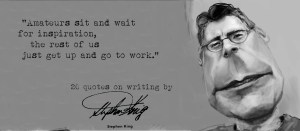
Writing Quote by Stephen KingAnother motivational boost comes from reminding myself that I am a professional. This means I don’t just think about writing, dream about writing, or talk about writing — I do it. A professional writer puts the same integrity, (doing the right thing whether anyone else can see or hear them or not), into their craft as the CEO of a multi-billion dollar company. I refuse to be the amateur Stephen King talks about.

Writing What Others Can't SayMy past and present circumstances are more than writing fodder, they are also qualifiers. My unique experiences qualify me to speak about subjects, while my role as a professional writer enables me to say what others cannot due to willingness or ability. This is why writing is both privilege and responsibility. This thought alone motivates me to action when I feel unmotivated.

In speaking with many of my author friends, I find I’m not the only one who needs the occasional reminder to move my fingers across the keyboard when I feel like pushing buttons on the remote. The truth is, writing is hard under ideal conditions, but it can feel excruciating when life batters you with tough situations. This is where my writing mettle is tested.

  • Am I serious?
  • Will I resolve to follow through no matter what?
  • Can I motivate myself when I’d most like to bury myself in bed and pull the covers over my head?
Writer at WorkThe answer is yes. After all, I am a professional. And professional authors get to work — one intentional word at a time.

Does your writing come easy, or do you require a motivational push to do the daily word grind?
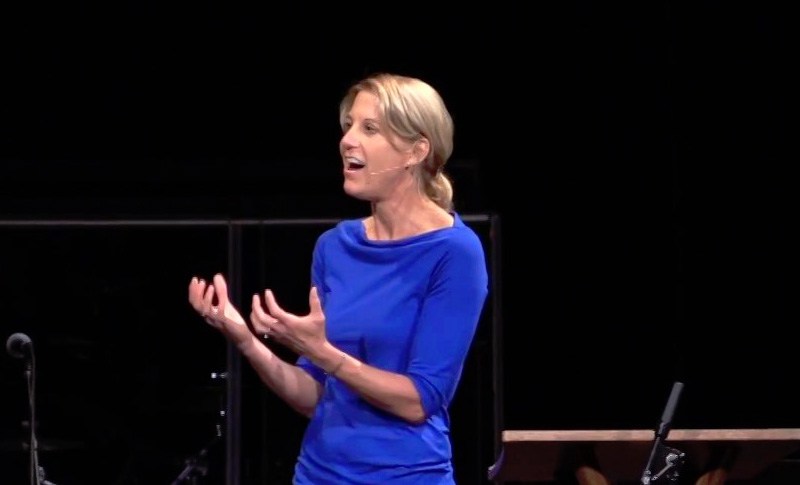
 

When a Speaker becomes a Writer

VideoPic

When I was asked to contribute to the Wordserve blog, I immediately thought “No.
But almost immediately after the first immediately, something in my heart said “Yes.

The truth is, compared to many other writers, I am under qualified, untrained and rather unconventional in the way I write. Particularly the way I use sentence fragments (and parenthesis) for effect. So the thought of having a lot of trained writers reading my stuff is, well, a bit nerve wracking. (If I was being honest it makes me want to pee my pants.)

However, it strikes me that I may be able to offer an angle on writing from a speaker-turned-writer’s viewpoint that could be helpful. So with that in mind, I decided to jump in.

As far as some background on me, in my 30s, I published fourteen books under my maiden name of Polich. They were “How to” youth ministry books that sold like hotcakes in the audiences I served. However, just before I turned 50, I shifted out of youth ministry, survived a fiancé who broke our engagement to remarry his ex wife, and experienced some new and deeper truths about God; and suddenly, I felt I had more in me to write.

I remember running the idea of moving from the “Youth Ministry” sector to the “Christian Life” sector by my publisher, who met me with the encouraging words, “Good luck with that.

I realized at that moment that switching book genres was not going to be done easily.

But I’m here to tell you it’s not impossible.

By the grace of God, I got hooked up with a great agent (Greg Johnson), a great editor at Zondervan (John Sloan), and was contracted for my first Christian Life book, titled Finding Faith in the Dark. It was my maiden voyage, and it released in 2014. I am currently at work on my second book, tentatively titled “When Changing Nothing Changes Everything” (this time for IVP). It’s due in three weeks, so I’ll keep the rest of this blog short.

I thought I could offer a couple of insights from a speaker-turned-writer’s viewpoint that might be helpful to you. Because when it comes right down to it, don’t many of us do both? The fact is, in today’s “Look at Me” world, holding an audience is a skill all of us need.

Here are three tips I’ve taken from my speaking into writing:

  1. Grab ‘em in the first 3 minutes
    There is a rule in speaking that if you don’t grab the audience in the first three minutes, you have to work triple time to get them back. I think in today’s world with writing, it may even be more true. Your audience can actually leave your book without you ever having to know, which is harder to do when you’re speaking to them. (Unless they’re teenagers and aren’t polite enough to care.) Here’s the point: In today’s blog-reading, book-skimming culture, the first page of your book should be the one you focus on most.
  1. Anchor every truth you share
    This may be more directed more to non fiction authors, but no matter how great your point is, it will be lost if you don’t break it up with something to anchor it. Whether you use an interesting story, a dash of humor, or a poignant quote, you need something to entice them to read on. In speaking, I call this “Keep yourself from becoming boring.” I think in writing, it could be called the same.
  1. End with a pow
    This may feel like too much pressure when combined with point #1, but there is nothing worse than a reader who has stayed with you till the end and gets rewarded with nothing but a re-emphasis of what you’ve already said. Surprise them. Leave them thinking. Say something new. Give them a parting gift.

How you do this of course is all up to you.

And one last thing… if YOU have a voice nudging you to write something that may be different than you’ve ever written before, Don’t give up. There may be people out there who need what you have to write.

For more info, visit http://www.laurieshort.com

When There is No Erasing

In my world of too many words — written words, spoken words, printed words, listened words — I need places where there is silence.

Usually I find a Place of No Words in creation as I take to the trails among cactus and creosote with my dog, Mollie, pulling on the leash in anticipation of the next adventure.

The other Place of No Words that I have found is an art museum.

Sometimes I find God there in the standing still.

While in Nashville recently, I went to The First Center for the Visual Arts. When I first entered, I found the silence oppressive. The museum had so many rules about photography and sketching only with a pencil and no shoulder bags, that I wanted to escape… escape to my world of familiar words filling up the spaces.

But I resisted, and stepped forward into the first of four galleries.

The gallery, Ink, Silk and Gold, was interesting, but I only heard facts when I viewed the display. History. I did not linger.

My ear was not yet tuned to the unheard.

I entered the next gallery.

The boldness of Shinigue Smith’s work in the Wonder and Rainbows Gallery, shouted from the walls as she combined paint with textiles and other mediums. As a teen she experimented with graffiti, an interest that eventually turned to Japanese calligraphy. I could see elements of both in her colorful paintings and sculptures.

Forever Strong by S. Smith. Compliments of Google since no photos were allowed.

“In both, you can’t back up,” Smith said in an interview, “You must have a confident hand when you put your brush to the surface. There is no erasing.” 

No erasing.

I liked the thought. I am in a season of editing and rewriting. 

Editing a manuscript. Rewriting life goals and purposes.

What would it be like to put a confident hand to the surface without the paralyzing thought of erasing? What if I didn’t hesitate, but stepped forward without the fear of getting it perfect and simply chose a color and painted boldly?

Where could my words take me?

Where could yours?

Dreams Between Blades

What are you drawing today?


The Importance of Dreaming

Ever feel like your writing time has slipped into a series of tasks you are struggling to check off?

1500 hundred words and counting? Check.
Edits? Check.
Social media graphics for the week? Check.
Blog posts written and turned in? Check.
Responded to readers and answered emails? Check.
Laundry, grocery shopping, life things? Maybe check. Kinda.
Maintain sanity? In process.

If we aren’t careful our writing routine turns into a list that can drain our creativity and make us forget why we are writing. I am the queen of time management and boundaries. I have to be in order to prioritize and get things done. But sometimes in the midst of trying to be disciplined and organized, I miss out on the creativity that comes with dreaming. I actually plan time to dream. It’s vitally important to the rest of my list.

Dream a little bigger

Dreaming rejuvenates me.
One of my favorite questions to ask when it comes to writing is “what if.” What if my characters decided to do something totally unexpected? What if my villain surprises everyone? What if I create a setting that puts a unique spin on a scene? What if I created a character that absolutely fascinated my reader? Then how do I do all this?

“What if” is a powerful question, one I don’t ask nearly enough. But when I do, my writing sings more than normal and my creative juices flow.

I also like to story board. I may love words, but I am attracted to powerful visuals. It’s fun to create the scene and cast my characters by scouring the internet for photos that jog my creativity in a greater way. I pin them on a corkboard so that I can see and move them to help craft the story. This helps dream about possibilities. Possibilities are endless in our writing. We just have to seize them.

Dreaming rejuvenates the story.
I like to set a timer and see how many words I can spill on the page before time runs out, but occasionally this depletes my creativity instead of inspiring it. However, when I take time to dream before I start writing, even if I just spend fifteen minutes on a writing prompt, my writing carries a different kind of power and creativity. When I race the timer, my story has quality and quantity. My characters are also deeper and my settings more vivid.

Dreaming rejuvenates the reader.
Letting readers into my brainstorming and dreaming is fun to share with readers. This makes great social media content to excite them and help them invest in the story before they ever hold it in their hands. Inviting them into the dreaming helps them feel like part of the team and part of the journey. If you do this, be prepared to write faster to satisfy their growing curiosity.

Tasks and deadlines are part of writing, but dreaming and enjoying the writing…that’s the most vital part of the journey, for it informs everything else. If you are feeling overwhelmed or stuck, grab a pen and fun notepad, and don’t be afraid to dream a little, darling. I have a feeling you will like the results.

Debut Novels, Reprint Rights, and Movie Deal Dreams

I didn’t know how blessed I was to get my first book deal. Love Finds You in Sun Valley, Idaho came out in 2010. It was part of the Love Finds You series. And because the books were written by a bunch of different well-known authors and set across the United States, my book got swept along with the marketing current.

album 155

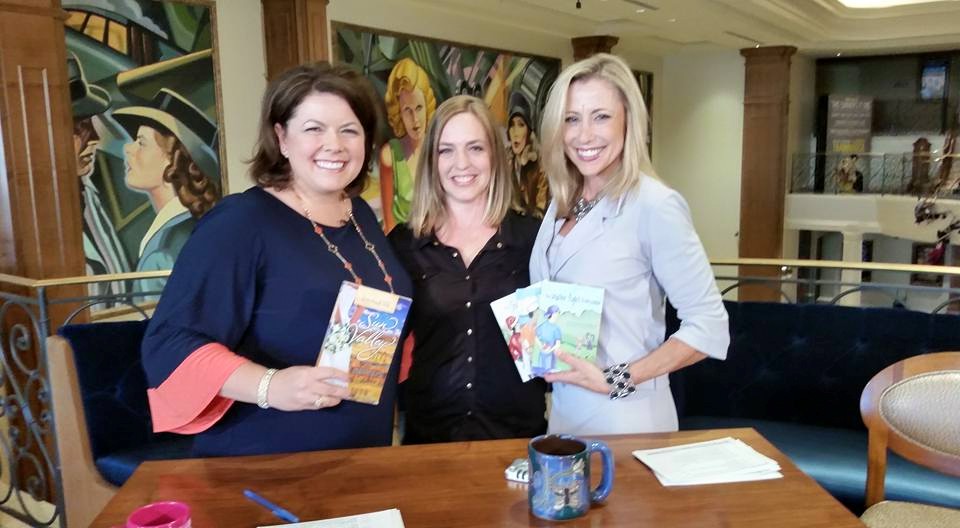
I got to do a television interview.

I had a Costco book-signing.

The novel was featured in the magazines for a Christian bookstore chain.

It was sold in airports.

The hardback edition came out for book clubs.

And now It’s being considered for a MOVIE. When I found this out, I was so excited my husband thought someone had died. Not that I get excited when people die, but I was crying and could barely speak, and he assumed the worst.

Three movies have already been made for the UPtv network. I had a premier party with my writer friends for Love Finds You in Charm, including homemade Amish pastries. Love Finds You in Valentine comes out this month.

I can’t keep from mentally casting actors to play my characters Tracen Lake and Emily Van Arsdale. Especially since Emily Van Arsdale is supposed to be the actress who plays Wonder Woman, and Wonder Woman is releasing in the theaters soon.

The idea of having my debut novel considered for a movie made me want to revisit the story. Then it made me want to write sequels like many of my readers requested. So I got my rights back, and I’m rereleasing the book as the first in my new series titled Resort to Love.

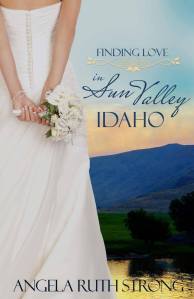
Finding Love in Sun Valley Cover


Finding Love in Sun Valley, Idaho comes out this month. I updated a few things—like how the characters now all have smart phones. And I gave it an epilogue that leads into the following books.

Finding Love in Big Sky, Montana comes out in November. I’m currently writing this one and wish I could throw my responsibilities to the wind so I could go write in a cave until it’s done because the ending is going to be so good!

Finding Love in Park City, Utah comes out in the spring of 2017. This one I’ve plotted, but I’m still researching the location. I’m spending the end of January in the mountain town and attending the Sundance Film Festival. Remember how I said my main character in Sun Valley is an actress? It fits.

I didn’t know anything about getting my rights back, but I ran into Miralee Ferrell at the Oregon Christian Writer’s Conference last summer, and she’d already done it for a couple of her own Love Finds You books. With her help. I was able to find out that my book had been out of print for a couple years. From there I simply had to make my request. Once I got my PDF files, I not-so-simply converted them to a Word document and edited out about a million exclamation points—among other newbie mistakes.

Miralee had been able to get her cover files, but mine weren’t available, so we hired a designer. When I say we, I mean Miralee. She’s releasing my series through her new publishing company, Mountain Brook Ink. But she let me have creative reign over my cover. I especially like the scrollwork around the Finding Love label. That symbol will go on all her Finding Love titles. Another cool thing is that I’ve remarried since my first book came out, so I get to add the name Strong to this cover.

I’m currently getting ready for my Books and Beverages Blog Tour. Check my website for details and the chance to win a Kindle Fire.

Books and Beverages

Even if my book never makes it to the big screen TV, I’m still glad I get to enjoy my debut novel a little longer. And I’m honored to get to share my dreams with you.

What’s a book you’ve read that you think would make a good movie?

15 Motivational Quotes for Authors

What Does Writing Teach Us?

What is it about motivational quotes that inspire us to greater endeavors? Daring us, energizing us, prodding us to overcome our fears and anxiety, so we can do what we truly desire?

Maybe it’s the quick, easy-to-remember word bites, or perhaps simply the comfort of knowing we are not the first trodding this territory. Regardless, the human spirit responds to simple quotes with powerful impact.

As writers, quotes from successful authors can move us past blocks, help us overcome anxiety, and keep us from giving up in the face of rejection. Maybe you could use a quick boost of daring, energy, or prodding today.

If so, here are fifteen of my favorite motivators:

“I write entirely to find out what I’m thinking, what I’m looking at, what I see and what it means. What I want and what I fear.” — Joan Didion

“If I don’t write to empty my mind, I go mad.” — Lord Byron

“It’s about getting up, getting well, and getting over.” — Stephen King

“Writing is the supreme solace.” — William Somerset Maugham

“If you’re a singer you lose your voice. A baseball player loses his arm. A writer gets more knowledge, and if he’s good, the older he gets, the better he writes.” — Mickey Spillane

“A wounded deer leaps the highest.” — Emily Dickinson

“Writers write about what obsesses them. You draw those cards. I lost my mother when I was 14. My daughter died at the age of 6. I lost my faith as a Catholic. When I’m writing, the darkness is always there. I go where the pain is.” — Anne Rice

“You don’t write because you want to say something; you write because you’ve got something to say.” — F. Scott Fitzgerald

“Any man who keeps working is not a failure. He may not be a great writer, but if he applies the old-fashioned virtues of hard, constant labor, he’ll eventually make some kind of career for himself as writer.” — Ray Bradbury

“Not that the story need be long, but it will take a long while to make it short.” — Henry David Thoreau

“My own experience is that once a story has been written, one has to cross out the beginning and the end. It is there that we authors do most of our lying.” — Anton Chekhov

“Get it down. Take chances. It may be bad, but it’s the only way you can do anything really good.” — William Faulkner

“I am irritated by my own writing. I am like a violinist whose ear is true, but whose fingers refuse to reproduce precisely the sound he hears within.” — Gustave Flaubert

“The unread story is not a story; it is little black marks on wood pulp. The reader, reading it, makes it live: a live thing, a story.” — Ursula K. Le Guin

“A blank piece of paper is God’s way of telling us how hard it is to be God.” — Sidney Sheldon

Which of these inspires you most?

Know Why Not

This post comes from Martha Bolton, author of the author of 87 books, including her newest, Josiah for President. Welcome Martha!

pencil-918449_960_720

It’s just as important to know why you don’t write as it is to know why you do.

You don’t write to get rich. I once had a business card made up as a joke that said, “Have pen, will grovel.” Being a writer is not a fast track to riches. You work long and hard on projects that may or may not ever see the light of day. You’ll find yourself celebrating a $50 cartoon gag sale with as much enthusiasm as you would signing a book contract. It’s nice to receive fair compensation for your work, but a writer should be passionate about his/her craft beyond any monetary gain. If awards and riches come, enjoy them and do some good in the world. But your passion should be in the work. If not, you’ll be tempted to throw in the towel at the first rejection.

You don’t write to get even or compete with others. We’ve all been hurt in life, and even the greats have had to contend with the jealousy of others. Most good writers don’t waste their career on such things. Write what you are meant to write and don’t get sidetracked.

You don’t write to please everyone. You can try, but you’ll only make yourself ill. Write the story that’s burning inside of you. Write for one person, even if that person is yourself. Write it well, but write it. The masses may end up loving your work, but that part is out of your control.

You don’t write to get famous. Few writers are recognized on the street.
For the most part, writing is a “behind the scenes” career. I once saw a book that I had co-written with a famous personality advertised in a catalog. The 20 percent off emblem was placed directly over my name. I had to laugh. But things like that happen all the time in a writing career. So you can’t take yourself too seriously. If you’re writing to stroke your ego, this probably isn’t the career for you. But if writing is what keeps you getting up in the morning and going to your work area, if you’re not seeking riches or fame or anything else other than putting pen to paper, or fingers on the keyboard, and seeing what can happen, then go for it. Who knows, you may end up becoming famous after all. Like I said, that part is out of your control. But I can almost guarantee you will end up fulfilled.

Want to Get Published? 3 Things a Publisher Must See

Note: This is the first post in a series of 4 posts: 3 Things a Publisher Must See.

3 things

You have a book in your heart that you’d love to see published. It may even be a great book. A publisher and her editing board need to see three things to say the “yes” you’re hoping for. They need to see: a unique project, a viable market and the right author.

1. A Publisher Needs to See a Unique Project

Although what you’re writing may seem fresh to you, know that publishers have already received countless pitches for “My Cancer Journey,” “My Eating Disorder Journey,” “My Spiritual Memoir.” Does this mean you scrap your project? No. But it does mean that you need to demonstrate how yours is unique. For example, these might catch a publisher’s attention:

  • Why Cancer Was The Best Thing To Happen to Me This Year
  • How My Eating Disorder Was Cured When I Won “The Biggest Loser”
  • I Was a Satanist High Priest and Now I Love Jesus

Make an editor curious enough to open your proposal!

One baby step toward publication: Read other books in your genre and identify what, if anything, makes yours unique.

2. A Publisher Needs to See a Viable Market

The publisher also needs to see that there is a market for this book. Who are the readers who will buy your book? What is the felt-need they have that will cause them to purchase your book, read it and rave about it to their friends? Research the market so that you can demonstrate that there are book-buying readers who need your book.

One baby step toward publication: Develop a one- or two-sentence “elevator pitch” that succinctly communicates the substance of your book, who will read it and what distinguishes it from similar books.

3. A Publisher Needs to See an Author Who Can Write and Promote This Book

A publisher is looking for authors who can write and who can also get that writing before an audience.

You’ve probably heard that author platform—your ability to reach readers—is the most important thing to a publisher. (And it’s pretty important.) But hear this: every publisher wants to publish great writing.

Chapters and pages and paragraphs and sentences and phrases need to engage readers. Your goal is to get a publisher (aka “reader”) to read the first sentence of your proposal and want to read the next one and the next one. You may think it’s an editor’s job to give your proposal a thorough reading, but it’s not. Her job is to find quality books to publish. When she is perusing your proposal, she can check out—and check facebook—at any point in the process. Develop your craft so that you can write prose that a reader does not want to put down.

And there’s also that platform business…

Who has platform? Oprah. Rick Warren. Francis Chan.

Intimidated? You don’t need to be. You can be building your platform right now by:

  • pitching and writing articles for publications
  • developing an audience for your blog
  • building your speaking resume by speaking places for free: MOPs groups, churches, etc.

The key is finding what works for you and sticking with it.

One baby step toward becoming a great writer: Sign up for a local writing class, sometimes available at city colleges, or attend a writer’s conference in your area.

One baby step toward building platform: Set a goal to publish one article or story, with a reputable national publication that appeals to the eventual audience for your book, in the next three months.

Cheering you on,

Margot


Take Heed!

This month marks the eighth anniversary of my writer’s blog: A Writer’s Way of Seeing. At this time last year, I offered writers advice for the coming year. I was going to offer a new list for 2016, but in reading what I wrote last year, I really think the same advice applies. Also, now that I’m an agent with WordServe Literary, I’ve picked up numerous new readers. So for new readers, and as a refresher for my regular readers, here’s a slightly edited version of last year’s blog called “Take Charge!” Maybe for this year the title should be “Take Heed!” because we’re all a year closer to our real deadline when we no longer will be writing.

new-years-eve-1036513_960_720

As we’re in the opening weeks of 2016 I want to offer my yearly exhortation for the new year. We’re all getting older and time’s a’ wasting, folks. If we want to succeed as writers, we need to take charge of our writing career. In fact, that will be my rally cry for you in 2016: “Take charge of your writing career!”

Here are seven suggestions on how to do that.

  1. Stay prayed up. Presumably by now you’ve confirmed in your own mind that God has called you to be a writer. Part of that calling is, of course, to write. But for a Christian, that’s only half the calling. The other half is knowing what to write. Mostly we find that out through prayer and discerning the needs of readers and our ability to write to those needs. As you pray, ask God to guide you in your writing pursuits. Make that a year-long (life-long, actually) commitment to yourself. If you stay prayed up about your writing, you’ll stay pumped up too.
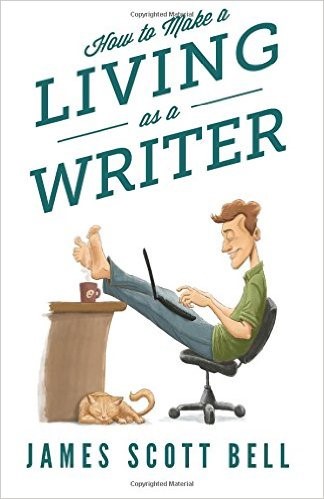
  2. Improve your craft. Each year I urge all of us who write to find a way to keep improving our craft. Take classes, read magazines such as The Writer, Writer’s Digest, and The Christian Communicator.  Join a critique group. Read the blogs of other successful writers, agents, and editors. Write, write, write. Commit to writing at least three (and probably more) drafts of each project, with each draft an improvement from the preceding draft.  Always have a good writing book on hand. I recommend any of James Scott Bell’s books on the writing craft, particularly How to Make a Living As a Writer.
  3. writerWrite out specific goals for each month. Make each goal realistic, but then stick to them. Daily, weekly, and monthly goals are good, but also write out in some detail what you hope to have accomplished by December 31. To stay on track, consider finding a writing accountability partner. Share your writing goals with each other and meet in person or by internet every week or two to encourage one another.
  4. If possible, have two or three projects/proposals/manuscripts in some stage of progress. Perhaps you’re working on just a one-sheet for Project A, while on Project B, you’re at the full proposal stage. Project C might be your work-in-progress—the actual manuscript you’re working on. For a successful writing career, you must always be thinking ahead.
  5. Pick one or two writer’s conferences and plan to attend. If money is a problem start saving now. Come up with creative fund-raising ideas. Perhaps ask your church to chip in with the fees. Most conferences have some scholarship money. See if you qualify or if you can do some conference work in exchange for part of your tuition.
  6. Stay up to date with the publishing world—including self-publishing. Know what the bestsellers are. Know which authors are writing successfully in the same genre in which you write. Read Publisher’s Weekly or Publisher’s Marketplace online. More and more writers are finding their entry into publishing through self-publishing. Sadly, many are making very serious mistakes. Although I encourage self-publishing as an option, I do not recommend it if you’re going to do a poor job of it. Last year at one writer’s conference I picked up a self-published book and found three major errors on the first page, including the misspelling of the name of a famous world leader. Who would buy such a book? Not me.
  7. Work on your platform. I know very few authors who like platform-building. I don’t like it either. I’d much rather just write. But a platform is important. Starting small is fine. Just do what small thing you can do now and build from there. Eat the elephant one bite at a time.

The crucial thing in all this is to keep your commitment red-hot. Rest assured, there will be discouragements, distractions, and even rejections in 2016. That’s life. It’s also another reason to plan ahead and to indeed “take charge of your writing career” in 2016. Start planning now!

Walking Down Memory Lane: Recording Your Legacy Stories

Photo/KarenJordan

What memories do you recall of your hometown?

Christmas always brings back a lot of memories from my hometown, Silsbee, Texas.

My husband Dan and I grew up in the same town in Southeast Texas. So, even though he’s a few years older than me, we share a lot of memories of our hometown. Not only were we both born in that small Texas town, our parents grew up there, too. So, a lot of our relatives and friends still live there. And we still make trips back there when we can.

Fun times. Both of our children were born in Southeast Texas, too. But since we moved away when they were young, they only remember the holidays, summer vacations, and fun times with their relatives there.

Painful moments. Some memories are difficult to embrace–like the death of loved ones or mistakes from our past. But I’ve discovered the importance of recording some of my painful memories, especially since both of my parents are gone now.

Writing down some of those narratives brings healing to my soul. Plus, if I don’t write my family stories down, I know they will be lost forever.

Legacy stories. I should have written down the stories my mother and dad told me long ago. But at the time, I didn’t see any value of recording them.

I still hear those stories from my other relatives when I go back to Silsbee for holidays, weddings, reunions, and funerals. I’m trying to work out a plan for jotting down more of those stories as I remember them.

Certain songs also trigger memories for me. Although I moved from my childhood home several decades ago, Kenny Rogers‘ hit, “Twenty Years Ago,” always takes me back in time, reminding me of my past.

As you listen to the song below, I hope it helps you recall some of the stories from your hometown, too. But be sure to write them down. Someone you love might be blessed by your stories. I also hope you’ll share a story with our readers in the comments below.

YouTube/RareCountry2 (“Twenty Years Ago – Kenny Rogers)

Did this video remind you of a story from your hometown?