
 Every writer wants to believe that he or she can write a bestselling book.
I’m here to tell you there’s nothing wrong with believing that. I have no doubt that many times, my belief in that idea is the only thing that keeps me pounding out words on my laptop. To be completely transparent, I’ve never had a book reach the NYT bestseller list; the closest I came was learning that my memoir of dog adoption, Saved by Gracie: How a Rough-and-Tumble Rescue Dog Dragged Me Back to Health, Happiness and God, was a bestseller – at one point in time – for my publisher. Whether that one point in time was a week or a month, or even three hours, I honestly don’t know. And actually, it doesn’t matter, because the terrible truth of best-selling-ness is that it’s truly a transitory thing, as well as completely unpredictable.
As a reader, I also find that “bestseller” doesn’t necessarily predict my own evaluation or enjoyment of a book. I read plenty of books on the bestseller lists that leave me cold, to say the least. Other books I stumble across are amazing, but languish forever in No One’s Heard of It Land.
As a result, I’ve decided that I probably know as much as anyone about writing a bestseller, which is to say, no one really does know why some books win the lottery and others don’t. So the next time you’re struggling with your belief in your ability to write a bestseller, here are my tips(laughs?) to keep you moving forward:
- Sit down and write. Or you can stand up and write (I’ve been reading a lot lately about the health benefits of sit/stand desks). Either way, actually writing seems to be an uncontested avenue to producing a bestselling book. (Caveat: unless you’re famous, in which case you can pay someone else to do the writing and still put your name on it and get even more famous, although I think that’s kind of cheating, don’t you?)
- Write short sentences. Really. Bestsellers have short sentences. Like this one. If you want to write a literary novel, though, you can make the sentences as long as you like because the people who read literary novels generally read at a higher reading level and more assuredly appreciate the sheer beauty of the written language, even if they don’t have the market clout to send your book’s rating skyhigh.
- Use active verbs. (They even tell you this in graduate writing programs. I just saved you a ton of money and two years of your life. You’re welcome.)
- Put a dog on the cover of your book. Even if it’s not about a dog. Books with a dog on the cover sell better. Even the latest statistics show that dogs get more internet time than any other animal. Want attention? I’m telling you, put a dog on it.
In closing, I want to share with you the writing advice of a bestselling author named W. Somerset Maugham: “There are three rules for writing the novel. Unfortunately, no one knows what they are.”
Happy writing!
 Value-added describes the enhancement a company gives its product or service before offering the product to customers. Value-added applies to instances where a firm takes a product that may be considered a homogeneous product, with few differences (if any) from that of a competitor, and provides potential customers with a feature or add-on that gives it a greater sense of value….
 Now that I’ve submitted my latest book to my publisher, marketing is on my mind. I know from past experience with my other titles, the book launch will arrive sooner than I’ll ever feel ready for.
 You can do this for yourself, but it does require a lot of dedication and persistence. And there are some important things I’ve learned a long the way. Maybe by sharing, I can save you a few expectation headaches.
 Recently, I also realized this was something I could duplicate for others. From my desire to help fellow authors and the publishing industry at large,
 How do you respond to overwhelming emotions? Positive or negative self-talk?
 Schedule writing as an event on your calendar. If it’s a priority, formalize your intent by putting it in black and white with a time stamp.
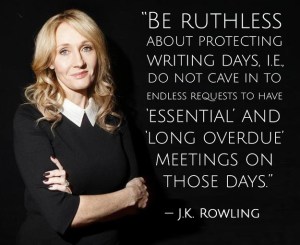 Clearly communicate writing rules to family and close friends. When I started writing passionately, my loving peeps did not consider it a serious endeavor. To some, working from home meant I was available for them to pop in for extended visits, to call or text about random things, or to pressure me to participate in endeavors I had neither the time or inclination for. Didn’t they know I needed to write? I fought frustration until I remembered a rule I had incorporated for my business coaching. So, I told family and friends that when I closed the door to my office or posted cave-dwelling on social media, that this was a Do Not Disturb symbol. I asked my peeps not to bother me, unless it was important enough that they would call me out of a meeting 500 miles away. It took a couple of weeks for training, but now it works beautifully.
 Get up and move on a regular basis. I do one-minute intervals at least hourly when writing. Running in place, jumping jacks, leg kicks, and air boxing all keep my blood pumping and my mind working.
 As I compiled RESTNotes, the devotional guide to my book, Words That Change Everything, other commitments and obligations kept getting in the way.
 The new year has come and gone, and we’re in the full throes of fresh starts, new goals, and updated resolutions. This has me thinking about the definition of success — and more specifically, defining real writing success.
 I have goals to write and sell many more books, but part of my planning strategies now include more time set aside to enjoy walks with friends, cups of coffee with people I respect, and to laugh often with my family. I want to catch up on life, and I believe by doing so, I’ll have even more to write about. I don’t want to “make it” as a writer, only to look around and discover I’m perched in a precarious position — standing all alone.



 WordServe Water Cooler