Cry. Another Bookstore Bites the Dust.

bookshop closedThe last local bookstore in my town is closing. This will only leave us with a Barnes & Noble, but what you should know is that more people shopped at the other store, the local store that’s closing. That’s the scary (or scarier) part.

To put it into perspective, I had a book signing last winter at both places. The smaller, family-owned bookstore had about triple the amount of traffic and I sold and signed almost a hundred books. At Barnes & Noble, someone walked into the joint maybe every ten to fifteen minutes, sometimes for a coffee, and I only signed and sold four books.

I’ve heard all the sobbing and woe over the book industry for years now, but I didn’t ever think it’d make my hometown bookstore close up for good. I suppose the Barnes & Noble will be next, too. And then, in a county that’s home to over 850,000 people, we’ll have no bookstores for new material.

Yet, I’m an offender.

I read almost all my books on my Kindle. Or, the Kindle app on my phone.

Did I contribute to the closing down of my town’s last family-owned bookstore? Yes.

Am I sorry? As an author, absolutely. I lost a sure-fire spot to conduct future book signings. It was an easy in, my hometown advantage.

Am I sorry as a consumer? Tougher question. Like I’ve said, I’m an offender when it comes to the death of print because I adore my e-reader.

I hate to see the world in which I operate and play in get messy . . .  a world where an author who prefers e-books strongly laments the perpetual closing of bookstores.

I’ve also yet to witness how this transition away from honest-to-goodness bookstores to the world of e-readers and internet sales affects my bottom line. As far as I know, most of my sales are coming from Amazon anyway, so I won’t begin to poo-poo them for taking over the book-selling world.

If what’s happening in my county is happening all over, does that mean the death of book signings all together? Maybe it does. But it is certainly not the death of interacting with your favorite author.

With the advent of Facebook fan pages, Skype for book clubs, Twitter, and YouTube, there are more ways than one to “meet” an author. Besides, if fans are e-book readers like me, they probably don’t want you to sign their device. (In fact, they might punch you for that.)

So, is it all for the better, the worse, or is it a different kind of the same? I’ve heard mixed reactions. Some authors admit that if not for the reach of Amazon, they wouldn’t have sold any books. Other authors feel they get lost in all the zeros and ones of Amazon digital code, as well as the influx of self-published books, side-by-side their own in the search query. Whereas, in a store, they’d be easier to spot in their niche.

In the end, it’s hard to say that consumers are upset with these changes. They direct the market after all, and the direction they’ve chosen is that bookstores aren’t a necessity for their literary enjoyment.

But as an author who’s feeling the death of bookstore marketing events. . . we’ll see.

What about you? What would your world be like if your town lost all its bookstores?

Your Friends in the Book Marketing Business

Book marketing can be rather overwhelming, especially here in the middle of the publishing revolution. The good news is that there are more and more emerging companies out there who bring a lot of light to this dark arena. Whether you are an author looking for assistance or a reader trying to find the best deals available, this post is to create a compilation of resources you may find helpful.

Pubslush: A global, crowd funding and analytics platform for books only. This platform allows authors to raise money and gauge the initial audience for new book ideas, and for readers to pledge their financial support to bring books to life. Pubslush is entirely about giving: giving an opportunity to authors, giving a voice to readers, and giving books to children without access to literature. http://www.pubslush.com 

Businessman Midair in a Business Meeting

Author Marketing ClubAn author member can submit books for promotional opportunities, as well as access free online training and resources related to book marketing. A reader member will get notified about new and discounted books, and can discover new authors. This service is free for both authors and readers. You can upgrade to the Premium program if you wish for additional benefits, but it is not required for you to do so. Some of the options offered under a Premium membership include an Amazon book reviewer tool that can help you find reviewers who focus on your literary genre.  http://authormarketingclub.com/

BookBub: The best marketing dollars I have ever spent have been with BookBub. BookBub is a free daily email that notifies you about deep discounts on acclaimed ebooks. You choose the types you’d like to get notified about — with categories ranging from mysteries to cookbooks — and they email you great deals in those genres. BookBub features ebooks ranging from top-tier publishers to critically acclaimed independent authors. During my last campaign with BookBub, I spent about $260.00 and yielded thousands of downloads as a result. If you are looking for new readers, do yourself a favor and check out BookBub: http://www.bookbub.com/home/

Other great resources for readers:

Pixel of Ink: A website which features daily publishing of Free Kindle Books and Hot Deals. On any given day, there are thousands of Free Kindle Books available.  http://www.pixelofink.com/

Inspired Reads: The best Christian Kindle books on a budget. http://www.inspiredreads.com/

Kindle Daily Deal: The best deals available for Kindle. http://amzn.to/KindleDailyDeal

What are your favorite book marketing resources, websites, and venues?

Extra! Extra!

So many new books to celebrate for the month of December that WordServe is doing an extra announcement about these releases.

TheListeningHeartThe Listening Heart: Hearing God in Prayer by Judy Gordon Morrow (Regal Publishing) is available now on Amazon, Barnes & Noble, CBD, and GospelLight.com. In The Listening Heart, Judy invites you to spend a year hearing from the God Who Speaks—the God who wants to speak to you. Each daily devotion echoes the Father’s love and care for you, offering hope, comfort, encouragement and more—a rich closeness with God that will satisfy the longings of your heart. A wonderful Christmas/New Year gift for your friends and family–or for yourself!
************************************************************************************************
WhenaWomanWhen A Woman Finds Her Voice: Overcoming Life’s Hurts & Using Your Story to Make a Difference by Jo Ann Fore (Leafwood Publishers) is now available in major bookstores. Jo Ann wants women to know they have a message worth sharing.  With straight talk, insightful biblical truths, and heart-aching stories of hope, Jo Ann leads women on the unparalleled adventure of finding their voices and using them to make a difference. You will be moved to share the stories you’ve been hesitant to share—those healing stories that have the power to change both your life and the lives of others.


How a Blue Bird Can Save You Time

bluebirdI love Twitter.

Yes, it’s true – a year ago, I said I would never get on Twitter.

Just like I said “no Facebook,” the year before that.

The truth is that as an author, if you’re not on the social networks, you’re missing the boat, and while I’m still learning the best ways to use social media, I’ve found a surprising, but HUGE, benefit to spending time every day on Twitter: it’s my go-to source for content.

Content – the endless supply of information you need to share – is one of the things you have to manage on social media, and for me, it was one of the most intimidating. I barely eke out enough time to work on manuscripts between book marketing, my part-time teaching job, mothering, housekeeping, and walking the dog, let alone to come up with bright new pieces of information to post on my social networks every day. Effective social media marketing requires new content to keep your followers interested in what you do as an author; if your audience doesn’t hear from you in a while, they’ll move on to someone or something new, which defeats your whole social media strategy.

On top of fresh material, I also have to find/create the right spin on the content I collect to make it appropriate for my social networks. My readers expect humor, which isn’t nearly as simple or easy as it may sound; all authors – no matter what they write about – have to somehow personalize the content they curate to reflect their own signature brand.

Enter Twitter – tiny snippets of titles on anything and everything. It’s like an overflowing cornucopia of trivia, which is exactly what I like about it – I can skim through my Twitter feed and if some title catches my eye and strikes me as funny, or inspires a witty response in me, I can open the link and immediately bookmark it into a folder on my laptop. (Keeping a bookmarking folder dedicated to raw social media content has been one of my better ideas.) Then, when I’m making the rounds on my social networks and need new content, I can open that folder and retrieve the snippet for instant material. I’ve discovered that in just a few minutes a day, I can find enough tweets on Twitter to provide me with ideas and quick posts for a week, which frees up more time to write.

The danger of wasting time on Twitter was originally one of the reasons I didn’t want to use it, because like all social media, it pulls you into engagement that is hard to escape. (How many times have you told yourself, “I’m only reading one more post,” and then, an hour later, you’re still on Facebook?) By mindfully turning my Twitter time into content development time, I’ve made it a more productive and focused task that actually reduces the amount of time I need to spend on creating posts for my other networks. And that makes me tweet with happiness! (And you can join me @BirderMurder!)

What are some of the creative ways you use one social media to assist you with another one? 

Writing for Strangers

For my first book release, I did what many authors do. I gave copies of my book to everyone I knew, followed up with them with the intensity of an air traffic controller, and then begged to be evaluated. It was only when I had garnered about twenty five reviews that I was comfortable enough to share my work with strangers.

PettyCashFor my second book, I have been much bolder. I only showed Petty Cash to a select few people (about five) and then launched it on Amazon. Each day, I pull up the page with one eye closed, bracing myself to get hammered. But you know what? It really hasn’t been that bad. In fact, total strangers have written the best reviews of all. Who knew?

It’s awkward to provide feedback to our loved ones at times. People often avoid conflict with those close to them, and they may whitewash their feedback in an attempt to encourage us. Although this is done out of love, we must take the feedback from those who love us with a grain of salt. The people closest to us will also see the content a bit differently than the writing of someone about whom they know nothing.Those close to us will have a built in filter as they regard each character, setting, and turn of phrase.

On the other hand, strangers have no such filters. Since there is no fear of impacting the relationship, the comments and reviews of strangers are incredibly forthright. Some of the feedback from strangers has been so outstanding and helpful, that I have modifed the story slightly to reflect their feedback, which is easy to do with an e-book. Some of the people who write reviews are so eloquent that it seems like they should be reviewing books on a professional basis – and maybe they do.

From what I understand, it is considered bad taste for authors to engage with strangers who have written reviews on their work. That makes sense, but sometimes it’s hard to keep silent and not thank them for putting in the time and effort of creating a review. The exercise has really driven home the concept of relying on the kindness of strangers. Honesty is actually a type of kindness, even if it stings from time to time.

For a myriad of reasons, friends and family may not be able to convey the true value of our writing. It just might be the people you have never met, perhaps in other countires or on the other side of the world, who may end up giving you more validation and insight about your work than you ever imagined.

Who do you trust to provide feedback on your writing?

Have you ever received helpful comments and reviews from total strangers?

Crowdfunding: Is It a Writer’s New Marketing Tool?

I’m pleased to host author Ken Gire who stops by to share a little about Crowdfunding and his current project.

Welcome, Ken!

WealthWith the technological, social, and demographic upheavals that have happened within the publishing landscape over the last decade, many writers have found themselves having to get more involved with things that most writers hate—sales and marketing.

Myself included.

My last book sold under 500 copies, and that experience was so discouraging I felt like giving up writing entirely.

Faced with fewer and fewer bookstores to sell our books, and smaller and smaller advances to fund the writing, what’s a writer to do?

There’s not a lot of options, honestly, but here are a few.

Marry rich.

Consider “Breaking Bad”.

Crowdfunding.

Crowdfunding is growing in popularity, and, though it has had its share of failures, it has had its share of successes, too. Numerous sites have sprung up. Kickstarter and Indiegogo are the two most popular. And there are faith-based crowdfunding platforms you can google. They are newer, less successful, and generally the funding is lower.

Here’s a sample of an almost unheard-of success in publishing with one of Seth Godin’s books.

I had been following Seth’s TED talks for some time, so his campaign really intrigued me. When I looked at the numbers, I had to do a double-take. Who needs that kind of money to write a book? I wondered. Then I realized what he was doing. He wasn’t trying to get an advance; he was trying to generate pre-sales. And he did that through the platform of crowdfunding.

Seth is an internationally-known marketing guru, and so he probably shouldn’t be used as a poster child for crowdfunding, but I used him anyway to show the possibilities.

Well, the long and short of it is . . . I decided to try it.

Though I am not the least bit tech-savy, I managed to do it all myself, with the exception of the video. I found someone on Elance who did that for me fairly cheaply.

I also thought it would be helpful for those involved in the campaign if I gave regular updates on the progress I was making on writing my book. I remembered reading Steinbeck’s, Working Days, a journal he kept while writing Grapes of Wrath, and I remember how much I enjoyed it. So I decided to write a blog (Centurion) aimed at aspiring writers so they could see what the process of writing a novel was like.

The daily posts have been really fun for me, a nice break from my writing, and also a creative outlet to try to find things on the internet that would help illustrate my blogs.

I think this could be a good option for many of us. For those of us who don’t have a publisher. For those whose advance wasn’t enough to finish their book. For those needing expense money to travel to a foreign country in order to do research (say, for example, your novel is set in Ireland, but you have never been to Ireland, and an extended stay there would add authenticity to your story and to the dialect of your characters.)

Maybe we, as writers, can help each other through this difficult transition in publishing by helping to fund each other’s campaigns.

I’m sure mine won’t be anywhere as successful as Seth Godin’s. But it doesn’t have to be. If just 10% as successful, it would be a game-changing experience for me and my career.

Here is my crowdfunding campaign that I hope you will check out. Check out this post for more information on these type of fundraisers.

There are only two weeks to go, and my campaign is only 10% funded. For perks, I am offering everything from signed books to services such as personal mentoring to public speaking.

I appreciate you all taking the time to consider being a part of this. Truly.

What do you think of crowdfunding? Would you ever consider doing it as an author to raise money for a book project? Why or why not?

********************************************************************************************

kengirephotoKen Gire is the author of more than 20 books, including The Divine Embrace, Windows of the Soul, The Work of His Hands, the Moments with the Savior series, and the Reflective Living series. Two of his books have been awarded a Gold Medallion. A full-time writer and speaker, Ken is the founder of Reflective Living, a nonprofit ministry devoted to helping people learn how to slow down and live more reflective lives so they can experience life more deeply, especially life with God and other people.

Ken is a graduate of Texas Christian University and Dallas Theological Seminary. He has four children and three grandchildren and lives in Baltimore, Maryland.

How to Plan a Multi-Author Cross Promotion Event

Every writer I know feels pressure to build their platform. From the pre-pubbed stage, sending out proposals to an agent, then editor, to published authors working on keeping their numbers up, it can be a constant maze of hunting through websites telling you how to do it the best way.

Despite how you package promoting, be it in a contest, giveaway, or ad, there is only one thing that truly matters to determine its success. Are you giving your target audience something they find of value?

Join five mountain fiction authors with our virtual cookie recipe exchange, and downloadable Bible verse garland and gift tags.

Notice I didn’t say something valuable to a reader. There are many readers out there, but not all readers are your target audience. You need to have a deep understanding of your reader before you plan any promotional event, especially a multi-author one.

1. Start by identifying other authors who have similar target audiences or readers as yours. For cross promoting to work, the audiences must be linked by a similar interest.

2. Decide what will be the common theme for the event. You’ll need to decide before inviting the other authors to your event what the theme or purpose will be. And it is not to sell books. This is what you hope will be the end result, but the purpose of the event will be to somehow reach readers and enrich their time spent with you.

3. Send out the invites with a time frame for response at least two months before the date of the event. Expect to have some authors not be able to join you. Be gracious and thank them for considering. Move on to the next authors on your list.

4. Ask for ideas or comments on how to make the event better. Allow the other authors to have a say in the event, but be sure you have one person who is the leader. When planning the Mountain Hearth Christmas, it was my original idea to just have it be a virtual cookie recipe exchange. Amanda had the idea of incorporating the printable Bible verses for garlands and or gift tags.

5. Be very clear on what is expected of everyone. While all of the fabulous authors in the Mountain Hearth Christmas worked together, it’s best to let everyone know what you’d like them to do. For example: everyone is expected to share links on their social media pages each day of the hop, not just the day it’s being hosted on their own website. Cross-promoting only works if everyone helps.

6. Send out reminders leading up to the event. The leader should send out reminders as things draw nearer. Keep them short and to the point. Always be respectful of others’ time. Three weeks before, two weeks before, and the day before are a good time frame. You may want to have the leader send out daily emails the morning of the event with the link to that day’s highlighted article and composed social media updates for people to copy and paste if pressed for time.

Want to see a multi-author cross promotional event in action? I’m thrilled to be part of A Mountain Hearth Christmas. 

What multi-author events have you been part of? Have you attended any multi-author events you thought went well? What did you like about them?

Risky Moves, But Not Like Miley Cyrus or Britney Spears

Miley CyrusSome risks are worth taking, some are not so smart. Authors aren’t typically in the same celebrity category as Miley Cyrus or Britney Spears. But just as these young artists turned off many product purchasing fans with crazy antics, so can an author’s choices affect book sales. Taking a risk is one thing, taking an in-your-face attitude is not wise.

But unless you fall off the cliff of common sense, some risks can bring happy results.

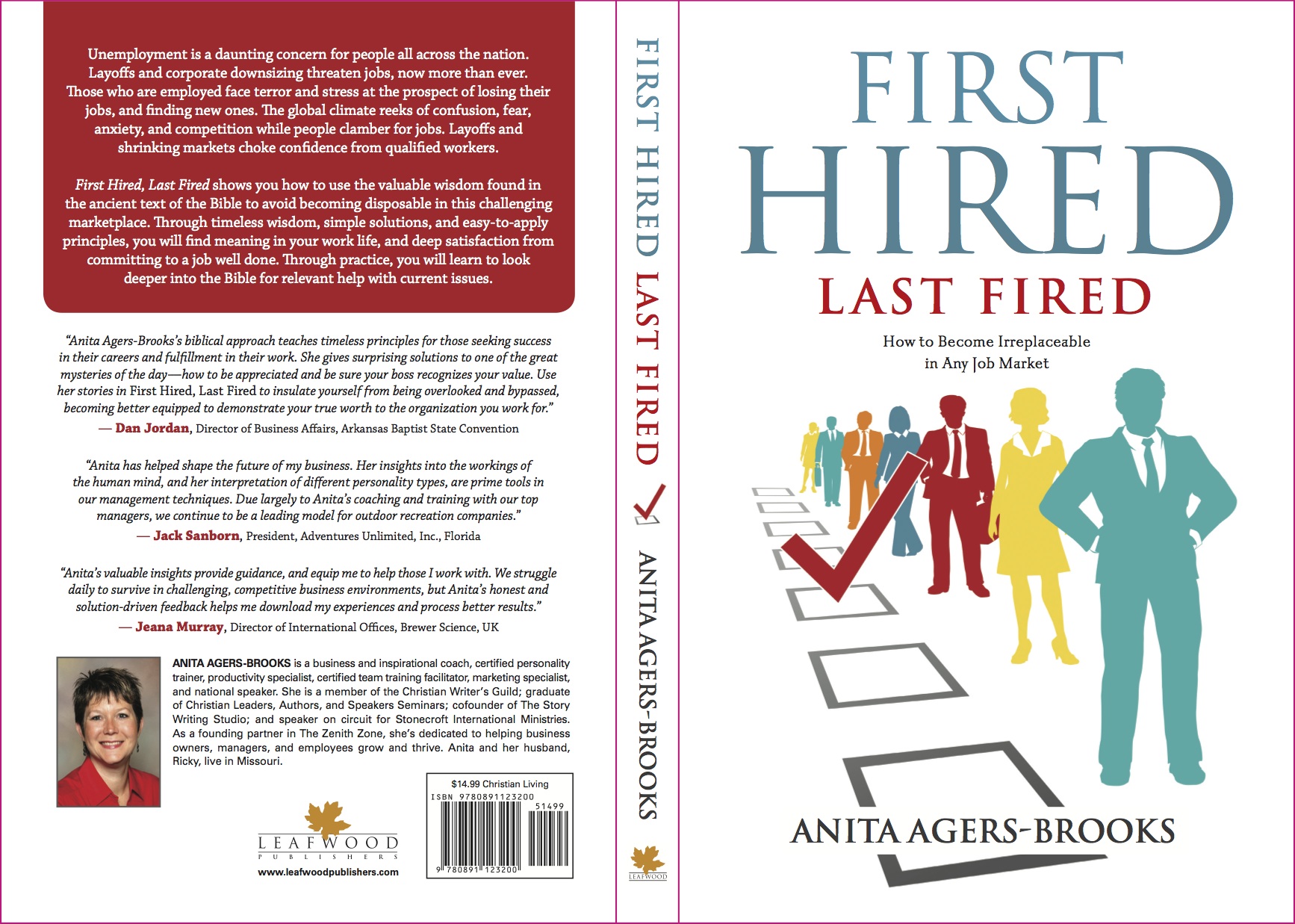
First Hired Last Fired BookAuthors take risks when they try a new style. I did this with my nonfiction book, First Hired, Last Fired — How to Become Irreplaceable in Any Job Market. I patterned short stories in each chapter, using strong fictional elements to demonstrate my hypothesis. It wasn’t something I’d seen done in exactly that way before, but I decided to take the risk. So far, it’s working well.

Into the Free

Many WordServe authors have taken their own style risks suited to particular genres. Reading their books infused me with courage when I battled fear.

It’s a risk when authors write about difficult subjects. Our own Julie Perkins Cantrell did this in her amazing novel, Into the FreeWhy is it an award-winning best seller? Because it hits the heart with readers. Even if they don’t relate to the circumstances in the story line, they can relate to the gut-wrenching feelings Millie experiences. I expect much of the same in the sequel, When Mountains Move

Authors risk when they get out of bed at 4:00 a.m., versus sleeping until 7:00. Who wouldn’t prefer a few extra Zz’s, but trusting the rewards will outweigh the sacrifice keeps dreams alive.

Investing time and energy in the elements that make up your writing business is a risk. After all, you can’t recycle either one. But every web page, blog post, article, social media blast, and book proposal are like laying pieces down in a jigsaw puzzle. Not until you’ve placed a string together, does the picture of your writing career finally start to look appealing. The key is not to give up before the last piece is in place.

But I would be remiss if I didn’t mention some risky moves that don’t typically work for authors. 

  • Avoiding education and research, in hopes you’ll get lucky, and success will come with little effort on your part.
  • Assuming you know how your writing comes across without getting feedback from unbiased sources.
  • Joining negative media frenzies on social media when they involve putting others down for political views, personal choices, or religious beliefs.
  • Reacting to professional guidance with an unteachable spirit.
  • Giving up on writing, and spending the rest of your life wondering, what if . . .

There are many risky writing moves, but envisioning worst case and best case scenarios can help you decide which ones are worth taking. Most are reasonable, and even if you don’t get the outcome you hope for, be willing to brush yourself off and dream again.

After all, if you risk and fail, are you any worse off than you are now?  

Book Reviews: Do They Help?

Agents, editors, and publishers alike encourage authors to build platforms and engage with readers, well before books are published, whether non-fiction or fiction. I work in both arenas, so I launched www.kerriansnotebook.com (a crime fiction blog with non-fiction resource links) in December of 2011 and www.nightstandbookreviews.com (a book review site that I’ll refer to as NBR) in December of 2012.

BookwormJordyn Redwood and I chatted online and after reviewing Proof, her terrific debut novel, I shared with her some interesting patterns that seemed to be emerging with the book review readers. Three months after the website launch, reviews of books by male authors were being sought out more frequently than those of female authors. It has now been six months since the launch and that remains true.

In the first six months, I reviewed 29 novels, featuring 15 female authors (5 debut, 1 indie) and 14 male. More than half the titles I review are in the suspense/mystery genres, but women’s fiction, historical fiction, adventure, and cozies can be found on the list as well.

I use Google Analytics on my WordPress sites, a great tool for mining the readership data. Here are some of my discoveries:

Spikes in the data for the book review site seemed to be tied to school (and perhaps work) vacations. I post new reviews on Thursdays. NBR gets the most hits for the reviews on Thursdays and Fridays, with the exception of the vacation weeks.

The most read review? Joe Finder’s, Buried Secrets, a thriller.

The second most read? Dee Henderson’s “O’Malley series.” Wahoo! A Christian writer in second place, just ahead of Lee Child and well ahead of a few huge bestselling males in the suspense/mystery genre. Initially, the review of her O’Malley series did not receive much interest, but two-three weeks after Full Disclosure was released, the hits on the related review on my site increased and continue to do so. During that same time, Ms. Henderson (or her representative) became involved in a Twitter promotion and retweets of my review increased.

#3 thru #7 are male suspense/mystery writers (all bestselling authors).

#8 – female debut author, legal mystery, ebook only.

#9 – female author, women’s fiction, bestseller.

#10 – female author, romantic suspense, bestseller.

#26 thru #29 – female authors, a mixture of genres, 3 bestsellers.

Update (as of 8/23/2013)
During the last month, the Dee Henderson review has moved into first place, by a LOT. The rest of the authors maintain approximately the same standings, with the top of the list after Dee still mostly men, and the bottom of the list, mostly women.

Authors who have an active Twitter presence retweeted my tweets about their books (6-8 times a day the first two days of each new post) and that resulted in sales (they told me so) as well as retweets from other fans of mine and theirs. They were also higher in the rankings for my site.

I continue to tweet about each of the titles, but most of the hits come from the first week of publication of the reviews. If the authors have a new book coming out after the initial week of my post, incoming links to the site indicate a specific search for the author.

Most weeks, Twitter is much more effective for Nightstand Book Reviews than Facebook. FB is more effective for my crime fiction site. Half of the FB followers are personal friends and acquaintances, mixed with professional associates. Almost all the Twitter followers were initially unknown to me personally. Several Tweeps have become online friends whose work I respect and also promote. I follow a number of writers and bloggers who provide valuable sources of research information and I promote their work on Twitter’s #FF (#FridayFollow).

According to Google Analytics, I have had absolutely no click-thrus from the Pinterest boards, but LinkedIn has produced a few hits.

The Paper.li community has generated repeated hits for the book reviews. I retweet the Paper.li posts, highlight the publishers, and that in turn, increases hits.

Aside from the increased exposure, there are other benefits to all the work that goes into creating and maintaining both sites. A Christian writer subscribed after reading the ‘About NBR’ blurb. We chatted through FB, discovered we live three hours from each other, and a few weeks ago, I had the privilege of taking a look at an ARC of her book that was in the final edit stage. Three weeks from now, I will attend her book signing, and take some friends along. So much fun!

For me, it has been all about building relationships within the FB, Twitter, and Paper.li communities. Some of those relationships were established after I did guest blogs about research for the crime fiction work, some after attending conferences. But a few have begun just because people like what I write or I like their work and promote them. I have met a few of the fans in person – what a blessing to be able to do so!

Does social media help you? Where do you focus your efforts?

************************************************************************************************
PattiPhillipsPatti Phillips is a transplanted metropolitan New Yorker/north Texan, now living in the piney state of North Carolina.

Her best investigative days are spent writing, cooking, traveling for research and playing golf. Her time on the golf course has been murderously valuable while creating the perfect alibi for the chief villain in her novel, One Sweet Motion. Did you know that there are spots on a golf course that can’t be accessed by listening devices?

Ms. Phillips (writing as Detective Charlie Kerrian) can be found at www.kerriansnotebook.com. Her book reviews can be read at www.nightstandbookreviews.com.

The 15-Minute Writer: Taming the Social Media Monster

file0002062790027 This is part five of a series. Read parts 1-4 here.

Ever wonder how top authors (especially those with families) do it all–write, read, speak, tweet, pin, travel, correspond and more? I’ve got a hunch that they choose what they’re best at, and hire talented people to do the rest.

There are simply not enough hours in the day to do it all. In addition, since new social media platforms pop up regularly, it’s easy to get overwhelmed.

Over the past few years as a writer-mom, I’ve made more than a few mistakes, but I’ve also learned to prayerfully make (sometimes tough) choices. With God’s help, I’m taming the social media monster–instead of letting it wreck my schedule and family life.

  • First, I regularly revisit my priorities. As seasons of life change, so do my family’s needs and schedule. When my children were small, I wrote during Mother’s Day Out and nap times. Now, I write, research, and update my blog and Twitter or Instagram accounts during their school hours and activities. I try to be available to them after dinner and while they’re doing homework, keeping certain times free of online distraction. So far, it’s working well for us.     OLYMPUS DIGITAL CAMERA
  • Second,realize where I’m strong–and weak. I began blogging in 2004, and last year, I admitted to myself that I’m simply burned out. Bleh. Meh. Etcetera. However, giving myself permission to blog less often, and do other things I enjoy more (keeping an active Facebook and Pinterest presence, for instance) has helped my attitude about online promotion. I also love my work as an editor at an online magazine, and the curating I do for The High Calling helps me build my own platform. Score!
  • Third, I recognize my addictive tendencies. Recently, I discovered that with a few handy-dandy apps on my Iphone, I could tweet, chirp and pin while waiting for doctor’s appointments, eating by myself at fast food restaurants, and even in bed. The only problem? I had used those times previously to read, daydream or think. No down-time for Dena makes her a grumpy girl–and a boring writer. So, I decided to delete the apps. I already feel more peaceful and balanced.
  • Fourth, I reign in my expectations. Someday, when the kids are grown, I will have more quiet/alone time. (Please, God?) And I don’t want to have a ton of regrets later in life. This creative, crazy family is where the Lord has placed me. He has also chosen to give me wonderful writing opportunities. Such a precarious balancing act means I can’t pursue every single marketing or promotion lead that comes my way. I won’t be able to accept every speaking engagement I’m offered. And I can’t attend every platform-enhancing conference that looks interesting. This both helps and hinders our family financially, but God has always honored my commitment by providing everything we need (and most of what we want). As my dad told me many times, “Honor God, and He’ll honor you.”

Hopefully, my experiences will encourage you in your own efforts to mollify the online marketing beast. What are YOUR tips for handling this potential monster?