Rejection!

Rejection is an ugly word, especially to a writer. But we need to keep it in perspective.

To help you put rejection into perspective, I’d like to discuss my shoes.

I have a pair of lovely leather shoes. I really like my shoes. They are stylish, look good with many types of clothing, and are comfortable to wear for many hours. I love, love, love my shoes.

A few months ago, I noticed my shoes were beginning to look worn out and were no longer attractive to wear with dress pants. I thought about purchasing another pair of shoes, and then I had the bright idea to bring them to a shoe repairman. The repairman put new heels on my shoes, polished the leather, and blackened the soles. After some effort and work, my leather shoes are spiffed up and look as good as new.

Now, if I offered my shoes to someone and they don’t love them like I do, should I be heartbroken? Does their rejection of my shoes make me less of a person? Does it make my shoes less attractive? Does it make me less worthy?

Think about it, I bet my shoes wouldn’t fit just anyone. They wouldn’t be right for a number of people with different tastes and different needs. But that doesn’t make my shoes less valuable or less worthy.

That’s the way I look at rejection. My manuscript (shoes) is polished and ready to go out into the world. But perhaps the agent/editor (consumer) needs a different size or is looking for a different style. It’s easy to look at the situation from this perspective and see that it’s not always personal when your manuscript (shoes) is rejected! Sometimes the rejection is not about the story or craft but for other reasons, some of them simply being reasons of timing.

Rejection is an ugly word, especially to a writer. But we need to keep it in perspective. If we’ve been gifted/called to write, then we should keep writing and polishing our manuscripts. After all, many successful writers have suffered rejection.

Now that you’ve gotten the fear of rejection out of your mind, put your new confidence to the test by planning to attend a writer’s conference this year. Many writers will testify that their career got on the fast track after they attended their first conference. You meet other writers, editors, agents, and learn about the craft and the industry at conferences. Your competence and enthusiasm for your writing gets a great boost by attending conferences.

Don’t stress about rejection, keep moving forward in your career.

How do you shrug off rejection? How do you keep it in perspective?

Answering Critics

Everyone’s a critic. Everyone has an opinion. And of course, everyone’s entitled to their opinion.

But what happens when a critic or a reviewer or a book club member reads your book and doesn’t like it? What do you do when you read a cutting review of the book you toiled over for months (or years)?

Novelist Alice Hoffman had a book release in 2009 called The Story Sisters. She received a less-than-glowing review by The Boston Globe’s Roberta Silman. Unfortunately Hoffman wasn’t able to dismiss the review as one person’s opinion and move on. Gawker, an Internet gossip site captured all the dirty details. Lashing out on Twitter, Hoffman posted 27 Tweets in response to that review, including posting the contact information for Silman in hopes that Hoffman’s fans would call the reviewer out on the carpet.

I wonder if Ms. Hoffman is wishing she could take back her words. Well, actually — if she could take back her Tweets. I think that the answer to that is a resounding yes because her Twitter page is no longer online.

Very few writers please all the critics all the time, and most likely there is no writer who’s ever accomplished that feat. But the issue lies in how you deal with the criticism. It’s tough to receive negative feedback whether you’re a yet-to-be published author or one who’s had several books printed.

Some strategies to deal with the disappointment?

Call your agent/editor/mother/spouse/best friend/significant other and vent your frustration. Go for a walk. Write something. Take a nap. Write a private email to your critic if you must. Still, if the last option is your choice, first give it a day or two, and consider praying about the words you’ll deliver.

But don’t go and lose it online.

Perhaps the best course of action for Ms. Hoffman would have been to say nothing. What’s accomplished in slamming the reviewer for her words? It just doesn’t look professional, even if you think the other party acted poorly.

Author Angela Hunt cautions writers to never answer a critic publicly. That sounds like good advice. Too bad Ms. Hoffman didn’t receive such counsel.

Want a laugh? Here’s one author’s humorous response to criticism.

What’s your advice to someone suffering the sting of criticism or rejection?

Happy Thanksgiving from the Water Cooler Family to Yours

Photo by Tom Gill

Thanksgiving has always been a great time for Americans to reflect on what is going right in their lives.

There are other moments throughout the year like our birthday or the upcoming New Year’s holiday that lend themselves to the same moment of gratitude.  However, this holiday asks the same question with a wonderful twist.

Instead of what might be the usual, what-about-me, we’re asked to remember others, especially those who can’t be with their families like our servicemen and women stationed all over the world and in harm’s way in Iraq and Afghanistan. That gives all of us a moment to step out of ourselves and remember what really matters to us.

For many of us it’s the people seated at the table right around us, and we get to say directly to them on Thanksgiving day just how much they mean to us. But there are also many others who touch our lives every day, and mean so much to us for their unflagging support and cheers of encouragements, who are scattered all over the world.

For the writers at the Water Cooler that includes you.

All of us at the WordServe Water Cooler want to take a moment to say thank you to everyone who has joined in our fun. Thank you for taking the time to share your thoughts and feelings here at the blog on the rollicking, fast-paced world of writing, publishing and marketing. We have all grown to feel like one big family.

For writers, who spend a lot of their career waiting to hear from editors or critics or booksellers, it’s a very special and sometimes rare gift to create such a supportive community. We look forward to all of the great conversations, book news, writing tips, and platform building to come.

A great big thank you as well to our agents at the WordServe Literary Agency, Greg, Rachelle and Barbara for all of your guidance, hard work and for always going that extra mile. We are all very grateful. Happy Thanksgiving everyone!

Five Myths of Publishing

The 30-plus journals on my bookshelf prove that I’ve had a passion for writing since I was a little girl. And after my first son was born, I began prayerfully crafting and submitting book proposals. Up until that point, I had been a prolific freelance writer, but [here’s a reality check] it took me five years and about fifty rejections before I got my first contract.

Now, after ten-plus years as an author in the Christian book industry (Christian Booksellers Association), I can see how much I’ve grown as a writer, and as a person of faith.

I’ll be transparent here: before I became an author with a traditional publisher, I believed several myths, which are common to aspiring writers. I want to share, and debunk, them here. [Note: I don’t write fiction, and I haven’t tried self-publishing, so my statements will be coming from a traditionally published non-fiction author’s perspective.]

1. If I find an agent, I’ll get a book deal. I’ve had several agents, and all of them had their strengths. However, in all but two of my contracts, I already had an offer when I approached the agent. I’m sorry to report that signing with an agent–though it’s something to be celebrated–is not a golden ticket to Book Deal Land.

2. If I don’t have an agent, I won’t get a book deal. What leads to book deals? Great ideas, stellar proposals, strong platforms, and authentic relationships with editors. Small and mid-size publishers are ALWAYS looking for new talent, so write like crazy; be teachable; meet editors at conferences; and speak or do other things to increase your visibility.

3. If my book is good enough, I won’t have to market it. How I wish this were true! Unless you name starts with “Bill” and ends with “Graham,” you’ll need to participate in your publisher’s marketing and publicity plan. You may be asked to guest-blog, send out review copies, write op-eds, speak, and/or appear as a guest on radio and television shows–in both traditional and online media. There are ways to market yourself without selling your soul–or upchucking. I promise! (My advice? Pray; BE YOURSELF; find mentors in the industry; and talk to your editor, agent, or fellow authors about creative ways to fight stage fright and shyness.)

4. If I follow a certain marketing plan, my book will be a bestseller. People make big money selling this lie and creating plans you can follow in order to get your book on certain lists. But those plans are expensive, time-consuming, and not-at-all foolproof. To be honest, the book I did the least marketing on (because it was a work-for-hire) sold many, many times better than the tomes I did extensive marketing and promotion on.

So what’s true in this “house of mirrors” called publishing?

Great writers WILL get published–in some form. Readers want to buy amazing books, which they can read and tell their friends about. Publishers long to find one-of-a-kind ideas, brought to life by seasoned, unique and professional writers.

And, most important of all, if the Creator has given you a talent for writing, He wants to use that gift to encourage others. There are so many ways to be published now. The whole world has changed over the last few years, and publishing is evolving at warp-speed. So hone your craft; seek His face; and ask Him what He wants to teach you on the journey.

You might just be surprised–and pleased–by what you learn.

About the author: Communications expert, mom, wife and chocoholic Dena Dyer is a contributor to over twenty anthologies and the author of six books, with a seventh (25 Christmas Blessings) coming out in September from Barbour Publishing. Visit her blog/site, “Mother Inferior,” to find out more about her books, family, and faith.

The Publishing Type

I don’t know if this is true for your business, but in medicine, there are definitely types. Recently, I was sitting at the nurse’s station with several of my co-workers when this discussion came up. It is easy to tell if a nurse is going to make it in the ER within the first few shifts of their orientation. There is a certain attitude, work ethic, and demeanor that are likely consistent among ER nurses across the country.

Several experiences have led me to believe that there may also be a publishing type and I’m curious to know what others think. I’ve been quite surprised at some authorly discussions of late and wondered how there could even be controversy… yet, there is. What follows are qualities I think a writer needs to possess in order to seek publication. Notice, I didn’t say write. Anyone, literally, can put pen to paper and write. This is taking your hope, your dream, to the next level.

  1. Must love to read. This discussion has been raging over at a marketing loop of authors I follow. Several have complained that there are actual people who think they can craft a novel but hate reading. I find this problematic on several levels. First, I think writing is born from an enjoyment of reading. Your pulse has pounded at an author’s musings and you wonder if you could pull off such a feat. You’ll need to read extensively in the genre you hope to publish in if for no other reason than to know what’s being published. Reading in other genres will help your writing grow. Next, will be reading agent/editor’s submission guidelines. Really, the reading list is extensive.
  2. Must be able to multitask. Consider the following if you’re blessed enough to get a multi-book contract. Researching your next series, writing one book, and editing one (or more) novels at one time. Add to that blogging at several sites and developing your marketing strategy for your novel when it is released. Oh, and then there is likely your family, church and full-time job to add into the mix. What else should be on this list?
  3. Be able to organize. See #2.
  4. Must be able to follow direction. Agents and editors lament often about getting material they just don’t need or didn’t request. This is a waste of their time and you don’t want to be the thorn in their heel. If they ask for a one page synopsis—that’s what they actually mean and it’s not open for your interpretation. It’s not a challenge from them to you to get them to change their mind. The ability to do this will aid a lot in your developing a well-respected, professional reputation.
  5. You know how much more you need to learn. A continual love for learning is definitely a must if pursuing publication. I know I had a minor heart attack when my agent asked me for a book proposal. What is that?!? Recently, I was having coffee with a good friend of mine who is also a writer and we were talking about the current state of our relative manuscripts. Needless to say, we both wanted to shred them at the time. I said to her, “You know, the more I write, the more I know how much more I need to learn.” Do you feel this way? Did you feel that way after your first book was published? I think I buy more books now on the writing craft than ever before.

What are your thoughts? What qualities do you see in those who have successfully navigated the publishing road? Which would you take off my list?

The Bloody Page

I received my first critique of my first book (from someone other than my mom or husband) in the spring of 2008.

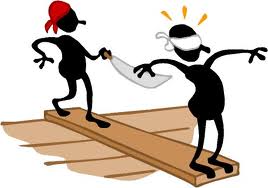
After much fear and trembling, I’d joined a small critique group through ACFW (American Christian Fiction Writers.) Pushing send on that first submission made me feel like I was walking the plank on a gigantic pirate ship, destined to plunge into the shark-filled waters, causing my poor words to be slashed and slaughtered.

What if they hated it? What if they came back and said it was the worst thing they’d ever read? Worse, yet, what if they said it was fabulous but silently snickered behind their cyber-mail back and plotted ways to kick my sorry rear-end out of the group?

But then a thought came to me. What if they really DID love it? What if my work was utter brilliance, and they begged me to critique their work because of what they felt they would glean from my writing prowess? (Think jumping off the plank only to be rescued by friendly dolphins who let me ride on their backs while those on the ship hoot, holler, and applaud!)

I’m sorry to report, the reality was somewhere in between, leaning toward option A.

The critiques I received back were a bloody mess. And I’m not swearing in a British accent there. Comments overwhelmed the pages, words were sliced everywhere, whole paragraphs were victims of the brutal attack.

At first, I was left numb. But as I read through the notes, the wheels in my head started to unthaw and turn. Their notes to a very novice writer started to make sense. Show, don’t tell. Don’t explain here. Explain this more. Adverbs in every sentence is not a fab idea. Adjectives after every noun doesn’t help the cause. Beats, not tags. The list of my faux pas goes on and on.

After a day of mourning, I got to work.

I’d love to tell you that I rewrote that chapter and it was perfect. No such luck. I’ve edited that chapter about 100 times since then, even getting more dripping red critiques.Much of my problem was that I was trying to put Barbie Band-aids on very large holes that really needed antiseptic ointment, gauze and an ace bandage, if not amputation all together.

Fast forward three years. My original manuscript is sitting, bandages still intact, in ICU.

A new baby was born a few years ago and survived the plank a little better. In September, I was tickled pink to sign my FIRST publishing contract. Sandwich, With a Side of Romance is set to release September 2012.

But very, very soon, my poor sandwich book will be dripping in blood again, but from a new source. A publishing house editor!

I’m getting ready to walk the plank again. On one hand, the safety of the boat sounds really nice. To live in my-book-is-wonderful land is tempting! But I’ve survived many massacres now, from critique groups, to rejections, to contest results. And I’ve learned that what doesn’t kill my book will make it better.

Discussion: For you unpubbed out there… who do YOU have to “bleed” your writing? Have you survived, or did the coroner have to get involved? For you pubbed among us… *gulp* does it hurt too badly???

A Writer’s Life: The Waiting Room

Today I’d like to invite you to join me someplace most, if not all, writers are familiar with. Where’s that, you ask?

The Waiting Room.

Oh. My. Word. Your groans probably registered on the Richter scale. Stop it right now and come on in. Yeah, the Waiting Room is crowded. And the magazines are out-of-date. But we’re here to talk, not peruse the 2005 issue of Bowhunter magazine

If you’re a writer, the Waiting Room is unavoidable. Truth is, if you stay the course, you’ll make repeated trips to this room where the hands on the clock never seem to move and you languish forever, wondering when someone will call your name and say, “We’ll see you now.”

Aren’t I just the messenger of all things light and breezy today?

Why, you ask, why the Waiting Room? It’s such a waste of time.

Is it really? 

What can you learn while you wait? (Yes, I know you’d rather get seen and get out of here. But stick with me.)

  1.  Understand attitude is key. If I expect to wait then I avoid the “Woe is me” attitude — or at least succumb to fewer attacks of self-pity. If I get into my appointment on time or — gasp! — early, then I celebrate. Translation: No one is an overnight success. If some author tells you that they were, they’re lying. (You can tell them I said so.)
  2. Come prepared to wait. Do I want to waste time thumbing through magazines I’d never read even if I was stranded on a desert island? Translation: What are you doing while you wait for “the call”? Are you counting time or making time count by revising your manuscript, attending conferences, connecting with other writers — maybe even encouraging other writers?
  3. Realize everyone hates waiting. Medical professionals hate being behind schedule as much as you hate waiting. Translation: Editors wait too. And agents. And publishers. (Side note: Please, no comments with “waiting for my doctor” horror stories.  Not the point of this post. If you really need to vent, email me at beth@bethvogt.com. I’m married to a doctor. I can take it.)

Time for me to sit back and see what y’all have to say about time spent in the Waiting Room. Tell me how you handle waiting for feedback from your critique group. Or from your agent. Or for the “sign here and would you like an advance with that?” phone call. How do you make waiting worthwhile?


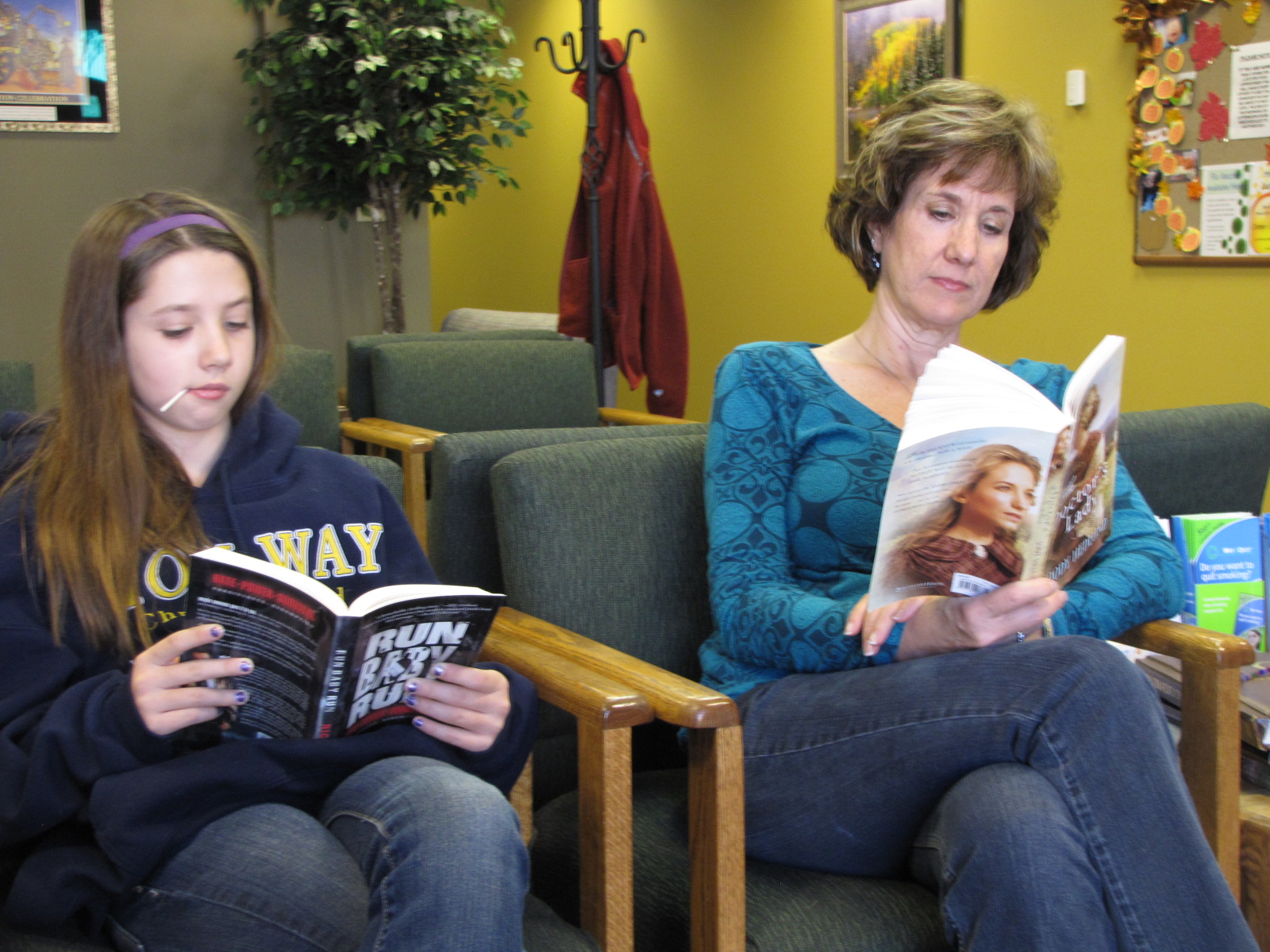
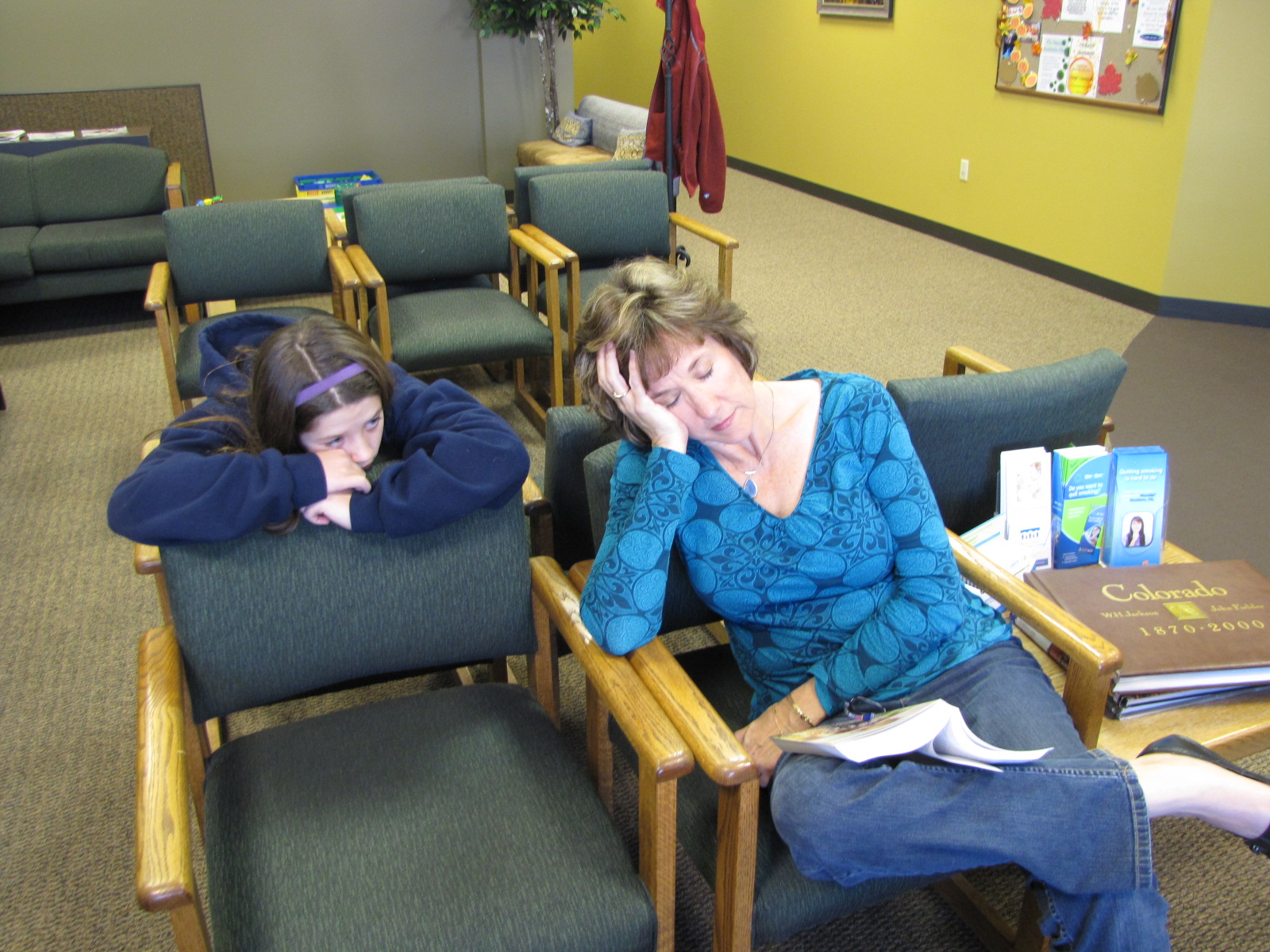
*Photo credit: That’s me and my daughter. In my husband’s waiting room. With a copy of author Jody Hedlund’s latest release, The Doctor’s Lady. The sleeping pose is for the sake of the column — not a statement on Jody’s writing. I loved reading The Doctor’s Lady!

Post Author: Beth K. Vogt

Beth K. Vogt is a non-fiction author and editor who said she’d never write fiction. She’s the wife of an air force physician (now in solo practice) who said she’d never marry a doctor—or anyone in the military. She’s a mom of four who said she’d never have kids. She’s discovered that God’s best often waits behind the doors marked “Never.” She writes contemporary romance because she believes there’s more to happily ever after than the fairy tales tell us.

The Publishing Biz: Will it Break You?

Photo: Bill Longshaw / FreeDigitalPhotos.net

Launch the Internet these days and you’ll find a deluge of opinions on what it takes to make it as a writer. You can glean expertise about search engine optimization, how to build a platform or leverage social media, garner advice on author branding, book promotion and networking, and find out what’s happening right this moment in the explosive world of ebooks. If the odds were against a writer back in the day, they really have their work cut out now.

You might tremble before the daunting writing, publishing and now marketing journey and wonder how you can possibly succeed. Do you look around and ask, “Are my writing dreams even relevant anymore?” Maybe you think…

  • With ebooks at everyone’s fingertips, the number of titles available has skyrocketed. There are simply too many books out there for any one author to garner much attention. Besides, you’ve missed the latest trend. Your chosen genre has been overdone. Editors have seen it all before and you have nothing new to offer.
  • The economy is still too scary, weak or unstable for you to venture into something so uncertain, and few authors earn enough to quite their day jobs anyway, so why bother?
  • Publishing houses aren’t taking many risks on new authors, and if they do, they aren’t investing in them the way they used to. The good old days are over, and while self-publishing is an option, you don’t have money to invest in it, let alone a website and SEO, and it’s all too complicated anyway.
  • Everyone else is better at social media than you. You’re not part of the ‘in’ social media networking crowd, and that train has already left the station without you—agents and publishers will take one look at your Klout score and break a nail trying to hit the ‘thanks, but no thanks’ button. You can’t possibly catch up.
  • You’re too utterly exhausted after working, volunteering, cooking, cleaning, carpooling, commuting, going to church, tweeting and generally living life to step it up in the writing and publishing game, especially to keep up with rules that seem to change everyday. If you thought you didn’t have the time before, you really don’t have the time now.
  • You don’t have a platform—you’re not even sure you know what a platform is. It probably takes too much time and effort to build one, and frankly, you’d rather stick a rusty fork in your eye than have to promote yourself anyway.
  • It’s easier to take a ‘wait and see’ approach. Industry changes may be a passing phase you can wait out—maybe when the kids are grown, you graduate or you retire. Eventually, the world will revert back to the way it was before, when writers had only to write and there was plenty of ozone left in the northern hemisphere.
  • Your old writing dream is in jeopardy, and you can’t come up with a new one you’re as passionate about, so you’re left to lurk about in a fog no one can lead you from with any certainty.

Maybe you believe some of this—maybe not, but the most likely reason you may fail to achieve your writing dreams is you will simply give them up. Any excuse will work. Pick one.

You can be paralyzed by the changes of today and uncertainty of tomorrow, or you can refuse to dwell on the reasons ‘why not’ and learn what works and what doesn’t from trial and error and from those working alongside you—those who keep putting themselves out there so others can keep dreaming.

What about you? Has the industry changed too much for the dream to appeal to you anymore? Or are you in it for better or worse?

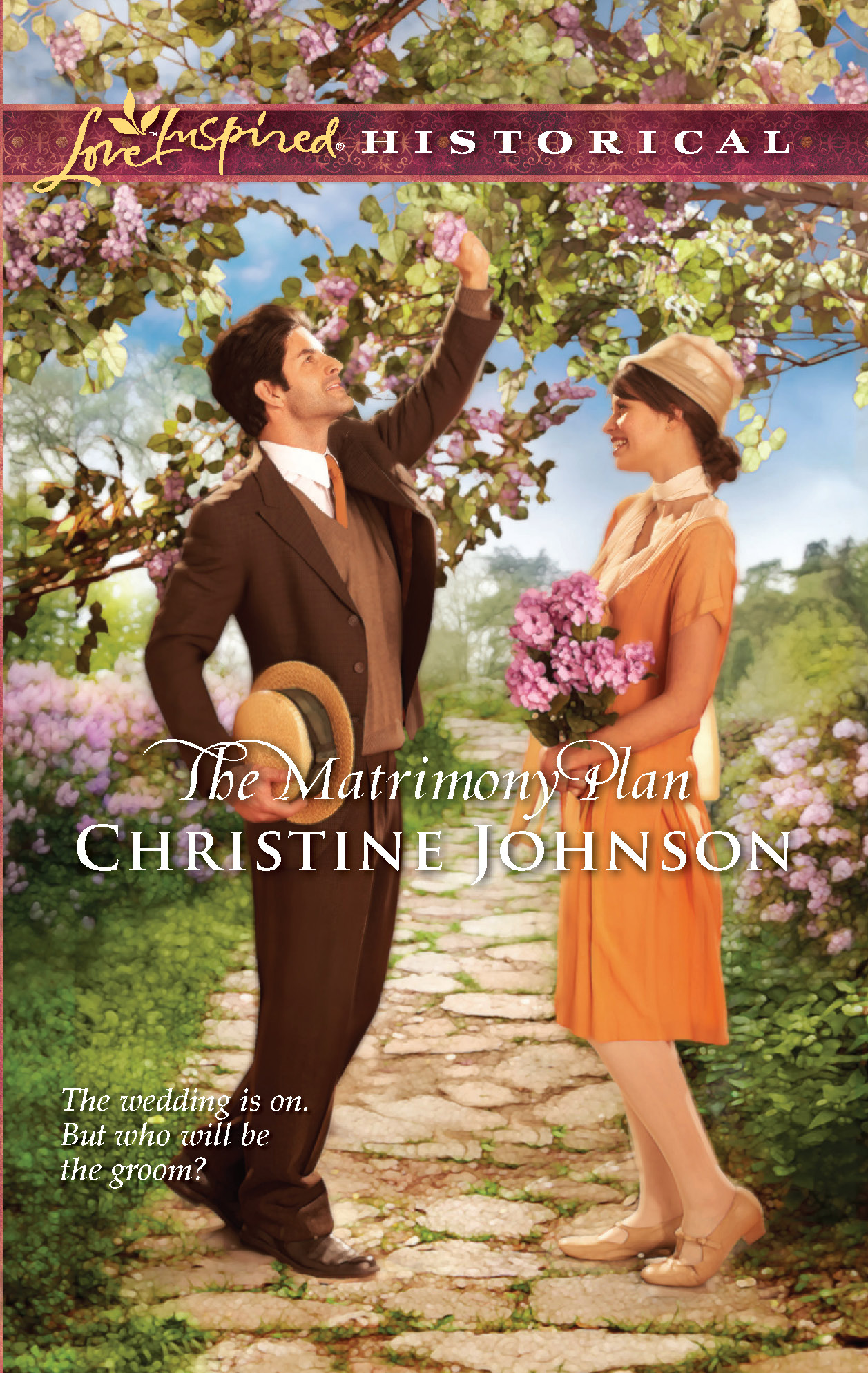
Guest Blogger: Emily Rodmell for Love Inspired Historical

I’m excited to welcome a special guest to the WordServe Water Cooler–Emily Rodmell, associate editor for Love Inspired, Love Inspired Suspense and Love Inspired Historical. She also coordinates the lines’ continuity series. You can find her online at Twitter @EmilyRodmell or at Harlequin.com.

Good morning Wordserve Water Cooler. My name is Emily Rodmell, and I’m here today to chat with you all about a great opportunity for historical romance authors.

As associate editor for Harlequin’s Love Inspired lines, I get to work on inspirational contemporary romance, romantic suspense and historical romance. And it’s the Love Inspired Historical line that I’m here to talk about today.

Love Inspired Historical is a line dedicated to Christian historical romance from any time period before World War II. It started publishing two books a month in 2008, and early this year we doubled the amount of books we put out each month to four. That’s great news for historical romance readers, but it’s also great news for historical romance writers because it means that we need double the amount of authors. Since the expansion, we’ve welcomed around 20 new authors to the group, and we still have room for more.

If you love the days of old, we’d love to see a submission from you. We’re looking for great, emotional love stories set in a variety of settings and time periods. We always welcome Western stories, but we’d also love to see settings such as Biblical, Regency, Amish, Scottish, missionary and other unique eras that you’re passionate about. Make your characters relatable and your plots unpredictable. While we all know that the hero and heroine end up together in a romance novel, it’s the journey to that happily ever after that’s the fun part. Also, make sure your characters have something keeping them apart that they must overcome. Conflict, both internal and external, is vital to a successful romance.

We’re open to both published and unpublished authors. If you’re a published romance author, we accept a submission of a proposal (synopsis and three chapters). If you’re unpublished in romance, start with a query letter and synopsis, but make sure to have a full manuscript ready to send should we request it. I’m also open to submissions for our other two lines: Love Inspired and Love Inspired Suspense. You can mail your queries to my attention at 233 Broadway, Ste. 1001 New York, NY 10279 or have your agents get in touch.

Your Turn: We’re eager to see what you come up with. I’ll be around today to answer any questions you’d like to ask about writing for Love Inspired Historical.

Introvert Marketing in an Extrovert Market

My name is Olivia Newport and I am an introvert.

I’m not a hermit. Rich relationships nourish me, and my peeps keep me buoyant. Speaking, preaching, or leading a workshop do not scare me. But they take from me, rather than give to me.

At least 25 percent of the general population are introverts and charge up during time alone. Among writers, the percentage of introverts likely rises.

The rub comes because the rest of publishing runs on a 75 percent extrovert mindset. “Why Writers Have to Market.” “Ten Steps to Building Your Platform.” “Authors Must Be Speakers.” “How to Suck All the Readers in the World to Your Blog!” (Okay, I haven’t actually seen that last headline, but you know it’s a game winner.)

Um. Markets and platforms are places where hordes of people hang out. And since I don’t fuel my creative energy by hanging out with hordes of people … well, you see where this is going.

I do want to be a novelist. I do want to build an audience. I do want to be successful over the long haul.

My challenge is this: How can I accomplish these goals without feeling thrust into a 75 percent extrovert mindset that is counter-intuitive to who I am? I’m not talking about the work of learning new skills, including social media. We all have to do that. I’m talking about being able to meet readers out of the strength of my natural introversion, rather than being squeezed to set it aside in order to play the game.

I can’t turn myself into an extrovert. I don’t even want to pretend to be one for periods of time. It’s exhausting, and how does that help? As I got ready to launch a website and blog, I thought a lot about how to build an online presence based on my strengths, not on rules that are a foreign language to me.

• Be present. It’s not hard to find me. You find my name, you find me. I don’t spurn social media, and I don’t make it tricky to be cyber-friends.

• Seek connection. I like people. Really. My heart rejoices with those who rejoice and weeps with those who weep.

• Risk authenticity. I’m not perfect. I’m figuring life out as I live it. I love to go deep and share that experience with others doing the same.

• Build on consistency. I am a creature of habit and lists. I’m generally predictable. This will serve me well in an expanding author-reader universe.

• Celebrate being me. I’m not competing in that reality show, “She Who Dies With the Most Wins.” Embracing and celebrating the person God created me to be is the greatest value I offer to readers.

We all connect with readers by building on strengths. Being introverted is a different sort of strength than 75 percent of the population, but it serves me well because it’s my strength and I understand it.

Are you introverted or extroverted? How does that affect your experience of publishing?