How to Get Started Writing: Hamster Wheels and Hurdles

type lettersOf all that a writer can and should do—how, actually, does one get started?

It would be possible, in assembling writing advice from just a handful of the people who are giving it, to come away with the impression that making it in this business requires doing everything all the time.

You must, people say, build and maintain a platform. Start or re-start your website. Pin to boards. Make things that other people will pin to boards. Attend conferences and conventions. Join groups. Pitch ideas. Hone your message. Know your audience. Study writing books. Edit incessantly. Post blogs. Find a writing schedule that works. Tweet and re-tweet updates about all of this. Plus string tens of thousands of words together and hope somebody will see fit to make a book of it. That’s just phase one.

Phase two is its own hamster wheel. With a book in publication you must, people say, promote like crazy. Speak at events. Do interviews. Pursue interviews. Write accompanying articles. Track reviews. Deal with disapproval. Build friendships with booksellers. Have catchy marketing stuff. Improve on sales. Aim for bestseller lists. Figure out your next project. Pin, post, platform-build, edit, update, and speak some more. Promise to tweet and re-tweet, always and forever.

The general question: Who can possibly manage all that?

The specific question: How, possibly, can I?

The general answer is that likely nobody can manage it all, when trying all of it at once. The other answer is that you, specifically you, can work toward all of this by doing so incrementally.

You will not start out on bestseller lists. You’ll begin at the beginning, with the whole unrelenting shebang left to do. Tweet This

There will be potential failures and rejections at every corner and turn. But if you begin—if you sit at a computer or a typewriter or even a small slip of paper, and if you start putting words down and then keep putting words down, you will be writing. Often it is as simple as that.

hurdleHere is a personal example. After having published three books by 30 (two as author, one as collaborator), late last year I didn’t have a single writing project to speak of. I wasn’t sure I wanted any, because being submerged in the mire again—see above paragraphs—seemed exhausting. Other concerns demanded my focus and time too, namely: my husband was on a seven-month combat deployment to Afghanistan, we had moved our lives across the country twice in less than a year, and I had just given birth to a baby, our first. Some days, accomplishing just laundry and dishes seemed out of my league.

But I knew that God had given me a love for writing and the opportunity to publish. He was percolating words in me that I wanted to put down. So on one harried morning, I dared draft an article query. On another day I bravely emailed some book ideas to my agent. It was just a baby toe stepped back into the pool, but from where I stood it was the all-important start, a jump at the big, looming hurdle.

That was trajectory, finally, and in a matter of weeks and months I was actually writing again: ideas flowing, plenty of potential projects on hand, a few materializing, and even (always miraculously) another book contract waiting in the wings. Perhaps more importantly, I was learning to chip away at this job, little by little, reminding myself that it would not be accomplished in a single swing. The laundry and dishes were waiting longer than before, but I figured I could deal with that.

Have you wondered, frustrated, how to get started writing? The solution can be as simple as a little trajectory. Tweet This

Stop trying to figure out how to start writing; instead, start. Aim at a goal and have the courage to start imperfectly and incompletely. As you get a handle on one area, add another. You will likely surprise yourself with all that can be attempted and accomplished. Writing is far more doable when you’re doing it.

WordServe News: February 2013

Exciting things have been happening at WordServe Literary!

On the final post of each month you’ll find a list of Water Cooler contributors’ books releasing in the upcoming month along with a recap of WordServe client news from the current month.

The biggest news is our own Sarah Freese gave birth to a baby boy, Mason. They say writing a book is like giving birth, but I think the comparison breaks down a bit…if you’re the one actually giving birth! Congrats, Sarah! Now…back to work.

New Releases

WhatASonCheri Fuller released What a Son Needs From His Mom (Bethany House)

***********************************************************************************************

wishingonwillowsKatie Ganshert released Wishing on Willows (WaterBrook)

***********************************************************************************************

husbandlistenRick Johnson released How to Talk So Your Husband Will Listen (Revell)

***********************************************************************************************

Jordyn Redwood released Poison, book #2 in her “Bloodline Trilogy” (Kregel)

***********************************************************************************************

permissiongrantedMargot Starbuck released Permission Granted (Baker)

***********************************************************************************************

forsakendreamsMaryLu Tyndall released Forsaken Dreams, the first book in her new “Escape to Paradise” trilogy (Barbour)

***********************************************************************************************

MarianoRiveraMike Yorkey and Jesse Florea released Playing with Purpose: Mariano Rivera, the future Hall of Famer from the New York Yankees (Barbour)

***********************************************************************************************

New WordServe Clients

During the Super Bowl, a storyline grew about Colin Kaepernick, the San Francisco 49er’s starting quarterback. He had been adopted and his faith and family were being talked about, including his birth mother. His birth mother, Heidi Russo, had contacted our agency a few days before and quickly signed in. Margot Starbuck is writing her memoir You’ll Do Great Things, and Alice is circulating it to publishers.

New Contracts

Marcus Brotherton signed with Tyndale to collaborate with a Seattle-area pastor on a book called The Presence.

Tim LaHaye and Timothy Parker signed with Thomas Nelson to write Revelation: Clear and Simple, a chapter-by-chapter explanation of the last book of the Bible.

Margot Starbuck and Jeremy Jones signed with Focus on the Family to publish devotionals called Kingdom Women and Kingdom Men (respectively), using content from Tony Evan’s books of the same name.

Mike Yorkey and Marcus Brotherton signed on with Barbour to do Playing with Purpose: Nascar about Christian race car drivers.

What We’re Celebrating!!

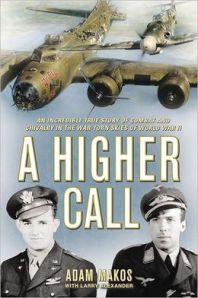
A Higher Call by Adam Makos was able to stay on the New York Times hard cover bestseller list all through the month of February. It rose as high as #6 on the print list. The WWII story also made the NPR hard cover nonfiction list for 4 weeks, Publisher’s Weekly list, as well as USA Today.

Helen Shores Lee and her sister Barbara Shores, authors of The Gentle Giant of Dynamite Hill (Zondervan), appeared on “The 700 Club“.

Carol Barnier flew to Colorado Springs to tape an episode for Focus on the Family for her book Engaging Today’s Prodigal (Moody). One episode turned into two! It should air in March.

Jordyn Redwood got a starred review (her second!) in Library Journal for her new novel, Poison. That’s a pretty rare event, so it’s big news when it happens.

Carolyn McKinstry was on “The Today Show” to talk about Black History and her book, While the World Watched (Tyndale), the story of her losing her 4 girlfriends in 1963 to the 16th Avenue Baptist Church bombing in Birmingham, Alabama.

What can we help you celebrate?

Already Loved: Encouragement for This Writing Life

file9431319827916Another rejection. My agent gently relayed that though my dream publisher had said “yes” to a proposal all the way up the chain of command to the last committee, they finally decided to nix it.

As I hung up the phone, tears spilled down my cheeks. Two years of canceled book contracts, low sales figures, and repeated “thanks but no thanks” emails had left me discouraged, frustrated, and confused. Writing—and the marketing tasks necessary to be a professional writer—now seemed like drudgery, not play. No matter how many marketing rules I tried to follow, my efforts failed.

I felt like a failure, too.

I still believed God wasn’t through using me. But I couldn’t help but wonder, Will I ever get another book contract? And what happens if I don’t? Is God trying to tell me something?

Later that day, I sat at my desk, playing a computer game with my three year-old son. As Jackson sat in my lap, I kissed his ear and inhaled his little-boy scent; a combination of milk, grime, and chocolate. Nearby sat a copy of my first book, which I had referred to earlier in the day for a radio interview. Jackson looked at the illustration of a frazzled mom on the cover and asked, “Is that you?”

“No, sweetie,” I said, “but I wrote that book. See, mommy’s name is on the cover. It says, ‘by Dena Dyer.’ “

“Oh!” Jackson said, grinning up at me. “I love Dena Dyer!”

Stunned, I blinked back tears. “I love you, too,” I murmured.

After a few minutes more at the computer, I found a quiet corner and prayerfully pondered Jackson’s simple expression of love. He didn’t care if I published books or not. He simply loved me for me. He loved me the way God does.

In all my disappointments, I had thought more about selling books than surrendering my heart. It was painful to admit that somewhere in the midst of trying to serve Jesus, I’d become goal-driven instead of God-driven. I seemed to care more about what the publishing powers-that-be thought than what my Heavenly Father thought.

Satan is crafty. He takes our God-given talents and twists them into temptations. Gradually, my calling had become an idol. Who I was became less important than what I did.

“Lord, I’m sorry,” I prayed, crying for the third time that day. “My heart is so full of sin. I know you couldn’t care less how many books I sell. You just want ME.”

In the weeks and months to come, as I asked God to help me believe the truth of His unconditional acceptance, I began working freely and joyfully again instead of writing just to be published. God continued to close some doors, and another book proposal was rejected, but He gave me other opportunities–ones I hadn’t even known to pursue.

The truth is, though, I will probably always have a tendency to think I must perform to be loved. So I’ve ask God to whack me upside the head (as we say here in Texas) before I get too far off track.

If experience is any teacher, He’ll be faithful to do just that.

(This article first appeared at The High Calling. Used by permission) 

Writing a Trilogy

For those of you starting on your writing journey—there are two realms of publishing. The ABA (the American Booksellers Association) and the CBA (the Christian Booksellers Association.) The ABA publishes what would be considered secular novels and the CBA publishes Christian or “inspirational” books. Publishers generally fall under one of these two categories.

Book #1 Bloodline Trilogy

CBA publishers like trilogies. And there is good reason for this. If you can hook a reader on one, they’ll likely buy the rest. There is an inherent marketing value to producing a series. I’ve not quite seen this trilogy trend in the ABA though there are beloved characters (James Patterson’s Alex Cross, Lee Child’s Jack Reacher, and Sue Grafton’s Kinsey Millhone to name a few) that monopolize more than a few books but are not quite designed as self-enclosed three-book sets.

When Proof was first contracted, it was proposed as a trilogy. The publisher didn’t like the first proposed sequels and asked for different plot lines in the subsequent titles, which I provided. Even after that, they still contracted only the first. In a twist and turn of God fingerprinted events, they ended up contracting the trilogy a few months after the initial offer.

Book #2 Bloodline Trilogy

However, having not ever written a trilogy, there are a few things I would do now when planning a series that I thought could benefit future trilogy authors.

  1. Each book stands alone but should be connected to the others: It’s nice for readers if they don’t have to read one book to understand the others but is also nice if certain characters/themes carry through all the books for those sticking with you. This can be challenging because a little information will have to be given (in a creative way) to readers to both clue them in to the previous story(ies) and also serve as a nice reminder to those picking up the next book who may have read the others—considering books release six to twelve months apart.
  2. Book #3 Bloodline Trilogy
    Book #3 Bloodline Trilogy

    Timelines are important: I know—this should have been uber-obvious to me, right? But consider some things that can seriously mess up your timeline—like characters getting pregnant. You have to then backtrack to the time of conception and make sure all story plots support it. Add to that a hostage story (Poison) that deals with younger children that then need to be aged seven years, and a teen pregnancy (yes, I did all of this!) and it can be challenging to make sure all events line up. Graphing out the timeline is a seriously good idea. And then keep it to refer back to until the book is actually in print.

  3. Avoid absolute characterizations: In Proofone character commented that another one never sweats (and it was a blazing hot day and he was in SWAT gear.) It was more to relay how calm the man was under pressure. Well, in Poison, my editor reminded me how often this character was now sweating and how I said in book #1 that he never did. It’s just like a test—never, all, and always are not good picks or preludes to character traits.
  4. Provide a circular moment for the reader: What is a circular moment? It’s something (an event, an emotion) that happens in the beginning that is revisited at the end of the novel that shows how the character has changed. For instance, in Proof, the lead detective, Nathan Long, carries a list of “unforgivables”—acts that he literally writes out that he can’t get over emotionally. There is some forgiveness for Nathan at the end of the first book but it ultimately doesn’t fully happen until the end of Peril, the third book in the series. So each book needs a moment like this as well as the series.

What about you? Do you have tips for planning a trilogy?

When Your Book Doesn’t Sell: Separating the Writer From the Wannabe

http://www.stockfreeimages.com/

“I’m so glad it is our first year here so that the pressure’s off to win an award. I heard you have to be returning to be in the running,” my friend Kim leaned over and whispered as we sat in the back of Mount Hermon Christian Writers Conference’s auditorium last April.

“Seriously, right?” I said, slouching down in the pew and sighing. We were settled in for the final night of programming; awards, music, and a message from the great Liz Curtis Higgs, who, if I am being honest, seemed so inviting and encouraging that it took all I could muster not to walk over and crawl up in her lap.

The week in California had been a dream for this mother of four, prone to piles of laundry, homework with kids, housework, and therapy and doctor appointments for my two daughters with Down syndrome. One week by myself, ensconced with like-minded people, authors, agents, publishers, and writers with dreams of their own, in one of the prettiest parts of God’s creation.

So you can imagine my surprise when my bio was read and my name was called. I won the Ethel Herr 2012 Most Promising New Writer Award for submitting 25 pages of my memoir about giving birth to my daughter Polly, and her diagnosis of Down syndrome, while serving as a missionary in Ukraine. My friend and I jumped up and down, and I ambled to the stage. The bright lights made me dizzy. Liz Curtis Higgs gave me a huge smile. “Wonderful!” Ethel Herr (Ethel Herr!) gave me a hug. The award thrilled me, and embarrassed me. After all, I was just a mom, trying my hand at this writing thing.

I naively left the conference sure that I would secure an agent and a publisher for my book within minutes of walking in the door back home.

Yeah. That didn’t happen. I secured an agent, but months later, through a different writing venue. The manuscript garnered interest from publishing houses that even resulted in two frightening, sweat-producing face to face meetings.

But so far, my book hasn’t sold.

Here are three things I’ve learned from this experience so far:

1. Keep writing

Someone offered me sage advice once I completed my manuscript. “Start another one.” Diving right back into another book length project has been one of the best things I’ve done as a writer. I’m a writer, not a wannabe, because I want, no, I need to write, not just to be published. I am growing in my craft, and I am still having fun doing it.

2. Grow your platform

I’ll admit it, there have been days that I’ve wanted to curl up in a ball over my memoir not finding a publishing home. OK, there have been days I have curled up in a ball because my memoir has not found a publishing home. But I’m a writer, not a wannabe, because I get back up and keep trying. I am building my platform and brand through articles, speaking, social media, and blogging.

3. Trust God’s timing

As a person of faith, although my carnality wants what I want in my timing, this experience has been a great exercise in trusting God and his timing. I am called to write. And by God’s grace, he uses my words in other people’s lives, and in my personal pursuit to become more like Jesus. So I practice trusting him. If it is God’s will for my memoir to be in print, it will happen. In the meantime, I’ll keep writing.

I may not be a published author, but I am a writer, not a wannabe.

And today, that’s enough to get back to this crazy, exciting, challenging work of putting pen to paper.

The 15-Minute Writer, Part 4: Brain “Rules” for Writers

file0001052648856 (1)Busy authors and authors-in-training need all the brainpower we can get. (Especially us writer-moms; I’m convinced that some of my brain came out with each of my two children!)

Therefore, I listened VERY closely during a recent writers retreat as John Medina, author of Brain Rules, spoke about brain science, and how it can help writers become more productive.

Before we begin, we need to realize that there are no real “brain rules” for creatives. “I’m guessing as to what will help your creativity and output, according to the brain research that’s out there,” Medina told us. With that caveat in mind (pun intended), here are a few practical lessons I gleaned from the two hour-long sessions he led.

First, our ability to be creative is directly related to feeling safe. Our minds are instinctual; therefore, we need to find a place to write where we don’t feel threatened emotionally, creatively, or physically. Maybe it’s a coffee shop where the server knows our favorite drink, or a corner of our home where we can thoroughly relax.

Try this: ask yourself: where can I create without someone interrupting and/or discouraging me? Journal for fifteen minutes about this, or spend that time setting up a more nurturing space.

Second, we need to sleep to learn. Medina says, “We not only rehearse what we’ve learned as we sleep; we also rehearse what we don’t know, and try to solve it.”

Try this: do you have writer’s block? Work on your problem manuscript two hours before bed. Need to finish something within a few hours? Set a timer, and take a refreshing 15-minute nap.

Third, we all have times of the day when we’re most productive. Medina calls these natural body rhythms “chrono-types,” and he encourages authors to pay close attention to them.

Try this: work when you’re most creative. Are you a lark (morning person)? Set your alarm to write before work or school. Are you a might owl (night person)? Write after the kids are in bed. Maybe you’re a hummingbird (afternoon person). If so, try to write during your break at work, even if it’s only for fifteen minutes.

Fourth, exercise boosts cognition and buffers against the negative effects of stress. Medina cited a study which looked at two groups of people as they transitioned through the aging process. The active group suffered less depression and dementia, retired later in life, surrounded themselves by family and friends, and aged beautifully. The sedentary group aged “terribly,” according to Medina. “They endured depression, anxiety, medical problems, loneliness–and they looked old.”

He then mentioned a study in which soldiers exercised before and after Chinese language lessons. “There was a one hundred percent change in cognitive function when the soldiers exercised before trying to learn Chinese,” he said. “Other studies show that if you keep up regular exercise for three years, you actually improve memory!”

Try this: Medina vows that five aerobic sessions of 30 minutes per week is all it takes to get the massive brain benefits from exercise. Those sessions can also be two smaller ones (say, 15 minutes). He also says that your mental “sweet spot” will occur right after you exercise. So schedule a short exercise session right before your writing time. Your brain–and your body–will thank you!

Read part one, two, or three of this series.

Generating Buzz Through Book Reviews

beeOptimizing buzz from book reviews can be an key part of your book’s overall marketing campaign, so it’s important to make time for it, even if you’re like me and writing isn’t your primary day-job. 

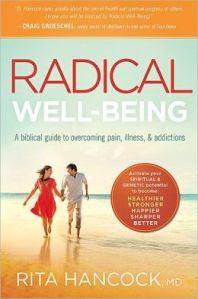
Allow me to share a few tips that helped me get SIXTY-THREE book reviews and interviews for my new book, Radical Well-being, while suffering only a short-term, reversible case of utter exhaustion. Yay!!

(1) Establish your platform and develop relationships on the Internet long before you ask people to review your book.

When you pitch to book reviewers, it helps if you already have an established presence on the Internet and elsewhere. That’s why you need as many of these as possible (I included links so you can see what mine look like): an author website, Facebook fan/author & book pages, an Amazon.com author page, at least ten positive reviews on your book’s Amazon.com page, a Pinterest page, a Linked-In profile, a video book trailer on Youtube (see my latest book trailer, for example), a Twitter account, a blog (I actually created an interactive forum for discussion about my diet book–with a blog embedded in it), an Internet talk radio show, a newsletter or e-zine, magazine articles, and as many TV and radio appearances as possible. Don’t necessarily shoot for perfection on your Internet pages before you publish them. Just get your pages up and running. You can improve them gradually, over time, if need be.

(2) Pitch to every reviewer you can, and do it early.

I started collecting names and contact information for book reviewers, columnists, newsletter producers, and bloggers in my specific niche about six to nine months before the official launch date for Radical Well-being. As soon as the reviewers responded with interest, I asked if they would accept an electronic version of the book when it became available. If the answer was “No,” I put them on a separate list to receive a bound galley copy (a rough version of the book).

(3) Ask your publisher for an electronic version of your book to send to reviewers early. Also, get the cover art to include with the book file.

Almost half of the sixty-three people who agreed to review my book were willing to accept an electronic copy. The copy was watermarked by the publisher to deter widespread bootlegging. Attach the book’s cover art, a short author bio, and a book synopsis to the book file when you email it to reviewers, and send sample interview questions if the blogger wants to run an interview about you, as well. Bloggers love it when you suggest questions they might want to ask you.

(4) Try to coordinate reviewers to publish on the day of your book’s actual launch date.

Start well in advance. Otherwise, you won’t allow your reviewers enough time to read your book and write their reviews before your launch date! I had to scramble in this regard, as my publisher unexpectedly moved up my book’s release date by two months! Yikes! To help my publicist get the galley copies out in time, I actually printed out cover letters and mailing labels and snail mailed them to her. That way, all she had to do was put the galleys in the envelopes, insert my signed cover letter, affix the mailing label, and send them off. It wasn’t necessary for me to do that, but it freed her up to get me more media hits than I could get on my own, so it was worth the effort on my part.

(5) Solicit radio interviews well in advance of your book’s launch date, if possible.

You don’t have to be a major author to get radio spots. Try for Internet radio! Some hosts with smaller audiences may be eager to have you on. The nice thing about radio is you can PRE-record shows, thus freeing yourself up for other buzz-building activities on your launch date. Plus, you don’t have to get all dressed up or travel far from home like you do with TV. As a side note…. when you pitch to radio producers, keep in mind they get hundreds of pitches a day. Odds are high they won’t make it past your email’s subject line if it’s boring, so write one that’s enticing! My subject line read, “Christian IvyLeague MedDoc/radio guest/author w/ unlimited FREE Kindle diet book downloads for ALL ur listeners, Jan8-12.” Yes, you read that right. I offered my first book, The Eden Diet, entirely FREE, in exchange for a chance to talk about my second book, Radical Well-being. (By the way, you can have my diet book for FREE, too, if you want it. It’s FREE on Kindle through January 12, 2013. Just follow the link above, which I shamelessly worked into this point. Do you see what I did there? Use every opportunity!)

(6) Make marketing opportunities for your book anywhere possible.

The launch date for my new book, Radical Well-beingA Biblical Guide to Overcoming Pain, Illness, and Addictions, was YESTERDAY!!!! Thus, I wrote this blog entry ahead of time and strategically set it aside for publication today. As you can see, preparing promotional material in advance is critical if you want to achieve optimal buzz around the time of your book’s launch.

(7) Send reminders to your reviewers and radio hosts.

Don’t expect everyone who promised you a review or an interview to necessarily remember your release date. In fact, just assume they already forgot. Send them a “thanks again for agreeing to publish my review on [insert launch date]. May I provide any further information to facilitate your writing the review?” Many reviewers responded with a “I’m so glad you reminded me…” or “Would you mind reminding me again in two weeks? I have a lot going on right now.”

(8) Thank your reviewers with back-links to their reviews. 

It’s only courteous! And it’s good for relationship-building. Keep in mind that you might write another book someday and might therefore solicit reviews again from these bloggers! As for me, I intend to publish “thank you’s” and back-links in the February 2013 edition of Dr. Rita’s Christian Health Newsletter, which goes out to over 3400 subscribers. I also posted thank you’s to my reviewers on Facebook and elsewhere.

As you can see, it isn’t easy to create buzz for your new books, but starting early, working hard, and establishing good cyber-relationships certainly helps. A little bit of OCD doesn’t hurt, either.

Do YOU have info to add, here? If so, I’m all ears! What additional advice do YOU have regarding how to solicit and coordinate book reviews and interviews to optimize book buzz? Any and all comments are appreciated!

Blessings from Dr. Rita!

WordServe News: December 2012

Exciting things have been happening at WordServe Literary!

As the year comes to a close, we’re so very grateful that WordServe Authors released 83 books in 2012, and signed 80 book contracts for nearly 119 books to release off in the future.

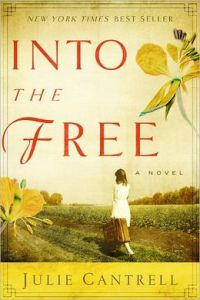
IntotheFreeJulie Cantrell had the agency’s first New York Times Bestseller in many years with her book Into the Free. It also garnered a starred review in Publisher’s Weekly. A rarity.

We had several books climb over the 100,000 copy mark:

* The Secret Holocaust Diaries of Nonna Bannister, written by Denise George and Carolyn Tomlin (Tyndale)

* The Devil in Pew Seven by Rebecca Alonzo, with James Pence (Tyndale)

* My Flight to Heaven by Dale Black (Bethany)

* Edge of Apocalypse by Tim LaHaye and Craig Parshall (Zondervan)

* Linspired (adult and YA book together) by Mike Yorkey (Zondervan)

And we’ve had several authors show up on national shows:

* Rebecca Alonzo on Dr. Phil (twice)

* Lauren Scruggs appeared on several shows in November at the launch of her book, Still Lolo.

These WordServe authors signed their FIRST BOOK CONTRACT in 2012:

* Anita Agers-Brooks (Leafwood)
* Leigh Ann Bryant (Authentic)
* Deb DeArmond (Leafwood)
* Rebecca DiMarino (Revell)
* Jan Drexler (Love Inspired)
* Michael Hidalgo (IVP)
* Heather James (Kregel)
* Amanda Jenkins (Tyndale)
* Caesar Kalinowski (Zondervan)
* Heather Larson, with David and Claudia Arp (Bethany)
* Tracie Miles (Leafwood)
* Jerry and Caroly Parr (Tyndale)
* Christina Powell (IVP)
* Rachel Randolph, with Becky Johnson (Zondervan)
* Tina Samples (Kregel)
* Lauren Scruggs (Tyndale)
* Amy Sorrels (David C. Cook)
* Mandy Stewarad (David C. Cook)
* Janalyn Voigt (Harbourlight)
* Jeremy & Jennifer Williams (Thomas Nelson)
* Tricia Williford (WaterBrook)

These WordServe authors had their FIRST BOOKS published through a traditional publishing house:

* Julie Cantrell, Into the Free (David C. Cook)
* Arnie Cole, Unstuck (Bethany)
* Katie Ganshert, Wildflowers from Winter (WaterBrook)
* Adam Makos, A Higher Call (Berkley Caliber)
* Jay Pathak/Dave Runyon, The Art of Neighboring (Baker)
* Zeke Pipher, Man on the Run (Howard)
* Lauren Scrubbs, Still Lolo (Tyndale)
* Helen Shores and Barbara Shores Lee, The Gentle Giant of Dynamite Hill (Zondervan)
* Jordyn Redwood, Proof (Kregel)

So all in all, we had lots to celebrate!

New January Releases

WhatJesusSteve Addison, What Jesus Started.

******************************************************************************************
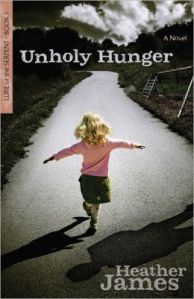
UnholyHungerHeather James, Unholy Hunger, her debut novel!

******************************************************************************************

RadicalDr. Rita Hancock, Radical Well Being

******************************************************************************************
AHigherCallAdam Makos, A Higher Call

******************************************************************************************
JustWhatDoctorRick Marschall, Just What the Doctor Disordered

******************************************************************************************
TheRiverGilbert Morris, The River Palace

******************************************************************************************
DilemmaOlivia Newport, The Dilemma of Charlotte Farrow

******************************************************************************************
GreatStoriesJoe Wheeler, Great Stories Remembered #1, audio (eChristian)

******************************************************************************************
StinkyJoe Wheeler, Stinky: The Skunk Who Wouldn’t Leave (Pacific Press)

******************************************************************************************

New WordServe Clients

Several new clients have joined the WordServe stable with Alice Crider as their point person, but we’ll report more on that next month.

New Contracts

Christina Powell signed with Intervarsity Press (IVP) for her first book. The book is tentatively titled Question your Doubts. It explores the many roots of doubt experienced by both believers and nonbelievers, providing a corresponding response of faith from the rare perspective of a Harvard-trained research scientist who is also an ordained minister. (SF)

What can we help you celebrate?

Are Reader Questions Helpful?

Freedigitalphoto.net Reading Club

After my first avid reading friend told me she had made a vow not to read fiction until the end of the year and hoped by then her desire to read fiction would be gone for good, my thought was, I would never try to convince my friend she should read fiction if she has a conviction against it. I know my life would be very dull without fiction.

Because I could see a reason to relieve any guilt other Christians might have about reading fiction, I became interested in the discussion questions in the back of some of my Christian friends’ novels. They always seemed to reveal the author’s motives in writing that particular story. The questions bring out the growth in the characters as they lived through the events of the story, and as they became better people.

In asking around about lessons on writing reader questions … what type of questions to ask, I learned some of my author friends are required to write the questions but admit they never read them and don’t know why they are asked to provide them.

I never found those lessons. So, I’m not sure how I did it, but I came up with 9 questions for the back of my book.

Last week a writing friend stopped in. I had one proof copy of my book left. A few years back she was writing fiction and it was awesome. Her words take on a lyrical quality. In fact she wrote the most awesome story I have ever read about the murderer Barabbas who was spared crucifixion at the time our Lord was sacrificed for our sins. So I know at one time she understood the place of Christian fiction in our lives.

She took the book knowing it was fiction, but thinking she could read it—for me. And she did give me some points and suggestions for three different changes, which I appreciated. But she couldn’t get past chapter eight because to her it read like a romance. And she had decided a few years ago that reading romance stories were not good for her mind. In fact she has not read fiction at all for several years. So of course she never made it to the discussion questions. I did not know my friend had quit reading fiction when I asked her to read it. And I did not try to convince her to finish it.

Earlier, my sister read a PDF copy of this story, and her words to me were: “Thank you for letting me read your book. At first I thought, ‘Oh dear, this is a Harlequin Romance’—but as the story progressed I realized it wasn’t. I cried when [unnamed character] died. I was on the edge of my seat while Birdie was running through the tunnel. I could picture it all. You have several subplots that make it interesting, but more important, you have several messages about Christian living.”

I’m still trying to come up with a basic template for discovering how to write the best discussion questions for any given book. Do you have any suggestions?

How to Write a Bestseller – Even If You Never Took a Writing Class

Recently, I was invited to share what I’ve learned in the trenches as I wrote, pitched, and published my debut novel, Into the Free…a book that spent three weeks on both the New York Times and USA TODAY bestseller lists and earned a starred review from Publishers Weekly (even though I never took a writing class).

Through the WriteNow writer’s workshop, I answered many questions, including:

  1. How did the idea for this book develop?
  2. Did you sell your first draft or were there many edits involved?
  3. What tools were most helpful for you as you learned to craft a novel?
  4. How did your debut novel get noticed on shelves?

We also discussed logistical details such as finding an agent, signing with a large publisher vs small publisher, dealing with editors, and carving time to write.

And we touched on hot topics in the publishing world including the convergence of the Christian and secular markets, self-published e-books, and why indie stores matter.

PLUS…listeners had time to ask questions at the end of this 45 minute workshop.

And the best part of all…the entire audio recording is still available FREE of charge online.

As a debut novelist, I’ve learned a lot by trial and error. Now, I’m ready to share my advice with you.

Why am I offering a free workshop? Because nice people helped me achieve my dream of becoming a novelist, and I want to do the same for you.

What’s in it for me? Well, selfishly, I’m an avid reader…and if I can help you publish a good book, then I’ll have a fabulous new story to read.

What do you have to lose? Absolutely nothing but time.

How can you participate in this free workshop? Visit WriteNowCoach.com where you can find an extensive archive of free workshops. While there, register to receive email updates so you won’t miss upcoming cost-free teleconferences.