Don’t Write to Heal and Other Truths about Writing from Affliction

_MG_9992

Dear writers, don’t we know already that we are to write into our darkest moments? My writing students have heard me say this 1000 ways: Enter the forest, dive into the wreck, face your toothy, hot-breathed dragons, open the closet, hold hands with your enemies, etc. We may remain silent in the midst of them, but at some point we must write. We must steward the afflictions God has granted us. Patricia Hampl reminds us why: “We do not, after all, simply have experience; we are entrusted with it. We must do something—make something—with it. A story, we sense, is the only possible habitation for the burden of our witnessing.” Dan Allender, in “Forgetting to Remember: How We Run From Our Stories,” tells us what happens when we ignore the hard events in our lives: “Forgetting is a wager we all make on a daily basis and it exacts a terrible price. The price of forgetting is a life of repetition, an insincere way of relating, a loss of self.”

How then do we begin to write from within our afflictions? And how might the practice and the disciplines of writing offer a means of shaping our suffering into meaning for both writer and reader? Forgive the brevity and oversimplification, but here’s what NOT to do and why:

1. Don’t write to heal. Really. Our therapeutic culture urges us to write into our pain as a means of self-healing. Newsweek’s article, “Our Era of Dirty Laundry: Do Tell-All Memoirs Really Heal?” rightly questions this cultural assumption. One friend assumed I wrote my most recent book, Forgiving Our Fathers and Mothers: Finding Freedom from Hate and Hurt primarily as a means of self-healing. Not so. Writing into our pain can be hellish at times. Know that returning to re-live an experience with language and full consciousness is sometimes worse than the original event. Recognize that writing into affliction brings its own affliction. And even more importantly, recognize that when we are predisposed to heal ourselves, we will not be fully honest in the writing. Healing will likely and eventually come, but only as we engage with the hardest truths.

noah pulling in skiff in storm

2. Don’t write to redeem, to turn inexplicable pain into sense and salvation. We want to bring beauty from ashes. We want to make suffering redemptive to prove its worth. But this is God’s work, not ours. Our first responsibility is to be true to what was, to witness honestly to what happened. Our job is not to bring beauty out of suffering but to bring understanding out of suffering. Poet Alan Shapiro argues that “…the job of art is to generate beauty out of suffering, but in such a way that doesn’t prettify or falsify the suffering.”

smiling old woman with cigarette

3. Don’t write for yourself alone. This is not just about you. You are working to translate suffering to the shared page. Buechner reminds us of the universality we should be striving for: “…all our stories are in the end one story, one vast story about being human, being together, being here. Does the story point beyond itself? Does it mean something? What is the truth of this interminable, sprawling story we all of us share? Either life is holy with meaning, or life doesn’t mean a damn thing.” One of the greatest compliments I have heard from the book and the telling of my own story is, “You told my story.” Writing begins in the self but should consciously move us beyond ourselves, to place our story into the larger stories around us, and ultimately, into the grand story that God is writing. The most powerful work comes from a “self that renders the world,” as Hampl has said—not just the self that renders the self.

W-larger-hands-holding-bookglobe

Life is holy with meaning. Pain is holy with meaning. Don’t miss it. I pray for you the strength and faith and wisdom to begin to enter those hard places and to translate your afflictions onto the pages we share—for the good of All.

How have you been able to translate your suffering into your writing?

After You Sign the Contract

You did it! You succeeded in acquiring an agent, your book sold, and you just signed your contract. Ahhh. Life is amazing.

But…

There’s more work to do. Maybe the hardest work of all. This is where an author truly needs encouragement, practical ideas, and inner strength. But it all starts with thoughts.

Magic of Thinking Big Book
Little Thoughts Keep Your Writing Small

“Success is determined not so much by the size of one’s brain as it is by the size of one’s thinking.” The Magic of Thinking Big by David J. Schwartz

Allowing any task to become daunting can deter us from doing all we are capable of. Especially when there’s a lot at stake — like the completion of a life’s dream. I know, I almost let it happen to me.

I was approximately 85% finished with my final manuscript and three weeks from deadline. Then I froze. There’s no reasonable explanation I can offer as to why. My outline was solid, and until that morning, my words flowed smoothly.

At first, I attributed it to exhaustion. After all, I was still working over sixty hours a week as the general manager of a large river resort, and it was early September. But after taking a couple of extra days off, catching up on rest, and trying again, still no go.

I panicked. A swell of fear felt like it was swamping over me. In a choked voice, I told my husband, “I guess I’ll send the advance money back.”

“What’s wrong?”

“I can’t finish.” I felt my chin quiver. “I don’t know why I ever thought I could write a book. It isn’t good enough to send in, and I can’t get any new words on the page.”

“I thought you wanted this.”

I ran out of the room. My husband meant well, and he was right. It was what I wanted, but in that moment, I didn’t know how to get it done.

First Hired Last Fired
Available in Major Bookstores and Online

The next morning, I awoke feeling no less anguished, but one thing had changed. My determination not to give up. My husband’s final words on the subject resonated in my heart. I did want this. So I got on my knees and thanked God for helping me finish what He had started. Then I took advice from my own book, First Hired, Last Fired — How to Become Irreplaceable in Any Job Market, and resolved to get the job done, regardless of how I felt.

I won’t lie and tell you things suddenly got easy. Those final pages were excruciating, and to this day, I can pick them out of my book by the weakness I see in the sentences forced into existence. But I did it. Exactly on my deadline date, I submitted the full manuscript according to contract. And I learned something.

Michael HyattI’m not the first author to experience soul-crushing panic deep into the book writing journey. Many have relayed similar experiences, including best-seller Michael Hyatt.

But I also learned how to push past my fears, and whether the world likes it or not, to put the message out there. It was hard, but the satisfaction is sweeter than my earlier efforts and emotions.

I’m not sure where you are on the path to publication. But if you’re new to the process, be prepared for some emotional bumps after you sign the contract. And remember — sometimes we need to do what we love, versus what feels safe.

Have you ever panicked in the middle of a big accomplishment? It’s never too late to start again.

Anita Fresh Faith

WordServe News: February 2014

Exciting things have been happening at WordServe Literary!

On the final post of each month you’ll find a list of Water Cooler contributors’ books releasing in the upcoming month along with a recap of WordServe client news from the current month.

New Releases

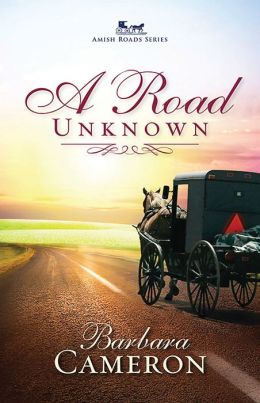
RoadUnknownBarbara Cameron released A Road Unknown (part of the Amish Road Series) with Abingdon.

***************************************************************************************

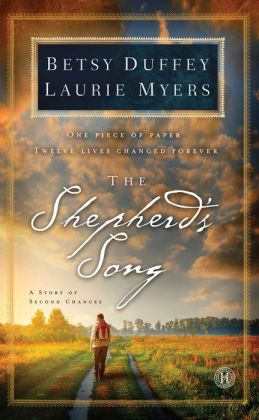
Shepherd SongBetsy Duffey and Laurie Myers release The Shepherd’s Song, their debut novel with Howard Publishers.

***************************************************************************************

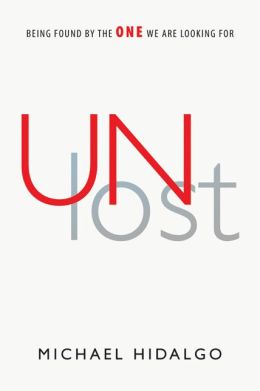
UnlostMichael Hidalgo released Unlost: Being Found by the ONE We Are Looking For, with IVP.

***************************************************************************************

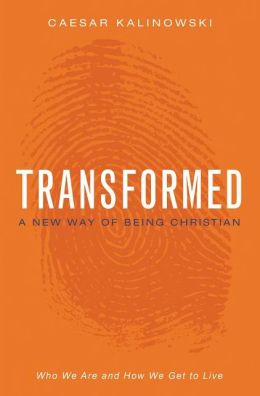
TransformedCaesar Kalinowski released Transformed: A New Way of Being a Christian with Zondervan Publishing House.

***************************************************************************************

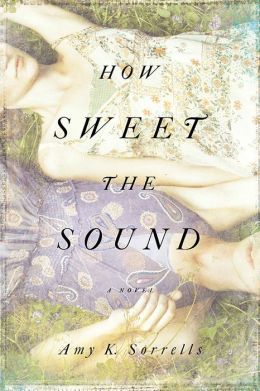
How SweetAmy Sorrells released How Sweet the Sound, her debut novel, with David C. Cook.

***************************************************************************************

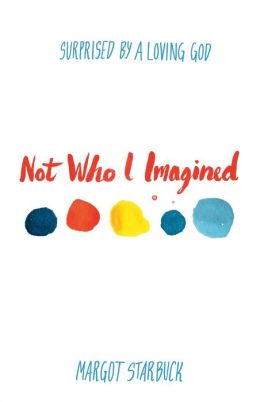
NotWhoIImaginedMargot Starbuck released Not Who I Imagined: Surprised by a Loving God with Baker Books.

***************************************************************************************

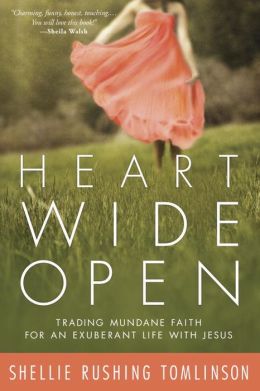
HeartWideOpenShellie Tomlinson released Heart Wide Open: Trading Mundane Faith for an Exuberant Life with Jesus, with WaterBrook Press.

***************************************************************************************

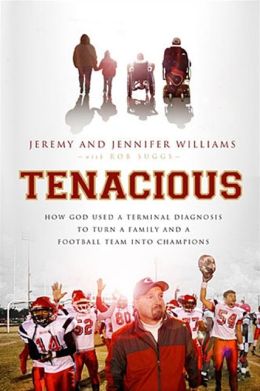
TenaciousJeremy and Jennifer Williams released the DVD and audio of their book Tenacious through Brilliance Audio.

***************************************************************************************

New WordServe Clients

Bill Myers, longtime CBA novelist and filmmaker.

Kathy Carlton Willis, platform coach, editor, and member/trainer with Advanced Writers and Speakers Association and CLASSeminars, signed with Alice Crider.

Cassandra Soars, narrative non-fiction writer and cofounder of iheartus, a new social media website for couples, signed with Alice Crider.

New Contracts

Robert Wise signed with Barbour to write Bible Lands: An Illustrated Guide to Scriptural Places.

Back to the Bible signed a 13 book agreement with Barbour Publishers to write short, felt-need books that will be distributed directly to churches through a back of the church spinner rack (as well as in all other outlets).

Sarah Varland signed with Love Inspired to write Tundra Threat, a romantic suspense novel.

Bryan Bishop signed with Baker Books to publish Boundless Jesus: Radical Faith from a Hidden Global Trend.

Kelli Gotthardt signed with Kregel to write her memoir, Unlikely Rebel.

Kate Hurley signed with Harvest House to publish a memoir about making sense of the unexpected single life.

Sarah Parshall Perry signed a two-book contract with Revell for her projects tentatively titled Sand in My Sandwich and Mommy Wants a Raise.

What We’re Celebrating!!

YouFoundMeKeith Robinson’s book, You Found Me, landed on three bestseller lists this month!

5 Ways to Add Humor to Your Writing

1373807555xxxa8


Humor is a life-giving stress reliever and ice breaker. I often sprinkle my talks, articles and books with funny word pictures and phrases, because laughter opens a reader/listener’s heart to the serious points I want to make. Thankfully, my home is full of crazy guys (including my husband, who’s the most hilarious person I’ve ever met) and I’m a ditzy, accident-prone bundle of midlife hormones. Thus, I’m never short on material.

It’s true that humor, like writing, is an innate gift, and some people have it in abundance. Others…well, not so much. However, certain aspects of both crafts can be taught. As a follow-up to this popular post, here are a few ways to humorously pump up your prose:

1. Wordplay.

Mae West said, “I used to be Snow White, but I drifted.” Classic!

Cultivate your LOL quotient by reading children’s books, which are full of 1362536802le12smarvelous wordplay. Humor writers and comedians are childlike spirits–playing constantly with sounds, alliteration, and rhyme. Let loose a little, and see what happens.

2. Exaggeration.

Never stop at one when fourteen will do. In humor, less is not more and more is better. Erma Bombeck, one of my all-time favorites, was a master at exaggeration: “I’ve exercised with women so thin that buzzards followed them to their cars.”

Remember George Burns? He often exaggerated about his age: “When I was a boy the Dead Sea was alive.”

3. Surprise.

When my nine-year-old saw that our local drive-in was up for sale, he said, “Mom, I’m sad about that. It’s such an iconic part of our town.” I laughed because I was surprised that he knew the word at all, let alone used it correctly.

Want your reader to laugh? Take a phrase and change the ending to something unexpected, like Jim Carrey did:  “Behind every great man is a woman rolling her eyes.” Stephen Wright makes a living by crafting surprise endings to one-liners: “A lot of people are afraid of heights. Not me, I’m afraid of widths.”

4. Parody.

“Weird” Al Yankovich has been doing parody songs for years. More recently, Christian comedians Tim Hawkins (“Cletus, Take the Reel,” etc.) and Anita Renfroe (“All the Wrinkled Ladies”) have gotten into the act. There’s even a clever parody of the infamous song “Blurred Lines” called “Church Signs.” The writers make fun of Christians’ tendency to preach mini-sermons with little plastic letters.

A word of caution (especially for Christian writers): let’s be careful when poking fun at other people. Sarcasm can be soul-crushing, as can insult humor. Remember the Golden Rule.

5. Learn from the best.

Read funny writers, watch comedy videos on Netflix, take courses in humor writing, or read books about the craft. You can also hire professional humor writers to spice up your work (I did this with the first book proposal I sold, and learned a ton from the experience.)

While you’re learning, though, remember to be yourself and not a copy of someone else. Readers can tell when you’re trying to force a joke, and it will make them uncomfortable. Find a style of humor you like, and try it on for size. Ask for opinions from people you trust–if it doesn’t fit, simply try another.

Most of all, have fun!

How have you used humor in your writing?

Tell Your Story

Tell Your Story

Each year thousands of folks descend on the tiny town of Jonesborough, Tennessee, for the National Storytelling Festival. Tucked in these southern Appalachian hills, the International Storytelling Center hosts storytellers and attendees from throughout the country for exciting performances.

What New Orleans is to jazz… Jonesborough is to storytelling.
 Los Angeles Times

Watching this unfold for many years now, I’m seeing how the crowds gather, yes, for the exceptional story-telling, but I believe for more than that. More as in the exponential healing power that story holds.

There’s just something about story that somehow makes our lives better, easier to live.

As writers, we understand this, how the greatest stories of all time evolve from a raging internal conflict. As writers, we can also use this. I don’t mean “use” as in “cheapen,” I mean “use” as in put to good use, aligning with God’s purpose.

We live in a self-aware generation that craves authenticity and real connections with writers who are willing to share raw and real, willing to share the story of overcoming, yes, but also the backstory. Today’s generation wants real hope, seeded in Truth, from folks who have been there.

We can use our stories to make a difference.

I’m passionate about this, believing we’re part of a selfishly divine design. Our stories hold the potential to unlock hardened {or even hopeless} hearts, our personal experiences serving as a point of reference for others in similar places.

Consider the Israelites—an intimidating Jordan River standing between them and God’s future, the imposing waters (seemingly) blocking God’s promise. Remember how God successfully led Joshua and his people through those waters? We know this story because God called them to establish a memorial. He had them return to the trouble-spot {that very place they thought they would never endure} to gather twelve stones to mark the occasion of His divine deliverance. These twelve stones served as an invitation for a future generation {including us}.

“In the future, when you are asked, ‘what does this mean?’ God said, “tell them the story (Joshua 4).”

He meant the whole story. The storyteller was required to be careful and exact. To share the intricate details and not change one single word. The Israelites story of deliverance began in back-breaking bondage as slaves to the Egyptians. The oppression was as much a part of their story as the victory, the pain as important as the healing, and God wanted their children, and their children’s children, and all future generations to know that.

Will we do this, ground our legacies through the power of authentic story?

Oh, that our epitaph would read what was said of King David. “David served God’s purpose in his own generation, then he died (Acts 13:36 ESV).” Yes, God has a purpose. And I pray that by the time I arrive at my grave I’ve lived out mine, that you will have lived out yours, and the same can be written about us.

Everyone has a story. It’s time to tell yours.

Deeper Still: Do you ever feel stuck in the “in-between”? This stalled out place somewhere between the joy of using your story to make a difference and the daily to-do’s of parenting, a busy career, or even a fear of failure? What is one step you can take today to move you closer to using your story?

(Photo: Shanyn Silinski)

The Journey from Idea to Bookstore

Someday I’d like to write a book. 

Book on the beachHaving spent most of my adult life as a research scientist affiliated with Harvard University, I like to break down goals into doable steps and analyze the process needed to achieve a certain result. While the publishing process is more art than science, here are some basic steps you will need to take to move from dreaming about writing a book to holding the finished product in your hands.

What’s the big idea?

Your nonfiction book of tens of thousands of words starts with one sentence that captures the main idea, or theme, of your book. Ernest Hemingway talked about writing one true sentence, and this goal is your first task. While this sentence may never appear in the book itself, you will need it in the book proposal your literary agent will send to publishers. Crystallizing the big idea of your book also will help you write a working title.

For my first book, Questioning Your Doubts: A Harvard PhD Explores Challenges to Faith (InterVarsity Press, 2014), I started the process by writing down a list of words and short phrases that captured the essence of my message. A cluster of these words became the working title. Once I had a working title, I was ready to write the outline for the book.

Who is the audience?

Books are for readers, not the writers. Publishers want books to sell, not collect dust on bookstore shelves. Accordingly, once you have your big idea, you need to determine who will desire to read the book. These readers are your audience. Perhaps your book is for a general audience, and you hope everyone will read it. However, publishers will require that you define your audience more clearly.

Is there an age group more likely to read your book? Will the book appeal to certain specialists or professionals, like pastors or counselors? What interests do your potential readers have that would make them likely to buy your book? Will your readers use the book in a group setting such as a Bible study or classroom, or will they tuck it into a carry-on bag for entertainment on an airplane ride or while soaking up the sun on a distant beach?

Think in terms of primary, secondary, and tertiary audiences. These categories will help you define who is most likely to buy the book as well as the wider audiences that may express interest. You will need to describe your audience in your nonfiction book proposal. Knowing your audience also will shape your writing style for the book. For example, a book for teens will use a different vocabulary than a book for seminary professors. A book useful for a specialist may need to include references and an index, while a book used in a church setting may benefit from a discussion guide.

 Why write this book?

The journey from idea to bookstore usually measures in years not months, so knowing why you are writing this book will fuel your motivation early in the morning or late at night as you face publication deadlines. The answer to this question will come in handy when family members and friends wonder why you are spending your free time in your office instead of having fun anywhere else.

Understanding what need your book will meet in the marketplace of ideas will provide direction as you decide what material you need to cover in your chapters and what falls outside the scope of this book. Ultimately, focusing on the purpose for writing this book will keep you connected to your calling as an author and the original dream that has moved from someday to today.

Failure to Freedom

DSC_0486Last year I flew with my co-writer and friend, Dena Dyer, to Indiana for a television interview. The Harvest Show interviewed us about our newly released book Wounded Women of the Bible. This was my first television interview and I had no idea what to expect. The night before, Dena and I walked through thoughts and questions, so I felt ready and prepared.

Our host helped us feel comfortable in every way. Once I stepped onto the platform, beneath the lights and cameras, I sank like a marshmallow in the heat of the sun. Someone should have blindfolded me or thrown a towel over the monitors.  I didn’t like my appearance on camera and fidgeted too much. I had too many pillows behind my back and stuck out like a sore thumb. Dena sat proper and polished while I sat like a huge lump on the couch. I smacked my lips and swallowed hard. I even needed a trip to the bathroom.

Dena’s eyes and beautiful smile said, “Stop fidgeting.” Confession: My thoughts not hers. I looked around for a brown paper bag, feeling I might hyperventilate, but then came the questions. I knew these stories. I spent twelve months writing about these particular wounded women in the Bible. I could share in-depth thoughts and notes on each one. I was ready.

The host said, “Tell me about Ichabod.”  Ichabod who? I completely froze. Blank. Nothing. Empty. I grasped at something to say. I couldn’t gather my thoughts or remember that Eli was Ichabod’s father-in-law. As if an eternity, a long pause of silence fell. I had no idea what came out of my mouth after that moment. Before long it was over and I drooped off the stage. Needless to say, I wasn’t pleased with my first television interview, but so grateful to have had the experience.

After Dena left the hotel to fly home, something hit me – I felt despair, inadequacy, and insufficiency. I would be lying if I said tears weren’t involved in that moment of self-pity. While packing, I turned the television on and flipped through the channels to find something to cheer my mood. I stopped on a well-known female pastor. The first words out of her mouth were, “Listen! God uses people all the time who have no idea what they’re doing!”

My heart leaped and the words slapped me in the face – starting with “Listen!” Leave it to God to reach through our self-pity and grab hold of our collars. I was reminded that life is full of experiences and God uses “the least of these.” If I hadn’t heard those words that day, I may have carried my feelings of despair (among others) home, placed them on a shelf, and allowed them to identify my character and abilities. God recognized my “stinkin’ thinkin'” (as my friend says) and burst forward with one bold statement: “He uses people all the time who have no idea what they’re doing.”

Sometimes we have those frozen cloud crowding moments when our mind appears broken. God understands and desires to free us of anything the enemy may hold over our heads. All we have to do is be willing to step into Him and God will teach, grow, and strengthen us, even when we feel like we have no idea what we’re doing. God takes our offerings and uses them for His glory.

One other word of affirmation from God came when my husband, who is one of two men on Sheila Walsh’s launch team for her new book, shared a story she wrote. In her book, Sheila shares a story of one particular television interview. My mouth dropped as it mirrored mine! (But you’ll have to wait and read the story when her book comes out). As if what God shared through the television wasn’t enough, He said, “You see, Tina, even the big girls start out in similar places.”

Let me encourage you to never give up, push through those feelings of failure, and move forward with God at your side. God turns our failures into faith walks when we trust He can use every part of what we offer Him. May this year be the beginning of great things, especially allowing God to free you, and you freeing yourself, from any past failures.

A new dawn awaits.

???????????????????????????????


Ten (Plus) Tips on Humor Writing

file0001122505692I’ve had the pleasure of incorporating humor into several of my books, most notably Grace for the Race: Meditations for Busy Moms and Let the Crow’s Feet and Laugh Lines Come. Funny enough, humor is not easy to write. It was a learning process–one I’m still undergoing.

Humor writers James Watkins and Rhonda Rhea are two of the most genuinely hilarious authors I know. When I asked them for tips, they didn’t disappoint. (They’re also incredibly generous and insightful…and they didn’t even pay me to say that!) So, without further ado, I present their helpful comedic insights.

James’ Watkins’ top ten tips for ending up on welfare having a successful comedy career:

10. Eat cold pizza for breakfast. Wash it down with large quantities of Diet Coke. After three cans, I can type 470 words of side-splitting humor per minute but unfortuwythdly nonr ofit maks anv senze aftcher tke thirddddddd . . .

9. Travel. Some of my best columns have come from three weeks in India (“The Land Without Toilet Paper”) and being stuck in traffic in downtown Chicago, in August with a stick shift with no air-conditioning and two kids in the backseat waging a fight to the death.

8. Get married, have kids. Dave Barry provides positive proof that marriage and raising children is a source for hundreds of columns, thousands of dollars, and even a Pulitzer Prize. However, use discretion! He’s also on his third or fourth marriage and is buying baby diapers with his AARP discount card.

7. Read, read, read. Essential reads include Dave Barry, Erma Bombeck and, of course, my very funny friend, Rhonda Rhea! And every morning NewsMax.com provides transcripts of late night comics.

6. Pass a kidney stone. I keep reminding students at writers conferences, “Nothing terrible happens to authors. [It’s all] just terrific anecdotes.” The old adage is so true: Comedy is tragedy plus time.

5. Tackle a home-improvement project. This is always good for at least two or three columns and one visit to the ER.

4. Look at life from just a few degrees off normal. Successful humorists look at life through their twisted point of view. It doesn’t have to 360 degrees from normal, because that would put you right back at normal. Just a few degrees keeps it plausible yet humorous.

3. Don’t be afraid of people thinking you’re crazy. St. Francis, who is viewed as, well, saintly, said, “I am God’s clown. People look at me and laugh.” Humor is a brutal business, so if you’re thin-skinned, take up a less stressful occupation such as bomb technician, rodeo clown or drug runner.

2. Hang out with people who are even crazier than you. I enjoyed having lunch with a fellow columnist while working as a humor columnist at a local paper. Most of our brainstorms were not “fit for print,” such as low-tech terrorist “Amish bin Laden” who drives around Lancaster county with a buggy armed with kerosene-filled milk cans! However, my friend never ceased to get my brain cells firing on all neurons.

1. Read my book, Writing with Banana Peels. It’s required reading for a humor class I teach at Taylor University and contains principles, practices and pratfalls of writing humor. (And always, whenever you have the chance, shamelessly self-promote your work.)

file000111849428Rhonda says:

I’m going to have to agree with Jim—especially the part where he says to read my stuff. Brilliant. Instead of cold pizza and Diet Coke, however, I don’t know how any writing is ever fueled without coffee. I walk into Starbucks and almost always find my muse sitting in a hip leather chair in the corner. I can get at least three chapters from a couple of shots of espresso. They’re all one sentence with no punctuation, but still.

Exploiting every experience for its comedic value—family, friends, travel, projects—is also great counsel. They say nothing bad ever happens to writers; it’s all just material. Read Jim’s book. More great things to exploit there. Or plagiarize. Whichever.

I suggest keeping a running “funny file,” as well. Anytime something makes you laugh or you come up with something hilariously brilliant, take a little note. Then when you’re ready to start an article or chapter you can peruse your file for a kick-start.

It doesn’t hurt to test-drive a few lines as Facebook statuses, either. See what people like and then…milk those things for all they’re worth. Getting a handle on comedic timing in print is no easy task. Your friends can help you polish. They can also make fun of you, mercilessly. And that’s usually helpful too.

I’m proud to say I taught Jim Watkins everything he knows about being funny. And about the funny sound of the letter “C.” If my children let me name any of my grandchildren, I’m naming one Carl–after Jim.

Will It Ever be Enough?

worried head

I love the turn of the year; it’s one of my favorite times. There’s just something that happens when a fresh hope stirs the air. And, yes, in this season of countless commitments for less of this and more of that, I’ll admit I’ve shared more than a few words with myself about change. Not resolutions per se but rather affirmations, things I choose to think about in a positive manner in the hopes of moving in that direction.

Some of those have to do with folks finding my book. I shared recently how my publishing dream quickly turned to a real-life marketing responsibility after the book was released. My dream morphed into a product—a product that competed with many others for incredibly scarce bookshelf space and reader eyes. And while I was passionate about sharing the hope of God’s truths tucked between my words, I knew well that readers sense motive and I felt {more than} a little funny chasing numbers and progress.

Until my days of interviews and Facebook parties and twitter chats turned to nights of laryngitis and pneumonia and cancelled engagements and disillusionment because I could no longer directly engage my audience.

You see, as newly published authors there’s this window of opportunity to which we respond in launching our books, this newness that either ignites and spreads like wildfire or burns a quick blaze and dies out. And sometimes, in an effort to fan the flame, we new authors nurture this mind-numbing over-fixation to be everywhere at once so we can personally touch each one of our readers.

Will it ever be enough?

I imagine it’s not too far from how the disciples felt that day they walked alongside Jesus by the lake in the country, that day they found themselves responsible for a crowd of hungry mouths yet held only five small loaves of bread and two fish. {Remember the miraculous story in the gospels of Jesus feeding five thousand folks?}

“We have here only five loaves and two fish,” they said.

Will it ever be enough?

“Bring them here to me,” Jesus said.

That’s when we watch the miracle unfold, when we see Jesus take what they had, bless it, and return it to the disciples so that they could do what needed to be done.

I’m learning this the hard way, how God blesses what we bring to him, shares what we offer through him. I will never have enough, never be able to be everywhere I need to be {for countless reasons} but Jesus takes what we’re willing to bring him, blessing and multiplying it.

Walking this marketing journey, sometimes I forget that. After several weeks of an unexpected illness, I’m now back out there sharing the word about my book with my intended audience. As far as those weeks I missed that couldn’t be helped, I’m earnestly praying that God will multiply my loaves and fishes.

Deeper Still: How about you? Do you ever struggle with the need to be in control? What do you do when things don’t go as planned?

The Loss of Words

Fountain pen over Script1 John: 1-5. In the beginning was the Word, and the Word was with God, and the Word was God. He was in the beginning with God; all things were made through him, and without him was not anything made that was made. In him was life, and the life was the light of men. The light shines in the darkness, and the darkness has not overcome it.

I have to confess, I’m fascinated by words. How we use them. How we use them against each other. Pro-life. Pro-abortion. Pro-choice. Each of these words casts the same issue in a totally different light.

I also have great wonder about how God chose to communicate with us, which I believe happens in two ways–through the written word and through creation. Whether or not you believe that is a whole other discussion.

When I write a book, I choose words carefully. I imagine God being the same way. Not wasting anything. The words, phrases, paragraphs, and chapters of the Bible have multiple layers of meaning. Enough layers to satisfy a reader for longer than one human lifetime.

This Christmas, I find myself pondering 1John and how Jesus Christ was referred to as the Word. I think of how words bring enlightenment. Then I think about how the use of our words is changing.

As an author, I’ve been concerned about the loss of words, even though there seems to be more words than ever before. Texts. FB posts. Blog posts. The number of books that are now available through publishing (in all formats) is greater than at any time in history.

But are they meaningful words? Do they have the same impact as the Bible passage above?

We don’t write anymore. Not in the form of handwritten notes, anyway. And what we do write is abbreviated with little context. I wonder what our children will show their grandchildren. Once e-mail accounts are deleted, those messages are lost. Do you print out e-mails, texts, etc., and archive them?

I know I don’t.

So I wonder, a lot, about the meaning and context of our words and what will be lost in this technological age. Handwritten love letters. Diaries. Journals. I doubt even this blog post will survive me.

Often, we don’t think about the impact of a loved one, a job, or an event until it is gone. I’m amazed how people strive to communicate even when they can’t physically speak. Sign language. Speaking with the use of computers.

What if you couldn’t speak anymore? What if there never had been the Bible? How do you think God would have communicated with creation about Himself?

Glenn Beck is a polarizing character. I totally get that. I’m not a fan of everything he says but this is a powerful message to ponder. It’s a written monologue delivered on large postcards because, for a period of time, Glenn couldn’t speak and it caused him to think of what he had spoken in the past. If you want to avoid his political message, you can stop viewing the video after about 3 minutes.

But consider the loss of words and what you can do to maintain an actual pen-to-paper history. Remember this Christmas the impact of how God chose to communicate with us–with words.

John 3:16. For God so loved the world that he gave his only Son, that whoever believes in him should not perish but have eternal life.

Every day, I think about losing our written words. Do you?

Have a Merry Christmas.