5 Ways to Overcome Writer’s Block

Writer's Block

If you have been sitting in front of a computer staring at the empty white screen, you are not alone. We all have felt stuck before. Here are 5 things that I have done that have helped me get the creativity flowing.

1. Get Away to Write

When I am beginning a new project, I like to get away for a week to begin the writing process. I have an 80-year-old mother who has helped provide a place for me to “hide-out.” She goes to Clear Water, Florida every fall for a couple of months. I have taken a week to go and write. I take my computer bag and sit looking at the ocean and let my fingers fly. I don’t worry about perfection, I just write and devote myself to the process.

2. Set A Schedule to Write

If you are going to complete a writing project, a schedule can help you stay the course. I set a goal of how many words I am going to write a day before I stop. Often, I am going to write 1500 words. At first it can be slow, but as I allow my mind to wrap around the page it helps. I like to write in the mornings while my mind is fresh (but others like to write in the evenings when the kids go to bed). You know what time works for you, so put it on your calendar. When I was writing my first book, I made a commitment not to take any appointments before noon. There were people who were frustrated with me and didn’t see what the big deal was. For me, I needed to prioritize writing or it wouldn’t get done.

3. Take the Pressure Off

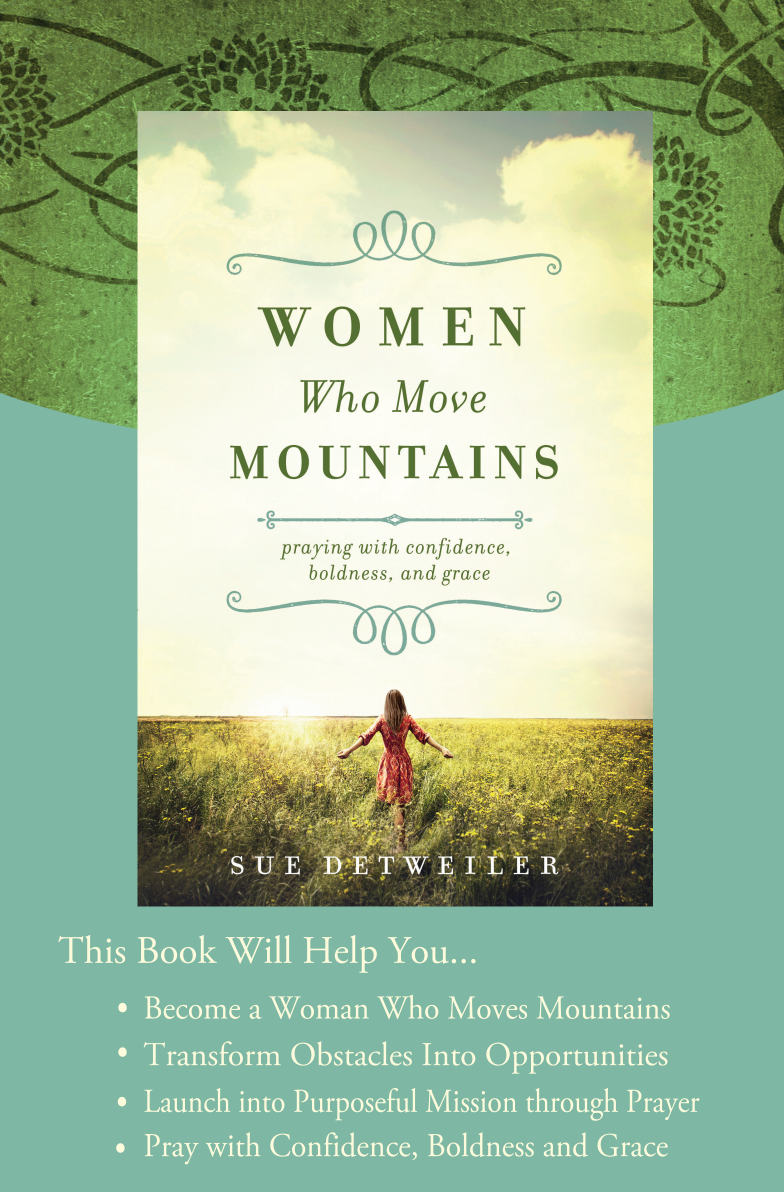
One of the most difficult times of writer’s block that I experienced was with my newly released book, Women Who Move Mountains, Praying with Confidence, Boldness, and Grace. I had already signed the contract with Baker Publishing Group and had negotiated a date that I thought would work on the calendar. However, as we got closer, the date to launch our new church was changed and it conflicted with my writing deadline. I simply had too much on my plate and I couldn’t do it all. When we renegotiated the due date, it took the pressure off.

4. Just Do It

I was dealing with a great deal of spiritual warfare in the form of negative thoughts: You are in over your head. You can’t write this. You don’t know what you aClick here to Download the Introduction and Chapter 1 of Women Who Move Mountains.re doing. Who are you kidding? Have you ever had some version of negative thoughts? I tried praying (after all the book is about prayer). However, I didn’t have a breakthrough in terms of peace, until I forced myself to just do it. In prayer, God gave me a picture of an acorn that I was holding in my hand, but if I would plant that acorn in good soil, and provide nurture, it would grow to be a strong a mighty tree whose leaves would provide healing for all who read it. After writing these words down in a journal, I took my computer and I sat in my 80-year-old mother’s room and I began to type. (If you read chapter 1 of Women Who Move Mountains, you will learn that my mom has been my main role model for prayer.) (Click the Picture of the book to immediately download the Introduction and Chapter 1).
5. Pray, Believe, Write

Little by little, you will accomplish what God has called you to do. Begin each writing session with this rhythm: pray, believe, write. When you know that God hears your prayers, you can set aside the worries of the day, believe God, and write. Take frequent breaks, look up at the sky, smile, and believe that the ONE who has called you to write will inspire you to do it. As you follow his guidance, little by little, the written words will bring life and hope to those who read it.

I Prepared A Gift for You

Yes, a gift. Maybe you are like me. I tend to drift away from fully believing who I am in Christ. Somehow, unbelief comes into my mindset. I get discouraged and battle worn and I need to find a way to calibrate my soul. Sometimes it’s the sin that is hidden from me that I need to confess. I may be hurt by someone, and I need to choose to forgive them. Other times, it’s just the uncleanness of the world we live in. All of these things can cause you to get stuck and have writer’s block!

5 Steps of Grace will help bring healing and deliverance to your life. You and I are cleansed by God’s Word. We need His Word to wash our minds of the unclean things in the world. These things become like a weight to us and they drag down our joy-filled love life with God. Set aside a time for you to pray through this guide to freedom. You can pray on your own, or invite a prayer partner or spiritual mentor to pray with you. Download your copy here!

The Magic of Collaborative Marketing for Writers

Zig Ziglar Motivational Quotes“You can have everything in life you want, if you will just help other people get what they want.” Zig Ziglar, the ultimate motivator, knew that when we authentically and unselfishly support other people, great things happen. I’ve experienced the truth of this principle many times in my life, but especially recently, when I joined forces with two other WordServe authors.

Karen Jordan, Kathryn Graves, and myself decided to collaborate on writing a non-fiction book for women. By doing so, we discovered some surprising side benefits. We’ve found the magic of the collaborative process for writers improves marketing, increases our income potential, and adds a fun element to the author’s journey.

The pressures seems lighter, because we’re in it together.

Untangled A Women's ConfereneceOne of our most exciting accomplishments came from developing a women’s conference based on our book’s title and message. We outlined options for a one-day conference as well as a two-day event. We came up with a suggested ticket price and estimated income from the event based on a variety of attendance number ranges. We brainstormed ideas for other creative ways to support the Untangled Women’s Conference. And we reviewed different expense scenarios, weighing convenience against cost.

Then we formalized our thoughts.Untangled A Women's Conference

We created an Event Planner’s Kit to make it easier for churches and organizations to host Untangled. (I found it much more efficient and thorough to generate resources as a team versus what I might accomplish on my own.) We created a marketing flyer, and put it on our speaking tables at events, mentioned it in passing conversations, and posted it on social media. One of the most important actions we took was praying for and with each other.

We didn’t wait long before seeing results.

The response amazed us. Within a week, we had a conference scheduled and on the calendar in one state, while two other states began serious talks with us. Within three weeks, we had sent out four more conference kits to other states by request. Because of our collaborative marketing efforts, this coming fall/winter/spring should fill up fast with paid speaking gigs and greater book sales.

As we traverse this new world of collaborative marketing, we are learning many things. But the truth of Zig’s words is already evident — by helping each other through the collaborative process, we are all winning. This is what we can tell you so far:

8 Reasons the Magic of Collaborative Marketing for Writers Works:Collaboration Works

  • You build off of each other’s ideas — growing creative efforts.
  • You share the expenses, reducing costs for each individual.
  • You expand the message reach further than one individual can accomplish on their own.
  • Your mind moves from thinking of your efforts as self-promotion, to that of helping your fellow writer(s).
  • You enrich the lives of readers, event planners, and audiences by offering them a diverse experience through multiple voices.
  • You sell more books as an author by increasing your opportunities to speak and participate in other cooperative public events.
  • You feel more courageous to step out and try new things.
  • You have people to support and celebrate with, who really understand the emotional highs and lows of writing and marketing.

Have you collaborated with other WordServe authors? If so, what did you do, and how did it affect your book sales as well as your morale? Would you be interested in brainstorming and collaborating together?

Get Your Work Seen: Tips on Successfully Placing Articles

by Bonnie Kristian

As a writer whose current gigs include weekend editor at The Week and contributing writer at Rare, I was recently asked for tips on how to successfully place articles with publications when you are in the early stages of your writing career. Let me preface this by saying this process will no doubt be different for you depending on your background, professional connections, target publications, and more, but here are some general ideas:

+ As you start writing, think about where you’d like to publish. Pay attention to how those outlets work. What is their tone? How do they structure their headlines? Are they publishing freelance contributors or mostly staff writers? How long are their pieces? Do they have people regularly covering the topics of your own expertise? (Speaking of, don’t try to be an expert on everything. Narrow it down.) What is their turnaround time on time-sensitive stories (i.e. if Trump says something Monday at 10 a.m., are all their op-eds on it published by that afternoon, or will they still be commenting on it through the end of the week?), and will your schedule permit you to match it?

+ Once you’ve done that, make a list of the publications that you like but also that would be a good fit for your writing style and schedule. Find the submission guidelines for those outlets and start sending pitches tailored to their shtick. Nothing will make an editor dismiss you faster than submitting an idea that is obviously a bad fit for their brand. You don’t need to write the full article to send a pitch; just a paragraph with a headline will do. Once you get your foot in the door, this process will become easier, both in terms of returning to editors you know and in pitching to new editors who will be happy to see your publication credits from other credible outlets.

+ Your blog can be useful for developing your own writing style and ideas, but it’s not strictly necessary for your goals as they’re described here. (Personal platform is hugely important for nonfiction book publishing, but many journalists/commentators don’t bother to maintain anything beyond a basic bio page because they do not need to do so.) Magazine and website editors typically do not want to read your blog. You may want to get a couple good posts up which you can link to in your very early pitch emails so editors can get a taste of your writing style if they prefer, but usually they won’t bother. They are much more likely to respond based on the quality of your pitch, because they are under no obligation to publish/pay for the completed piece if it turns out to be crappy.

+ Finally, on the subject of money: Political commentators (as well as those in other arenas) are a dime a dozen. I have been immensely fortunate in working with editors at Rare and The Week alike who are conscientious about paying in a timely and fair manner. That is far from universal. Many major publications will happily take your stuff for free and say your “payment” is the exposure they offer. (Pro-tip: You cannot pay bills with exposure.) At the very beginning, you might have to give your content away to build up your credentials, but be very careful. It is difficult to transform a non-paying relationship into a paying one. My best suggestion is to aim for permalancing gigs, where you are not an employee proper but have an agreement to contribute a given number of pieces per week or month and are paid for them on a set schedule.

This first appeared on Bonnie’s blog, www.bonniekrisitan.com.

Bonnie Kristian recently joined WordServe Literary as a client. A writer who lives in the Twin Cities, she is weekend editor at The Week, fellow at Defense Priorities, and contributing writer at Rare. Her writing has also appeared in Time Magazine, Relevant Magazine, The American Conservative, and more. To find out more, visit www.bonniekristian.com.

7 Reasons To Consider a Study Group for Your Next Book Project

Image/karen jordan.net

In writing, your audience is one single reader. I have found that sometimes it helps to pick out one person—a real person you know, or an imagined person and write to that one. (John Steinbeck)


Need help writing your next book proposal? Try this.

To help me with the research of my most recent nonfiction book proposal, I recruited a group of ladies at my church to walk through each chapter as I developed it. Since it’s been surprisingly helpful, I thought I’d share a few reasons to consider it.

  1. Helps with book launch. This group started meeting during my first book launch. I had just taken them through a study of my book, Words That Change Everything, this past fall. Each week they read a chapter of the book, downloading a copy of my RESTNotes as a guide for our weekly discussions. This meant I added every member to my mailing list, an important step in the platform-building process.
  2. Offers encouragement for book projects. After we finished the book study, the ladies asked me to lead them in another. I told them that I wanted to use material for a book that I’m currently working on. They happily agreed. In fact, they were excited to be part of the writing process with me.
  3. Produces insights from primary audience. Want to understand how to meet the needs of your audience? What better way to do this than to invite them into your writing process? I’ve learned invaluable insights from these wonderful ladies as we brainstormed questions and issues pertinent to my project.
  4. Keeps you on task and organized. Not only has the weekly agenda kept me on task with my book project, this study has been one of the most productive ideas I’ve ever employed as a writer. Each week, I prepared our session using a template that I developed for each chapter. And I did my outside research for each chapter with this class in mind.
  5. Supplies ongoing research in your absence. During the weeks I’ve been out of town for a speaking event or to help my grandkids, I recruited one of the class members to facilitate a discussion of some of the questions that we may have skipped in an earlier class.
  6. Meets fellowship needs of the group. When I returned from a recent speaking event, the group shared what an engaging experience they had getting to know each other even better, as they focused specifically on the questions I had prepared for them. I’ve also created a private Facebook group for our class to help us stay in touch and share insights on our topic with each other between meetings.
  7. Provides potential help with future projects. We still have a few weeks before we complete our current study. But several of the ladies have already asked me which book project we will use next. And I have several to choose from, since I’m working on a few personal and collaborative projects.

In his book On Writing Well, William Zinsser observed, “Ultimately every writer must follow the path that feels most comfortable.”

Right now, while I’m researching my next book proposal, using the help of a study group works for me. So, I want to offer this idea to you, because I love to share lessons I’ve learned and the stories that matter most to me.

Have you ever recruited a study group for one of your works in progress? If so, what did you glean from that experience? Any tips?


5 Things Aspiring Writers Might Be Surprised to Know

Your DreamsI remember when my pulse quickened and my heart thumped at the thought of “making it” as a writer. The first time I gingerly brushed the soft cover of my first book, flicked through its pristine pages, I felt awed. The young girl inside of me, who’d always dreamed of seeing her name on a book, shed a happy tear.

Now that I’ve succeeded in publishing multiple books, with more on the way, I’ve found myself in a reflective mood. Recently, I pondered some of the more surprising things publishing success has taught me — boiling them down to my top five.

***

5. Your need to learn will never diminish. Culture shifts, technology advances, headline focuses, and global changes necessitate a writer’s dedication to ongoing education. Solid research and investigation are bedrock pieces in the foundation of any great written work. New information equals fresh content. 

4. Fear will not subside — although fear can change as your writing career progresses. Early on, many aspiring writers fall prey to the paralysis of fear, while professionals know that fear can prove a driving motivator. When you consider the greater loss of missing potential success, the emotion of fear propels you to action. If you fail to try, your failure is guaranteed. 

best thing you don't write3. The writing life is not a solitary endeavor. It takes a team to successfully publish. Critique groups, writing peers, or advance readers help us delve deeper into our subject matter, and pick up on flaws we often miss. Agents, publishers, and editors polish our projects and help promote them to reach a bigger audience. Readers become fans who sometimes become friends — if we are so blessed.

A wise writer intentionally and consistently builds their audience. When much in the world changes, one thing does not: word of mouth is still the most powerful marketing machine.

2. Story, whether written in the entirety of a book, or a short paragraph to example a point, draws readers deeper into your world. Few people appreciate being talked at, while most love being drawn into a good story. Whether they author novels or non-fiction, the skillful writer paints pictures with their words.

1. Human curiosity is king. Write cliff-hangers, page-turners, and chapter-leads to keep your reader wanting more. As you resolve or answer each inquisitive sentence you craft, replace it with another, until ultimately, you tie it all together at the end. A satisfying conclusion after creating ongoing curiosity makes a reader say, “I wish this book hadn’t ended.”

Motivational MantraI’m still working on all of these areas in my own writing, and anticipate the need to keep them in mind until the day I type my very last word. I don’t simply want to write, I want to use my words well.

Most writers I know would agree — we start out writing for ourselves — until we discover the real gift is in writing for others. The dream we live is the dream we share.

Stepping Stones to Writing Success

Stepping stones

Along the journey from staring out the window thinking of a marketable idea for a new book to unpacking the box of freshly printed books sent by the publisher, a writer needs to set small goals to serve as stepping stones to writing success. While each person will have a unique approach to setting project milestones, here are a few ideas to get you started:

  1. Conduct market research: Stroll through several local bookstores, flip through the pages of catalogs, and browse the websites of online book retailers to see what books are on the market now in the category of your book proposal. You will need to find about five comparable books to discuss in the Comparable Titles section of your book proposal. However, marketing research is helpful for you as you define what you hope to accomplish and cover within the pages of your potential book. You do not want to duplicate the work of another author. By reading what has been said by other writers about your topic, you can better understand what you have to contribute to the topic. Do not be discouraged from writing a book in a popular category. The existence of many books on the topic indicates a market for that subject.
  2. Set realistic deadlines: As you prepare to publish your book, you will encounter many deadlines. Within your book proposal, you will specify how long it will take you from signing a new contract with your publisher to handing in the first draft of the manuscript to the editor. A time period between five to six months is a good goal for completing a nonfiction manuscript. Make sure that you are confident you can complete the manuscript on time. Once you sign the book contract, break down the goal of writing the book content into smaller deadlines for yourself. Be sure to allow some margin for the interruptions and distractions that arise in the life of all writers. The sooner you finish your first draft, the sooner you can move on to the other tasks necessary for publishing your book. Set ambitious but achievable deadlines.
  3. Connect with key influencers: As I wrote about in an earlier post, “Finding Champions for Your Book,” many people will contribute to the future success of your book. Hopefully, you already have strong relationships with many of these key influencers. Use the time from the beginning stages of book proposal preparation to the completion of the manuscript to strengthen existing relationships with champions for your book and forge new ones. Connecting with people will provide a welcome break from the tedium of writing. You will remember the purpose for your pursuit of your writing goals. You can sharpen your ideas by discussing them with a few trusted advisors. You will prepare yourself for the upcoming transition from writer to marketer of your own book. The sooner you prepare to connect with potential readers, the better for everyone involved in publishing your book.

What do you consider as important stepping stones to writing success?

Seven Essential Tips Every Successful Writer Must Apply

Fresh StartsI think every published author wishes they could go back in time to whisper in their younger self’s ear. Doing so would certainly save volumes of time and energy. I’m sure five years from now, I’d wish for the opportunity to tell today’s me something I need to know right now.
These are the thoughts rolling through my mind this new year, clean with the possibility of fresh starts. I think it’s important to slow down sometimes.

We need to reflect on the past in order to improve on the future. So I’m reminding myself of the tips I’d give my younger self, knowing I’ve let some slack, and resolving to begin again. I believe the seven following tips are essential, things every writer must know.

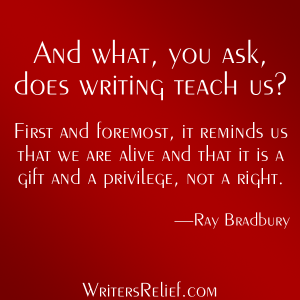
  1. Ray BradburyRead as much as you can. Phrases such as, “Great writers are great readers,” hold a wealth of truth. The more we study, the more prepared we are to succeed. Reading teaches us the subliminal art of sentence flow, heart tugs, and scene staging. It also shows us what to avoid, as we learn from the mistakes of others. It’s the best motivator I know.
  2. Eavesdrop. Most of my best dialogue came from listening in on someone else’s conversation in restaurants, conferences, stores, airplanes, etc. I write non-fiction, and I tell true stories or compilations based on real people, but even if I wrote fiction, I would use this technique for writing believable and fascinating statements.
  3. Listen to outsiders. The more detached someone is from you, the more objective their writing feedback is going to be. Family and friends tend to fall into two camps: they either gush over everything you write, even your sloppy first drafts, or they nitpick, make digs, or outright blast anything you pen. Make it your mission to interact with people on social media, critique groups, or professional advance readers who are willing to respond honestly.
  4. Pull on your thick skin. You might want to consider whale shark skin for this one, (estimated at 6″ thick). Just like “there’s no crying in baseball,” professional writers soon learn, no one’s handing out Kleenex around here either. When rejection stings, stiffen your spine, and pitch again.
  5. Douse distractions. It’s going to happen. Ten people want five different things from you at once. You’re working on one project, when the siren call of another beckons. But professionals know the power of tenacity — grinding your behind into the seat, tuning out the voices trying to break your focus, and writing through to the finish line.
  6. motivational quotesSet time-stamped writing goals. I’ve really let this one slip lately, and my work is showing it. But my One Word is Reset, so I am resetting my goals. The difference between a dream and a goal is a measurement. So my refreshed writing goals include a minimum of 5,000 words per week. This reasonable number allows for flexibility, while pushing me beyond a normal comfort zone. It’s doable.
  7. Touch your own heart. If I’m not passionate about what I’m writing on, why would anyone else be interested? If I’m bored, my readers will feel boredom. If I’m thrilled, my readers will feel a flutter of excitement driving them to turn the page.

The more I write, the more I question myself at times, and yet, when I go back to the basics, I find the truth, the way, and a successful writer’s life. Which brings me to a bonus secret.

Pages in a Thousand BooksI can write until my fingers are numb. I can start writing at dawn’s break, pushing until the wee hours of the next morn, but if I am not inspired, it’s all for nothing. My personal inspiration come from prayer, provision, and praise for my Maker. He’s the one who gifted and called me. This is my most powerful secret.

What inspires you to write? Do you have any tips you would whisper to your younger self?

New Possibilities for a New Year

Empty road to upcoming 2017 at sunrise
The sunrise of a new year.
  1. Your future is not limited by the past. While past successes and experiences can inspire the future, as I wrote about in my book, Questioning Your Doubts: A Harvard PhD Explores Challenges to Faith, the future does not need to be limited by the past. New scientific discoveries can build on past knowledge, but they also can disrupt old paradigms. For example, the microprocessor made computing available to nearly everyone, with a modern laptop more powerful that a computer that once took up an entire room. Thanks to this invention, most writers prepare their manuscripts using convenient word processors instead of typewriters, and keep their contact list of agents, editors, and publishers on their smartphone in place of their Rolodex. In the not-so-distant future, writers might conference with editors and other writers in virtual reality, skipping the long lines at airports and time spent traveling. As a writer, your next fresh idea can define the future. Your past projects may influence your future goals, but feel free to try something new and even disruptive. Progress happens when people dream new dreams. Let the start of the New Year serve as your excuse to pursue a great new project.
  2. New friendships are waiting to be discovered by you. Writers quickly learn the value of relationships in their profession. After all, writing is all about communicating and collaborating. Even when writers spent quiet hours alone putting their thoughts on the page, the needs and interests of their readers shape their work. The audience of readers is always present when a writer expresses ideas with words. By the time a book reaches the shelves of a bookstore or the warehouse of an online retailer, the writer has collaborated with many people – literary agents, editors, illustrators, cover designers, copy editors, reviewers, publicists, and marketing directors. These colleagues as well as radio interviewers, blog readers, online reviewers, customers, and conference coordinators become new friends in the life of a writer. Resolve to maintain the friendships you have formed as a writer in years past, while staying open to the possibilities of accepting the input, advice, and encouragement of new friendships in the year to come.
  3. To accomplish your goal, break it down into discrete, doable steps. Whether you are planning to write a blog post in one evening or a book in six months, if you have a plan divided into measurable and actionable steps, you are well on your way to getting the job done. Fit your plan into your lifestyle and your current schedule to keep it realistic and achievable. Can you envision setting aside two hours every evening to complete a new manuscript? Should you schedule a vacation in a secluded and beautiful setting surrounded by nature in order to disconnect from everything and make your writing deadline? Having a plan that matches your working habits and the needs of your family and other responsibilities increases the likelihood of reaching your goal. Great new projects need to-do lists and new friendships need time set aside to develop the relationships. Make a plan that fits your life so your dreams can come to fruition in the New Year.

What do you plan to do to prepare for the new possibilities awaiting you in the New Year?

10 Words That Change Everything

Image/KarenJordanWhat was your “One Word” for 2016?

This year, 10 words changed everything for me. I focused on these words because they were the titles to several chapters in my book, Words That Change Everything, published this year by Leafwood Publishers.

I shared a little about the power of these words during an interview that Anita Brooks and I had on Bridges with Monica Schmelter on WHTN Christian Television Network.

I refocused on these 10 powerful words as I compiled the FREE 15-day devotional guide to Words That Change Everything: RESTNotes.

BookCover/WordsThatChangeEverythingBookCover/RESTNotesMy 10-word focus continued as I prepared to teach a Bible study based on my book at my church every week this fall.

I never imagined how a few words could change everything for me.

So for my last WordServe Water Cooler post for the year, I offer these 10 powerful words to you.

  1. REST. “The Lord is near. Do not be anxious about anything, but in every situation, by prayer and petition, with thanksgiving, present your requests to God. And the peace of God, which transcends all understanding, will guard your hearts and your minds in Christ Jesus” (Phil 4:5-7 NIV). This scripture offers an effective prayer strategy for speaking truth to the warning signs of worry, symbolized by the acronym REST: Remember. Exalt. Surrender. Trust.
  2. Remember. “The Lord is near” (Phil. 4:5 NIV). We take the first step in overcoming our negative thoughts by seeking the powerful presence of God in our lives.
  3. Exalt. “In every situation, by prayer and petition, with thanksgiving . . .” (Phil 4:6 NIV). Praise can be a powerful weapon for us in our battle with worry. We can enter into God’s presence through praising Him (Ps. 100:4-5).
  4. Surrender. “Present your requests to God” (Phil 4: 6). In our day, the term “surrender” often means being taken into captivity. But in God’s kingdom, “surrender” suggests a renewed freedom from the enemy of our souls.
  5. Trust. “And the peace of God, which transcends all understanding, will guard your hearts and your minds in Christ Jesus” (Phil 4:7). God promises to guard our hearts and minds with His peace. God gives us specific instructions about how to embrace His peace—by changing our mental focus and exercising our faith.
  6. Solitude. “When life is heavy and hard to take, go off by yourself. Enter the silence. Bow in prayer. Don’t ask questions: Wait for hope to appear” (Lam. 3:28-29 The Message). This scripture offers a powerful prayer strategy for stressful days. My writing life requires that I spend time alone without distractions. But at times, the isolation becomes my distraction.
  7. Silence. “Enter the silence” (Lam. 3:28). As we seek God in silence, the accuser (Rev. 12:10) always dangles threats and accusations.
  8. Prayer. “Bow in prayer” (Lam. 3:28). Prayer can be as natural as speaking with a good friend or as intimate as a whispered secret. It can occur at any time, no matter the circumstances. And God promises to listen when we call on His name: “And if we’re confident that he’s listening, we know that what we’ve asked for is as good as ours” (1 Jn. 5:15 MSG).
  9. Listen. “Don’t ask questions” (Lam. 3:29). How do you respond when someone won’t listen to you? Anger, rejection, or frustration? When Jesus instructed His disciples, He asked them on several occasions, “Are you listening to this? Really listening?” (Matt.11:15).
  10. Wait. “Wait for hope to appear” (Lam. 3:29). Waiting rooms can bring out the worst in us. Long periods of waiting hoist all kinds of emotional red flags—from impatience and worry to full-blown panic attacks. Reminders of past pain, traumas, and personal loss make our present trouble seem intolerable. The dark clouds roll in, and we can’t see the light of spiritual truth. However, waiting does not need to produce hopelessness for Christ-followers.

Do you have any “Words” that have changed everything for you?

A Library Located in a Village of Stilted Houses by the Sea

library-story

I loved going to the library as a girl. In the summer, after chores were done, we would go to town once a week, a trip that included a stop at the library.

I would always get the allowed quota–four books. 

At home I would sit in the tire swing under the elm tree and escape to faraway places in the pages.

I never imagined in the shadow of cornfields, alfalfa, and soy beans, that one day I would travel to a library in a village of stilted houses by the sea:

Our driver parked the van at the curve of a road on the mainland, near a dirt entrance across the bay to a smaller village of sea gypsies, the gypsy part of the name being a misnomer because they don’t move from place to place. They live there, a few hundred yards from the mainland in their simple stilted homes, because the lore of their people states that if they would leave, their skin would become diseased; they would grow sick and die.

sea library 1

“Where’s the library?” we asked our host as we passed a group of boys listening to a boombox, while laundry dried outside a simple house with a satellite dish in the backyard. As part of a literacy program we had been invited to check out the library in this small fishing village in Indonesia.

sea library 7

Our host pointed in the distance, to a destination I could not see, because all I saw in front of me was a series of rough wooden planks, nailed together in a single, rickety path above the water.

Walking the plank suddenly had an entirely new meaning as the boards weaved side to side as I shuffled across one and then another. I peered at the water six feet below as it flowed back and forth with the current. What happens when cell phones get wet? I wondered, as I took step after cautious step, on planks number three, four and five.

What happens when library visitors get wet?

My husband comes across

I was thankful for the years I spent as a child balancing on railroad tracks as I imagined being a tightrope walker on my way to our no-boys-allowed fort in a culvert under the tracks, never imagining I would need those high-wire skills four decades later.

Eventually all six of us made it across, some uttering not-very-silent prayers for God’s deliverance.

When we arrived at the library in the village school, we discovered the building was closed. School testing happened that week and the kids had a half day, an education reality that is common around the world. We stood around in the 85-degree heat with 90% humidity. The circle of sweat on my cotton t-shirt widened exponentially with each ticking minute.

“We can come into this home,” our host said, motioning us into a blue house with a corrugated metal roof across from the school.

sea library 4

“Have a seat, have a seat.” The woman and homeowner directed me to a far corner. Our group of six and a dozen children trooped in behind. Candies and other snacks hung down from the ceiling. The home was also a store.

We were invited to tell a story while the woman served crackers and bottled water. My husband told a tale of another stilted house with a boy, his noisy sisters, and their cows. It was a story about gratitude. Our interpreter echoed my husband’s hand motions and side effects, adding a few of his own, while the children listened, entranced.

The homeowner smiled as the children sang a song, moving with the tempo. More children arrived on the front porch, but there was no more room inside. 

In our culture, I hear arguments about the relevance of libraries in a digital world, but those debates were silenced for me in a stilted village where children pressed against the metal screen covering the front window in hopes of getting closer to the words, while the sea and the people swayed.

Do you have a library story?

Lynne Hartke’s first book: Under a Desert Sky: Redefining Hope, Beauty and Faith in the Hardest Places is coming out with Revell/Baker in May 2017. She blogs at http://www.lynnehartke.com.