How to Get Any Book Into Your Lap…Free!

Have you ever been in the situation of wanting to look up one item in a book, but the book is either expensive or obscure. Chances are you turn to your local library. Many people know about Interlibrary Loan (ILL) within their own library system, but what happens if your library system doesn’t carry a specific book?

In my last post I described how to get ahold of serious research in professional journals by accessing your library’s computer database. Today I want to describe how to get any book, from places all over the world, and have it delivered directly to your library branch?

The first time you do this it may seem tedious, but once you know how, it’s a breeze. I typically order about a dozen books a month this way. Your library system may vary, but here’s how my library does it:

  1. Bring up my library web site: Jefferson County Library
  2. Click on maroon-colored icon called “Research tools”
  3. This brings up:  “Subscription Databases A – Z” Click on this.
  4. In the Databases A to Z, click on “W” and choose “World Cat” or scroll down to “World Cat” Click link.
  5. Search for book. It is best to put several items in the search boxes. For instance, the book title and the author. Here I selected the title Seeking Peace and the author Mary Pipher. (I write about self-care and wanted to see how a bestselling author and psychotherapist burned out and subsequently learned to simplify her life.)
  6. When the world catalog finds your book, either print out the page, move it over to a dual monitor, or jot down the most important items: Publisher, year, and the OCLC number. (For Mary Pipher’s book the OCLC number is at the bottom of the page and is 233547957)
  7. Now go back to your library’s main screen. Choose the blue icon on the left side, “Find Library Books and More” – You will find a link called “Interlibrary Loan Request.” Double click. At the bottom of this page is a link called “ILL form for Books/AV Materials.” Click on that.
  8. Fill out the author, title of book, publisher/place/date, format (book, video, DVD), pick-up location (for me that is “Columbine Library”) and OCLC number.

*I don’t fill out the part about paying money for the request or the “cancel if not filled by date” information.

At the bottom of the page, I type my name and library card number.

Voila!

Almost any title from across the miles will be delivered right to my library. It takes about a week. If you find this confusing, go into your library and ask how you can use the World Catalog and Interlibrary Loan. Chances are your librarian has a bookmark with instructions already printed on them.

I’m curious, did you know you could do this?  What research tips do you have to offer writers? 

The Long View of Getting Published

Photo by Michael Hirst

There are two distinct parts to my career as an author. Part one, when I saw myself as more of a lone wolf and part two, when I finally started admitting I don’t know everything.

The second half where humility has played a lot bigger part has been more rewarding in every way, particularly financially and spiritually.

Funny little thing I’m learning about life is that when I stop trying to force my will and realize I may not get what I want but I can still be of service, more of what I wanted all along shows up. However, to head down that path the first few times took a lot of courage and hope because I didn’t have any personal proof. Fortunately, I had worn myself out trying things my way. I became willing.

To be an author, whether it’s as an independent or through the traditional venues takes more people and therefore a lot more willingness. The independent route sounds like it would be easier to stick to your own common sense and that would be more than enough, except for the occasional question. But publishing a book is a process that requires a lot of hands.

Besides, I was more arrogant than that anyway, running down the traditional path and still telling everyone how I saw things.

However, when I stopped listening for just the small kernel I wanted and expected to hear, dropped any agenda and not only took in the information but gave it time to sink in, things really began to move in a better direction. That opened things up even more.

What if I even followed through on some of the suggestions to see if other people who are actually the professionals in their slice of the publishing game were right? Perhaps my part in the entire process is to be a team player, be open to all of the information that’s coming in and just do what’s been suggested.

Some wrong turns are to be expected and even that’s okay because  the last tool I keep close by is the one that makes all of it okay.

I am powerless over the outcome but there is One who has His hand on everything, loves all of us beyond our ability to understand and has a plan that includes everyone. This is the most important part to me and makes it possible to relax and go back to the day I’m in when I’m worried about how book sales will go or if a book will get published at all.

The answer is, maybe it will, maybe it won’t.

In the past I couldn’t live with that answer so I tried harder to fix things. That just didn’t work and I wore out others as well as myself. Doors closed.

Now, I ask myself if I’ve done my part? Do I trust the professionals I’m working with on this book? What’s in front of me to do? How can I go be of service?

I know, all of that sounded really contrary to becoming published to me too, at first. But I had tried the lone wolf gig and only gotten mediocre results, at best.

I became willing to try a new tack. God is everything or God is nothing and I wanted, maybe even needed God to be everything so I started listening with a new ear. I asked for help and admitted when I didn’t know something. I grew more patient and less ‘helpful’ with suggestions. I did what was asked of me, on time and nothing more, allowing others to do their job without my interference. I became willing to change structure or style and see what happened.

And on the days when my anxiety still sits on my chest like an angry gorilla, I go pray, turn it all over to God and ask for peace of mind and heart. Then I get back to my day, do what’s right in front of me and keep going. As a result, more of my publishing life has fallen into place and my relationships in that area are a lot stronger.

The Write Death

Writing

They raced through my brain going Mach 5. Brilliant ideas and heart-grabbing experiences I felt called to share. They screamed to be captured for the multitude, so write I must!

Lassoing the brilliance and transferring it to paper would be a piece of cake. C’mon, I’m from Texas. Throwing a lasso comes naturally.

Full of self confidence with excitement electrifying every nerve, I arranged my desk just so. Lamps dimmed. Candles glowed. Laptop waited. Coffee brewed. I knew something epic was about to happen.

My fingers hovered over the keys. I took a deep breath and slowly typed, “Chapter One.” I stared at the screen at those wondrous words. Enraptured. Savoring each letter.

This was a glorious moment. I had embraced my calling as a writer! And now…time to write. Let the brilliance shine!

Blink. Blink. Blink went the cursor.

Blink. Blink. Blink went my eyes.

Repeat 30 times.

And then it happened. My brain’s hard drive melted like wax. (It must have been all the self-induced brilliance.) The ideas tangled like rubber bands. The mental beavers built a dam at lightening pace – smack dab in the middle of my brain.

My lasso kept missing. The brilliance was just an illusion. My coffee grew cold. In tears, I blew out the candles and turned off the laptop. Those two words were all I typed that night.

And so began the journey of writing my first book. Thrilling, right?

That evening something died, and rightfully so. Ego. Writing a book isn’t about me. It never will be. It’s about an unlasso-able God who desires to communite to me, through me, and oftentimes in spite of me.

In my eagerness to stand as a published writer, I forgot to kneel before the One who called me to it.

That night drastically altered my writing perspective. I don’t care if my desk is tidy. It doesn’t matter if the candles glow softly. It doesn’t matter if the coffee gets brewed. If I don’t start in prayer, I don’t start at all.

Today, Chapter 1 has successfully passed through the hands of my editor. But God accomplished something far greater that night. He caught my fall, reminded me of His love, and encouraged me to start again.

Something epic did happen. Instead of allowing me to capture the perfect phrase, He
re-captured my heart.

Thank you, God, for your brilliant grace.

Let’s chat: What did you experience as you launched into writing your first book? At what point did you have a meltdown (or did you)? What kept you writing after that?

How Bad Do We Want It?

For years, I harbored a secret.

I wanted to be a writer. I longed to see my words in print. But persistent doubts and fear of failure often sidetracked me.

Desire and talent were two different threads. I wondered, “Am I truly capable of crafting words people will want to read?”

As a mostly self-taught writer, it was time. Time to learn. Time to network. And time to confess my secret.

Where to turn?

Three and a half years ago, feeling a bit Alice in Wonderland-esque, I fell into my first writer’s conference. Upon my arrival, I discovered a very weird yet indelibly native wonderland.

The mountains were filled with beginner, intermediate, and widely-read authors. And the land overflowed with editors, publishers, and agents. Finally, a sense of genuine community—these people understood. We spoke the same language, shared similar idiosyncrasies, and dreamed the same dreams.

But dare I fantasize they would help me—that they could help me—figure out which way to go from here?

Like water for a flower, the serendipitous environment seduced me to voice my dream. I whispered my idea into attentive ears. It was all I had—a simple, naïve, and undeveloped concept.

The faculty was incredibly helpful. Come-at-able (within respective boundaries). Attainable. These worldwide publishers, award-winning authors, national editors, and stellar agents were simply real people. And they didn’t bite! They wanted to help, and expressed a genuine interest in my success.

Words of encouragement and strong support overtook me. Transformed me. A newfound confidence wafted through the mountain air. I really can do this.

I packed my bags for home with a new resolve. I would return to next year’s conference with something tangible—my book proposal and sample chapters.

However, dark storms quickly absorbed this new perfume of confidence. I returned, instead, to the lie of the daily routine. Life as a mom, wife, and entrepreneur consumed my days. Not to mention various health issues that cropped up at the most inopportune times. I quickly learned inspiration alone doesn’t write a book.

Eight months passed. A fluorescent note on my Daytimer reminded me of the upcoming conference, only a few months away. The date pierced my heart. How bad do I want this?

I had found the courage to voice my dream. Now, would I really do what I needed to do? It was time to be intentional, time to register for the next conference. And time to start writing.

A couple months later, I returned to my writer wonderland. Determined now to find my way, I hemmed up my fears and laid out my work before eagle eyes. I coveted honest insight and constructive critique. The faculty didn’t disappoint; the feedback was invaluable and the support overwhelming.

In the end, I completed my first book. I also gained multiple offers of agent representation, found a fantastic editor/writing coach, and secured potential endorsements. That first writer’s conference was the gentle kick I needed.


Desire and talent may well be different threads but woven together they have the potential for a beautiful tapestry.


How about you? As a writer, do you ever feel isolated? Lack motivation or confidence? How do you stay on track? Have you struggled to marry your desire with your talent? (I would love to hear from you; we’re all here to learn from each other’s experiences.)

Are You Ready For A One-Star Review?

It’s no fun getting a one-star review on Amazon.  What’s worse?  Having your 10-year-old son read it in front of you.
When Nick looked up, he was fighting the tears.  Trying to stay strong.  Trying to act like it didn’t matter.

Then he gave his own critique.

“You know, Mom, some of this is probably true.  But, you know what really upsets me?  She didn’t criticize your book.  She criticized you.  And she doesn’t even know you.”

Like Nick, I was fighting the tears.  Trying to stay strong.  Trying to act like it didn’t matter.

But public criticism is a big deal.  And first-time authors are never prepared.  I wasn’t. 

Now, at this point in the blog, I’m supposed to give you the magic formula.  You know, the three-step plan to prepare you for a public flogging.  The things I wish I knew.  Wish I did.  Want you to know.  Then, you’ll walk away with some value added, and I can bask in the comments.

But I’m not going to do that. 

Don’t get me wrong.  If I had a secret sauce I would probably share it.  Heck, I’d probably write another book and maybe even make some money off of it.  But since that’s not in the plans (and Rachelle would probably give me a hard time about platform), the best I can do is share my story and let you draw your own conclusions.

Here’s how it works.  When you’re an author, you are supposed to actually say something.  If you’re lucky enough to get people to read what you have to say, some people may actually like it.  Others won’t. 

Certain gluttons for punishment, like me, end up writing memoirs.  So if readers don’t like our story, it means they don’t like us.  Plain and simple. 

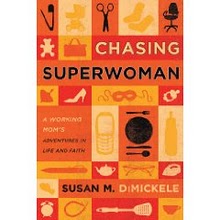
In my case, Chasing Superwoman is a very personal story.  It’s my story about my struggles (and failures) being a working mother who admits she is trying to do too much.  And while I love Jesus madly, I don’t always act like it.  This apparently offended a few readers who told me both publicly and privately that I should really set my priorities straight, act more like a “Christian” and hang up my “worldly” ambition.

Sure, I could feel sorry for myself.  I don’t deserve the criticism.  It’s not fair.  These readers haven’t met me (or my darling children!).

But let’s face it.  I kind of asked for it.   Didn’t I?

When we tell our stories, we put ourselves out there.  We make it personal.  We pour out our lives on paper, give people loaded guns, and yell “shoot”! 

Which means we have no business complaining about it. 

Now, if you’re a fiction author, you’re thinking, “What does this have to do with me?  I write fiction.  It’s not my story.” 

Think again. 

We all know deep down that your first novel is secretly autobiographical and that all the characters are based on your family and friends.  So when people criticize your book, you are equally going to feel like they are criticizing you.  Trust me.

The good news?  We not only live through it, we become stronger.  I promise.  (I’m going to blog about that next month.)

For now, just know to expect it.  And don’t complain about it, ok?

Aspiring authors, are you ready for a one-star review?  Old-timers, what’s your advice?  And how do you protect those closest to you — like your family — in the process? 


The honest stain of truth

Professor looked like Jabba the Hut, jowls of  flesh hanging over the collar of his shirt. He watched, smirking, as fellow co-eds and I jockeyed for seats around the long conference table, Professor’s preferred room arrangement for this, our first college creative writing class.

Until I met Professor, I could always count on my writing to please teachers and professors. But assignment after assignment came back with haphazard red-pen scratches. I imagined Professor held my paper for a brief moment before tossing it aside.

Professor enjoyed two things: making students cry and picking favorites. I landed in the first group, and was left out of the second like a scrawny girl in a middle school dodge ball gym class.

The class favorites wrote about sex, of course, and they wrote about it often. Though I lamented my mediocre scores, I refused to write about something so sacred just for him.

One fateful morning, my alarm clock malfunctioned and I was late for Professor’s class. When I arrived, he stopped class and laid into me with a barrage of insults. On and on he spat about how lazy, irresponsible and stupid I was, daring to enter his class late. Too hurt to hold back tears but too proud to leave, I stayed for the whole class.

My notebook was a soggy mess.

That day, I resolved to please Professor–if not shock the hell out of him–with my writing.

And I did.

I wrote a short story full of violence and deceit, sex and betrayal, blood and fine champagne.

The story disgusted me.

Professor loved it.

I hated Professor for a long time after that.

Years later, I realized my sordid short story paralleled scars of abuse from my childhood. The rage I felt toward Professor was a pivotal breakthrough from flowery, Pollyannic prose, and the beginning of my journey of writing hard, writing real and learning to write well.

I can’t say I agree with Professors tactics.

But I think I understand, now, what he was trying to do.

See, good writing involves daring to go to deep and frightening places. Like John Coffey–the man who breathed light and life into dead things in The Green Mile–hearts come alive when we breathe into still and long-forgotten places.

Words become life when writers allow the pen to pull them places no one else wants to go.

Like leper colonies, places in the soul exist where fear hangs like shadows, veiling what we don’t understand and shielding us from disease and pain. And yet, the only way to be real and alive is to allow the pen to touch diseased and painful places.

It is the unsought job of the writer to burst through the gates of leper colonies . . . to run to those who are bandaged and losing limbs . . . to embrace those who smell like rotting flesh . . . and to caress touch-starved hearts until they stop trembling and maybe, just maybe, believe in life again.

Good writers learn to distinguish the honest stain of truth from pencil scratches on paper.

Good writers learn the events in life which enslave us are ultimately the ones which set us free.

Good writers endure hours–even days–of depression that come when the pen finds fragile, tender places.

Good writers touch ugly, diseased places, in order to touch ugly, diseased places of others.

Good writers allow the pen to pull them.

To set even one person free.

What about you? How have you learned to write more deeply? Has a person, teacher, mentor or friend influenced the deep, true pull of your pen? Do you believe words have the power to set people free?

What is “Take Away” Value?

In my post last month I referred to our need to have “take away” value. Sometimes that’s pretty obvious, but other times it’s as subtle as how you’re presenting your product or services. I find at times it’s a fine line that we can easily cross into the “me” zone.

I have a feeling, though, that you’ve seen and know what that looks like. How about Twitter? I get a fair amount of requests but have little time to follow people who are just throwing stuff out there for the sake of being visible. Plus, I want to follow people that I can relate to and connect with. I’m most likely not going to follow a furniture company located in a different state.

Except, this time I did. Why?

Take a look at the Twitter page for Mealey’s Furniture, (@FollowMealeys) located in Warminster, PA. They do a lot of things right.

  1. They don’t over-tweet. Mealey’s tweets about 2 to 3 times a day. When I see a Twitter page loaded with hourly tweets of stuff just thrown out there, I’m not going to pay attention. The delete button is my friend.
  2. Their tweets are helpful. They have take away value. Not only do they have it, they personalize it. They’re not just putting tweets out there about a sale, they’re giving you decorating ideas and hints for better living. They also support causes. Basically, they don’t want to just sell you a piece of furniture. They want to add quality to your life. Again, motivation is key.
  3. They’re not just about the product. Mealey’s presence is clearly not about them. They are about the customer and serving those needs. They’re focused on their audience and serving them, not on themselves.

This is brilliant marketing. Would I buy furniture from Mealey’s? If they had a store in San Jose, CA, you bet they’d be the first place I’d think of next time I needed something.

The key here is they make a lasting and positive impression. You walk away from this page with the understanding that to them, it’s not just about the sale. They want to do more for their customers. They want to connect with them.

Today’s market takes more than just what we have to offer, which in nonfiction is a lot. We have a clear message, an idea, or something to share. But there’s already so much out there. We have to be clear about the “why.” Think about why we write what we write and how we can translate that into connecting with our readers, which in turn translates into word of mouth marketing—the best kind. Just as I’m talking about Mealey’s furniture because they offered me take away value, we want our readers to talk about our books, our message, and what we stand for.

But even that comes back to our motivation. Are we doing it to just sell books? Or are we, like Mealey’s, genuinely trying to give quality to our readers? That’s our origination point in writing these books to help others. Let’s not leave that motivation in the pages of our books. Let’s figure out ways we can we bring that over into our marketing too.

Besides Using Google, How Can I Do Research for My Book?

Research Tools for Fiction and Non-fiction Writers

The majority of writers know how to use the Internet when they need to investigate a topic. Most of us pop onto a search engine like Google, bing, or Yahoo! Search and type our subject of interest into the search box.

But let’s say you are researching a term like “cancer.” Thousands of sites are going to show up. Some may offer helpful material, but many of the links are going to be useless. You may get scams and offers of miracle cures all mixed in with legitimate websites.

So how do you sort through all the extraneous material to get to the good stuff?

Here’s a simple trick I always use: Type the words “site: edu” after the term you are searching. (Don’t use quotation marks.) Inside your browser it’s going to look like this:

cancer site: edu

Now, the first websites that are going to be listed have been sifted through an educational institution. You are much more likely to find helpful material for your writing.

I write about self-care, so let’s say I have a question in my mind like, “I wonder how listening to music benefits cancer patients?”

Once again I could Google my question, but how will I know if the answers are valid? Maybe someone wrote them on a blog post without verifying the facts. Wouldn’t it be nice to know that the answers have been studied scientifically? Vetted by other scholars? Wouldn’t it be nice to know how the study was done, and whether the research was current?

Even as recent as ten years ago, you had to search tomes or giant stacks of professional journals in an actual library in order to get valid research. But with today’s computer technology it is simple to access serious research for your fiction or non-fiction book.

Hang with me here. It’s not as difficult as it might sound.

My library here in Littleton, Colorado (Jefferson County Library) lets me access professional journals from my home computer. I’m going to show you how Jefferson County’s library system does this. Your library system may vary, so If you need help, ask your librarian for assistance. Also, you need to make sure you have a library card so you can access the system. Here’s what I do:

  1. I go to Jefferson County Library’s web site
  2. I click on the maroon icon labeled, “Research Tools”
  3. I click on “Magazines and Newspapers” (on the left-hand side)

*My library subscribes to something called EBSCOhost, which provides online databases to libraries worldwide. All libraries are different, but most will give you access to two “workhorse, all-purpose” databases: Academic Search Premier and/or ProQuest. These allow you to search specific topics under a broad umbrella rather than having to narrow your research to certain journals (e.g. nursing journals or psychology journals).

Now you’re going to guess at some key words to put into the search box. I start by entering the words:

 affects music cancer patients

This next part is important:

Before I click the search button, I narrow my search by using limiters:

I want to limit my search to scholarly material because I don’t want information to come from non-scholarly magazines such as People or Newsweek, so I check “Scholarly (Peer Reviewed) Journals.”

I only want to look at the articles where I can read the entire article, not just the summary or abstract, so I check “Full Text.”

And lastly, I want the research to be current, so I’ll limit the date to the last ten years.

As I find articles, I look to see which key words are noted so I can try searching those if I’m not finding what I need. When I find my article, I can read it online, print it out in PDF format, or even email it to others or myself. If you are a visual learner, maybe a video showing how I do research will be a helpful addition.

 Do you have some research tips to offer other writers?

A Writer’s Life: Surviving the Fire Swamp

Rodents of Unusual Size? I don't believe they exist...

After hanging out at the Cliffs of Insanity, I’m doing a bit of rumor control today before negativity infiltrates the Water Cooler crowd. The report is this: “We’ll never survive.”

Survive what, you ask? The journey–wherever it takes us–along the writing road.

Never survive? To quote Westley, our hero from The Princess Bride, when he faced the Fire Swamp: “Nonsense.”

Many writers survive–even thrive. Sure, at times the Brute Squad hammers our egos, but consider a pounding an occupational hazard. Westley and Buttercup conquered the flame spurt, the lightning sand and Rodents of Unusual Size (R.O.U.S.’s). Like our hero and heroine, writers must overcome terrors specific to the writing world.

  • Expect the expected. Flame spurts were predictable. Listen for the popping noise, move, and you won’t get burned. Hang around the writing world long enough and you’ll recognize probable pitfalls. Listen for oft-repeated refrains like:
  1. Show don’t tell. (Unless you’re Erin Healy, who’s teaching a class at ACFW titled “Sometimes It’s Better to Tell than Show.” I don’t know about you, but I’m intrigued.)
  2. Know the rules before breaking the rules. (See bullet #1.)
  3. Writers need a platform. (Or a brand. Or, at the very least, an engaging plot.)
  • Don’t travel alone. You don’t survive a solo encounter with lightning sand. Buttercup would have suffered a tragic death but for Westley’s daring dive into the sand to rescue her. And despite writer Jessamyn West’s oft-quoted assertion that “Writing is a solitary occupation,” I’m thankful for my writing comrades. They’ve saved me from death by over-writing. Death by over-editing. Death by over-thinking why I decided ever to set foot on the writing road to begin with.
  • Realize the reports may be true. I’ll disappoint some of you by not drawing an anology between R.O.U.S.’s and editors. Or agents. Sorry, not going there. (I’m an editor too, after all.) Remember Westley’s response when Buttercup asked about R.O.U.S.’s? He said: “I don’t think they exist.” And right after that–OOOF! An R.O.U.S. took him down. We’d like to think we’re exempt from the tough times writers face: Bad reviews. Low sales. Dissatisfaction with critique groups. Let me be frank: Ignorance isn’t bliss when it comes to R.O.U.S.’s in the Fire Swamp or very real problems along the writing road. Saying “It ain’t going to happen to me” only accomplishes one thing: You’re unprepared when low sales take you out at the knees.Or when your crit group pummels your work-in-progress (WIP). Or when your elevator pitch plummets to the basement.

What about you? Any survival techniques you’d care to share with the rest of the group gathered ’round the Water Cooler today?

Post Author: Beth K. Vogt

Beth K. Vogt is a non-fiction author and editor who said she’d never write fiction. She’s the wife of an air force physician (now in solo practice) who said she’d never marry a doctor—or anyone in the military. She’s a mom of four who said she’d never have kids. She’s discovered that God’s best often waits behind the doors marked “Never.” She writes contemporary romance because she believes there’s more to happily ever after than the fairy tales tell us.

Writing Bible Studies: Feeling the Nudge?

Writing Bible studies is my passion, but it used to scare my freckles white. How are we supposed to improve on the inerrant Word? Thankfully, that’s not our goal. Whew! A good Bible study provides practical, 21st-century application to timeless truths filtered through the author’s life experiences.

So where do we begin? Some writers start with a theme such as comfort or joy. I love to start with a few passages of Scripture that resonate in my heart and mind that I’ve read during my morning quiet time, or heard in a sermon or Bible class. Both approaches work well because they provide a solid starting point.

Whether you’re writing a full-length Bible study, an abbreviated study for a magazine, or teaching a Bible class, I’ve learned there are five basic steps that seldom change. Begin by asking God for His wisdom and guidance, then:

1. Immerse yourself in the scene.

Writing Bible studies involves telling a story, so don’t neglect the scenery, human interaction, or history. Who wrote the passages? Where do they take place? What season is it? What’s the emotional temperature? Is there conflict? Who’s involved? From whose POV is the story told? How is God revealed? What’s the overarching lesson? Incorporating some or all of these elements invites readers to relate on a personal level.

2.  Look up the passages in their original language.

Whether Greek (New Testament) or Hebrew (Old Testament), it’s crucial to understand the accurate meaning of the words used. The Hebrew language contains no vowels, so English translators added them so we could understand the text. But sometimes the interpretations fall short of capturing the original connotation. For example, Psalm 23:3 promises, “He restores my soul.” In the Hebrew, “restores” means “to reset.” In other words, God reboots us! The rich meanings that I learn during this step often alter the trajectory of an entire study.

3. Research the culture of that time period.

For example, it’s hard to understand the depth of love that drove the prodigal son‘s father to run and welcome his son home until we learn that it was utterly disgraceful in that culture for a man of the father’s stature to lift his robes, run, and reveal his hairy knees. (Yes, really!) That cultural detail allows us to grasp on a deeper level God’s passionate pursuit of us when we go astray. Researching the cultural background provides vivid history and valuable insight.

4. Read Biblical commentaries.

Scholars use their theological expertise to point out nuances in the original languages and cultural idiosyncrasies that help you parallel today’s trends. They often cross-reference words, verses, and similar scenarios throughout Scripture that aid your writing perspective. Also, several commentators lived in the 19-20th centuries, so that really cool, old-school writing style lights up my imagination!

5. Use reference books and resources.

Just like the Chicago Manual of Style represents a must-have for fiction writers, Bible study writers need particular resources readily available. I find these indispensable:

Last, but by no means least, every Bible study writer needs to be a faithful student of Scripture. Here’s a handy Bible Reading Checklist to download and tuck in your Bible. It’s a useful tool to check off the books and chapters as you read them.

Regardless of how you approach writing Bible studies, keep writing. Relentlessly ask God to guide you. Your freckles will return, I promise! This process enriches your spiritual journey and provides that same opportunity for others. This may be a tedious process, but you’re not just writing about any story. It’s THE story.

Let’s chat:  If you write Bible studies, what works for you?  If you’ve never written one, what did you find most helpful?