Organizing Your Non-Fiction Writing

Non-fiction Writer Friends,

Do you wake up with brilliant ideas for your writing, but struggle with the outline when you sit down at your computer?

I do.

When I have an idea for a book, I grab a piece of paper and draw a circle with the main idea in the middle and the spokes become all the topics I could use to fill in the book.

Once I begin, my writing becomes haphazard. First, I start telling stories, and then I try to convey strong ideas by inserting subtitles and explanations around my stories. Often it seems like I’m going backwards, trying to fudge an outline around my stories. If you’re thinking this is a path to frustration, you’re right.

Sometimes I wish I had a simple and clear method for outlining each chapter.

Two months ago, I attended a speaker training led by speaker and comedian Ken Davis. Previously the workshop was called Dynamic Communicators Workshop, but now Ken is teaming up with Michael Hyatt, Chairman of Thomas Nelson Publishers, and they have renamed the workshop The SCORRE Conference.

At this workshop, what I learned about speaking easily translated into my writing. The SCORRE method gave me an easy template for both. Attendees of the SCORRE Conference are taught how to pick one of two choices for their talk: It will either be enabling or persuasive? It can not be both.

The reason for the choice is because it forces you to distill your talk into a single objective and forces you to stay on track. This is important because 75% of people leave a presentation with no idea of what was communicated. Even sadder, 50% of speakers cannot articulate the objective of their talk.

With my new strategy in mind, I went back to my previously written chapters so I could clean them up and make them purposeful. As I read my first chapter, I wondered, “Is this a persuasive chapter or an enabling one?” To make things more confusing, I came across a quote attributed to Zig Ziglar:

“All great books convey the HOW and the WHY.”

For awhile I wrestled with the direction. Should I have my book be a WHY or a HOW? Should I make each chapter contain a WHY and a HOW? Was there a way to incorporate Zig Ziglar’s quote and adhere to the SCORRE method?

As I prayed, the answer appeared. The bulk of each chapter was a persuasive speech — It answered the question WHY.  But, at the end of each chapter I had tips for implementing the chapter ideas — these became the HOW.

I think I finally came up with a really good way to organize my non-fiction book.

(Just to clarify, if I were giving a speech, I would still pick a HOW or a  WHY, not both)

What about you? How do you organize your non-fiction writing?

*A few years ago I bought Ken’s book Secrets of Dynamic Communication. The book was helpful, but to be honest I did not implement his method until I attended this workshop. Now that I’ve learned the method, it’s all I’m going to use. There is a SCORRE conference coming up in April in Rome, GA and another one back in Vail, CO next October. I highly recommend writers attend.The accommodations were deluxe, the coaches were supportive, the opportunities for networking were immense, and the learning was easy due to the skill and humor of Ken and his associates. I’ve been to many speaker conferences but this was by far the best.

Happy Thanksgiving from the Water Cooler Family to Yours

Photo by Tom Gill

Thanksgiving has always been a great time for Americans to reflect on what is going right in their lives.

There are other moments throughout the year like our birthday or the upcoming New Year’s holiday that lend themselves to the same moment of gratitude.  However, this holiday asks the same question with a wonderful twist.

Instead of what might be the usual, what-about-me, we’re asked to remember others, especially those who can’t be with their families like our servicemen and women stationed all over the world and in harm’s way in Iraq and Afghanistan. That gives all of us a moment to step out of ourselves and remember what really matters to us.

For many of us it’s the people seated at the table right around us, and we get to say directly to them on Thanksgiving day just how much they mean to us. But there are also many others who touch our lives every day, and mean so much to us for their unflagging support and cheers of encouragements, who are scattered all over the world.

For the writers at the Water Cooler that includes you.

All of us at the WordServe Water Cooler want to take a moment to say thank you to everyone who has joined in our fun. Thank you for taking the time to share your thoughts and feelings here at the blog on the rollicking, fast-paced world of writing, publishing and marketing. We have all grown to feel like one big family.

For writers, who spend a lot of their career waiting to hear from editors or critics or booksellers, it’s a very special and sometimes rare gift to create such a supportive community. We look forward to all of the great conversations, book news, writing tips, and platform building to come.

A great big thank you as well to our agents at the WordServe Literary Agency, Greg, Rachelle and Barbara for all of your guidance, hard work and for always going that extra mile. We are all very grateful. Happy Thanksgiving everyone!

Five Myths of Publishing

The 30-plus journals on my bookshelf prove that I’ve had a passion for writing since I was a little girl. And after my first son was born, I began prayerfully crafting and submitting book proposals. Up until that point, I had been a prolific freelance writer, but [here’s a reality check] it took me five years and about fifty rejections before I got my first contract.

Now, after ten-plus years as an author in the Christian book industry (Christian Booksellers Association), I can see how much I’ve grown as a writer, and as a person of faith.

I’ll be transparent here: before I became an author with a traditional publisher, I believed several myths, which are common to aspiring writers. I want to share, and debunk, them here. [Note: I don’t write fiction, and I haven’t tried self-publishing, so my statements will be coming from a traditionally published non-fiction author’s perspective.]

1. If I find an agent, I’ll get a book deal. I’ve had several agents, and all of them had their strengths. However, in all but two of my contracts, I already had an offer when I approached the agent. I’m sorry to report that signing with an agent–though it’s something to be celebrated–is not a golden ticket to Book Deal Land.

2. If I don’t have an agent, I won’t get a book deal. What leads to book deals? Great ideas, stellar proposals, strong platforms, and authentic relationships with editors. Small and mid-size publishers are ALWAYS looking for new talent, so write like crazy; be teachable; meet editors at conferences; and speak or do other things to increase your visibility.

3. If my book is good enough, I won’t have to market it. How I wish this were true! Unless you name starts with “Bill” and ends with “Graham,” you’ll need to participate in your publisher’s marketing and publicity plan. You may be asked to guest-blog, send out review copies, write op-eds, speak, and/or appear as a guest on radio and television shows–in both traditional and online media. There are ways to market yourself without selling your soul–or upchucking. I promise! (My advice? Pray; BE YOURSELF; find mentors in the industry; and talk to your editor, agent, or fellow authors about creative ways to fight stage fright and shyness.)

4. If I follow a certain marketing plan, my book will be a bestseller. People make big money selling this lie and creating plans you can follow in order to get your book on certain lists. But those plans are expensive, time-consuming, and not-at-all foolproof. To be honest, the book I did the least marketing on (because it was a work-for-hire) sold many, many times better than the tomes I did extensive marketing and promotion on.

So what’s true in this “house of mirrors” called publishing?

Great writers WILL get published–in some form. Readers want to buy amazing books, which they can read and tell their friends about. Publishers long to find one-of-a-kind ideas, brought to life by seasoned, unique and professional writers.

And, most important of all, if the Creator has given you a talent for writing, He wants to use that gift to encourage others. There are so many ways to be published now. The whole world has changed over the last few years, and publishing is evolving at warp-speed. So hone your craft; seek His face; and ask Him what He wants to teach you on the journey.

You might just be surprised–and pleased–by what you learn.

About the author: Communications expert, mom, wife and chocoholic Dena Dyer is a contributor to over twenty anthologies and the author of six books, with a seventh (25 Christmas Blessings) coming out in September from Barbour Publishing. Visit her blog/site, “Mother Inferior,” to find out more about her books, family, and faith.

My Greatest Nonfiction Tool


I’m a disorganized perfectionist. Creative to a fault—I run off in a multitude of directions and suffer from the attraction of distraction. My husband loves to call me “bright shiny thing.” Whatever I’m doing can be interrupted by anything, and soon I’m involved in something and accomplish nothing.

This week my husband had enough. “Your piles of papers and stray books all over the house are driving me nuts! Can you please find time to go through and get rid of what you don’t need?” For some this request is an inconsequential written task on your to-do list. For me, well, you might as well ask me to strap an oxygen tank to my back and climb Mount Everest.

While organizing, I came across something so dear to me that I had to sit a moment and take it in. My journal.

It’s misleading for me to tell you I found my journal, when really I have many journals. I was one of those little girls who kept her words in diaries, locked with tiny gold metal keys. Pre-teen angst over pimples and parents found sweet refuge on paper. As I grew in age, my journals grew in number. No longer confined to only one, as a young mother I purchased a new journal for each precious child inside of me. It was one of those journals I discovered while cleaning yesterday.

Holding the words of first-time parenting in my hands, this flowery-fabric-covered time machine transported me to the winter of 1991. As I turned the pages I felt the flutter of new life again, and could almost smell the Pampers and Desitin. Taking a deep breath, I remembered the anxiety of a twenty-something mother who worried over ear infections, allergic reactions, and kidnappers.

As a nonfiction writer, I write about marriage and parenting. What better tool is there than my journals? A smorgasbord of material—it’s a place where I can remember my fears and joys and reach my readers with real words and stories—family permission permitting. So, I thought I’d share a few ways I used my journals to author my first book, and a couple ways you can use a journal as a keepsake.

Prayer Journal – I keep my prayer journal beside my favorite leather recliner in our family room. When I have my cup of tea in the morning, I jot down a few things that are pressing or maybe a scripture verse or quote that spoke to my heart. When I wrote my book I included a prayer at the end of each chapter. This journal was a helpful tool.

Family Journal – Funny things my kids say, life experiences, favorite recipes can all find their place here. I recently laughed out loud after reading my journal entry when the kids were five and seven. Since I write with lots of humor, what a great help my kids and this journal are. I took the time to write random things I heard them say that morning. My favorite? “When smoke comes out of the hole, turn it off.”

New Life Journal – When I discovered I was pregnant with each of my four children, I ran out and purchased a new journal. My words of love, joy, and their own baby milestones grace the pages. Now I try to write something each year around their birthdays. When they are married and expecting their first child, I plan on gifting them with this book from my heart, along with their very own blank journal to continue the tradition.

Gratitude Journal – This season is the perfect time to write what you’re thankful for. Pass a gratitude journal around to your family and ask them to write something down and sign it. Are you hosting Thanksgiving? Leave it by the spinach dip where your guests can see it and add their own thoughts of thankfulness. What a precious keepsake.

As an author, I take great joy in hearing from my readers. When my words have helped bring a laugh, comfort or teach, I am elated. But, my first love is my family. I’ve always believed as a writer I’m cutting a path for my children. This gift of writing is for them first. When my last day on earth draws to a close, my legacy remains. My journals are a part of that legacy. My words on paper are the fingerprints of my heart, left behind to remind them how much they were loved.

What about you? Did you keep a diary as a child? Do you write in a journal today? If so, what do you record on its pages?

Simple and Sincere

Novel readers and children share a common characteristic.  Both have a nose for sincerity. If they catch the faintest whiff of guile or disingenuousness, you’ve lost them.

In writing and teaching children, you must be sincere.

I pondered this when I watched a videotape of my first grade music students. They sang about falling leaves, and the excitement in my voice as I guided them was obvious. Their faces and singing voices reflected my enthusiasm.

Watching the tape reinforced my suspicion: students respond to me because I love their songs. Though I’ve sung opera and studied the classics, I haven’t lost my taste for the simple things. I find simple truth in “Shoo, Fly” and simple beauty in “All night, all day, angels watching over me, my Lord.”

When I sing the songs of childhood, I believe them in the most hidden labyrinth of my soul. They resonate with me, and not because they’re “cute”. Fun, certainly. Entertaining, beyond a doubt. But if a song smacks of cuteness, I refuse to sing it. My students are too precious to patronize. They deserve simple, powerful songs that convey joy, truth, and beauty.

So do readers. They deserve a story we believe in, one that conveys truth, joy, or beauty, and preferably all three. They won’t be pandered to. They will respond to a book that burns its way out of us with tears, smiles, excitement, pain, or revelation. They will sense the engine of passion behind each line, in the subtle rhythm of a story we had to write. That doesn’t mean they’ll love the story. But if we tap into that rhythm, they might continue reading until the last page, until the last chord fades.

Honest, uncontrived passion. That’s what students and readers crave.

Did you ever try to write a book that didn’t resonate with you? Did you keep at it until it did, or did you scrap it and move on to a new project?

A Writer’s Life: The Waiting Room

Today I’d like to invite you to join me someplace most, if not all, writers are familiar with. Where’s that, you ask?

The Waiting Room.

Oh. My. Word. Your groans probably registered on the Richter scale. Stop it right now and come on in. Yeah, the Waiting Room is crowded. And the magazines are out-of-date. But we’re here to talk, not peruse the 2005 issue of Bowhunter magazine

If you’re a writer, the Waiting Room is unavoidable. Truth is, if you stay the course, you’ll make repeated trips to this room where the hands on the clock never seem to move and you languish forever, wondering when someone will call your name and say, “We’ll see you now.”

Aren’t I just the messenger of all things light and breezy today?

Why, you ask, why the Waiting Room? It’s such a waste of time.

Is it really? 

What can you learn while you wait? (Yes, I know you’d rather get seen and get out of here. But stick with me.)

  1.  Understand attitude is key. If I expect to wait then I avoid the “Woe is me” attitude — or at least succumb to fewer attacks of self-pity. If I get into my appointment on time or — gasp! — early, then I celebrate. Translation: No one is an overnight success. If some author tells you that they were, they’re lying. (You can tell them I said so.)
  2. Come prepared to wait. Do I want to waste time thumbing through magazines I’d never read even if I was stranded on a desert island? Translation: What are you doing while you wait for “the call”? Are you counting time or making time count by revising your manuscript, attending conferences, connecting with other writers — maybe even encouraging other writers?
  3. Realize everyone hates waiting. Medical professionals hate being behind schedule as much as you hate waiting. Translation: Editors wait too. And agents. And publishers. (Side note: Please, no comments with “waiting for my doctor” horror stories.  Not the point of this post. If you really need to vent, email me at beth@bethvogt.com. I’m married to a doctor. I can take it.)

Time for me to sit back and see what y’all have to say about time spent in the Waiting Room. Tell me how you handle waiting for feedback from your critique group. Or from your agent. Or for the “sign here and would you like an advance with that?” phone call. How do you make waiting worthwhile?


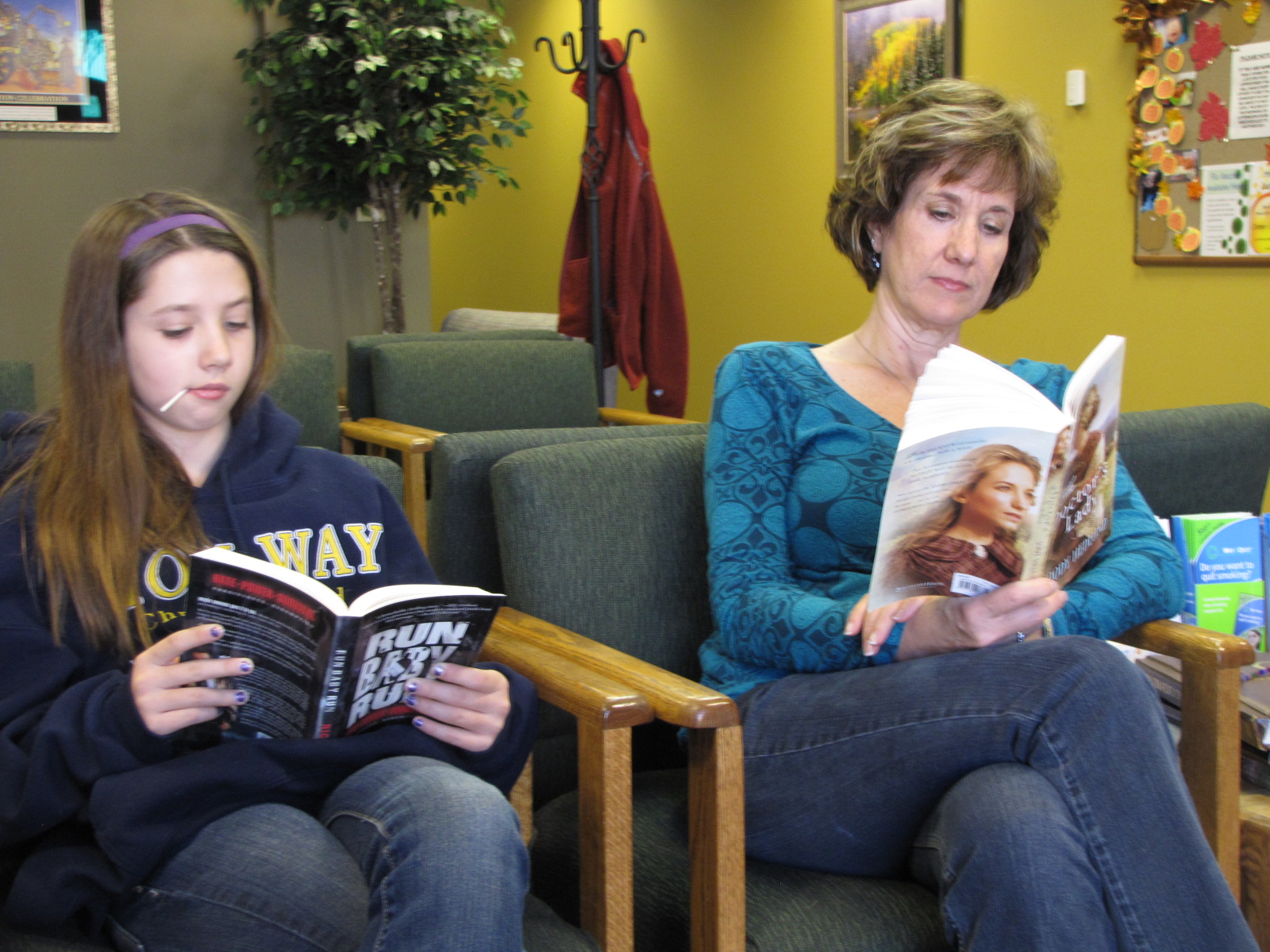
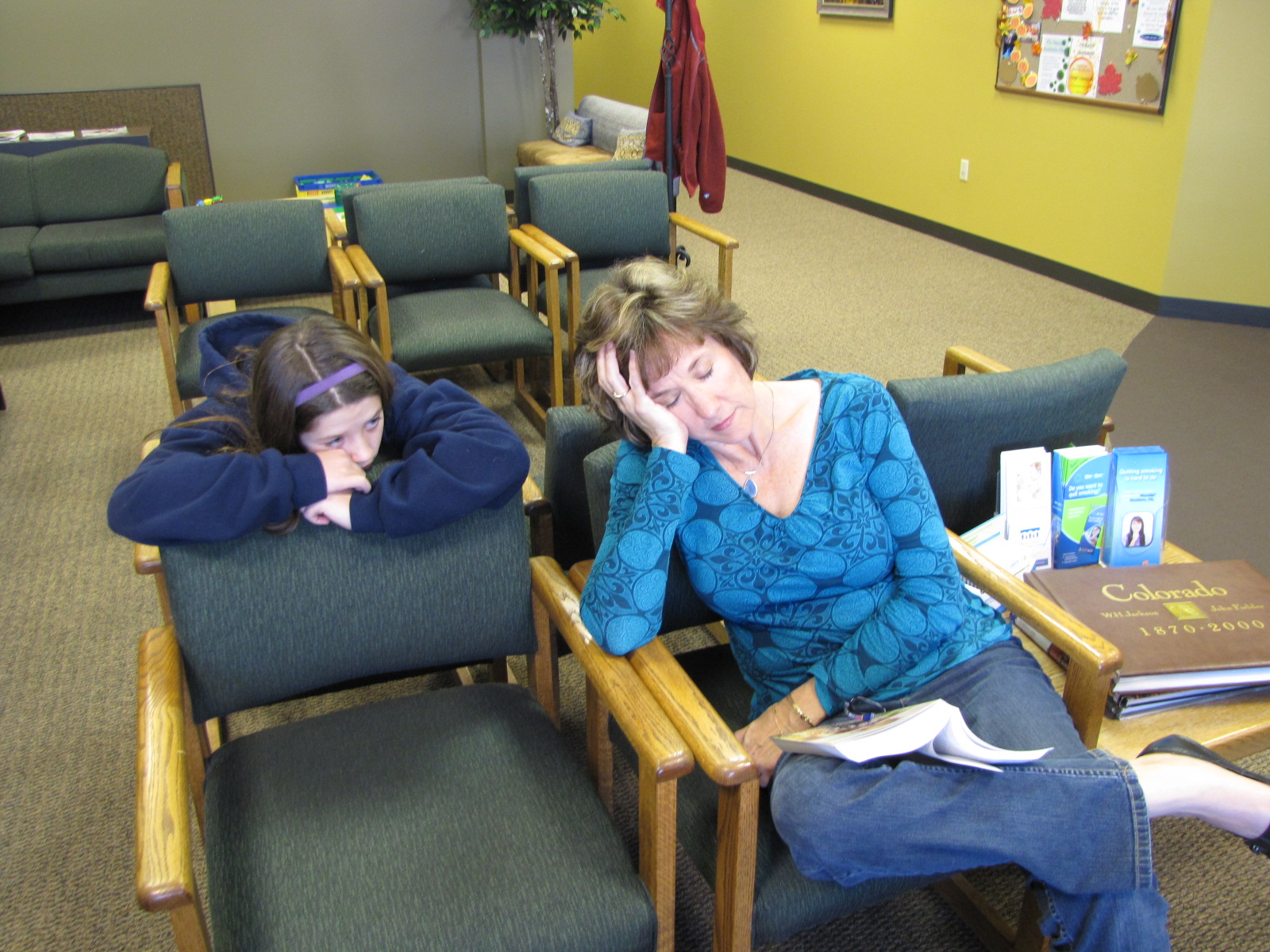
*Photo credit: That’s me and my daughter. In my husband’s waiting room. With a copy of author Jody Hedlund’s latest release, The Doctor’s Lady. The sleeping pose is for the sake of the column — not a statement on Jody’s writing. I loved reading The Doctor’s Lady!

Post Author: Beth K. Vogt

Beth K. Vogt is a non-fiction author and editor who said she’d never write fiction. She’s the wife of an air force physician (now in solo practice) who said she’d never marry a doctor—or anyone in the military. She’s a mom of four who said she’d never have kids. She’s discovered that God’s best often waits behind the doors marked “Never.” She writes contemporary romance because she believes there’s more to happily ever after than the fairy tales tell us.

Creative Nonfiction: Top Tips for Memorable Memoirs and MORE!

Photo Credit: Simon Howden / http://www.freedigitalphotos.net

My husband parks our silver F150 in a turnoff, which is really a patch of pounded land where folks have repeatedly turned their cars around after realizing the road goes nowhere. I imagine drug dealers, prostitutes, meth heads, and hormonal teens fighting for this spot on steamy summer nights, but for now, it’s just Charles and me. And my doubts.

He turns off the engine, and in the silence, we wait. We are surrounded by thousands of acres of farm fields, old growth hardwoods, and murky cattle ponds. The land is beautiful, and this type of setting would normally calm my nerves, but not this time. Not now, as I’m waiting at the end of the road for a stranger to arrive. My heart races and my breath quickens, as I realize, with sudden alarm, that we might be in danger.

“Should we have brought the gun?” A question I never thought I’d ask. Even though I despise America’s love affair with arsenals, in this position, I wish I was holding a gun.

“What gun?” He’s barely paying attention to me as he checks email on his phone.

“The one in the garage.”

Charles laughs. “It’s a 22.” With sarcasm he insinuates that if we find ourselves going head-to-head with a coyote or a tom cat it might come in handy. A hardened criminal? Not so much.

“Well what if it’s a setup. One of those Craigslist crimes?”

He doesn’t answer. Just keeps emailing.

11:49. No sign of the white Ford truck we are waiting for. “Of course it’s a white Ford,” I say. “Does anyone drive anything else around here?” I’m sure we’ve passed at least forty-seven white trucks since we left the interstate. Forty-six of them, Fords.

I open the door and get out to stretch my legs. The sounds of rubber tires and gasoline engines roar in the distance. Somewhere, within earshot, the newer highway ribbons through these fields, and I feel a little comfort thinking I can run toward the noise if it comes to that.

Then the engine noise comes closer, and the white truck we’ve been waiting for eases its way into a corner field and comes to a stop in front of a metal gate, a rusty chain locking the gate closed.

In the movies, headlights would have flashed, drums would have punched a dramatic rhythm, and a heavy pause would have filled the screen. Instead, Charles’s phone rings. “Yep, I see you. We’re headed that way now.”

I return to my passenger perch and close my door just in time, as Charles is already putting the truck in gear.

“You have the money?” he bites his nails, a habit he’s had all his life.

“Yes,” I check my purse, just to make sure. Cash only, I remember the stranger’s instructions. My pulse shoots flares.

And then it happens. We climb down from the bench seat and enter an isolated pasture with a man we’ve never met.

What’s this scene about? Do you suspect this couple is about to engage in some sort of illegal transaction? Are they in danger? Or is it just a creative twist on something as ordinary and realistic as buying a cow?

If you guessed a cow, you’re right. This is part of a creative non-fiction proposal that enabled me to become the 2012 recipient of the Mississippi Arts Commission’s Literary Arts Fellowship, an honor I am privileged to accept.

Whether writing about cooking or canines, remember non-fiction doesn’t have to be dry.

Try these tips:

  • At some point, let us know exactly where and when the event takes place, but use subtle hints to set the scene (music, tv, news, technology, etc., to hint at the era.)
  • Use sensory details – smells, sounds, sights (avoid writing “I see… I smell…I hear…”)
  • Involve more than one person in the scene…it’s not all about YOU. Describe something specific about the other characters. Use a few snips of dialog and let unique personalities shine.
  • Elicit an emotional response from the reader. How do you want them to FEEL when they read the story?
  • What is the main point of the story? What question do you want to answer? Try to leave the reader with one main thought, all while trying to show rather than tell.

When you write, what approach do you take to make the mundane magnificent? Share your thoughts about creative nonfiction and learn more about this interesting genre by visiting http://www.creativenonfiction.org/

Julie’s first novel, Into the Free, hits shelves February 1. Learn more at www.juliecantrell.com

Police Work and Writing

For the past twenty years, I’ve worked as a 911 dispatcher. In the beginning of my career, I worked the graveyard shift at a busy California Bay Area police department. I cut my teeth on everything from stabbings to suicidal callers. My husband and I first met over a homicide. I dispatched him to the call; a drug deal gone bad. I know, not your average boy meets girl story.

Over my career, I’ve taken thousands of emergency calls and each one has molded and shaped my dark sense of humor and often cynical-quick-to-judge personality. After all, I get paid to judge in a matter of seconds, type-coding a call that will determine the response of police/fire/ambulance.

As an author, the road to publication twisted and shaped the writer I am as well. I can’t help but see clear parallels between a writer and police work.

It’s not always what it seems. A detective is trained to look for what the untrained eye doesn’t see—things like blood patterns, fingerprints, and previous cell phone activity. A writer’s path isn’t always an obvious three-step plan either. The craft must be studied, worked on, and almost never is how we dreamed it would turn out, with twists and turns taking you places you never thought you’d be. My two-page personal essay became a nonfiction book for moms—who knew?

Friends matter. Whether you’re the suspect or the victim of a crime, who you’ve associated with always comes into play. As a writer, who do you hang out with? Do you network with other writers/authors? Or, do you think your work is so good you’ll be miraculously discovered? If you truly believe this way, you couldn’t be more wrong. Trust me when I say: it’s only a matter of time before you’re a victim of un-success. Writing can be very solitary. Having someone come alongside who understands the ups and downs can make all the difference.

Word of mouth. Home invasions are almost always drug-related, a targeted place where the suspect has planned to regain their lost monies or steal drugs from someone they know. Occasionally, it’s a friend of a friend who bragged to the wrong person about their parents jewelry and non-belief in banks. As a writer, your reputation begins as soon as you share, “I’m a writer.” Once your words are published via blog, articles, or any other venue, your branding begins. Conferences, retreats, writer’s groups, and online relations are where your reputation is formed. Use every connection as an opportunity for helping other writers as well. I like to remind myself, no matter how well I write, I will never rise above the reputation my family, colleagues, and readers have of me.

Are you a victim?  I hate to break it to you…there aren’t as many victims as you think. Tough to hear? It’s true. The media loves to play on viewers emotions. As a writer, are you a victim? Do you suffer from itshouldbeme-syndrome? Do you believe every agent/publisher/editor just doesn’t understand your talent? Are you giving up the writer-ghost while complaining to everyone who will listen? Writer-victims aren’t as common as you’d like to think either. If your work is really that good and you are actively putting it in front of the right people, it will eventually be recognized. So, hang in there!

Writing and police work have a lot in common. After twenty years, my heart still races when I handle a hot call. There’s nothing like calming a woman who’s hiding from an intruder downstairs, encouraging someone to live another day, soothing a child who’s called an ambulance for their sick grandma, or the sound of a baby being born. The same can be said about writing. My heart still races when I submit an article, or speak before a crowd. There have been sleepless nights, anxious calls to writer-friends, and though my first published book is far from the New York Times best seller list—it’s been the ride of my life.

What about YOU? Does your writing journey have anything in common with your paying job?

A Writer’s Life: The Pit of Despair

Whenever I watch The Princess Bride, I skip the Pit of Despair segments. Popcorn, anyone? Maybe rewind to the Fire Swamp?

Sure, the Albino with the needs-to-cough-up-a-hairball voice is a bit of comedic relief before discovering our hero Westley is in the Pit of Despair. His future? Torture — attached to a life-sucking machine. His only escape? Death.

Am I the only one who skips these scenes?

As writers, there are days we are trapped in our personal Pit of Despair, without even a somewhat friendly Albino nearby. Life — our passion — is being sucked out of us, bit by bit.

What does Westley’s trip to the Pit teach us? Consider two truths:

  1. Truth # 1: Enemies get you into the Pit.
  2.  Truth # 2: Friends get you out of the Pit.

What about those enemies?
Inconceivable, isn’t it, how both success and failure dump us in the Pit.

When you succeed as a writer — land an agent, sign a contract — you think: Other people have expectations for me. What if I fail? Overloading yourself with the real or imaginary expectations of others tumble you into the Pit faster than the Dread Pirate Roberts can scale the Cliffs of Insanity.

And then there’s the slippery slope of failure: never attaining your goals, never quite grasping whatever spells “victory” for you. The root problem is the same: expectations. Fear you won’t meet others’ expectations or disappointment in yourself for not fulfilling your own. The bigger question? How do you navigate both success and failure?

At last! It’s time for the friends.
Westley didn’t rescue himself. The heroes? Fezzik and Inigo, who found a “mostly dead” Westley in the Pit. But that didn’t stop his friends from hauling his body out to go looking for a miracle.

When you can’t see the faintest hope of a miracle for the forest of despair surrounding your writing dreams, who searches for you? When you no longer believe in yourself, in your story, who believes in it for you? And — perhaps even more importantly — who do you go looking for when they’ve been dragged off into the Pit of Despair?

We’ve peered over the Cliffs of Insanity, survived the Fire Swamp, and now find ourselves at the Pit of Despair. Which have you found to be the greater enemy: success or failure? How have friends rescued you? Like Miracle Max, I believe it takes a miracle sometimes for changes to happen … so if you have any of those to share, please do!

For Fun: The Princess Bride 25th Anniversary cast reunion

Post Author: Beth K. Vogt

Beth K. Vogt is a non-fiction author and editor who said she’d never write fiction. She’s the wife of an air force physician (now in solo practice) who said she’d never marry a doctor—or anyone in the military. She’s a mom of four who said she’d never have kids. She’s discovered that God’s best often waits behind the doors marked “Never.” She writes contemporary romance because she believes there’s more to happily ever after than the fairy tales tell us.

Blessings From A One-Star Review

What possible good comes from a one-star review? 

I promised last month that there was more.  That I would explain how the experience of being publically criticized can make us stronger. 

Is the pain worth it?

Absolutely yes.  Here are three reasons why.

No. 1 – Criticism Tests Our Passion

We must be passionate about writing.  We must really want it.  Why else would we subject ourselves to this insane process called publishing? 

Think about it.  As writers, we are either the stupidest people on the planet, or we actually have a dream.  When we count up all the hours we spending outlining, writing, re-writing, editing, and trying to publish (not to mention marketing and networking) we’re earning less than minimum wage.  Throw in some harsh critics, and you’ll meet the ultimate test of your will. 

Criticism brings us to that moment of reckoning.  That moment when we ask ourselves.  Is this gig really worth it?  I have a nice life.  A good job.  A stable family.  Why do I want to upset the apple cart?

It’s a beautiful moment.   A moment when some of us finally feel free.  When we wrestle with passion and look our dreams squarely in the eye and say, “I don’t care what people think!  I am in this race and I am going to finish!”

Boy, that felt good.

No. 2 – Criticism Tests Our Relationships

I need to correct myself.  I actually do care what people think.  Granted, that group is much smaller than it used to be, but there is a core group of people that I don’t want to disappoint.  Like my husband.  My immediate family.  My closest friends. 

Here’s the point.  When we are publically criticized, we learn who our allies are.  We learn who our allies aren’t.  And our closest relationships – the ones we really care about – will likely become stronger. 

The silver lining?  In addition to shoring up my closest relationships, I actually met some new friends in the process – people who came along side me and defended me just because I stuck my neck out there. 

No. 3 – Criticism Starts A Dialogue

Why do we write in the first place?  So that everyone will agree with us?  I think not!  Don’t we want people to wrestle, to debate, even disagree?

In my case, Chasing Superwoman is a faith-based memoir about being a working mom and trying to do it all.  Nothing like hitting a few hot buttons all in one sweep.  Parenting?  There are few subjects we feel stronger about.  The choice for mothers to work outside the home?  Now, I’m really getting personal. 

The point isn’t whether my readers agree or disagree.  The point is that I’ve made them think.  Don’t I want to start a dialogue?

I’d like to introduce you to my Amazon buddies.  Five women I’ve never met before went on Amazon and wrote responses to the one-star review.  Several of these women sent me encouraging notes and personal emails.  One of these women became my Facebook pal, and another started her own blog.  These are the kind of fans writers dream of – all because of a one-star review!

Are you ready to test your passion, test your relationships, and start a dialogue?

Why are we really writing?  Who are we trying to please?  And don’t we want people talking about our work?