Memoir Makes It Better

5 ways practicing memoir will improve both writer and writing.

There is fiction, and there is nonfiction; then somewhere in between lies memoir, their mutant spawn.

The last decade or so has been a heyday of sorts for memoir. Much of what makes the genre appealing to readers is that it combines the artfulness of fiction with the real-life validity of non-fiction. It’s the refined, literary version of reality TV.

But what appeals to memoir readers is often the same thing that confounds memoir writers. To piece together a good memoir, the tenets of fiction must be employed within the constraints of non-fiction. Likewise, the aims of non-fiction must be achieved through elements of fiction.

Still, this blurring of lines is precisely what makes memoir a worthy and worthwhile effort for any writer. Here are a few of the lessons you might find yourself picking up in the practice:

1. You Aren’t So Wonderful

In a world of bad characters and good ones, most of us would seat ourselves in the “good” group. But memoir might suggest we are being too generous in this. Try turning yourself into a protagonist: take a recent conflict in your life and record what your thoughts, actions, and interactions were in it. Leave out your motives and intentions, and instead write what actually happened. How did you respond when given a backhanded compliment, when annoyed in the check-out lane, when cut off in traffic, when insulted or demoted or hurt? Write it honestly.

I thought of myself as a capable and accomplished person, more or less—a kind one too, until I had to become a character in my memoir. The character-me was not nearly so magnanimous as the “me” that I had perceived myself to be. Seeing my unedited self on paper was startling. There was far more sin and selfishness than I would’ve been willing to admit. But that awareness made me better: more repentant, less proud, more forgiving, less afraid of making mistakes. I became newly grateful for what I have been given because I could see like never before that I don’t deserve it. And grateful is a great place from which any writer can start.

2. Characters are Complicated

Walk a mile in somebody’s shoes, as the saying goes. Real people have real complexities; this is impossible to ignore when writing memoir because the subjects you’re writing about are displaying their complexities all the time, from head to toe. Let this be a lesson. The people in your stories will be stronger subjects if you’re willing to appreciate nuance and even paradox in them. That means creating/presenting subjects who have dimension: likeable and unlikeable qualities, consistencies and inconsistencies, weaknesses and strengths alike.

3. Story Is Good

Setting, plot, characters, conflict, rising action, falling action, dialogue. Fiction writers tend to be experienced in weaving together these elements in their writing, while many non-fiction writers spend little time developing their story muscle. The result is often a non-fiction writer with a profound writing weakness: four parts tell for every one part show. Take a crack at memoir, and you’ll see that story can make a point on its own. Events and truths don’t necessarily require further explanation from an omniscient author voice. When the story you’re telling is complete, resolution is already there.

4. Reality is Simple

To keep things fair, here’s one for the fiction folks. You have zero limitations on the creativity you can bring to your story lines, which is likely why the rest of us so thoroughly enjoy your work. But memoir can remind you that most happenings in life are not extraordinary, at least not at first glance. While it can be tempting to rely on spectacular details to move your story along, often that’s an easy way out. It might take more effort and more practice in writing to instead craft a more plausible storyline that has every bit as much resonance.

5. “Interesting” is Necessary

But it should also be said that spectacular things resonate spectacularly. Few people will want to read your work if nothing in it drums up any interest. Far too often we let ourselves settle for an existence that is boring and wimpy. Ask yourself: In the last year, have I changed? Have I pursued something? Have I discovered something? Have I been part of something that matters?

We are creatures made in the image of a bold, reckless, zealous God, the One whose story grips people and sets their lives on an entirely new course. If there is nothing in your life that seems worth writing about, let memoir be an alarm that wakes you up to live bravely. Chase after something. Commit to something. Let go of something. Be moved to action. Give generously. Receive graciously. Love with tenacity. Or write some memoir, if you dare.

Five Ways to Handle Stress in Your Writing Process

Are you overwhelmed with stress in your writing life? The book of Lamentations offers a clear word on how to deal with stress. “When life is heavy and hard to take, go off by yourself. Enter the silence. Bow in prayer. Don’t ask questions: Wait for hope to appear” (Lam. 3:28-29 MSG).

1. Go off by yourself. Solitude often seems impossible for me, even with an “empty nest.” But Jesus knew the importance of spending time alone with His Father. When He needed to listen, He would pull away from everyone. Matthew 14 says that after Jesus fed the 5,000, He “climbed the mountain so he could be by himself and pray. He stayed there alone, late into the night” (23).

2. Enter the silence. When we seek God in silence, often the accuser (Rev. 12:10) tries to distract us with fear, like in the story of Hannah (1 Samuel 1). Hanna’s husband had two wives—talk about stress! And her husband’s other wife taunted her year after year, blaming and accusing God for Hannah’s inability to conceive children. Then, when Hannah prayed, her spiritual leader misunderstood her. “Hannah was praying in her heart, silently. Her lips moved, but no sound was heard. Eli jumped to the conclusion that she was drunk” (13).

3. Bow in prayer. Prayer can be as natural as talking with a good friend or as intimate as sharing a secret whisper. It can occur any time of day, no matter where you are or what you are doing. God promises that if we call on His Name, He’ll listen. “And if we’re confident that he’s listening, we know that what we’ve asked for is as good as ours” (1 John 5:15).

4. Don’t ask questions. My questions often interfere with my communication with God—I’m talking, instead of listening. When Jesus taught His disciples, He asked them on several occasions, “Are you listening to this? Really listening?” (Matt.11:15).

5. Wait for hope to appear. Waiting rooms seem to bring out the worst in me, like my impatience or frustration. But waiting does not have to be hopeless. The psalmist speaks of “waiting” in Psalm 40, “I waited and waited and waited for God. At last he looked; finally he listened. He lifted me out of the ditch, pulled me from deep mud. He stood me up on a solid rock to make sure I wouldn’t slip” (1-2 MSG).

Reflection: Matthew 6:30-34 advises, “Give your entire attention to what God is doing right now, and don’t get worked up about what may or may not happen tomorrow. God will help you deal with whatever hard things come up when the time comes” (MSG).

So, remember, “When life is heavy and hard to take, go off by yourself. Enter the silence. Bow in prayer. Don’t ask questions: Wait for hope to appear” (Lam. 3:28-29 MSG).

Photo/KarenJordan

What helps you handle the stressful times in your writing life?


Stewarding Your Career and Your Agent

Good agents take the privilege of shepherding authors and projects very seriously. We’re hugely selective and typically only make a “yes” decision on a client if we love (not just like) their project, and then see them as a good potential relational fit.  Life is too short to work with people if they’re demanding or mean…no matter what the potential payoff.

But make no mistake, agents work FOR their authors, not the other way around. Yet with the lightning-fast changes in publishing still happening, nearly every agent I know is telling me, “It feels like I’m working harder than I ever have before, and still closing fewer—and smaller—deals.”

Welcome to the new normal in publishing.

What this means for the client/author is potentially less time interacting with their agent because the agent is trying to stay in business. What’s an author to do in this new normal to make sure their own projects still receive a high level of attention?

  1. Take more control of your career.  The path to finding readers has never been clearer—or more time-consuming. “Get involved with Facebook Fan Pages, blogging, tweeting, Google+, YouTube, Pinterest, and networking with other authors (such as this Water Cooler),” is the familiar mantra from publishers and agents alike.  In this new world where social media IS the most influential advertising resource,  if you’re not selling books and finding new readers, it’s no longer your publisher’s (or agent’s) fault.  If you don’t feel you can come to play in marketing your own creative blood, sweat and tears, don’t even ponder a career as a writer. Look in the mirror: You are your publisher’s best PR agent.
  2. Craft, craft, craft. I tell new novelists that I don’t want to see their manuscript until 5 to 10 “non friends and family” have read and critically appraised their work.  I’d rather authors take a full year to rewrite their manuscripts than almost anything else.  If you write nonfiction and you have a strong message and a good regional platform, then be relentless on making every paragraph zing. Don’ tell me “it picks up in chapter three.” It better engage me from paragraph one or you’ll be getting the dreaded “not for me” letter. If you’re a seasoned writer, be diligent in making your prose as professional and engaging as possible.   Constantly read books on writing craft; find a mentor or critique group. Be a lifelong learner on writing well and you’ll have a good chance at being a lifelong author.

Along with taking control of your own career and staying committed to the craft, here’s how to help your agent help you.

  1. Respect his or her time.  Since you want them to stay in business, bunch questions for a once-a-week email.  If possible, use clear bullet points with clear simple questions to make it easy for us to see and answer, rather than lots of loaded, dense text.  Mondays are good. If your questions are more complex, better to talk by phone than email.  But do set a phone appointment (by email) instead of calling with hope that we will answer.  The agent is there to serve you, very true, but time is the coin of the realm. Be judicious in how you spend their precious minutes and hours because ultimately you want us out there pitching your projects!
  2. Press the panic button. I spend a good portion of my week fighting fires for authors. Bad covers, wrong titles, heavy-handed editors, proposals that MUST be out the door this week, family or personal crisis…all of these and more are what I’m here for.  When you really need me to jump on something or lend an ear, this is absolutely what I want to do. Don’t hesitate to pick up the phone or send me a “call me ASAP” email.  You’re not “bothering me” (ever); I work for you and love (almost) every minute.
  3. Pray. It’s not trite, it’s essential. Really. If I’m distracted, off task, ill or in a personal crisis myself, what am I not doing? I’m not tending to the details of what I should be doing for you. The very thing I want to do most is often what the enemy doesn’t want me to accomplish. I need to stay spiritually sharp and steady for you to feel fully supported.  And I’m not bashful to say I need your help in doing it. I covet and appreciate your prayers for me, my work and family.  I also love to pray for you, so never hesitate to zip me a prayer request during a rough patch.
  4. Share the goodies!  I love hearing how your work has impacted others in the world, or a great opportunity that has come up for you to share your book.  Forward me one or two of your best notes from readers every month and any news that is exciting to you concerning the marketing of your project.  We love to hear how the end result, your book, is impacting the world.  It is why we do what we do.

What more can you do to serve your own career? How would you feel even more supported by your agent?

The Create Space Experience

Many people gaze at online publishing as settlers must have viewed the wild, wild, west – with fear and awe. However, life on this frontier is not as lawless as one might think. It can be a useful accelerator on your path of obtaining or supplementing traditional publishing efforts. Take Create Space, for instance. Well-organized and structured, this tool can provide the positioning and leverage you need to take your creative efforts to the next level. Where you go from there is entirely up to you, and there are a myriad of options for you to ornament your work with whatever bells and whistles you want.

Even before you receive what is called an advanced reader copy (ARC) or a gallery (similar to an ARC), you can print out books for your readers and reviewers. In turn, they can begin your marketing buzz by word of mouth. With Create Space’s step-by-step application, the author is guided through all the necessary steps to correctly setting up their book. Setting up the title, creating the interior, and selecting cover art are parts of the process. You can upload interior files as a PDF to ensure formatting will not change. You can either create a cover with the website’s cover creator wizard or upload your own. In this case, be sure to follow their directions to the letter to ensure you don’t frustrate yourself by having the wrong size spine or files with poor resolution that will look shabby.  If you aren’t the type that can sustain the trial and error it will take to get this right, then recruit a patient friend to help you with the details.

Even before your book is actually for sale, you can choose to have sample chapters viewable to your social media networks through Create Space / Amazon, even if you don’t have your own website. You will have a way for people all over the world to familiarize themselves with your book. Create Space also has very good deals and is a low cost vehicle for having copies on hand for your book signings and giveaways.

The flexibility for authors is also remarkable. There are no minimum print runs with Create Space. You can order as few as one at a time. For perfectionists who want to make sure everything is just right before committing to a large press run, this is an unprecedented luxury. I ask readers to write Amazon book reviews, which are better than gold, and send out those links via Twitter. Perhaps best of all, actual customer service people answer the phones and they do so 24 hours a day.

Thanks to Create Space and other emerging platforms, there are more options than ever for authors to distribute their work. Technology has opened up an ocean of opportunity, and the new world looks brighter than ever.

Have you ever utilized non-traditional publishing methods to support your traditional publishing dreams? If so, how? How might a tool like Create Space help your marketing platform?

Embracing Sacred Moments

Lake Cortez at dawn

Have you ever wanted to hold on to a moment in time and savor the amazing experience a little longer?

The radiant fog bank settled just above Lake Cortez at dawn, a stark contrast to the winter landscape surrounding my home. I tried to focus on my writing deadline, but I halted my work to observe the breath-taking view.

The glowing mist at sunrise brought a familiar Bible verse to mind, encouraging me to embrace the moment. “How do you know what your life will be like tomorrow? Your life is like the morning fog—it’s here a little while, then it’s gone” (James 4:14 NLT).

Such memorable experiences happen when I least expect them, and they vanish without warning. But I always want to hold on to those special moments longer than possible.

The first time I heard my child’s heartbeat, I tuned out everything else, as I wondered about the new life inside me. Etched on the tablet of my heart, I recall those firsts—feeling him move, seeing his face, and holding him in my arms.

Those rare occurrences happen in my writing life, too. When I received my first contract to write an article for a well-respected publication, I held the envelope close to my heart a long time before opening it. Then, I unfolded the letter with great care and examined every word to be sure I didn’t skip any details.

Another momentous occasion occurred in December, as I shopped for Christmas gifts with my grandson Miles. “Wait, wait,” I drew a deep breath and raised my right hand to stop our conversation, so I could read the e-mail on my iPhone.

Confused by the interruption, Miles offered me a wrinkled brow.

“Seriously—wait,” I exhaled. “I’ve got to hold on to this moment.”

I read the message again, basking in the power of the encouraging words. “They like my proposal! And she wants to discuss signing me as a client!” I couldn’t restrain myself from expressing my thanksgiving and praise. “What a great Christmas gift!”

Later that week, my heart raced again when the agent called to confirm her offer. I found it hard to suppress my enthusiasm and joy, so I could listen to her instructions and tell her about my writing goals and dreams.

When my husband, Dan, asked about the details of my phone call, I still couldn’t gather my thoughts because of my excitement. “Maybe I should have taken notes,” I admitted.

So how can we embrace our sacred moments? We know such blessings vanish as fast as they appear, just as morning fog dissipates when exposed to the first rays of sunlight.

We can capture the essence of our experiences with descriptive words and well-chosen phrases in our narratives. And through this writing process, others will also be encouraged to tell the stories that matter most to them.

Photo/KarenJordan

Did my story remind you of a sacred moment in your life? Write that story!

Building Your Author Platform Before The Contract

I remember attending a writer’s conference where the agent I was pitching stated debut authors needed a platform, even for fiction, in their proposal. She said if a query piqued her interest, she’d google the author’s name to see what came up. If there was hardly anything, she’d think long and hard before asking to see more of their book. And, she said editors do the same thing.

Yikes. I didn’t have anything up. I thought that all came after the book deal.

First thing do to is establish yourself as a professional writer. I recommend starting a Facebook page as a writer, not a profile, but a page. Announce to people that you are a writer and believe it!

Do the same with your Twitter account. Don’t have one, here’s my post on How to Effectively Use Twitter for Authors.

You need a website. Don’t panic. There are plenty of free sites that can provide you with a website. I use wordpress.com You don’t have to start a blog yet, though I would recommend it later. You can simply have an about page and a contact page. You can check out my about page here for ideas. Visit your favorite author sites to see what you like and don’t like.

Now, you’ve got these pages up, but what do you do with them. Here’s where it get’s a little bit harder. You need to figure out who your target audience is. You’ll need this for your book proposal, so now is a good time to start on it.

Who will be interested in your books? If you’re writing inspirational fiction, then you’ve already got a faith element. Christians are interested in your books. If you’re writing historical, then what time period? What groups of people or hobbies would go along with this?

This is just scratching the surface. Go deep with this. I recommend making a list of possible interests. Now, you can write some guest posts to blogs targeting this area. Tweet and share Facebook links with articles written by other people on these subjects.

Ask questions on Facebook and Twitter. If you’re coming up with a name for a new character, list two and have people vote.

You are well on your way to establishing a platform.

What ideas or tips do you have to make your platform even more effective? How often do spend social networking? Should you be engaging even more?

Write With Realistic Expectations

Aspiring or first-time authors sometimes hold the misconception that they will hit it big with their first book. Visions of bestsellers dance in their heads.

It’s time for a reality check from The Agent’s Desk. One of our jobs is to manage your expectations through every stage of this long process called publishing.

The statistics have not changed much in the years that I’ve been involved in the book industry. In the entire Kingdom of Books, which includes every title sold in every category—not just Christian—only ten percent of authors make a living solely by writing books.

The authors you meet at conferences may still have day jobs, or if they freelance, they edit manuscripts, ghostwrite books, or conduct their own writing workshops. Or they still have day jobs. They work all day and then come home and write their novels at night. Or if they’re early birds like me, they hop out of bed at 4 a.m. and sit down at the keyboard before rushing out the door to make it to work on time. Some pound out two or three pages every day while riding a commuter train.

Another group of writers may be blessed with a spouse who is the sole breadwinner of the family. Mothers who are writers take care of the kids and write during nap time. I’ve known stay-at-home writer dads as well. The whole family tightens the purse strings and lives on a budget.

Of course, a few authors inherited their fortunes and live on Fantasy Island.

Here’s the reality. The average Christian novel sells about 5,000 copies. Some sell less; some sell more. You notice I didn’t say that the first-time author only sells about 5,000 copies. No, that includes experienced and newbie authors as well. Do the math.

A smaller percentage may sell 10,000 to 15,000 books each time. This is our hope for you because it will assure you a place at the table and a long-term career. Now we enter more rarefied air.

A much smaller group sells 20,000 or 25,000 books, but those are usually long-time authors or a new author who happens to write a book that hits a nerve with readers. We hope you are the exception and will publish books in this range.

Only a handful of authors sell in the 50,000 to 100,000 or more range consistently. You know their names. They live on the bestseller lists. You see their names month after month and year after year on the CBA or ECPA bestseller lists.

Then, once in awhile, an author catches lightning in a bottle, and you have a series such as Left Behind or a single book title like The Shack.

So please, if you are a newcomer to publishing, adjust your expectations, and if you knock it out of the ballpark, you’ll be as ecstatic as your agent and your publisher. We pray for bestsellers!

Image: Nutdanai Apikhomboonwaroot / FreeDigitalPhotos.net

WordServe Literary News

Exciting things have been happening at WordServe Literary!

On the final post of each month you’ll find a list of Water Cooler contributors’ books releasing in the upcoming month along with a recap of WordServe client news from the current month.

February New Releases

From Santa to Sexting
By Dr. Brenda Hunter and Kristen Blair
Leafwood Publishers
Non Fiction/Parenting


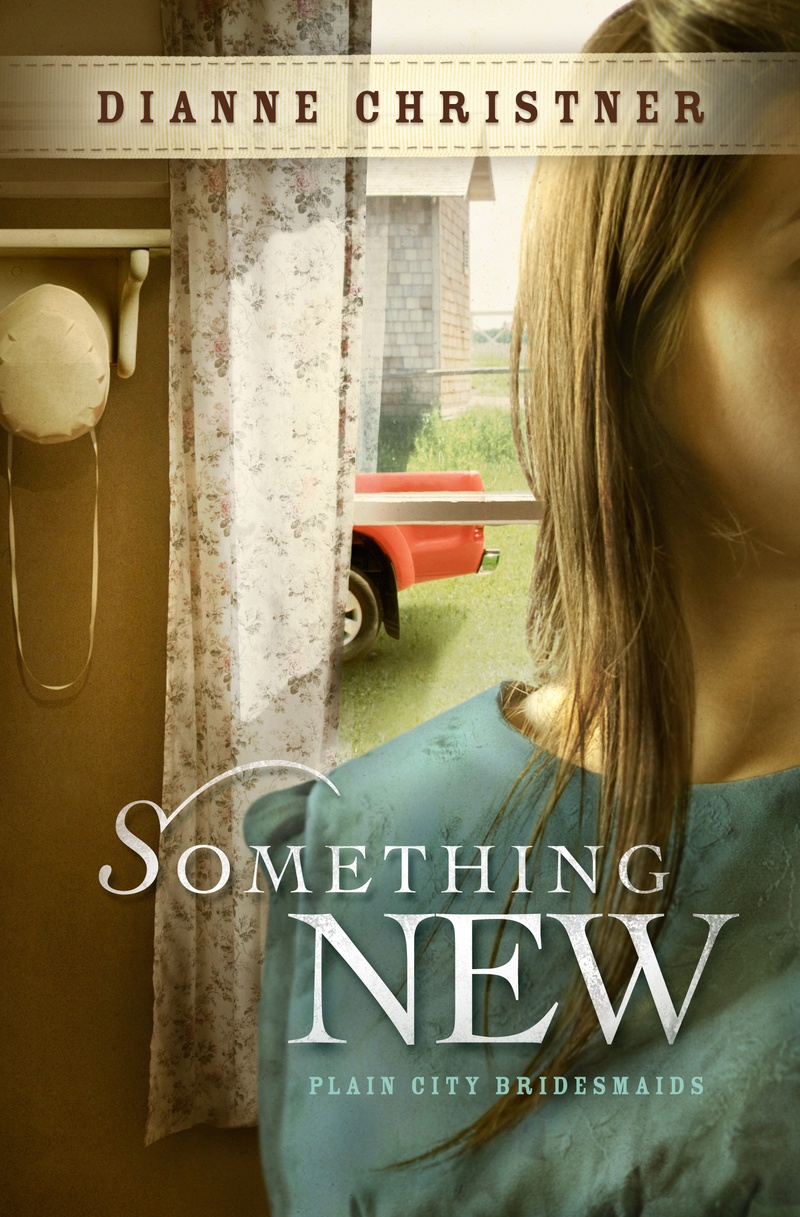
Something New
By Dianne Christner
Barbour Publishers
Historical Fiction

Into the Free
By Julie P. Cantrell
David C. Cook Publishers
                                                          

Sweeter Than Birdsong
By Rosslyn Elliot
Thomas Nelson Publishers
Historical Fiction

 • • •

 Agent News

Though Rachelle is “gone”, she’s still closing deals for her authors that were submitted last fall: Sandi Bricker got a 3-book contract with Moody for fiction; Billy Coffey a 2-book deal with Thomas Nelson for his next two novels; Susie Eller with Regal for a non-fiction book on forgiveness, and several others.

• • •

 Barbara’s New Clients

Dianna T. Benson, EMT and Haz-Mat Operative, is a suspense/thriller novelist.

Terry Brennan, author of The Sacred Cipher published by Kregel, writes political thrillers and is Vice President of the National Organization on Disability in Manhattan.

Ann Lang Bundy, is a former police officer, home-schools her five children, and is a lay Bible scholar. She writes long biblical fiction.

Mary Davis, authored numerous bestselling Barbour/Heartsong books and is writing a longer work of fiction.

Sharon A. Lavy, a member of the Old German Baptist Brethren and author of traditional Old Order fiction. Sharon lives with her husband on a farm in southwest Ohio.

Sandra Dionne Mooore, multi-published Barbour/Heartsong author, has written a longer historical fiction novel.

Stephanie Reed, is a published author and currently in the editing stage of an Amish novel for Kregel.

Amy K. Sorrells, a registered nurse, writes women’s fiction.

Janalyn Voigt, will publish her first epic fantasy novels with Harbourlight and is also writing historical fiction.

 • • •

Greg’s Request

Would appreciate prayers for Lauren Scruggs. She as the woman who was in that horrific airplane/propeller accident where she lost her left hand and eye before Christmas in Dallas, Texas. She’s the daughter of WordServe clients Jeff and Cheryl Scruggs (I Do Again).  She’s getting major media constantly contacting her (People magazine, and all of the morning and afternoon talk shows), and I’ve (naturally) been getting calls from publishers. She’ll be making a decision about whether to write a book about it all soon. If she does, it will likely be a family written book, as this experience has tested them all.

• • •

Sarah’s New Client

Kimberly Vargas, Kimberly Vargas has created instructional design content for companies such as Capital One and GEICO, and she is the 2011 Reader’s Favorite award winner for the category of Fiction—Chick Lit for her novel, Gumbeaux.

• • •

 Contract News from Greg

Heather James signed a three-book contract with Kregel Publishers for contemporary suspense. The novels are tentatively titled: Lure; Lust; Lies.  These are Heather’s first books! Kudos to Sarah Freese for helping with the proposal and manuscript.

The Center for Bible Engagement CEO Arnie Cole and Senior Writer Michael Ross signed their second contract with Bethany for a non-fiction book titled: Tempted, Tested, True: A Proven Path to Overcoming Soul-Robbing Behaviors  (their first book, Unstuck, comes out in May).

Using the research from nearly 20,000 surveys, the authors share the new research that reveals a solution to resisting its grip, untangling negative emotions, and breaking free from behaviors that rob our souls of the life God wants to give us.

Gilbert Morris signed a three-book contract with B&H Publishing Group for a historical series called “All That Glitters”. It’s a series set in turn-of-the-century San Francisco.

Rich Marschall got a contract from Dover Publications for a reprint of 1987 book he wrote called: The Tough Coughs As He Ploughs the Dough: Early Writings and Cartoons by Dr. Seuss.  As a former syndicated cartoonist, Rick knew and knows all of the big-time cartoonists/authors from the day.

 • • •

 Other News from Greg

 Author Ken Gire has decided to give back to authors everywhere and do a month or two-month mentoring intensive for new or seasoned writers (reasonably priced). Ken has written both fiction and nonfiction, and is considered one of the finest devotional writers of our time (Intimate Moments with the Savior, among others).  If you or a writer you know is interested in hearing more about what it all entails, please contact me at greg@wordserveliterary.com or Ken directly at kengire@gmail.com. You can also find Ken on Facebook. Tell him you read about it on the WaterCooler. (He’s hoping to join us soon!)

• • •

 That’s our good news for the month.

Please share yours in the comments so we can celebrate with you.

Live Audience Taping: How Do You Prepare?

Speaking at an event is one thing. Teaching a Bible class is another. But when you film content to produce on DVD, it’s a whole new ball game.

I just released my first ever 8-lesson DVD Bible study series in November called Your Strong Suit, based on the Armor of God found in Ephesians 6. The live taping took place last May at my home church.

Over the course of 48 hours, we taped eight, 35-45 minute lessons. Gulp.

Believe me when I say I could hardly put a coherent sentence together after that. It was exhilarating, amazing, and absolutely exhausting.

As an author, you may be requested to put some of your content in video snippets. Or perhaps, like me, you plan on producing a series of some kind. I promise I’m not an expert at this. But I hope that my recent experience offers insight and information that may help you.

So how do you prepare?

First of all, writing to speak is vastly different from writing to print. You have a live audience to keep engaged (and hopefully awake), so injecting humor and stories is essential. So here goes:

1) Forget about the cameras.

I was very thankful the production crew suggested a mini run through the night before our live taping officially started. When I walked in the staging area and saw three large television cameras, my heart started going pitter patter. Actually, it was more like POUND, POUND. One of the cameramen would actually be walking around to catch close up shots and audience reaction. My heart came right out of my chest at that point.

Over the course of the run through, the tech team was incredibly helpful in showing me the stage’s walking parameters to ensure consistent, good lighting. They taught me how to slow down my talking rate to make more impactful statements. But most importantly, they reminded me to take several deep breaths, release the tension in my voice, and speak/connect directly with the audience. Their coaching made all the difference.

2) Know your content so well that you barely need notes.

Nothing is more boring than watching someone read. I cannot stress enough how vital it is to thoroughly prepare. I rehearsed each lesson several times in the weeks leading up the taping so that when that weekend arrived, it wasn’t the first time I taught them (so to speak). We were on a tight schedule and budget. Room for error didn’t exist. 

Lesson preparation is essential. We only had 30 minute breaks in between each teaching session and it goes by at lightening speed. After each teaching, I’d head back stage to cool off, hydrate, take a deep breath, sit a minute, go through wardrobe changes/makeup touch-ups, pray, pull out my notes for the next session, read them through, and hit the stage again. If you’re not  properly prepared, you won’t make it.

3)  Put a team, buffers, and boundaries around you.

I cannot say enough about the team that surrounded me that weekend. My ministry assistant and a score of ministry volunteers handled the live audience registration, meals, and anything else an attendee needed. My stage manager (and best friend) never left my side except during taping time itself. She kept me on time and provided a buffer to handle anything that came up back stage. She handled all the technicalities so I could focus on preparing for the next session.

And then there’s the production team. I just can’t thank God often enough for those amazing professionals. They seamlessly ran the worship times, screen content, sound levels, and coordinated camera shots (both stationary and roaming) of me and the audience to produce a top level series. Joel, the Production Manager, even told jokes to keep the audience awake and laughing in between sessions. The main thing is that they are the professionals. Trust them and their instructions.

I hope you found a few helpful tidbits from my experience. What I learned during that amazing weekend put me on my knees in thankfulness, and taught me invaluable lessons that will play an important role in any future series.

If you’d like to see a 90 second snippet of the final series, click here.

Let’s chat: If you’ve done this type of thing before, what would you add or take away from this list? If you’re hoping to produce DVD content in the future, what did you find most helpful?

Throw Your Spaghetti

Parents are known for their one-liners, and mine were no exception. “Do it once, do it right, then forget about it.” Wise words tattooed on my heart as my military father explained how to mop the kitchen floor.

Now, with four children of my own, I’ve discovered there are a few one-liners I’ve batted around long enough to stick with my four kids as well. My personal favorite?

Throw your spaghetti!

I use these three words to encourage family and friends. Inspiring them to knock on every door in their path and walk through and follow-thru when that door opens.

This saying originates from the traditional Italian way of testing pasta. The cook throws a handful of spaghetti noodles against the wall and if a few strands stick the pasta’s ready. If the noodles fall to the ground—the pasta remains in the boiling water.

Here are a few life examples of what “Throw Your Spaghetti” looks like:

While attending a writer’s conference, I was surrounded by hundreds of wannabee-authors like myself who dreamed of a coveted publishing contract. When I had the chance to talk with some of them, I was amazed by their talent, awed by their creative ideas, and immediately anxious about ever being good enough.

One of those gifted writers spoke with me, “I just got back my edited manuscript. It’s full of red ink. The editor suggested I talk with another publisher.” She moped.

“So, what are you waiting for? There are lots of publishers here you could talk to.” I reminded her.

“I don’t know. I really had hoped this editor would want it for her publishing house. I’m thinking it’s not meant to be for me.” She mumbled.

“Are you kidding? You have a gift, and you’re going to let a rejection from one publisher hold you back from your dream? C’mon get out there and meet with everyone you can. Throw your spaghetti!”

And then there was the time my college-aged daughter called to share:

“Mom, I just found out about another college that offers a fellowship for creative writing. But, the problem is, I’m not sure if I should stick to my number one school choice in Iowa, or try for this one too?”

“Honey, there are no guarantees you’ll get into your first choice, so I’d apply for both. Throw your spaghetti!”

“Throw your spaghetti” is my own silent mantra from time to time. After flying cross-country to attend a women’s conference, I anticipated sharing my book idea with a few publishing houses. By divine miracle, my late registration didn’t hold me back from appointments with publishers.

I called my husband to share my progress. “Paul, I just met with a gal who taught a workshop about pitching my book idea. She said what I have isn’t good enough for a book.”

“I’m sorry, who told you? Did God personally tell you that?” Sarcasm oozed over every syllable.

“No, God did not personally tell me that!” Irritation got the best of me.

“Well then, I suggest you keep your appointments with the publishers and pitch your book idea. Throw your spaghetti!”

He was right. I kept both of my appointments. Each publisher gave me the green light to send in my full book proposal. Months later, those same publishers emailed rejections. But, I did what I do best—I threw my spaghetti and submitted my work over and over again.

What manuscript have you buried for lack of follow-thru? What gift have you ignored because you believe you aren’t good enough, smart enough, or talented enough? Start working on your follow-thru, and perseverance…then throw your spaghetti!

By the way, that book idea I was telling you about? You can find it on Amazon.

What holds you back from trying one more time?

Who encourages you to throw your spaghetti?