Writing Down Our Faith Stories

Photo/TaraRossIn the Psalms, David expresses this divine purpose for writing our faith stories.

Write down for the coming generation what the LORD has done. So that people not yet born will praise him. (Ps. 102:18 GNT)

What has the Lord done for you? Do you have stories about God’s intervention?

God expressed His love to humanity with the gift of His Son, Jesus.

This is how much God loved the world: He gave his Son, his one and only Son. And this is why: so that no one need be destroyed; by believing in him, anyone can have a whole and lasting life. (John 3:16 MSG)

Have you ever considered how much God loves you? I never really did, until the birth of my only son, Adam. I cannot fathom the love that it takes to sacrifice your only son, so that others might live. I’m sure many parents of soldiers come close to knowing how that feels, and I love to read their inspiring stories.

Someone once challenged me to ask God to show me how much He loved me. I believe God can speak to us. He speaks to me every day—through His Word, prayer, worship, people, and His beautiful creation. But I had never asked God how much He loved me.

So, I shut my eyes in prayer and asked, Lord, how much do you love me?

The answer I received still seems too intimate to share, for fear of being misunderstood and judged. I did not hear an audible voice. I just caught a little glimpse of Heaven, where God promises,

He will wipe every tear from (my) eyes, and there will be no more death or sorrow or crying or pain. All these things (would be) gone forever. (Rev. 21:4 NLT)

When I faced the death of both of my parents, this vision of heaven brought comfort to my grieving heart.

I challenge you to ask the Lord that same question, Lord, how much do you love me?

Then, listen quietly. And be sure to write down your story.

God told His Story to the world when He sent His Son—the Word of God.

The Word became flesh and made his dwelling among us. (John 1:14 NIV)

Jesus told His stories (or parables) to teach us “the way and the truth and the life” (Jn 13:6).

Jesus told them a story showing that it was necessary for them to pray consistently and never quit. (Luke 18:1 MSG)

Is there a biblical mandate for sharing our stories, especially our faith events?

In Acts 1:8, we read this charge from Christ to His followers,

But you will receive power when the Holy Spirit comes on you; and you will be my witnesses in Jerusalem, and in all Judea and Samaria, and to the ends of the earth. (NLT)

What stories are you telling about your life? Or rather … what stories are you not telling? What about your faith stories? Who can write them, but you?

I hope you will consider writing down some of your faith stories as you celebrate Christmas this year.

What faith stories have you written down? I hope you’ll share one of your stories in the comment space below.


YouTube/twofiress (“I Love to Tell the Story” – Alan Jackson)

Photo/TaraRoss 

The Trick to Becoming an Author

Pavillion_d'Armide_by_A._Benois_05The other day, a colleague asked me if I thought the burgeoning popularity of memoir-style books of the sort I had published had to do with the fact that the people who read them wanted to write such books themselves.

Reflecting on what he asked, it occurs to me now that—the underlying argument being that my writing’s appeal had nothing to do with my writing itself but only the envy of my readers and that the underlying argument of my readers’ envy being that anyone could write as well as I could—I should have gotten offended. But I didn’t. (Thanks, surely, to the Holy Spirit, who tries to protect me, usually in vain, from bouts of narcissism that make me think I’m a great writer and cause me to take offense at any reminder that I’m not.)

I didn’t get offended, too, because I knew, as anyone who’s ever published a book of any sort does, that what he said was true. We know it from the people who show up in our doorways wanting publishing advice. We know it from acquaintances who know about our good luck as writers and come up to us in the grocery store, or sitting at the vet’s office, or walking to our cars after church, and want to tell us their latest book idea. We know it from the mail we get when our books come out. Fast on the heels of a fan email, if not within the fan email itself, comes a question about how to get the fan’s own work published.

Everyone these days has not just a story in them, as they used to say, but a published book—even though it’s rarely written or even begun. All it takes to write a book, the would-be writer hopes or believes, is an idea and the need to tell it. What happens between that and getting something published is a trick they plan to learn from established writers.

But there is no trick. Just the arduous and time-consuming work of writing and rewriting and sending stuff out and waiting and trying to believe there’s a chance that someone who makes a difference in the world of publishing likes it and finding out there mostly isn’t (or, if you really are lucky, that there might be a chance with some major changes to what you’ve written) and then writing and rewriting again. That’s the part no one wants to hear or even know about. That to be a writer is to write. Period.

They’re like Simon the Magician, that guy in the book of Acts who—though Luke makes clear that he’s a genuine believer—tries to buy from the apostles the trick of touching people and thereby filling them with the Holy Spirit.

“Just teach me the trick of getting published!” EveryWriter begs. Often, as Simon does, they even offer to pay for the trick.

But there is no trick.

Sermons on Simon’s story often go on about how wrong-headed Simon was, thinking to buy the Holy Spirit, and sometimes they posit that Simon wasn’t really a believer at all, even if Luke says he was. But such sermons miss the point, I think—whether it’s the gift of writing we’re talking about or of imparting the Holy Spirit. Being a servant of the word, or the Word, is not a magic trick. You have to get out there and do it.

Hard Work--George Herriman 1907-11-24That said, I remember having had the same response to other writers’ writing—not just to their memoirs but to their novels and even textbooks. I’ve thought to myself, if they can do it, why then so can I. And so began this article and that book. So began my current writing project, a novel–my first. So began, indeed, my entire career as a writer.

If others can do it, so can you, but don’t sit around hoping to discover some trick to make it happen effortlessly. If you want to write, if you want to inspire others, if you want to fill them with good news, with the very spirit of God, you’ll just have to get out there and do it.

Choosing Thanksgiving

Photo/KarenJordanAs the autumn leaves began to fall this year, I had to admit to myself that I didn’t feel very thankful. So, I asked God to change my viewpoint as I focused on this Thanksgiving season.

In the past, I struggled with similar emotions, like love, forgiveness, and hope.

Love. After 40-plus years of marriage, I know that love must be a choice in every relationship. Our emotions and feelings ebb and flow with time. But as we invite God to intervene, He helps us navigate through the seasons of life.

Forgiveness. How can we release our anger and bitterness when we can’t forget the offenses? Impossible! That kind of forgiveness requires a divine source. But the Bible encourages us to offer ourselves and others the same forgiveness that Christ provides for us. And as we choose to remember what He’s done for us, He enables us to forgive ourselves and others.

“Bear with each other and forgive one another if any of you has a grievance against someone. Forgive as the Lord forgave you” (Col. 3:13 NIV).

Hope. In the past, I’ve been guilt-ridden when shame covered me like a dark, heavy cloak. I lost hope and succumbed to despair and depression. But when I choose to seek God and embrace His Truth, I experience His hope and peace. Hebrews 10:23 says to embrace hope, “Let us hold unswervingly to the hope we profess, for he who promised is faithful.”

Thanksgiving. Today, I choose to give thanks. Often holiday seasons bring painful memories and cloud my vision of God’s blessings. But as I confess my ingratitude and ask God to change my focus, He always offers His promises.

In 1 Thessalonians 5:16-18, notice four powerful strategies that can help us when our circumstances and emotions distract our focus on God’s blessings: “Rejoice always, pray continually, give thanks in all circumstances; for this is God’s will for you in Christ Jesus.”

  1. “Rejoice always …” (16). First, this passage reminds us to rejoice, even if that choice seems impossible. In Mark 10:27, we observe the disciples struggling with a seemingly impossible teaching. But “Jesus looked at them and said, ‘With man this is impossible, but not with God; all things are possible with God’” (NIV).This message is repeated in Philippians 4:4: “Rejoice in the Lord always. I will say it again: Rejoice!”
  2. “… pray continually …” (17). The Bible also teaches us to pray all the time, in every situation. Philippians 4:5-6 reminds us, “The Lord is near. Do not be anxious about anything, but in every situation, by prayer and petition, with thanksgiving, present your requests to God.”
  3. “ … give thanks in all circumstances …” (18). Notice my emphasis of the words “with thanksgiving” in the previous passage. Again, the scripture tells us to give thanks in every situation.
  4. “ … for this is God’s will for you in Christ Jesus” (18). Why rejoice? Why pray? Why give thanks? This verse answers these questions for me. Philippians 4: 7 offers this promise, “And the peace of God, which transcends all understanding, will guard your hearts and your minds in Christ Jesus.”

Today, I choose to give thanks, even if my circumstances never change. And I plan to begin by focusing on my blessings.

YouTube/LoveOneAnother2011 (Laura Story “Blessings”)
Photo/KarenJordan

What strategies help you as you enter into this season of thanksgiving and celebration of God’s blessings?

Want to Write a Memoir? Read These Books . . .

????????????????


Now that I published my memoir, I’ve received a few inquiries about how I accomplished my goal.

Good question.

The genre of memoir is tricky. I worked on Sun Shine Down for four years and then spent another two years writing the book proposal, finding an agent, and landing a publisher.

Here are a few questions I get about writing memoir.

“I have a story to tell, but how do I get started?”

“What is your advice about writing?”

“Any words of wisdom regarding the publishing world?”

I am by no means an expert, but here is my best and most basic advice for those who want to write memoir (this goes for breaking into the publishing world as well because if your book isn’t at its best, you won’t break in): 1) Read a lot 2) Write a lot and 3) Find a class or a group of people to read and critique your work.

In this post, I’d like to tackle my first piece of advice: read a lot. Here are three books every budding memoirist must read.

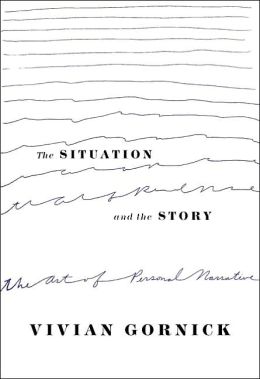
Situation and the story

In “The Situation and the Story: The Art of Personal Narrative“, Vivian Gornick explains the art of writing personal narrative by reviewing key elements like the persona (or narrator) of the writer, her writing voice, and the importance of knowing who she is at the point of writing. The book is broken up into four parts: Intro, Personal Essay, Memoir, and Conclusion. Gornick draws examples from famous books and essays, explaining the situation and story of each, thus causing the reader to pause not only to appreciate beautiful words, but also to break down and understand what makes a memoir or essay sing .

“Every work of literature has both a situation and a story,” Gornick writes. “The situation is the context or circumstance, sometimes the plot; the story is the emotional experience that preoccupies the writer: the insight, the wisdom, the thing one has come to say.” (page 13)

My copy is covered in red notes and underlining. There is just so much good stuff in this book.

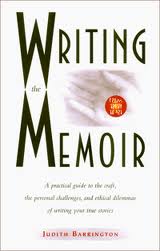
writing the memoir

If your not certain about the ins and outs of memoir, this book is for you. On the cover of Writing the Memoir: From Truth to Art by Judith Barrington, it states the book is “A practical guide to the craft, the personal challenges, and the ethical dilemmas of writing your true stories.” My writing instructor at Story Studio Chicago, where I participated in an advanced memoir workshop for two years, uses this book with her beginners class. In my opinion, it is a book even the most seasoned writer can glean knowledge from. The table of contents includes chapters on finding form, dealing with the truth, writing about living people, and getting feedback on your work. It also has short writing exercises at the end of each chapter.

“Telling your truths — the difficult ones and the joyful ones and all the ones between — is a big part of what makes for good writing. It is also what brings you pleasure in the process of writing.” (page 74)

If you write memoir or want to write memoir, this book must be in your library.

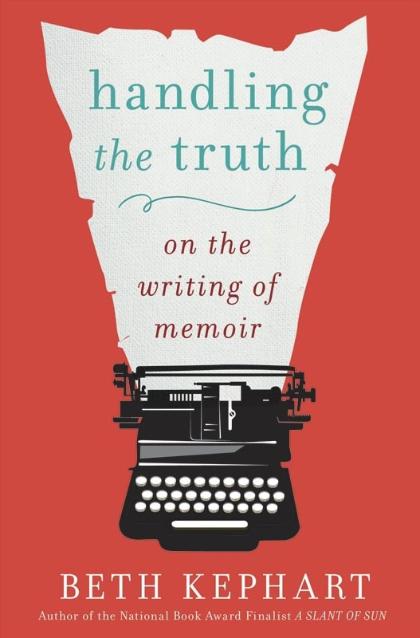
Handling the truth

Handling the Truth: On the Writing of Memoir by Beth Kephart just came out this year and I picked it up a couple of weeks ago. This book is not so much about the ‘how to’ of memoir, but more about the value of the genre of memoir. It is broken up into four parts: Part I: Definitions, Preliminaries, and Cautions, Part II: Raw Material, Part III: Get Moving, and Part IV: Fake Not and Other Last Words.

“If you want to write memoir, you need to set caterwauling narcissism to the side. You need to soften your stance. You need to work through the explosives — anger, aggrandizement, injustice, misfortune, despair, fumes — towards mercy. Real memoirists, literary memoirists, don’t justify behaviors, decisions, moods. They don’t ladder themselves up — high, high, high — so as to look down upon the rest of us. Real memoirists open themselves to self-discovery and, in the process, make themselves vulnerable not just to the world but also to themselves.” (Page 8)

See … you need to buy this book.

Attempting to write and publish a memoir is an arduous task. Start by writing, sharing your work, and reading these three books.

“Penetrating the familiar is by no means a given. On the contrary, it is hard, hard work.” (page 9)

Right on, Vivian.

I would add that it is worth it, if you are up to the task.

Seven No Nonsense Book Launch Tips for Broke Authors

Seven no nonsense book launch tips


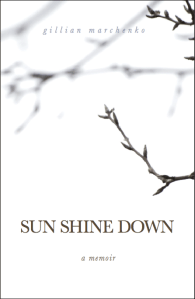
Sun Shine DownI am launching a book.

My memoir, Sun Shine Down, published at the end of August with T. S. Poetry Press. Eeek!

As a broke, green as the grass in mid-July first time author, I tackled the daunting assignment of launching a book like any other able-minded individual in North America.

I googled ‘book launch.’

In .02 seconds, reputable results-driven marketing and publicity firms jumped into my line of vision. These people surely could launch my book into the stratosphere!

But after some number crunching and a realistic talk with my husband about where hiring a publicist falls in the needs of a family of six (braces, soccer, therapy, FOOD), I conceded. We could not hire help for Sun Shine Down.

These days, whether we sign with a big publisher, a small press, or self-publish, we bear much of the responsibility for launching our own books. And it’s hard work.

If you, too, are a broke new author, here are seven no-nonsense book-launching tips:

1) Plan ahead

If you wait to plan your book launch until your book is out, you’re toast. Plan ahead. Start six months before you are to publish. Research, and consider elements of a book launch you will utilize.

2) Launch your book online

Social media is a marketing ocean. You’ve got Facebook, Twitter, Pinterest, Instagram … Where do you spend your time online? How can you introduce your book in those venues? With Amazon stomping on the book industry, it is a mistake not to market online.

3) Launch your book offline

Is a book party right for you? I’m hosting a party at a bar down the street from my house. I’m doing it on a Monday (because the venue is free then), providing appetizers, and using evites and Facebook events to publicize. Extra tip: Don’t call your gathering a book signing. Call it a book party. Who doesn’t love a good party?

4) Don’t spam people to death with your book

Not everyone is excited to hear about your book all day every day. Post about your book (especially on your Author Fan Page–don’t have one? Um, get going), but don’t post several times a day. It just makes you look full of yourself. The trick is fun, cool content, and looking like you’re not trying that hard even when you are.

4) Create a Facebook launch team

In an effort to build buzz about Sun Shine Down, I invited Facebook friends to join a super secret launch group. I offered perks for joining ( a free PDF advanced copy of the memoir, a thank you on the blog, access to a secret group, and interaction with the author) and requirements (help promote for five weeks, post about the book on your blog, etc.). My secret group has been the highlight of promotion so far. Why? Because relationships are being strengthened and we are having fun! It is also a great way to ensure Amazon reviews once the book is published (make it a requirement).  Read this post to see how I did it. 

5) Get help!

OK, I know that I sound like I am contradicting myself. But next time (God willing), I will hire someone or ask a friend to assist with some promotion. I’m talking about someone to help with a couple time consuming tasks and who is affordable (as opposed to a publicist who would do everything and is expensive). I’m talking a flat rate per month to run a blog tour or help with the launch group. I’d like not to have that pressure, and I am finding out with this book that there are virtual assistants and others who could fit this description. *Note: I LOVE publicists, so If I get to that point in my career when I can hire one, I probably will.

6) Create a new email address to send out official book launch news

I simply created a new Gmail account with the name of my book and merged it with my current email account so that when I send out press releases and other book emails, it looks official (instead of the author sending them, which she is 🙂 ).

7) Set expectations low

This is my Eeyore personality coming out, but I suggest you set your expectations low. Then you’ll be pleasantly surprised when something remarkable happens. Not an Eeyore? More a Tigger? OK, then expect like crazy. We are all different. In my experience, though, the people I thought would help publicize and raise excitement about Sun Shine Down haven’t. I did have one or two wild cards, individuals I knew for a short time long ago who have become cheerleaders and promoters complete with pom- poms and cardboard signs.

Here’s to successful book launches, and to many more hours with our butts in chairs, getting books written so that we can, gasp, go through the nonsense of launching again and again!

WordServe News: August 2013

Exciting things have been happening at WordServe Literary!

On the final post of each month you’ll find a list of Water Cooler contributors’ books releasing in the upcoming month along with a recap of WordServe client news from the current month.

New Releases

First HiredAnita Agers-Brooks has her debut book coming out, First Hired, Last Fired: How to Become Irreplaceable in Any Job Market (Leafwood).

****************************************************************************************

MountainsJulie Cantrell released the sequel to Into the Free, called When Mountains Move (David C. Cook).

****************************************************************************************

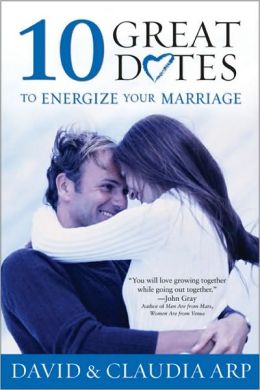
GreatDatesPeter and Heather Larson and Dave and Claudia Arp release 10 Great Dates: Connecting Faith, Love and Marriage (Bethany House Publishers)

****************************************************************************************

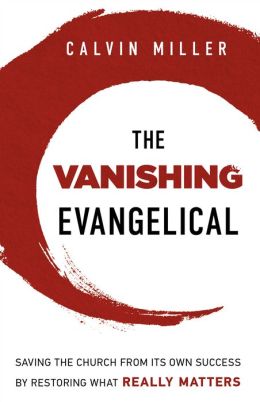
VanishingCalvin Miller’s last book, The Vanishing Evangelical: Saving the Church from its Own Success by Restoring What Really Matters (Baker Books).

****************************************************************************************

InventionOlivia Newport, The Invention of Sarah Cummings (Revell)

****************************************************************************************

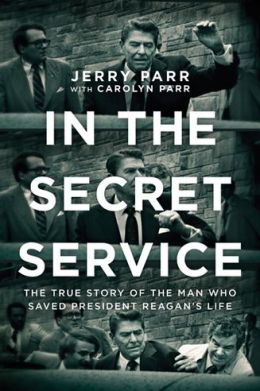
SecretServiceJerry and Carolyn Parr, In the Secret Service (Tyndale House Publishers)

****************************************************************************************

stillloloLauren Scruggs (with Marcus Brotherton) has her book Still Lolo coming out in trade paper (Tyndale)

****************************************************************************************

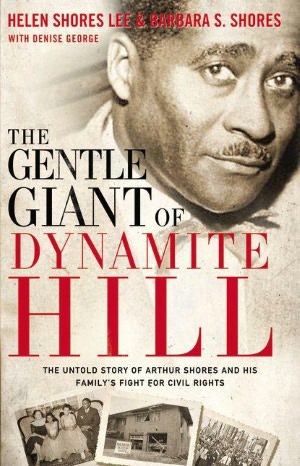
GentleGiantHelen Shores Lee and Barbara Shores (with Denise George) have their memoir of their Civil Rights champion father, The Gentle Giant of Dynamite Hill come out in trade paper (Zondervan Publishing Houses)

****************************************************************************************

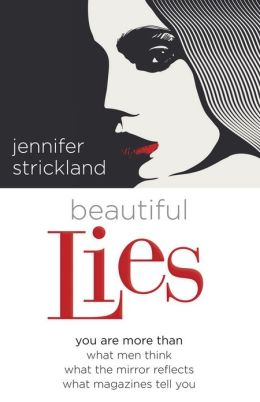
beautifulliesJennifer Strickland is releasing Beautiful Lies, book and separate Study Guide (Harvest House Publishers)

****************************************************************************************

TenaciousJeremy and Jennifer Williams released their moving memoir, Tenacious: How God Used a Terminal Diagnosis to Turn a Family and a Football Team into Champions (Thomas Nelson)

****************************************************************************************

FootballMike Yorkey has another book coming out in the Playing with Purpose series, this time on the lives of NFL football players (Barbour Publishers)

****************************************************************************************

New Contracts

Daniel Allan signed with IVP for a book called Deeper, a call for young men to look for ways to grow their roots as they transition from youth to adulthood.

Wintley Phipps signed with Tyndale for a book titled Living the Great Life (co-written by James Lund), in which he shares the secrets to living a fulfilled life by developing eight vital characteristics.

Jan Drexler with Love Inspired for her second novel. Congrats, Jan!

What We’re Celebrating!!

Becky Johnson and Rachel Randolph had a NICE article in the recent issue of Guideposts Magazine surrounding the release of their mother/daughter cookbook We Laugh, We Cry, We Cook, as well as a 4-part article in the huge website/blog postings, Beliefnet.

What can we help you celebrate?

Facing Your Fears as a Writer

Photo/TaraRoss

Write down for the coming generation what the Lord has done, so that people not yet born will praise him. (Ps. 102:18 GNT)

I’m always looking for ways to encourage people to tell the stories that matter most. As a writing instructor, I’ve often observed the need for others to tell their stories.

Passing along our faith and family stories helps us make sense of some of the crucial issues that we face in life. When Christians begin telling the stories that matter most, lives change and hearts heal.

But fear silences the voices of many Christians, preventing them from telling their stories. And if you’ve considered writing for publication for any length of time at all, you’ve probably faced the emotion of fear in your work. Many obstacles keep us from telling our stories—personal insecurities, writer’s block, or a variety of excuses.

Excuses. I can think of so many examples through the years when I just sat back and waited on someone else to do something that I knew I needed to do myself. And I can always come up with an excuse about why I can’t do something.

Before my own children became independent, I often reminded them, “Delayed obedience is disobedience.” I never wanted Adam and Tara to be afraid of me, but I knew delayed obedience might be dangerous and harmful at times. But even though my instructions were motivated out of my love and concern for them, they often resisted. Yet I persisted in my discipline. I prayed that they would learn obedience as children, so they would obey God and their God-given authorities as adults.

I even offer myself excuses now, when I don’t want to do something, like making my bed. What does it matter if my husband Dan does that? It’s his bed, too! And our unmade bed obviously bothers him more than it does me anyway.

But what about the things that God calls me to do? What kind of excuses do I use to attempt to justify my disobedience?

  • That’s not my “gift.”
  • I’m not trained to do that.
  • What do I have to say?
  • I’m not a “good” speaker (writer, teacher, blogger … whatever).

Insecurities. As I searched the Bible to try to find some answers to my problem of fear, I discovered that I was in good company.

In fact, when God called Moses to lead His people out of bondage, “ … Moses protested to God, ‘Who am I to appear before Pharaoh? Who am I to lead the people of Israel out of Egypt?’” (Ex. 3:11 NLT).

Moses knew that this assignment was way out of his area of expertise and experience. And Moses knew that he couldn’t do this impossible task in his own strength or with his limited wisdom. But his awareness of his own limitations proved to be one of Moses’ greatest leadership qualities. It forced him to become totally dependent upon God.

Do you think that God was shocked by Moses’ questions and concerns? I don’t.

Promises. In fact, God responded to Moses with the assurance of His presence, not His judgment. “God answered, ‘I will be with you’” (3:12).

I don’t believe that my questions surprise God, either. God still promises to always be with us today. “… And be sure of this: I am with you always, even to the end of the age” (Mt. 28:20).

And He also promises to provide all that we need to do what He calls us to do.

“And I am certain that God, who began the good work within you, will continue his work until it is finally finished … ” (Phil. 1:6).

What’s keeping you from telling the stories that matter most to you?

Photo/TaraRoss
YouTube/JoshWilsonVEVO (“I Refuse”)

Three Requirements for Christian Writers to Consider

Photo/KarenJordan

… The right word at the right time—beautiful! (Prov. 15:23 MSG).

I opened the book package at my mailbox and read the title, Renewed: Finding Your Inner Happy in an Overwhelming World

Renewed. I need to read this book today, I mused. 

But my “to do” list interrupted my daydream of relaxing in my recliner, enjoying a tall glass of iced tea, and reading Renewedby WordServe author, Lucille Zimmerman.

Renewed

I placed my copy of Renewed on the end table next to my chair and revisited my checklist. Speaking engagement? Check. Four Bible studies for newsmagazine? Four checks. Blog post? Maybe tomorrow. Three book proposals? Question mark. Post for WordServe Water Cooler? Oops. Just breathe … I guess the book proposals go on hold again. Drat.

Responsibilities. After a few minutes of brainstorming about my WordServe post, the phone rang. “Mom, do you have two large suitcases that the boys can borrow for next week?”

Next week? I cringed with this pressing reminder of my commitment to keep my youngest two grandchildren in Texas, while my daughter attended church camp with two of her older boys.

Requirements. When I return to my computer, I’m drawn to Renewed again, desperate for a word of encouragement and a sense of renewal. As I read the first chapter on self-care, Renewed offered the exact words that I needed for that moment. Later, a reference to Micah 6:8  reminded me of a question that I had failed to ask earlier as I struggled with my other commitments.

And what does the Lord require of you? To act justly and to love mercy and to walk humbly with your God. (NIV)

Did I read that right? Only three requirements? 

  1. To act justly.
  2. To love mercy.
  3. To walk humbly with God.

Maybe I should check out another translation. 

But he’s already made it plain how to live, what to do, what God is looking for in men and women. It’s quite simple: Do what is fair and just to your neighbor, be compassionate and loyal in your love, and don’t take yourself too seriously—take God seriously. (MSG)

Relief. I breathed a sign of relief, as I read the answer again. Then, I whispered a prayer of thanks to God for the healing power of His Word, the encouragement of my writing friends, and the gift of His call to be a writer.

In all my prayers for all of you, I always pray with joy because of your partnership in the gospel from the first day until now, being confident of this, that he who began a good work in you will carry it on to completion until the day of Christ Jesus. (Phil 1:4).

Lord, give us the courage to listen and obey Your Word.


Photo/KarenJordan

YouTube/CastingCrowns (Courageous)

What recent encouragement have you received from God’s Word or gleaned from another writer’s work? 

Memoir Writing: Scene, Summary, and Musing

Photo/KarenJordanWhat is a memoir? “I had to look up the definition of a memoir before I wrote my entry for this contest,” one writer confessed to me.

“Congratulations!” I responded, acknowledging her award.

This writer’s research paid off. Plus, she chose an inspiring, true story from her life, and she engaged her readers with a meaningful message using creative nonfiction techniques.

Being a judge of the contest entries, I also noticed that some of the other aspiring and experienced writers needed to do a little research before they wrote a memoir. So, I’m sharing here some of what I’ve learned as a memoirist.

My road to memoir writing started with enrolling in a class on writing for publication while in college. But I really didn’t hear the term “memoir” much until I took nonfiction writing classes a decade later.

One of my favorite professors at the University of Arkansas at Little Rock, Dr. Sally Crisp, recommended a very helpful book on that subject by another writing teacher, Judith Barrington. Barrington describes her book, Memoir Writing, as a “practical guide to the craft, the personal challenges, and ethical dilemmas of writing your true stories.”

Defining memoir. Since I’m knee-deep in writing a memoir with my daughter Tara, I needed a refresher course. Here’s my own memoir checklist.

  • Focused theme or topic. William Zinsser discusses the memoir in his book On Writing Well. “Memoir isn’t the summary of a life (like autobiography); it’s a window into a life, very much like a photograph in its selective composition” (136).
  • Narrative. Memoir tells a story about certain people, places, or events from the writer’s personal life.
  • Reflection. The writer’s thoughts and beliefs about the events are a vital part of  the memoir.
  • Conversation. The narrative voice reflects on her thoughts and feelings in an intimate, conversational, and honest manner.

Creative NonfictionThe memoir tells true stories using creative nonfiction techniques.

  • Contains all the elements of fiction.
  • Moves back and forth in time.
  • Requires believable dialogue, based on truth.
  • Switches from scene to summary to musing.

Photo/KarenJordanScene, Summary, and Musing. Musing takes a vital role in the memoir. But scene and summary provide two useful ways to move through the narrative.

Judith Barrington describes the memoir’s characteristics of scene and summary in cinematic terms. I’ve often used photographic terms to describe the editing process.

  • Summary. Here the writer focuses on the panoramic view. This may include numerous details, but examines the person, place, or event from a distance. For this viewpoint, I imagine myself taking a photo of a sunset or sunrise over a lake with my long-distance camera lens.
  • Photo/KarenJordanScene. For this macroscopic view, you zoom in for a closer look at your story and focus on a particular point of view or incident. Consider using some dialogue to illustrate your scene or another descriptive device to describe an intimate detail of that moment. In photography, I change my lens and focus for a closer view of a child or the reflection over the lake.
  • Musing. I visualize this characteristic of a memoir as the microscopic view, zooming in on the writer’s intimate feelings and thoughts. The reflective voice of the writer expresses her feelings and thoughts at the time of the event. She might choose to express her current understanding or the wisdom that she gleaned from her personal experience. For instance, I love to capture the memories by the lake close to my home–the awesome sunrises and the poignant moments with my grandkids. It reminds me to record the stories that matter most to me as a gift for the next generation.

Storytelling. In memoir, the writer tells a true story from her life, using her best creative nonfiction skills. As you examine your memoir for revisions, focus on your areas of strength and weakness. Do you tend to focus on summarizing your story rather than zooming in on some important scenes? Have you reflected on what a certain person or event means to you or what you’ve learned from this experience?

I challenge you to work on the weaker elements of your memoir. Your story will become stronger and even more meaningful, as you examine your scene, summary, and musing.

Photos/KarenJordan

What helpful insights could you offer about memoir writing?


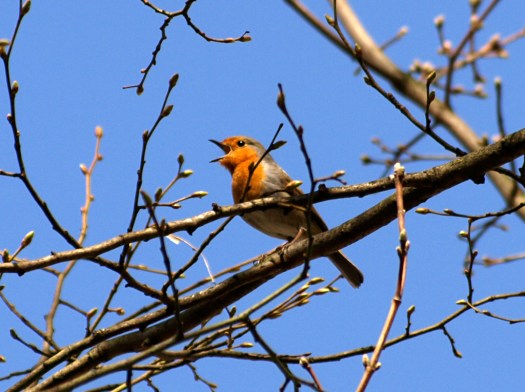
The Memoir and the Robin

978512_28037870

I sit in the living room, my laptop in front of me, open, alive, waiting for my fingers to type.

But I don’t. I can’t seem to think of one true word, let alone one true sentence. Papa Hemingway would not be impressed.

Thud… Thud…

My eyes follow the thud to the window that looks out to our chipped blue porch and the Japanese maple in the front yard. Within a month, leaves will bud. Eventually a glorious rust-colored blanket from the tree will shelter the porch.

Thud.

A robin flies into the window. She backs up, bewildered, and returns to her perch on a bare branch of the Japanese maple.

“Oh, you poor bird. I understand. I’ve hit my head against my reflection more than once in my life.”

The robin seems to catch her breath, and she’s off again, flying towards the window, searching for someone in the smudge filled glass. Herself? A lover? What does she want, and why doesn’t she learn her lesson? There’s nothing there for her but a hard, cold surface that will cause her pain.

And still, she flies into the window. Again and again and again.

Thud… Thud … Thud …

I watch her as I sit on our comfy, worn leather couch with a hole in the right seat cushion, the buzz of the laptop the only noise–that, and the recurring thud of the bird.

On writing memoir

As a memoirist, this happens, this hitting my head against a hard surface, when I get too introspective with my work. I am the writer, and the narrator, and the main character, and sometimes my roles mingle to the point of self-obsession and confusion. My desire to be perceived well, and to reach my personal predestined truth in the story turns me into a robin, fixated on my reflection, attempting time and again to break into something bigger than me, but really only hitting my head against a hard surface.

Annie Dillard says that you have to take pains in a memoir not to hang on the reader’s arms, like a drunk, and say, “And then I did this and it was so interesting.”

Thud.

The robin has banged her head against our window for three days. I’ve tried to deter her by closing the curtains and opening the window a bit, but to no avail. She returns every few moments, unaware that if she just shifts her focus there is a whole world to fly into and discover.

If a memoirist’s goal is for people to esteem her, to like her, to want to be like her, it will show in the work. The writing will fall flat, come across as inauthentic, and showy.

No, the memoirist should write for discovery. According to Andre Gide, a French author and winner of the Nobel Prize in literature in 1947, one doesn’t discover new lands without consenting to lose sight of the shore for a very long time.

A good memoirist is open to her story’s agenda. She participates with the reader, and diminishes the importance of her role for the sake of the universal truth found in her words.

“On the outskirts of every agony sits some observant fellow who points,” says Virginia Woolf. I would add that every good memoir has a point outside the visceral domain of the writer starting out. Our job is to bring ourselves and our readers to that point. Instead of a writer playing tour guide, the memoirist should rather find herself on the journey in the words. Then she will be able to fly right and free for discovery, and most assuredly get herself and her readers somewhere she would not have found on her own.