Another Sacred Moment: Launching My First Book

Photo/KarenJordanIn my first post on the WordServe Water Cooler blog few years ago, I wrote about “Embracing Sacred Moments” in our lives. In that short piece, I mentioned a couple of writing firsts for me—my first contract to write an article for a well-respected publication and my first call from a WordServe agent, signing me as a client.

This month, I’m experiencing another first—the launch of my first book.

But as I prepared to write this book, a sudden and disturbing vivid memory emerged from a time when I stepped out of my comfort zone to serve. I still feel the embarrassment of that day when I helped prepare the noon meal after a revival service in my hometown church.

A million doubts and fears raced through my mind that morning. Was my skirt too short? Were my heels too high? Were my clothes too tight? Would someone ask me too much about my personal life? Why did I even come here in the first place?

Since I was the youngest and newest member of the ladies’ group helping that day, someone nominated me to pass out rolls to everyone.

I stacked the rolls high on a large platter, hoping to avoid a second trip to the kitchen. But as I pushed the swinging door open with my back, I tripped and fell to the floor, propelling everything across the room.

I can still recall everyone in the room gasping at the spectacle I had made of myself.

BookCover/WordsThatChangeEverythingAs I wrote my first book, Words That Change Everything, my old fears and worries resurfaced, reminding me of that humiliating experience. Do I dare expose more of my failures, worries, and vulnerabilities with an even larger audience? What if I make a total fool of myself again in front of my friends, family, and total strangers as they read some of my life stories?

Then, I remembered what I learned from my earlier failed attempt in serving others. Forty years after I humiliated myself in my home church, the pastor’s wife invited me to speak in that same fellowship hall at a women’s ministry event. And I shared my humiliating “tossed roll” story, revealing some of my own worries and vulnerability.

God gave me an opportunity to revisit and overcome a moment of failure in the same context and venue, four decades later, as I stood on this promise from God’s Word: “My grace is all you need. My power works best in weakness” (2 Cor. 12:9 NLT).

So, even though I’m a little apprehensive about revealing some of my most intimate stories in my first book, I’m excited to share my story with the world—Words That Change Everything: Speaking Truth to Your Soul.

Why? Because I also believe in the power of story—as we share the stories that matter most, lives change and hearts heal.

Did my story remind you of a story in your own life?

Why Marriage (and writing) Needs a Third

Why Marriage(and writing)Need a Third

“Two’s company, three’s a crowd,” we are told. But sometimes that is not true. Both in marriage and in writing.

Writers can’t just write about writing. It’s tedious. Not to mention boring to the non-writer.

Nouns, verbs, and prepositional phrases can only interest a person for so long, but put those same words in a story, and a writer has the ability to capture imagination.

Writers need a third thing–something “to gaze out at” according to author Natalie Goldberg in her book, Old Friend From Far Away: The Practice of Writing Memoir.

Sometimes the writer has no plan or control of what that third thing will be.

“We must find the third thing,” Goldberg writes. “And we cannot afford to be fussy. How a pothole is formed holds our interest. A kind of cheese, a license to own a beauty parlor, a felt slipper, someone’s toothache, all are fodder for our pen….”

Or staples. Staples can be the third.

This week I decided to re-do my kitchen chairs. I can’t remember what fabric originally covered the chairs when my grandmother owned them. After my mom inherited the chairs, she covered them in a cream-colored fabric, material that was now showing years of stains:

  • Stains from family dinners of scalloped potatoes, ham, frozen peas, and orange jello served in goblets Mom and Dad received as gifts at their wedding in 1957.
  • Stains from years of grandchildren learning to eat cheerios with a spoon, but invariably milk dripped down toddler chins and pooled on the fabric.
  • Stains from card games around the table, with fingers needing to be wiped of popcorn grease, and the cushion serving as a giant napkin.

Decades of stains.

I flipped over the first chair, a testament to the importance of life around the table, to begin removing the material from the cushion. I encountered staples.

Many, many staples.

As I pulled them out, I began counting. Twenty…thirty…forty.

The kitchen table was soon covered with flying metal projectiles. Sixty…seventy…eighty.

recovering a kitchen chair

I began to laugh. I knew, without being told, that although my mom selected the fabric, my dad was the one who stapled the material in place. Although neither was alive to ask, the unseen surface of the bottom of the cushion told the tale of a man who was legendary for taping the wrapping paper around Christmas presents so securely, that a knife or scissors was needed to open the package.

Mom was the project idea person. Dad was the implementer of the plan. 

Like writers, Goldberg contends, couples also need something “to gaze out at” for time cannot always be spent looking face to face, but rather, also, side by side.

Projects were my parents’ third. As was family. And faith.

I pulled out the last remaining staples holding the dingy cream fabric. Eighty-five. Did the chair cushion really need eight-five staples to hold the material in place?

“What are you doing?” my husband asked, walking into the kitchen.

“I’m re-counting the staples,” I replied, a bit distracted as I remembered yesterday moments around a Christmas tree. (To his credit, he did not ask why I was re-counting staples.) “I wonder if I can write a blog about staples?”

“I think you have proven that you can write a blog about anything,” he said.

I smiled at the compliment, from a man who has lived with my writing third, not an interest he shares, but a gifting he gives me space to pursue–which in itself is one of our thirds.

Family. Faith. And applauding one another’s dreams. Each has given us something “to gaze out at.”

Eighty-five staples do not hold us, yet we walk side by side.

What is your third?

5 Tips for Sharing Your Faith Stories

imageThe Bible encourages Christ followers to share their life lessons of faith with others.

Men. The apostle Paul gave Titus this advice as he prepared to teach men.

.  .  .  talk to them; give them a good, healthy diet of solid teaching so they will know the right way to live  .  .  .  teach the older men (to) enjoy everything in moderation, respect yourselves and others, be sensible, and dedicate yourselves to living an unbroken faith demonstrated by your love and perseverance.” (Titus 2:1 The Message).

Women. Paul also gave Titus instructions about teaching the older women, offering him some instructions concerning issues that concern all women (Titus 2:3-5).

Today. We might be able to glean some good stories with writing prompts from these passages. But how can we share our own faith if we can’t communicate our personal stories, identifying the stories that matter most to us?

As I prepared to speak to a group of Christian women, encouraging them to share their faith stores, I recalled an important challenge in 1 Peter 3:15: “Always be prepared to give an answer to everyone who asks you to give the reason for the hope that you have” (NIV).

Prompts. The following writing prompts helped me prepare to tell my faith story, particularly my personal “come to Jesus” experience.

  1. Before Christ. How would you characterize your life before you trusted in Jesus Christ? [Attitudes, emotions, concerns . . . ]
  2. Faith Crisis. What were the circumstances in your life that led you to trust Jesus Christ as Savior?
  3. Salvation. When and how did you respond to accepting Jesus Christ as your personal Savior?
  4. Christ follower. How would you characterize your life today since you chose to follow Christ? How is your life different now?
  5. Scripture Promises. What Bible verses have helped through a crisis of faith?

What resource or practice has helped you communicate your faith stories?

10 Tips For Memoir

10 memoir tips

You have a unique story that only you can tell. And the way you tell it matters. Even the world’s best story—winning the World Cup, walking on the moon, dipping into death and returning to life—needs to be told well. Here are a few ideas to help you write your story in the most compelling way.

1. Show, don’t tell.

Allow reader to discover what you have by painting colorful moments, conversations, conflicts, etc.

2. Ignore your internal critic.

Silence the inner voice that says you’re doing it wrong or should probably just stop and make a sandwich. Write now; edit later.

3. Tell the truth.

Notice your own resistance to truth-telling. Being bullied by an instinct to protect yourself or others deprives readers—and you!—of the surprising gifts truth brings forth.

4. Develop a clear theme.

Are you after adventure? Hunting for healing? Identifying your fundamental theme, or “red thread,” allows you to skim off extraneous material in the editing stage.

5. Exercise chronological creativity.

Sometimes telling your story from conception to the present moment works. Be open, though, to the ways a reordered narrative might serve the story.

6. Employ dialogue.

Dialogue lubricates the flow of the narrative. It gives the reader critical insight into characters without telling the reader about them.

7. Record inspirations.

Keep a small notebook in your pocket or car or purse to jot down ideas, insights and details. The best ones come at the most inconvenient times.

8. Create intrigue.

“Dangling a carrot” keeps the reader reading! When you allude to something ahead, a curious reader keeps reading. Useful at end of chapters. Employ sparingly.

9. Avoid painting yourself as the victim or the hero.

Abigail Thomas writes, “Memoir should never be self-serving, even accidentally.” Avoid “poor little me” and “good little me.” Jeanette Wall’s Glass Castle does this beautifully.

10. Read memoir. But be you.

Notice when memoir makes your heart soar (or sore) and when you want to set the book down to take out the trash. Don’t try to sound like Anne Lamott. Be you. It’s better that way.

Cheering you on,

Margot


Walking Down Memory Lane: Recording Your Legacy Stories

Photo/KarenJordan

What memories do you recall of your hometown?

Christmas always brings back a lot of memories from my hometown, Silsbee, Texas.

My husband Dan and I grew up in the same town in Southeast Texas. So, even though he’s a few years older than me, we share a lot of memories of our hometown. Not only were we both born in that small Texas town, our parents grew up there, too. So, a lot of our relatives and friends still live there. And we still make trips back there when we can.

Fun times. Both of our children were born in Southeast Texas, too. But since we moved away when they were young, they only remember the holidays, summer vacations, and fun times with their relatives there.

Painful moments. Some memories are difficult to embrace–like the death of loved ones or mistakes from our past. But I’ve discovered the importance of recording some of my painful memories, especially since both of my parents are gone now.

Writing down some of those narratives brings healing to my soul. Plus, if I don’t write my family stories down, I know they will be lost forever.

Legacy stories. I should have written down the stories my mother and dad told me long ago. But at the time, I didn’t see any value of recording them.

I still hear those stories from my other relatives when I go back to Silsbee for holidays, weddings, reunions, and funerals. I’m trying to work out a plan for jotting down more of those stories as I remember them.

Certain songs also trigger memories for me. Although I moved from my childhood home several decades ago, Kenny Rogers‘ hit, “Twenty Years Ago,” always takes me back in time, reminding me of my past.

As you listen to the song below, I hope it helps you recall some of the stories from your hometown, too. But be sure to write them down. Someone you love might be blessed by your stories. I also hope you’ll share a story with our readers in the comments below.

YouTube/RareCountry2 (“Twenty Years Ago – Kenny Rogers)

Did this video remind you of a story from your hometown?

Writing about Thanksgiving and Food

Photo/Jordan

If you decide for God, living a life of God-worship, it follows that you don’t fuss about what’s on the table at mealtimes … (Matthew 6:25 MSG).

Food, food, food! Why does everyone make such a big fuss about food during the holidays? I’m always focused on food! Either I’m overeating, dieting, or trying to feed someone else. I can’t remember one day of my life that I didn’t focus on food at some point.

So, how can my worries about food help my spiritual focus? Over the years, I’ve discovered that my hyperfocus on food is often a warning sign for a much deeper problem than just trying to meet my physical needs.

Needs. While we were seminary students, I first learned how my own worry about food could actually motivate me to seek deeper spiritual insights.

At seminary, we lived on a much lower income than most of our family and friends. Often we didn’t have enough money for the food we needed for our family.

Miracles. God used that problem to capture my attention, and I saw Him provide in miraculous ways for some of my friends. Groceries would be left on their doorsteps. Money for food would arrive in the mail. Or they would discover some random source of free food, like day-old bread or vegetables discarded from the grocery’s produce department.

Tips. Intrigued by my friends’ stories, I began to ask to God to help me find ways to deal with our food needs. And I discovered many tips for stretching my food budget with recipe ideas and coupons. My friends and I found that we could all stretch our food budgets by sharing our resources. When we gathered together for a meal, each family would bring their menu contributions.

Manna and quail. In Exodus 16:4, “God said to Moses, ‘I’m going to rain bread down from the skies for you. The people will go out and gather each day’s ration. I’m going to test them to see if they’ll live according to my Teaching or not’” (MSG).

I joked about identifying with the Israelites in the wilderness as God provided manna and quail for them to eat. But as I experienced God providing for my own family, like He did for His children in the Old Testament, I searched for more answers to my everyday problems in the Bible.

Traditions. Before my seminary days, I never thought about asking God to provide for my family’s needs, especially our food. Yes, we taught our children to express their thanks before our meals. But my prayer of thanks usually came after I had purchased groceries and prepared our meals.

So, I examined our mealtime prayers and Thanksgiving blessings. Could they simply be a family or religious tradition? Had I ever offered my mealtime prayers with a heartfelt gratitude for God’s blessings?

Diets. I still struggle with worry and my spiritual focus on food from time to time. Even now, as I try to eat a healthier diet, I realize that I must stop and ask God for direction every day–sometimes moment-by-moment–as I seek answers to my problems and needs.

As I prepare to enter into this season of Thanksgiving once again, I pray that I will remember this promise from God’s Word.

… The Lord is near. Do not be anxious about anything, but in every situation, by prayer and petition, with thanksgiving, present your requests to God. And the peace of God, which transcends all understanding, will guard your hearts and your minds in Christ Jesus. (Phil. 4:5-7 NIV)

What stories about food come to mind as you prepare for this Thanksgiving season? Have you recorded them?

Spelunking and Writing in the Deep Dark

When my husband was in college, he and a group of friends went spelunking in an undeveloped cave called Devil’s Icebox near Columbia, Missouri .

Unbeknownst to them, while they spent hours exploring the 6.25 miles of underground passages, it had started raining. When they attempted to return to the entrance, through a narrow tunnel so low they had to meander like snakes on their bellies, they noticed the water was rising. Forced to grope for breaks in the rocks in the tunnel’s ceiling, they were able to gasp for breath in the air pockets.

All the flames in their carbide headlamps became drenched in their scramble to get out of the narrow section and save their lives.

Their lights extinguished.

spelunking

Carbide headlamps or acetylene gas lights were popular with cavers at the time for the bright white light they produced. Unfortunately the flint system–like a lighter–needed to be kept dry.

My husband and his friends, having survived the narrow section, found themselves stranded in utter blackness.

And the water was rising.

Eventually one of the girls in the group found one dry corner on her shirt collar. They dried the flint, lit the lamps and exited to safety.

Despite that experience, my husband still enjoys exploring deep underground caves, corkscrewing his body through narrow passages and entering the unknown.

Me? Not so much.

But I have been in the Deep Dark. My Deep Dark has been cancer.

Perhaps you have your own difficult place.

In the Deep Dark we find ourselves in unknown passageways wondering how in the world we are going to turn on our lights and find our way home.

In the meantime we wrestle in darkness.

Darkness of the unknown. Darkness of our deepest fears. Dark nights of the soul.

Where we wonder where God is in it all.

I have waited on a doctor’s examining table and known the deep darkness. I have sat at a dining room table holding hands with my parents after hearing the diagnosis of my mom’s stage four and heard Dad pray to “our God who is in control.” And I wanted to shout, “God is in control?”

The Deep Dark is a place for shouting. A place for questioning. A place of fumbling for the light.

As writers, one of our challenges is to explore the Deep Dark and take our readers with us as we plunge the depths. One of our most difficult responsibilities is to put into words what people are afraid to whisper in the shadows.

But we don’t leave our readers there.

With our pens … with our pencils … with our keyboards … we craft light in the passages to lead our readers home, home to a God who sees in the dark.

“If I say, ‘Surely the darkness will overwhelm me,
And the light around me will be night,’
Even the darkness is not dark to You,
And the night is as bright as the day.
Darkness and light are alike to You.”  Psalm 139:11-12 NASB

So grab your carbide headlamps. It’s time to go spelunking!

Bad Writer, Bad Writer

Working with Me, Myself, and I isn’t always what it’s cracked up to be. Now don’t get me wrong, they’re great people, (for the most part), but when they’re bad, they’re really bad.

Every one of them has a propensity to be a bad writer. But maybe not in the way you might think.

Stop When You Are DoneThey, (me), are bad in the realm of behavior. For instance — right now I should be writing the memoir I’ve been hired to pen. It’s a fascinating story of a true miracle man, and I am honored he asked me to help him tell his true story of supernatural experiences.

I should be chomping to listen to the audio recordings of interviews we’ve done. I should be rushing to relay my time with some of the top cardiologists in the world at Mayo Clinic. But am I doing either of those things?

No.

I’m fighting myself. The part that wants to do anything BUT make the most of this once-in-a-lifetime opportunity I’ve been given. Here’s what today consisted of:

  • Earlier, I caught myself popping onto Facebook without realizing I was doing it.
  • I keep checking the rankings of my latest release, Getting Through What You Can’t Get Over. (Granted, at this writing it’s in its twelfth consecutive week listing among Amazon’s best sellers, so it’s hard to ignore, especially when my author’s heart is thumping like a beaver tail on a warm spring day.)
  • I set up two promotional giveaways for Getting Through. One on Amazon, and one on Goodreads.
  • I accepted an invitation from a local TV station to record four, one minute devotionals. Of course, my brain started to buzz with possibility as soon as we confirmed the deal.
  • And all of this spurred a great idea for a WordServe blog post, so I had to jump over here before the inspiration leapt from my brain.

I hope you understand. I’m not saying any of the things I’m doing are wrong, in their appropriate time and setting, they are each very right. We need to stay relationally connected with our readers and our network of fellow writing professionals. It’s important to keep momentum going when a new project is launched into the world. And who doesn’t want to share great insights with our WordServe friends and family?

BreakdownBut how do I ensure I finish the project I was hired to write? First, I need to give myself a little grace. Enough to brush away unhealthy guilt, but not so much that I keep allowing poor behavior to make me a bad writer. When I give myself the level of patience I offer others, a breakthrough often follows.

I also take a few to celebrate the good things. Excellent reviews on Goodreads and Amazon. Strong sales rankings for Getting Through What You Can’t Get Over. New opportunities to spread a message of hope and healing for the hurting via television. All blessings, I couldn’t conjure or imagine — these are gifts from God. So allowing myself to express gratitude is in order. Knowing if I focus only on the gifts instead of the Gift-Giver, I’m out of line.

Finally, I set goals. A target keeps me accountable, even when Me, Myself, and I try to distract me from the work at hand. Word count — that’s the key for me. No matter how tired I am, I push toward the prize, reaching that daily word count before going to bed.

Goodreads Review Getting ThroughWith a shift in mindset, I’m now bathed in fresh discipline. A self-imposed word count waves in front of me, one I will meet before retiring. A grateful heart beats in my chest with new praise. And I’m almost done with this blog post.

As I process all of this, I realize — I’m not a bad writer, I’m a human one. At the end of the journey, it’s what connects a reader to my message. Real, authentic, raw. Word after word, step after step, Me, Myself, and I are helping change the world. All it takes is one positive review or reader response to remind me why I keep on keeping on. What I experience resonates with others — the writing comes from the living.

How a Non-Writer Like Me Got Published (conclusion)

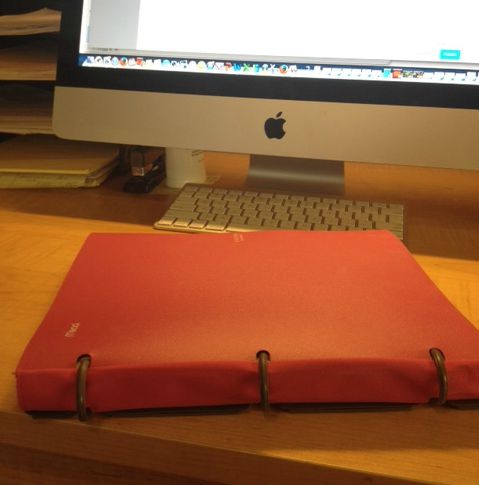
(Continued from Part I, Part II and Part III) Image, pink binder

I will never forget the feeling that day when I collated thirty chapters, punched holes, and neatly stacked all 330 pages of my first draft into a pink, soft-cover binder. I wasn’t Rocky at the stop of the stairs with pumped fists, but rather felt a peaceful satisfaction unlike any I’d ever experienced. It was a book in my hands, and I’d written it.

At the prescribed time, I emailed a digital copy to Jim Lund, the editor who had agreed to help me. His feedback arrived about three weeks later.

Jim’s comments were mostly about structural issues. The timeline was chaotic and he had trouble following what happened when. We shuffled chapters and paragraphs, and “trimmed” unnecessary copy. For example, when describing the time Annie broke into our upstairs bedroom, I’d “squirreled” a three-page tangent about the bats that flew into our house throughout that entire summer. “Kind of interesting,” Jim said, “in a creepy sort of way. I’d trim this.” “Trim” being the kind word for “chuck it.”

Over a period of months, I integrated Jim’s recommendations into a cleaner draft. I read and re-read that manuscript dozens of times, sometimes aloud, and fine-tuned the cadence and the prose into a finished product that sounded like me. It was then ready for beta readers.

I paid Office Max $110 to print eleven copies of the manuscript. I then assembled the pages into inexpensive binders and began to share my work with friends and family. Copies went to my brother, Paul; to Annie, of course; my son, Jeff; a couple of dear friends; my pastor’s wife, Kari; plus my therapist and the four women in our long-standing support group. My husband, Pete, continued to show little interest in reading, remaining insistent that it took me 330 pages to say what he likely would have said in 11.

I can’t remember a time when I ever felt so vulnerable… and I was terrified.

It’s a huge commitment to read someone’s work, especially 330 pages of it, and comments began to trickle in over a period of weeks. “This is good, Barb. This is really, really good. I read tons of books and frankly could not put this down.”

Yeah… that’s what friends are supposed to say.

I continued to edit and trim, ultimately heeding the advice of others and slashed/reworked/condensed the first few chapters. I couldn’t read a paragraph without reworking it, and wondered if I’d ever know when the book was done.

In the meantime, I bought hundreds of dollars worth of books on self-publishing. Jim taught me that only famous people received publishing deals these days, or people who had developed strong national platforms. He thought my story was powerful, but I was unknown. Completely unfamous.

Nevertheless, after two years of hard writing, I thought it would be fun to query some agents and see how the process worked. Maybe I’d get some helpful feedback. I’d already drafted a query letter in a “How to get your book published” class up at our community college. Next I needed to write a proposal, and Jim provided some templates.

Writing the proposal was miserable. While my business background proved helpful, I found this part of the process a chore. The manuscript was written first-person past tense, yet Jim instructed me to write the proposal in third-person present tense. So each of the thirty plus chapters needed to be condensed and translated into a different form of speech. It was a grind, and I shelved the book for months. This just wasn’t going to happen.

Until… until, I felt the nudge again. “It’s time,” said the voice within my own.

Two days later I sent a query letter to two agents, and both responded within a week. Requests for the proposal followed, and the manuscript followed after that. My brain could scarcely take in the enormity of what was happening.

One of the agents was the wonderful Alice Crider and she signed me with WordServe Literary. Within a few weeks, Alice had secured two publishing offers.

grunge image of a field

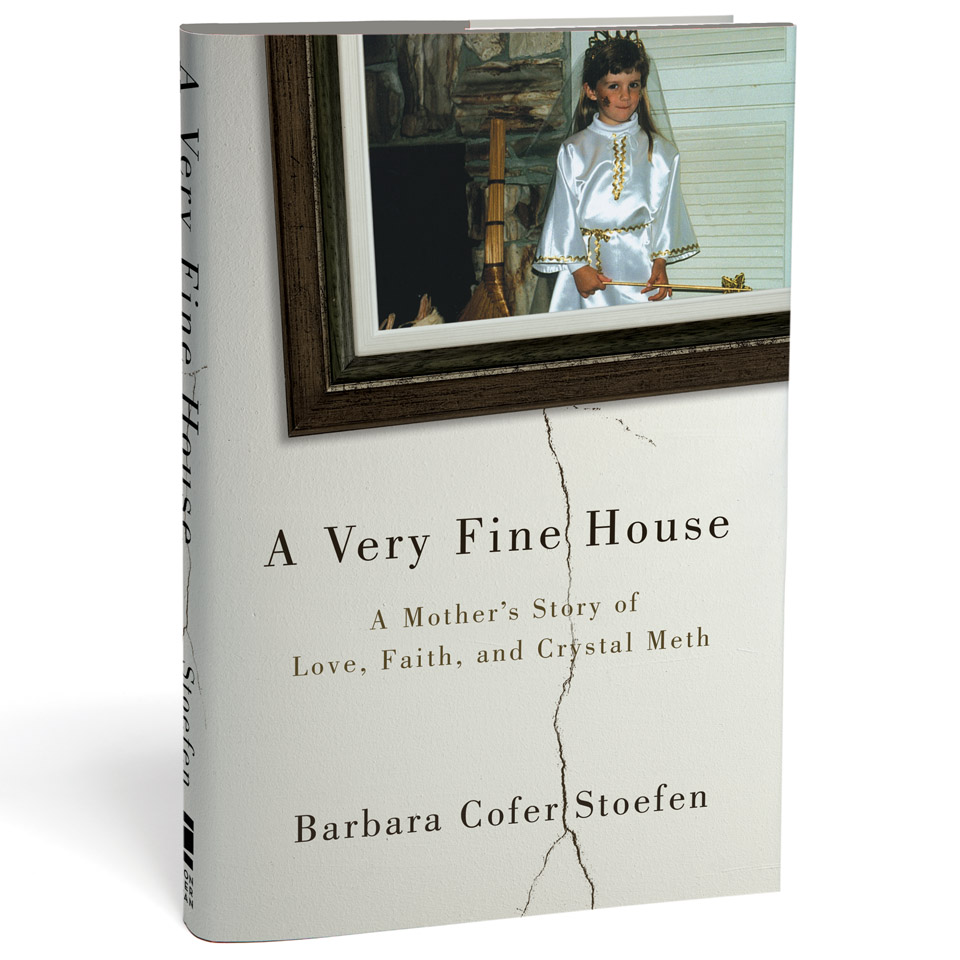
The rest is history, as they say. I’m not a famous author by any means, but I am an author nonetheless. It was four years after I received that first nudge from God to “write a book about the gifts you were given,” that Zondervan released A Very Fine House: A Mother’s Story of Love, Faith and Crystal Meth. They even retained my working title.

Miracles can and do happen. First was my daughter’s return from the abyss of drug addiction. Then a book followed about the gifts, the lessons learned. Whew. Both experiences have strengthened a simple faith, and changed me forever.

Impossibility: Five Important Truths

Photo/TaraRoss

Sometimes God leads us to do the impossible.

This morning as I waited for the sunrise to go on my walk, it started raining. I thought, Oh, no! If I don’t go for a walk now, it won’t happen today.

Simple problems. Sometimes the simplest challenge can seem impossible. I also know that my emotions lead me to exaggerate my problems at times.

Life and death issues. I don’t intend to compare my insignificant problems with the life and death issues that others are facing right now. I’m aware that many people face horrific, painful circumstances every day. And as I look at my circumstances in light of the needs of others, my problems often seem trivial.

Photo/KarenJordanCrises in Spain. My writing life often pushes me out of my comfort zone toward some “impossible” dreams. It led me into the academic world where I faced all kinds of uncomfortable situations. My most memorable learning experience occurred in Spain.

I wrote a previous post on the WordServe Water Cooler about my academic journey in Salamanca, Spain, “Sergio: A Memoir from My Writing Life.” During that summer in Spain, God revealed His faithful guidance and strength as I faced my limitations and weaknesses.

Photo/KarenJordanImmersed in another culture and language, I discovered I had taken on an academic endeavor far beyond my abilities, and I felt totally incompetent to complete it. My personal weaknesses became painfully obvious, as I experienced the reality of my limitations.

I’d been pacing myself as I pursued a course of study as a nontraditional student, commuting to school from home. But after a few weeks in Spain, without warning, I crashed—physically, mentally, emotionally, and spiritually. Like an athlete, I hit the wall, suddenly losing all my strength after a long, difficult journey.

Spiritual Truths. I rediscovered five important spiritual truths about impossibilities during my painful summer of learning in Spain.

  • Some things are impossible to do in my own strength. “Humanly speaking, it is impossible …” (Matt. 19:26 NLT).
  • All things are possible with God. “… But with God everything is possible.” (ibid.).
  • I can do anything God calls me to do. “… I can do everything through Christ, who gives me strength” (Phil. 4:13).
  • God will complete the work that He began in me. “ And I am certain that God, who began the good work within (me), will continue his work until it is finally finished …” (Phil. 1:6).
  • God gives me His strength, when I am weak. “That’s why I take pleasure in my weaknesses, and in the insults, hardships, persecutions, and troubles that I suffer for Christ. For when I am weak, then I am strong” (2 Cor. 12:10).

Reflection. These promises from God’s Word continue to encourage me as I face the impossibilities of my writing life. And I’m thankful that God offers His powerful promises to all who choose to believe His Word.

I’ll never forget some of the painful lessons I learned in Spain—and I still bear some of the scars from that experience. Now, I try not to take on more than I can handle, since I’m more aware of my limitations. In fact, I hit the wall faster and more frequent than ever as life takes its toll on me. So, I’m trying to stay focused on the course set for me.

Remember this promise as you face your impossible dreams and goals: ”Humanly speaking, it is impossible. But with God everything is possible.” (Matt. 19:26 NLT)

What seems impossible for you today? Does your situation seem hopeless, difficult, or ridiculous to even consider?