
 Value-added describes the enhancement a company gives its product or service before offering the product to customers. Value-added applies to instances where a firm takes a product that may be considered a homogeneous product, with few differences (if any) from that of a competitor, and provides potential customers with a feature or add-on that gives it a greater sense of value….Investopedia.com
There you have it, folks – a clear definition of “value added,” a key concept in today’s marketing strategies. If you’re a hotel, your “value added” may be a free breakfast, or bonus loyalty points. If you’re a tire dealership, your “value added” may be a discounted fourth tire after the purchase of three. If you’re a writer…..ah….if you’re a writer….what if you’re a writer?
I’ve been grappling for years with the idea of my “added value,” and I’ve finally come up with a few guidelines that might help you work on your own. As the definition above points out, we writers offer a fairly homogeneous product – writing – so our challenge is to distinguish ourselves from other writers by offering readers something in our work that makes it stand out as having more ‘value’ than other similar products of writing. To identify your “added value”, consider these questions:
- What do my readers want from me that they won’t get from someone else? In the case of my murder mysteries, I relied on detailed accurate information about birds to appeal to my readers, so that reading my novels was like a virtual birding trip. Readers often told me they knew the restaurants where my characters ate, or that they had actually visited the real locations named in my books. That familiarity made the books personal for readers, and even inspired a few vacations for readers who wanted to add bird sightings to their life lists. That’s added value.
- Do I provide unique extras along with my book? A common extra is a Reader’s Guide at the end of your book for book club discussion. If you are tech-savvy, you can even offer to “attend” book clubs via Skype or other online meeting platforms. That’s a valuable benefit for many readers! Other extras include links to online journaling or videos that supplement your text. Even questions for personal reflection (and the space to answer them) is a nice extra used by many nonfiction writers in their books.
- What does my reader need? Ultimately, “value added” is about giving your readers more of what they value. To do that, you have to know your audience and consider what they would regard as additional benefit from reading your work. When I wrote my memoir about overcoming anxiety thanks to our adopted rescue dog, I included endnotes to refer readers to research into depression and anxiety; I’d found those resources helpful in my own recovery and wanted to share that with readers. I also invited readers to email me about their own healing experiences with adopted pets to broaden the conversation about the therapeutic effects of animals (and three years after the book’s publication, I still get wonderful emails from readers about it).
Have you identified your “value added” yet?


 My heart pounded as I braved my re-entry into my writing space. I simply did not want to work on another uninspired blog post. Why, I didn’t know. But I knew I needed to identify the source of my resistance to what I’m passionate about—writing.


 Remember all those things you were going to do this year to update and enhance your online presence, like upload recent photos, add new publication credits, revise your bio? With 2017 approaching the half-way point, here’s a checklist to remind you to take the time now to tackle that list and mark off the tasks. Not only will it make you look active and engaged, but many social media platforms automatically post to your networks the changes you make to your profile, which means you get a boost in exposure. And that’s always a score for a writer…as long as it’s good exposure, that is!
 I think every published author wishes they could go back in time to whisper in their younger self’s ear. Doing so would certainly save volumes of time and energy. I’m sure five years from now, I’d wish for the opportunity to tell today’s me something I need to know right now.
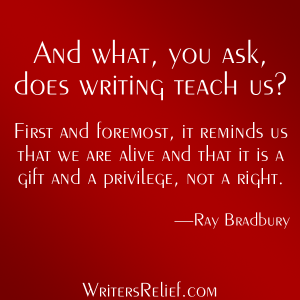 Read as much as you can. Phrases such as, “Great writers are great readers,” hold a wealth of truth. The more we study, the more prepared we are to succeed. Reading teaches us the subliminal art of sentence flow, heart tugs, and scene staging. It also shows us what to avoid, as we learn from the mistakes of others. It’s the best motivator I know.
 Set time-stamped writing goals. I’ve really let this one slip lately, and my work is showing it. But my One Word is Reset, so I am resetting my goals. The difference between a dream and a goal is a measurement. So my refreshed writing goals include a minimum of 5,000 words per week. This reasonable number allows for flexibility, while pushing me beyond a normal comfort zone. It’s doable.
 I can write until my fingers are numb. I can start writing at dawn’s break, pushing until the wee hours of the next morn, but if I am not inspired, it’s all for nothing. My personal inspiration come from prayer, provision, and praise for my Maker. He’s the one who gifted and called me. This is my most powerful secret.
 WordServe Water Cooler