Marketing Love

Striding down the endless hallway of the Mayo Clinic, I passed hurting people on all sides.  This wasn’t about being heroic; I simply wanted to make my day about more than a doctor appointment.

“Okay, Lord. Who?”  My book felt sweaty in my hand.

Copy number one went to the sweet lady in a wheelchair. “Oohhh,” she said, pursing  fuchsia lips.  “It looks wonderful.  Thank you, Dear.”

Copy number two returned to me with the cold shoulder of rejection.  I kept walking because I couldn’t shake off the possibility that God might still want to do something. Besides, I was stubborn and didn’t want to go home with the book.  When I got to the end of the hallway, I discovered I’d inadvertently funneled into a large waiting room.

“Okay, God.  What now?”

Doing a three-sixty over a sea of people, I tried to look inconspicuous.  Then, with a puff of a prayer, I picked a pleasant-looking lady.  She’d be the one.  I took a deep breath and plopped myself down with only a chair between us.

After a minute of pretending to read my own book, I cleared my throat.  It worked.  We made eye contact.

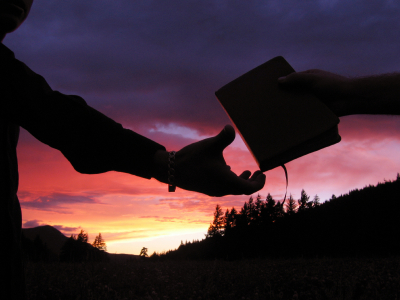
“Hi,” I began.  “This may sound strange, but I prayed God would lead me to someone I could bless with this free inspirational book, and I feel it’s you.  May I give you this?  I wrote it.”

Her eyes lit up.  “Oh, bless you,” she said, glazing with tears.  No fanfare, just a simple exchange.  I went home happy and bookless.

Two or three weeks went by and apart from a few imaginations of finding “A Friend in the Storm” in a thrift shop, I basically forgot about my give-aways.  That is, until three days ago, when I received this heart-stopping email from Sara, a friend I hadn’t talked to for months:

Dear Cheryl,

I talked to my neighbor & friend about 2 weeks ago, Krista Flint.  She had an amazing story of being touched by God’s love through a stranger.  And that stranger was YOU!  It gave me goose bumps to hear of how she had been going through so much and that you sat beside her in the waiting room and gave her your book.

She was so blessed by your words, kindness, & the power of your poems. She said that she knew that God was near, but it was so comforting to hear it from someone! So I wanted you to know that your choice to follow God’s nudge to go to the waiting room and give “someone” your book was exactly what God planned for you & Krista!! It was so exciting to hear how God did that for both of you.

Sara’s P.S. explained that Krista was a breast cancer survivor.  Later, the same day I gave her my book, she was in a major car accident.  Although her car was totaled, she somehow managed to make it through it okay.  “A Friend in the Storm” gave her peace and reminded her that God has a purpose.

“Make use of every opportunity.”  Ephesians 5:16

When we ask God to go before us and use us for His glory, He makes a way.

Until heaven, we can’t possibly grasp all the ways God uses us to reach others.  We simply rejoice in these glimpses.

Giving away books is only one of many ways we can be God’s messengers.  We can also share personal notes, Scripture cards, and post cards or business cards with thought-provoking quotes or concepts from our books.

One time, when I gave a waitress a poem card, she threw her arms around me and burst into tears.  The Lord used a simple poem to reach into her heart and start a healing conversation.  Don’t you love how the Holy Spirit works behind the scenes?

How do you share marketing love?  I’d love to hear stories of how God used you and your words.
Market to the Front of Your Own Parade

It’s my first post here at the WordServe Water Cooler, and I’ve been racking my brain trying to find something unique and helpful to share with a group of experienced and prolific writers like yourselves. For the last several years, I’ve hidden behind authors, quietly helping them with publicity, blog tours, and social media. After taking a year “off” to birth and raise a baby and to start my writing career, I find myself having to actually implement all of the marketing advice I’ve offered to others. I now have to build my own writing platform. Even with my experience, it’s scary and overwhelming.

So many other people are more competent than I am when it comes to writing, marketing, social media, cooking, healthy living, parenting…and the list goes on. When I start to think of all the ways I’m under-qualified to write and market a book about food, family, and faith, I’m tempted to become crippled with fear.

This morning, I was reading a book to my 10-month old son and these words jumped out of the page at me.

Climb any mountain…climb up to the sky!

Make a big splash! Go out on a limb!

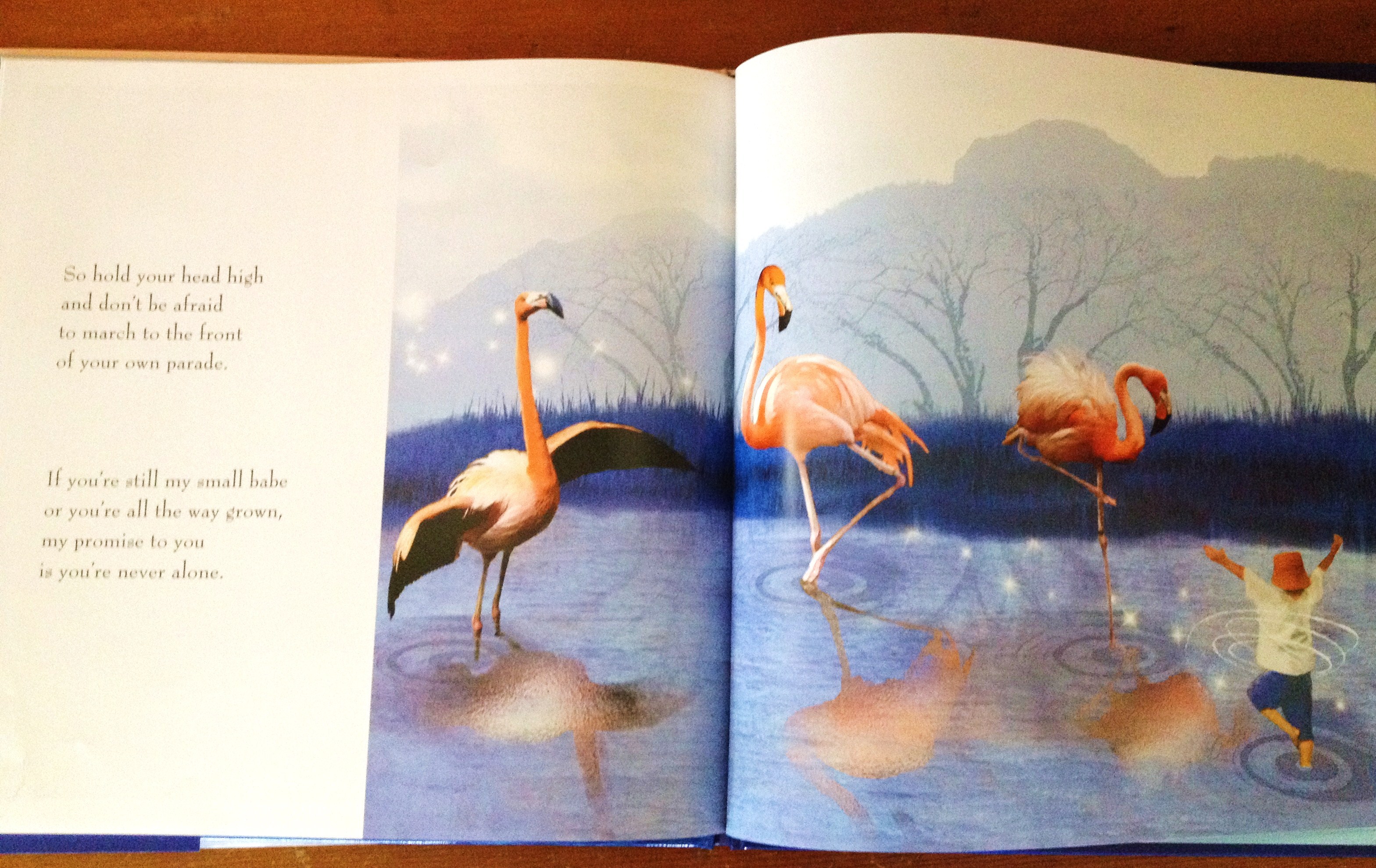
Hold your head high and don’t be afraid to march to the front of your own parade.

I love the picture of the little boy proudly making a splash and leading his parade in Nancy Tillman’s sweet book, “Wherever You Are, My Love Will Find You.”

March to the front of your own parade.

I don’t have to march to the front of your parade or The Pioneer Woman’s parade, or Seth Godin’s parade. My book, my career, my parade.

And better yet, I can hold my head high and be proud of what I do have to offer, the areas I do excel in, and the gifts God wants me to share. I don’t have to measure up to anyone else. I’m uniquely me!

Instead of thinking of it as building our platform, we could just pretend we’re marketing to the front of our own parade. Doesn’t that sound more fun and less intimidating?

Imagine a parade about you and your books, where the collection of floats tells a story. Each float celebrating a part of who you are, what you believe in, what your expertise is, what your passions are, what your books are about, what you are like.

If each of your blog posts, tweets, Facebook statuses, and online bios is a float, does your current collection of floats look like the parade you imagined for yourself? Do you think people are inviting their friends to come watch your parade? Are they jumping in and marching along with you? Is fear of failing, judgement, or not measuring up keeping you from proudly stomping around and letting yourself be seen and heard?

Hold yourself high, and don’t be afraid to march to the front of your own parade. – Nancy Tillman, Wherever You Are, My Love Will Find You

The Best Resource to Build Your Author Platform

Are you so sick of the word platform you want to throw all wooden boxes into a huge bonfire?

Everywhere authors turn we hear about the importance of author platform. Many pre-published authors have no idea how to go about building a successful author platform. You just know that you need one.

Even seasoned authors know we need to keep adding planks to our platform, making it larger every day.

I was one of 100 people recently chosen to participate in the launch of Michael Hyatt’s new book, Platform: Get Noticed in A Noisy World.

This in itself was pure genius. Every one wants the invitation to the private party, we want the behind the scenes all access pass. To read the call out, here’s the link to Michael’s invite. Did you notice it’s not just about what you can do for him, but what it will do for you?

That is the number one lesson from this book. Everything you put in front of your readers, from blog posts to social media updates, must provide value to them!

Michael really knows how to take this to the next level. Here’s the link to his Platform book page. He breaks down the benefits his book provides to the reader. Many books, or book pages, fail to spell out what the purchaser will get from reading them.

This book doesn’t just tell you a few key points or things to do, it teaches you. Michael provides numerous links to extra info and also gives tons of examples. I’m a visual learner, so this is key for me.

God has been reminding me that it’s not about me. And the same is true in all aspects of our lives, as both authors and human beings. I ultimately write for God’s glory, and adding glory for Him is what’s all about. Remember to always add value, in everything we do.

What are ways you can add value to your book? How can you add value to the readers of your blog? How has an author added extra value for you?

Here’s an added value if you haven’t already read 7 Tips for Self-Editing Your Novel with Promotional USB Drives Before we can create a platform, our content must be amazing.

Goodreads

Here is some Social Media just for authors and just for readers. You are probably thinking, “Am I dreaming?”

No! It does exist, and it is an amazing place to devote time and energy. This little heaven for authors is called Goodreads. Goodreads has approximately 4.6 million users. While it may not seem to be as grand as Facebook’s 800 million users, these 4.6 million users are just on Goodreads as readers!

Goodreads is a place people go to only to think about reading. What an awesome concept. There are no random pictures of kids, like on Facebook, pictures of things you can’t afford like on Pinterest. Instead, there are readers, some virtual books shelves, and people talking about BOOKS!  Think about this as Facebook just for authors and their audience.

What are some of the things that you can do on Goodreads?  You can create an author page that “fans” can share with others.  Within Goodreads, you can also start pages specifically for your book. ( I do not encourage people to start book pages on Facebook, just fan pages.  But on Goodreads, you can have both, and they link back to your author page.)  It’s designed just for you, the author. You can easily chat with your readers, add video clips, and link it to your Facebook and/or Twitter pages.

I recommend to authors that they spend money on Facebook, programming a page with their books, so it directs them to buy the author’s books. If you are an author with many books, start a store on your fan page. Goodreads does this for you! (Score!) If your book is on Amazon or Barnes and Noble, it is automatically connected to Goodreads.

Goodreads is super user friendly and very intuitive.  When you sign in, there are tips and tricks that are posted on their pages everyday.  It will give you more ideas and walk you through the site.  This makes it very easy to learn and be more adept in controlling the site. Have fun with this site, and don’t just put your books on it, but really get involved. Dialogue with friends, readers, and other authors.

These were my three tips from Goodreads when I signed in today.

My personal favorite thing on Goodreads is their quote section.  You can add quotes from your book or quotes from your favorite author. I love to search the quotes by words and topics. There are no ads with these quotes, and it is such a great resource for writing. Quotes are also a good way to promote yourself!

Goodreads is definitely a top social networking site for authors.

Go here to start your adventure as a Goodreads author. Also, here is some great information about how to effectively utilize all that Goodreads has to offer: Using Goodreads to Promote Your Books

Have you been using Goodreads to promote your writing? How so?

With Us Here Tonight

Shortly after my first book was published, I gave a book talk at our local library.

Then I gave another talk at another library. And then a third library.

Then a Rotary Club called me. A few months later, I found myself the featured speaker at a Shriners dinner. Last month I presented a talk at the National Eagle Center. Birding festivals, book conferences, annual meetings, schools, service organizations–I’ve addressed them all.

Wait a minute. I thought I was a writer, not a speaker.

Guess what? Book authors get to do both!

The fact is, you NEED to do both if you’re going to successfully build your readership and market your writing. That means you should work on your public speaking skills, and the best way to do that is to take every opportunity you find for a speaking engagement. Develop the following five types of speeches, and you’ll be ready for anyone!

The Sound Bite is the one you will use a bazillion times. It’s the one-liner you’ll utter every time someone asks you what your book is about. It’s also one of the hardest to compose because you need to distill your book and its value down to one sentence. My sound bite for my series is “The Birder Murders is a humorous series about a really nice guy who happens to find bodies when he’s out birding.”

The Book Talk is the speech that focuses on your book’s content. If it’s nonfiction, you can give a general review of the topic itself, or focus on just one chapter’s point and why it’s important. If it’s fiction, you discuss characters, their relationships, the plot, how you came up with all of it, what you want to accomplish with it. This works best with audiences who have already read your book because they will have questions about what they’ve learned and/or enjoyed from reading it.

The Business Talk is about your experience with the publishing business of being an author. The changes we’ve seen in publishing, including the growth of e-books and marketing paradigms, is a topic that appeals to audiences composed of business people or future authors.

The Writing Talk is about your own process of writing a book. Do you do research? Conduct interviews? Journal or set word goals? The beauty of a Writing Talk is that it is appropriate for a variety of groups, and depending on the slant you give it for the group you’re addressing, it works equally well as a classroom talk, a keynote address for a gathering of library supporters, an awards speech, a writers conference, a book club… you name it.

The Topic Talk is the newest talk in my own arsenal of speeches. Because my books are about nature, I’ve started giving talks about nature education and conservation issues. If it is mentioned in my books, it’s fair game for a talk and a great way to use extra research.

Here is a great resource to help you to continue to develop your public speaking skills.

What talks could you present for your book? Do you have any ideas for talks that I have not mentioned?

Small Pond, Big Splash

Make a Splash!

On my recent mini book tour, I discovered how easy it is to create major buzz in a small geographical pocket.  Since Phoenix has 1 ½ million residents, I haven’t made much of a local splash for all my marketing efforts. Call me a city girl, but you can imagine how thrilled I was to create major splash in several small communities?

I chose a small Ohio town (the setting of my novel) and an Indiana Mennonite community because my characters are, yes, Mennonite. In twelve short days, I connected with hundreds of people who started a local buzz about my books. I did my part, and the rest just happened.

Imagine hundreds of rocks simultaneously tossed into water. The ripples intersect and make a major splash. The same disturbance would go unnoticed in the ocean, but is visible in a pond.

Helpful Tips for a Mini Book Tour

Establish a relationship with local influencers. They work hard on your behalf. Influencers booked my speaking engagement, organized book signings, and blogged and promoted my events. They placed newspaper notifications for me. See what I mean about easy?

Keep costs down. If you need to buy books, don’t over purchase (like I did) unless you wish to haul them around. I left unsold books with influencers. I did cover half of my expenses, and I’m sure I can do better next time.

Book at least one paid speaking event. My event had 200 + guests. I sold 40 books and gave free handouts with my contact information. It was a bonus when a newspaper reporter covered the event.

Take a guestbook to your events. I didn’t, but I will next time! A guestbook would provide a relaxing way to get name spellings, information, and jot notes for later—all while making pleasant conversation with readers. I frantically jotted notes that got shoved into my purse. Not very professional.

Attend local events, even if it’s not your event. When a book tour is the reason for your visit to a community, the topic naturally accompanies personal introductions.

Giveaways. Offering free bookmarks opens conversations with people who wouldn’t otherwise make eye contact. Book giveaways are both promo and ministry. Trust God with your offerings.

Get prayer support. I would have remained fearful and frazzled without my prayer support team. Thanks guys!

Take your vitamins. Even good stress is hard on the immune system, and I ended up going to Urgent Care two days upon my return. (Probably because I was an introvert on overload)

Benefits and Blessings

          Meeting local authors

          Opportunity to sign shelved books in local bookstores and gift shops.

–          Networking – (Got featured in summer reading group. They approached me!)

–          Media/newspaper coverage

          Unexpected opportunities – Books placed in church and school libraries

          Purchasing items for future promo.  Of course I bought a handcrafted Amish doll.

          Photographing opportunities for website, blog, and promo use

–          Research for blogging topics

          Gleaning new information about the book industry

–          Ministry – planting spiritual seeds and encouraging readers

–          Personal growth


Who are your influencers? Are you building relationships with them? Do you implement the small pond, big splash method for marketing your books?

Print on Demand: Edison Style

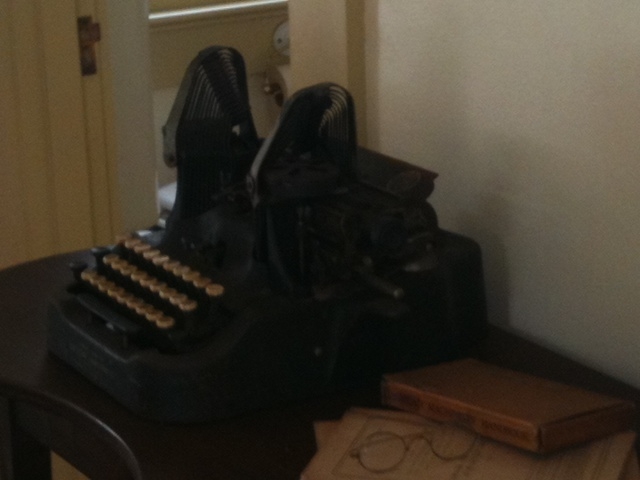
Thomas Edison Typewriter
Edison’s Keyboard

Steam swooshed onto the platform as the metallic black-horse eased to a stop in Detroit. 

The clunky train rocked The Grand Trunk Western Railway passengers in their seats. Cargo slid in the holding bays.

A twelve year old boy steadied himself against precious equipment, secured in the baggage department. Coins jingled in his near-full pockets. The odor of hot ink and ironed paper mixed with burnt coal.

And the train wasn’t the only thing rocking. The innovative boy smiled while he tallied sales of The Grand Trunk Herald. Demand for his real-time newspaper was on the rise.

Thomas Edison birthed a fresh era of news publishing in 1862. He sold the voice of his original publication by the copy, or for a mere eight cents per month, by subscription.

In the volcanic and news-hungry climate of Civil War America, Edison hit on a popular niche. For the first time ever, passengers could devour the contents of a paper written on a moving train. A pre-pubescent Thomas couldn’t know he would soon change the culture of a publishing world.

Recently, I visited Thomas Edison’s Winter Home in Fort Myers, Florida. It was there I learned the factual details of my embellished account above. But it made me think about the culture of American publishing during that time of war, financial upheaval, and emotional decision-making. Not so different from today.

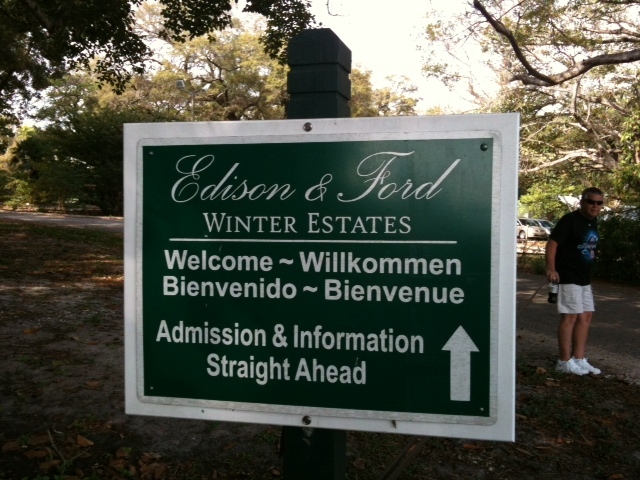
Edison & Ford Winter Estates
Edison Winter Estates Entrance Sign

So it makes me wonder, if we were to rewind time, how would people in Edison’s time react to things we take for granted today? Could the folks living in that era have imagined CNN, the Internet, texting, social media, online videos, and other forms of immediacy news?

But I also reflect on those businesses who felt threatened by the young, creative upstart. They probably didn’t appreciate what they viewed as infringement on their market. Did they make changes in their own processes, as a result of the Edison transformation?

And how does all of this affect us as professionals, and the aspiring, in a writing world today?

What does the future hold for those of us impassioned to share a message through words? I believe young Edison provides a stellar example of how to face adversity. Thomas didn’t bemoan the times.

He exemplified a brilliant mind who took action where others surely complained. He paid attention when people expressed frustration. He heard those who wished to know what was going on in the war and in other parts of the country.

He turned ordinary news into newsprint customers couldn’t wait to buy.

Thomas Edison refused to let a depressive environment get him down. In today’s volatile publishing market, it’s a lesson we can learn.

No one knows exactly what tomorrow’s finished books will look like. Print on demand is making waves. But Edison’s style reminds us to keep our ears, minds, and eyes open. After all, what we do today may impact people one hundred years in the future.

Like passengers in Edison’s era, we may be readers, writers, editors, or publishers. But we all ride toward the same end. The enjoyment of great books. We can bemoan rocking motions, temporary stops, and a change in the news, but we can’t prevent innovation.

We have a single choice if our destination is writing for publication–climb on, and try to enjoy the ride.

Can you hear the whistle? The train is preparing to leave the station. All aboard!

What innovative ways might our books reach readers’ hands in the future? Those of us who author, how can we help publishers invent new ways to sell our books?

Antisocial Media

God bless the Internet.

It’s the great equalizer of our time. It has been a tour de force for introverts the world over who feel more confident and less prone to risk behind a laptop than a podium. Marketing no longer is the exclusive playground of handsome and highly articulate extroverts, people that really know how to connect with other people.  A website can have an infinite amount of charm – or at least charm enough not to require a spokesmodel.

How has this been possible? One reason is a fundamental shift in marketing itself and how society sees it. Marketing strategy has evolved from outbound to inbound. An outbound marketing strategy involves actively finding people and making them aware of your product and offerings.  An inbound marketing strategy is about being easy to find. It requires a high level of visibility. If you are invisible to Google, it’s not going to work.

This being said, I recently met with a visibility coach to discuss the next steps for how to continue building a writing platform. It seemed like many bases had been covered, and now I was stuck on how to proceed. After all, the infrastructure seemed to be coming along:

  • Website
  • Blog
  • Writing contest award site
  • Book reviews
  • Smashwords and Amazon purchase links
  • Facebook
  • LinkedIn
  • Pinterest board
  • YouTube radio interview
  • Google Adwords, Google+

I reviewed all of these facets of the marketing platform with the visibility coach. She was glad that some visibility had already been created, but there was still a lot to do. She said that the aforementioned social media sites are tools. Such tools are only part of a marketing strategy’s infrastructure and did not constitute its entirety.

Some of the things I had been putting off on my to-do list started coming back to mind:

  • Determine how many prospective customers would be interested in your product
  • Define that group – Who are they? How old are they? What is their demographic data?
  • Create a buzz among that target profile
  • Identify their buying behavior
  • Develop a message that speaks to that group
  • Become highly visible to that customer group
  • Learn their communication style and preferred methods of contact

The coach said, “I think we need to get you some REAL fans and not just virtual ones.” She kind of laughed a little bit, and I hadn’t realized until then that it was kind of funny. All my supporters are either friends or ones I’ve garnered online.  “Virtual fans are all well and good, but you need to meet and connect with some REAL people, some actual people now. We’re going to move forward with a press release and creating some events.”

The coach could probably tell that I was a little uneasy about the whole ‘events’ thing.  It’s awkward enough pumping up a site with one’s name and picture on it in cyberspace. How could I look people in the eye and do it for real? I would know if they didn’t really want to meet me.  What if someone told me to get lost? What if they said they had already read my book and they thought I was destroying literature or something? Besides, I had never met any of the authors I had always admired. Was that really necessary? Talking about my work with strangers… ugh. It seemed like the worst kind of vanity.

But the visibility coach pointed out something enlightening. When positioning the book and other works to the audience, there is no reason to focus on the author. The focus is on the characters in the book. She said to become the cheerleader of my main characters and pump them up constantly – and to take myself out of the equation. That resonated with my introverted nature, and I breathed a little easier.

Marketing is about telling a story. Who better to market, then, than us storytellers?

The ancient concept of the group storyteller conjures up images of tribes fixated on a speaker, basking in the orange glow of a campfire.  That kind of storytelling is interactive. Actors are storytellers, but of a different sort. They tell stories with their physical beings-not with words.

Writing, as a form of storytelling, can’t be purely antisocial because life and the human experience aren’t antisocial. That’s the whole point. People are trying to connect and feel something.  The Internet has made it very easy to forget that – but people go to the movies and read books for a reason. They are looking to connect. And as uncomfortable as it may be at times, connections just do not belong in the realm of the antisocial.

In what ways have you RECENTLY connected with your non-virtual reader fans? How might you reach out to them, specifically, this week?

In the Wrong Place at the Right Time

This may not be the place to admit it, but I’m having an affair. We go on dates, doing things together that we love. Other times we pull down the shades, dim the lights, and cuddle up close. And–dare I admit–sometimes we whisper in agreement about our future.

Yes, I confess, I am having a torrid love affair with books. We were meant to be together. I believe in them; they believe in me. We’re inseparable.

The intimacy of this relationship explains the uncontrollable urge that surfaces each time I finish reading a great book, this impulse to write my own hope-filled book that leads women right to Jesus.

As a new writer, I used to scour the bookshelves coveting the author names on the spines. I traced my fingers across compelling covers and inhaled the new-book freshness as I dreamed of my very own name gracing the art. I envisioned countless days spent whittling my words and learning to be a master craftsman.

Later, as a career writer, I fell into a whole new world. Today’s publishing culture demanded I become an expert not only at writing, but marketing and social media as well. A bit disconcerting to a shy writer who simply wanted to write well.

How could I improve my craft if I had to concentrate on building my platform before I was ever published? How would I offer both a high-concept idea and a stop-you-in-your-tracks platform that agents and publishers couldn’t refuse?

It was time to reconsider. Instead of my name on a book spine, maybe, for now, my place was a magazine byline? While focused on writing books, I couldn’t discount that writing for magazines might help me reach my goal. I couldn’t ignore the platform-building opportunity that freelance writing offered.

While an average book may sell 5,000 copies, the readership of some magazines hits millions. Last month, I wrote a feature for Guideposts that offered me an audience of five million readers. My audience expanded as I cast my writing net a little deeper, a little wider. That article led to about 10,000 hits to my website within a very short period of time and connected me to some amazing new readers and relationships. Oh, and I sold books like crazy.

I didn’t start out with Guideposts, I started regionally. My first published print article was for a women’s magazine in my hometown—monthly circulation about 50,000. But from that article came a couple of joint ventures and writing assignments that led to later features in national and international magazines. Today, I have a healthy following of women with whom I am honored to share hope and inspiration on a regular basis.

Without taking time to go to where my readers were (to build my platform), I imagine my first royalty check would have come from a small base of hardcore fans (all relatives). Not only did writing for magazines allow me the chance to make new connections, but I also honed my craft while cushioning my bank account—not a bad deal overall.

Ready to get started? Here’s a helpful article I found online on how to break into the national magazines.

By the way, feed my curiosity. What book can you not live without?

The 15-Minute Writer: Help for Harried Aspiring Authors

I’ve never had the luxury of uninterrupted time to write. In fact, while finishing my first book, I had a five year-old, a busy hubby–and morning sickness (which lasted all day, throughout the whole time I was pregnant with my second son). Since then, I’ve worked a variety of part- and even full-time jobs while continuing to build my platform and hone my craft. And out of sheer necessity, I’ve become a master at using hidden pockets of time to further my career.

If you’ve got all the time in the world to research, read, and write, then skip this post. If you’re like me, however, I hope you’ll find encouragement for reaching your writing goals–fifteen minutes at a time:

—Write whenever, and wherever, you have a few spare minutes (during lunch hours, while your kids are at soccer practice, in waiting rooms). During these “cram sessions,” don’t edit; just write as fast as you can.

–Or just edit. Read a draft of a poem, filler, or blog post (preferably out loud) and make a few quick changes.

–Browse the writing section of your local bookstore or library and pick out a few gems to read in fifteen-minute spurts. I can highly recommend Writer with a Day Job.

—Hire a teenager to watch your kids, clean house, or do your errands. And later, use the time you just saved to write!

–Create a spreadsheet. Like this.

—-Look for an online writing support group. The members can provide support, tips, and tricks. (If they instead give you spam, aggravation, and passive-aggressive “critiques,” you can always un-join. That would only take five minutes.)

–Save a few templates of frequently-used pitch letters and customize a query to a specific magazine or agent.

–Create a rough draft of a new writing resume.

–Update your LinkedIn account with recent writing jobs.

–Flip through the newest issue of your favorite magazine, and list a few ideas for features you could pitch to the editor.

–Think about the unique ways you organize your kitchen, kids’ rooms, or office. Draft a filler to send to an appropriate magazine.

–Have a great idea for a greeting card? Check out Hallmark‘s website to see what contests they’re currently running.

—“Backwards plan.” Take a deadline, or set one for yourself, and mark it on your calendar. Then write down all the tasks you’ll need to complete in order to meet the deadline—interviews, outlining, writing a rough draft, revising—and decide how much time you’ll likely need to complete each one. Finally, plan backwards, setting yourself mini-deadlines. (This tip has saved my sanity—and my family life—on several occasions!)

From my busy-but-very productive writer friend, Glynn Young, here are a few final suggestions: “Find and follow three writing blogs, like noveldoctor or Jeff Goins. Read one chapter of a book about writing. Read three poems. Read one author’s entry on Wikipedia. Read the current post on The High Calling.” [where Glynn and I both serve as editors]

See how much you can accomplish in short spurts? Who knows–your mini writing sessions might just lead to your fifteen minutes of fame. Either way, you’ll never regret the time you spent pursuing a passion. I promise!

Now it’s your turn. What ideas do you have for using small amounts of time wisely?