Keeping Track of Contacts, Media History, and Speaking Engagements (Sample Forms Included)

Many of us creative types wish to not be bothered with anything but our craft, especially when a deadline is approaching. But as your electric company has probably conveyed to you, creative types aren’t exempt from pesky little tasks like paying bills, and the IRS doesn’t excuse us from keeping up with our receipts and paperwork either. Much the same, our publishers need their right-brained authors to tap into that left hemisphere on occasion.

Last week, my co-author/mom and I worked on our publisher’s Advanced Sales and Marketing Information (ASMI), which included compiling a list of influencers that should receive a copy of the book. Our book deadline is still three months away and it won’t be on the shelves for another year. As a newbie author I didn’t know to plan for this project and my experienced co-author was surprised at how early it was being requested. It seems we authors have driven our publishers to request the information earlier and earlier.

If you’ve thought ahead and kept good records, the gathering of information will not be a big deal. Then, you can focus on the fun part of the ASMI, the description of your book, the key takeaways, the reason you’re writing it and so on. If you haven’t kept good records, though, you will likely spend days tracking down addresses and contacts, finding the best full service moving rates at http://www.fullservicemovers.biz/ and racking your brain to remember the name of the church where you spoke in the Fall of 2005 and what the call letters are for that radio station in Milwaukee that interviewed you last spring.

Don’t be surprised when you are frantically trying to meet your deadline and your publisher says, “Oh, by the way, we need the following in three weeks.”

A list of names, professional titles, and addresses of 50 influential people who can be counted on to help promote your book.

As someone who has done this legwork for self-published authors, I can say that you really want to take advantage of this offer. It’s a lot of work and expensive to package and mail 50 or more books. Your publisher is offering, but you need the connections and their contact information. In the day of email and Facebook, unless you run a business, it’s rare to exchange physical addresses. I suggest, as you meet potential influencers, to tell them you are writing a book and would love their address so you can have a copy sent to them when it comes out (you don’t have to have a contract to use this line). When you get an address, quickly add it to your online contact database and tag the person as a potential influencer. Excel is an excellent and easy place to track contacts. Here’s a sample contact form you’re welcome to use.
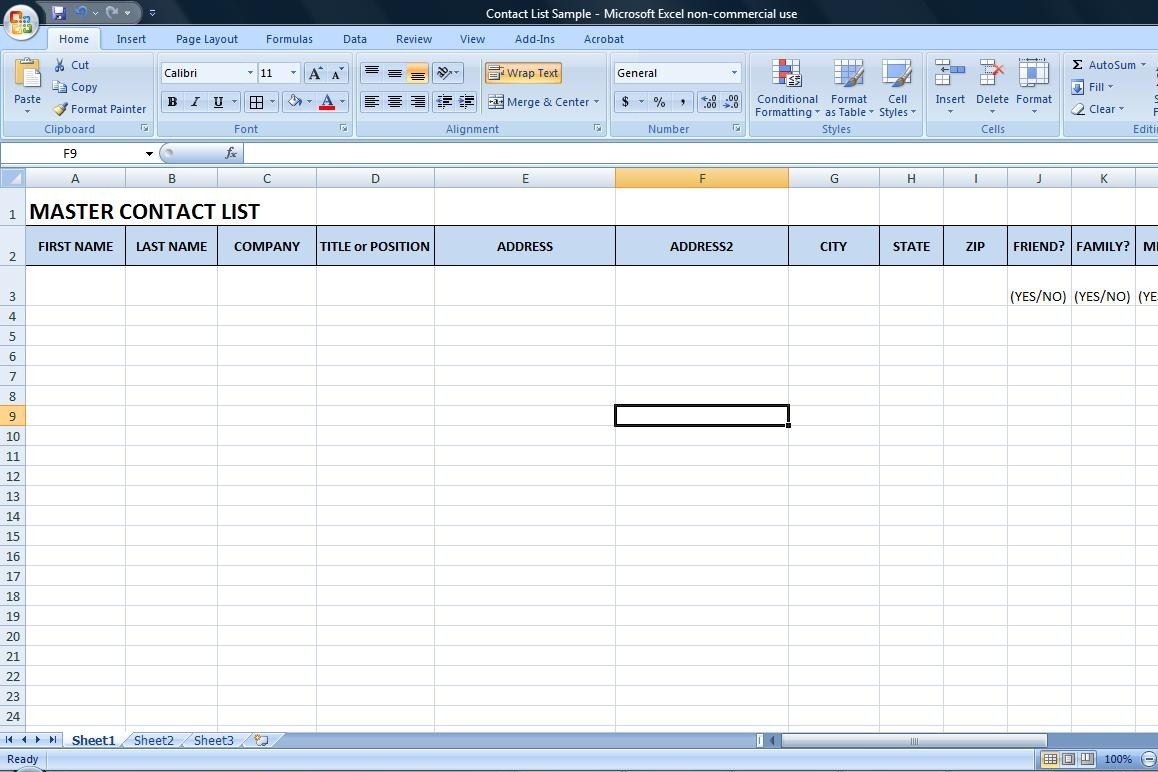
A simple excel spreadsheet can help authors keep track of friends, family, potential endorsers, and media all in one place. Download a copy in the link below.

Download a Sample Contact Spreadsheet

A list of prominent people from whom we should request an endorsement.

If you are lucky or have put in the time to network with other authors or experts in your field, you might know a few prominent people who would gladly write an endorsement for you. Even if you don’t know a person, if they would be a perfect endorser for your book and you can get their address, include them. You may be surprised who will say yes. One of my self-publishing clients requested an endorsement from Olivia-Newton John on her book Alphatudes: the Alphabet of Gratitude. Instead of an endorsement, Olivia ended up offering a free download of her song “Grace and Gratitude” with the purchase of the book. Start a contact record for any potential endorser now or when you are researching competition for your proposal. Those “competitors” may be perfect people to ask.

A list of media you think should receive a copy of the book.

Your publisher will have a set of media contacts that they already plan to send your book to, but you can’t rely on them to know every local or topic-specific outlet. The great news is they will ask you for your input on this, since you know your topic best. As you come across media outlets (blogs, magazines, newspapers, television shows) that would be perfect for your book, put their mailing information in your database.

A list of your previous media and speaking history.

For some, this may be a short and easy list. My writing and speaking career is just getting started, so I I’ve had very few media and speaking appearances, and even still, I almost forgot some of the details I needed.

My mom, on the other hand, has been writing and speaking for almost two decades. Try remembering 20 years of speaking engagements and interviews for 40+ books. My suggestion is to keep one ongoing spreadsheet for speeches and one for media. Every time you finish an interview or publish an article, write down all the details. The name of your contact person, the host’s name, the topic, the date, etc. Put contact information in your contact database, though, not on these forms, so you only have to keep one record updated. Here are sample Speech and Media History forms you are free to use.
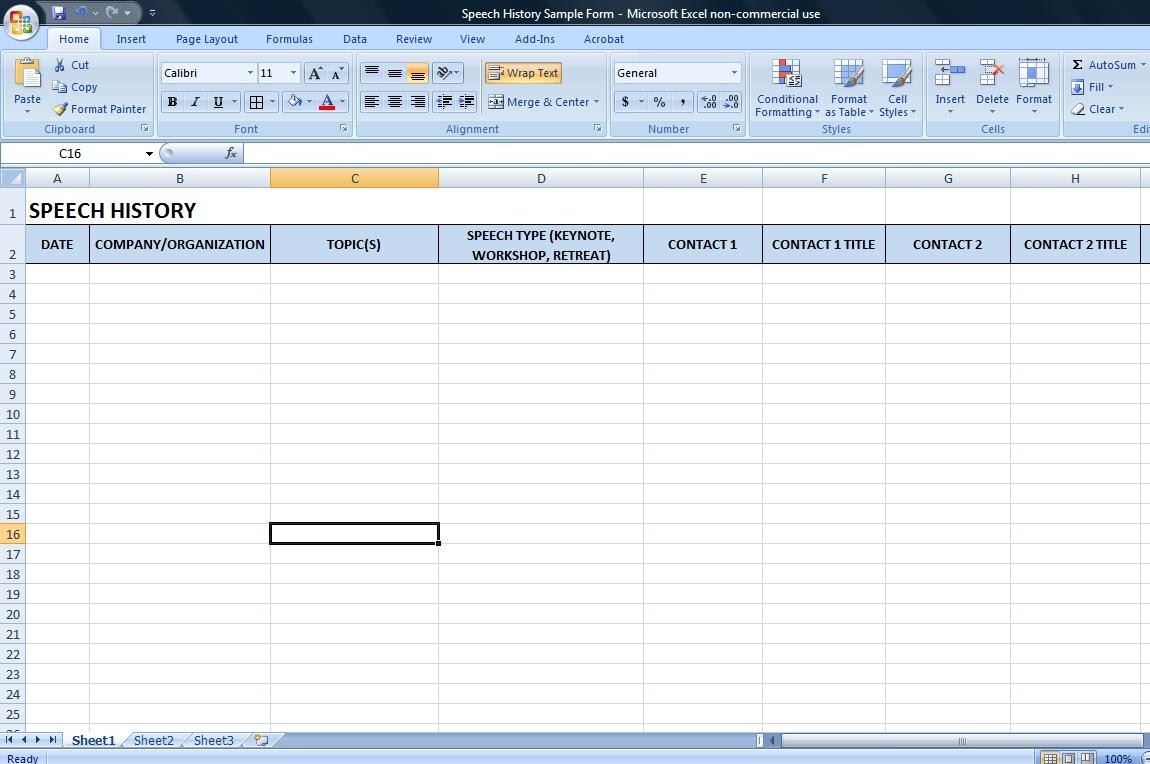
Keeping track of all your speeches in one place will not only make it easier to fill out your ASMI, but will also give you a quick sortable  history when you need a reference for a certain speaking topic or want to pitch something fresh to a previous client. Download a copy below to start keeping track of your speeches.

Download a Sample Speech History Form
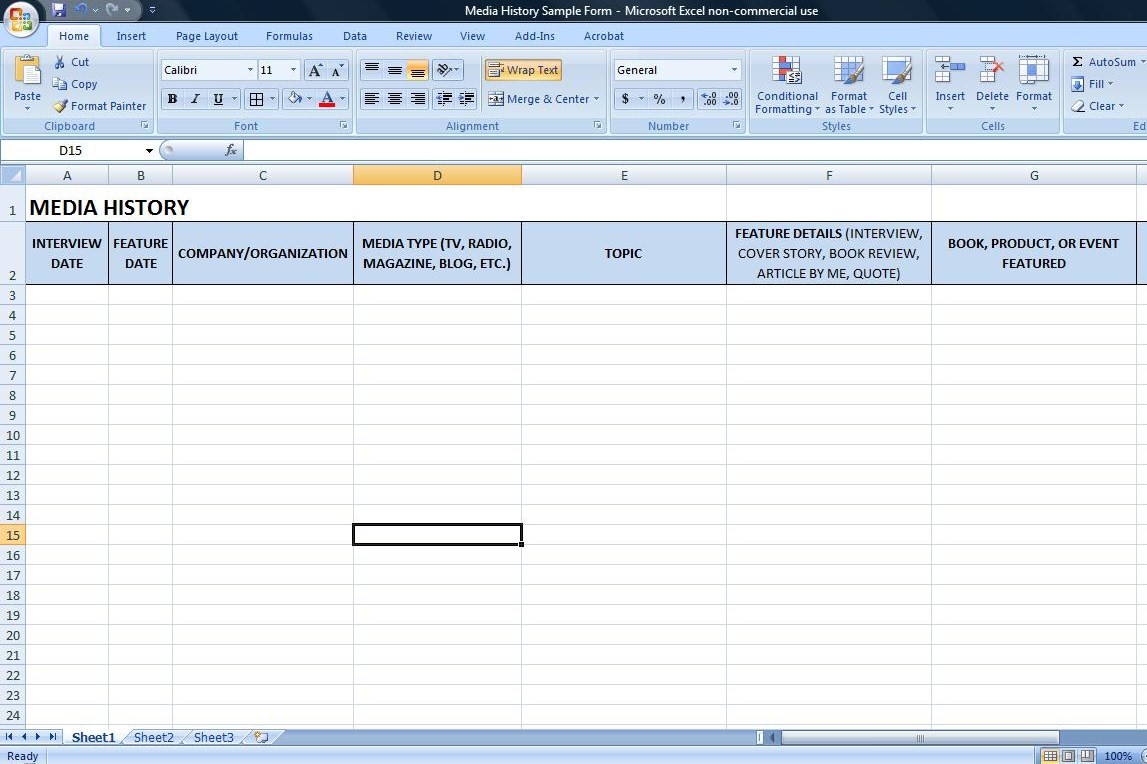
As excited as you might be for your first few interviews, you’d be surprised how quickly you’ll forget which magazine interviewed you on what topic or which tv producer you worked with. Keep it all in one place with an easy spreadsheet. Download a copy below.

Download a Sample Media History Form

How do you keep track of your contacts, media, and speaking engagements? Any other tips or suggestions?
WordServe News: July 2012

Exciting things have been happening at WordServe Literary!

On the final post of each month you’ll find a list of Water Cooler contributors’ books releasing in the upcoming month along with a recap of WordServe client news from the current month.

New Releases

******************************************************************************************

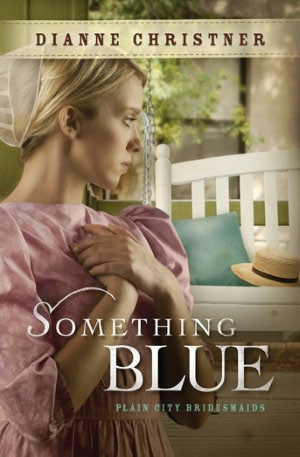
Something Blue by Dianne Christner

Publisher: Barbour

Agent: Greg Johnson

******************************************************************************************

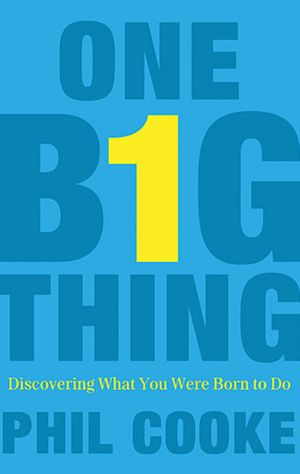
One Big Thing by Phil Cooke

Publisher: Thomas Nelson

Agent: Rachelle Gardner

******************************************************************************************

Serving God and Country by Lyle Dorsett

Publisher:  Berkley Caliber

Agent: Greg Johnson

******************************************************************************************

The Well-Lived Laugh by Rachel St. John-Gilbert

Publisher: Barbour

Agent: Greg Johnson

******************************************************************************************

Son of a Gun by Anne de Graaf

Publisher: Eerdmans

Agent: Greg Johnson

******************************************************************************************

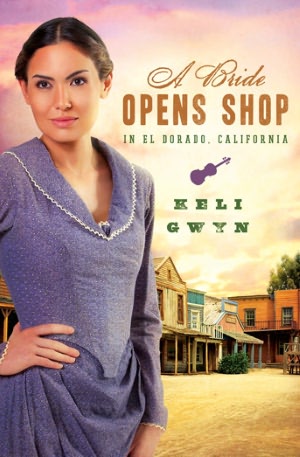
A Bride Opens Shop in El Dorado, California by Keli Gywn

Publisher: Barbour

Agent: Rachelle Gardner

******************************************************************************************

Shrewd by Rick Lawrence

Publisher: David C. Cook

Agent: Greg Johnson

******************************************************************************************

Desperate for Hope by Bruce W. Martin

Publisher: Revell

Agent: Rachelle Gardner

******************************************************************************************

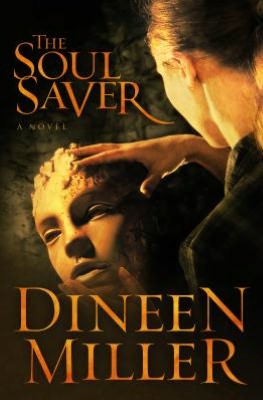
The Soul Saver by Dineen Miller

Publisher: Barbour

Agent: Rachelle Gardner

******************************************************************************************

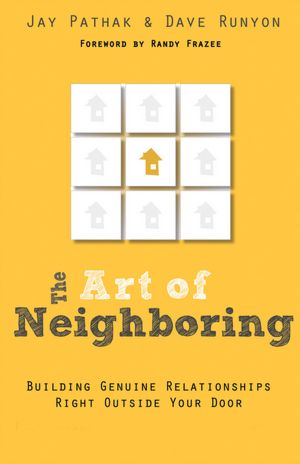
The Art of Neighboring by Jay Pathak and Dave Runyon

Publisher: Baker Books

Agent: Greg Johnson

******************************************************************************************

Central Park Rendezvous by Marylu Tyndall and others

Publisher: Barbour

Agent: Greg Johnson

******************************************************************************************

DawnSinger by Janalyn Voigt

Publsiher: Harbourlight Books

Agent: Barbara Scott

******************************************************************************************

New WordServe Clients

Dave and Claudia Arp and Peter and Heather Larson. The Arps started “Marriage Alive” 25 years ago. Now the Larsons are transitioning into leadershp roles for their ministry to marriages.

Dr. Dave Stoop, a longtime Greg Johnson client when he was at Alive, has rejoined Greg at WordServe.

New Contracts

Marcus Brotherton to collaborate on Austin pastor Matt Carter and NFL quarterback Colt McCoy’s book on BIBLICAL MANHOOD, to be publsihed by WaterBrook Press.

Leigh Ann Bryant sold her book, IN MY DEFENSE. It’s the true story of a life of shame and abuse with a husband she finally had to kill in self defense to protect herself and her small son. Soon after, she came to faith and has built a life as a pastor’s wife and a minister to those in prison (though she served no prison time). Our first sale to the new publisher Authentic Publishers. (Agent: Greg Johnson)

Roberta Kells Dorr was a Christian novelist who wrote biblical fiction in the 70s and 80s. Though she died several years ago, her family and estate wanted the books back in print, especially as e-books. We were able to do a 5-book deal with Moody Publishers for an unpublished work of biblical fiction and four previously published and out of print books. (Agent: Greg Johnson)

Ken Gire to collaborate on Chrissy Cymbola Toledo’s memoir of her prodigal life. Published by Tyndale House Publishers. (Agent: Greg Johnson)

Caesar Kalinowski, pastor and thought leader in the missional movement for the Soma Communities network of churches, a book with a working title of TRANSFORMED. A new way of seeing who we are in Christ and what a foundational difference that makes as we attempt to represent Jesus well to our network of friends.  Sold to Zondervan Publishers. (Agent: Greg Johnson)

Amy Sorrells debut novel CANARY SONG and another untitled work to David C. Cook Publishers. Synopsis: Tucked into the groves of a pecan plantation near the coast of Mobile Bay, secrets deep within the Harlan family simmer until they boil over one long, languishing summer. Will Anna Pearl Harlan, her family and friends seek hope in the midst of unbearable pain, or allow it to destroy their lives? Inspired by Tamar in 2 Samuel 13, Canary Song combines one girl’s coming-of-age with another woman’s redemption to show how God heals the hearts of the broken, and how crooked branches can one day provide the best shade. (Agent: Barbara Scott)

Shellie Tomlinson, our All Things Southern Belle (www.allthingsouthern.com), sold to WaterBrook Press, LORD, I WANT TO LOVE YOU MORE, a book for those who have ever wondered how to get from “belief” to “passion.” (Agent: Greg Johnson)

What We’re Celebrating

Jan Drexler‘s Amish novel slated for publication by Harlequin’s Love Inspired line (titled  Love Bears All Things) placed second in the Inspirational category of the The Fool for Love contest sponsored by the Virginia Romance Writers. 

Bestsellers

Rebecca Alonzo’s book The Devil in Pew 7 reappeared on the New York Times Bestseller lists after her episode on Dr. Phil re-aired:

#4 – Primary e-book best seller list

#14 – Primary combined print & e-book list

#26 – Extended paperback non-fiction list

Karen Witemeyer’s book Short Straw Bride made it two months in a row on the list, moving up from #13 (July) to #10 (August).

Mike Yorkey’s book Playing With Purpose: Tim Tebow (Barbour) debuted #32 on the ECPA Top-50 list for July (May release). (Sorry we missed this last month, Mike.)

Carol Award Finalists

Though these authors are no longer with WordServe, we’re so very proud of their accomplishments and their books that were contracted under the WordServe banner. Rachelle, of course, had a great eye for good writers and good stories, so the kudos goes to her, as well.

Roslyn Elliot is a finalist both for “Debut Novel” and “Long Historical” for her book Fairer Than Morning. (Thomas Nelson)

Lisa Jordan is a finalist for “Short Contemporary” for her book Lakeside Reunion. (Love Inspired)

Erica Vetsch is a finalist for “Short Historical” for her book Light to My Path. (Heartsong Presents)

Karen Witemeyer is a finalist for “Long Historical Romance” for her book To Win Her Heart. (Bethany)

What writing celebrations do you have?

Surviving the Summer and Social Media

Let’s talk about how hard it is to get things done right now. Ugh!! Personally, I have been battling getting things done because I am so busy with summer activities, or the heat makes me lethargic (and it’s been a HOT one). For those of you writers who are also parents, your life is especially tricky because the kids are out of school. I just got back from the Pine Ridge Indian Reservation, and I am late with this post. Summer can dish out some unexpected adventures. Remember to be prepared. Learn from me, and I am sorry to those who are a victim of my summer.

Summer in Pine Ridge
photo by Amanda Jensen Photography

I decided to make a list of my best tricks for making summer social media survivable.

First.

Schedule whatever you can ahead of time. Block off time to work for a few hours on social media, and do yourself a favor if you are living in Denver: find the nearest icebox with Wi-Fi and work there. Seriously, take time out and work in a isolated place where you can knock a BUNCH of work out.

Schedule your Facebook posts. Did you notice that with the latest update you can schedule and date your posts? It’s kind of the coolest thing ever!

Second.

GUEST BLOG!! Ask people to blog for you, and you should extend the same courtesy to others. This is the best way to skip a little and give a little. The best thing about guest blogging is that you are able to cross-market with some of your author friends/co-conspirators.

Third.

Take advantage of being outside.  You can take some epic pictures with Instagram and use them in your future blog posts.  Be creative and take trips that could be relative to your blogs.  Strategize.  (If you missed my blog about how to use Instagram, find it here.)

Summer in Telluride

Fourth.

Remember that people are not on Social Media quite as much in the summer.  The times that trend are a little bit different depending on your target audience.  More people are on later at night.  Try some test posts to see what time you are getting the best feed back.

Fifth.

Make sure you have all your accounts linked.  Tools like this plug-in make things easier. Link your Twitter to Facebook and your blog to both.

I hope you all survive the heat and have many summer adventures the next month.

What is your best trick to survive the summer? What makes social media easier when you are busy?

Creative Venue Planning

If bookstores are the only place you’re signing and talking about your books, then you’re missing the boat.

Perhaps even literally.

In the last year, in addition to bookstores, I’ve talked and signed books at gift shops, diners, book club gatherings, Rotary Club breakfasts, libraries, senior community dinners, and summer festival booths. Since my novels are about a bird lover, I’ve also signed books at bird feeding supply stores and an annual birding meeting, not to mention an international owl festival, a regional hummingbird celebration, and the National Eagle Center. At every venue, I’ve sold more books than I have at any bookstore signing, not to mention the new readers I’ve found and the publicity such events generated.

So how do you pack your calendar with venues that will work hard for you? The answer is Creative Venue Planning, and here’s my three-step recipe:

  1. Look past your story, and instead, brainstorm your book’s topics. Like trying to identify keywords or tags for a blog, pulling out the topics, and even specific characters, in your book can lead you to new audiences and venues. Since my protagonist began birding as a child, I give talks about the importance of nature education for kids at family-oriented programs. A restaurant I included in one book happily hosted a signing for me, and displays my books in a prominent place. HINT: Does one of your characters run a small business? Your local Rotary Club or Chamber of Commerce might be delighted to have you come speak to them about how that plays into your novel. Many groups are eager for new ideas and personalities to book for their meetings. Find a link between them and your work, and you’ve got a foot in the door.
  2. Research opportunities. What groups in your community need speakers? My current goldmine is senior living communities who have busy activity calendars for their residents. Since many of my readers are older and enjoy birdwatching, speaking at these venues is a perfect fit for me. I’ve learned that many communities have on-site book clubs, too, and having an author (you!) available to join a gathering can mean a shortcut to your book being selected for reading. HINT: Would you be willing to talk to a high school class about something related to your book? Teachers are generally thrilled to have a guest speaker, and while you may not make any sales in the classroom, you can bet on word-of-mouth publicity (and perhaps a small fee from the school field trip budget!).
  3. Pick up the phone. Nothing beats personal contact when it comes to booking events at creative venues. Find the right person to ask (research on the internet or by phone) and prepare a short, convincing, sales pitch as to how they’ll benefit from your visit. Offer to email your photo, a brief bio, and talk description for their use in promotion. Take your bookmarks to hand out, and books to sell and sign.

What’s on your creative venue plan?

Who is My Reader?

Marketing Your Debut Novel Part III

I’ve been doing a series on marketing your debut novel. You can find Part I and Part II by clicking the links.

Briefly, Part I focused on growing your tribe/social media and Part II was about the comparable books section of your book proposal.

In this installment, I’m going to continue on the pre-contract phase of the writer’s life by focusing on another troublesome aspect of the book proposal–the AUDIENCE SECTION. (Cue your choice of scary music.) This section goes before the overall marketing plan that you will design to help the publisher get the word out about your book.

A publisher wants to see that you know who your potential reader is. Are you savvy enough to figure it out? This audience section will help your publisher know how to market your book and how to best reach the reader you’ve identified.

For instance, a novice book proposal writer would say something like: “Proof will be loved by ALL people ages 18-102.”

Really? Everyone? That’s not very discerning. You may not understand your potential readers very well and this will be troubling for the publisher.

EVERYONE is not going to like your book. That’s just fact. And you will waste time trying to market the book to everyone. Did you know the largest group of Christian fiction buyers is women, mostly between the ages of 30-50? In fact, this morsel of truth may translate to the general fiction market as well which are those books published by the ABA. You can watch this fascinating interview with CJ Lyons and Lee Child as they discuss that women purchase most books.

So, when you’re working on this section of your book proposal, think hard about who will be attracted to buying your book. Are they men or women? College educated? What age are they? What do they watch on TV? How popular are those TV shows?

What follows in quotes is my audience section in the book proposal for Proof. For those of you who are not aware, Proof is a medical thriller/police procedural. Equal parts of both. Some romance but not 50/50 romance like a true romantic suspense novel should be.

“Those likely to buy Proof are career men and women age 25-45 who are fans of medical/police procedural television shows and novels. ER ran for 15 seasons and during its first ten years was consistently a top ten show. House, currently in its seventh season, averages 10 million viewers. The DNA mystery in Proof will attract people who watch CSI, as well. CSI has three television shows in its franchise.

Suspense novels with a heavy medical edge do well in fiction markets. Mainstream writers like Robin Cook, Tess Gerritsen, Michael Palmer, and Kathy Reichs consistently hit the New York Times bestseller list. Furthermore, Lethal Harvest by Cutrer and Glahn was a Christy Award finalist. Candace Calvert’s Critical Care was a 2010 Carol Award Finalist. Proof will appeal to these readers.”

What’s been interesting in hindsight is that Library Journal suggested my novel to those who were fans of Robin Cook. Several reviews have specifically mentioned the show CSI as well as Law and Order SVU and Grey’s Anatomy. I carefully marketed the book to those I thought it would appeal to, and ultimately they are indeed the ones who’ve loved the book.

What do you think? Have you tried to write an audience section of a book proposal? How easy or hard was it? What advice helped you write this section?

Media Training 101: How to Create an Outstanding Promotional Video for Your Book

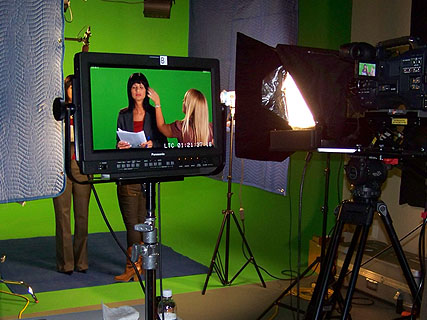
A growing trend in the book industry is for publishers to ask authors to create their own promotional videos. The publishers then upload these videos to websites such as YouTube, as well as show them to book buyers at conferences and to media producers in hopes of securing TV time for their authors.

In case you are asked to create such a video, don’t worry. I can help. Below are ten steps that I learned through formal media training and from my own TV appearances. These tips can save you thousands of dollars in formal media training costs, not to mention greatly increase your chance of landing promotional TV spots.

First, read the enumerated suggestions below, then follow the link to my last book trailer, and see if you can spot what I did right, and, perhaps, what I did wrong.

Trailer For Dr. Rita’s Book: Radical Well-being, A Biblical Guide to Overcoming Pain, Illness, and Addictions (January, 2013, Charisma House).

1. Create Good Content: Your content should be persuasive, entertaining, and/or helpful. For non-fiction, establish your professional credibility by stating your qualifications when you first introduce yourself. Discuss your book’s focus, and establish how your book can solve the viewer’s problem. However, if you write fiction, it’s probably more important for you to entertain the viewers. “Hook” them with your captivating story line, and tell them just enough to make them want to hear more. Consider re-stating your name and the name of your book for emphasis at the close of your trailer.

2. Take Care in Your Delivery: Make an effort to speak slowly and deliberately, and don’t forget to enunciate. To do so, have a succinct, goal-oriented script with only one or two main points. Also, stay within the time frame requested by your publisher.

3. Choose Your Attire Carefully: Pick a solid color that doesn’t distract. Avoid red, black, white, and bold prints. Avoid large jewelry. When in doubt, go with simple and understated clothing and accessories. Men: unless you have six-pack abs, button your jacket, or you’ll look sloppy.

4. Watch Your Posture and Body Language: Sit up tall and straight, preferably at the edge of your seat, and lean slightly into the camera. Avoid direct head-on shots. It’s better to sit with your body angled slightly as you face the camera. Avoid exaggerated movements, as they can distract from your message.

5. Make It Personal: If you wish to make an emotional connection with your viewers, write a monologue about your book, and deliver it directly to the camera. Doing so gives each individual viewer the impression that you are having a private conversation with only him or her.

6. Be Happy, Relax, and Have Fun: Your positive energy will make you more attractive, and it will entice viewers to want to hear more of what you say. Also, try to relax. When you feel relaxed, you look relaxed, and your gestures appear more natural.

7. Smile More Than Usual: Video is a very cold communication medium. Facial expressions that look “neutral” in person cause you to appear cold and distant on camera. Smile the entire time you’re talking.

8. Wear Make-up: You can forgo the lipstick and eye shadow if you’re male, but don’t forget the oil-absorbing powder. Apply a generous amount to your forehead, chin, and especially the tip of your nose. The camera lights make you look greasy and pale, otherwise.

9. Hire a Professional Camera Operator: Subtle factors like choice of background, lighting, and camera angle strongly impact the image and feel of your video. Nonetheless, you could shoot a homemade video, first, for practice, and then get feedback from your agent or other professionals regarding your content, delivery, attire, and background before you hire the professional camera person at $100 per hour.

10. Once You Land a TV Spot: It’s more likely that you will be interviewed by a show host if you are asked to be on TV. In that case, keep your eyes fixed on the interviewer the whole time. Do NOT look directly at the camera as you might in a monologue. TV viewers want to feel like they’re eavesdropping on the private conversation between you and your interviewer. Make sure you’re the first one in position (sitting up tall, smiling, looking at the interviewer) when the cameraman starts counting down, and make sure you’re the last one still in position when the video shoot is over. Doing these subtle things helps build your reputation as a good TV show guest, and it might also earn you a return invitation to talk about your next book.

Do you have any suggestions for TV appearances? Any questions about something I did not address above?

Profits from Back-of-the-Room Sales

Let’s be honest, most work-horse writers cannot make a living by advances alone. However, if you combine writing with speaking and profitable back-of-the-room sales, look out! Writing, speaking and book/product sales is a true triple whammy, each avenue supporting the other. Each leg of this career stool brought in roughly one-third of my income.  Here are some ideas for a money-making book table.

Bundle or Bag ‘Em

Bundle items into gift bags. For example, I would put my humor books for moms in clear gift bags with a pretty sheet of tissue paper and call it “Laughter Rx for Moms.” I created another bag I called “Smiles for the Stressed-Out Soul” that included my books on slowing down and thriving. People want to give their friends some tangible love, so selling your books in gift bag form makes them instantly ready to share.

Something for the Kids

I wrote four books for young kids (Gabe & Critters)  and five “first chapter” books for ages 7-11 (Camp Wanna Banana). Moms and grandmas love to buy something for children. I found darling finger puppets, cute plastic “bookworms,” and small plush spider monkeys that tied in with the books’ themes. The eye appeal of colorful items surrounding the books proved irresistible. It took time to find items that were lightweight, small, fun, sturdy, and profitable. But when I did, books flew off the children’s section of my table.

Offer a Bargain

In what I now view as a great business opportunity, two of my books went out of print. I negotiated to buy a literal truckload of them for 72 cents each. I bought 10,000 books and filled up an empty guest room, wondering what in the world I had done. However, I sold every book by offering them “2 for $5.00” to retreat attendees. A profit for me, and a great deal for them. The event planner put a coupon in the retreat bags for this “special bargain,” ensuring a rush to the book table.

High Profit Items

I quickly discovered that women wanted to take my “retreat talks” home or share  with a friend. So I had audio CDs made of my talks and called them “Girlfriend Getaway.” I sold four talks for $15.00. My investment in the CDs (including case) was only $3.00 each. Many speakers create their own workbooks or study guides to go with their books and make a nice profit.

Mention in Your Talk

I am turned off by speakers who hawk their books like an infomercial. I’ve found it much more natural to say, “In my book, Worms in My Tea, I told a story about a time when …”, then simply tell the story.  People would always show up at the table asking for the book that contained the story I told.

The More Books, Higher Profit

The greater the variety of books you have on your table, the higher the profit; however, you don’t have to author all the books you sell. If you refer to books by other authors in your speeches, negotiate with a publisher to buy them in bulk at a good discount and sell them on your table. Or sell other product-tie-ins. If you wrote a cookbook, you might sell adorable aprons. If you teach writing classes, you might offer pens and blank journals that have fun literary themes.

Information Sheet for Event Planner

In a packet of information that I would mail ahead or email to the event planner, I included a Book Description Sheet. It had the picture and title of each book with a one or two sentence description below it. This would help volunteers get quickly familiar with the products. Always ask for at least two volunteers to help with the book table, giving them free books as a thank you. After you speak, women will want to chat and have you sign books, so having others take care of the money exchange is essential.

Bookmarks

Create a cute bookmark to be tucked into the books you sell on your table with information leading to your website, other books, etc.

Signs & Set Ups

I typically only put about ten copies of each book on the book table at a time, re-filling it from a box under the table as they sold. Make clear concise signs to prop up on your table that clearly show the price of your books. Go for visual clarity rather than cuteness. And be sure to take credit cards; it greatly increases sales.

I hope these tips prove helpful to you and increase your profits as you speak and write. Feel free to ask me any questions.

What advice do you have for other authors to help sell their books?


//

What Food Network Star Taught Me About Author Branding

Marketing your Debut Novel: Part Two

Last month, I started this series on how to market your debut novel. You can find Part One here. We’re going to stick with the same time period of the writer’s life–the pre-contract phase.

In brief, I discussed those things an author should be doing pre-contract phase, which is identifying and building your brand through social media. You are working to build a well-defined tribe. (You are reading Seth’s book by now, right?)

The issue of branding became very apparent to me while watching The Next Food Network Star. Yes, hand straight up in the air, I like reality TV. If you’re not familiar with the series, earnest chefs attempt to win their own show on Food Network by doing next to impossible cooking tasks for a panel of feisty food judges they may work for someday.

The judges want to know what their POV is. This season one contestant, Malcolm, was often heard saying, “I don’t need a POV. I just need to cook great food. That will speak for itself.”

I’d like to indulge a few different words. “I don’t need a brand. I just need to write a great novel! The words will speak for themselves.”

The problem is where do said judges, or in our world, publishers, place you?

If you’re seeking publication and you’ve not been published before (particularly in fiction) you are going to have to 1. finish your novel and 2. write a book proposal.

A book proposal is essentially a marketing tool for your book. It’s the sales plan. It’s the blueprint of how your tribe (again, reading it?!?) will purchase your product.

One section of the book proposal is the dreaded “comparison” section. It can be called other things. Market analysis. Comparable books. In this section, you list books that are like yours (and what sets yours apart in a nice, professional way.) The purpose of this section is to help a publisher identify what type of audience you’re trying to reach. Is there consistency amongst the authors you picked and what type of novels they write? This helps a publisher know that you know yourself pretty well. You have brand awareness and can plug into the group of people who also like those authors.

But say I have little brand awareness. My novel is a Steampunk, alien invasion set during Roman times with a population of Amish quilters–and if a book like this makes it big, you heard it here first! My website looks like a Steampunk machine tossed out a Roman gladiator who just tousled with an alien on the prairie–and throw in a couple of Amish looking bonnets for good measure since those books sell really well.

In your comparable books section, you list these books: Proof by Jordyn Redwood (a medical thriller), The Half-Stitched Amish Quilting Club by Wanda Brunstetter (Amish gives a clue there), Not a Fan by Kyle Idleman (this is Christian non-fiction), and Francine Rivers’s A Voice in the Wind (which is historical fiction).

A publisher is going to be scratching their collective head. How can one fiction book possibly be placed by each of these novels? They’re so different. Not even in the same section.

But, you say, my book will satisfy all of those readers. A publisher shakes their head. No, it won’t. The books above represent very diverse readers. I’ve personally read two: my own and Not a Fan. Not to say the other two by Wanda and Francine are not excellent novels– but they don’t appeal to me and what I like to read.

Don’t be Malcolm. Discover your brand. BE the BRAND (think Miss Congeniality– BE the CROWN!)

So, you may ask, what happened to Malcolm? Voted off midway through the season. Great chef but “we don’t know who he is.” They didn’t know how to brand him.

What about you? How did you like writing your book proposal? How easy or hard was it to write the comparable books section?

Take Beautiful Pictures with Instagram

I get random questions from people all the time, “Ingrid, how do I block my Aunt Beatrice who won’t stop tagging me in pictures that are not even of me?” These are the things I know. These are simple things to me, but to some of you figuring this out is like wrestling with air: impossible. So I always love your input on what to learn and how you can better use your social media skills to influence your tribe and build your readership.

What is happening in my social media world? My new obsession: Instagram!

Yes, I am a little bit late to this game, I know. (It is very rare that I am tardy, but on this one my friends, I AM!) My friends have all had it for a few years, and I have watched them. I have played with it many times, but it was for the “elite” iphone users. I have had T-mobile for years, and yes, they lock you into a contract, and then you are stuck. But Instagram for Android was released a few months ago, and I hopped on the bandwagon with no convincing.

Instagram is doing well. In case you didn’t know, Facebook bought Instagram for 1 billion dollars. You don’t even know what Instagram is? Well, check this out. Here is a picture of mine; right now I am at the Telluride Blue Grass festival.

What is Instagram? Instagram is a free and fun way to share your life with family and friends with edited fun photos. Each picture is taken through your iphone or android phone. You then choose to edit your photo through with very different filters. Instagram’s intuitive set up lets you link your photo to your social media world, either via Twitter or Facebook.

As an author, Instagram can be a valuable tool in using pictures to tell stories about your life and the life of your books.

1. Maybe if it is a novel, you can post pictures of things related to your characters; be creative. I would love to hear your ideas about how you can use this tool to create more buzz and excitement for your books.

2. Connect with your audience, your readers, and your friends. Publish your fun photos. Be creative and show a little bit of your world without intruding into your private world. Use this as a valuable tool to connect. It is a necessity to connect with your readers visually. Help paint them pictures of things you want them to understand about your books.

3. Hash tag your photos like you do on Twitter, and if you can, pick the same Twitter name for your Instagram name. I would love to hear your feedback and see your Instagram photos.

Follow me at @gridlocked on Instagram and Twitter. ☺ Let’s take beautiful and inspiring pictures.

P.S. My favorite new joke: How much does a hipster weigh? An Instagram. If you don’t get it, don’t worry. 🙂

How to Create a Free E-Book for Your Website

People love to receive stuff for free. Ever wandered through Costco in the afternoon? You can always spot the free sample stands by the crowds gathered round.

Our readers are no different. They love to get stuff for free and what better way to encourage or thank them for signing up to your blog posts than with a free e-book.

You may be unsure what content to include in your e-book. Ask your readers. I put a poll on my website asking what subject people would like to see more. This helped me decide what to write my e-book about. Take a look at your web stats; which posts have the highest views?

Once you’ve decided on your topic, start writing it. Keep it on the shorter side; it doesn’t need to be a full book length. Under five thousand words is a good guideline. Remember to offer new content in your book. Because it’s electronic, you can and should link to articles on your blog for further reading and value to the reader.

After your e-book is finished, save it as a PDF file and then upload it to your website. Keep it unassigned (for self-hosted WordPress) and copy the location.

I use Feedburner as my RSS and email subscription service for my website. I downloaded my existing email subscribers addresses to MailChimp and sent them out a free copy thanking them for being with me. You never want to forget your current readers in the search for new ones.

For new subscribers, I included the PDF link in the email they receive from Feedburner when they sign up for my blog. This allowed for free automation and instant access for the reader.

If you use Feedburner and have a sign up box on your website, I highly recommend customizing the sign up box. Even if you don’t have an e-book to offer yet, you should list the benefits subscribers receive when they sign up for your emails. Here’s an example of my homepage and subscriber box. 

By using the Feedburner verification email to send out my free e-book link, I realize people don’t have to verify in order to get the free copy. But if they don’t like my free e-book and choose not to verify to get my posts, then they most likely would have unsubscribed anyway.

Have you ever bought something from a free sample? What makes you subscribe to a blog via email? Do you think having a free e-book has helped your blog numbers?