Rejection!

Rejection is an ugly word, especially to a writer. But we need to keep it in perspective.

To help you put rejection into perspective, I’d like to discuss my shoes.

I have a pair of lovely leather shoes. I really like my shoes. They are stylish, look good with many types of clothing, and are comfortable to wear for many hours. I love, love, love my shoes.

A few months ago, I noticed my shoes were beginning to look worn out and were no longer attractive to wear with dress pants. I thought about purchasing another pair of shoes, and then I had the bright idea to bring them to a shoe repairman. The repairman put new heels on my shoes, polished the leather, and blackened the soles. After some effort and work, my leather shoes are spiffed up and look as good as new.

Now, if I offered my shoes to someone and they don’t love them like I do, should I be heartbroken? Does their rejection of my shoes make me less of a person? Does it make my shoes less attractive? Does it make me less worthy?

Think about it, I bet my shoes wouldn’t fit just anyone. They wouldn’t be right for a number of people with different tastes and different needs. But that doesn’t make my shoes less valuable or less worthy.

That’s the way I look at rejection. My manuscript (shoes) is polished and ready to go out into the world. But perhaps the agent/editor (consumer) needs a different size or is looking for a different style. It’s easy to look at the situation from this perspective and see that it’s not always personal when your manuscript (shoes) is rejected! Sometimes the rejection is not about the story or craft but for other reasons, some of them simply being reasons of timing.

Rejection is an ugly word, especially to a writer. But we need to keep it in perspective. If we’ve been gifted/called to write, then we should keep writing and polishing our manuscripts. After all, many successful writers have suffered rejection.

Now that you’ve gotten the fear of rejection out of your mind, put your new confidence to the test by planning to attend a writer’s conference this year. Many writers will testify that their career got on the fast track after they attended their first conference. You meet other writers, editors, agents, and learn about the craft and the industry at conferences. Your competence and enthusiasm for your writing gets a great boost by attending conferences.

Don’t stress about rejection, keep moving forward in your career.

How do you shrug off rejection? How do you keep it in perspective?

7 Ways to Do Book Dedications

Ever since I imagined writing a book I imagined my dedication page. I’m not talking about the acknowledgements page where you thank everyone who ever helped you; I’m talking about that mostly blank page tucked in the beginning of a book, after the title page and publishing credits.

Many people give a clear dedication to a spouse for all his or her longsuffering, but some book dedications are cryptic — they proclaim a public thanks while alluding to stories more interesting than the book itself.

I am fascinated with the topic of book dedications because there is always a story behind the story. There’s a reason the author wrote the book in the first place, and there is often intrigue behind the dedication — a story or relationship we may never know. Here are seven examples of book dedictations:

Loving

A.A. Milne’s dedication to his wife in Winnie the Pooh:

To her – Hand in hand we come Christopher Robin and I, To lay this book in your lap. Say you’re surprised? Say you like it? Say it’s just what you wanted? Because it’s yours — because we love you.

Curious

Betty MacDonald to her sister in The Egg and I

To my sister, who always believed that I can do anything she puts her mind to.

Striving

John Steinbeck to his friend Pascal “Pat” Covici. As Steinbeck wrote Journal of a Novel: The East of Eden Letters, he often mentioned the things he was tinkering with or building around the house. At one point, Pat asked Steinbeck to make him a box; Steinbeck joked that the only specification was that Pat shouldn’t be able to fit inside it. When Steinbeck finished East of Eden, he placed his 250,000 word manuscript into a mahogany box he had carved and sent it to Pat. The note he placed on top became the dedication page of the novel.

Dear Pat,
 You came upon me carving some kind of little figure out of wood and you said, ‘Why don’t you make something for me?’ 
I asked you what you wanted, and you said, ‘A box.’ ‘What for?’ ‘To put things in.’ ‘What kind of things?’ ‘Whatever you have,’ you said.
 Well, here’s your box. Nearly everything I have is in it, and it is not full. Pain and excitement are in it, and feeling good or bad and evil thoughts and good thoughts – the pleasure of design and some despair and the indescribable joy of creation.
 And on top of these are all the gratitude and love I have for you.
 And still the box is not full.

Funny

Random blogger to actor Colin Firth in her future, hoped for book

Thanks for playing Mr. Darcy, and for wearing that white shirt in the lake scene.

Touching

J.K. Rowling to Sean PF Harris (the first of her friends to learn to drive and the first with whom she discussed her ambition to be a writer) in Harry Potter and the Chamber of Secrets

For Sean PF Harris, getaway driver and foul weather friend

Sentimental 

C. S. Lewis to his God-daughter Lucy Barfield (age 12 when he began the writing the book and age 15 when it was finally released) in The Lion the Witch and the Wardrobe

My dear Lucy, I wrote this story for you, but when I began it I had not realized that girls grow quicker than books. As a result you are already too old for fairy tales, and by the time it is printed and bound you will be older still. But some day you will be old enough to start reading fairy tales again. You can then take it down from some upper shelf, dust it, and tell me what you think of it. I shall probably be too deaf to hear, and too old to understand a word you say, but I shall still be your affectionate Godfather

Predictable

Dave Cullen to those injured and killed in Columbine

For Rachel, Danny, Dave, Cassie, Steven, Corey, Kelly, Matthew, Daniel, Isaiah, John, Lauren, and Kyle. And for Patrick, for giving me hope.

What are some of your favorite book dedications? To whom will/did you dedicate your book? What will you say? How will you say it? 

Perfecting Prose – What I learned from being a RITA finalist

Earlier this year, I received a thrilling phone call notifying me that my debut book, A Tailor-Made Bride, had finaled in the RITA®  category for Best First Book. Was I ever excited! Then people started asking me about why I thought my book made it to the finals. My first reaction was – How can I possibly know? Contest judging is so subjective. The more I thought about it, however, the more I realized that even though I didn’t have direct feedback from the RITA judges, I had feedback from other judges—readers. So the tips you’ll find here today, are based on what I have gleaned from the comments of readers and reviewers.

Characters impact readers more than plot.

“What amazing characters… I loved Jericho and Hannah. It was as if they were real people.”

“Her characters live and breathe, not only within the pages but long after the cover is closed.”

“Her characters were flawed in ways that made them endearing and gave you a vested interest in their individual quests for happiness and fulfillment.”

My goal in designing main characters is twofold: have every woman who reads my story fall in love with the hero, and have every female reader wish to be the heroine. In order for me to accomplish this, as an author, I need to do exactly the same—fall in love with my hero and live vicariously through my heroine. If the characters aren’t real to me, they won’t be real to the reader either. So what makes them real?

  • Use Deep POV  Spend time in the character’s head. Express his thoughts directly using language that matches his personality. Show his reactions and emotions instead of explaining them to the reader. Give him a distinct narrative voice.
  • Use Contrast – My hero is a grouchy, set-in-his-ways livery owner, but that crusty exterior hides a soft heart that leads him to perform acts of kindness when no one is looking. His words might sound arrogant, but his actions show his inner goodness.
  • Give them flaws to make them real. Give them quirks to make them unique. Give them noble motivations to make them likeable – Hannah was living her dream of opening her own dress shop, but she struggled with her lack of business savvy when customers were scarce. Her quirk – she’s a 19th century fitness maven with a daily exercise regimen that most folks scoffed at. As for motivation, she wanted to have a successful shop, but not at the cost of being a stumbling block to others. Her ultimate aim was to use the gifts God had given her to serve her community, not simply to support herself by making a good living. Giving her a more noble motivation increased her likeability even when her stubbornness and pride led her into trouble.
  • Have well-developed secondary characters – Many readers have asked me about turning A Tailor-Made Bride into a series because they found themselves so attached to the town and its characters that they wanted more. What a fabulous compliment! Even though secondary characters don’t have their own POVs, make them memorable and real to the reader. Make them quirky and fun, or have them tug on the reader’s heartstrings. Use them to open the eyes of your main character when he/she is struggling to come to grips with a specific truth. But remember, their purpose is to enhance the story of the hero and heroine, not to steal the show.
  • Use dialog as a romance tool – Witty dialog is something I greatly admire in novels and strive to incorporate in my own. My favorite way to use it is between the hero and heroine as they fight against their attraction. Let them tease, flirt, and spar with each other as a way to build romantic tension. Sometimes having a character be audaciously honest can be a delightful surprise. One of my favorite scenes from A Tailor-Made Bride uses this technique. Hannah has learned Jericho’s true name and is teasing him about it.

He prowled forward, jaw clenched so hard, his facial muscles ticked. “The name’s J.T.”

“No,” she said, tapping her chin as if pondering some great mystery. “Those are initials. Your name is Jericho.”

Wiggling his fingers to keep them from curling into fists, J.T. reminded himself that she was a woman.

“Are you purposely trying to rile me?” His voice rumbled with menace, warning her against such a dangerous path.

An all-too-innocent smile stretched across her face. “Why, yes. Yes, I am. Is it working?”

Deepen Your Spiritual Theme with Layers

“Besides a beautiful romance, this story has take-home value in it that made me stop and reflect…The characters grew not only as individual people, and as a couple, but as children of God as well.”

“…you will also find the Lord’s “thumbprint” on every page. Her words ministered to my spirit in such a deep, penetrating way.”

“…while the book is highly readable and enjoyable, it is also thought-provoking. I found myself pausing time and again to reflect on my own life, particularly as it relates to God’s purpose for me.”

  • More than skin deep – On the surface, the key spiritual message of A Tailor-Made Bride seems to entail the issue of beauty vs. vanity. However, if you look deeper, you’ll see that the true message is about balance, unity, and opening yourself to God’s truth even when it goes against long-held beliefs based on personal experience.
  • Complicate things – Another aspect that I believe made my theme unique was that I allowed both characters to be right. Both had a biblical foundation to back up their position, and as I wrote their story, I found myself agreeing with both sides. The true issue is not who is right and who is wrong. The true issue is how can we treat each other with love, even when we disagree? And can we set our dogmatism aside long enough to see if there is any truth to be gained by pondering the opposite perspective?
  • Sprinkle other spiritual truths throughout the story in addition to the main theme – In real life, we rarely deal with one issue at a time. So in addition to the beauty-vanity theme, I also sprinkled in thoughts about running a business as a person of faith, using gifts to serve others even when the service goes unnoticed, and reaching out to the outcasts among us. Remember, however, that story rules. Never incorporate a spiritual thread simply to teach your readers a truth. Everything has to spring naturally from the characters and the plot, otherwise it will come across as preachy.

Question for you: So when you think about your favorite books, the ones that linger in your mind long after the last page is turned, what is it about them that impacted you most? If you were a contest judge, what would you be looking for?

How to Plan a Book Club World Premiere

Image by Salvatore Vuono

As I’ve journeyed to the February 2012 publication date of my first novel, Into the Free, I’ve listened carefully to authors who have “been ‘round this track” a few times before me. One such author is bestselling novelist Lisa Wingate.

Just before her sixteenth novel, Dandelion Summer, hit shelves, Lisa shared the book with a lucky group of ladies from the McGregor Tiara Literary Society. Then she shared their reaction to the book with the world via YouTube.

Book Premiere? That’s Genius!

I’ve always been a member of at least one book club, and I am drawn to books that encourage people to discuss the themes of the story. I was intrigued by Lisa’s idea for a premiere. I figured, Hollywood holds premieres for new movies, right? Publishers have started making trailers for books, just as producers do for films…so…why not follow that line of thinking and host a premiere for my novel? I was convinced Lisa Wingate was brilliant. And I was right.

But Lisa is not just brilliant. She is generous and compassionate and eager to share her talents with others. It’s no surprise she provided a step-by-step tutorial on her Southern Belle View blog for others who might want to plan such an event. There you’ll find detailed instructions on planning, organizing, recording, and sharing the big premiere.

Without her directions, I would have overlooked details about release forms and microphones. I would have struggled using Windows Movie Maker to edit the clips, and I would have been clueless about lighting, length, and little tips to make the event fun for all involved.

Roll out the Red Carpet!

Thanks to Lisa Wingate’s fabulous advice, and Terri Blackstock’s kind suggestion to check out Lisa’s idea, I have since held three book premieres across the country for Into the Free. I’m editing them now and will be sharing them with the public in January, 2012. But just for fun, I have posted some of the photos and comments on my website.

If you’re planning to launch a book in the future, I strongly encourage you to consider a book club premiere. Even if the camera malfunctions (as mine did with the third event) or Skype gets moody (as it did with the group in Colorado), it’s still a ton of fun and very interesting to hear reader feedback before the book ever hits shelves.

Big thanks to the Beach Babes of Baton Rouge, Louisiana; Porch Pals in Longmont, Colorado; and the University Literary Circle from Oxford, Mississippi for playing along with me.

And…be sure to view  clips from Lisa Wingate’s world premiere for Dandelion Summer.

NaNoFAILNo: Cracking the code

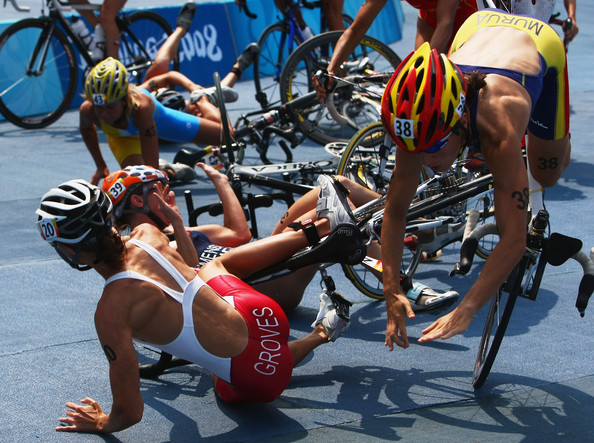
Ever feel like these 2008 Olympic tri-athletes?

I did last month, when (ten years postpartum) I decided to get in shape. Though our three golden retrievers have always kept me walking, this fall my prodigious cross-country-running son inspired me to pick up the pace a bit and run.

I followed all the training recommendations, slowly building up pace and stamina. I alternated running and walking until I could run a good couple of miles without stopping. As I trained, I noticed a tiny twinge in my left knee. Nothing major. Nothing too painful. Then I ran a 4.5 mile race on Thanksgiving Day. My knee hurt about half-way through, but I continued, finishing the race with a dull throb I thought would dissipate.

The next day, the pain felt excruciating. Days of ice, rest, compression and ibuprofen didn’t help. Convinced something major was severed—or needed to be—I went to the orthopaedic hospital for x-rays.

I left with the disappointing diagnosis of tendonitis. As much as it hurt, I expected a cast or bandage or something to show for it. Instead, I limped back home and continued rest, ice and ibuprofen for the next 5-6 days.

Finally, the pain subsided and I attempted my first walk since the race. I barely walked a block before the knife-like pain dug into the side of my knee. By the time I got home, all I could do was curl up in my bed with an ice bag and weep. One by one as if at a wake, our three dogs and three sons filed by the bed offering reassuring licks and hugs (respectively).

All of this occurred as NaNoWriMo drew to a close, along with my pathetic word count. I struggled with feelings of failure, futility, inadequacy, even doom regarding both my running and writing. Even so, I gleaned some wisdom from the experience—wisdom I thought fellow writers might appreciate.

1) First, it’s okay to try and fail.

Like most folks, I started NaNoWriMo with fervor and motivation. I had accountability partners. I tweeted word counts. Laundry piled high. Then life happened: three kids had to be three places at once; my family actually needed clean underwear; a day job and bank account needed me to work more hours; one dog licked open a hot spot and two others stepped all over my laptop whenever I sat down to write. 

All the while, that annoying NaNoWriMo daily word counter thingy crept upward. On the first day, the counter said to maintain a 1,667 words/day pace to meet the 50,000 goal. As writing time waned, the goal increased to 2,300/day. Then 6,534. On November 30, I would’ve had to write 26,000 words to meet my goal.

Still, I’m 24,000 words farther into my WIP than if I never tried at all.

2) Second, free writing leads to discovery of strengths, weaknesses and voice.

Psychologists use a journaling technique with some patients in which they tell them to use their non-dominant hand to write themselves a letter. Many times, this leads the writer in unexpected directions, opening doors to new and more productive stories. Similarly, as I continued through NaNoWriMo, I discovered new ways to write scenes. New characters felt free to emerge. I felt free to kill a few off and start over. I found my voice and lost it several times over, and even discovered new ones. Free writing, well, it frees us from editor mode, allowing uncharted creativity to emerge.

3) Keep going, but stop if it hurts.

I learned after-the-fact running shouldn’t hurt, and if it does, you should stop. Same thing with writing.

I know—I know. We’re supposed to allow our hearts to “bleed upon the page.” We ought to pour ourselves through our pens until we can sing “Nobody Knows the Trouble I Seen” in a grand, unrelenting crescendo.

Not that there’s anything wrong with that. 

But, most of us writers are melodramatic, hyperbolic saps. Seriously. If it’s too difficult, take a break. Find a new angle. Cross-train by reading a few books. Settle in to what works for you. If you participated in NaNoWriMo, be proud of whatever word count you achieved. If that sort of jump-start works for you, participate again. If you hated it and the whole month felt like a proverbial knife-in-the-knee, don’t bother.

4) As Captain Barbosa (from Pirates of the Caribbean) said, “The code is more what you’d call ‘guidelines’ than actual rules.”

So it goes with writing, including NanoWriMo. Writing advice on the web, in books or taught in classrooms are guidelines—not code—we need to tweak and apply to our unique lives. For example, the “write every day” advice is not feasible for my life stage, which includes boys, dogs, work and possibly undiagnosed ADD. For a long time, I beat myself up for not meeting that seemingly ultimate criterion for being a “real writer.” Now I’m learning to embrace my quirky—if manic-depressive—methods of achieving word counts.

You might wonder what’s become of my knee injury. I decided to head to the local swimming pool. A competitive swimmer in college, I returned to the place I knew I could find a niche and was gentler on my joints and 10-year-postpartum body. As I glide (pain-free) through the water, voices and the noise of the world are assuaged until all I focus on are breathing.

Kicking.

Reaching.

Pulling the water behind me.

More water.

More words.

Ever behind us.

Ever before us.

Ever beckoning each of us to write.

What about you? Did you participate in NaNoWriMo? If so, what did you take away from the experience?


Answering Critics

Everyone’s a critic. Everyone has an opinion. And of course, everyone’s entitled to their opinion.

But what happens when a critic or a reviewer or a book club member reads your book and doesn’t like it? What do you do when you read a cutting review of the book you toiled over for months (or years)?

Novelist Alice Hoffman had a book release in 2009 called The Story Sisters. She received a less-than-glowing review by The Boston Globe’s Roberta Silman. Unfortunately Hoffman wasn’t able to dismiss the review as one person’s opinion and move on. Gawker, an Internet gossip site captured all the dirty details. Lashing out on Twitter, Hoffman posted 27 Tweets in response to that review, including posting the contact information for Silman in hopes that Hoffman’s fans would call the reviewer out on the carpet.

I wonder if Ms. Hoffman is wishing she could take back her words. Well, actually — if she could take back her Tweets. I think that the answer to that is a resounding yes because her Twitter page is no longer online.

Very few writers please all the critics all the time, and most likely there is no writer who’s ever accomplished that feat. But the issue lies in how you deal with the criticism. It’s tough to receive negative feedback whether you’re a yet-to-be published author or one who’s had several books printed.

Some strategies to deal with the disappointment?

Call your agent/editor/mother/spouse/best friend/significant other and vent your frustration. Go for a walk. Write something. Take a nap. Write a private email to your critic if you must. Still, if the last option is your choice, first give it a day or two, and consider praying about the words you’ll deliver.

But don’t go and lose it online.

Perhaps the best course of action for Ms. Hoffman would have been to say nothing. What’s accomplished in slamming the reviewer for her words? It just doesn’t look professional, even if you think the other party acted poorly.

Author Angela Hunt cautions writers to never answer a critic publicly. That sounds like good advice. Too bad Ms. Hoffman didn’t receive such counsel.

Want a laugh? Here’s one author’s humorous response to criticism.

What’s your advice to someone suffering the sting of criticism or rejection?

Stuck in a Corner

Photo by Keith Lyndaker Schlabach

There’s a kind of fear most writers have that can inspire a clammy feeling even faster than waiting to hear if a book’s been accepted by an agent or a publisher. It’s the blank mind, particularly when there’s a deadline looming just ahead. Some people call it writer’s block, as if there’s something sitting in our heads that stands between our keyboard and creative brilliance.

It happens to all of us, no matter how long we’ve been writing or how successful we’ve become in our writing careers. However, I have learned a few tricks to remove the blocks and get going so that I don’t go sliding past a deadline and just make myself, and everyone else, feel worse. Even better, occasionally a reader will point out that very spot in a book as their favorite, and I marvel, once again, at how important it is to just keep going without expectations or attachments.

First Tip: Be gentle with yourself. Berating, digging around in your past for reasons, imagining a bleak future, or even waiting for the muse are not helpful. A walk might be, though. Also follow the HALT rule. Are you hungry, angry, lonely or tired? Take care of those first and then get back to work.

Second Tip: Pull out your character descriptions you hopefully wrote out before you started the book, whether it’s fiction, nonfiction or a memoir. Reintroduce yourself to all the idiosyncrasies, some of which you’re not even using on paper, and even add a few if you feel so moved. If you haven’t done this, do it now. We’re the driver on this literary trip, and we need to know all of the passengers in order to see where it’s going.

Third Tip: This one has gotten me out of more than one corner. Write the words, “Once upon a time,” and then let your imagination go. Write whatever comes up and follow the trail. You can delete those four little words later along with anything else you needed in order to get the left side of your brain going again. Most of us were read a fairy tale or two as a child, and those words can often create a sense of wonderful anticipation of what might be coming next. Our brain recognizes that too.

Fourth Tip: Pull out the description you have, however brief, for the arc in the story. That’s the place that’s most climatic, where everything changes. Is the arc still satisfying? Does it need beefing up, more research, more details? Is everything still pointing to that arc? That may be why you’re stuck. You’ve gone a little off course and need to delete some, add some more, so that you’re once again heading toward a big moment. Stories usually have several smaller arcs on both sides that can be used as places to aim toward as well till you’re driving for the ending.

Fifth Tip: Read the last portion you got down on paper to a trusted friend, preferably another writer that you respect. Hearing it out loud may help you hear what comes next. A brief conversation about what you’re writing and where it’s headed next may do the same. If you have to call more than one or two friends, though, you’re serial dialing as a distraction and not to help the writing. That usually leaves me overwhelmed.

Keep in mind that every job has its down days, and even though we love being writers, some days we’re bored or anxious or frustrated. That’s okay, but we have to also keep going because this is a business as well as an art form and someone’s made plans with that deadline in mind. So do your best, hammer out what you can and come back tomorrow. This too shall pass.

Q: What do you do to get out of a literary corner?

Four Ways to Engage Fiction Readers


From listening to my readers and following book reviews, four key topics repeatedly surface. While they’re not new ideas, they contain basic value in creating fictional worlds.

Readers wish to be swept away from their normal reality.

If readers wish to be swept away from their normal reality, our fiction has to contain something compelling or unique. This element must be intentional, not just something we hope for in our writing. And it should be identifiable. It can be an unusual setting or a fresh plot idea. Or how about an uplifting theme or a unique friendship? In order to offer something fresh yet appealing, I find it helpful to identify my readers and understand my genre.

Not only that, once we’ve swept readers off their feet, we must protect their experience by keeping them airborne—in their fictional world. They trust us not to let them come crashing back to earth without warning. Good writing remains invisible while creating a safety-net of lasting and vivid impressions. In other words, we must be careful not to do anything to draw them out of the story and ruin their fictional experience.

Readers need their emotions engaged and gratified.

 In order to engage and gratify readers’ emotions, we must create fascinating characters with whom they can identify—because they are looking for an emotional connection with the story. Our stories, and especially our endings, must not leave them up in the air, but provide emotional satisfaction and resolution. Again, we target the emotions associated with our genre. Suspense readers are looking for the adrenalin rush. They enjoy a short fall as long as they land safely in the end. Romance readers need to set their feet back on earth with a contented sigh.

Readers expect a takeaway.

 Readers also expect a story takeaway. When they have to come back to reality, they want something to take with them to enrich their everyday lives. It can be a spiritual theme that gives them hope in the real world. For a mystery, it might be an unexpected and intriguing twist. In women’s fiction, it might be a distinct image that provokes further thought or action—such as a family that solves their problems around the dinner table. While we foremost entertain, it’s this lingering takeaway that lives on inside our readers’ minds and excites them to spread the word about our stories. It compels them to follow our works.

Readers want to know more about authors.

Readers want to connect with us. It’s humbly amazing, and it’s the source of our greatest blessings. There’s something very intimate in the breath of story, the giving and taking that goes into the entire fictional experience. As authors, we’re sensitive beings who delight in the wonder and fear of it. And so we gladly leave our signature—a link for readers to interact with us or find out more about our writing.

What else? What do readers want from fiction?

Happy Thanksgiving from the Water Cooler Family to Yours

Photo by Tom Gill

Thanksgiving has always been a great time for Americans to reflect on what is going right in their lives.

There are other moments throughout the year like our birthday or the upcoming New Year’s holiday that lend themselves to the same moment of gratitude.  However, this holiday asks the same question with a wonderful twist.

Instead of what might be the usual, what-about-me, we’re asked to remember others, especially those who can’t be with their families like our servicemen and women stationed all over the world and in harm’s way in Iraq and Afghanistan. That gives all of us a moment to step out of ourselves and remember what really matters to us.

For many of us it’s the people seated at the table right around us, and we get to say directly to them on Thanksgiving day just how much they mean to us. But there are also many others who touch our lives every day, and mean so much to us for their unflagging support and cheers of encouragements, who are scattered all over the world.

For the writers at the Water Cooler that includes you.

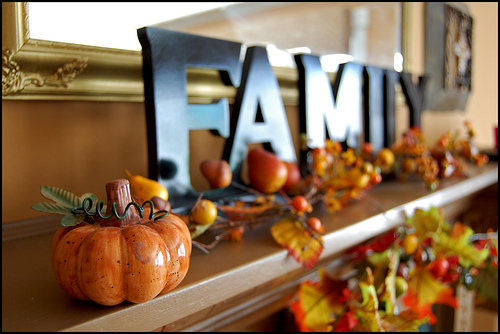
All of us at the WordServe Water Cooler want to take a moment to say thank you to everyone who has joined in our fun. Thank you for taking the time to share your thoughts and feelings here at the blog on the rollicking, fast-paced world of writing, publishing and marketing. We have all grown to feel like one big family.

For writers, who spend a lot of their career waiting to hear from editors or critics or booksellers, it’s a very special and sometimes rare gift to create such a supportive community. We look forward to all of the great conversations, book news, writing tips, and platform building to come.

A great big thank you as well to our agents at the WordServe Literary Agency, Greg, Rachelle and Barbara for all of your guidance, hard work and for always going that extra mile. We are all very grateful. Happy Thanksgiving everyone!

This Business of Story

Fall Road Olivia Newport
photo by Lorri Nussbaum http://www.keeperscards.com

“Noveling.”

On the day that I’m writing this, I’ve typed the word novelist several times and it keeps coming out noveling. “I’m a novelist” comes out “I’m noveling.”

Well. There’s something arresting there, especially since I decided long ago to write about “this business of story.”

I love stories. I read stories. I write stories. I live stories, with plot and character conflicts disassembling my tidy life plans every day. I share stories when I go deep in conversation with friends or walk beside them through their dry valleys. The fact is I see bits and pieces of stories flung around my ordinary day.

Dialogue. Humor. Moods. Obstacles. Disappointments. Faith gone dark. Determination. Overcoming. What it is that binds me to story?

My meanderings around this business of story take me to some dead ends and some scary places.

• Can I sell stories? We’ll find out when my contracted books start releasing.

• Can I survive the story of the storytelling industry, which seems to have a new cliffhanger every week?

• Can I shape stories? What am I contributing to the lives of people I care about?

• Can I sustain myself with stories? Can I make a living as writer? Can I carve out the time to feed my soul with the fruit of writing even if I don’t make a penny?

I tend to want to be at the end of stories. As a novelist I want to write stories that keep readers turning pages to get to the end. But I also want to know how things turn out in my own life story. What will be the payoff for my efforts, whether it be in relationships, ministry, or the next manuscript?

Almost every month, though, someone in my book group turns to a page to read aloud a striking passage that stills my hurrying. Mentally my tongue sloshes around trying to slurp up the wisdom and craft dripping from the words I hear. One exquisite paragraph, the precision of one sentence, even just one delicious word—story mingles in the writer’s choices, and zest lingers long after the book is closed. How could I have missed those morsels in my own reading? It’s a reminder to me of the splendor of being on the way somewhere, rather than being at the end of the story.

This business of story is about seeing life through a lens of story. We capture life within the words we wrestle onto the page. The meaning of moments comes into focus when the time is ripe.

As much as I want to understand the business of story to make a living as a storyteller, I want even more to understand the business of living a good story.

So I am “noveling” after all. I may just hang onto that accidental word.

How is your noveling going?

Note: On the day this posts, I’ll be driving across four states to be with extended family on Thanksgiving for the first time in six years. I’ll be on the lookout for free wi-fi along the way to check in with comments. Even if I’m late to the discussion, though, I hope you will find richness in conversation.