A Mean Delivery

I’ve spent the past few weeks doing the unthinkable: scrubbing unwanted birthmarks, surgically altering dangling participles and mutated paragraphs off my newborn. Manuscript, that is. But it feels every bit as painful as though it were one of my children that is running circles around me, hanging out underneath my elbows even as I type.

An occasional deep sigh runs out of me like flipping the pancake syrup bottle over too quickly. This is my baby.

Its inception was 7 years ago as I spoke at a conference and heard so many stories about this issue. I wanted to reach them with fiction.

Its conception began a year later. But starting actual labor was harder; I much preferred the slow incubation and the relative safety of my baby being hidden from other eyes. I tolerated the creeping pace of false of labor and welcomed the wussy labor pains, preferring to box the baby back up and allow it to grow some more until the mood struck/it was convenient to write/I was having a good hair day.

And then my book club/accountability girls decided it was time for Pitocin. “Let’s speed this thing up,” they chorused. “You’ve written other books and had them published. Get on it!”

“But those were non-fiction,” I protested. “I don’t know if I can share this one.”

Ignoring me, they chose my novel as the November book, thereby forcing me to have it completed by October 30th.

They loved it. It was inexpressibly joyful to have actual readers discussing opinions and for me to be able to explain my thoughts. “That surprised me, too!” And it did. Sometimes my characters took over.

Then my baby went to the NICU with Sarah Joy Freese. She was so gracious in her admiration. No plot problems or character problems, a rarity in a first-born. BUT…there were changes to tweak, tighten and thrill. Some things had to go the land of the unwritten for the sake of pacing.

That’s a lot of pressure for someone who’s not yet been out of the isolette! But I’m learning this process of birthing a different sort of baby. When the changes are completed, it will go from the nurturing NICU into the hands of the ruthless publishers.

And instead of a decent score on the Apgar scale, I’d settle for naming it “Published.” The last name could be, “Best Seller.”

How is your baby doing?

Memoir Makes It Better

5 ways practicing memoir will improve both writer and writing.

There is fiction, and there is nonfiction; then somewhere in between lies memoir, their mutant spawn.

The last decade or so has been a heyday of sorts for memoir. Much of what makes the genre appealing to readers is that it combines the artfulness of fiction with the real-life validity of non-fiction. It’s the refined, literary version of reality TV.

But what appeals to memoir readers is often the same thing that confounds memoir writers. To piece together a good memoir, the tenets of fiction must be employed within the constraints of non-fiction. Likewise, the aims of non-fiction must be achieved through elements of fiction.

Still, this blurring of lines is precisely what makes memoir a worthy and worthwhile effort for any writer. Here are a few of the lessons you might find yourself picking up in the practice:

1. You Aren’t So Wonderful

In a world of bad characters and good ones, most of us would seat ourselves in the “good” group. But memoir might suggest we are being too generous in this. Try turning yourself into a protagonist: take a recent conflict in your life and record what your thoughts, actions, and interactions were in it. Leave out your motives and intentions, and instead write what actually happened. How did you respond when given a backhanded compliment, when annoyed in the check-out lane, when cut off in traffic, when insulted or demoted or hurt? Write it honestly.

I thought of myself as a capable and accomplished person, more or less—a kind one too, until I had to become a character in my memoir. The character-me was not nearly so magnanimous as the “me” that I had perceived myself to be. Seeing my unedited self on paper was startling. There was far more sin and selfishness than I would’ve been willing to admit. But that awareness made me better: more repentant, less proud, more forgiving, less afraid of making mistakes. I became newly grateful for what I have been given because I could see like never before that I don’t deserve it. And grateful is a great place from which any writer can start.

2. Characters are Complicated

Walk a mile in somebody’s shoes, as the saying goes. Real people have real complexities; this is impossible to ignore when writing memoir because the subjects you’re writing about are displaying their complexities all the time, from head to toe. Let this be a lesson. The people in your stories will be stronger subjects if you’re willing to appreciate nuance and even paradox in them. That means creating/presenting subjects who have dimension: likeable and unlikeable qualities, consistencies and inconsistencies, weaknesses and strengths alike.

3. Story Is Good

Setting, plot, characters, conflict, rising action, falling action, dialogue. Fiction writers tend to be experienced in weaving together these elements in their writing, while many non-fiction writers spend little time developing their story muscle. The result is often a non-fiction writer with a profound writing weakness: four parts tell for every one part show. Take a crack at memoir, and you’ll see that story can make a point on its own. Events and truths don’t necessarily require further explanation from an omniscient author voice. When the story you’re telling is complete, resolution is already there.

4. Reality is Simple

To keep things fair, here’s one for the fiction folks. You have zero limitations on the creativity you can bring to your story lines, which is likely why the rest of us so thoroughly enjoy your work. But memoir can remind you that most happenings in life are not extraordinary, at least not at first glance. While it can be tempting to rely on spectacular details to move your story along, often that’s an easy way out. It might take more effort and more practice in writing to instead craft a more plausible storyline that has every bit as much resonance.

5. “Interesting” is Necessary

But it should also be said that spectacular things resonate spectacularly. Few people will want to read your work if nothing in it drums up any interest. Far too often we let ourselves settle for an existence that is boring and wimpy. Ask yourself: In the last year, have I changed? Have I pursued something? Have I discovered something? Have I been part of something that matters?

We are creatures made in the image of a bold, reckless, zealous God, the One whose story grips people and sets their lives on an entirely new course. If there is nothing in your life that seems worth writing about, let memoir be an alarm that wakes you up to live bravely. Chase after something. Commit to something. Let go of something. Be moved to action. Give generously. Receive graciously. Love with tenacity. Or write some memoir, if you dare.

My Day in Prison

I went to prison not long ago to visit an inmate and to hear her story. I needed to know first-hand if she was who my client said she was. My client, her best friend on the outside, is writing a story of forgiveness between two women. I spent two hours in a small room listening as she spoke more words than my male ears could possibly take in. But I was riveted.

Outside in the main visiting area, dozens of inmates visited with parents, friends, children. Eating vending machine food, playing cards, laughing and trying to find a bit of normal in their season of isolation from the world for their public sins.

Her words filled the air for about 95 percent of our time together. She radiated the Lord like few I’ve come in contact with on the outside. Twenty-two years behind bars for a cold-blooded murder that she readily admits to committing. Many more years lie ahead. She killed the best friend of her best friend, the woman I mentioned in the first paragraph. Tears of regret come easy for the life she took, the lives of children she altered (including her own, one of whom was only 18 months old at the time and whom she has not seen since), even a city she threw into turmoil.

The good part of the story is that she’s now had 22 years of learning what it means to know, love, serve and wrestle with the Lord.

“Though I have the privilege of keeping a small TV in my cell, I have few distractions. I get up at 6:00, make coffee in my little coffee maker, and spend time with God in the Word.” She prays…a lot. She writes songs, words and lyrics, which are truly inspired. She’s an advocate for other prisoners trying to navigate a system that, by its nature, has to be more concerned with incarceration than care, with towing the line instead of grace. She understands. “It’s just the way it is.”

“There are 1,000 women here,” she says, “about 600 I would say know the Lord, probably 400 attend one of the four ‘church’ services offered once a week. Three of the services are the fire and brimstone variety, only one of the pastors of one church talks about the grace of God.”

“As if people here need more shame,” I say, attempting to understand a bit of what prisoners feel when they’re locked up for years at a time. She agrees that most of the women are so full of shame they don’t need the heaping coals of judgment to go along with it.

Before I can ask the question, she says, “That’s why books get passed around here so often. Books communicate, through story, God’s grace and the love of Jesus in a form that women can grasp. A woman can get swept away into the love of God through a story, well told. Jerry Jenkins’ book, Riven, is a favorite here, we have four copies. Francine Rivers is passed around a lot, and of course Karen Kingsbury.” Ted Dekker is mentioned, Gary Chapman, John Eldredge, as are several other familiar novelists and nonfiction authors.

You and I both know writers can’t invest their precious time writing solely to prisoners incarcerated for not playing by life’s rules. But in a bigger sense, that’s exactly what you’re doing every time you get behind your computer to tell the story God’s given you to write. We’re all prisoners to our own story in ways unseen, locked-up to our own daily grind. We all hear too much condemnation and not enough grace and love, and we all need those continual reminders that God is involved in the details but also looking out for the big picture.

And we all need to hear that He is constantly trying to inspire us to move closer to Him, His Kingdom, and communicating the true love He has to those who can’t readily touch it.

Books do that. Perhaps the book you’re writing right now does that.

So in the truest sense, you do what you do for the prisoners. You labor long hours in research, in writing and rewriting, in obeying the editorial instructions of your agent and editors. And most of the time you do it for a pretty low hourly paycheck. You hone your craft to tell the story better. You endure bad reviews and confusing royalty reports. It’s often hard and thankless and lonely.

But you do it for the prisoners.

Thank you.

Greg Johnson is president of WordServe Literary Group and has been a literary agent for 18 years serving Christian authors.

7 Tips for Self-Editing Your Novel

Before I signed with my awesome agent, Barbara Scott, I knew my novel needed another round of edits. I looked at several freelance editors, but I just couldn’t afford the cost. So, I rolled up my shirt sleeves, prayed, and decided to do it myself. Again.

At this point, I’d already gone through my book for grammatical errors, typos, etc. I’d had a published writer and several beta readers go through it. Three other agents expressed interest if I could go back and make my novel stronger.

Here are the tips I learned that pushed my book from a maybe to yes.

1. Print it out. I fought this (don’t ask me why, my frugalness I suppose, sounds better than stubbornness), but it truly makes a huge difference. Your eye will catch things on the printed page you won’t see on the computer screen.

2. Only edit one thing at a time. Go through your manuscript focusing on one thing at a time. Do a sweep for dialogue. Is there useless chatter? Talking that doesn’t move the story forward? Do you have too many tags? Then go back for description. And so forth.

3. Examine every character. Don’t waste time with cardboard characters or the stereotypical bad guy. I highly recommend Deb Dixon’s Goal Motivation and Conflict.

4. Setting. Regardless if you write historical or contemporary, you need to research your setting. Find some of the not so common places to set your characters in. For example, lots of scenes are in restaurants, change it up and put them on a picnic at some fantastic landmark.

5. Hooks and cliff-hangers. Check out the beginning of every chapter and the ending. What can you do to make it stronger? What could happen that would ensure the reader couldn’t put your book down because they have to know what happens next? Is your heroine being chased by a wolf? Then make it a pack of wolves and have her twist her ankle. Take it a step further and do this to every scene. I recommend James Scott Bell’s Revision and Self-Editing.

6. Description. Remember to include things beyond sight. Let us know how it smells, tastes, feels, and sounds. Is the rain splattering or pounding? Are the hero’s hands calloused or warm? See Frontierinternetservices.com.

7. Wrapping up all the ends. Make sure all the sub-plots and story lines are resolved. You can set things up for a sequel, but you can’t leave things undone. Readers will feel cheated if they have to buy the next book to find out what happens to the main storyline in book one.

What are some of your favorite non-fiction writing books? Do you have any tips or tricks you use when editing?

Stewarding Your Career and Your Agent

Good agents take the privilege of shepherding authors and projects very seriously. We’re hugely selective and typically only make a “yes” decision on a client if we love (not just like) their project, and then see them as a good potential relational fit.  Life is too short to work with people if they’re demanding or mean…no matter what the potential payoff.

But make no mistake, agents work FOR their authors, not the other way around. Yet with the lightning-fast changes in publishing still happening, nearly every agent I know is telling me, “It feels like I’m working harder than I ever have before, and still closing fewer—and smaller—deals.”

Welcome to the new normal in publishing.

What this means for the client/author is potentially less time interacting with their agent because the agent is trying to stay in business. What’s an author to do in this new normal to make sure their own projects still receive a high level of attention?

  1. Take more control of your career.  The path to finding readers has never been clearer—or more time-consuming. “Get involved with Facebook Fan Pages, blogging, tweeting, Google+, YouTube, Pinterest, and networking with other authors (such as this Water Cooler),” is the familiar mantra from publishers and agents alike.  In this new world where social media IS the most influential advertising resource,  if you’re not selling books and finding new readers, it’s no longer your publisher’s (or agent’s) fault.  If you don’t feel you can come to play in marketing your own creative blood, sweat and tears, don’t even ponder a career as a writer. Look in the mirror: You are your publisher’s best PR agent.
  2. Craft, craft, craft. I tell new novelists that I don’t want to see their manuscript until 5 to 10 “non friends and family” have read and critically appraised their work.  I’d rather authors take a full year to rewrite their manuscripts than almost anything else.  If you write nonfiction and you have a strong message and a good regional platform, then be relentless on making every paragraph zing. Don’ tell me “it picks up in chapter three.” It better engage me from paragraph one or you’ll be getting the dreaded “not for me” letter. If you’re a seasoned writer, be diligent in making your prose as professional and engaging as possible.   Constantly read books on writing craft; find a mentor or critique group. Be a lifelong learner on writing well and you’ll have a good chance at being a lifelong author.

Along with taking control of your own career and staying committed to the craft, here’s how to help your agent help you.

  1. Respect his or her time.  Since you want them to stay in business, bunch questions for a once-a-week email.  If possible, use clear bullet points with clear simple questions to make it easy for us to see and answer, rather than lots of loaded, dense text.  Mondays are good. If your questions are more complex, better to talk by phone than email.  But do set a phone appointment (by email) instead of calling with hope that we will answer.  The agent is there to serve you, very true, but time is the coin of the realm. Be judicious in how you spend their precious minutes and hours because ultimately you want us out there pitching your projects!
  2. Press the panic button. I spend a good portion of my week fighting fires for authors. Bad covers, wrong titles, heavy-handed editors, proposals that MUST be out the door this week, family or personal crisis…all of these and more are what I’m here for.  When you really need me to jump on something or lend an ear, this is absolutely what I want to do. Don’t hesitate to pick up the phone or send me a “call me ASAP” email.  You’re not “bothering me” (ever); I work for you and love (almost) every minute.
  3. Pray. It’s not trite, it’s essential. Really. If I’m distracted, off task, ill or in a personal crisis myself, what am I not doing? I’m not tending to the details of what I should be doing for you. The very thing I want to do most is often what the enemy doesn’t want me to accomplish. I need to stay spiritually sharp and steady for you to feel fully supported.  And I’m not bashful to say I need your help in doing it. I covet and appreciate your prayers for me, my work and family.  I also love to pray for you, so never hesitate to zip me a prayer request during a rough patch.
  4. Share the goodies!  I love hearing how your work has impacted others in the world, or a great opportunity that has come up for you to share your book.  Forward me one or two of your best notes from readers every month and any news that is exciting to you concerning the marketing of your project.  We love to hear how the end result, your book, is impacting the world.  It is why we do what we do.

What more can you do to serve your own career? How would you feel even more supported by your agent?

Building Your Author Platform Before The Contract

I remember attending a writer’s conference where the agent I was pitching stated debut authors needed a platform, even for fiction, in their proposal. She said if a query piqued her interest, she’d google the author’s name to see what came up. If there was hardly anything, she’d think long and hard before asking to see more of their book. And, she said editors do the same thing.

Yikes. I didn’t have anything up. I thought that all came after the book deal.

First thing do to is establish yourself as a professional writer. I recommend starting a Facebook page as a writer, not a profile, but a page. Announce to people that you are a writer and believe it!

Do the same with your Twitter account. Don’t have one, here’s my post on How to Effectively Use Twitter for Authors.

You need a website. Don’t panic. There are plenty of free sites that can provide you with a website. I use wordpress.com You don’t have to start a blog yet, though I would recommend it later. You can simply have an about page and a contact page. You can check out my about page here for ideas. Visit your favorite author sites to see what you like and don’t like.

Now, you’ve got these pages up, but what do you do with them. Here’s where it get’s a little bit harder. You need to figure out who your target audience is. You’ll need this for your book proposal, so now is a good time to start on it.

Who will be interested in your books? If you’re writing inspirational fiction, then you’ve already got a faith element. Christians are interested in your books. If you’re writing historical, then what time period? What groups of people or hobbies would go along with this?

This is just scratching the surface. Go deep with this. I recommend making a list of possible interests. Now, you can write some guest posts to blogs targeting this area. Tweet and share Facebook links with articles written by other people on these subjects.

Ask questions on Facebook and Twitter. If you’re coming up with a name for a new character, list two and have people vote.

You are well on your way to establishing a platform.

What ideas or tips do you have to make your platform even more effective? How often do spend social networking? Should you be engaging even more?

Write With Realistic Expectations

Aspiring or first-time authors sometimes hold the misconception that they will hit it big with their first book. Visions of bestsellers dance in their heads.

It’s time for a reality check from The Agent’s Desk. One of our jobs is to manage your expectations through every stage of this long process called publishing.

The statistics have not changed much in the years that I’ve been involved in the book industry. In the entire Kingdom of Books, which includes every title sold in every category—not just Christian—only ten percent of authors make a living solely by writing books.

The authors you meet at conferences may still have day jobs, or if they freelance, they edit manuscripts, ghostwrite books, or conduct their own writing workshops. Or they still have day jobs. They work all day and then come home and write their novels at night. Or if they’re early birds like me, they hop out of bed at 4 a.m. and sit down at the keyboard before rushing out the door to make it to work on time. Some pound out two or three pages every day while riding a commuter train.

Another group of writers may be blessed with a spouse who is the sole breadwinner of the family. Mothers who are writers take care of the kids and write during nap time. I’ve known stay-at-home writer dads as well. The whole family tightens the purse strings and lives on a budget.

Of course, a few authors inherited their fortunes and live on Fantasy Island.

Here’s the reality. The average Christian novel sells about 5,000 copies. Some sell less; some sell more. You notice I didn’t say that the first-time author only sells about 5,000 copies. No, that includes experienced and newbie authors as well. Do the math.

A smaller percentage may sell 10,000 to 15,000 books each time. This is our hope for you because it will assure you a place at the table and a long-term career. Now we enter more rarefied air.

A much smaller group sells 20,000 or 25,000 books, but those are usually long-time authors or a new author who happens to write a book that hits a nerve with readers. We hope you are the exception and will publish books in this range.

Only a handful of authors sell in the 50,000 to 100,000 or more range consistently. You know their names. They live on the bestseller lists. You see their names month after month and year after year on the CBA or ECPA bestseller lists.

Then, once in awhile, an author catches lightning in a bottle, and you have a series such as Left Behind or a single book title like The Shack.

So please, if you are a newcomer to publishing, adjust your expectations, and if you knock it out of the ballpark, you’ll be as ecstatic as your agent and your publisher. We pray for bestsellers!

Image: Nutdanai Apikhomboonwaroot / FreeDigitalPhotos.net

WordServe Literary News

Exciting things have been happening at WordServe Literary!

On the final post of each month you’ll find a list of Water Cooler contributors’ books releasing in the upcoming month along with a recap of WordServe client news from the current month.

February New Releases

From Santa to Sexting
By Dr. Brenda Hunter and Kristen Blair
Leafwood Publishers
Non Fiction/Parenting
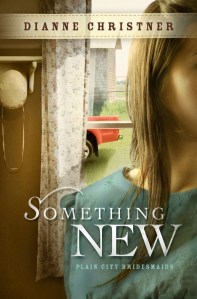
 

Something New
By Dianne Christner
Barbour Publishers
Historical Fiction
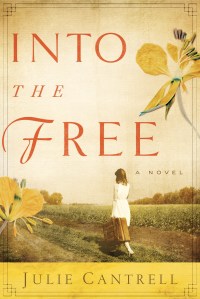
Into the Free
By Julie P. Cantrell
David C. Cook Publishers
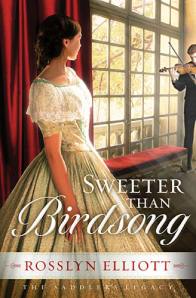
                                                          

Sweeter Than Birdsong
By Rosslyn Elliot
Thomas Nelson Publishers
Historical Fiction

 • • •

 Agent News

Though Rachelle is “gone”, she’s still closing deals for her authors that were submitted last fall: Sandi Bricker got a 3-book contract with Moody for fiction; Billy Coffey a 2-book deal with Thomas Nelson for his next two novels; Susie Eller with Regal for a non-fiction book on forgiveness, and several others.

• • •

 Barbara’s New Clients

Dianna T. Benson, EMT and Haz-Mat Operative, is a suspense/thriller novelist.

Terry Brennan, author of The Sacred Cipher published by Kregel, writes political thrillers and is Vice President of the National Organization on Disability in Manhattan.

Ann Lang Bundy, is a former police officer, home-schools her five children, and is a lay Bible scholar. She writes long biblical fiction.

Mary Davis, authored numerous bestselling Barbour/Heartsong books and is writing a longer work of fiction.

Sharon A. Lavy, a member of the Old German Baptist Brethren and author of traditional Old Order fiction. Sharon lives with her husband on a farm in southwest Ohio.

Sandra Dionne Mooore, multi-published Barbour/Heartsong author, has written a longer historical fiction novel.

Stephanie Reed, is a published author and currently in the editing stage of an Amish novel for Kregel.

Amy K. Sorrells, a registered nurse, writes women’s fiction.

Janalyn Voigt, will publish her first epic fantasy novels with Harbourlight and is also writing historical fiction.

 • • •

Greg’s Request

Would appreciate prayers for Lauren Scruggs. She as the woman who was in that horrific airplane/propeller accident where she lost her left hand and eye before Christmas in Dallas, Texas. She’s the daughter of WordServe clients Jeff and Cheryl Scruggs (I Do Again).  She’s getting major media constantly contacting her (People magazine, and all of the morning and afternoon talk shows), and I’ve (naturally) been getting calls from publishers. She’ll be making a decision about whether to write a book about it all soon. If she does, it will likely be a family written book, as this experience has tested them all.

• • •

Sarah’s New Client

Kimberly Vargas, Kimberly Vargas has created instructional design content for companies such as Capital One and GEICO, and she is the 2011 Reader’s Favorite award winner for the category of Fiction—Chick Lit for her novel, Gumbeaux.

• • •

 Contract News from Greg

Heather James signed a three-book contract with Kregel Publishers for contemporary suspense. The novels are tentatively titled: Lure; Lust; Lies.  These are Heather’s first books! Kudos to Sarah Freese for helping with the proposal and manuscript.

The Center for Bible Engagement CEO Arnie Cole and Senior Writer Michael Ross signed their second contract with Bethany for a non-fiction book titled: Tempted, Tested, True: A Proven Path to Overcoming Soul-Robbing Behaviors  (their first book, Unstuck, comes out in May).

Using the research from nearly 20,000 surveys, the authors share the new research that reveals a solution to resisting its grip, untangling negative emotions, and breaking free from behaviors that rob our souls of the life God wants to give us.

Gilbert Morris signed a three-book contract with B&H Publishing Group for a historical series called “All That Glitters”. It’s a series set in turn-of-the-century San Francisco.

Rich Marschall got a contract from Dover Publications for a reprint of 1987 book he wrote called: The Tough Coughs As He Ploughs the Dough: Early Writings and Cartoons by Dr. Seuss.  As a former syndicated cartoonist, Rick knew and knows all of the big-time cartoonists/authors from the day.

 • • •

 Other News from Greg

 Author Ken Gire has decided to give back to authors everywhere and do a month or two-month mentoring intensive for new or seasoned writers (reasonably priced). Ken has written both fiction and nonfiction, and is considered one of the finest devotional writers of our time (Intimate Moments with the Savior, among others).  If you or a writer you know is interested in hearing more about what it all entails, please contact me at greg@wordserveliterary.com or Ken directly at kengire@gmail.com. You can also find Ken on Facebook. Tell him you read about it on the WaterCooler. (He’s hoping to join us soon!)

• • •

 That’s our good news for the month.

Please share yours in the comments so we can celebrate with you.

Just Keep Writing

Photo by Lord Marmalade

There’s a reason I keep writing even though monetary success hasn’t found me, yet. Words strung together in books have always given me the ability to dream of bigger things and even the courage to go out and try.

I’ve been blessed to have three books published and each time there have been plenty of readers who have said that I helped them let go of what no longer worked for them and dream, too.

We talk a lot about our purpose for being here in this life and I’ve come to believe mine is to be of service in whatever ways I can figure out. So far, translating the common man’s dream into something worthwhile, something doable and something that’s even full of a little God-magic has been mine. Not the big, change a country, build a corporation dreams. The smaller moments that stay in your heart.

It’s a message that I took in from the very start.

My first experiences with books and stories are three of the strongest memories I have as a child. The very first one was the first time I walked into a library, the Philadelphia library and found out they let you check out as many as you could carry, my father’s rule, read them all and bring them back for more. My world opened up that day and I found out there were a thousand possibilities when it came to living a life.

The second has to be explained a little bit. We were so poor when I was growing up that my father talked a friend of his who worked at a local bank to lend him a hundred dollars so he could buy us a used black and white television. We screamed with delight when Dad brought the set home. So, when a Reading is Fundamental bookmobile came through our neighborhood and the driver told us we could pick out any new book and keep it, I felt like a little big of magic had settled over us that day. I took my time and tried to choose a book that I could read over and over again. I still have it and read it to my son when he was little.

The third memory is my brother, Jeff and myself when we taught ourselves to read, Horton Hears a Who by Dr. Seuss. We had the book read to us so many times we knew what part of the story went with what pictures and on our own figured out which words went with the sounds. That’s when I understood a secret about books. They have their own power to transform. They don’t know if you’re rich or poor, beautiful or an ugly duckling, a wealthy doctor or a poor cabdriver, and they don’t care. A book will take you on an adventure whenever you’re ready, regardless of how you see yourself and as a bonus may even change the definitions.

Books made it possible for me to envision a way to become someone I couldn’t even define yet. They gave me the faith to set out when I couldn’t find it anywhere else and the hope that somehow things would all work out.

I’ve seen it happen just often enough. A lost human being feels like they’re the only one who has ever felt this much pain. They don’t know how to reach out for help but then, inside of a story some writer concocted out of whole cloth they see every emotion or secret or hope-for happy ending that they’ve kept bottled up inside, acted out, and they start to believe – maybe there’s more to this world.

That’s why I keep writing and that’s why I’m so grateful for every writer out there who struggles to tell a good tale. I’m one of your biggest fans, whoever you are, so keep writing. We need every single exciting, cliffhanger, romance, potboiler, science fiction, political thriller that we can get our hands on because even now, sometimes my dreams need a kick start. So please, just keep writing.

Linking Arms

Talk about lousy timing! After accepting the position of president for my local writer’s group, HIS Writers, I was shocked when the Lord asked me to stop pursuing book publication. “Why are you asking me to work for writers if you won’t let me write?” I whined.

His answer was tender, “This is for you–a gift.”

And so it was. As chaos swirled in my life friends in HIS Writers linked arms with me and kept me sane. Though multiple family crises didn’t allow much writing time, staying involved kept me learning, growing, and networking as a writer. As the difficult season drew to a close, HIS Writers cheered as I received my first book contract.

There are many practical reasons to get involved in a writing group. Below are some reasons to connect–and also things to look for as you choose where to belong.

Networking

HIS Writers in 2010

There’s great value in finding support among your peers, but there’s also the business aspect of networking. Because of networking in HIS Writers, I received my first free-lance editing job. I’ve also been in the position to sub-contract part of my free-lance writing, and I looked to the people in my group when it came time to hire. It was a joy to offer a first publishing opportunity to some gifted writers. My first fiction book contract came about through a friend in the group. Never underestimate the power of peer relationships.

In many vibrant writing groups, you don’t only network with peers. Through HIS Writers I’ve met people from across the publishing world–authors, editors, even a publisher! Two agents from WordServe Literary spoke to our group. I also networked with the store manager where we meet. He’s promised me a prime spot during the next holiday season for a book signing!

Education

Good writing groups offer you a chance to develop professionally. Advanced writers and speakers teach craft. Critique groups help members develop. Strong groups also educate  about the business of writing.

HIS Writers board with the speaker of our first Novel Crafters Seminar of the Rockies. Left to right: Donna Schlachter, Susan May Warren, Paula Moldenhauer, Linda Abels, and Jill Hups

Cheerleaders

We’ve all watched eyes glaze over when non-writer family and friends are no longer tracking with us. As excited as our loved ones get as they watch us succeed, they often don’t understand the journey. We need cheerleaders who’ve felt the sting of rejection and know how to get up and try again. We need wise counsel from people who’ve been there.

A Chance to Give Back

As Christian writers we’re on the same team, working toward eternal impact. There are many ways to serve in a writing group. While getting involved with a local leadership team is rewarding, giving back can be as simple as cheering on the person seated next to you.

I recently accepted the position of Colorado Coordinator for the American Christian Fiction Writers. My passion is to see others benefit as I have from strong local chapters. How about you? Have writing groups helped you? How have you given back? What do you wish your local group had to offer?