50 Shades of Grey: To Read or Not to Read

Okay, I will not really talk about whether or not you should read one of the most controversial books published in 2011. If you want to participate in that discussion go here. I will say that I read the first third of the first book and skimmed the rest of the first book. I asked my husband if I could read it before I started, and I talked to him about what I read as I moved through the book. I say that because I want to provide a context—I have at least some experience with 50 Shades of Grey. I really want to discuss how Christians can produce books as compelling as 50. I think we might start doing that by trying the following, but I would love to hear your thoughts as well. I’ve included a lot of questions. Feel free to offer your thoughts in the comment section below.

  1. Writing Well. In the article I linked to above, Michelle mentions that she chose not to read the book because her friend did not like the writing. Honestly? The writing needs improvement. Sure, the plot moves forward, but language and fully developed characters don’t drive the book. Shouldn’t Christians produce books that compel readers to keep reading based on the beautifully written language? Shouldn’t the plot make readers want to stay up late reading under the covers with a flashlight? Shouldn’t the setting feel like home? Or if it’s an uncomfortable setting, shouldn’t it make the readers feel the tension within that particular place?  What about the main characters? Shouldn’t they feel like life-long friends?
  2. Incorporating Strong Male Characters. Christian Grey, the protagonist in 50, has a dominant personality that makes females swoon. God set up the marriage relationship with the male as the head of the wife. Obviously, that does not involve abuse, but God created the idea of headship as attractive. I love romance books (Christian or otherwise) because I swoon over a strapping male willing to make tough decisions and come to the rescue. How could you incorporate a strong, sexy male character into your novel while remaining tactful? What sort of tact is necessary in a Christian romance novel, specifically regarding the male protagonist?
  3. Incorporating Strong Female Characters. The female protagonist in 50, Anastasia Steele, doesn’t just accept what Christian has to offer in a relationship at face value (at least in the first book). She fights him on the particular details of their relationship with which she feels uncomfortable. How can you make your female characters strong in their character and conviction? Should a female character confront her husband in a novel if he makes a poor decision? What if the male that she is confronting is just a boyfriend? How do the relationship dynamics differ, and how can you keep both types of relationships interesting so that readers want to keep turning pages?
  4. Discussing Controversial Topics. Even the secular community startled a bit when they discovered 50 Shades of Grey. I doubt it would have been as popular without the controversy. Should Christians be writing about controversial issues in novels, as well?  If so, should those issues be resolved biblically, or is it okay to show that a bad decision was made and to then reveal appropriate consequences for that bad decision? As with anything, you need to pray about the decisions you make in your writing.
  5. Writing About The “S” Word. Who doesn’t like to hear about a spicy relationship between a man and a woman? How would you choose to write about a man and a woman who are in a courtship or dating relationship? How do you write about a man and a woman in a marriage relationship? How do you balance being tactful but also keeping the spice going? And, finally, should Christians only be able to include kissing scenes in their novels, or will characters ever be able to go beyond first base?

What other ideas can we glean from controversial books that sell well?

The Invisible Writer

Great fiction writers create new worlds.  Going to another world requires a cultural assimilation program, at the very least. To live in another world, even temporarily, requires isolation from the here and the now.

Having a personal creative space is a dream come true for most writers. On days when everyone else is attending a baseball game or what have you, the solitude of being an author sets in. It sometimes entails turning down a few invitations, because creating a new world takes focus, time and energy.

Writers’ needs and preferences run the gamut. Conrad Aiken wrote in his dining room. D.H. Lawrence liked to write outdoors, under the trees. Some authors like to write in hotel rooms, as Toni Morrison did when her children were young. A hotel affords privacy and the opportunity to limit interruptions for days at a time.

Some writers don’t seem to need privacy. They can retreat into the recesses of their own minds and vanish in plain sight. A legendary Parisian café, Les Deux Magots, has hosted great writers such as Jean-Paul Satre and Albert Camus. They generated content right in the restaurant.  French author Nathalie Sarraute once said that a café “is a neutral place, and no one disturbs me – there is no telephone.” A café allows a writer to feel less isolated. They can be alone while in a crowd, blending into the background. They are physically present, but their minds are busily creating all the while.

Writers also may tell you that they can’t disappear into their writing without the use of props. Only a specific pen, type of music and particular shirt will do. Therefore, the idea of a writing place is psychological in nature. That equates to whatever the writer needs to feel comfortable.  In his 1951 essay “Transitional Objects and Transitional Phenomena,” British psychologist D. W. Winnicott wrote, “It is in the space between inner and outer worlds, which is also the space between people—the transitional space—that intimate relationships and creativity occur.” With that in mind, perhaps the best answer about finding a writing haven is from a quote by Ernest Hemingway: “The best place to write is in your head.”

Where do you go when you disappear? Do you have a writing haven or can you write in plain sight?

Top 5 Self-Editing Tips: Intention

In my first post last month on the topic of the Top 5 Self-Editing Tips, I covered in detail how a novel is structured and how you can be more aware of how to build the structure of your novel.

This month, let’s concentrate on an aspect of self-editing that writers rarely hear much about:  intention.

Merriam-Webster’s Collegiate Dictionary defines intention as “(1) a determination to act in a certain way: resolve; (2) import, significance; (3) what one intends to do or bring about.”

The definition of intention includes other topics, but for our purposes, we can examine the synonyms for intention and determine how we might find intention in a piece of writing, whether fiction or non-fiction. Synonyms: intent, purpose, design, aim, end, object, objective goal.

Once you finish your first or second draft, ask yourself, “Did I fulfill my overall intention for writing this piece, and did I achieve my intention in each scene or section?”

Whoa! That sounds like a tall order, doesn’t it? You might be thinking, how long am I supposed to spend on an edit? The answer: as long as it takes. Because if you have not fulfilled your intention in writing your book, then how can your reader know what you were trying to say?

Let me make this a little simpler by starting with a chapter or even a part of a chapter. Did you intend to make your character unsympathetic in this scene? If not, then you have not communicated the soul of your character to the reader. You have not fulfilled your intention. The reader might even think, “Marsha would never say that. Why is she being so rude?”

On a greater scale, your story or your non-fiction book should have an over-arching aim or goal. It is the road that connects you to the reader and pulls the story along. Yes, even a non-fiction book is more successful if it tells a story that persuades your reader to believe in what you’re writing about.

Your road will twist and turn in a novel, but you, as the author, should always keep the goal in mind. You don’t want to tell your reader up-front what your intention is, but you should know where you’re headed. If you take readers down a rabbit trail and nothing of significance happens, they will soon stop following you through the brush.

Only you know what you want to achieve in your book. If you’re leading your reader down a “road less traveled,” the trip may be leisurely or it may zip along. You may travel on a super highway, on a country lane filled with potholes, or you may walk with your reader down a garden path.

But if you veer off that highway/road/path just because you have a sudden inspiration, your book may be filled with pointless arguments (non-fiction) or characters who pop out of nowhere to deliver a useless piece of dialogue (fiction).

My intention in this post is not to say that plotters are better writers than pantsters. You can write your book as you please, but if you know your beginning and where you aim to end—intention—then the journey will be that much sweeter.

To be continued…

How will you self-edit your novel or non-fiction book to make sure your intention is clear and that you have achieved your goal in every chapter? 

What Food Network Star Taught Me About Author Branding

Marketing your Debut Novel: Part Two

Last month, I started this series on how to market your debut novel. You can find Part One here. We’re going to stick with the same time period of the writer’s life–the pre-contract phase.

In brief, I discussed those things an author should be doing pre-contract phase, which is identifying and building your brand through social media. You are working to build a well-defined tribe. (You are reading Seth’s book by now, right?)

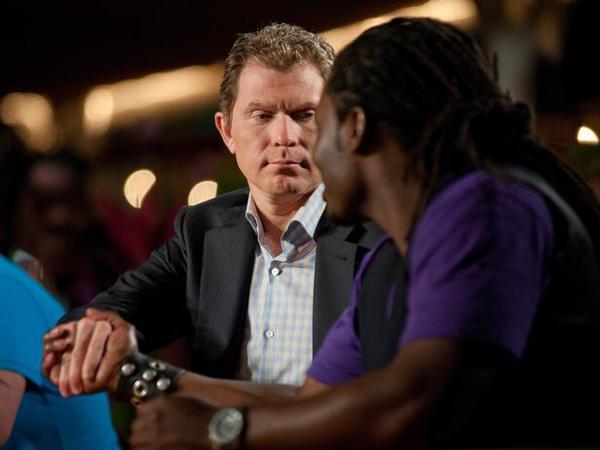
The issue of branding became very apparent to me while watching The Next Food Network Star. Yes, hand straight up in the air, I like reality TV. If you’re not familiar with the series, earnest chefs attempt to win their own show on Food Network by doing next to impossible cooking tasks for a panel of feisty food judges they may work for someday.

The judges want to know what their POV is. This season one contestant, Malcolm, was often heard saying, “I don’t need a POV. I just need to cook great food. That will speak for itself.”

I’d like to indulge a few different words. “I don’t need a brand. I just need to write a great novel! The words will speak for themselves.”

The problem is where do said judges, or in our world, publishers, place you?

If you’re seeking publication and you’ve not been published before (particularly in fiction) you are going to have to 1. finish your novel and 2. write a book proposal.

A book proposal is essentially a marketing tool for your book. It’s the sales plan. It’s the blueprint of how your tribe (again, reading it?!?) will purchase your product.

One section of the book proposal is the dreaded “comparison” section. It can be called other things. Market analysis. Comparable books. In this section, you list books that are like yours (and what sets yours apart in a nice, professional way.) The purpose of this section is to help a publisher identify what type of audience you’re trying to reach. Is there consistency amongst the authors you picked and what type of novels they write? This helps a publisher know that you know yourself pretty well. You have brand awareness and can plug into the group of people who also like those authors.

But say I have little brand awareness. My novel is a Steampunk, alien invasion set during Roman times with a population of Amish quilters–and if a book like this makes it big, you heard it here first! My website looks like a Steampunk machine tossed out a Roman gladiator who just tousled with an alien on the prairie–and throw in a couple of Amish looking bonnets for good measure since those books sell really well.

In your comparable books section, you list these books: Proof by Jordyn Redwood (a medical thriller), The Half-Stitched Amish Quilting Club by Wanda Brunstetter (Amish gives a clue there), Not a Fan by Kyle Idleman (this is Christian non-fiction), and Francine Rivers’s A Voice in the Wind (which is historical fiction).

A publisher is going to be scratching their collective head. How can one fiction book possibly be placed by each of these novels? They’re so different. Not even in the same section.

But, you say, my book will satisfy all of those readers. A publisher shakes their head. No, it won’t. The books above represent very diverse readers. I’ve personally read two: my own and Not a Fan. Not to say the other two by Wanda and Francine are not excellent novels– but they don’t appeal to me and what I like to read.

Don’t be Malcolm. Discover your brand. BE the BRAND (think Miss Congeniality– BE the CROWN!)

So, you may ask, what happened to Malcolm? Voted off midway through the season. Great chef but “we don’t know who he is.” They didn’t know how to brand him.

What about you? How did you like writing your book proposal? How easy or hard was it to write the comparable books section?

Will Reading Fiction Turn Men Into Sissies?

Image courtesy of FreeDigitalPhotos.net 

Upon learning I’m a novelist, many brethren (opposite of sisters) tell me they don’t have time to read, especially fiction. My brother-in-love, bless his heart, wants to write “real books.” My friend Torry Martin, who works for Adventures in Odyssey, doesn’t have time to read fiction.

Hey, my grands listen to Adventures in Odyssey. I’ve listened to the books on tape when traveling with them. Okay, okay, that’s not reading. But, it is fiction. It is story. And, we get totally immersed in them.

So, this brings up a question. Is fiction reading something only for women and children?

Not according to the Art of Manliness.

“Whatever the reason, cognitive studies are beginning to show men might be short-shifting themselves by avoiding the fiction section in the bookstore and library.  Today we make the case for why you need to put down those business books every once in a while and pick up a copy of Hemingway.”

Scientists have discovered fiction stimulates and improves the functions that allow us to survive in society. Unfortunately, men received the short end of the stick when it comes to the ability to socialize.

“Most of your success as a man,” says Dr. Keith Oatley, “whether in love or work, depends on your ability to socialize adroitly. We’ve all heard the phrase, ‘Success depends not on what you know, but who you know.’ As much as you’d like to think that’s not true, it is. You can be the most skilled and talented whatever in the world, but you’ll likely labor away in obscurity if you don’t know how to reach out and share those talents with others.”

The brains of boys and girls are the same in the womb, but a male brain changes at birth. (I learned this from Dr. Gary Smalley. Didn’t everyone?) In order to deal properly in our world, and in our respective roles, most male brains are good at dealing with stuff, while female brains are typically better at dealing with people.

While this might explain why women often prefer fiction over non-fiction, men probably have the most to gain from reading fiction.

Instead of seeing fiction as a bunch of made-up, waste-of-time baloney, looking at it as a simulator allows both men and women to exercise and strengthen the ability to socialize. Men, every time you pick up and read a novel, you’re molding yourself into a better, more socially adept man.

Mystery novels particularly exercise the mind. Whenever you read a Dashiell Hammett novel, you’re guessing right along with Sam Spade about what the subtle gestures or the words really mean. Is the suspect or witness just saying something to throw you and Spade off the trail? Reading fiction is wrestling with reading the minds of the characters and taxing and fun at the same time. Literary critic, Lisa Zunshine, says the mental workout you get from reading a detective story does for the brain what lifting weights at the gym will do for your physical body.

When asked if there is a special type of fiction that men should read, Dr. Oatley’s response was to read whatever interests you. The result is the same when reading highbrow Russian novels or lowbrow dime paperbacks.

“Our studies show that the effect fiction has on the mind is independent of literary quality,” says Dr. Oatley.

Image courtesy of FreeDigitalPhotos.net 

He recommends reading a wide variety of fiction, which allows us to get to know more people in more circumstances.

“Read those Louis  L’Amour and Michael Crichton novels without any guilt. You’re helping yourself become a charismatic social-dynamo.”

So, men (or women :)), what novels have you read lately?


The ‘Real Stuff’ of Character Building

A few years ago, my sister gave me a t-shirt that reads, “Careful or you will end up in my novel.” She meant it as a joke, but the truth is that my t-shirt does not lie: for me, every person I meet is a potential character in my mystery series. Like every writer, my writing is informed by my experiences and that includes experiences of people.

That said, none of my fictional characters are ‘real.’ Though they may be inspired by someone I meet, I usually take my creative license very seriously and make my characters composites of traits that fit the needs of my story lines. For example, I met a charming World War II veteran at a dinner speaking engagement last fall. He kept everyone at the table laughing with his wisecracks and his stories of being an ordnance (explosives expert) officer during his military career. When he noted that he still had all ten original fingers, I knew I had to use that line in a novel, so I began to formulate the character of Vern Metternick in my upcoming release.

What was even more surprising to me – and especially delightful! – was that as I developed the character and his relationships with other characters in the book, I realized his explosives experience could lead to a key, and very funny, scene in the novel that I had not anticipated. So my chance dinner partner unknowingly not only gave me the kernel for a wonderful character, but also actually helped shape the plot of the book. It really is true that authors can create characters, but not always control them, and I say that’s a good thing! Especially when those characters can solve knotty plot problems and make the book even better than I had planned.

There is also a flip side to my t-shirt – on occasion, I do use real people in my mystery series. Since my books deal with current conservation issues, and I aim for strong local connections, I use real places in my books, and actual experts in the story. I always ask those folks for permission to write them into the novel and then thank them in my acknowledgments. To put them at ease, I promise not to make them murderers (unless they ask to be!), and I generally give them an overview of how they’ll fit into the story. So far, no one has turned me down, and I get a real-life connection out of it that my readers love…not to mention one more person who is almost as excited as I am when the book debuts!

As a result, I assure my friends who see my shirt that their secrets are safe with me. Besides, they can always take comfort in that lovely disclaimer that prefaces fiction: “Any resemblance to actual events, locales, or persons, living or dead, is coincidental.”

And if you believe that, I have some ocean-front property in Arizona I’d be happy to sell you.

Where do your characters come from?


WordServe News: June 2012

Exciting things have been happening at WordServe Literary!

On the final post of each month you’ll find a list of Water Cooler contributors’ books releasing in the upcoming month along with a recap of WordServe client news from the current month.

New Releases

Will Davis, Enough, Revell (Agent: Greg Johnson)

******************************************************************************

Katie Ganshert, Wildflowers From Winter, WaterBrook Press (Agent: Rachelle Gardner)

******************************************************************************

Ken Gire, Relentless Pursuit, Bethany House Publishers (Agent: Greg Johnson)

******************************************************************************


Lisa Jordan, Lakeside Family, Love Inspired (Agent: Rachelle Gardner)

******************************************************************************


Maureen Lang, Bees in the Butterfly Garden, Tyndale House Publishers (Agent: Rachelle Gardner)

******************************************************************************


Kathi Lipp, Praying God’s Word for Your Husband, Revell (Agent: Rachelle Gardner)

******************************************************************************


Gilbert Morris, The River Rose, B&H Publishing Group (Agent: Greg Johnson)

******************************************************************************

Jordyn Redwood, Proof, Kregel Publishers (Agent: Greg Johnson)

******************************************************************************

Beth Vogt, Wish You Were Here, Howard Publishers (Agent: Rachelle Gardner)

******************************************************************************

Karen Witemeyer, Short-Straw Bride, Bethany House Publishers (Agent: Rachelle Gardner)

******************************************************************************


Mike Yorkey, Tim Tebow, Barbour Publishers (Agent: Greg Johnson)

******************************************************************************

Mike Yorkey, Linspired (Kids Edition, too), Barbour Publishers (Agent: Greg Johnson)

******************************************************************************

New WordServe Clients

Caesar Kalinowski is one of the thought leaders in the missional church movement and a trainer and founder of the Soma Communities in the Tacoma, Wash, area. (Agent: Greg Johnson)

Gillian Marchenko is a small town girl from Michigan who has spent the majority of her married life in big cities: first Kiev, Ukraine and now Chicago, Illinois where she lives with her husband, Sergei, and their four daughters. Gillian writes and speaks about parenthood, stumbling faith, adoption, and special needs. Gillian has written a memoir about the birth of her third daughter, Polly, and her diagnosis of Down syndrome in the former Soviet Union. Her writing has appeared in MomSense Magazine, EFCA TODAY, Four Cornered Universe, CHICAGO PARENT, Story Bleed, and CHICAGO SPECIAL PARENT. Check out Gillian’s website at www.gillianmarchenko.com. (Agent: Sarah Joy Freese)

Laurie Polich-Short, veteran youth speaker and author, is making the leap to adult non-fiction for women. (Agent: Greg Johnson)

New Contracts

Marcus Brotherton signed with Zondervan Publishing House to collaborate and write DiscipleShift with pastors and authors Jim Putman and Bob Harrington. The book will be the lead book for the April 2013 Exponential Conference. (Agent: Greg Johnson)

Julie Cantrell has signed with David C. Cook for two more untitled novels. (Agent: Greg Johnson)

Jan Drexler, a debut author, has signed a contract with Harlequin’s Love Inspired line of Christian fiction for her Amish book Love Bears All Things. With her Anabaptist upbringing and ancestral ties to the Amish church, Jan brings a unique understanding of Amish traditions, doctrine, and theology to her writing. Her ancestors were among the first Amish immigrants to Pennsylvania, fleeing intense religious persecution in Europe in the 17th century, and then continued west, arriving in northern Indiana in the mid-1800’s. Their experiences are the basis for her stories. Jan holds a B.A. in English with a Creative Writing Emphasis from Kalamazoo College in Michigan. She lives with her husband and two of her four children in the Black Hills of South Dakota. (Agent: Barbara Scott)

Pamela Binnings Ewen, an award-winning fiction author, signed a contract with B&H Publishing Group for the second edition of her non-fiction apologetics book titled Faith on Trial: Would the Testimony of Matthew, Mark, Luke, and John Stand Up in Court? The first edition of Faith on Trial was published in 1999 and was listed on many best-seller lists and even used as a textbook at Yale University in a course on Law and Religion. Pamela practiced law for twenty-five years in Houston before retiring in 2004 to write full time. (Agent: Barbara Scott)

Denver Pastor Michael Hidalgo signed with IVP for two books. The first is called Unlost, a book about stopping our search for God and standing still long enough for Him to find us. The second book is untitled. (Agent: Greg Johnson)

Amanda Jenkins recently signed a contract with Tyndale House Publishers for her memoir tentatively titled Confessions of a Raging Perfectionist. Before life as a homemaker and mother of four, Amanda worked in sales and marketing for a number of Christian retailers, as well as in visual communications and advertising. She spent ten years in L.A. alongside her film-making husband Dallas Jenkins, son of bestselling author Jerry Jenkins. Amanda attended Northwestern Bible College and graduated with a degree in Biblical Studies and Communications. She has taught Bible studies for women of all ages for the past fourteen years and is passionate about communicating truth in a culturally relevant and humorous way. (Agent: Barbara Scott)

Our own Becky Johnson and her daughter, Rachel Randolph, have signed a two-book contract with Zondervan Publishing House. The first book will mirror the title of their food blog, We Laugh, We Cry, We Cook.  It’s a book of vignettes about mother-daughter life up to and after the birth of Rachel’s first child.  The second book is tentatively titled Getting Momma Fit, Getting Daughter Relaxed. (Agent: Greg Johnson)

Jerry and Carolyn Parr signed with Tyndale House Publishers to write their memoir. Jerry was a Secret Service Agent for 25 years. Jerry was the agent who pushed Ronald Reagan into the limo after he was shot by John Hinckley and then made the decision to immediately go the hospital, a decision that saved the President’s life. After retiring, he went to seminary, and he and his wife spent more than 15 years serving the poor and homeless of Washington D.C. (Agent: Greg Johnson)

Debut author Amy Sorrells signed a two-book contract with David C. Cook. Her first novel is tentatively titled Canary Song and was the winner of the recent Women of Faith writing contest under the title of Comfort and Salvation. As well as an author, Amy is currently a registered nurse for Indiana University Health North Hospital in Carmel, Indiana. Her professional writing has been featured in numerous national journals. She lives with her husband, three boys, and three golden retrievers in central Indiana.  (Agent: Barbara Scott)

Mike Yorkey and Jesse Florea have signed with Barbour Publishers to do a shorter book on New York Yankees future Hall of Fame closer Mariano Rivera. (Agent: Greg Johnson)

Mike Yorkey signed with Barbour Publishers to write a “Playing with Purpose” book on a broad range of NFL stars. (Agent: Greg Johnson)

Mike Yorkey signed with Harper Collins Publishers as the collaborator for the Eric LeGrand story that will be published this fall. Eric was the Rutgers University football player who suffered a spinal cord injury and yet has inspired millions with his courage. (Agent: Greg Johnson)

What We’re Celebrating!!

Jordyn Redwood received a starred review from Library Journal for her debut medical thriller Proof. Their Verdict: Strong writing, terrific plot twists, and a great premise make this debut medical thriller a must-read. Recommend it to fans of Richard L. Mabry and Robin Cook.

Dave Runyon was featured in the June 2012 issue of Christianity Today. It highlights Dave’s work in the Arvada, Colo., area pulling churches together to be better neighbors. His book, written with Arvada pastor Jay Pathak, The Art of Neighboring, will be releasing in August. (www.artofneighboring.com)

Karen Witemeyer’s book Short-Straw Bride was #14 on the CBA Fiction list for July (May sales).

What can we help you celebrate?

Is Reading Fiction . . . Safe?

Image courtesy of FreeDigitalPhotos.net 

Stories have always stimulated our minds. Thousands of years before computers were dreamed of, people told stories and passed them down from generation to generation.

Our earliest record of fiction comes from the morality plays of the eleventh century. Typically, these allegorical dramas followed a story line where the antagonist tempts the protagonist to sin. And, much like our inspirational fiction of today, the protagonist finds peace, salvation, or hope, through the grace of God.

The belief in metamorphose is old. Today’s writers call this the character arc of the protagonist. The writer asks the reader to think and feel. With the suspension of disbelief, our minds reach out. As readers of well-written fiction, we think it could happen. Psychologically, the story becomes part of us. We realize we too can change.

With the origin of fiction, people thought literature could change and improve our actions. Today we turn the assertion into a question. If reading can change us, is reading fiction . . . safe?

As we learned last week, our brain doesn’t make a distinction between reading about an experience and encountering it in real life. Just as in dreams and memories, the same neurological regions are stimulated. (Have you ever had a child tell you about something horrible that happened last week and start crying as if it had just happened?)

In his book, Such Stuff as Dreams, Keith Oatley proposed that reading produces a vivid simulation of reality, one that “runs on minds of readers just as computer simulations run on computers.”

And just as my grandsons’ piloting skills improve when they spend time in a flight simulator, so people’s skills of understanding themselves and others should improve when they spend time reading fiction.

Fiction gives readers an experience found only on the page. As we read, we can enter fully into the thoughts and feelings of fictional characters which simulates the feelings of other people.

Dr. Oatley notes, “I liken fiction to a simulation that runs on the software of our minds. Just as computer simulations can help us get to grips with complex problems such as flying a plane or forecasting the weather, so novels, stories and dramas can help us understand the complexities of social life.”

So what exactly is fiction? Contrary to popular opinion, the word doesn’t mean untrue. The Latin word, fingere means to make. The Greek word, poesis also means to make. Both fiction and poetry come from the imagination, on the part of both the author and the reader.

Novelist Henry James said fiction is a direct impression of life. Robert Louis Stevenson didn’t agree with that statement. A novel, he said, is a work of art.

Oatley researched the effects of fiction on readers. He tested for empathy and understanding of others’ minds.

Participants looked at photographs of people, showing only the eyes. For each image, they chose the most appropriate of four words, “joking, flustered, desire, or convinced,” to describe what they thought the person was feeling at the time the photo was taken.

Regardless of personality type, people who preferred fiction had greater empathy than those who read mainly non-fiction. The more fiction people read, the better they were at having empathy for others.

Which leads us to our third question: Will reading fiction turn men into . . . sissys? Thoughts?

Until next time, . . . Sharon A. Lavy

Knowing My Characters

The more I explore this writing stuff, the more I learn how much I don’t know, or can do better.

I’ve recently come across two techniques that help me probe deeper into my main character and discover new things about her, new insights that add rich texture to her, to her relationships, and to the story.

In his new book, Conflict & Suspense, James Scott Bell writes, “The stakes in an emotionally satisfying novel have to be death.” These include physical, professional, and psychological.

My current work is about a female attorney, Emily Peyton, in the 1880s. In the main conflict in the book, her first trial, she defends a man accused of murder. She faces both professional and psychological death. A conviction would mean she failed as an attorney and would damage, if not destroy, her confidence in her ability to practice the profession she loves. In her professional career, Emily must overcome the prejudices of a male-dominated world. To lose the trial would give credence to all those who say the law is no profession for a woman. A conviction also adds a burden of guilt over having her client face the gallows for a crime she believes he didn’t commit.

Randy Ingermanson teaches the importance of our characters having internal conflicts. Such conflicts follow the character throughout the story and present emotional dilemmas she must overcome. These internal conflicts are identified through value statements, core beliefs that drive her. These beliefs are best identified through “Nothing is more important than…” sentences, such as:

Nothing is more important to Emily than being accepted as an attorney.

Nothing is more important to Emily than seeing justice prevail.

The internal conflict arises when these value statements collide. Emily’s value of being accepted as an attorney conflicts with her value to see justice prevail when she risks her career to do all she can to have her client acquitted.

The keys to the value statements are they must be equally strong and, at some point in the story, they must come into conflict, forcing the character to make a choice.

What techniques have you found helpful in developing your characters?

Does Reading Fiction Affect Your Brain?

Image courtesy of FreeDigitalPhotos.net 

Annie Murphy Paul raised the question earlier this year with her article: Your Brain on Fiction posted in the New York Times Sunday Review. As readers and writers, we need to know the answers to the questions raised by her article.

In this day of instant gratification, with our children and grands fixated on computer games and other digital distractions, is reading dead?

According to Neuroscience’s findings on how reading affects the brain, perhaps we should encourage the old-fashioned virtue of reading stories.

Or should we?

For further research, I ordered first one book and then another.

Keith Oatley’s Such Stuff as DreamsBrian Boyd’s On the Origin of Story Tilottama Rajan’s The Supplement of ReadingLisa Zunshine’s Why We Read Fiction Lewis Mehl-Madrona, D.D., Ph.D.’s Healing the Mind Through the Power of Story

To read Keith Oatley’s blog go here.

While waiting for the books to arrive, I printed out 50 pages of web articles on the subject. I searched the brain’s known language regions, like Broca’s area and Wernicke’s area. Fascinating stuff for me, it brought back memories of pouring over Dad’s medical books as a child.

It was worth it. Now to compress all this information into a 500-word blog post.

Can you say brain overload?
#1. Does reading fiction affect the brain differently than reading non-fiction?

#2. If so, is reading fiction . . . safe?

#3. Will reading fiction turn men into sissies?

Neuroscience shows the Broca’s area and Wernicke’s area of our brain affect how the mind interprets written words. Other parts of our brains are involved as well.

No wonder the experience of reading can feel so alive. (At least for those of us who love novels.)

While words describing smells like “apple pie” or “vanilla” or “vomit,” cause a response from Broca and Wernike, the language-processing areas of our brains, these words also affect the parts that process smells and scents.

Anne describes using brain scans to reveal how stories stimulate the brain and can even change how we act in life. I’ve condensed and paraphrased her content.

Volunteers read while scientists scanned their brains with a functional magnetic resonance imaging (fMRI) machine. As the readers looked at the words cologne, bacon, and eggs, their primary olfactory cortex lit up. The words describing objects such as car, or building, left this part of the brain dark.

Motion words activated sections of the brain other than those for language processing. Participants read sentences like “Gritting his teeth, he ran after her” and “He grabbed her forearm.” Interestingly enough, these scans showed stimulation in the part of the brain which coordinates body movements. When the action described was arm-related, the stimulation was concentrated in one part of the motor cortex and in another part when the action concerned the leg.

Fiction, in the form of a novel, examines the social and emotional world of mankind through created characters. We have documented how the brain responds to words of smells and textures and movements as if they were the real thing.

While we read, our brains treat the interactions among fictional characters the same as if we, or someone in our real life, has experienced them.

Which leads us to the next question, “Is reading fiction . . . safe?” What are your thoughts? I will discuss the answers in my next post.