Use of Humor in Thriller Novels

Don’t we need humor in life to make it through? Life is hard. I have two very serious jobs. I’m a real life pediatric ER RN and a suspense novelist. Those can be heavy days but they can also be fun days—by using a little humor to get through.

LaughterMarriage is no different, right? Humor is necessary. What are some of the funniest things that have happened between you and your spouse? To take a break from discussing serious subjects: like death, trauma, and writing suspense—I thought I’d take a humor break and share some funny highlights from my married life.

Do you find that opposites attract? That’s the truth with my husband and I. He’s the quiet introvert. I’m the more outspoken extrovert. He gets queasy at the site of blood. Obviously, I do not. What we have seems to work—as we’ve been married fifteen years.

During our dating years, we were set to see a movie. I drove to his place and let myself in—and then sat there fuming when he was nowhere to be found. This was before the age of everyone having a cell phone. Finally, his phone rings. I answer. He’s on the line. “Where are you?” He asks. “Where are you?” I ask right back. He says, “I’m at your place!”—“Well, I’m where you should be.”

Other funny moments? Let’s see—teaching kindergarten Sunday school with his ex-girlfriend. Well, we can laugh about that now.

My husband likes to trim his own hair. One day, he mistakenly forgot to put the spacer on the clippers and took a swipe. Without much introduction, he comes into the living room and asks me, “Can you fix this?” with one bald stripe down the middle of his head.

I burst out laughing so hard—I still crack up thinking about it. ER nurse, honey—not hairdresser extraordinaire.

Then, add kids to the mix and the potential for a good laugh multiplies. We have two daughters age 8 and 10. When my youngest was perhaps 4 y/o—she was just in one of these pestering type moods. After several attempts at redirection, I finally just say, “Please, just get out of my hair!” In her sweet, innocent voice, she says—“But, I’m not in your hair.”

Sometimes, readers need lighter moments to get them through serious subjects or intense novels, too. I have a very dry sense of humor. My debut medical thriller, Proof, dealt with some very serious subjects and I thought whilst writing the ms—I really do need some moments of levity.

Hence, the humorous pairing of my odd couple detectives, Nathan Long and Brett Sawyer. Nathan means business. He’s serious and organized—bordering on an undiagnosed case of OCD. A southern gentleman. Brett’s the laid back easy type—maybe plays a little bit loose with the rules to get the job done. Often, their interactions provide comic relief in Proof. Let me give one example: an elderly woman with some questionable underwear choices serving them tea with a heavy dose of liquor during an interview. You may think that would never happen. Well, just recently I had a 14y/o show up just in his skivvies—at the ER. That’s right—just the white cotton briefs. And let me say—he was not deathly ill. Plenty of time for that young man to get dressed.

What about you? What’s the most humorous thing that’s happened in your married/dating/writing life? I’d love to know—could end up in my next book.

Names withheld—of course.

Being Equipped

Criticism 1Many times, when I meditate on God’s Word, my eyes are drawn to encouraging and uplifting verses like John 3:16, or “I can do all things through Christ who strengthens me,” or “The Lord is my shepherd, I shall not want.”

And sometimes, as only God can do, He whacks me upside the head with a mackerel as he did during my prayer time the other day when He led me to Proverbs 29:1 (NLT): Whoever stubbornly refuses to accept criticism will suddenly be destroyed beyond recovery.

In the King James Version, this verse reads: He, that being often reproved hardeneth his neck, shall suddenly be destroyed, and that without remedy. Not quite as in my face as the NLT. The Old English makes it a little mushier with having to untie the knots in the sentence.

Not the NLT. It’s like stepping on the wrong end of a rake.

When I began writing seriously, the thing I feared most was receiving criticism. I had always been extremely sensitive to criticism. It came from having a poor self-image and being convinced in my mind I could never be smart enough or good enough. My first reaction was to shut down and then, at the first opportunity, I would go off by myself and brood.

Frustrated Woman at Computer With Stack of PaperImagine taking this attitude into a critique group.

But God, with His grace and favor and wisdom, prepared me. He showed me magazine articles, books, and blogs that talked about receiving and giving criticism. He brought me to my first critique group. There I observed a group of people much more experienced than I give and receive critiques in ways that were constructive and encouraging.

Most importantly, through prayer and wise counsel, He showed me, for the first time, how to see the criticism was not about me personally, but about my words.

Sometimes, it’s still hard to make this distinction. The enemy tries to wedge the door open and tell me negative feedback means I’m no good. But God has shown me, no matter what people think of my writing, I am good. I am His child and, as the old saying goes, God does not make junk.

To refuse and reject criticism is to set myself up for failure, to put myself in a situation of not being published, of developing a reputation of being difficult, if not impossible, to work with. This accomplishes several things I don’t want to happen. People won’t work with me or consider my work because I’m not open about improving it. It hurts God because it takes me out of His plan for me. And it gives the enemy a victory because it takes me out of the will of God and opens the door for him to do even more damage, and, thus, for me to be destroyed beyond recovery.

God’s shown me the purpose of the criticism, how it applies through this verse. The feedback is to help me improve as a writer, to develop and refine my craft, to become a better storyteller. To become a better servant of Him by taking my skills to the highest level possible. To walk in obedience and in the fullness of His plan and calling for my life.

After getting my attention in Proverbs 29:1, He led me to this Scripture, a part of a prayer in Hebrews 13:21 (NLT): May he equip you with all you need for doing his will. May he produce in you, through the power of Jesus Christ, every good thing that is pleasing to him. All glory to him forever and ever! Amen.

He’s equipped to me write and He’s equipped me to receive feedback and instruction to improve my writing so it serves Him even better.

Thank You, Doctors

compassI have a secret to share with you.

When I create characters for my novels, I often call on the expertise of two renowned psychologists. Their names are Carl Jung and Isabel Briggs Myers. Many of us know their work in the form of the theory of psychological typology, or the personality inventory called the Myers-Briggs Type Indicator (MBTI). I’ve found that once I start developing a character, I can turn to the Myers-Briggs personality types to fill out the outline of a character with true-to-life traits and behaviors using the four categories of personality type. In short, it’s like a cheat sheet for character creation.

Let’s look at an example using the first piece of the four-part MBTI.

I’ve got a rather demanding physicist I want to cast as my reluctant hero. As an academic, he fits the Introvert (I) type, rather than the Extrovert (E): he prefers private time, doesn’t do well in crowds, and is sometimes so wrapped up in his thoughts that he’s oblivious to what’s happening around him. I’d say that’s a good description of a physicist who loves to work long hours in a research lab. However, since I want him to come across as blunt and insensitive, I’m going to throw in a little Extrovert: he tends to act first, and reflect later, in social situations he finds challenging.

Here’s the scene I’m working on: After finishing a 20-hour stint in the lab, the physicist is awakened from a deep sleep by an insistent knocking at his front door.

Here’s the question I have to answer as the author: Is he going to greet the visitor with a smile, because he can’t wait to share the big discovery he made during that lab marathon? Or is he going to roll over and refuse to come to the door?

I decide he’s going to roll over and pull the pillow over his head in true Introvert style.

But the knocking continues. He has to do something to make it stop because it’s infringing on his solitude, which he craves.

Grudgingly, he drags himself out of bed; he’s not going to be a happy camper when he opens that door. Nor does he want to talk with anyone (this is an awkward social situation, remember!), but because of that bit of Extrovert quality (act first, think later), he ends up jerking open the door. When he see’s it’s his least favorite colleague from work, he blurts out a rude, “What are you doing here?”.

By using the MBTI as my guide, I’ve accomplished several things, such as giving him consistent character traits, motivation for his actions, and even the beginning of a conflict with another character.

By the time I identify the other three parts of his personality type – Sensing (S) or Intuitive (N), Thinking (T) or Feeling (F), Judging (J) or Perceiving (P) – I’ll have the keys to his actions in any situation my plot throws at him.

How do you make your characters come to life?

I Told You So

IMG_38701_edited-1

Some of the most well meaning people told me to wait to write until I get older. No way a twenty-something can write what people want to read. You don’t have enough real world experience. This is a pipe dream.

The reality of writing a book is that this is a tough job, tough business, and not everyone succeeds. So often the people in our lives have the best intentions as they quietly attempt to redirect us. They don’t want us to be disappointed, experience the sting of failure, or struggle through pain induced by rejection.

Thank goodness the Lord has different plans. I’m thankful for those who attempted to redirect me. I’m thankful for the countless friends and family members who consistently encouraged me. Both groups helped me trust the Lord more. I imagine Him smiling down with a little chuckle and saying, “I told you so.”

I am under qualified in life experience, but I serve a big God. If fisherman can become world changers, so can I. I love what the apostles say in Acts 4:20, “As for us, we cannot help speaking about what we have seen and heard.” So let’s turn that into writing advice:

1)   Write what you know.

I know the heart of young adults to make a difference and dream big. I know the pitfalls that come with learning this adult life. I know the struggles of my parents to raise kids and find a new dynamic with adult children. I know my grandparents’ joy as they pour into us and take the “friend and counselor” role because they’ve already done the parent thing.

I know the south. I know Texas. I understand different personality dynamics. I know how girls think. With a younger brother, I’ve been around guys enough to know how they react and respond.

Bam. I can take all that and craft characters, scenes, problems, and story lines. Imagination takes care of the rest.

2)   Write what you want to learn.

In the course of writing my first book, I wanted to learn more about the SEALs, Haiti, and living in the deep south. (Yep, my brain is random.) So I set my book in Alabama with a trip to Haiti and a Navy SEAL love interest. I might recommend starting out with something slightly more familiar for a first novel, but I rarely pick the easy avenue when I start a project. So here we are!

I traveled to Haiti, made friends with a SEAL, and peppered my Alabama friend with questions and requests for pictures. I worked to become an expert. I’m still a long way from perfection, but I can now speak with a working knowledge on these topics.

3)   Write from your passions.

Three things impact my writing heavily:

– Characters that dream big

– Life as an adventure

– Hope that is found in Christ

I believe we serve a big God who loves to do big things with everyday people. I believe every day is an adventure crafted by the Master Storyteller. And I believe every story ends with hope because of Christ. Forget this post-modern idea that you live and die and that’s it. We were created for something more, and my stories wrestle through hard issues that don’t always end perfectly but always end with Christ. With that fueling me, passion informs every word I write.

I don’t have to understand life, the universe, and everything. I understand my world and snapshots of the world around me. I write what I know. I write what I want to learn, and in doing so, my world expands to fuel my next novel. I write what I’m passionate about, which changes and grows constantly.

Now, I’m telling you that you can do it. You can achieve your writing dream. There were many moments when I doubted this dream would come true. But if the Lord has called, He will bring it to pass. Keep writing. Keep growing. Keep networking.

One of these days, when you get that first contract in the mail, know that you heard it here first: I told you so!

Jumping in the Deep End With Your Characters

Fiction writers write stories, and the best stories are the ones that bring the reader into the characters’ lives. As writers, we want our characters to take on lives of their own, to seem real, to bring the reader along on the journey.

The best way to do that is to give our characters identifiable goals that move them from one end of the book to the other, propelling them forward until they reach their dream.

Sounds simple, right? Well, it isn’t quite that simple.

Image

Our hero doesn’t just need a goal – the “what” of what he wants. We need to dig a little deeper. For example, your hero wants to become a doctor. That’s a worthy goal. But what makes it an important goal, one that the readers care about, is that he wants to become a doctor because his younger brother died of a mysterious disease. He wants to identify the disease and find a cure for it. That’s his motivation, the thing that keeps him moving toward his goal.

What keeps the reader turning the page, though, is that there is something or someone in conflict with the hero, trying to keep him from attaining his goal. Perhaps it’s a lack of money that keeps him from going to school. Perhaps it’s another medical student who competes with him at every turn – cheating whenever he can. Perhaps your hero has the same disease that killed his brother, and he knows he has a limited time to find the cure. Or maybe it’s the hero’s daughter who has the disease…that ramps up the tension a bit, doesn’t it?

This concept is covered well in one of my favorite writing books, Goal, Motivation and Conflict by Debra Dixon. I try to read it at least once a year, and I learn a bit more about ImageGMC every time I read it.

But I recently found something else to use to bring my readers deeper into my characters’ lives. As we write, we often ask ourselves, “What would my hero do in this situation?” To go deeper, you need to know not only what your character would do, but what your character would never do.

Let’s look at our hero who wants to be the doctor. He’s smart, good-looking, dedicated, compassionate, honest. We know what he would do in most situations. We also know he would never murder anyone. How could he? He’s dedicated his life to helping people.

But think how the tension would crackle if you put your doctor-to-be in a situation where he has to make a choice between the life of a stranger and the life of his daughter. What would he do? Could he do the unthinkable?

Taking your readers through your hero’s thoughts and emotions as he wrestles with that decision brings them deeper into his character than anything else you can do. They sweat with him as he realizes he’s in a no-win situation. They feel the dread of making a decision that will haunt him for the rest of his life. And they celebrate with him when he comes upon the only solution – the perfect solution that preserves both lives.

So think about the hero or heroine in your work in progress. What is the one thing he or she would never do?

And what situation will guarantee they’ll have to contemplate taking that step?

Jan Drexler lives in the Black Hills of South Dakota with her husband of thirty years, their four adult children, two rowdy dogs, and Maggie, the cat who thinks she’s a dog. If she isn’t sitting at her computer living the lives of her characters, she’s probably hiking in the Hills or the Badlands, enjoying the spectacular scenery.

Jan’s debut novel, The Prodigal Son Returns, was published by Love Inspired in May 2013.

Writing Aversion Disorder

I am currently suffering from writer’s block—or, to use a term more descriptive of how it actually feels on the rare instances when it seizes me, Writing Aversion Disorder (WAD), an ailment of much more serious proportions than mere blockage. Pointless No Entry sigh--James YardleyIt’s not just that I can’t think of anything to say or don’t like what I do say or even that the words are there but just won’t emerge from my brain or fingers onto the virtual page. Rather, I’m incapable of even approaching my computer. The thought of writing nauseates me.

As such, I’m late posting this month, which has surely not endeared me to the tireless and underappreciated editors of this blog. We’re supposed to set our posts two weeks early to give them time to look our writing over before letting it loose into the blogosphere. I feel bad about my sloth. I can’t help it, though. I’m in a bad way.

It should be good writing time for me. As a professor, I have summers off, and, with both daughters occupied with faraway internships, I’ve had big writerly plans this summer. I’m right in the middle—the most exciting part, where all the narrative strands start coming together—of a novel-in-progress, and my goal, before WAS set in, was to get ’er drafted by summer’s end.

Now my goal is to do anything but write. Read. Relearn “Minuet in G Minor” and “Für Elise” from my year of piano lessons as a child. String beads from stashes I found in my daughters’ rooms to make gaudy bracelets for myself and them. Play Spider Solitaire on my new phone. (My brother recently clued me in on how to Control-Z back to a game’s beginning to avoid wrecking my win-percentage.) Clean my deceased mother-in-law’s house down the road. (I’m not joking: I spent all day yesterday there, sorting, tossing, soaping, scrubbing.) Weed my garden out in the hot sun.

Raised bed--photo by SrlI was thinking about this problem as I crouched, hands in the dirt, today, and it occurred to me that, while I usually love working in the garden, even weeding, I’m also overcome on occasion by Gardening Aversion Disorder (GAD)—surely related to WAD. So, with no other blog post in view, I decided to examine what triggered my GAD episodes for anything that might illuminate and, ideally, solve my current dilemma.

Here’s what I came up with: I suffer from GAD when tasks or trips have taken me away from the garden for bit and, upon my return, everything has gotten out of control. Vegetables need harvesting, many having overgrown their tastiness. Itchy weeds carpet the gravel paths between the beds. Sand fleas have made lace of my eggplant leaves; my bean vines are encrusted in ants; my tomato plants are speckled with big black beetles. I know I have to regain control but don’t know where to start.

The answer to my own question—where to start—is to not ask it in the first place. Don’t look, I tell myself. Just leap! Whatever task I choose, my gardening soul has learned to believe, will be more productive, more creative, than wallowing in indecision.

Maybe I don’t want to write, I speculated, because I’ve lost control and uncertain where to start in reclaiming it. And, indeed, as soon as I thought these words, I knew them to be true. That little lightbulb of insight was all I needed.

Perhaps, I thought—or hoped, or both—I need to quit trying to figure what part to work on next and just do whatever comes to hand.

And somehow, having just that much—that little—of a plan sent me back to my desk to dash off this post and then leap back into story.

What Does Your Hero Yearn For?

I’m not talking about story goals here. This is something deeper, more at the core of his being. James Scott Bell writes about this in his book Conflict & Suspense.

The hero may not even realize it’s present. It’s something he doesn’t have but yearns for. Businessman Running with UmbrellaBell defines yearning as a desire for something without which the person feels incomplete. And he may not even be aware the yearning is there until a story event triggers a response based more on the yearning than on the event itself. This could lead to behavior, an overreaction or under reaction, that makes little sense to the other characters and to the hero himself.

This yearning is in your hero’s history, perhaps something from his childhood. Whatever it is, it predates the story. When he comes into the story, he’s already carrying trouble in the form of this unfulfilled yearning. This gives you all kinds of possibilities for unpredictable actions by the hero as the unspoken yearning influences his behavior and relationships with others.

man prayingFor example, say your hero yearns for a strong father figure because his father left the family when the hero was a boy. In your novel, he might have a hard time seeing the antagonist as the villain because he develops a strong emotional attachment to the man early on. As the villain is slowly revealed, the hero rebels against what he sees and may even attempt to shield the bad guy, defend him, rationalize his behavior. Or he may feel betrayed which can send him down another path in the story

Next time you feel stuck with your hero, dig deeper into his history. See what unexpressed yearning he’s hiding from himself—and from you.Now the tension and potential for a tragic outcome is heightened as the hero’s yearning, and resulting idolization, of the villain conflicts with the reality of who and what the villain really is.

Showing Vs. Telling

Let me first say I am hardly an expert on show versus tell—every writing teacher’s admonition for every storyteller out there. In fact, I was quite shocked when another author said she was taking notes on some passages in Poison because she thought they were good examples of showing. I am still hoping she will tell me exactly which ones they were so I can admire my own amazing work because I was that surprised.

ActorShowing versus telling can definitely be learned (after all, I did it and was never an English major) so don’t go over the writer’s cliff Thelma and Louise style if some of these points don’t hit home. I am still learning the more advanced points myself and that’s a mark of a true writer—always desiring to learn more.

The concept of showing could also be described as Deep POV. I think these concepts are honestly interchangeable. So if you hear one—think of the other.

The first (and really good) piece of advice I got on showing was to write my scenes as if I was filming a movie. How would I describe what was on the screen to a reader without stating the obvious?

For instance: He was angry. This is telling. It doesn’t leave any room for the reader to use their imagination. Now, more showing. Her husband swore at her and spittle hit her face seemingly to mark a target for his fist to punch her in the jaw. See the difference? I haven’t said the word “angry” at all, but does this man seem fired up?

While editing, you’re likely telling if you name the feeling. He was mad, sad, fearful…etc.

A great tool I’ve used to help me show more visceral reactions is The Emotion Thesaurus. There is also a website by the same author called The Bookshelf Muse. It gives specific bodily actions for tons of different emotions. Use this as a starting point to generate ideas and then improve them for your own manuscript.

Another tip to help show instead of tell is to phrase things as questions. Telling: She wondered if her attacker was walking behind her. Showing: The echo of footsteps matched her high heels as they clipped down the pavement of the dark alley. Was it him? Was it the man who nearly killed her with a quick slash of a knife across her throat two years ago? The one she presumed was now sending her all those threatening letters—just like before. Now he was free.

To show more, add a visceral reaction from the woman from the emotion she is likely feeling which in this instance would be fear.

The echo of footsteps matched the quickened pace of her heart as she broke out into a run down the dark alley. Instinctively, her hand covered the thick scar as a shield from both the memory and the act. Was it him? Was it the man who nearly killed her with a quick slash of a knife across her throat two years ago? The one she presumed was now sending her all those threatening letters—just like before. Now he was free.

I know—future editor. How can she run with her hand set on her throat? Just to illustrate a point. Edit at will.

Also, don’t feel like you have to do this in the first draft. The first draft is all about getting the words on the page. Showing can be added in subsequent editing phases that you do before the manuscript goes to an agent or publisher, but don’t get too hung up on trying to do a lot in the first draft until it becomes more natural for you.

This is just the beginning. There are many more techniques that can be used so keep working at it and you’ll have the reader sitting inside your character in no time.

What are some techniques that have helped you show vs. tell?

Writing Life Lessons

photoNo matter what stage I’m at in the writing journey, whether it’s researching, plotting, writing, or editing, I continue to learn. Currently, I’m in my last round of edits for my debut novel, Shaken. Man, has it been humbling. I don’t claim to have all the answers to this writing journey, but here are a few tips I’ve learned from trial and error. Like my novels, I’m always a work in progress.

Paint a scene

This seems like a no-brainer, right? I thought it was, too. Except sometimes I don’t write all that is in my head. Thank goodness for an editor who reads the story and asks me to fill in the holes. Use the senses. Again, you would think this is obvious, but too often we forget. In my second book, I open with a beach scene. Can my reader smell the smoke from the bonfire, taste the salt in the air, feel the whip of the sea breeze, hear the lap of the waves, see the fireworks exploding? If not, I need to keep crafting.

Make connections

Link scenes, events, and characters. As my granddad told my brother when he came home from college late one night, “Account for yourself!” Make sure all your elements are accounted for, and again, not just in your head. If a character just spoke yet the scene ends and they are nowhere to be found, make sure there is a clue to the reader of where they went and when they exited the conversation. Again, these should be obvious, but sometimes when I focus on the story line at large, I forget these important little details that further immerse the reader in the story.

Books are not movies

I tend to see my book playing out like one of Nicholas Spark’s movies – sweeping, southern, and characters that tug at your heart. Except, books are not movies. What a viewer can take in in a few seconds of a new scene takes a lot longer to paint in a book. The best movies come from books that paint vivid scenes. Think the party scenes in Gatsby where Fitzgerald describes the house and guests in great detail. If you don’t know what I’m talking about, stop reading this right now and at least read those scenes.

Kill your “darlings”

This is a lesson one my college professors shared with me, and regardless of the time passage, it doesn’t get easier. First, let’s define “darlings.” It is any piece of your story that you are attached to that does not ultimately propel the story forward. You may think a scene is epic, but will your readers care? Does it demonstrate an irreplaceable character quality or scene that is essential to your reader’s knowledge of the story line? Is your attachment greater than the reader’s? If yes, then don’t be afraid to kill that “darling.” Your story will be better for it. Trust me, I know it’s painful, but strike with your red pen and make the page bleed.

You’ll never be completely satisfied

photo copyStop looking at the blinking cursor. Save and send. Your story will never be perfect. If you are waiting for that, choose a different career. I emailed my mentor a couple months ago and told her I thought my story sucked and I wanted to start from scratch. She laughed (I could sense it over email), and told me that it was great for where I’m at now. The next novel will be better than the first, and the third better than the second. If you know you have done all you can do right now, then allow yourself to be satisfied with the results and send that sucker. I still find mistakes in my short stories from college, and I couldn’t count how many times I have edited those pages. But I’ve also increased in my ability and my knowledge since college. I’ll focus on doing my best now and realize that I’m always growing.

What writing tips have you picked up along the way?

WordServe News: May 2013

Exciting things have been happening at WordServe Literary!

On the final post of each month you’ll find a list of Water Cooler contributors’ books releasing in the upcoming month along with a recap of WordServe client news from the current month.

New Releases

*************************************************************************************************

IslandoftheInnocentIsland of the Innocent by Lynn Morris, number 7 in the repackaged “Cheney Duvall, M.D.” series.

*************************************************************************************************

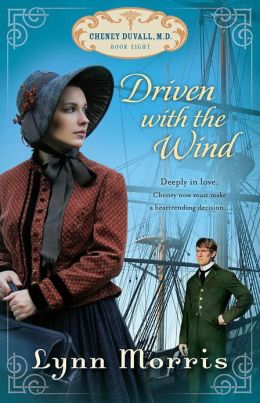
drivenbythewindDriven by the Wind by Lynn Morris, number 8 and the final book in the series.

*************************************************************************************************

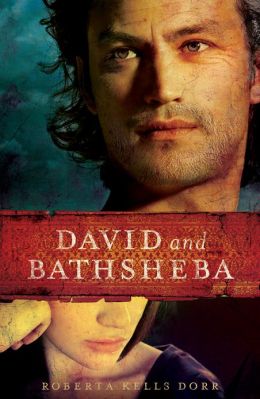
DavidandBathshebaDavid and Bathsheba by Roberta Kells Dorr (Moody). This is the first in a series of biblical novels that are being repackaged by Moody for a new generation of readers. Roberta died several years ago, but her novels were so well written and well-researched, they were deserving of a new life in e-books and the trade.

*************************************************************************************************

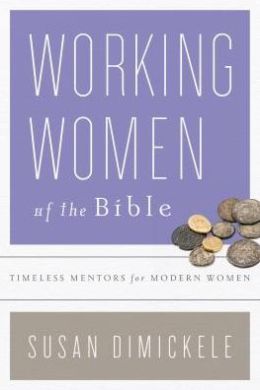
workingwomenWorking Women of the Bible by Susan DiMickele (Leafwood)

*************************************************************************************************

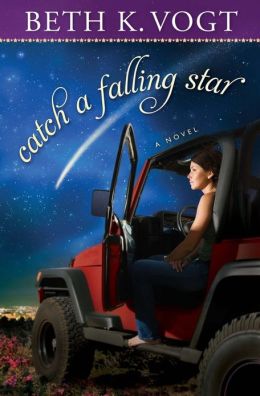
CatchAFallingStarCatch a Falling Star by Beth Vogt (Howard)

*************************************************************************************************


New Contracts

Joe Wheeler has signed 3 new books with Pacific Press to continue the “Christmas in My Heart” series. These books will be numbers 23, 24, and 25…the longest running series of Christmas stories ever published.

Cheri Fuller has signed with Bethany House Publishers to write What a Daughter Needs in a Mom. This will compliment her recently published book, What a Son Needs in a Mom.

Mike Yorkey signed with Destiny Image to write the next health and wellness book for Jordan Rubin.

Jonathan McKee has signed with Barbour to write a book for teen boys, The Wise Guy’s Guide to God, Girls and Google.

What We’re Celebrating!!

Jan Drexler’s The Prodigal Son Returns is #37 of 100 romances through RWA. This is Jan’s second week on the list; her book debuted at #95, so it is definitely moving on up!

Jillian Kent has her second novel in The Ravensmoore Chronicles, Chameleon, getting some noteworthy buzz. It finaled in the Fiction-Romance Category in the Inspirational Romantic Mystery/Suspense category. And it’s also finaled in RWA’s Daphne du Maurier Contest. Congratulations, Jillian!