When Your Mountain Comes Crashing Down

Do you remember those troubling times when after writing your first book you are faced with the unenviable task of finding an agent and then a publisher? I heard that J. K. Rowling’s book Harry Potter and the Philosopher’s Stone was rejected 87 times. I don’t know about you, but I think I would have given up long before that.

Do you remember when you suddenly found an agent and they were actually prepared to add you–a mere nobody in the world of literature–to their long list of well-seasoned, published, and successful authors? Oh, what unbelievable joy! And then, by a miracle, it seemed you had a publisher, and not just any publisher but an ‘A’ list one at that.

me and fredYour dreams have become a reality and a bright new world is opening its golden doors to you. Your name in silver lights, your book in all the shop windows of the world. Important people, who before wouldn’t give you the time of day, suddenly are keen to chat. Success is contagious, isn’t it?

Even when standing on the top of the mountain, though, storms may come. The views are fine at first but we should not forget that the mountain is not of our making. We don’t own it. We don’t control what we stand upon.

The decision by my publisher, without warning, to pull out of the fiction market altogether brought my mountain crashing down. I was suddenly cast into the valley of despair and left alone, looking up at a crumpled mass of dreams. My journey to the top, which I had imagined was completely irreversible, was in a moment dashed to pieces.

mountain_collapse

Amidst all the confusion and the devastation, in all the pain and grief, a still small voice struggled to be heard. At first I did not want to hear words of consolation, nor of encouragement. Not from my wife. Not from my friends.

Certainly not from God.

I wanted to have my say! I was angry at God and shouted, “What the hell are you doing with my life? Is that the kind of God you really are? To build me up, to set me on the top of the pile, only to tear me down?”

After a while the anger dissipated and, before I let depression seek me out, I heard the still small voice say, “The most important journey in life is not to reach the top of the mountain, but to journey inward and find Me in the depths of your own being.”

This was a truth I knew. I had long, long ago been set free by His truth. I knew that He dwelt in me, deep in my spirit. John 15:15 declares, “If you remain in Me and I in you, you will bear much fruit; apart from Me you can do nothing.”

Whose mountain top was I standing on?

St. Augustine’s commentary on the Christian faith says:

St_%20Augustine%202Enter into yourself. Leave behind all noise and confusion. Look within yourself and see whether there be some sweet hidden place within where you can be free from noise and argument, where you need not be carrying on your disputes, and planning to have your own stubborn way. Hear the word in quietness that you may understand it.

My wife Linda gave me some very good advice once: ‘”Let God be God, in all your life. He knows what He is doing.”

Creating Plots

I recently attended an intensive writing retreat given by Steven James and Robert Dugoni.

Happy PeopleHere are some of the highlights from the session on creating plots.

One way to look at plot is to ask: What’s a story? It’s the protagonist’s journey. There has to be movement on some level—we don’t want to confine the character. The journey can be physical, emotional, or spiritual. Or all three. As long as we keep the protagonist moving.

What motivates the character to start the journey? The motivation can be simple: love, justice, hate, revenge, power, greed, fear, or adventure.

Here’s a five-question exercise for brainstorming a story, given by Robert Dugoni:

  • Who is my protagonist?
  • What is my protagonist? (accountant, police detective, stayquestion marks man in circle-at-home mom, lawyer, etc.)
  • Where is my protagonist? The setting for the story.
  • What does my protagonist want?
  • What stands in the way of achieving it?

Also, when you’ve answered all these questions, you have the basics of your elevator pitch.

The basic elements of plot are the beginning, the middle, and the end.

In the beginning we establish the tone and the genre. And we introduce who we are going to be traveling with on the story journey—the protagonist.

Also, at the start of the story, we want to create empathy for our hero. One way we can do this is to give the character a wound we all share and a goal we can identify with.

We also want to hook the reader by asking a question or introducing a problem that launches the protagonist into the story.

In the middle, the story continues to develop as we take the protagonist deeper into the story question or problem. And we add twists and surprises.

StrivingWe also add escalating obstacles that make the situation worse. These obstacles must serve one of two purposes: they must move the story forward by raising the tension, or they must further develop a character trait, or both. If they do neither, they need to be cut. Otherwise, the dreaded sagging middle will occur.

The obstacles lead us to the climax where the protagonist either achieves his quest or doesn’t.

The end of the story answers the story questions. It must be satisfying to the reader and it needs to show the protagonist changed by what he experienced in the story.

Here are two excellent resources for plotting. There are many others but I find these very helpful:

  • Plot and Structure by James Scott Bell
  • Plot versus Character by Jeff Gerke.

You’ve Been “Notebooked”

Screen Shot 2013-10-02 at 10.59.37 AM

Have you ever read or watched a scene that gave you chills? The guy says all the right things, the girl responds accordingly, and the scene ends in an epic kiss that you feel down to your toes because you know that these two are meant for each other.

Those are the kind of scenes I like to write. And I’m still learning. Several years ago, I would have laughed at anyone who told me I would write romance. Don’t get me wrong…I’m definitely a romantic, but I’m more of a closet romantic who only expresses it if the situation allows. As I write, I’m learning to tap into that closet romantic side of myself. To do so, it helps to understand why people love the romantic pop culture hits.

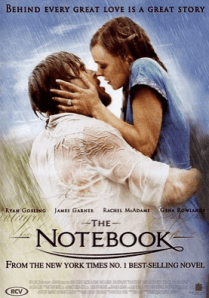
Let’s face it: You can’t talk pop culture romance without talking The Notebook.

People mock it. Chicks dig it. He’s hot, and she’s girl next door gorgeous. Guys groan when their girlfriends “Notebook” them. But there’s a reason that The Notebook and other movies based on Nicholas Sparks’ books do so well. If you can move past your bias, you’ll identify the attracting factor.

It’s all about love. Those are the moments in the movie/book most remembered and most quoted. Think about it. You remember what Noah said to Ally. You remember the passion and tears. You remember the words, the heartache, and the victory.

You root for this couple. So what can we take away that will help us write memorable romance?

1. The scene becomes another character and sets the mood.

Whether it’s the sweeping southern scenes that make you long for small towns, front porches, and handsome gentlemen, or the throes of war that make you cheer for the soldiers on the battlefield, Sparks (and others) knows how to give the scene a personality all its own. The scene definitely sets the stage of the romance, tugging at your sympathies.

2. The characters are three dimensional.

I love following Noah’s story in The Notebook. And no, it’s not just because he’s good looking. I love watching his growth. He starts out as a gutsy teenager who works to help his family and experiences summer love. Only he doesn’t let go when the summer comes to a close. He writes, growing in the midst of recording his heart to a girl who left. Then he heads off to war with his best friend, loses him, comes home, buys a home, loses his dad, and spends some time refurbishing a house. He is no longer the gutsy teenager out to charm the girl. He’s experienced heartache, loss, success, regret, and loneliness. But then Ally comes back. He’s the same romantic guy, but more mature, calm, confident in what he wants. By the end of the movie, he is an old man still set on charming his one and only love and fully confident in their love story. Who doesn’t like to watch love conquer all?

3. The dialogue is memorable and passionate.

Screen Shot 2013-10-02 at 10.58.56 AM

Once again, I love Noah’s dialogue. This country boy is deep. Why? He realizes the cost of love, the difficulty, the pain, the joy, and he’s willing and ready to weather it all. He believes it’s worth it. And he makes us believe it, too.

4. Good, bad, or indifferent – it doesn’t shy away from cultural issues or trends.

We live in a culture of sex, drugs, and whatever you want goes. Don’t shy away from the issues. Be in the world but not of it with your writing. Some writers define love by physical relationships. We have to address how Jesus defines life and love in the midst of our romance.

5. It relates to our desire to be known, loved, and belong to something greater than ourselves.

Why is this a big deal? Because God created us for relationships, set eternity in our hearts, and said it isn’t good for us to be alone. Tap into your emotions. Let them flow on the page with every word. And in the midst of the character romance, point people to the romance they can have with Jesus.

What tools help you when writing romance?

Give Me A Hint: The Use of Foreshadowing

I was at work discussing books with a physician who is an avid reader as well of Robin Cook’s novels. Cook could be considered the grandfather of the medical thriller with his ground breaking The Year of the Intern, which highlighted the training physicians go through.

Cook, for me, delved into what a medical thriller should be. Take something medical in nature (like organ donation) and put a twist on it (genetically engineered individuals being used for spare body parts). That novel was Chromosome 6. What my physician friend said was, “The great thing about Robin Cook was he grounded you in the science before he took that leap, so when he did go over the cliff with his theory you were able to buy it hook, line, and sinker.”

Book #3 Bloodline Trilogy

This conversation got me thinking a lot about my third novel, Peril, which just released. I’m asking the reader to take a big (HUGE really) theoretical leap, but had I spent time grounding them in how this medical theory could really play out?

That question led me to rewrite the first third of my novel.

Some people view foreshadowing as the scary thing suspense novelists do to readers to get the hair to stand up on the back of their necks. Truly, this is part of it. The scary music cuing up before the axe falls on the victim.

More importantly, though, foreshadowing could be viewed as the details we plant for readers so that when the character does something unbelievable, the reader won’t be rolling their eyes in a jump-the-shark moment.

In my first novel, Proof, I needed there to be a instant in time where one character could place a lethal (or was it really?) shot to the villain. In order to do that, I had to paint a picture for the reader of the character being capable of doing it mentally and physically when that moment came.

Step One: Show that she is comfortable with weapons–and maybe a little too psychotic about her safety.

Step Two: Show that she is a good marksman. This scene included her taking a close friend to an indoor shooting gallery. Let’s just say that girl had some skill even with a little bit of alcohol on board. Plus, she had purchased another weapon, which increased the probability of one of them being used. Don’t give the character a weapon and then never have her use it.

Step Three: Show that she will use a weapon when in a dangerous situation. At one point in the book, the villain is giving chase and she fires at him from a moving vehicle.

Step Four: The ultimate showdown must take place. Don’t plant any seeds that aren’t eventually harvested.

Does anyone remember the Laura Croft Tomb Raider movies? In one, it dealt with her finding Pandora’s Box. The whole two hours is devoted to the adventure of discovering ancient clues that would lead her to the ultimate treasure. At the end of the movie, she has the box in her hands and . . . she doesn’t open it.

Huge let down.

What do you think about foreshadowing? How do you think it’s been used effectively or poorly in books and movies?

WordServe News: September 2013

Exciting things have been happening at WordServe Literary!

On the final post of each month you’ll find a list of Water Cooler contributors’ books releasing in the upcoming month along with a recap of WordServe client news from the current month.

New Releases

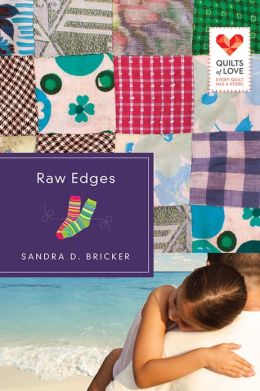
RawEdgesSandra D. Bricker releases Raw Edges, a book in the “Quilts of Love” series with Abingdon Press.

****************************************************************************************

AnniesChristmasWishBarbara Cameron releases Annie’s Christmas Wish, a book in the “Quilts of Lancaster County” series, with Abingdon Press.

****************************************************************************************

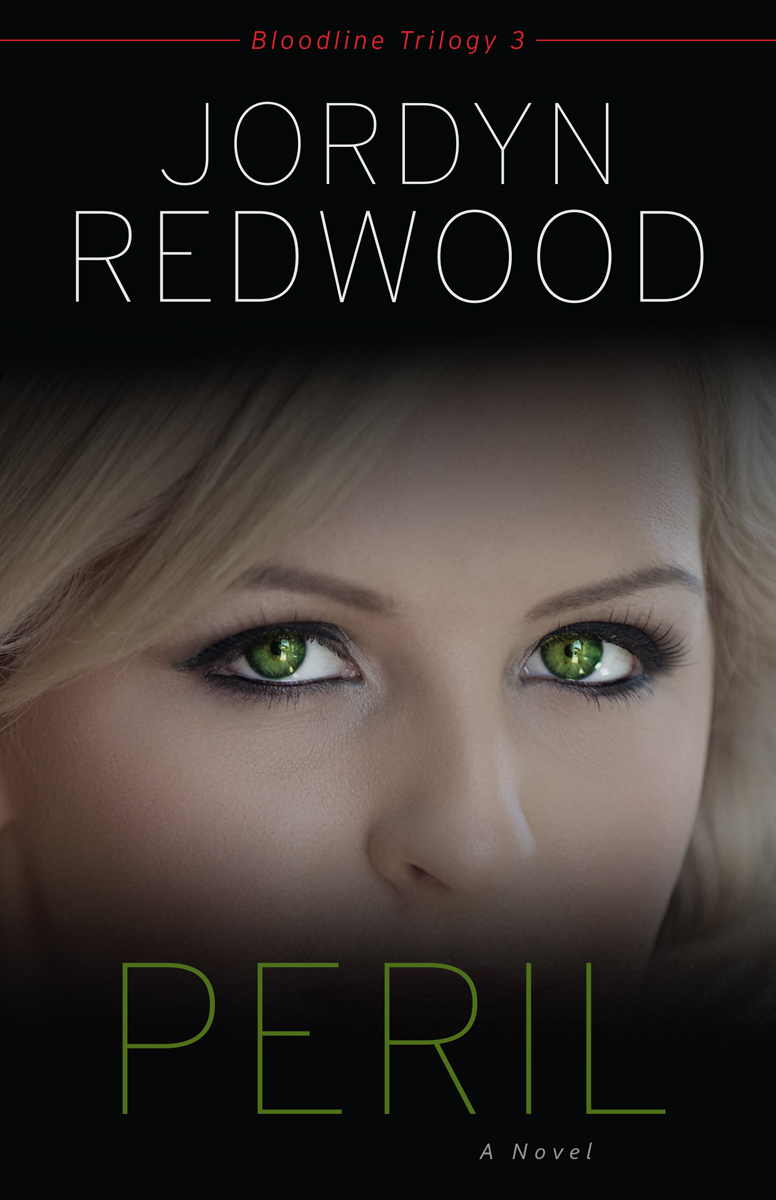
4213 cvr1 CS6.inddJordyn Redwood releases Peril, the final book in her “Bloodline Trilogy” with Kregel Publications.

****************************************************************************************

TheBargainStephanie Reed releases, The Bargain, the first book in the “Plain City Peace” series with Kregel Publications.

****************************************************************************************

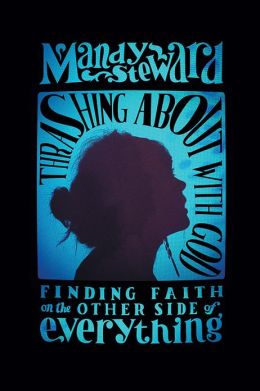
ThrashingAboutMandy Steward releases her debut book, Thrashing About With God: Finding Faith on the Other Side of Everything, with David C. Cook.

****************************************************************************************

Christmasinmyheart22Joe Wheeler releases Christmas in my Heart #22, another heartwarming collection of Christmas stories, from Pacific Press.

****************************************************************************************

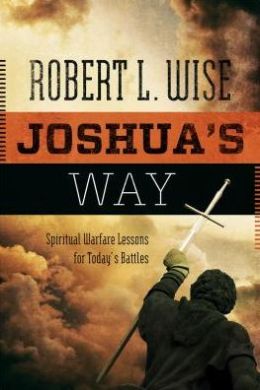
Joshua'sWayRobert Wise releases Joshua’s Way: Spiritual Warfare Lessons for Today’s Battles with Leafwood Publishers.

****************************************************************************************

New WordServe Clients

Jeff Calloway signed with Alice Crider. He’s writing about clearing spiritual clutter so you can clearly see God’s vision for your life.

Kate Hurley, a singer-songwriter who self-published a spunky memoir titled Getting Naked Later, signed with Alice Crider.

Mike Fechner, a Dallas-based missionary to the inner-city, will write his story with Marcus Brotherton.

New Contracts

Marcus Brotherton has signed with Moody Press for his first novel! Rev Rowdy is the post WWII story of a soldier coming home from the war who finds trouble, but then is convinced by the local sheriff to become the town preacher. Sort of a “Band of Brothers” meets “Mitford” for men.

Joe Wheeler signed a three-book deal with Pacific Press to compile and anthologize miracle and angel stories.

What can we help you celebrate?

Puppies, Unicorns and Dolphin-Shaped Balloons

notes-md

Have you heard of the term bait-and-switch? Yep. This is one of them, and for good cause. If the title had read “3 Reasons to Outline,” would you seriously have stayed tuned? Not only is the topic of outlining boring, it often causes big hivey welts to break out on some people. So if you need to slug back a few gulps of Benadryl, go for it, and let’s move forward with…

3 REASONS TO OUTLINE

1. To keep from crashing head first into the lack of confidence wall.

Yes, you can write an entire novel without drafting an outline, but the chances of losing steam and curling into the fetal position about midway through are pretty high. What you thought was a plot screeches to a halt. Characters wander around like zombies on steroids. Your narrative is a flaming train wreck of twisted words. Reaching this state of mind has a way of sucking all the confidence marrow from your bones. This is where an outline comes in handy. Think of it as a safety net and/or anti-zombie mega-gun. When you hit midway in your story, you can reach out and grab the outline rope to pull yourself up to the grand summit of a finale.

2. So you know where you’re going.

I’m not a huge map fan. I can’t fold the dang things. I know. I know. There’s this great new invention called MapQuest. Yeah. That’d be great if I had a smart phone—which I don’t. Even so, there have been a few family vacations where I’ve been awfully thankful for a map. That’s what your outline is. Writing a story is a lot like going on a road trip. Sure you can throw your bags in the car and hope for the best, but what happens when you hit construction? Or worse…road closed? That’s when a map is your best friend. Same thing with a meandering story. An outline will keep you on track to end up where you wanted to go.

3. It works out the kinks.

Don’t get me wrong. Writing an outline is not a magic pill that takes you to happy writer land (but if you could market that, you’d make scads of money.) Planning out the major scenes ahead of time, thinking through all the what-if-that-happens scenarios, straightens out your plot so you’ll be less likely to have to rewrite unnecessary chapters.

Convinced yet that outlining is the greatest thing ever? I wouldn’t be, either. Outlining sounds about as much fun as scrubbing the toilet—outlining as in Roman Numerals and sub-points and all that analytical falderal. I say it’s time to start thinking outside that no-fun box and reinvent the outline.

Newsflash: there’s no law that says you have to write a text-on-screen outline.

Maybe you’re a Pinterest type of person who creates story boards. That counts. Perhaps you love the smell of dry erase markers and get off on mind mapping a tale on a large whiteboard. Shoot, I even know some writers who adore 3M sticky notes and plan out a novel by decorating a wall with their scenes. Go ahead and get creative. That’s what fiction is about, folks.

One parting thought to shoot down the scare factor of outlining. You have my permission to outline only chunks at a time. If scribbling down the entire story totally freaks you out, just do the first third, then take a break and write the first chapter. Before you end the first third, however, you should plan the next third. Savvy?

Outlining does not have to steal the joy from your writing. Turn it around to enhance the joy of your writing…and keep from having a nervous breakdown halfway through.

What about you? Are you fans of the outline or more pantsers types?

Write to be Relevant

Twelve years ago, tragedy struck our nation. For the second time in United States history, we experienced a day that “lives in infamy,” a day we were attacked on our own soil. From across our country, people came together from every religious, ethnic, and cultural background. The walls fell for a few short weeks between liberals and conservatives, and we stood united in the face of great threat.

Screen Shot 2013-09-04 at 1.16.12 PM

So many years later, many have forgotten the pain they experienced that day, but they are reminded through the documentaries, television shows, and news broadcasts. Flags will fly and people will remember where they were on 9/11.

The news will make much of the event that marked this day twelve years ago. Why? Because people want to know. They will take to the internet and read articles and more new stories. They will remember the valiant plane crew and cheer their heroism. They’ll remember the firefighters and first responders who bravely ran into the towers as they crashed.

As writers, our bread and butter is anticipating what our audience wants. Where are the holes in the market? What’s doing well? What isn’t? Judge the attitudes and mindsets of people. Teen fantasy sells well because those that buy it want to escape reality. The same could be said for many Amish fiction readers.

Know who you are writing for. Let’s be honest. Most of us would like to say that our audience is everyone from 16 to 95, but that’s not realistic. While you hope that those in that age range will read your books, attempt to tailor it to a certain group within that and then market hard. I am a young adult who understands the heart, habits, and hang ups of my generation. I can tailor my novels to my age group. However, I also want to make it relatable to every age group, so I create characters that every group can somehow identify with.

At a mentoring clinic I attended, one of my mentors, a very successful author, looked at me and said, “Kariss, your books perfectly describe your generation’s desire to not simply DO church but to BE the church. You have a lot to learn from those who have gone before, but my generation could learn a lot from your generation by reading this book.” Why? Because at one point, this man was my age. His children are my age. His grandchildren will be my age. It’s still relevant and relatable to him.

We’ve been at war since I was 13. But as a result, I’ve come to value the brave men and women who serve our country and protect our freedom. It’s affected the way I write. It’s even bled into my characters as I researched and created courageous Navy SEALs. I live in an age of everyday heroes who are seldom recognized. 9/11 is relevant to me today, but it also shaped my teen years. It sent my friends into the service and combat. While the media markets this day for other reasons, I choose to remember. And in my writing, I make these heroes front and center, because no matter the day, they are relevant. Now that’s something to market.

10 Ideas for Tension Filled Writing

It was 10:30 at night. Not just any night, but the night before school started. Not just any night-before-school, but my first day of my first year back teaching high school full-time after a decade spent home being a full-time mother to my four precious blessings.

StressedOutWomanI was supposed to be in bed, but instead, I was on the front porch, armed with Rid spray, Rid gel, Rid comb and Rid shampoo angrily picking nits out of my second-born’s hair. She was sobbing. I was sobbing, too. Tears ran down my face making my nose itch. Even my kneecaps (recently shaved, I might add) itched at the mere thought of those hideous creatures.

Arriving home late from a city council meeting, my police chief husband discovered us thusly sobbing, picking and spraying. Without saying a word, he went inside, changed and took over the flashlight holding as we shampooed, checked and double checked until the wee hours of the morning. I flopped into bed exhausted and angry. Why hadn’t my daughter’s friend noticed this illegal immigration into her hair while on a mission trip sooner? Why had my daughter had a sleepover two nights prior, thus accidentally inviting them into our home? How could any of this work out for the best? Surely I would never last an entire school day on four hours of sleep!

That same week, both bathrooms sprung leaks causing a waterfall in my office and falling drywall in the laundry room. I attended Open House with my skirt caught in the back of my belt. My husband kept later-than-usual hours with murder suspects, stabbing suspects and hit-and-run accidents. Wasps made their home under our porch and the upstairs air-conditioning went out. I was hot, tired, cranky and spent my days in fearful waiting for the next plague to strike.

What does this have to do with writing? Nothing. And everything. For it gave me ideas for those times when the ill-timed equivalent of lice arrive on your scene!

1. Remember that the best plots involve conflict, action and drama. If everything in life went according to plan, it would make a boring book. Nobody would read past page two.

2. When life falls apart around you it often provides a forced clarity. Priorities become real. We are reminded that God is as necessary as breath. We invite Him into our lives and into our writing.

3. Every irritating situation has its flip side. Look for the humor and use it to make an unusual tweak in a character or an unique twist in your story line.

4. Listen to real life dialogue and take notes in your head (as if you’re not doing this already!) Sometimes what is being said in response makes a great jumping point for dialogue in your novel or a superb illustration in your non-fiction work.

5. Most likely, you didn’t expire from the stress of these multiple irritations, and your character won’t either. Rather, they can grow, change and develop. It can be a point of humor or a highlight of your character’s movement toward your desired ending.

6. What scriptures, friends, or soothing rituals helped you to cope? Might your characters borrow some of them for their problem pages?

7. Taking a walk or a laughter break can help alleviate stress. Send your character on an imaginary walk, or take note cards outside with you on a real walk and see what happens. Let your characters talk to you about what’s going on in their lives. What tickles your characters’ funny bones?

8. Was there a nemesis involved in your frustrating situation? Maybe this can be a starting point for a quirky or irritating companion to your main character. What did people say about your week/day of crisis that got on your last nerve? Serve it up on the page and make it fit your story.

9. A clump of events or disaster in your character’s life can likewise point him or her to a God who is very real and present. Recall the touch points in your frustrations that made you reach out to Him almost in spite of your determination to be angry or bitter.

10. If you’re stuck in a louse-y situation just now, either in your personal life or in your life between the pages– remember, just as chapters end, this too shall pass. If you’ll likely laugh about it later, try to laugh now. Almost everything, sooner or later, makes its way into the writing craft!

Writing Powerful Sentences

On my writing journey, I spent a lot of time studying the big-picture concepts of writing, suchas smusical notestory arcs, conflict and character, but then I began to notice some smaller scale aspects. A phrase or a small block of text would sing out to me as I read. For a while, I logged the best examples in an Excel spreadsheet. I noticed that my favorite books usually had a lot of these winning sentences.

What made them so powerful? Just as I had studied scenes and novels to see what made them successful, I began to study phrases and individual sentences to see what gave them that singing quality. All of them had one of the six qualities below. Most had several of them.

The Five Senses

The authors didn’t just use the senses. They bathed the words in sight or touch or taste (often using more than one sense at a time) until I could smell the burning gasoline or feel the dried leaves crumble between my own fingers.

“There was a sizzle and steam and a sound like a thousand muskets firing. Then the sheets of ore began to fall.”

–          Year of Wonders, Geraldine Brooks

Emotion

The phrases usually occurred in the context of an emotional scene, but then a few well chosen words would zing the emotion all the way home.

“I had only human comparisons for such a look. Caesar and Brutus. Jesus and Judas.”

–          The Host, Stephenie Meyer

Metaphorical Language

The authors utilized metaphors or similes, fresh images that made general ideas tangible and ordinary actions captivating.

“The prayer seemed to find shelter in the morning breeze, as though chanted by the leaves overhead.”

–          Book of Dreams, Davis Bunn

 Rhythm

Repetition of a word or a sentence structure gave the writing rhythm, almost like poetry.

“Each question would lead to another and another until there was only a man and a woman in a garden and a forbidden tree.”

–          At the Scent of Water, Linda Nichols

Forceful, Visceral Words

Even removed from their scenes and sentences, the words were strong, capable of evoking a reaction. I noticed that the writers often used words related to the body (bone, blood, flesh) or to a threat (thunder, electric, knifed). Even when the words were used in a different context (neither related to a human body or a physical threat), they still carried the weight of those associations.

“Her voice was a whip-crack in the silent arena.”

–          Taliesin, Stephen Lawhead

Unique

The text twisted the normal way of saying things. The writers clearly dug deep, looking for an original and unexpected way to convey their scene, and the words they found were guaranteed to catch the reader’s attention.

“She had skin the shade of bootleg coffee, and crossing her back were the memories of lashed scars.”

–          Harvesting the Heart, Jodi Piccoult

Once I pinned down what gave these memorable sentences their power, it was that much easier to write a few of my own. What about you? Have you found other traits that make a sentence or phrase sing to you?

WordServe News: August 2013

Exciting things have been happening at WordServe Literary!

On the final post of each month you’ll find a list of Water Cooler contributors’ books releasing in the upcoming month along with a recap of WordServe client news from the current month.

New Releases

First HiredAnita Agers-Brooks has her debut book coming out, First Hired, Last Fired: How to Become Irreplaceable in Any Job Market (Leafwood).

****************************************************************************************

MountainsJulie Cantrell released the sequel to Into the Free, called When Mountains Move (David C. Cook).

****************************************************************************************

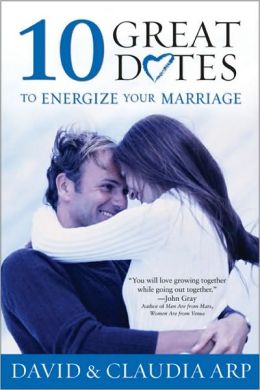
GreatDatesPeter and Heather Larson and Dave and Claudia Arp release 10 Great Dates: Connecting Faith, Love and Marriage (Bethany House Publishers)

****************************************************************************************

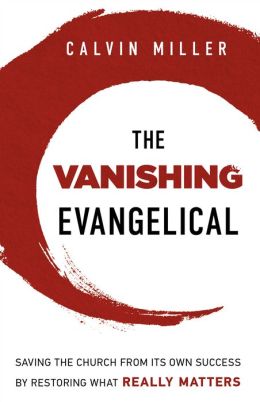
VanishingCalvin Miller’s last book, The Vanishing Evangelical: Saving the Church from its Own Success by Restoring What Really Matters (Baker Books).

****************************************************************************************

InventionOlivia Newport, The Invention of Sarah Cummings (Revell)

****************************************************************************************

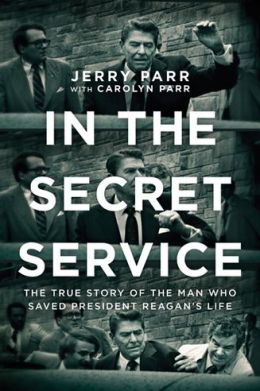
SecretServiceJerry and Carolyn Parr, In the Secret Service (Tyndale House Publishers)

****************************************************************************************

stillloloLauren Scruggs (with Marcus Brotherton) has her book Still Lolo coming out in trade paper (Tyndale)

****************************************************************************************

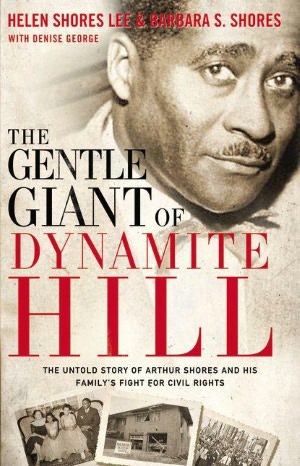
GentleGiantHelen Shores Lee and Barbara Shores (with Denise George) have their memoir of their Civil Rights champion father, The Gentle Giant of Dynamite Hill come out in trade paper (Zondervan Publishing Houses)

****************************************************************************************

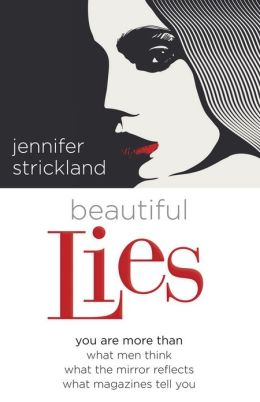
beautifulliesJennifer Strickland is releasing Beautiful Lies, book and separate Study Guide (Harvest House Publishers)

****************************************************************************************

TenaciousJeremy and Jennifer Williams released their moving memoir, Tenacious: How God Used a Terminal Diagnosis to Turn a Family and a Football Team into Champions (Thomas Nelson)

****************************************************************************************

FootballMike Yorkey has another book coming out in the Playing with Purpose series, this time on the lives of NFL football players (Barbour Publishers)

****************************************************************************************

New Contracts

Daniel Allan signed with IVP for a book called Deeper, a call for young men to look for ways to grow their roots as they transition from youth to adulthood.

Wintley Phipps signed with Tyndale for a book titled Living the Great Life (co-written by James Lund), in which he shares the secrets to living a fulfilled life by developing eight vital characteristics.

Jan Drexler with Love Inspired for her second novel. Congrats, Jan!

What We’re Celebrating!!

Becky Johnson and Rachel Randolph had a NICE article in the recent issue of Guideposts Magazine surrounding the release of their mother/daughter cookbook We Laugh, We Cry, We Cook, as well as a 4-part article in the huge website/blog postings, Beliefnet.

What can we help you celebrate?