Should a Non-Fiction Author Write Novels and Vice-Versa?

Gift Wrapped Package
Are Shiny Objects Calling You?

One of my coaching clients has to guard against his propensity to chase every shiny new object. I can identify with his temptations, as I struggle with similar ones in my writing. Can I author both fiction and non-fiction? Can you? Let’s explore the question, and see if we arrive at the same conclusions.

Recently, I had a conversation with my literary agent that went something like this: 

Me, “I’m grateful my non-fiction books are selling, and my platform is building in the genre, but I have these two great novel ideas. What do you think? Would it be okay for me to pursue them?”

Alice, in a gentle tone after taking a deep breath, (I’m sure praying for patience with this crazy, bling-chasing author she has to deal with), “We normally recommend trying to stick with one genre. Otherwise it confuses your audience.”

“Could I do it using a pen name? I have one picked out.”

“Possibly. But then you’re using twice the energy to build two platforms simultaneously.”

That sounded like a whole lot of work to me.

Alice, “Can you turn your novel ideas into non-fiction?”

“Fiction is more fun to write.”

“I’m sure. But why don’t we focus on finishing your current book, then revisit this when you’re done?”

She’s a wise woman. I’m sure she believed the luster of authoring fiction would fade with time. And to a degree, she was right.

I’ve since researched the subject further, and found there are some common concerns and benefits listed from those with vast experience and knowledge. Publishers, agents, and even high-profile authors said much of the same. Here are the highlights of what I learned about the subject.
Keep Your Promises
Reader Expectation Can Drive their Trust

Cons:

1. Most readers will try a favorite author’s book in a new genre once, but if they don’t like it, may not buy any books written by them again. Including those they loved before.

2. Loyal readers often feel betrayed by the switch, and never regain trust. Genre confusion can cause authors to lose whole segments of audiences who now view them as promise-breakers.

3. If you switch genres, and the new book tanks, it can take years to rebuild publisher confidence and marketing momentum.

Pros:

1. Writing too much of a similar thing can cause an author to sound scripted, formulaic, and stale in later books. A change in the creative landscape can infuse fresh dimension into their craft.

2. Opportunities to cultivate new audiences grow with change. For example, if you write murder mysteries, but switch to a practical how-to, you chance reaching people who won’t read the mystery.

3. Authors like C.S. Lewis successfully carried their voices into cross-over markets, reaching many more people. If you are careful to stay true to your writing self, you potentially could do the same.
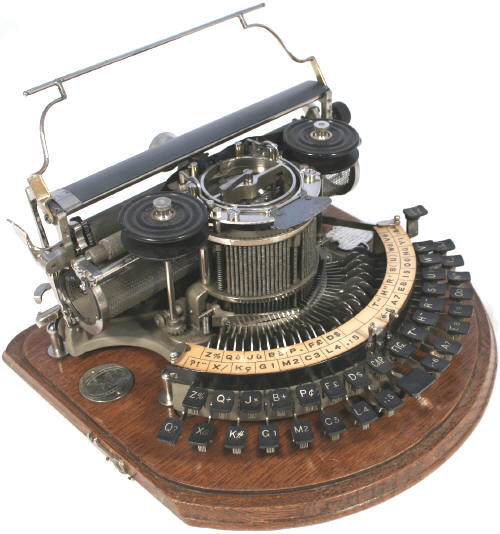
Old TypewriterAfter talking it over with my agent, researching, praying, and much pondering, I think I’ve had a change of heart. Turning my novel ideas into non-fiction is feasible. And I know successful writers are teachable and flexible. If I want to thrive in the writing world, I need to mirror those traits, and listen to those with voices of wisdom.

Down the writing road, I may change my mind or the market may shift, but at this point, why mess with success? I’d hate to have a shiny new object deflect me from the blessings I already have.

Do you think it’s wise to write fiction and non-fiction? Why or why not?
 

Five Essentials of Character Building

No matter the genre, every story has characters; otherwise you’d be writing a phone directory. Hold on. Bad analogy. I know plenty of characters in a phone book, and who in the wide, wide world of sports uses a phone book anymore anyway?

1262267_47588357
Creating a memorable character doesn’t have to be daunting!

As I was saying, sans phone books, characters are an essential ingredient in a story recipe. There are lots of tricks to jazz up a character to make him memorable, but EVERY character needs some basic elements right from the get-go.

#1. FEAR

What makes your character scream like a little girl? Centipedes? The IRS? The threat of an alien abduction and subsequent probe . . . wait a minute . . . I’m scaring myself. And that, my friends, is the point. Everyone is afraid of something, fictional or not. Identify what terrifies your character so that you can use that fear to ramp up the tension.

#2. STRENGTH

I’m not talking six-pack abs here, though in the case of your hero, that’s never a bad idea. What sweet skills does your character possess? Is he a crazy freak with nunchucks? Can she hit a raccoon in the eyeball from fifty yards away with a slingshot? Maybe this character has x-ray vision and can see into people’s souls. Whatever. Give them something to work with. Even Charlie Brown excelled with his spirit of compassion.

#3. FLAWS

Perfect characters make readers want to punch them in the head. Nobody is flawless, so make sure your character isn’t either, even your super stud that swoops in to save the day and the damsel in distress all with one arm tied behind his back. This can be something as small as an inability to balance a checkbook, or feeding a gambling habit using stolen money copped from nuns. It’s not mean to give your character a flaw. It’s a necessity.

#4. A SECRET

Psst. Hey buddy. Come over here and I’ll whisper you some covert information because have I got something juicy to tell you! Are you leaning toward the screen? That’s because you want to know what I’ve got hidden. Secrets are like big, juicy nightcrawlers wriggling on a hook, irresistible to the reader fish. Characters with secrets reel a reader in.

#5. MOTIVATION

Everybody wants something. A brand-spanking-new Tesla. A mutton lettuce tomato sandwich. The stupid hangnail on your thumb to go away. Your character wants something as well. After you identify what it is, then dig a little deeper and find out why they want it. What drives them to go after their desire? That is motivation. I’m not saying you have to spell this out to a reader with a ton of backstory, but it’s important for you as a writer to know because it will show up in their mannerisms and even in the way they speak to others. Motivation manifests in attitude. What kind of aura do you want your character to portray?

These are the building blocks of creating a memorable character, someone who will stick with a reader long after they’ve read the last page of your story. What character haunts your head from one of your favorite authors? Chances are that the author used each one of these elements in his/her creation.

When to Consult a Medical Expert

female doctor in ICUAlthough I’ve always helped authors along the way with medical questions, it’s been one of my primary focuses for the last three years since the invention of Redwood’s Medical Edge—my medical blog for authors.

The reason for creating my blog was the multitude of published works I read that were loaded with medical inaccuracies. Not just a few here and there. Time after time, errors caught my eye.

In a pod-cast interview, the interviewer asked if these medical mistakes would be enough for the average reader to pick up. To be honest, I’m probably more sensitive to these errors after spending 20 years in nursing but some are mind-numbingly obvious. Such as saying the spleen is on the right side. Such as calling a collar bone a shoulder blade. You don’t have to have a medical degree in anything to pick up on these missed anatomy issues.

Writers, I think, are confused as to when it’s beneficial to consider consulting a medical expert. And I actually mean more than asking Uncle Joe who has worked as a dentist when you need information about delivering an infant.

Not the best option.

An author who is also a medical expert is your best bet. They know what will overload the reader, they know what is too medically complex for a non-medical author to pull off, and can help you with the nuances (the language and the interactions) since they’ve worked in the field.

But when is it best to consider plucking down a few hard earned dollars to work with a medical consultant?

Here are my thoughts.

  1. You need a medical condition that fits a certain set of symptoms. I often get queries from authors along these lines and perhaps they’ve tried to find something on their own but just cannot decipher the medical language to know, for certain, if it fits: “I need a fatal condition for a child that won’t be immediately obvious but could put the child in peril around three months of age.” Believe it or not, a metabolic disorder fits this criteria.
  2. You have a medical scenario in mind but aren’t sure if it’s reasonable. This happens frequently and is probably the most dangerous position to work from. Let’s take a look at the following example: “My character has been in a car accident. The car has rolled three times. The injured character was not wearing a seat belt and was thrown 100 yards into a swift moving river, where he almost drowned. He was rescued and required only a minute of CPR to revive him. I need him home from the hospital that night.” Or the opposite is true. “I have a character that fell down the stairs and I need him to be in the ICU for three days.”

Both of these situations set up implausible medical scenarios. The car accident victim is going to be too injured to go home that day. Someone who requires CPR after nearly drowning is going to be watched, at a minimum, overnight. In order to get admitted into the ICU a patient has to be pretty sick so the simple fall down the stairs is likely not going to injure the character sufficiently.

  1. Come with an open mind but with a needed result for your character. What I prefer to know is your end game with an open mind to the medical scenario. “I need a character to suffer an injury from a fall that would land them in the hospital for a few days in the ICU and I’m fine with a few extra days in the hospital but I don’t want them to have any residual injuries.” For you, I would pick an epidural hematoma.
  2. You have a pivotal medical scene. I consulted once for an author who had a child in the Pediatric ICU, dying from leukemia. This is something you want to flow nicely for the reader. If at any moment they pause, look away from the page, and think about the accuracy of what you’ve written, you’ve taken them out of the story bubble and perhaps their trust in you has fallen. Perhaps you’ve even lost a reader.

I once read a review from a fan of historical fiction that skewered an author for writing a completely inaccurate historical scenario in the third book of the series. This reader then doubted the previous two books and swore off reading anything else from the author.

Don’t let this happen to you. Consult a medical expert if you find yourself writing these scenarios. It’s likely not as expensive as you think.

What about you? Any medical inaccuracies you’ve found in a novel?

Hearing What You Can’t Read

woman listeningI am always fascinated by our five senses—touch, smell, sight, taste, and hearing. I love the warmth of my husband’s hand when he clasps mine, the fragrant scent of a rose caught up on the morning breeze, or the tart pucker of a Granny Smith apple.

As writers, we know that adding the senses into our books makes the world our characters live in more real to the reader. But that’s not where I’m going with this post. My question to you is, when was the last time you listened to a book? I don’t mean just for pleasure, but to get into the depth of the story by using more than your eyes.

I have a Kindle that offers a “text to speech” option, which I’ve found to be available on many books. (I believe this is up to the author and/or publisher if they offer this choice and I’m sure it’s available on other readers as well.) It has a computer generated voice, which for me is fine, but you can go through this exercise with an audio book as well.

The trick is to listen to the words, but not become caught up in the story. It’s amazing what you can hear.

Rhythm: Did you know words and sentences have rhythm? When you listen to a story you can hear it. A good writer will create a steady beat with their words to slow the pace of the story. Or, speed it up to raise the tension as needed.

Choice of words: I’m a big proponent of not using the same word over and over again. I’m not advocating pulling out a thesaurus and running the gamut of possible choices, but just having an acute awareness of word choices. It makes the work more appealing. Fresh. You can “hear” the repeated words more than “read” them.

Story world: Has the author “painted” the world the character is in vividly enough that when you close your eyes while listening to a scene you can almost imagine yourself right in the middle? This aspect is hard to do when you need your eyes to read!

Emotions: Much like the story world, can you picture the characters’ actions? Feel their pain? Or laugh with them? This follows the line of showing instead of telling. When you listen to a book, you can “see” their reaction, like a movie screen playing on the backside of your eyelids.

I go through this exercise with many of my favorite authors. I take the time to learn from their writing style by listening to it. Then try to apply the concepts to my own writing.

So what do I do then? I always listen to what I’ve written. I email the Word doc to Amazon and it goes right to my Kindle. Then I go through the same exercise. Have I set the proper rhythm for the scene? Do I have words repeating that should be changed? Have I created a memorable scene mixed with real-life emotions?

Try it some time. You might be surprised what you hear that your eyes would have never seen.

Working with an Editor

Kariss manuscriptsThey say that all good things must come to an end. Sadly, the same holds true in writing. As you turn your manuscript in to the publisher, you abdicate your position as ruler of your own fictional kingdom in favor of an advisor who tells you all the wonderful things you did wrong and how you can fix them. (For example, my editor would have asked me who “they” is in that opening line.)

But this “bad” thing doesn’t actually have to be bad. In fact, think of it as iron sharpening iron. Who knows your story and characters better than you? And who better to help you improve than an unbiased person who likes to read and knows a whole lot about writing and how to craft a story?

I am by no means an expert, but as I edit my second book, I realize how much I learned while editing Shaken. As you prepare your book for the editing process, here are some ways to prepare yourself, as well.

1. Check your pride at the door.

First of all, realize your editor is there to HELP you, not hurt you. Don’t take it personally. I thought I understood that, but I didn’t really grasp it until I received my first round of notes. Then my pride took a nose dive and shattered in a very ugly pile around my feet. This process is meant to refine both you and your story. I tend to write in a steady stream of consciousness, wrapped up in my story world. It takes someone looking at it from the outside to show me where the issues are and help me to change them.

2. Kill your darlings.

In Texas, we call this “killin’ your darlin’.” Your editor believes in your story, too, or they wouldn’t spend countless hours helping you. They want to make it better, but sometimes that means cutting important characters or scenes you love. This is the part I hated in the editing process.

It is challenging to dig into your story, delete scenes, and create new ones where you originally imagined something different. There were times my editor suggested a line of copy or dialogue that made me cringe, not because she wasn’t right, but because it wasn’t in the exact voice my character would have said it. Here’s where camaraderie came into effect. She could see the holes. I could keep the story true. We made a great team. Killing my darlings made my story stronger.

3. Fight for your story.

This may seem to contradict the previous point, but trust me, it doesn’t. Like I’ve said before, NO ONE knows your story or characters better than you. Here’s where discernment comes into play. At the beginning of the editing process, my editor asked me to cut several characters. No matter how much I played with this request, something didn’t sit right. So I fought for these characters, explained the role they would play in future books, and stood my ground. I knew keeping them would benefit the story. Once I explained their importance (and not just my emotional attachment), my editor listened and immediately replied with ways I could make these characters even stronger than what I had in mind.

It turns out that the characters I fought to keep have been some of the favorites for readers. If you know in your gut something needs to stay, fight for it. Just make sure to check your emotional attachment at the door and identify exactly why this piece adds to the story.

So, take what I’ve learned. Add your own insight. And I’ll add to the list after I finish this round of edits. I never want to be a bratty author who says I know best. I do want to collaborate. Yes, I know my story, but I need people who will help me make it better. I’m pretty excited about the possibilities. Bring on the next challenge.

What lessons have you learned while working with your editor?

WordServe News: March 2014

Exciting things have been happening at WordServe Literary!

On the final post of each month you’ll find a list of Water Cooler contributors’ books releasing in the upcoming month along with a recap of WordServe client news from the current month.

New Releases

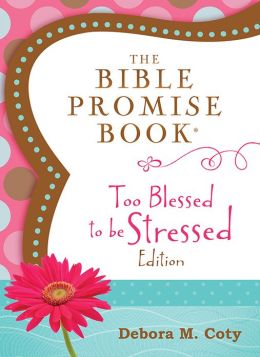
Debora M. Coty released The Bible Promise Book: Too Blessed to be Stressed Edition 9781624169885_p0_v2_s260x420with Barbour, a collection of selections from the original Too Blessed to be Stressed book.

*********************************************************************************

9780802409577_p0_v1_s260x420Roberta Kells Dorr released Abraham and Sarah with River North.

*********************************************************************************

SavedbyGracieJan Dunlap released Saved by Gracie with Authentic.

*********************************************************************************
Ken Gire released At Peace in the Storm with Bethany House Publishers.9780764208843_p0_v2_s260x420

*********************************************************************************

9781624168581_p0_v2_s260x420Paul Kent released Playing with Purpose: Baseball Devotions with Barbour.

*********************************************************************************

Tim LaHaye and Craig Parshall released Mark of Evil with Zondervan.

9780310334545_p0_v3_s260x420

*********************************************************************************

9781433683312_p0_v3_s260x420

Ben & Julianna Zobrist with Mike Yorkey released Double Play with B&H Publishers.

*********************************************************************************

9781624166181_p0_v2_s260x420Mike Yorkey released Playing with Purpose: Racing with Barbour.

*********************************************************************************

New WordServe Clients

Shelley Hendricks signed with Alice Crider.

Leticia Yuzefpolsky signed with Greg Johnson.

Linda Znachko signed with Alice Crider.

New Contracts

Anita Agers-Brooks signed a contract with Barbour for her non-fiction project titled, Getting Through What You Can’t Get Over. Alice Crider, agent of record.

What We’re Celebrating!!

The Brotherhood Conspiracy by Terry Brennan is a finalist for Foreword Review’s 2013 Book of the Year Award, in the category of Action & Adventure (Adult Fiction). Foreword Reviews, the only review magazine solely dedicated to discovering new indie books, announced the finalists for its 16th Annual Book of the Year Awards. The winners will be determined within the next two months. The final announcement will be made Friday, June 27, in Las Vegas, during the American Library Association Annual Conference. There are awards in over 60 categories and cash prizes for the best in fiction and nonfiction. Here is the complete list of finalists and the listing for The Brotherhood Conspiracy can be found here.

Amy Sorrells’ debut novel How Sweet the Sound received a fantastic review from USA Today!

Set in the late 1970s and early 1980s, a time when the topic of sexual abuse was not a thing “talked about” in the media and for which victims were still too often treated as “deserving” of the crimes committed against them, this novel refuses to nicey-nice over tough and ugly realities. This story is, throughout, raw — but yet penned with a sweetness of prose that makes you want to keep reading, even when you know it would be easier to curl into a ball and weep for the brokenness of the characters therein.

Poignant switches of point-of-view between Anniston and her aunt, Comfort, show the reach of abuse within generations of the same family and stretch a reader’s heart to its limits. Simply put, it hurts to read this novel. It hurts to watch the characters go through what they do. It hurts to see family secrets exposed, revealing pain upon pain. It hurts to see them abandon true love and it hurts when they are seemingly abandoned by it — but how beautiful the pain when an ending so lovely and right redefines and redeems several futures at once.

This book will turn your emotions inside out and grip your heart with a clawed fist before pouring acid — and then balm — over the wounds. You have been warned. Now, by all means, go buy this unusually edgy and entirely moving inspirational novel and read it for yourself.

What are you celebrating on this writing journey?

Closing The Creative Gap Between What You Imagine and What You Write

The Gap Between What You Imagine and What You WriteTrying to play the piano can be humbling. You dream of executing a Bach fugue in perfect timing, but when you sit down it’s chopsticks or nothing. Writing is a lot like that, too. An amazing scene plays out in your mind, but after your critique group reviews your rendition, you wonder how you ever thought you could write.

Welcome to the imperfect world of creative artistry. Check your ego at the door. It can’t help and may hinder your efforts to bridge the gap between what you imagine and what you can create.

Let’s go back to that piano. Even when you love playing and have a natural affinity for music, to play well you’ll probably need lessons. In the same way, studying the craft is one of the surest ways to advance your writing skills.

But studying itself won’t teach you to write any more than watching the teacher play improves a musician’s abilities. Long, laborious, tedious practice is required. Yes, there are a (very) few musical and literary geniuses in the world, but for most of us practice is what it takes to become a master. Could that be why an art is called a discipline?

At times you’ll want to bang your head against the keyboard in frustration. It becomes easier to make excuses not to practice than to face that tell-tale gap between what you can imagine and what you actually write. Are these dues of time, money, effort, and disillusionment worth paying?

Only you can decide.

Thankfully, the gap narrows with time and effort, but it never completely goes away. Living with that reality is a cost every writer continues to pay. It is also a gift that helps keep us humble.

If you persevere you may reach a comfortable level of proficiency with the pain of your early efforts only an unpleasant memory. This may result in you having less patience with beginning writers and even a feeling of superiority. The temptation to skimp on improving your abilities will be stronger. If the gap will never close, why not save your time, money, and effort and settle for doing an adequate job?

Having a good work ethic can see you through those times when you lose your desire to write with excellence. Is it worth the trouble? That’s up to you to decide, too. However, in a crowded literary marketplace, it isn’t hard to be lost in the shuffle.

It helps to be clear on why and for whom you’re writing. Whether you’re writing to make your mark, to reach a particular audience, or to glorify God, close enough is never good enough.

Writing with excellence is a self-taught skill that, oddly enough, requires you to face and accept your imperfections.

Travel to Write, Write to Travel

“The world is a book, and those who do not travel read only a page.” St. Augustine

I’m an Irish girl, both by heart and by blood. As a teenager, I remember dreaming of visiting Ireland and Scotland and seeing the hallowed halls of my ancestors’ castles. The idea is more romanticized than real – the Lynch castle in Ireland is now a bank and the Chisholm castle in Scotland is a renovated weekend getaway.

Kariss - IrelandAs a kid, I loved studying the old folk tales, imaginative stories of the tricks and heroism of the wee folk. I grew up on a steady dose of faith and fairy tales. One nursed my convictions, the other my creativity. Three years ago, my dream came true. I spent three weeks on the British Isles. I didn’t see any of the wee folk, though I walked through the fairy gardens at Blarney Castle.

But this rainy tour wasn’t the beginning of my adventures. The travel bug bit me in middle school, and since then I’ve tried to visit new states and new countries, fascinated by the culture. Nothing stimulates my creative side more than exploring new sights, scents, and scenery.

Over the years, I’ve learned this serves me in my writing. All the sensory details, the tiny quirks, the cultural differences influence my settings and characters. I’m learning to identify different textures, not just what they look like but how they feel. I identify different scents with different people and memories. Color takes on vibrancy all its own, enhancing character features, scenery, and what the character experiences.

My travel stimulation reached new heights when I visited Haiti a couple of years ago. I had written and finished my first book, Shaken, which is partially set in Haiti around the time of the earthquake. I researched, talked to those who experienced the earthquake and those who visited before and after, and watched documentaries and the news. But when I finally had the chance to experience this tiny island for myself, I walked away changed with a perspective that enhanced the editing of Shaken.

Kariss - HaitiI remember the stifling humidity and heat as I stepped off the plane. Haitian men stood waiting in the small hangar where they tried to take our luggage off the conveyor belt and then quickly exit to the street as we chased them, hoping we would pay them to get our luggage back. While corralling our luggage was a challenge, I silently cheered their ingenuity and resourcefulness in a poverty-ridden city.

I caught my first glimpse of Port-au-Prince as I hopped in the back of a pick-up and gripped the seat as we played chicken on a two-lane highway, winding past people walking less than two feet from the side of the road. An old man bathed in plain view. Women balanced enormous baskets or jugs on their heads as their daughters trailed behind them with smaller cargo. The air reeked of garbage and burning plastic. Plastic bags that used to hold water littered the street.

Kids ran past in oversized American hand-me-down clothes or no clothes at all. Buses called tap-taps, that looked like a skittle pack blew up, wove in and out of traffic, people hanging onto the back of the cab. The people are down-to-earth and friendly. Those that work, work hard, and the kids are curious and intelligent.

ShakenWhile travel shows me the differences in this wide world, it also shows me the similarities. I noticed that the cement block homes on this tiny island resembled the colored homes in Ireland. I learned that cultures are not as different as we think, that people are people, no matter where you go. I learned to look at the human condition, the driving motivations behind actions, the heart, the hurt, the dreams.

Travel shapes my writing. Haiti certainly shaped Shaken, and adventures I had years ago in Ukraine shaped a few scenes in Shadowed, book two in the Heart of a Warrior series.

So, let the travel bug bite hard, and choose one new city, state, or country to visit each year. What places, people groups, or cultures have influenced your stories?

WordServe News: February 2014

Exciting things have been happening at WordServe Literary!

On the final post of each month you’ll find a list of Water Cooler contributors’ books releasing in the upcoming month along with a recap of WordServe client news from the current month.

New Releases

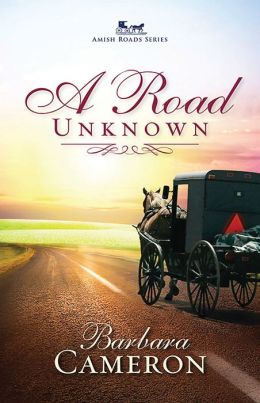
RoadUnknownBarbara Cameron released A Road Unknown (part of the Amish Road Series) with Abingdon.

***************************************************************************************

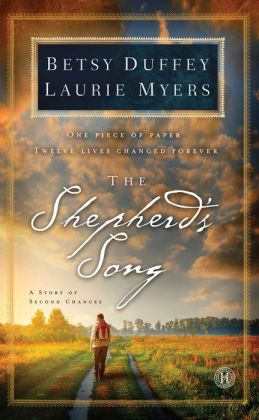
Shepherd SongBetsy Duffey and Laurie Myers release The Shepherd’s Song, their debut novel with Howard Publishers.

***************************************************************************************

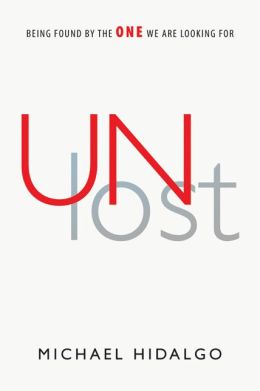
UnlostMichael Hidalgo released Unlost: Being Found by the ONE We Are Looking For, with IVP.

***************************************************************************************

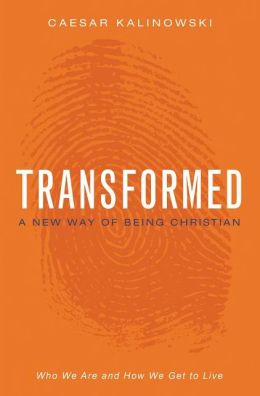
TransformedCaesar Kalinowski released Transformed: A New Way of Being a Christian with Zondervan Publishing House.

***************************************************************************************

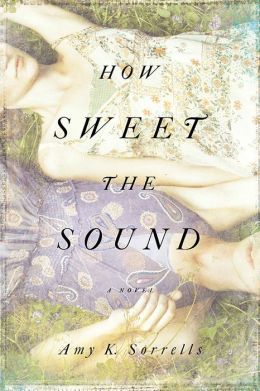
How SweetAmy Sorrells released How Sweet the Sound, her debut novel, with David C. Cook.

***************************************************************************************

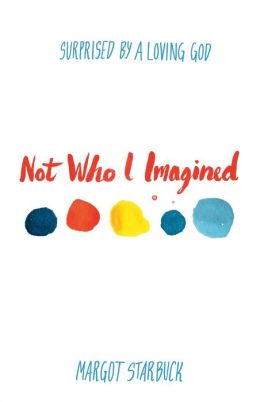
NotWhoIImaginedMargot Starbuck released Not Who I Imagined: Surprised by a Loving God with Baker Books.

***************************************************************************************

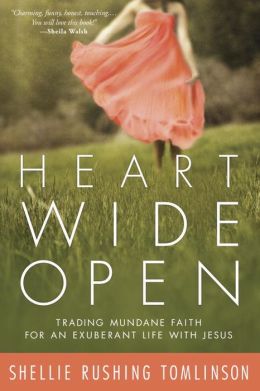
HeartWideOpenShellie Tomlinson released Heart Wide Open: Trading Mundane Faith for an Exuberant Life with Jesus, with WaterBrook Press.

***************************************************************************************

TenaciousJeremy and Jennifer Williams released the DVD and audio of their book Tenacious through Brilliance Audio.

***************************************************************************************

New WordServe Clients

Bill Myers, longtime CBA novelist and filmmaker.

Kathy Carlton Willis, platform coach, editor, and member/trainer with Advanced Writers and Speakers Association and CLASSeminars, signed with Alice Crider.

Cassandra Soars, narrative non-fiction writer and cofounder of iheartus, a new social media website for couples, signed with Alice Crider.

New Contracts

Robert Wise signed with Barbour to write Bible Lands: An Illustrated Guide to Scriptural Places.

Back to the Bible signed a 13 book agreement with Barbour Publishers to write short, felt-need books that will be distributed directly to churches through a back of the church spinner rack (as well as in all other outlets).

Sarah Varland signed with Love Inspired to write Tundra Threat, a romantic suspense novel.

Bryan Bishop signed with Baker Books to publish Boundless Jesus: Radical Faith from a Hidden Global Trend.

Kelli Gotthardt signed with Kregel to write her memoir, Unlikely Rebel.

Kate Hurley signed with Harvest House to publish a memoir about making sense of the unexpected single life.

Sarah Parshall Perry signed a two-book contract with Revell for her projects tentatively titled Sand in My Sandwich and Mommy Wants a Raise.

What We’re Celebrating!!

YouFoundMeKeith Robinson’s book, You Found Me, landed on three bestseller lists this month!

What Stories Teach Us

Woman readingI just finished reading two novels that I ended up loving but started out hating. Or, not exactly hating. Just struggling to keep on reading.

Both were assigned reading. One was a friend’s favorite novel: David Wroblewski’s The Story of Edgar Sawtelle. After repeatedly recommending it, she finally sent me a copy all the way from Germany. I couldn’t not read it. But it was a challenge. It’s about training dogs, I kept thinking through the first hundred pages. I like dogs, (we have four of our own), but how could this book have been such a bestseller? Right around then, though, the dogs and characters coalesced into a gripping mystery, and I read all night long.

The same happened with Randy Boyagoda’s Beggar’s Feast. A colleague organizing a conference featuring the novel’s author asked if I’d participate in a panel discussion of its “Christian elements.” The assignment made me leery. If there’s anything I can’t tolerate in fiction, it’s a sermon, which I assumed the presence of discernible “Christian elements” would comprise. When I sit down—or, more often, lie down—to read a novel, I want to be entertained. If there’s a message, I like to discover it myself, as with Jesus’ parables. “If you want to preach,” I tell my fiction workshop students, “write devotionals, not novels.”

My colleague’s new to our department, though, and I didn’t want to alienate her. Plus, running a conference is hard work; I wanted to offer support. Accordingly, I said I’d read the novel and, if I liked it, join the panel.

So, I started Beggar’s Feast, the syntactically gnarled tale of a boy mistreated and abandoned by his benighted family who subsequently fights, smarms, and schemes his way through the docks of Ceylon to become wealthy and powerful. A Ceylonese Horatio Alger, minus (thank God!) the moralism: Boyagoda’s protagonist, the self-named Sam Kandy, is no tractable boot-black. He despises everyone, even his own children, and murders two wives in the course of the story. Indeed, he’s such a baddie I’m struggling to discover Christian elements in his exploits.

tree diagramWhat made me dislike the book initially was that it was so hard to read. Those gnarled sentences— barrages of images so jumbled and knotted they defied sorting into logical wholes, even by someone who makes her living sorting sense from mangled prose. It was so linguistically maddening to follow this boy’s experiences—worse than Benji’s in The Sound and the Fury—that I decided my difficulty must be Boyagoda’s fault. That, though the novel was roundly acclaimed, he was incapable of writing a sound sentence.

Even as I thought this, though, I knew it wasn’t true. For one thing, despite my struggle to pin down what Boyagoda’s sentences were saying, their images and rhythms and little imbedded amusements carried me forward in a narrative that grew increasingly gripping. And, as the story developed and Sam sorted himself out, the prose did too. Soon I wasn’t laboring but just lying back, enjoying what happened next.

It eventually occurred to me (I’m slow, I know) that the sentences’ incoherence mimicked Sam’s, that a person so broken early on would likely perceive and express life brokenly, especially at first. What’s maturity, after all, beyond the accrual of coherence? As I progressed through the novel, I increasingly sensed and trusted, beneath the verbal chaos, Boyagoda’s guiding hand, shaping Sam alongside my experience of his story.

I hate devotional writing that’s just one long metaphor, but I guess that’s what this is. These two reading experiences reminded me of life—of how often I wade through a slew of confusing and often vexing mundane events unrelated to (or, worse, antithetical to) what’s really important only to realize, much later, that it was all relevant, every bit of it, all its elements, positive and negative, part of some bigger vision.

We are, each of us, part of a better story than we’re sometimes aware of, a story that unfurls only slowly, only slowly displays its meanings. Life may seem pointless or muddled or just plain wrong at times, but beneath and behind and above and within it all is its capable Writer, pulling us toward him.