Flubs are not Fatal

Approximately 650 Christian writers have just returned from the ACFW conference in St. Louis. Some are celebrating agent/editor requests for manuscripts and are on an emotional high at the apex of the roller coaster we call the writing life.

Others may be feeling like they just slid over the edge and are plummeting down the steep hill into an abysmal, dark cavern. This feeling may be perpetuated by some flub on your part and you’re wondering if you and your career will recover.

Whatever fatal flaw you may be experiencing emotional distress over; it will likely not end your writing career. Unless you actually murdered someone… well, that might cause the ultimate demise of your writing dream through traditional publishing at least.

I’m here to share two “golden lessons”. Flubs are not fatal and the world of publishing is comprised of a small group of editors and agents.

My goal at one of my first writer’s conferences was to do several paid critiques. This was at a smaller, local gathering and I was just dipping my toes into the pool like a first time swimmer. I asked the conference director what I should submit. I still think he said “your best three chapters.”

I should have submitted my first three chapters.

Now, by the time I met with this particular agent over that critique, I had realized my mistake and apologized profusely. Surely, there was no saving my reputation.

It gets better.

Three years later I had an appointment with that same editor. I had polished the manuscript in those many months and felt confident that I had something worthy for her to consider. Just before our appointment, I attended her talk on writing edgy fiction and she made a point to say, “I really dislike when writers use rape as a plot device. Can’t you come up with something better?” My stomach twisted into a glorious mariner’s knot.

That’s right, my manuscript was about a serial rapist and our appointment was minutes after that talk.

I still went.

How do you handle these situations? Here are some of my suggestions.

  • Confess your mistake. Editors and agents are human just as we are and have probably made a few flubs themselves. Be open and honest about the mistake and move on.
  • Learn from your mistake. Don’t do the same thing twice. It’s not the fact that you made a mistake but your ability to fix and learn from it that is the mark of a professional.
  • Stay positive. If you think the agent/editor flubbed and it affected you negatively, don’t disparage them on social media. That same editor I met with twice is still working as an editor and was at the conference sitting one table away from me at the banquet. That would likely be a career ender.
  • Laugh about it. The writing life is hard enough. Self deprecating humor goes a long way in helping keep you sane.

Despite these gross errors in my writing journey, I still managed to acquire an agent and a publishing contract. And yes, it was that same novel.

What “fatal” flub have you had and how did you handle it?

.

A Writer’s Life

My son sat across from me at the kitchen table with a notebook in front of him — Phineas on the cover, I think, or maybe it was Ferb — and a pen in his hand.

“What’cha doin’ there?” I asked him.

“I need to get this down.”

“Get what down?”

He looked at me and shrugged. Said, “I don’t know. I can’t get it right.”

I nodded. “I have that same problem all the time. Can I see?”

He slid the notebook across the table. Written on the page were three squiggly lines, the numbers 4 and 67, and a smiley face.

“Whaddaya think?” he asked.

“I think it’s brilliant.”

“I’m gonna be a writer when I grow up,” he said. “You know, like you.”

“Oh?”

“Yeppers. I like to write. Writin’s fun.”

I stared at him, tried to say something wise, and said instead, “Well, you have plenty of time to figure that out.”

The answer was good enough for him to accept. He finished his squiggles and then left me to ponder his words.

One day six years ago, something very special happened. My son sat down with a sheet of paper and a blue crayon, put the latter to the former, and made a waxy streak from the top left to the bottom right. Magic. And when he scurried off and came back later, he found more magic — that streak was still there.

And though the truth he’d stumbled upon then was incomprehensible, he’s been creeping closer to it ever since: if he wrote, he could leave something behind for others to remember. And it would be fun.

That, in a broad sense, is why many writers write. To plant a sign into the hard earth that says I Was Here. To know that to someone somewhere, what you say matters.

I had to admit that what my son said was true. Writing is fun. As frightening as a blank sheet of paper or an empty computer screen is, it is also marvelous. It is a canvas upon which to paint a story and a map by which to explore the world. A place where anything is possible.

But I also knew what he did not, at least not yet. Many times, writing is not fun. Writing is work. Difficult, exhausting, painful work. It takes courage to look genuinely, whether into the life around you or the heart within you, and more courage to share what you find there with others. To write is to bare you deepest self, naked of sham and disguise.

It is lonely work, a solitary walk through a land of little light and deep shadow. It is a life of irony in that by exposing yourself to the world, you inadvertently construct walls around you to keep the world away. And though you may indeed be surrounded by friends and loved ones, you know that in the end you are utterly and completely alone.

You write. They do not. That gulf is not easily bridged.

Because for many of us, writing is neither job nor hobby. It goes deeper, permeating every aspect of our lives. Every conversation we have, every face we see, every moment to which we bear witness, is seen through the lens of the page. We play our trade from the moment we wake until the moment we sleep. And even then, our dreams are often grist for the mill.

Success is fleeting. Failure is constant. You are turned away by agents and editors, the gatekeepers of your aspirations, and deemed unworthy of your dreams. You struggle with doubt and fear. You drown in desperation.

You face the agony of knowing that no matter what you manage to get down on the page, it will never be exactly what you want to say.

That’s a writer’s life. And I was left with this one question: was this the life I wanted for my son?

Yes.

Because despite it all, there is to me no greater pursuit in life than the search for meaning, and there is no better way to chart that search than with pen and paper as our compass.

To tell the world that we were here.

Post Author: Billy Coffey

Billy Coffey is the author of both Snow Day (2010) and Paper Angels (Nov. 2011), both by FaithWords. When he’s not writing, he can likely be found tromping through the woods near his home. He lives with his wife and children in Virginia’s Blue Ridge mountains.

An Author Needs A Web Presence

One of the first marketing tips a writer is given is to make sure she has a web presence–and do it before she’s  published.

Three years before my publishing contract, I created a blog and used it as my author site. For the most part, I was quite happy with it. I updated the site on a monthly basis, along with a newsletter reminder, and had formed a nice reader base, so it served me well. When I received my contract from Zondervan, however, I realized I wanted more. I had two choices–pay someone to build a website, or do it myself.

So began my journey. I began visiting author sites and kept track of those I liked best, paying attention to colors, layout schemes, page descriptions, and author photos. I also studied web designer sites and their client portfolios. For learning purposes, my favorite sites were:

.

From there, I requested price quotes. And that’s when my enthusiasm began to waver. Some of the designers were charging over two-thousand dollars–and I’m sure worth every penny, as their client pages were gorgeous! To add to my dilemma, I’d heard it said that your website must look professional–an outward reflection of who you are as an author (or in other words, not cheap & dowdy). Well that’s great, if you have the money . . . but this gal from Kansas didn’t have that kind of money to spend.

With a sigh, I began searching for less expensive alternatives. I considered updating my blog. Blogs are free, and I already knew how to manage them. But I really wanted a new look. So I set my chin, determined to figure out a way to make it work.

That’s when I discovered a host program called Homestead. Several of my author friends used the program and were quite happy with it. I began studying the tutorial and realized I could create an author site with nearly all the functions I’d requested of the designers–and for a smidgen of the price.

Of course, I would have to design the pages myself–which would take time and creativity. Fortunately, Homestead’s design program has an easy learning curve, and it turned out to be quite fun. Plus, I had the added advantage of being able to update my site whenever I wanted–an option I might not have had if I’d paid a designer. The company also offers a free trial period, to make sure it fits your needs. After 2 weeks, I’d designed a Website that was a reflection of who I am as an author.

Check it out here.

I went into this venture desiring the best, settling for less, and being quite satisfied with the end result.

For those who enjoy the creative aspects of web design (and who are working with a limited budget) this may be a nice option for you, too. Next  time, I’ll visit with you about publicity photos. Until then, enjoy the moments  . . .

Are You Ready For A One-Star Review?

It’s no fun getting a one-star review on Amazon.  What’s worse?  Having your 10-year-old son read it in front of you.

When Nick looked up, he was fighting the tears.  Trying to stay strong.  Trying to act like it didn’t matter.

Then he gave his own critique.

“You know, Mom, some of this is probably true.  But, you know what really upsets me?  She didn’t criticize your book.  She criticized you.  And she doesn’t even know you.”

Like Nick, I was fighting the tears.  Trying to stay strong.  Trying to act like it didn’t matter.

But public criticism is a big deal.  And first-time authors are never prepared.  I wasn’t. 

Now, at this point in the blog, I’m supposed to give you the magic formula.  You know, the three-step plan to prepare you for a public flogging.  The things I wish I knew.  Wish I did.  Want you to know.  Then, you’ll walk away with some value added, and I can bask in the comments.

But I’m not going to do that. 

Don’t get me wrong.  If I had a secret sauce I would probably share it.  Heck, I’d probably write another book and maybe even make some money off of it.  But since that’s not in the plans (and Rachelle would probably give me a hard time about platform), the best I can do is share my story and let you draw your own conclusions.

Here’s how it works.  When you’re an author, you are supposed to actually say something.  If you’re lucky enough to get people to read what you have to say, some people may actually like it.  Others won’t. 

Certain gluttons for punishment, like me, end up writing memoirs.  So if readers don’t like our story, it means they don’t like us.  Plain and simple. 

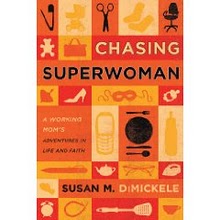
In my case, Chasing Superwoman is a very personal story.  It’s my story about my struggles (and failures) being a working mother who admits she is trying to do too much.  And while I love Jesus madly, I don’t always act like it.  This apparently offended a few readers who told me both publicly and privately that I should really set my priorities straight, act more like a “Christian” and hang up my “worldly” ambition.

Sure, I could feel sorry for myself.  I don’t deserve the criticism.  It’s not fair.  These readers haven’t met me (or my darling children!).

But let’s face it.  I kind of asked for it.   Didn’t I?

When we tell our stories, we put ourselves out there.  We make it personal.  We pour out our lives on paper, give people loaded guns, and yell “shoot”! 

Which means we have no business complaining about it. 

Now, if you’re a fiction author, you’re thinking, “What does this have to do with me?  I write fiction.  It’s not my story.” 

Think again. 

We all know deep down that your first novel is secretly autobiographical and that all the characters are based on your family and friends.  So when people criticize your book, you are equally going to feel like they are criticizing you.  Trust me.

The good news?  We not only live through it, we become stronger.  I promise.  (I’m going to blog about that next month.)

For now, just know to expect it.  And don’t complain about it, ok?

Aspiring authors, are you ready for a one-star review?  Old-timers, what’s your advice?  And how do you protect those closest to you — like your family — in the process? 


My First Rejection: the Twenty Year Ache

I received my first manuscript request in fourth grade.

My teacher invited me and another student to write a short story. The prize for the winning submission was breathtaking: a trip to a young writer’s workshop, where we would learn from real writers and hobnob with kids who, like me, dreamed secret stories deep in our young hearts.

For a ten year old, this was a once in a lifetime opportunity. I poured myself into my story, sparing no imaginative fancy. I don’t remember many details, only that it featured talking animals, a charging knight, and puppy love romance. I thought it was spectacular, one of a kind. I submitted my story and waited for the happy news.

A few days later, the teacher called me to her desk. Her soft, sympathetic voice set my knees to trembling. Why did she sound sad? Didn’t she have good news to deliver? “I’m sorry,” she said.  She’d chosen the other student’s story, a vignette about a visit to grandma’s house.

Oh, that rejection hurt. I cast green eyes at the winner and felt sick the day he attended the workshop. While he worked with grown-up writers, I solved math problems and filled out worksheets, just like every other school day.

If I’d been a stronger, more self-assured child, I might have pondered that grandma story. I might have learned the first adage of beginning writers: “write what you know”. I might have considered the fact that readers can relate to a visit to grandma’s, but no one can relate to talking ducks, fanciful knights, and puppy love. . .all in a single-page story.

I might have, but I didn’t. Instead, my young writer’s heart sported a big, throbbing bruise. But I didn’t talk about my writing, not to anyone.  So I came to my own conclusion: I wasn’t good enough. And that was that.

I couldn’t stop writing, though. I wrote poems and journal entries, short stories and personal narratives. I wrote frantically, then tore my words to shreds. Sometime I tucked my writing under my bed or in pages of childhood books, never to be seen again, even by me.

Meanwhile, I learned to deliver what my teachers wanted. An essay with a topic sentence and three paragraphs? Done. A summary of The Grapes of Wrath? Done. I earned good grades, but protected my writer’s heart with layers of bricks and barbed wire constructed from that fourth grade rejection.

I protected too dearly, and finally stopped writing all together. For twenty years I wrote nothing but grocery lists until, a few years ago, the writing exploded out of me with all the force of a long-dormant volcano.

Predictably, I still face rejection on this road to publication. But I don’t hide my words or tear them up anymore. I expect the hurt of rejection. I even embrace it, if I can. Because I understand now: the best stories come from bruised and throbbing hearts that don’t hide, don’t shred, and refuse to give up.

The honest stain of truth

Professor looked like Jabba the Hut, jowls of  flesh hanging over the collar of his shirt. He watched, smirking, as fellow co-eds and I jockeyed for seats around the long conference table, Professor’s preferred room arrangement for this, our first college creative writing class.

Until I met Professor, I could always count on my writing to please teachers and professors. But assignment after assignment came back with haphazard red-pen scratches. I imagined Professor held my paper for a brief moment before tossing it aside.

Professor enjoyed two things: making students cry and picking favorites. I landed in the first group, and was left out of the second like a scrawny girl in a middle school dodge ball gym class.

The class favorites wrote about sex, of course, and they wrote about it often. Though I lamented my mediocre scores, I refused to write about something so sacred just for him.

One fateful morning, my alarm clock malfunctioned and I was late for Professor’s class. When I arrived, he stopped class and laid into me with a barrage of insults. On and on he spat about how lazy, irresponsible and stupid I was, daring to enter his class late. Too hurt to hold back tears but too proud to leave, I stayed for the whole class.

My notebook was a soggy mess.

That day, I resolved to please Professor–if not shock the hell out of him–with my writing.

And I did.

I wrote a short story full of violence and deceit, sex and betrayal, blood and fine champagne.

The story disgusted me.

Professor loved it.

I hated Professor for a long time after that.

Years later, I realized my sordid short story paralleled scars of abuse from my childhood. The rage I felt toward Professor was a pivotal breakthrough from flowery, Pollyannic prose, and the beginning of my journey of writing hard, writing real and learning to write well.

I can’t say I agree with Professors tactics.

But I think I understand, now, what he was trying to do.

See, good writing involves daring to go to deep and frightening places. Like John Coffey–the man who breathed light and life into dead things in The Green Mile–hearts come alive when we breathe into still and long-forgotten places.

Words become life when writers allow the pen to pull them places no one else wants to go.

Like leper colonies, places in the soul exist where fear hangs like shadows, veiling what we don’t understand and shielding us from disease and pain. And yet, the only way to be real and alive is to allow the pen to touch diseased and painful places.

It is the unsought job of the writer to burst through the gates of leper colonies . . . to run to those who are bandaged and losing limbs . . . to embrace those who smell like rotting flesh . . . and to caress touch-starved hearts until they stop trembling and maybe, just maybe, believe in life again.

Good writers learn to distinguish the honest stain of truth from pencil scratches on paper.

Good writers learn the events in life which enslave us are ultimately the ones which set us free.

Good writers endure hours–even days–of depression that come when the pen finds fragile, tender places.

Good writers touch ugly, diseased places, in order to touch ugly, diseased places of others.

Good writers allow the pen to pull them.

To set even one person free.

What about you? How have you learned to write more deeply? Has a person, teacher, mentor or friend influenced the deep, true pull of your pen? Do you believe words have the power to set people free?

Energize Your Marketing Strategies

On  August 1st I wrote a marketing blog, Marketing Can Be Fun, Really! to coincide with Rachelle Gardner’s Blog, How To Market Your Book, that week. What I want to do today is encourage you as you look for ways to market your product. Yes, our books are products and they are very important for our life’s work.

We need to think like business folks as well as authors. This may not come naturally and then again maybe you’re good at this particular aspect of the business. It’s grown on me.  I met a guy at Mt.Hermon a few years ago. Some of you may know him, Jim Rubart. Listening to Jim made me think a bit harder about my natural instinct to market though I didn’t have much experience because up until I’d sold my novel there hadn’t been a need.

I counsel and teach nursing students at my day job. One of the problems some of them encounter in the college is test anxiety. I start my lectures with the words, “Have courage.” That’s what I want you to do when it comes to marketing your novels, have courage.

I want you to brainstorm marketing ideas with someone you trust. Just sit down and rattle off anything you can think of and then pick three that you really like that will energize you as well as your marketing plan. Think out of the box. I’m going to share three of my ideas that I’ve really liked exploring and working on to promote and market my  first book to it’s best advantage.

  •  Find the biggest book marketing opportunity in your area

          I mentioned Books by the Banks (that’s the riverbanks of Cincinnati), in the blog post on my personal blog. Since Secrets of the Heart was chosen for this opportunity some really cool things have happened. (1) I informed my publisher, Realms/Charisma, about signing at Books by the Banks. They kindly offered to send me 1,200 postcards to use for that day and to help promote my book at the American Christian Fiction Writer’s Conference later this month. That’s awesome! The postcards have my book cover on one side and a nice blurb on the opposite side with my website and the publisher’s website. (2) Dennis Lehane and Judy Collins are now promoting and signing their books at the same event. This will draw an even bigger crowd than expected and last year there were approximately 3,600 attendees.Opportunity galore!

  • Hospital Gift Shops

          I work in a large hospital in Cincinnati,Ohio. I asked the woman who runs our gift shop if she would carry my book. She said YES! Also, a dear friend of ours is the coordinator of volunteer services at the hospital where my husband works. She suggested I talk to the woman who runs the gift shop at there. I did and now they carry my book as well. My husband is an awesome publicist at his hospital and has been wonderful in talking up my book at his hospital. I also have the postcards at the register at both hospitals now. And I’m not stopping there. As time allows I’m asking the other hospital gift shops in the area.

  • Christian Bookstore Week

          When Cara Putman announced information about Christian Bookstore Week on our ACFW loop I got to work and now have a signing at a Kentucky Bookstore the week of the celebration and I’m going to ask one more store near me in Cincinnati if they are interested in having me come sign. So don’t waste time. Get on-line and get on your phone and market your novels.

This is just the tip of the iceberg related to opportunity and marketing savvy. Next month on October 24th, I will report back on what my experience was like at Books by the Banks on October 22nd.

Remember, even if you don’t have a book contract yet, if you’re serious about your writing you need to have an on-line presence, your home on the web. Though it’s hard to draw an audience it’s a good thing to get practice in on how to formulate blog posts, etc. 

What are you doing to energize your marketing plan?

Post Author: Jillian Kent

 Jillian Kent is more than enthusiastic about the release of her first novel, Secrets of the Heart, The Ravensmoore Chronicles, Book One. She’s a full-time counselor for nursing students and holds a masters degree in social work. She’s fascinated with human behavior and thought it would be interesting to explore what might have happened in a lunatic asylum during England’s Regency era, her favorite time period. Jillian hopes you will escape into the past with her and find faith for the future.

A Writer’s Life: Surviving the Fire Swamp

Rodents of Unusual Size? I don't believe they exist...

After hanging out at the Cliffs of Insanity, I’m doing a bit of rumor control today before negativity infiltrates the Water Cooler crowd. The report is this: “We’ll never survive.”

Survive what, you ask? The journey–wherever it takes us–along the writing road.

Never survive? To quote Westley, our hero from The Princess Bride, when he faced the Fire Swamp: “Nonsense.”

Many writers survive–even thrive. Sure, at times the Brute Squad hammers our egos, but consider a pounding an occupational hazard. Westley and Buttercup conquered the flame spurt, the lightning sand and Rodents of Unusual Size (R.O.U.S.’s). Like our hero and heroine, writers must overcome terrors specific to the writing world.

  • Expect the expected. Flame spurts were predictable. Listen for the popping noise, move, and you won’t get burned. Hang around the writing world long enough and you’ll recognize probable pitfalls. Listen for oft-repeated refrains like:
  1. Show don’t tell. (Unless you’re Erin Healy, who’s teaching a class at ACFW titled “Sometimes It’s Better to Tell than Show.” I don’t know about you, but I’m intrigued.)
  2. Know the rules before breaking the rules. (See bullet #1.)
  3. Writers need a platform. (Or a brand. Or, at the very least, an engaging plot.)
  • Don’t travel alone. You don’t survive a solo encounter with lightning sand. Buttercup would have suffered a tragic death but for Westley’s daring dive into the sand to rescue her. And despite writer Jessamyn West’s oft-quoted assertion that “Writing is a solitary occupation,” I’m thankful for my writing comrades. They’ve saved me from death by over-writing. Death by over-editing. Death by over-thinking why I decided ever to set foot on the writing road to begin with.
  • Realize the reports may be true. I’ll disappoint some of you by not drawing an anology between R.O.U.S.’s and editors. Or agents. Sorry, not going there. (I’m an editor too, after all.) Remember Westley’s response when Buttercup asked about R.O.U.S.’s? He said: “I don’t think they exist.” And right after that–OOOF! An R.O.U.S. took him down. We’d like to think we’re exempt from the tough times writers face: Bad reviews. Low sales. Dissatisfaction with critique groups. Let me be frank: Ignorance isn’t bliss when it comes to R.O.U.S.’s in the Fire Swamp or very real problems along the writing road. Saying “It ain’t going to happen to me” only accomplishes one thing: You’re unprepared when low sales take you out at the knees.Or when your crit group pummels your work-in-progress (WIP). Or when your elevator pitch plummets to the basement.

What about you? Any survival techniques you’d care to share with the rest of the group gathered ’round the Water Cooler today?

Post Author: Beth K. Vogt

Beth K. Vogt is a non-fiction author and editor who said she’d never write fiction. She’s the wife of an air force physician (now in solo practice) who said she’d never marry a doctor—or anyone in the military. She’s a mom of four who said she’d never have kids. She’s discovered that God’s best often waits behind the doors marked “Never.” She writes contemporary romance because she believes there’s more to happily ever after than the fairy tales tell us.

Celebrate!

Let's all celebrate! (Pic by Photobunny)

Today is both my birthday and my agent, Rachelle Gardner’s birthday. Reason enough to start a party!

As if that weren’t enough, as a bonus to really get in the mood to celebrate I have a few words of wisdom from Rachelle about building a career rather than just selling a book.

I was one of Rachelle’s first clients and right from the start I knew there was the potential for something special. It started with the way Rachelle chooses her clients, the writers.

Rachelle has never been afraid to take on a new author. She now has about 50 clients, 90 percent of whom are new authors, which says something wonderful about her approach to the publishing business. Her intention is to build a strong roster of credible writers rather than make the quick sale. That takes time and talent on both the author and the agent’s part and can be just as rare in an agent as it is in a writer.

“It’s great for me because as agents go, I’m still one of the newer agents, coming up on four years, and it’s kind of neat for me to help build writers from the ground up,” said Rachelle. “Now, keep in mind, I’m making very intentional decisions,” she added, as she looks for writers who have something to say and are willing to work with her.

I’ve had agents before, good agents who quickly sold my work but I’d never had anyone speak to me in terms of a career. Not only in general terms but specific steps I could take if I was interested in making a decent living. Rachelle was doing that from the start even while we were talking about the project at hand. She was taking the long view of me as a writer.

That approach was going to take more work and a lot more patience but has the potential to payoff with steadily rising book sales.

That’s like gold in this business. Continue reading “Celebrate!”

Writing Bible Studies: Feeling the Nudge?

Writing Bible studies is my passion, but it used to scare my freckles white. How are we supposed to improve on the inerrant Word? Thankfully, that’s not our goal. Whew! A good Bible study provides practical, 21st-century application to timeless truths filtered through the author’s life experiences.

So where do we begin? Some writers start with a theme such as comfort or joy. I love to start with a few passages of Scripture that resonate in my heart and mind that I’ve read during my morning quiet time, or heard in a sermon or Bible class. Both approaches work well because they provide a solid starting point.

Whether you’re writing a full-length Bible study, an abbreviated study for a magazine, or teaching a Bible class, I’ve learned there are five basic steps that seldom change. Begin by asking God for His wisdom and guidance, then:

1. Immerse yourself in the scene.

Writing Bible studies involves telling a story, so don’t neglect the scenery, human interaction, or history. Who wrote the passages? Where do they take place? What season is it? What’s the emotional temperature? Is there conflict? Who’s involved? From whose POV is the story told? How is God revealed? What’s the overarching lesson? Incorporating some or all of these elements invites readers to relate on a personal level.

2.  Look up the passages in their original language.

Whether Greek (New Testament) or Hebrew (Old Testament), it’s crucial to understand the accurate meaning of the words used. The Hebrew language contains no vowels, so English translators added them so we could understand the text. But sometimes the interpretations fall short of capturing the original connotation. For example, Psalm 23:3 promises, “He restores my soul.” In the Hebrew, “restores” means “to reset.” In other words, God reboots us! The rich meanings that I learn during this step often alter the trajectory of an entire study.

3. Research the culture of that time period.

For example, it’s hard to understand the depth of love that drove the prodigal son‘s father to run and welcome his son home until we learn that it was utterly disgraceful in that culture for a man of the father’s stature to lift his robes, run, and reveal his hairy knees. (Yes, really!) That cultural detail allows us to grasp on a deeper level God’s passionate pursuit of us when we go astray. Researching the cultural background provides vivid history and valuable insight.

4. Read Biblical commentaries.

Scholars use their theological expertise to point out nuances in the original languages and cultural idiosyncrasies that help you parallel today’s trends. They often cross-reference words, verses, and similar scenarios throughout Scripture that aid your writing perspective. Also, several commentators lived in the 19-20th centuries, so that really cool, old-school writing style lights up my imagination!

5. Use reference books and resources.

Just like the Chicago Manual of Style represents a must-have for fiction writers, Bible study writers need particular resources readily available. I find these indispensable:

Last, but by no means least, every Bible study writer needs to be a faithful student of Scripture. Here’s a handy Bible Reading Checklist to download and tuck in your Bible. It’s a useful tool to check off the books and chapters as you read them.

Regardless of how you approach writing Bible studies, keep writing. Relentlessly ask God to guide you. Your freckles will return, I promise! This process enriches your spiritual journey and provides that same opportunity for others. This may be a tedious process, but you’re not just writing about any story. It’s THE story.

Let’s chat:  If you write Bible studies, what works for you?  If you’ve never written one, what did you find most helpful?