Answering Critics

Everyone’s a critic. Everyone has an opinion. And of course, everyone’s entitled to their opinion.

But what happens when a critic or a reviewer or a book club member reads your book and doesn’t like it? What do you do when you read a cutting review of the book you toiled over for months (or years)?

Novelist Alice Hoffman had a book release in 2009 called The Story Sisters. She received a less-than-glowing review by The Boston Globe’s Roberta Silman. Unfortunately Hoffman wasn’t able to dismiss the review as one person’s opinion and move on. Gawker, an Internet gossip site captured all the dirty details. Lashing out on Twitter, Hoffman posted 27 Tweets in response to that review, including posting the contact information for Silman in hopes that Hoffman’s fans would call the reviewer out on the carpet.

I wonder if Ms. Hoffman is wishing she could take back her words. Well, actually — if she could take back her Tweets. I think that the answer to that is a resounding yes because her Twitter page is no longer online.

Very few writers please all the critics all the time, and most likely there is no writer who’s ever accomplished that feat. But the issue lies in how you deal with the criticism. It’s tough to receive negative feedback whether you’re a yet-to-be published author or one who’s had several books printed.

Some strategies to deal with the disappointment?

Call your agent/editor/mother/spouse/best friend/significant other and vent your frustration. Go for a walk. Write something. Take a nap. Write a private email to your critic if you must. Still, if the last option is your choice, first give it a day or two, and consider praying about the words you’ll deliver.

But don’t go and lose it online.

Perhaps the best course of action for Ms. Hoffman would have been to say nothing. What’s accomplished in slamming the reviewer for her words? It just doesn’t look professional, even if you think the other party acted poorly.

Author Angela Hunt cautions writers to never answer a critic publicly. That sounds like good advice. Too bad Ms. Hoffman didn’t receive such counsel.

Want a laugh? Here’s one author’s humorous response to criticism.

What’s your advice to someone suffering the sting of criticism or rejection?
Stuck in a Corner

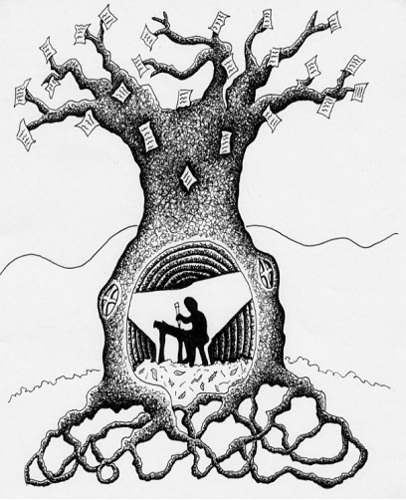
Photo by Keith Lyndaker Schlabach

There’s a kind of fear most writers have that can inspire a clammy feeling even faster than waiting to hear if a book’s been accepted by an agent or a publisher. It’s the blank mind, particularly when there’s a deadline looming just ahead. Some people call it writer’s block, as if there’s something sitting in our heads that stands between our keyboard and creative brilliance.

It happens to all of us, no matter how long we’ve been writing or how successful we’ve become in our writing careers. However, I have learned a few tricks to remove the blocks and get going so that I don’t go sliding past a deadline and just make myself, and everyone else, feel worse. Even better, occasionally a reader will point out that very spot in a book as their favorite, and I marvel, once again, at how important it is to just keep going without expectations or attachments.

First Tip: Be gentle with yourself. Berating, digging around in your past for reasons, imagining a bleak future, or even waiting for the muse are not helpful. A walk might be, though. Also follow the HALT rule. Are you hungry, angry, lonely or tired? Take care of those first and then get back to work.

Second Tip: Pull out your character descriptions you hopefully wrote out before you started the book, whether it’s fiction, nonfiction or a memoir. Reintroduce yourself to all the idiosyncrasies, some of which you’re not even using on paper, and even add a few if you feel so moved. If you haven’t done this, do it now. We’re the driver on this literary trip, and we need to know all of the passengers in order to see where it’s going.

Third Tip: This one has gotten me out of more than one corner. Write the words, “Once upon a time,” and then let your imagination go. Write whatever comes up and follow the trail. You can delete those four little words later along with anything else you needed in order to get the left side of your brain going again. Most of us were read a fairy tale or two as a child, and those words can often create a sense of wonderful anticipation of what might be coming next. Our brain recognizes that too.

Fourth Tip: Pull out the description you have, however brief, for the arc in the story. That’s the place that’s most climatic, where everything changes. Is the arc still satisfying? Does it need beefing up, more research, more details? Is everything still pointing to that arc? That may be why you’re stuck. You’ve gone a little off course and need to delete some, add some more, so that you’re once again heading toward a big moment. Stories usually have several smaller arcs on both sides that can be used as places to aim toward as well till you’re driving for the ending.

Fifth Tip: Read the last portion you got down on paper to a trusted friend, preferably another writer that you respect. Hearing it out loud may help you hear what comes next. A brief conversation about what you’re writing and where it’s headed next may do the same. If you have to call more than one or two friends, though, you’re serial dialing as a distraction and not to help the writing. That usually leaves me overwhelmed.

Keep in mind that every job has its down days, and even though we love being writers, some days we’re bored or anxious or frustrated. That’s okay, but we have to also keep going because this is a business as well as an art form and someone’s made plans with that deadline in mind. So do your best, hammer out what you can and come back tomorrow. This too shall pass.

Q: What do you do to get out of a literary corner?

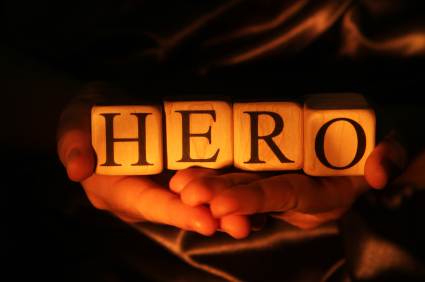
The Hero Within

In a writer’s world we are the masters of the pen (actually a computer keyboard, but that didn’t sound as cool). We create complicated characters through various techniques and tell them what to do.

But then they take on a life of their own and begin to tell us what the story is about. This can be quite fascinating, like sitting at a movie, watching the story unfold. Other times it’s frustrating because these life-like characters make bad choices or behave poorly (there’s always at least one), resisting our intended purposes for them.

When I think of writing in these terms, my thoughts drift to our Creator, and I wonder if God sees us in similar fashion. Aren’t we like His characters, created with His purpose in mind? Yet we have free will and the ability to choose poorly, or wisely.

God gives us that room, though I know we must frustrate him terribly at times. The Israelites certainly did. (Aren’t we still Israelites at times?) But part of the joy I experience in writing a powerful scene with my characters is seeing them grow and embrace God’s love and truth. There’s a sense of victory there even though these characters exist only in my head.

I remember as a kid imagining these scenes where the heroine (usually me, of course!) persevered and made this huge impact or discovery. I walked into the sunset as a new inspiration to my fellow underdogs (the theme of many teen movies).

The funny part of all this is, the longer I write and study the books and movies that are popular, the more I find a universal theme there—of a nobody discovering they have some kind of special gift that helps them save the day. A gift that comes from somewhere outside them and suddenly this feels-like-a-nobody character blooms into someone unique.

Now the amazing part. It’s a story theme that’s existed for thousands of years. The one I like best? The one in the Bible.

Jesus was just an ordinary carpenter. He didn’t look like much to those who resented and envied Him. He didn’t appear a whole lot different from the men He walked with. He started out as a nobody in the eyes of those around Him. But to know Him was to know He walked in greatness and humility.

He walked this earth like a man, yet within He holds a power to “save the day.” And every person who knows Him.

His is the story of the ultimate Messiah, the one true Savior of the world. He was and is the true Hero of the story—of the world and of our lives.

And the absolutely mind-blowing final part? He lives in us, changing us from nondescript nobodies to uniquely gifted individuals created to fit into a true story.

His story.

Happy Thanksgiving from the Water Cooler Family to Yours

Photo by Tom Gill

Thanksgiving has always been a great time for Americans to reflect on what is going right in their lives.

There are other moments throughout the year like our birthday or the upcoming New Year’s holiday that lend themselves to the same moment of gratitude.  However, this holiday asks the same question with a wonderful twist.

Instead of what might be the usual, what-about-me, we’re asked to remember others, especially those who can’t be with their families like our servicemen and women stationed all over the world and in harm’s way in Iraq and Afghanistan. That gives all of us a moment to step out of ourselves and remember what really matters to us.

For many of us it’s the people seated at the table right around us, and we get to say directly to them on Thanksgiving day just how much they mean to us. But there are also many others who touch our lives every day, and mean so much to us for their unflagging support and cheers of encouragements, who are scattered all over the world.

For the writers at the Water Cooler that includes you.

All of us at the WordServe Water Cooler want to take a moment to say thank you to everyone who has joined in our fun. Thank you for taking the time to share your thoughts and feelings here at the blog on the rollicking, fast-paced world of writing, publishing and marketing. We have all grown to feel like one big family.

For writers, who spend a lot of their career waiting to hear from editors or critics or booksellers, it’s a very special and sometimes rare gift to create such a supportive community. We look forward to all of the great conversations, book news, writing tips, and platform building to come.

A great big thank you as well to our agents at the WordServe Literary Agency, Greg, Rachelle and Barbara for all of your guidance, hard work and for always going that extra mile. We are all very grateful. Happy Thanksgiving everyone!

This Business of Story

Fall Road Olivia Newport
photo by Lorri Nussbaum http://www.keeperscards.com

“Noveling.”

On the day that I’m writing this, I’ve typed the word novelist several times and it keeps coming out noveling. “I’m a novelist” comes out “I’m noveling.”

Well. There’s something arresting there, especially since I decided long ago to write about “this business of story.”

I love stories. I read stories. I write stories. I live stories, with plot and character conflicts disassembling my tidy life plans every day. I share stories when I go deep in conversation with friends or walk beside them through their dry valleys. The fact is I see bits and pieces of stories flung around my ordinary day.

Dialogue. Humor. Moods. Obstacles. Disappointments. Faith gone dark. Determination. Overcoming. What it is that binds me to story?

My meanderings around this business of story take me to some dead ends and some scary places.

• Can I sell stories? We’ll find out when my contracted books start releasing.

• Can I survive the story of the storytelling industry, which seems to have a new cliffhanger every week?

• Can I shape stories? What am I contributing to the lives of people I care about?

• Can I sustain myself with stories? Can I make a living as writer? Can I carve out the time to feed my soul with the fruit of writing even if I don’t make a penny?

I tend to want to be at the end of stories. As a novelist I want to write stories that keep readers turning pages to get to the end. But I also want to know how things turn out in my own life story. What will be the payoff for my efforts, whether it be in relationships, ministry, or the next manuscript?

Almost every month, though, someone in my book group turns to a page to read aloud a striking passage that stills my hurrying. Mentally my tongue sloshes around trying to slurp up the wisdom and craft dripping from the words I hear. One exquisite paragraph, the precision of one sentence, even just one delicious word—story mingles in the writer’s choices, and zest lingers long after the book is closed. How could I have missed those morsels in my own reading? It’s a reminder to me of the splendor of being on the way somewhere, rather than being at the end of the story.

This business of story is about seeing life through a lens of story. We capture life within the words we wrestle onto the page. The meaning of moments comes into focus when the time is ripe.

As much as I want to understand the business of story to make a living as a storyteller, I want even more to understand the business of living a good story.

So I am “noveling” after all. I may just hang onto that accidental word.

How is your noveling going?

Note: On the day this posts, I’ll be driving across four states to be with extended family on Thanksgiving for the first time in six years. I’ll be on the lookout for free wi-fi along the way to check in with comments. Even if I’m late to the discussion, though, I hope you will find richness in conversation.

My Greatest Nonfiction Tool


I’m a disorganized perfectionist. Creative to a fault—I run off in a multitude of directions and suffer from the attraction of distraction. My husband loves to call me “bright shiny thing.” Whatever I’m doing can be interrupted by anything, and soon I’m involved in something and accomplish nothing.

This week my husband had enough. “Your piles of papers and stray books all over the house are driving me nuts! Can you please find time to go through and get rid of what you don’t need?” For some this request is an inconsequential written task on your to-do list. For me, well, you might as well ask me to strap an oxygen tank to my back and climb Mount Everest.

While organizing, I came across something so dear to me that I had to sit a moment and take it in. My journal.

It’s misleading for me to tell you I found my journal, when really I have many journals. I was one of those little girls who kept her words in diaries, locked with tiny gold metal keys. Pre-teen angst over pimples and parents found sweet refuge on paper. As I grew in age, my journals grew in number. No longer confined to only one, as a young mother I purchased a new journal for each precious child inside of me. It was one of those journals I discovered while cleaning yesterday.

Holding the words of first-time parenting in my hands, this flowery-fabric-covered time machine transported me to the winter of 1991. As I turned the pages I felt the flutter of new life again, and could almost smell the Pampers and Desitin. Taking a deep breath, I remembered the anxiety of a twenty-something mother who worried over ear infections, allergic reactions, and kidnappers.

As a nonfiction writer, I write about marriage and parenting. What better tool is there than my journals? A smorgasbord of material—it’s a place where I can remember my fears and joys and reach my readers with real words and stories—family permission permitting. So, I thought I’d share a few ways I used my journals to author my first book, and a couple ways you can use a journal as a keepsake.

Prayer Journal – I keep my prayer journal beside my favorite leather recliner in our family room. When I have my cup of tea in the morning, I jot down a few things that are pressing or maybe a scripture verse or quote that spoke to my heart. When I wrote my book I included a prayer at the end of each chapter. This journal was a helpful tool.

Family Journal – Funny things my kids say, life experiences, favorite recipes can all find their place here. I recently laughed out loud after reading my journal entry when the kids were five and seven. Since I write with lots of humor, what a great help my kids and this journal are. I took the time to write random things I heard them say that morning. My favorite? “When smoke comes out of the hole, turn it off.”

New Life Journal – When I discovered I was pregnant with each of my four children, I ran out and purchased a new journal. My words of love, joy, and their own baby milestones grace the pages. Now I try to write something each year around their birthdays. When they are married and expecting their first child, I plan on gifting them with this book from my heart, along with their very own blank journal to continue the tradition.

Gratitude Journal – This season is the perfect time to write what you’re thankful for. Pass a gratitude journal around to your family and ask them to write something down and sign it. Are you hosting Thanksgiving? Leave it by the spinach dip where your guests can see it and add their own thoughts of thankfulness. What a precious keepsake.

As an author, I take great joy in hearing from my readers. When my words have helped bring a laugh, comfort or teach, I am elated. But, my first love is my family. I’ve always believed as a writer I’m cutting a path for my children. This gift of writing is for them first. When my last day on earth draws to a close, my legacy remains. My journals are a part of that legacy. My words on paper are the fingerprints of my heart, left behind to remind them how much they were loved.

What about you? Did you keep a diary as a child? Do you write in a journal today? If so, what do you record on its pages?

Simple and Sincere

Novel readers and children share a common characteristic.  Both have a nose for sincerity. If they catch the faintest whiff of guile or disingenuousness, you’ve lost them.

In writing and teaching children, you must be sincere.

I pondered this when I watched a videotape of my first grade music students. They sang about falling leaves, and the excitement in my voice as I guided them was obvious. Their faces and singing voices reflected my enthusiasm.

Watching the tape reinforced my suspicion: students respond to me because I love their songs. Though I’ve sung opera and studied the classics, I haven’t lost my taste for the simple things. I find simple truth in “Shoo, Fly” and simple beauty in “All night, all day, angels watching over me, my Lord.”

When I sing the songs of childhood, I believe them in the most hidden labyrinth of my soul. They resonate with me, and not because they’re “cute”. Fun, certainly. Entertaining, beyond a doubt. But if a song smacks of cuteness, I refuse to sing it. My students are too precious to patronize. They deserve simple, powerful songs that convey joy, truth, and beauty.

So do readers. They deserve a story we believe in, one that conveys truth, joy, or beauty, and preferably all three. They won’t be pandered to. They will respond to a book that burns its way out of us with tears, smiles, excitement, pain, or revelation. They will sense the engine of passion behind each line, in the subtle rhythm of a story we had to write. That doesn’t mean they’ll love the story. But if we tap into that rhythm, they might continue reading until the last page, until the last chord fades.

Honest, uncontrived passion. That’s what students and readers crave.

Did you ever try to write a book that didn’t resonate with you? Did you keep at it until it did, or did you scrap it and move on to a new project?

A Writer’s Life: The Waiting Room

Today I’d like to invite you to join me someplace most, if not all, writers are familiar with. Where’s that, you ask?

The Waiting Room.

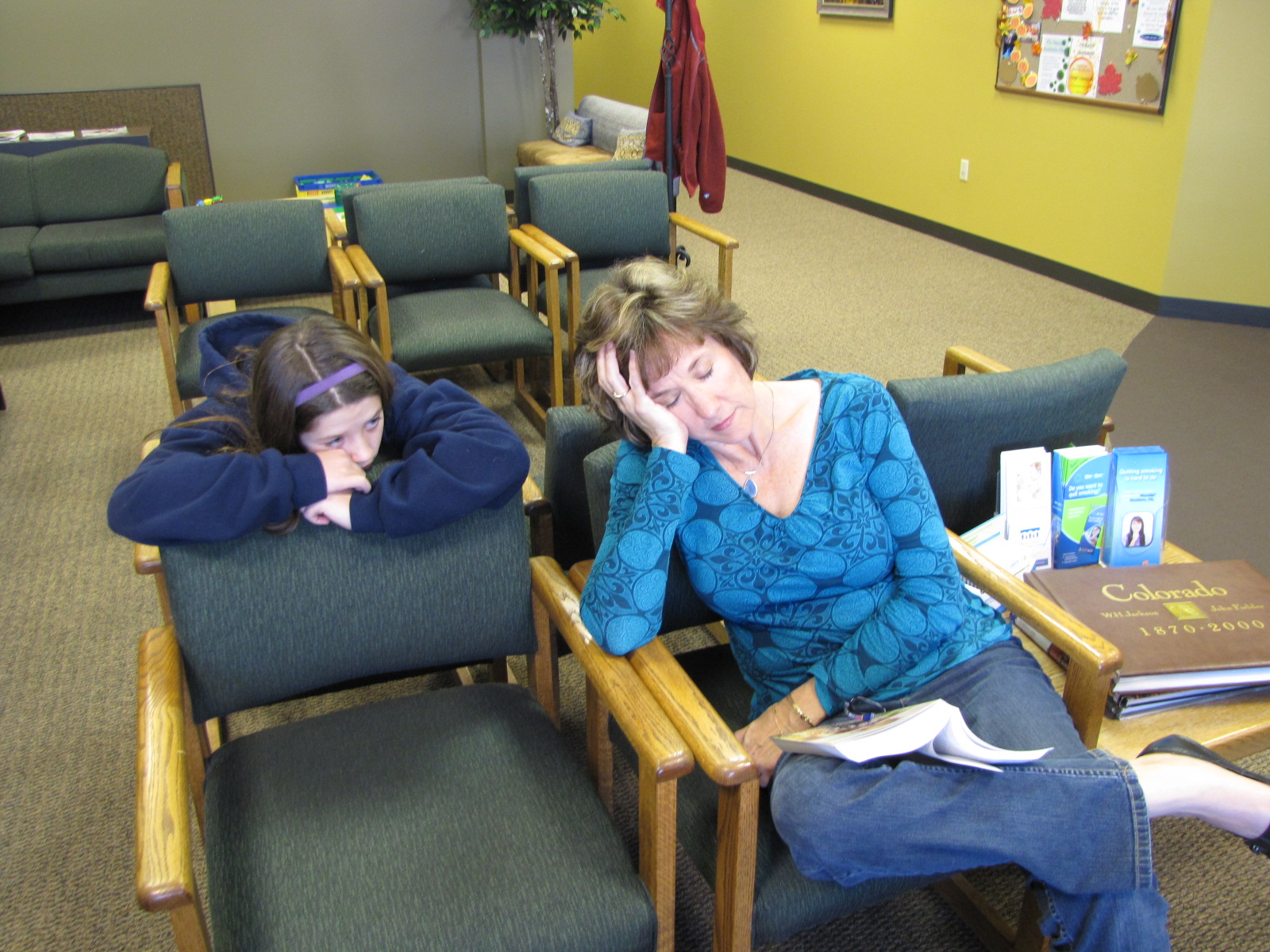
Oh. My. Word. Your groans probably registered on the Richter scale. Stop it right now and come on in. Yeah, the Waiting Room is crowded. And the magazines are out-of-date. But we’re here to talk, not peruse the 2005 issue of Bowhunter magazine

If you’re a writer, the Waiting Room is unavoidable. Truth is, if you stay the course, you’ll make repeated trips to this room where the hands on the clock never seem to move and you languish forever, wondering when someone will call your name and say, “We’ll see you now.”

Aren’t I just the messenger of all things light and breezy today?

Why, you ask, why the Waiting Room? It’s such a waste of time.

Is it really? 

What can you learn while you wait? (Yes, I know you’d rather get seen and get out of here. But stick with me.)

  1.  Understand attitude is key. If I expect to wait then I avoid the “Woe is me” attitude — or at least succumb to fewer attacks of self-pity. If I get into my appointment on time or — gasp! — early, then I celebrate. Translation: No one is an overnight success. If some author tells you that they were, they’re lying. (You can tell them I said so.)
  2. Come prepared to wait. Do I want to waste time thumbing through magazines I’d never read even if I was stranded on a desert island? Translation: What are you doing while you wait for “the call”? Are you counting time or making time count by revising your manuscript, attending conferences, connecting with other writers — maybe even encouraging other writers?
  3. Realize everyone hates waiting. Medical professionals hate being behind schedule as much as you hate waiting. Translation: Editors wait too. And agents. And publishers. (Side note: Please, no comments with “waiting for my doctor” horror stories.  Not the point of this post. If you really need to vent, email me at beth@bethvogt.com. I’m married to a doctor. I can take it.)

Time for me to sit back and see what y’all have to say about time spent in the Waiting Room. Tell me how you handle waiting for feedback from your critique group. Or from your agent. Or for the “sign here and would you like an advance with that?” phone call. How do you make waiting worthwhile?


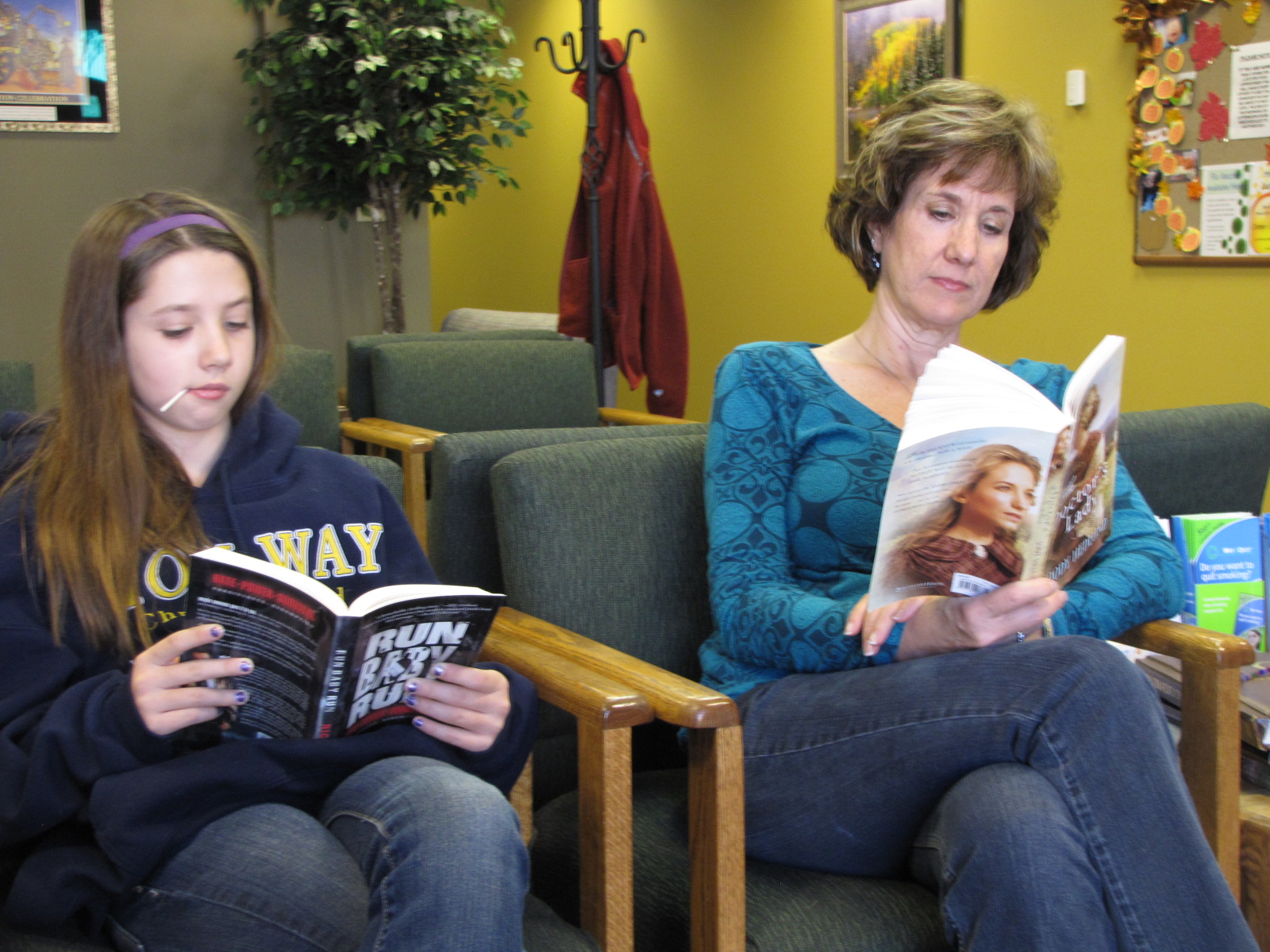
*Photo credit: That’s me and my daughter. In my husband’s waiting room. With a copy of author Jody Hedlund’s latest release, The Doctor’s Lady. The sleeping pose is for the sake of the column — not a statement on Jody’s writing. I loved reading The Doctor’s Lady!

Post Author: Beth K. Vogt

Beth K. Vogt is a non-fiction author and editor who said she’d never write fiction. She’s the wife of an air force physician (now in solo practice) who said she’d never marry a doctor—or anyone in the military. She’s a mom of four who said she’d never have kids. She’s discovered that God’s best often waits behind the doors marked “Never.” She writes contemporary romance because she believes there’s more to happily ever after than the fairy tales tell us.

The Publishing Biz: Will it Break You?

Photo: Bill Longshaw / FreeDigitalPhotos.net

Launch the Internet these days and you’ll find a deluge of opinions on what it takes to make it as a writer. You can glean expertise about search engine optimization, how to build a platform or leverage social media, garner advice on author branding, book promotion and networking, and find out what’s happening right this moment in the explosive world of ebooks. If the odds were against a writer back in the day, they really have their work cut out now.

You might tremble before the daunting writing, publishing and now marketing journey and wonder how you can possibly succeed. Do you look around and ask, “Are my writing dreams even relevant anymore?” Maybe you think…

  • With ebooks at everyone’s fingertips, the number of titles available has skyrocketed. There are simply too many books out there for any one author to garner much attention. Besides, you’ve missed the latest trend. Your chosen genre has been overdone. Editors have seen it all before and you have nothing new to offer.
  • The economy is still too scary, weak or unstable for you to venture into something so uncertain, and few authors earn enough to quite their day jobs anyway, so why bother?
  • Publishing houses aren’t taking many risks on new authors, and if they do, they aren’t investing in them the way they used to. The good old days are over, and while self-publishing is an option, you don’t have money to invest in it, let alone a website and SEO, and it’s all too complicated anyway.
  • Everyone else is better at social media than you. You’re not part of the ‘in’ social media networking crowd, and that train has already left the station without you—agents and publishers will take one look at your Klout score and break a nail trying to hit the ‘thanks, but no thanks’ button. You can’t possibly catch up.
  • You’re too utterly exhausted after working, volunteering, cooking, cleaning, carpooling, commuting, going to church, tweeting and generally living life to step it up in the writing and publishing game, especially to keep up with rules that seem to change everyday. If you thought you didn’t have the time before, you really don’t have the time now.
  • You don’t have a platform—you’re not even sure you know what a platform is. It probably takes too much time and effort to build one, and frankly, you’d rather stick a rusty fork in your eye than have to promote yourself anyway.
  • It’s easier to take a ‘wait and see’ approach. Industry changes may be a passing phase you can wait out—maybe when the kids are grown, you graduate or you retire. Eventually, the world will revert back to the way it was before, when writers had only to write and there was plenty of ozone left in the northern hemisphere.
  • Your old writing dream is in jeopardy, and you can’t come up with a new one you’re as passionate about, so you’re left to lurk about in a fog no one can lead you from with any certainty.

Maybe you believe some of this—maybe not, but the most likely reason you may fail to achieve your writing dreams is you will simply give them up. Any excuse will work. Pick one.

You can be paralyzed by the changes of today and uncertainty of tomorrow, or you can refuse to dwell on the reasons ‘why not’ and learn what works and what doesn’t from trial and error and from those working alongside you—those who keep putting themselves out there so others can keep dreaming.

What about you? Has the industry changed too much for the dream to appeal to you anymore? Or are you in it for better or worse?

Using Stolen Moments to Write

NaNoWriMo begins today. Around the world, millions of writers are pounding on their keys to produce a novel in 30 days.

Many writers aren’t like Richard Castle with styling offices and ability to write full-time. Most writers I know work full-time inside or outside the home, care for a family, have church responsibilities, act as the family chauffeur, battle dust bunnies from overtaking their homes, and try to squeeze in a decent night’s sleep.

Who has time to write? Well, many of them may not have time to write, but the majority of them MAKE the time to write.

I’m a stay-at-home-work-at-home-mom who owns and operates an in-home family childcare program. Not working isn’t an option. With my My Book Therapy responsibilities, book contracts, family and church commitments, life can be a bit crazy.

A schedule and stolen moments help me find time to write. Also, I’ve encouraged my family to help with housework, laundry and cooking. Plus I use my Crock Pot and bread machine a lot. I write in the evenings so Hubby runs errands and chauffeurs our son.

If you don’t have evenings to write, do you have 15 minutes in your day? The Fly Lady has a great site to help people get their homes and lives in order. One of her principles is you can do anything in 15 minutes … including writing.

I downloaded an egg timer for my computer. When I’m stuck on a scene or needing motivation, I set timer for 15 minutes and free write without editing. When I’m writing my rough drafts, I use my timer to increase my word count. After all, rough drafts are allowed to be rough.

If you are serious about your writing and want to make progress, enlist your family to help out. Delegate household duties, grab the timer and have everyone work for 15 minutes.

Another way to get some writing time is to ask your spouse to take your children for an hour or two each evening. The children and spouse will have a special bonding time and you will have time to write. Turn off the Internet and focus on your manuscript.

If you don’t have a spouse, consider doing a play date swap with a friend or neighbor. Ask a high school student to entertain your kids for an hour or so. Or write after your kids go to bed. If that won’t work, get up an hour earlier in the mornings. If you work outside the home, write during lunch. If you have to chauffeur your kids, take your laptop or a notebook and write while you’re waiting.

Set a daily writing goal and use stolen moments to build your word count. Remember, your first draft doesn’t need to be perfect.

Balancing life with work, family and writing can be a juggling act. Find what works for you. If you don’t take your writing time seriously, no one else will either.

**A bit of self-promotion: My debut novel, Lakeside Reunion, releases today! I’m having contests to promote my book. Visit my Lakeside Reunion Contest Page for more information. The token for this blog is a novel.

Your Turn: Are you participating in NaNoWriMo? How do you find time to write?