
 Feeling empty after finishing a manuscript or spending weeks marketing your books? Has burn-out become your default mode?
Then it’s past time for you to indulge in some writerly self-care. Here’s how I refill my tank:
- Eat ice cream. Lots of ice cream. It freezes all the synapses in your brain so you can’t think about writing, even if you wanted to. The idea is to give your brain a break, and ice cream does it every time for me.
- Read a lousy book. In fact, read two. It will remind you that anyone can write a book, but YOU can write a GOOD book. Pat yourself on the back. (Gratuitous self-praise is one of a writer’s most potent secret weapons when it comes to longevity in the writing business.)

- Go cliff-diving. (No, wait. That’s too much like writing – throwing yourself into a project not knowing where you’ll land. I guess that’s why I’ve never gone cliff-diving in real life since I do it all the time with writing. True confession: I just included it in the list to catch your attention…)
- 4. Take up a new hobby. Not cliff-diving (see #3 above). I’ve recently started weeding the yard, lopping off dead branches and building rustic furniture. Physical activity is good for the body, soul, and brain. (Hmmm… I just realized that my new hobbies all involve aggressive behavior: I get a visceral thrill from yanking out weeds, cutting off limbs and I absolutely LOVE drilling and pounding in nails. Let’s move right along…)
- Make something from Pinterest. Admit it, you’ve wasted time on Pinterest along with the rest of the world, oohing and aahing over charming hand-crafted items or exotic destinations or delightful food presentations. I took the plunge and here’s my result:
 (Hey, I didn’t promise it’s always pretty to refill my tank. I just offered to tell you what works for me. Sometimes, the most motivating thing I can do is fail miserably at something else and tell myself “Well, I can always write…”)
 - Be a language vigilante. I love this one. I’ll make a point of reading every sign I see in a day and point out to anyone who’s within hearing the grammar/spelling mistakes. Big favorites are the ever-present “Your” instead of “You’re” as in “Your our most valuable customer” or “Thanks for you’re support!” I have to make a conscious effort not to carry a big fat red magic marker with me everywhere and circle the errors. By the end of the day, I once again feel like I have a firm grip on the English language, and it’s my duty to enlighten others how to properly use the written word.

- Thank God for writing. It’s a lot more fun than standing all day with a stop/slow sign directing traffic in a one-lane construction zone. Truly, I am blessed!
- Laugh! After all, God made you a writer, of all things! Talk about a great (make that OMNIPOTENT) sense of humor…
 I was referring to writing.
 “Oh, Anita. I’m so glad you answered. I had to call you. I just finished reading your book,
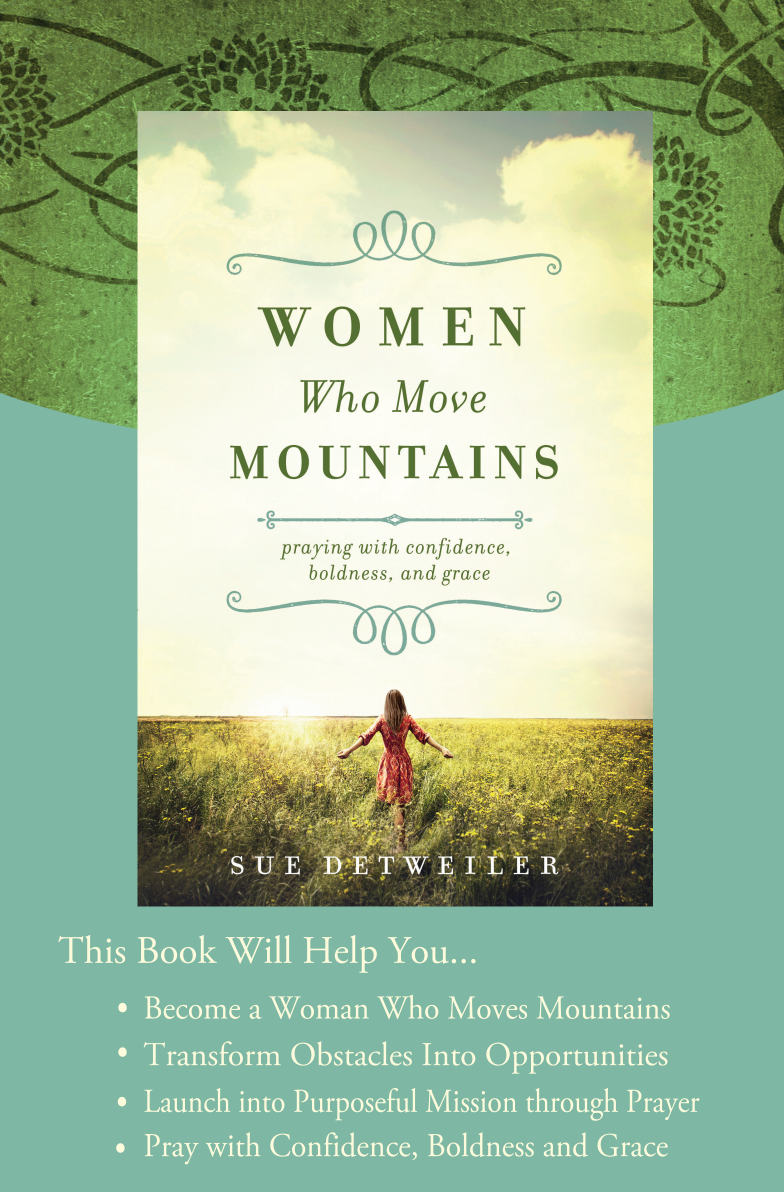 re doing. Who are you kidding? Have you ever had some version of negative thoughts? I tried praying (after all the book is about prayer). However, I didn’t have a breakthrough in terms of peace, until I forced myself to just do it. In prayer, God gave me a picture of an acorn that I was holding in my hand, but if I would plant that acorn in good soil, and provide nurture, it would grow to be a strong a mighty tree whose leaves would provide healing for all who read it. After writing these words down in a journal, I took my computer and I sat in my 80-year-old mother’s room and I began to type. (If you read chapter 1 of Women Who Move Mountains, you will learn that my mom has been my main role model for prayer.) (Click the Picture of the book to immediately download the Introduction and Chapter 1).
 Where do you need some white space in your life? I hope this excerpt from my book,
  “You can have everything in life you want, if you will just help other people get what they want.” Zig Ziglar, the ultimate motivator, knew that when we authentically and unselfishly support other people, great things happen. I’ve experienced the truth of this principle many times in my life, but especially recently, when I joined forces with two other WordServe authors.
 One of our most exciting accomplishments came from developing a women’s conference based on our book’s title and message. We outlined options for a one-day conference as well as a two-day event. We came up with a suggested ticket price and estimated income from the event based on a variety of attendance number ranges. We brainstormed ideas for other creative ways to support the Untangled Women’s Conference. And we reviewed different expense scenarios, weighing convenience against cost.

 One of my favorite definitions is the one for insanity that goes “doing the same thing over and over and expecting different results.” I’ve felt that was an accurate description of many of my book marketing efforts in the past twelve years; sending off press releases to local newspapers and rarely getting even a little paragraph tucked somewhere in the back pages comes to mind. I’m sure every author can add to that list of marketing insanity.
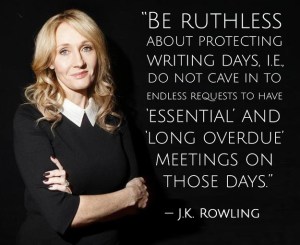
 Maybe you can relate to days like I’ve had. Where you need a dose of inspiration to get you moving — or a swift kick in the fingers. When this happens, I’m grateful for quick, motivational, and uplifting thoughts from other experienced writers.
 “First drafts are always horrible and ugly. Don’t worry about that – it’s the same for everyone. Just remember that the first draft is as bad as the book is ever going to be, and if you keep redrafting, one day you will look at your horrible book and realise that you’ve turned it into something actually quite beautiful.” – Robin Stevens, author of the Murder Most Unladylike series
 “Write what you want to know more about — the teacher always learns more than the student. Become passionate about the stories you tell and the people you are writing about. Finish your writing day with something that makes you want to know what happens next. Give yourself periods of rest — mental breaks sharpen the mind. And keep writing, especially when you don’t feel like it.” — Anita Agers Brooks, author of Getting Through What You Can’t Get Over and other titles
 I remember when my pulse quickened and my heart thumped at the thought of “making it” as a writer. The first time I gingerly brushed the soft cover of my first book, flicked through its pristine pages, I felt awed. The young girl inside of me, who’d always dreamed of seeing her name on a book, shed a happy tear.
 3. The writing life is not a solitary endeavor. It takes a team to successfully publish. Critique groups, writing peers, or advance readers help us delve deeper into our subject matter, and pick up on flaws we often miss. Agents, publishers, and editors polish our projects and help promote them to reach a bigger audience. Readers become fans who sometimes become friends — if we are so blessed.
 I’m still working on all of these areas in my own writing, and anticipate the need to keep them in mind until the day I type my very last word. I don’t simply want to write, I want to use my words well.
 I’ve learned a lot about waiting and watching as a writer. So, I wanted to share this excerpt from my book,
  WordServe Water Cooler