Angelina Jolie and the Burden of Our Neighbor’s Glory

angelina jolie (1)

When Angelina Jolie announced her elective double mastectomy surgery, my mother-flesh cringed. She did it for her children. Who will not laud Jolie’s courage, and, if nothing else, at least her intent? Only those who have not felt the weight of their neighbor’s glory.

Our neighbor’s glory is heavy, and it presses upon us everywhere, even in the most joyous moments and places.

This spring, I felt its weight again. At my son’s college graduation, I almost could not lift my chest for air, nor could the other thousand parents sitting in graduation finery beneath the California sky. The moment we all feared came at last: his name was read, and his parents walked slowly to the dais, took the offered diploma and stumbled down while we crumpled our programs under his absence. Just months before graduation, he was killed in an accident near campus. We could hardly bear the weight of even the thought of such grief, but I saw prayers running down faces beside me, prayers pressed into clenched programs, prayers kneaded into tissues. Every one of us watching carried those parents across the stage.

There is more. The dignified woman calling each graduate’s name with such gravity and care, who had proudly handed diplomas to twenty classes, had just been diagnosed with a terminal illness, one of the most terrifying diseases known. This was her last graduation. We lifted her with our eyes and helped her speak each name.

And most of us knew that this year the women’s basketball coach lost her husband to cancer just before the birth of their first child. 

This is our daily witness, is it not? Finality and commencement, beginning and ending, sorrow and celebration, risk and sacrifice lock hands over a diploma, a basketball, a surgeon’s knife.

We do it for the other. For the many others who live with us and beside us, our neighbors.

After the ceremony, later that day, we met our son and his six roommates and all their families at the beach and one hour later, we were building human pyramids in the sand. What a silly thing to do, I thought, what a California cliche, even as I laughed and snapped photos of these young men kneeling on their fathers’ backs.

And then the fathers kneeling on their sons’ backs.

And wait! The mothers were not forgotten. We, too, pressed our knees into our sons’ backs and held steady in the sand for a moment.

Moms and sons pyramid

I don ‘t know if we were just having fun—or if we were enacting something more that day. I think maybe something more.

This is truly how we stand in this world: our knees pressed in the bodies of those who have gone before us, beneath us. Our childrens’ knees in our own backs. The Bible talks about this as the “cloud of witnesses” whose words and lives hover over us and form the foundation beneath us.

These silly photos, then, are the truth of our lives. We neither stand nor kneel alone, no matter how much independence and self-reliance we claim, and I have claimed a lot. There are so many beneath us. So many noble, humble, simple, wise people. Even the ones who have hurt us, whose weight and knees have broken our backs, or whose substance has crumbled beneath us. We would not be ourselves without them. We would not be our limping but still kneeling selves without them. And we would not offer our backs to others without them.

C.S. Lewis writes, “The load, or weight, or burden of my neighbor’s glory should be laid daily on my back; a load so heavy that only humility can carry it and the backs of the proud will be broken.”

I hope as I write and as I live that I can keep my place, steady. I hope I am not too heavy for those carrying me. I hope I am humble enough to hold strong for those I am bearing.

I hope all these things for you, as well.

And while we get tired sometimes—yes, often, every day—the photos tell the fuller truth:

Who is lighter than our children, for whom we would cut off even our flesh?

Who is lighter than our neighbor?

Whose back and knees are not made exactly for this?

Build Your Marketing Wings on the Way Down

“The person who says it cannot be done should not interrupt the person who is doing it.” – Chinese Proverb

“Go to the edge of the cliff and jump off. Build your wings on the way down.” – Ray Bradbury

These powerful quotes began a wonderful book marketing seminar I attended recently with Sheri Fink, a #1 international best-selling, award-winning children’s author and creator of “The Whimsical World of Sheri Fink” children’s brand. Sheri writes books and gives talks that inspire and delight children while planting seeds of self-esteem. She is also very generous with sharing her best practices, as she has an extensive background in marketing.

No matter how you come to the table as an author, marketing is going to be a certainty for the duration of your career. How can we turn marketing into a labor of love? Sheri advises authors to “Write the story your heart wants to tell.” Although she enjoyed a very successful career in corporate America, her dream was to encourage and help children through writing. Sheri was able to leverage her work experience into a successful book launch, and within a few short years, her series has evolved in ways she never dreamed would happen. For example, she was approached by a playwright from Washington, D.C. who wanted to adapt one of her books for the stage, because he believed in her product. Over the course of a year, he shopped it around until a theater in Tennessee picked it up. It is now in production and will be playing to audiences in the near future.

During the seminar, Sheri emphasized the importance of graciousness and authenticity when interacting with readers. Going all out with a focus on creating a special event for the guests will result in a more enjoyable experience for everyone. At a recent festival in Mission Viejo, author Dean Koontz stayed hours longer than he was scheduled to attend a book signing. Why? Because he still had fans waiting to speak to him. Mr. Koontz posed for pictures and even put someone’s pet poodle on the table for a photo opportunity. This kind of attitude goes far in keeping fans for life.

The secret of your success will always be people, so grow your network and always add value for others. Be willing to give first. Know your readers and customers. When someone tells you they like your book, ask for a review. Make it easy for people to help you. Be specific in your request. Write and provide the campaign copy in advance. Always thank the people and share the result of their efforts, because books are marketed best by word of mouth. Your fans will always be your top marketers, so nurture and reward them in ways they will appreciate.

WWofSF_Poster_May0613

Think of yourself as the CEO of your own business and have an entrepreneurial mindset. Your work space will be important, so create space for what you want to come into your life. Establish a physical environment that’s conducive to your best writing. Set up a schedule to support your writing, publishing, and marketing goals. Come up with a consistent font and a brand, an umbrella under which all of your projects can be covered. Be strategic in your marketing efforts. Leverage your books into a brand and promote the whole line.

Find a mentor and / or coach. Create or join a mastermind group, which is a set of 5-6 people who have phone conferences. In these meetings, the group asks each other for assistance, shares  accomplishments, and provides feedback. Be sure to leverage ideas from people with diverse backgrounds who are from different parts of the world. Hire interns to help you (pay them, set expectations, set goals, and let them know what they are getting out of the program you create). Give them a confidentiality agreement. At all times, show professionalism.

In closing, Sheri acknowledged that It takes a lot of courage to build your wings on the way down, but if you’re going to dream, then dream big. Don’t let let other people’s limitations limit you. Play to win – be fearless and take action, because you never know when you’re going to catch an elusive breeze that allows you to take off and soar to new heights.

————————————–

Sheri Fink’s first book, The Little Rose, was a #1 best-seller on Amazon for over 60 weeks, became the #1 Top-Rated Children’s eBook on Amazon, and won a gold medal in the Readers Favorite International Book Awards. Her subsequent books, The Little Gnome and Exploring the Garden with the Little Rose, debuted on the Amazon best-seller list.

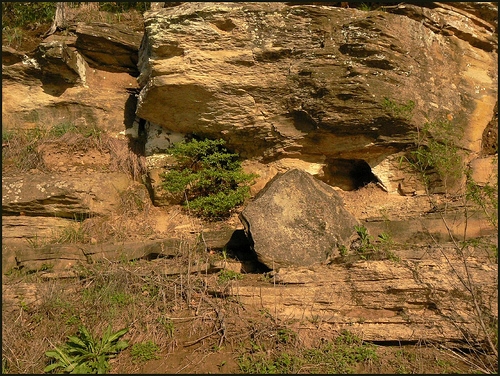
Roll the Stone Away

http://creativecommons.org/licenses/by/2.5/

One of my favorite scenes in the New Testament is when Jesus raises Lazarus from the dead in John 11: 38-44. “Roll the stone aside,” Jesus tells those around the burial place, a cave cut into the hillside. After the stone is moved, Jesus calls out in a loud voice: “Lazarus, come forth!” The dead man obeys, and Jesus then commands that Lazarus be freed from his burial linens and let go.

Aside from the brilliant drama of the moment, the undeniable demonstration that Jesus is the Lord of life, I am especially fond of this passage because I heard it proclaimed in church at a pivotal time in my own life when I was struggling with direction.

My fifth child was almost a year old, and I knew it was time to move on from having babies.

But move on to what?

As a full-time stay-at-home mom, I’d devoted fifteen years to raising my children. About once a year, I managed to produce a Christian magazine article, which satisfied my desire to write. (All my other desires were to get more sleep.) Since I still had a young child, I knew I wouldn’t be heading back to outside employment for at least another five years until she entered kindergarten, and even then, I’d need summers off to be home with my kids. What kind of work could I do, other than answer one of those ads in the back of magazines for someone to stuff envelopes as their own home business?

That’s when I heard the Scripture proclaimed at church.

And it immediately struck me that I needed to roll a stone aside in my own life – the stone of my own excuses that prevented me from committing myself to developing ALL the gifts God had given me.

Because excuses aren’t the same as authentic obstacles.

I didn’t have an enormous, heavy rock to literally push away like the friends of Lazarus had. Yes, I had important demands on most of my time, but I realized that some of those demands were also self-imposed – stones I had placed in my own pathway. With two teens in the house who doted on their baby sister, there wasn’t any reason I had to be the only one to mind the baby for an afternoon, yet I hesitated to lay that responsibility (stone) on my older children. Once I did, though, it was good for all of us – my teens learned new skills in carrying that particular stone, and with it removed from my path, I had several hours a day to develop my writing skills.

One by one, I worked at rolling away the stones of excuses so my writing talent could come out of its cave.  When my fifth child left for college last fall, I was sad to see the end of that phase of my life, but so excited to greet the new one waiting for me.

What stones do you need to roll aside to answer God’s call to new life?

Open Your Eyes, the Blinding Truth About Writing

Photo credit
Photo credit

Open Your Eyes

One time as a kid, I tried to walk home from the corner store with my eyes closed.

I knew the way. My brother and sister and I stopped in often at the tiny grocery store with floor to ceiling products and cold, cement floors, always desperately worried that Marsha, the mean cashier with a mustache, was working, and at the same time buoyed in our courage by the lure of fizz candy and green, curvy, ice cold bottles of Coca Cola.

I memorized every break in the sidewalk and each pebble from thousands of trips back and forth from our house to the market. It was a straight shot, no turns, no need to cross the street.

Confident I could find my way home using other senses, I closed my eyes. As a child I subscribed to the notion that if I couldn’t see, then no one else could see me either. Creeping forward, I gained confidence, enlightened by heightened noises and smells. I smelled pine. I heard cars zipping by on the street. My feet kicked broken up pieces of gravel on the sidewalk as I meandered.

Within a few steps, I smacked into a tree. Dubbed by confidence, I had veered off to the left. The impact wasn’t that severe because I had been going at a turtle’s pace. But my forehead stung and my pride was hurt. My eyes, now wide open, darted around for witnesses. I ran the half block home to my mother in tears.

The Blinding Truth

Most of us who write, or who want to write, will recognize this story. We’re at a party, or out to lunch with an acquaintance, and we mention the book we are working on.

“Oh, you’re writing a book? That’s great. I want to write a book some day.”

You nod, take a bite of your chicken sandwich on rye, and wonder if your conversation partner realizes you’re talking about actually writing a book, not taking in nine holes of golf on a lazy Saturday afternoon.

Here’s the blinding truth about writing: if you want to write, than you have to write.

Not only that, but you have to be willing to be humbled. You have to want to learn about craft, and building a platform, and countless drafts, endless revisions, fuzzy hours staring at a computer screen, keeping your butt on the chair in order to get the story down, and growing thick skin for rejections. Because rejections come, my friends. Oh, they come.

Earnest Hemingway said that we are all apprentices in a craft where no one ever becomes a master.

There is always more to learn about writing, and the best way I can figure out how to learn is by keeping my eyes open, and realizing that it is going to take work.

Gloria Steinem said that writing is the only thing that, when she does it, she doesn’t feel she should be doing something else. If that’s you, if that is how you feel, well then, write.

But do it with your eyes open …

The 15-Minute Writer: Taming the Social Media Monster

file0002062790027 This is part five of a series. Read parts 1-4 here.

Ever wonder how top authors (especially those with families) do it all–write, read, speak, tweet, pin, travel, correspond and more? I’ve got a hunch that they choose what they’re best at, and hire talented people to do the rest.

There are simply not enough hours in the day to do it all. In addition, since new social media platforms pop up regularly, it’s easy to get overwhelmed.

Over the past few years as a writer-mom, I’ve made more than a few mistakes, but I’ve also learned to prayerfully make (sometimes tough) choices. With God’s help, I’m taming the social media monster–instead of letting it wreck my schedule and family life.

  • First, I regularly revisit my priorities. As seasons of life change, so do my family’s needs and schedule. When my children were small, I wrote during Mother’s Day Out and nap times. Now, I write, research, and update my blog and Twitter or Instagram accounts during their school hours and activities. I try to be available to them after dinner and while they’re doing homework, keeping certain times free of online distraction. So far, it’s working well for us.     OLYMPUS DIGITAL CAMERA
  • Second,realize where I’m strong–and weak. I began blogging in 2004, and last year, I admitted to myself that I’m simply burned out. Bleh. Meh. Etcetera. However, giving myself permission to blog less often, and do other things I enjoy more (keeping an active Facebook and Pinterest presence, for instance) has helped my attitude about online promotion. I also love my work as an editor at an online magazine, and the curating I do for The High Calling helps me build my own platform. Score!
  • Third, I recognize my addictive tendencies. Recently, I discovered that with a few handy-dandy apps on my Iphone, I could tweet, chirp and pin while waiting for doctor’s appointments, eating by myself at fast food restaurants, and even in bed. The only problem? I had used those times previously to read, daydream or think. No down-time for Dena makes her a grumpy girl–and a boring writer. So, I decided to delete the apps. I already feel more peaceful and balanced.
  • Fourth, I reign in my expectations. Someday, when the kids are grown, I will have more quiet/alone time. (Please, God?) And I don’t want to have a ton of regrets later in life. This creative, crazy family is where the Lord has placed me. He has also chosen to give me wonderful writing opportunities. Such a precarious balancing act means I can’t pursue every single marketing or promotion lead that comes my way. I won’t be able to accept every speaking engagement I’m offered. And I can’t attend every platform-enhancing conference that looks interesting. This both helps and hinders our family financially, but God has always honored my commitment by providing everything we need (and most of what we want). As my dad told me many times, “Honor God, and He’ll honor you.”

Hopefully, my experiences will encourage you in your own efforts to mollify the online marketing beast. What are YOUR tips for handling this potential monster?

Being a Joseph to the People You Write With

1985 Montgomery WardWhen I was in my late teens I worked at a Montgomery Ward store. One day my supervisor told me to stock inventory in our sporting goods department, but the shelves were a disaster. Fishing lures of varying shapes in reds, oranges, blues, and browns were strewn beneath the silver pegs they’d hung on earlier.

I groaned to myself and looked around. No one will know if I put the new ones on the pegboard and leave the mess scattered below. They’ll assume customers came behind me and wrecked my work.

But my conscience wouldn’t let me get away with it. You’ll know. Mom and Dad always told you to leave things in as good a shape or better than you found them. They’d be disappointed if you did a shoddy job. 

So I got to work, and straightened every artificial worm, spinner bait, and fluke. When I finished, I stood back with a sigh and surveyed the tidy results. I didn’t hear my boss walk up behind me.

“Nice job. This is the best I’ve seen this area in months. Keep up the good work.” Then he patted me on the shoulder before walking away with a smile on his face.

Less than two months later, I received a nice raise and a small promotion. And I learned a valuable lesson through positive reinforcement.

A lesson I’ve carried with me into my writing work, along with another principle I picked up from a historical figure. I apply both to my career today.

The historical figure I mentioned is Joseph. His account in Genesis demonstrates an amazing work ethic that eventually brought him miraculous outcomes. Not without difficult circumstances, or serious setbacks, but by adhering to a determined set of attitudes and actions, Joseph overcame his adversity. And he ultimately succeeded.

As an author, I take the things I see in his story and allow them to help me be a Joseph to the people I write with. Whether it’s my literary agency, publishing team, or booking agency, like Joseph, I strive to:

  • Learn their ways, and follow their processes
  • Treat their business as if it were my own
  • Pray, and then listen for God’s wisdom on the steps I should take next
  • Always respond with a respectful attitude, even when boldness is required
  • Exercise patience when the situation looks bleak
  • Refuse to take credit that belongs to someone else
  • Believe in my early dreams — trusting they came from God

Anita Brooks - First Hired, Last FiredI share a more in-depth version of these principles in my book, First Hired, Last Fired — How to Become Irreplaceable in Any Job Market, releasing early next month. When it comes to writing, I have much more to learn, but these basics serve me well, and I hope make me an author others appreciate working with.

At the end of my career, I pray I’ll leave a few writing related businesses in as good a shape or better than they were before we partnered. I want to be a Joseph, for God’s glory, and the good of other people. Otherwise, why bother writing for publication at all?

Writing Aversion Disorder

I am currently suffering from writer’s block—or, to use a term more descriptive of how it actually feels on the rare instances when it seizes me, Writing Aversion Disorder (WAD), an ailment of much more serious proportions than mere blockage. Pointless No Entry sigh--James YardleyIt’s not just that I can’t think of anything to say or don’t like what I do say or even that the words are there but just won’t emerge from my brain or fingers onto the virtual page. Rather, I’m incapable of even approaching my computer. The thought of writing nauseates me.

As such, I’m late posting this month, which has surely not endeared me to the tireless and underappreciated editors of this blog. We’re supposed to set our posts two weeks early to give them time to look our writing over before letting it loose into the blogosphere. I feel bad about my sloth. I can’t help it, though. I’m in a bad way.

It should be good writing time for me. As a professor, I have summers off, and, with both daughters occupied with faraway internships, I’ve had big writerly plans this summer. I’m right in the middle—the most exciting part, where all the narrative strands start coming together—of a novel-in-progress, and my goal, before WAS set in, was to get ’er drafted by summer’s end.

Now my goal is to do anything but write. Read. Relearn “Minuet in G Minor” and “Für Elise” from my year of piano lessons as a child. String beads from stashes I found in my daughters’ rooms to make gaudy bracelets for myself and them. Play Spider Solitaire on my new phone. (My brother recently clued me in on how to Control-Z back to a game’s beginning to avoid wrecking my win-percentage.) Clean my deceased mother-in-law’s house down the road. (I’m not joking: I spent all day yesterday there, sorting, tossing, soaping, scrubbing.) Weed my garden out in the hot sun.

Raised bed--photo by SrlI was thinking about this problem as I crouched, hands in the dirt, today, and it occurred to me that, while I usually love working in the garden, even weeding, I’m also overcome on occasion by Gardening Aversion Disorder (GAD)—surely related to WAD. So, with no other blog post in view, I decided to examine what triggered my GAD episodes for anything that might illuminate and, ideally, solve my current dilemma.

Here’s what I came up with: I suffer from GAD when tasks or trips have taken me away from the garden for bit and, upon my return, everything has gotten out of control. Vegetables need harvesting, many having overgrown their tastiness. Itchy weeds carpet the gravel paths between the beds. Sand fleas have made lace of my eggplant leaves; my bean vines are encrusted in ants; my tomato plants are speckled with big black beetles. I know I have to regain control but don’t know where to start.

The answer to my own question—where to start—is to not ask it in the first place. Don’t look, I tell myself. Just leap! Whatever task I choose, my gardening soul has learned to believe, will be more productive, more creative, than wallowing in indecision.

Maybe I don’t want to write, I speculated, because I’ve lost control and uncertain where to start in reclaiming it. And, indeed, as soon as I thought these words, I knew them to be true. That little lightbulb of insight was all I needed.

Perhaps, I thought—or hoped, or both—I need to quit trying to figure what part to work on next and just do whatever comes to hand.

And somehow, having just that much—that little—of a plan sent me back to my desk to dash off this post and then leap back into story.

Four Promises for Facing Self-Induced Pressure or Deadlines

Photo/KarenJordan“And you will know the truth, and the truth will set you free” (John 8:32 NLT).

Sometimes I feel like I can’t breathe because of self-induced pressure or someone else’s expectations of me. And at times, I get tired even thinking about trying to follow through on all of the commitments that I’ve made as a freelance writer.

But I know that “God didn’t go to all the trouble of sending his Son merely to point an accusing finger, telling the world how bad it was. He came to help, to put the world right again” (John 3:17 MSG).

So, when I finally sit down and bring my feelings to the Lord, I remember His promises of freedom, strength, provision, and peace.

Freedom from judgment. Romans 8:1-2 reveals the promise that there is no condemnation to those who are in Christ Jesus.

With the arrival of Jesus, the Messiah, that fateful dilemma is resolved. Those who enter into Christ’s being-here-for-us no longer have to live under a continuous, low-lying black cloud. A new power is in operation. The Spirit of life in Christ, like a strong wind, has magnificently cleared the air, freeing you from a fated lifetime of brutal tyranny at the hands of sin and death (MSG).

Strength for our weakness. God also promises to give me His strength in my weaknesses. In 2 Cor. 12:9-10, I read,

My grace is enough; it’s all you need. My strength comes into its own in your weakness. Once I heard that, I was glad to let it happen. I quit focusing on the handicap and began appreciating the gift. It was a case of Christ’s strength moving in on my weakness. Now I take limitations in stride, and with good cheer, these limitations that cut me down to size—abuse, accidents, opposition, bad breaks. I just let Christ take over! And so the weaker I get, the stronger I become (MSG).

Provision for our needs. And did you know that God also promises to provide all that you need in Christ Jesus? “And this same God who takes care of me will supply all your needs from his glorious riches, which have been given to us in Christ Jesus” (Phil. 4:19 NLT).

Peace through prayer. So, if you’re struggling with self-induced pressure or fighting a battle with judgment or condemnation, I encourage you to stop what you’re doing for just a moment and voice your fears and needs to God. He promises to provide His peace through prayer.

Don’t fret or worry. Instead of worrying, pray. Let petitions and praises shape your worries into prayers, letting God know your concerns. Before you know it, a sense of God’s wholeness, everything coming together for good, will come and settle you down. It’s wonderful what happens when Christ displaces worry at the center of your life. (Phil 4:6-7 MSG)

How do you deal with your self-induced pressure as a writer?

Shameless: How to Fail a Book Signing (but Not the Writing Life)

“Art is born out of humiliation.”  W.H. Auden

I had a fantastically unsuccessful book signing in a big box store not long ago. (Yes, signings still occur, despite the takeover of social media.) Afterwards, licking my wounds, I turned to a book on my own shelves, Mortification: Writers’ Stories of Their Public Shame. In it, Margaret Atwood, Rick Moody, Billy Collins and a constellation of such literary brights offer up the most companionable ignominies and embarrassments. (Fittingly, I bought the book used, online, for a penny.) My own parade of humiliations that night were paltry next to theirs. Still, couldn’t I do better?

Two weeks later, an Internet search on “book signings” confirmed my suspicions. According to several book signing experts, I did indeed do everything wrong. First, I missed the Webinar on “The Seven Steps to Turn Yourself into a Celebrity.” In another  article, I violated nearly every one of thirteen steps, beginning with, “Decide, in advance, what sort of clothing you want to be seen wearing by your reading public.”  (Did I do this? No.) Step #6 advised bringing along a printout of your manuscript for fascinated readers. (Really?)  My most egregious error was the last step: my failure to inform the store managers that I would be the bookstore’s official greeter while I was there. Nor did I walk around with several copies of my book introducing myself to everyone in the store, as he advised, pressing my own books and bookmarks into their astonished hands.

I would rather demonstrate the wonders of Balinese kitchen knives through the Christmas season at Walmart than resort to such tactics.

We all know we need to successfully promote our own work. But when we sacrifice leisure, sleep, money, and most costly of all, time with our families so that we can write, none of us makes these difficult choices to be stalkers or hawkers with a leer and a bookmark. We write because we believe in our deepest-down spirit that God has called us to keep naming the world. We write to serve a meal to the famished, to dress the wounds of the betrayed and lonely. We write to offer hope and a story to the depressed. We write to offer clear thinking in a muddled marketplace. We write in humility, in insecurity, in desperate prayer.

And when our book releases, shall we then don our best barracuda suit, polish our teeth, slick back our hair and begin the hard, shiny sell, suctioning ourselves to every unfortunate person who innocently wanders into a bookstore? Did any of us sign up for this?

Let’s take a breath. We don’t need to sell. We don’t have to sell out or sell ourselves short, or sell our own snake oil. We need to offer. We’ve just spent two to three years composing, listening for God; we do indeed have something to offer. We offer our work, and, more importantly, we offer ourselves. In all of our promotion, we need to think, how may I serve others? How may I serve my readers? We might end up giving books away—a lot of books. We might do some speaking gratis. We might end up on the short end of the accounting sheet. We might end up praying with a stranger. But at the end of the day, the year, the decade, we’ll count it differently:

We got to give. We got to give more than we knew we possessed. We got to be part of a global conversation. We got to know new readers, who taught us more than we knew. We got to pray for strangers who became friends.

Don’t listen to “sell-a-ton-of-books” schemes when they violate who you are and what you’re to be doing in this world. Go ahead and “fail” a book signing if you must. Be a real writer, without shame.

Praying Psalm 23 for Writers

Sheep
Sheep (Photo credit: Wikipedia)

The Lord is my Shepherd:  Sheep are stubborn, fearful, and crowd followers, like people. We need a shepherd to lead us. We must surrender our life and work to God.

Lord, you are my Shepherd. I place myself and my words under your authority.

I shall not want: God is all sufficient. When we trust God to provide for us, we can let go of the wants of ego. He redefines success.

Lord help me to want what you want for me and for my work.

He makes me lie down in green pastures: Writing is endless and the refreshment of rest and renewal is essential.

Help me find the balance of work and rest.

He leads me beside still waters: We know the difference between our own exertion and divine filling when the words flow like gentle waters.

Lead me to inspiration and fill me to overflowing with your words.

He restores my soul: We are strongest in the areas where we have been healed.

Restore my spirit, Lord. Heal me that I may heal others.

He leads me in paths of righteousness for his name’s sake: He provides that daily connection that guides us in the truth, as we write–for His glory, not ours.

Help me always to know the truth and to remember that I do my work for your glory, not mine.

Even though I walk through the valley of the shadow of death, I will fear no evil, for you are with me. Your rod and your staff, they comfort me: We give deeply of ourselves and our experiences, making us vulnerable and easily hurt. We fear exposure and criticism and we receive it, but we don’t need to fear it.

Protect my heart, Lord.  Help me to be bold in my work and not to fear criticism.

You prepare a table before me in the presence of my enemies; you anoint my head with oil: God gives us provision in the midst of our problems and he continues to protect us.

Thank you for your provision. Anoint my head to protect me from the small things – the annoyances and thoughts that distract me.

My cup overflows: Every good gift comes from God–the good days, the letters and notes of encouragement from readers, the joy of seeing a life change because of the words He has provided.

Thank you, Lord, for this work and the abundance in life with you.

Surely goodness and mercy shall follow me all the days of my life. And I shall dwell in the house of the Lord forever: It is not for this world that we write. It is for eternity.

Lord, accept the offering of my words. Use them as you will.  Lead me, provide for me, protect me. I will follow.   

Amen

Betsy Duffey and Laurie Myers: The Writing Sisters

http://www.WritingSisters.com